
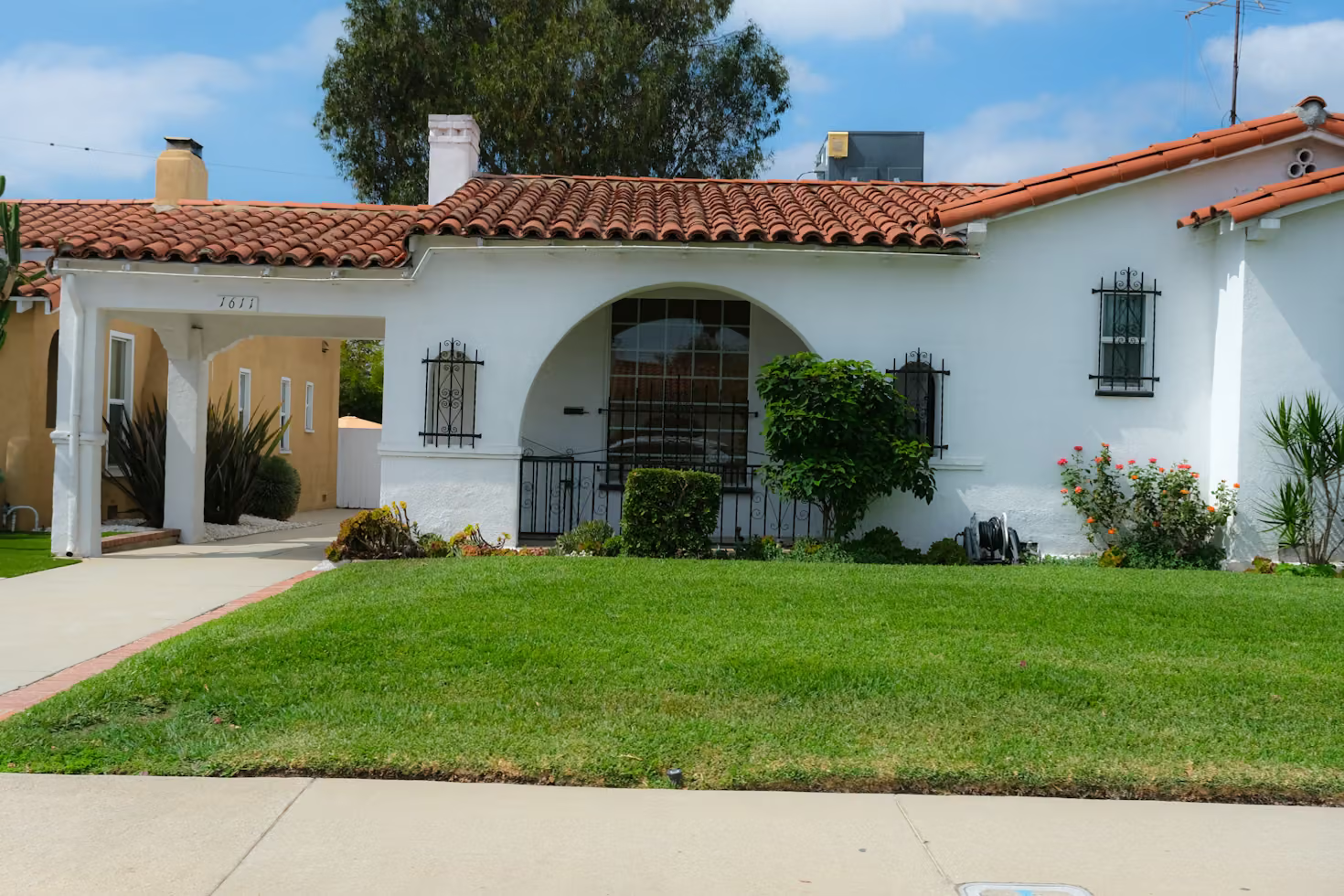
Roofs in Phoenix have a tough gig. Scorching sun, spring winds, those moody monsoon bursts—your roof takes every hit and still has to look good for the neighbors. You know what? It’s easy to ignore until something drips on the drywall or the summer bill spikes. If you’re wondering whether it’s time to stop patching and start planning a replacement, here are five telltale hints that matter in the Valley.
Hint #1: Sunburned shingles or “fine” tile… with a failing underlayment
Arizona sun is relentless. On shingle roofs, UV exposure bakes the asphalt, dries the oils, and loosens those protective granules. When the granules go, the roof ages fast. You might notice the shingles looking smooth, curled at the edges, or cracked—almost like the desert floor after a long dry spell. Here’s the twist: clay or concrete tile can look perfect for decades. That’s the contradiction. The tiles often outlast the layer that actually keeps water out—the underlayment. In Phoenix, felt or even lower-grade synthetics can turn brittle and split long before the tiles quit. So a roof can look “fine” from the street and still be one haboob away from a leak.
Quick yard check
- Grit in gutters or at downspouts (granules = shingle sunscreen flaking off).
- Random tiles slipped out of place after wind gusts.
- Exposed, sun-bleached underlayment visible in valleys or eaves.
Hint #2: Leaks that vanish… then come back after every monsoon
Monsoon season (roughly June through September) loves the element of surprise. One evening you spot a ceiling ring over the hallway. Next day it’s gone. Then the next storm hits and hello again. Intermittent leaks usually mean the system is right on the edge—aged valley metal, cracked pipe flashings, or torn underlayment that only fails when wind drives rain sideways. Let me explain: water finds the path of least resistance. When gusts push rain up-slope, it sneaks beneath lifted shingles, missed nails, or loose tile battens. If your leak plays hide-and-seek, the roof is sending a polite but firm message.
Right after a storm, look here
- Valleys (they handle the most flow, like highways for water).
- Penetrations: pipes, skylights, solar standoffs, satellite mounts.
- Fascia ends and kick-out flashing areas where walls meet eaves.
Hint #3: Flat or low-slope foam that blisters, cracks, or chalks
Plenty of Phoenix homes mix pitched tile with flat patio sections or full foam roofs. When foam dries out, blisters show up like tiny bubbles; coatings chalk to a powder; hairline cracks spider across sunny sections. If you press gently and it feels spongy—or you see ponding rings after a monsoon—water is flirting with the foam and, eventually, the deck below. Foam systems need regular re-coats to keep UV at bay. If it’s been many years and the surface looks like sun-bleached sidewalk, a re-coat may not cut it. At a certain point, replacement becomes the smarter move because you’re rebuilding a waterproof shell rather than painting over a tired one.
Hint #4: Your home runs hotter and your bill won’t cool down
Okay, yes—Phoenix summers make everything hot. But if your roof once handled July and now the upstairs feels like a sauna at sunset, the system may be tired. Lost shingle granules reduce reflectivity. Old membranes soak heat instead of bouncing it. Ventilation gets blocked by dust, bird nests, or displaced insulation. A replacement lets you reset the whole package: high-temp synthetic underlayment, better ridge and intake ventilation, and cool-rated shingles or fresh elastomeric coating on foam. The goal isn’t a miracle—this is Phoenix—but a noticeable, durable improvement you can feel around 4 p.m. when the west side usually groans.
Hint #5: The calendar and repair stack say, “It’s time”
Age isn’t everything; some roofs in Arcadia or Ahwatukee live differently than roofs in Buckeye or Queen Creek. Still, there are patterns:
- Asphalt shingles: many hit their stride for 15–20 years here, less if dark and unshaded.
- Tile systems: tiles can last much longer, but the underlayment often wants replacement around the 20–30-year mark.
- Foam: re-coats every several years are normal, but after repeated patches, full replacement is the cost-savvy reset.
If your folder of invoices shows annual fixes—new pipe boots in 2021, valley patch in 2022, leak trace in 2023, ceiling stain again in 2024—that trend doesn’t usually reverse. Honestly, it’s like an old truck that still starts but needs a tow every other month. Sooner or later, the new roof is the cheaper roof.
Repair or replace? The honest middle ground
We love a clean repair. Fast, tidy, done. But when UV has cooked the field shingles, when multiple penetrations leak, or when tile underlayment crumbles across wide sections, repairs start chasing symptoms. Replacement treats the cause. That’s the contradiction and the clarity: small, isolated issues deserve repairs; widespread aging calls for a reset.
What a Phoenix-ready replacement actually includes
Good roofs aren’t just pretty shingles or handsome tile lines. The real protection lives in layers and details engineered for desert life. A solid Phoenix replacement typically includes:
- High-temp synthetic underlayment (especially under tile) that won’t give up when the deck sizzles.
- Self-adhered membrane in valleys, around skylights, and at walls where splash-back is fierce.
- Proper intake and exhaust ventilation—soffit vents breathing in; ridge vents or cans moving heat out.
- Upgraded flashings: new pipe boots, fresh valley metal, kick-out flashings, and continuous drip edge.
- Cool-rated shingles or refreshed white coatings on foam/low-slope sections to help tame late-day heat.
- Tile reset with new battens and underlayment if you’re keeping your tile’s look but rebuilding the waterproof heart.
Those items aren’t fluff. They’re the difference between a roof that looks new and a roof that acts new during the first real monsoon of the season.
How to read your roof this week (a simple home checklist)
No ladders needed—just a few minutes and a careful eye:
- Scan the eaves at sunset. Wavy lines, lifted edges, or shiny bald spots hint at aging shingles.
- Check ceilings for faint tea-colored rings after storms; mark the date. Repeats matter.
- Peek at gutters and splash blocks for dark grit. That’s roofing sunscreen drifting away.
- Walk the exterior walls: look for staining where lower roofs meet stucco—kick-out flashing may be missing or tired.
If two or more hints show up, it’s worth a professional look. If three or more do, planning a replacement isn’t alarmist—it’s smart desert math.
Why timing matters in the Valley
Phoenix gives you seasons that aren’t exactly seasons. Spring winds can lift tired edges. Summer’s UV accelerates brittleness. Early monsoons test every weak seam. Waiting until August can compress schedules and raise the stress level. Planning ahead—late winter or spring, for example—often means smoother logistics and more breathable timelines.
Ready when you are: let’s sort your roof
We inspect, photograph, and explain. No vague jargon, no pressure. If a repair makes sense, we’ll say so. If replacement is the win, we’ll show you why—layer by layer—so you feel confident before a single nail is set. And yes, we work across Maricopa County, from Phoenix proper to the surrounding communities.
Talk with a Phoenix roofer who knows the sun, the wind, and the monsoon
If your roof has been sending hints, consider this your nudge to act while it’s still your schedule—not the next storm’s. We’re here to help.
By Phone:
By Form: