
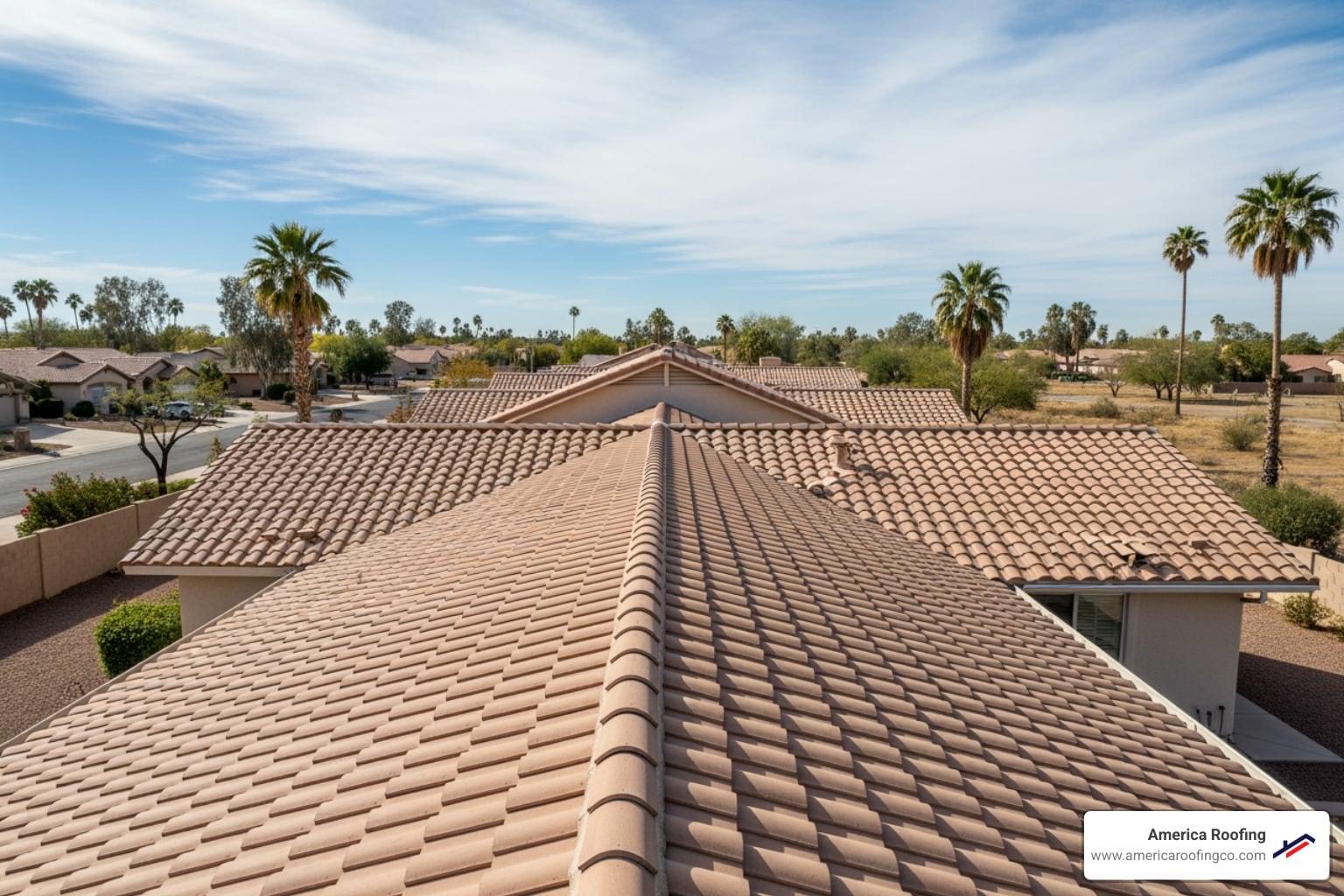
Roof maintenance is one of the most important — and most overlooked — responsibilities of homeownership. A small problem today can turn into a costly disaster tomorrow. Honestly, with a clear plan, you can get ahead of it.
Introduction
Here's a quick overview of essential roof maintenance tasks:
| Task | Frequency |
|---|---|
| Visual inspection (ground level) | Twice a year + after storms |
| Gutter cleaning | At least twice a year |
| Debris removal from roof surface | At least twice a year |
| Tree branch trimming | As needed, at least annually |
| Attic ventilation check | Twice a year |
| Flashing and sealant inspection | Twice a year |
| Professional roof inspection | Once to twice a year |
You know what's sobering? According to home inspection data, 31% of the most common problems found during home inspections are roof-related. That means for millions of homeowners, the roof is quietly failing before anyone notices.
Here's the thing — most of that damage is preventable. Whether you've just moved in or you've owned your home for decades, a consistent routine keeps small issues from becoming big, expensive ones. Arizona's intense heat, UV exposure, and monsoon seasons make this especially true for homeowners across the Phoenix metro area.
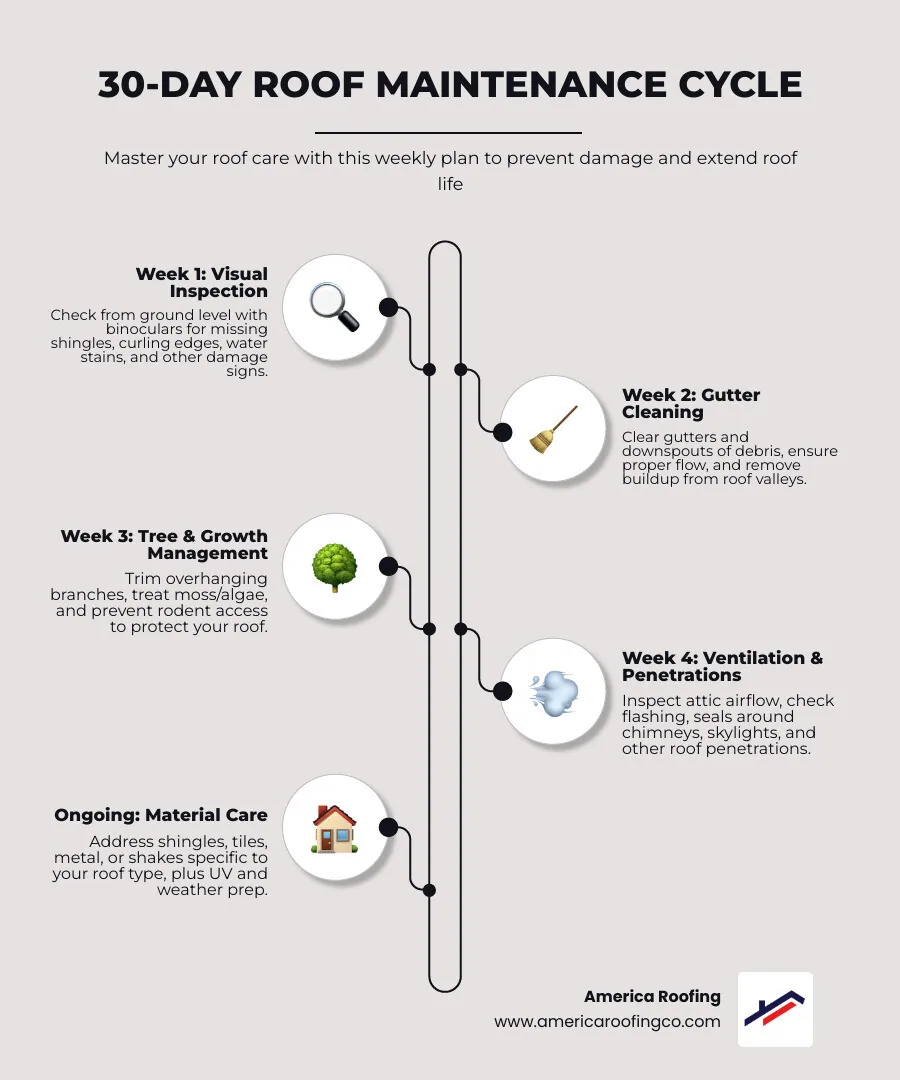
Maintaining your home’s exterior is a marathon, not a sprint, but you can get ahead of the curve in just four weeks. By committing to a structured plan for roof maintenance, you ensure your family stays dry and your property value remains intact for decades.
The first step in any plan is a regular inspection. Think of it like a wellness checkup for your house. Because 31% of home inspection issues are roof-related, being proactive isn't just a "good idea"—it’s essential financial protection. In the Valley of the Sun, our roofs face unique stressors. Between the 115-degree summer days and the sudden violence of monsoon winds, your roof is your home's primary shield. Protecting that investment starts with understanding what to look for and when to act.
The Ultimate 30-Day Roof Maintenance Checklist
Before we dive into the weekly breakdown, let's talk about the "how." Honestly, you don't need to be a daredevil to maintain your roof. In fact, we often recommend homeowners stay on the ground whenever possible. Have you ever wondered why some roofs last decades while others fail in just a few years?
Safety is our number one priority. Falls are a leading cause of home maintenance injuries. You can spot granular loss, cracked tiles, and sagging gutters perfectly well with a good pair of binoculars.
Essential Maintenance Tools for Homeowners:
- Binoculars: For high-resolution views from the safety of the lawn.
- Sturdy Ladder: If you must climb, ensure it’s rated for your weight and placed on level ground.
- Leaf Blower or Soft Broom: For clearing debris without scrubbing away protective granules.
- Work Gloves: To protect your hands from sharp metal and "gutter gunk."
- Flashlight: For your Week 4 attic inspection.
Week 1: Visual Inspections and Roof Maintenance Signs
The first week is all about observation. You’re looking for the "scars" left by time and weather. Start by walking the perimeter of your home. Use this Roofing Maintenance Checklist to keep track of what you find.
Exterior Damage Red Flags:
- Missing or Displaced Shingles/Tiles: Look for gaps in the pattern.
- Curling or Buckling: This often indicates heat damage or the end of the material's lifespan.
- Granules in the Gutters: If your gutters look like they’re filled with coffee grounds, your asphalt shingles are losing their UV protection.
- Damaged Flashing: Look for rusted or bent metal around chimneys and vents.
- Water Stains: Check the undersides of your eaves (soffits) for discoloration.
Inside the house, look at your ceilings and top-floor corners. A small brown ring on the drywall is a "smoking gun" for a slow leak that needs immediate attention.
Week 2: Cleaning Gutters and Removing Debris
Now that you’ve spotted the issues, it’s time for some elbow grease. Week 2 focuses on drainage. The Role of Gutters and Downspouts in Roof Health cannot be overstated; they are the "plumbing" of your roof.
When gutters clog, water backs up. In Arizona, this leads to "wicking," where water travels upward into your roof deck, causing rot. Use a small garden trowel or your gloved hands to scoop out debris. Once the channels are clear, run a hose to ensure the downspouts are flowing freely. If water pools at the base of your home, you might need downspout extensions to protect your foundation.
To make your life easier next time, consider Simple Ways to Prevent Clogged Gutters, such as installing gutter guards. Also, pay close attention to the roof "valleys"—the V-shaped angles where two roof planes meet. Debris tends to collect here, acting like a sponge that holds moisture against your roof.
Week 3: Managing Trees and Biological Growth
Arizona isn't exactly a rainforest, but we still deal with biological threats. Overhanging branches are "highways" for pests, providing easy rodent access to your attic. Furthermore, branches that scrape against the roof during a haboob or monsoon can strip away protective granules or crack expensive tiles.
Keep branches trimmed at least 6 to 10 feet away from your roofline. This is one of the 5 Helpful Tips to Extend the Life of Your Roof that offers the highest ROI.
If you have shade trees, you might notice moss and algae growth. While algae (those dark streaks) is mostly cosmetic, moss is a menace. It holds water and can actually lift shingles. You can treat this with a 50/50 mix of water and bleach, but never use a power washer—the high pressure will destroy your roof's integrity. For long-term prevention, consider installing zinc or copper strips near the roof peak; when it rains, the metallic ions wash down and kill biological growth.
Week 4: Checking Attic Ventilation and Roof Maintenance Penetrations
For the final week, we're heading inside and looking at the "invisible" side of roof maintenance. The Importance of Proper Roofing Maintenance includes ensuring your roof can "breathe."
In Phoenix, attic temperatures can soar above 150 degrees. Without proper ventilation, that heat bakes your shingles from the inside out and can even cause your roof deck to warp. Go into your attic with a flashlight. Do you see light through the vents? You should. Are the vents blocked by insulation? Clear them out.
Passive vs. Active Ventilation: A Quick Comparison
| Feature | Passive Ventilation (Ridge/Soffit) | Active Ventilation (Powered Fans) |
|---|---|---|
| Mechanism | Natural convection (hot air rises) | Mechanical pull via electric/solar motor |
| Cost | Low (no operating costs) | Higher (initial install + power) |
| Efficiency | Consistent, depends on wind/temp | High, can move large volumes of air |
| Maintenance | Minimal (keep vents clear) | Moderate (motor/sensor checks) |
Material-Specific Care: From Shingles to Tile
Not all roofs are created equal, and in Arizona, your material dictates your maintenance strategy. Let me explain the nuances in this Roof Repair and Maintenance: A Guide by America Roofing.
- Concrete Tile: This is the "Gold Standard" for the Phoenix metro. While the tiles themselves can last 50 years, the underlayment (the waterproof layer beneath) usually lasts 20-25. Maintenance involves checking for cracked tiles—especially after a hailstorm—and ensuring the "bird stops" at the eave ends are intact to prevent pests from nesting.
- Asphalt Shingles: These are prone to UV degradation. Look for "balding" spots where granules are missing. If you see shingles that look shiny or black, the asphalt is exposed and will soon fail.
- Metal Roofing: Generally low maintenance, but you must check for "bimetallic corrosion." This happens if different metals touch (like a copper pipe touching a steel roof), leading to rapid rusting.
- Flat Roofs (Foam/TPO): Common in Scottsdale and Tempe. These require monthly checks for "ponding" water. If water sits for more than 48 hours after a rain, your drainage is blocked, and the weight could cause structural damage.
When to Call the Professionals
You know what? Sometimes DIY isn't the answer. There is a fine line between maintenance and dangerous repair work.
If you find yourself asking, "Why Should You Get Professional Roof Inspection Regularly?", the answer is simple: expertise and safety. A professional roofer has the "trained eye" to spot a leak before it stains your ceiling. They also have the safety gear to navigate steep pitches that would be treacherous for a homeowner.
You should call us if you notice:
- Structural Sagging: If the ridgeline of your roof looks like a "swayback" horse.
- Active Leaks: If water is dripping inside, it’s past the maintenance stage.
- Extensive Storm Damage: After a major monsoon, a professional check ensures your insurance claim is accurate.
- Complex Flashing Issues: Repairing the seal around a chimney is a precision job.
Why Professional Roof Repair? Because a "patch" that isn't done correctly will only hide the problem while the wood underneath continues to rot. Many homeowners find peace of mind by enrolling in a professional maintenance plan, which includes scheduled cleanings and inspections twice a year.
Conclusion: Protecting Your Home for the Long Haul
At America Roofing, we’ve spent over two decades serving our neighbors from Peoria to Queen Creek. As a veteran-owned, third-generation family business, we understand that your roof is more than just shingles and nails—it’s the lid on your most precious investment.
How Does Regular Roof Maintenance Benefits You? It saves you thousands of dollars in premature replacement costs, keeps your energy bills lower through better ventilation, and ensures your home remains a safe haven for your family.
Honestly, taking care of your roof doesn't have to be a DIY nightmare if you stay proactive. You know what? A little attention today prevents a massive headache during the next monsoon season. If you’re ready to ensure your home is protected by the best in the business, call America Roofing at 602-237-2478. Our team is standing by to help you Request a Free Quote and secure your home's future today.