
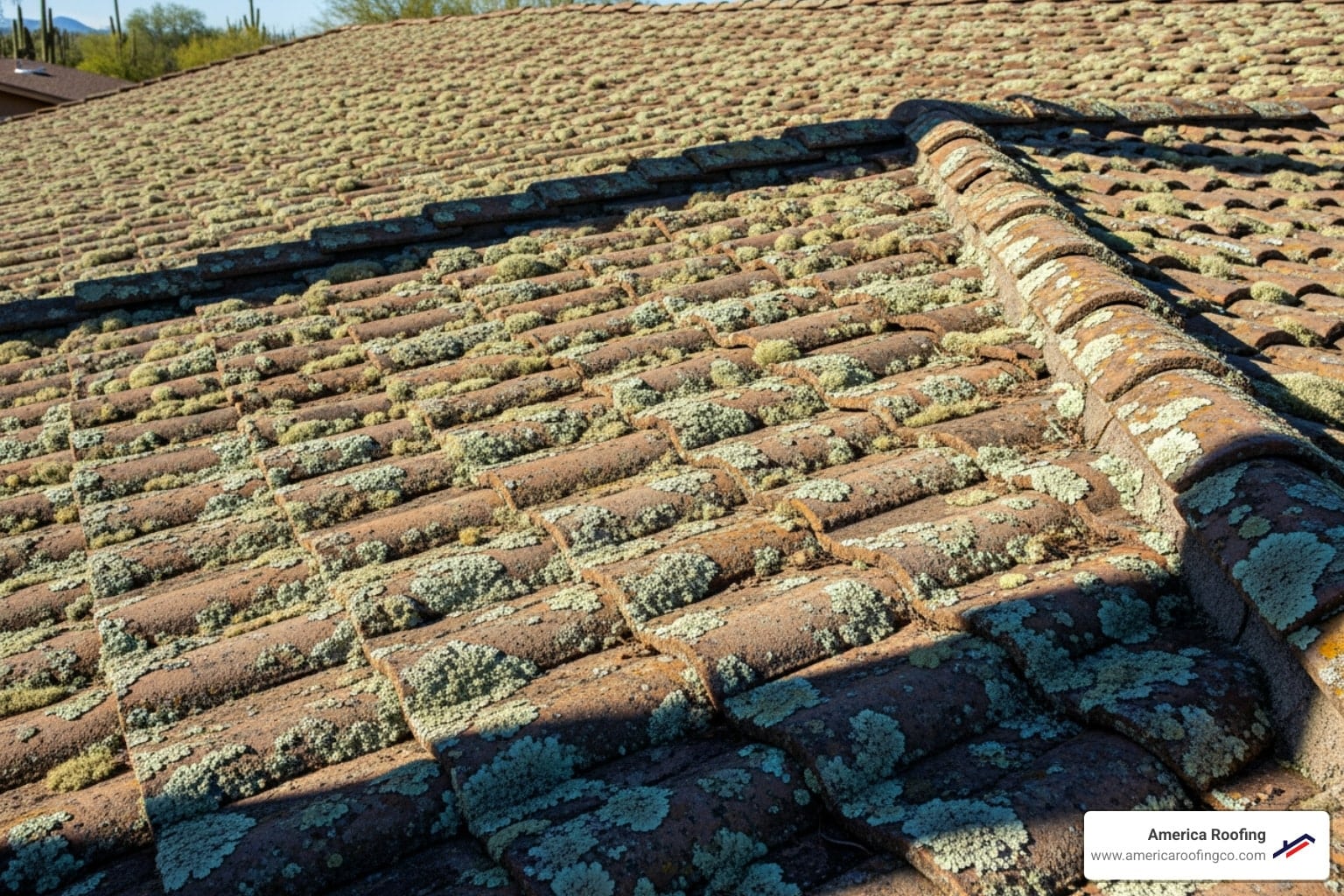
Lichen is a slow-growing partnership between a fungus and an alga or cyanobacterium. On a roof it often appears as flat, crusty patches in gray, green, yellow or orange tones. It is different from fuzzy moss and from the dark streaking commonly associated with algae.
The presence of lichen does not, by itself, prove a roof is leaking or failing. The right response depends on the roofing material, roof condition, amount of growth and whether the area stays damp or collects debris.
Is roof lichen harmful?
Claims that lichen always “eats” shingles or quickly causes leaks are overstated. Oregon State University Extension's roof moss and lichen guidance says lichens grow more slowly than moss and generally do not contribute to damage of wood or composite shingles. It notes that lichen is usually not a problem and can often be left alone.
That does not mean every roof with biological growth should be ignored. An inspection is reasonable when you also see:
- Lifted, cracked or missing roofing
- Heavy debris or persistent dampness
- Moss growing into shingle edges
- Loose granules in gutters
- Broken tile or exposed underlayment
- Soft decking, ceiling staining or active leakage
- Growth concentrated around a drainage or flashing problem
The roof defect matters more than the color of the organism.
Lichen, moss and algae are not the same
| Growth | Typical appearance | Main concern |
|---|---|---|
| Lichen | Crusty, flat or leafy patches in gray, green, yellow or orange | Often cosmetic; aggressive removal can damage the roof |
| Moss | Soft, raised green growth | Holds moisture and debris and can work beneath shingle edges |
| Algae | Dark streaks or discoloration | Usually appearance-related, but cleaning must still protect the roof surface |
GAF's roof moss guidance explains that moss can retain moisture and grow beneath shingle edges. That behavior should not be automatically assigned to every crusty lichen patch.
Why lichen appears on some Arizona roofs
Arizona is dry overall, but individual roof areas can still create a favorable microclimate. North-facing slopes, tree shade, irrigation overspray, roof debris and areas that drain slowly can stay cooler or damp longer than the rest of the roof.
Lichen may also establish on tile, masonry, metal coatings and other stable outdoor surfaces without indicating a roofing failure. The material beneath the growth determines how cautious the cleaning method must be.
Do not pressure-wash asphalt shingles
The biggest avoidable risk is damaging a serviceable roof while trying to make it look clean.
The Asphalt Roofing Manufacturers Association's algae and moss cleaning guidance warns against pressure washing asphalt shingles because it can remove protective granules and shorten roof life. ARMA also recommends following the shingle manufacturer's instructions rather than improvising with aggressive chemicals, brushing or high pressure.
Avoid:
- Pressure washing asphalt shingles
- Scraping or wire brushing
- Walking on brittle tile or hot roofing materials
- Mixing cleaning chemicals without manufacturer direction
- Letting runoff damage plants, metal, paint or drainage systems
- Assuming one cleaning mixture is safe for tile, shingles, coatings and metal
Roof access itself is a fall hazard. If treatment requires climbing onto the roof, the safer decision is usually professional evaluation.
When cleaning may be unnecessary
If the growth is confirmed as lichen, the roofing is sound and there is no associated moisture or debris issue, leaving it alone may be less damaging than forceful removal.
Aesthetic treatment can still be requested, but the goal should be gradual cleaning compatible with the roof manufacturer—not instant removal at any cost. Lichen can remain attached after it dies, and trying to remove every trace immediately can pull at the roof surface.
When to request an inspection
Schedule an inspection when:
- You cannot distinguish lichen from moss or algae
- Growth is near a leak, valley, flashing or drainage problem
- Shingles are curling, cracked or losing granules
- Tile is broken or underlayment is exposed
- The roof is steep, high or difficult to access
- A warranty requires an approved maintenance method
- You are preparing to sell the property and need the roof condition documented
America Roofing's Arizona roof-inspection service focuses on the roofing assembly beneath the growth: surface condition, flashings, drainage, penetrations, underlayment exposure and signs of leakage.
Prevention without damaging the roof
The practical prevention steps are ordinary maintenance:
- Remove leaves and other debris without abrading the roof
- Keep gutters, scuppers and drains clear
- Correct irrigation spray that repeatedly wets the roof
- Trim vegetation when it blocks drainage or keeps a roof area shaded and damp
- Repair broken tile, failed flashing and other defects that trap water
- Follow the roofing manufacturer's maintenance instructions
Do not install zinc or copper products, apply coatings or use chemical treatments without checking material compatibility and runoff effects.
Bottom line
Lichen is not an automatic roof emergency. Identify it correctly, inspect the roof around it and avoid destructive cleaning. Moss, algae and actual roof deterioration require different responses.
If you want the roof condition documented before deciding whether cleaning is worthwhile, request a free roofing estimate. The inspection should determine whether the issue is cosmetic, maintenance-related or connected to a real roofing defect.
Primary references
Sources used for this guide
- Moss on Roofs and Walkways Oregon State University Extension Service
- Algae and Moss Prevention and Cleaning for Asphalt Roofing Systems Asphalt Roofing Manufacturers Association
- Roof Moss Removal — How to Remove Moss on Roof Shingles GAF