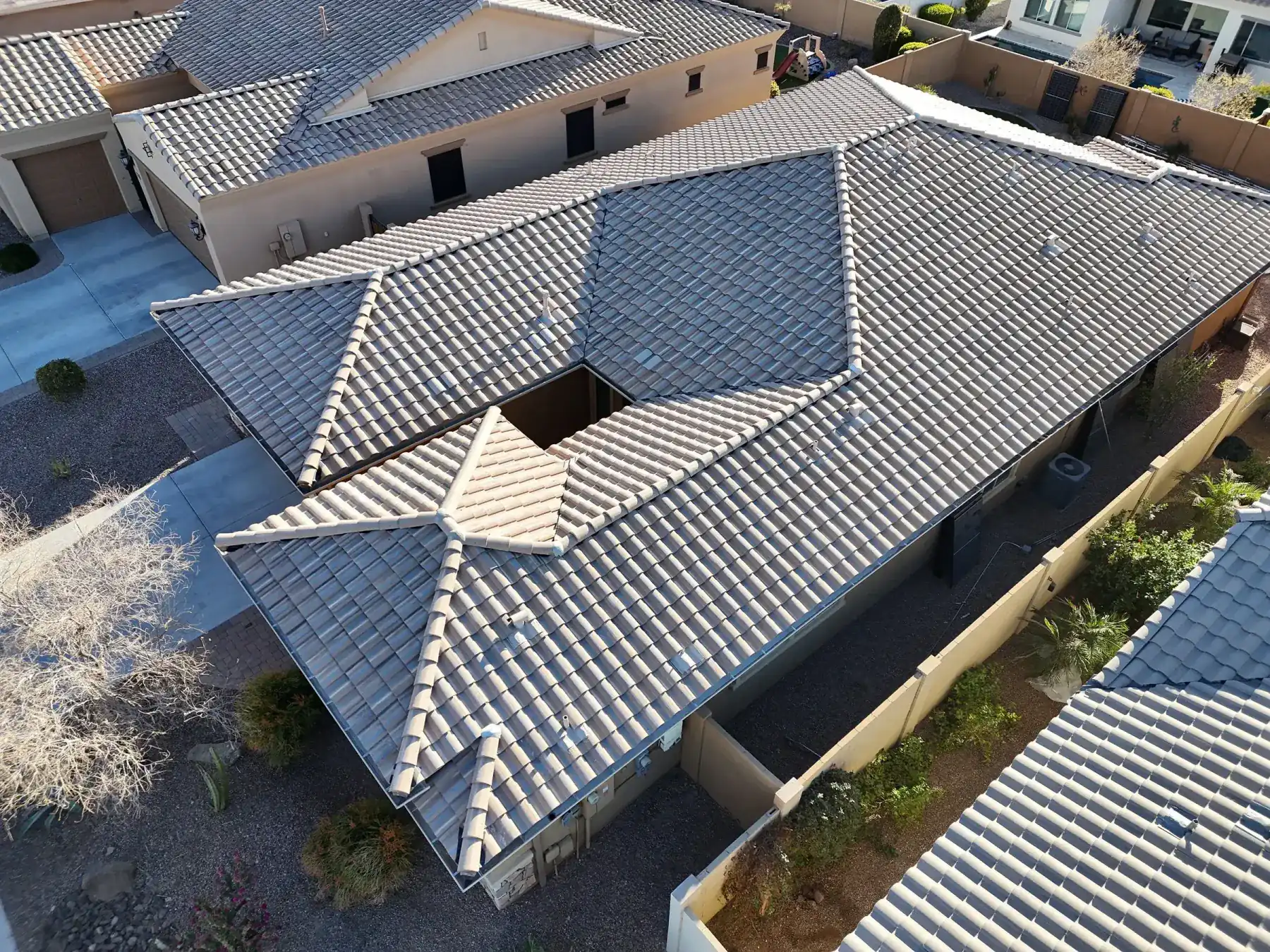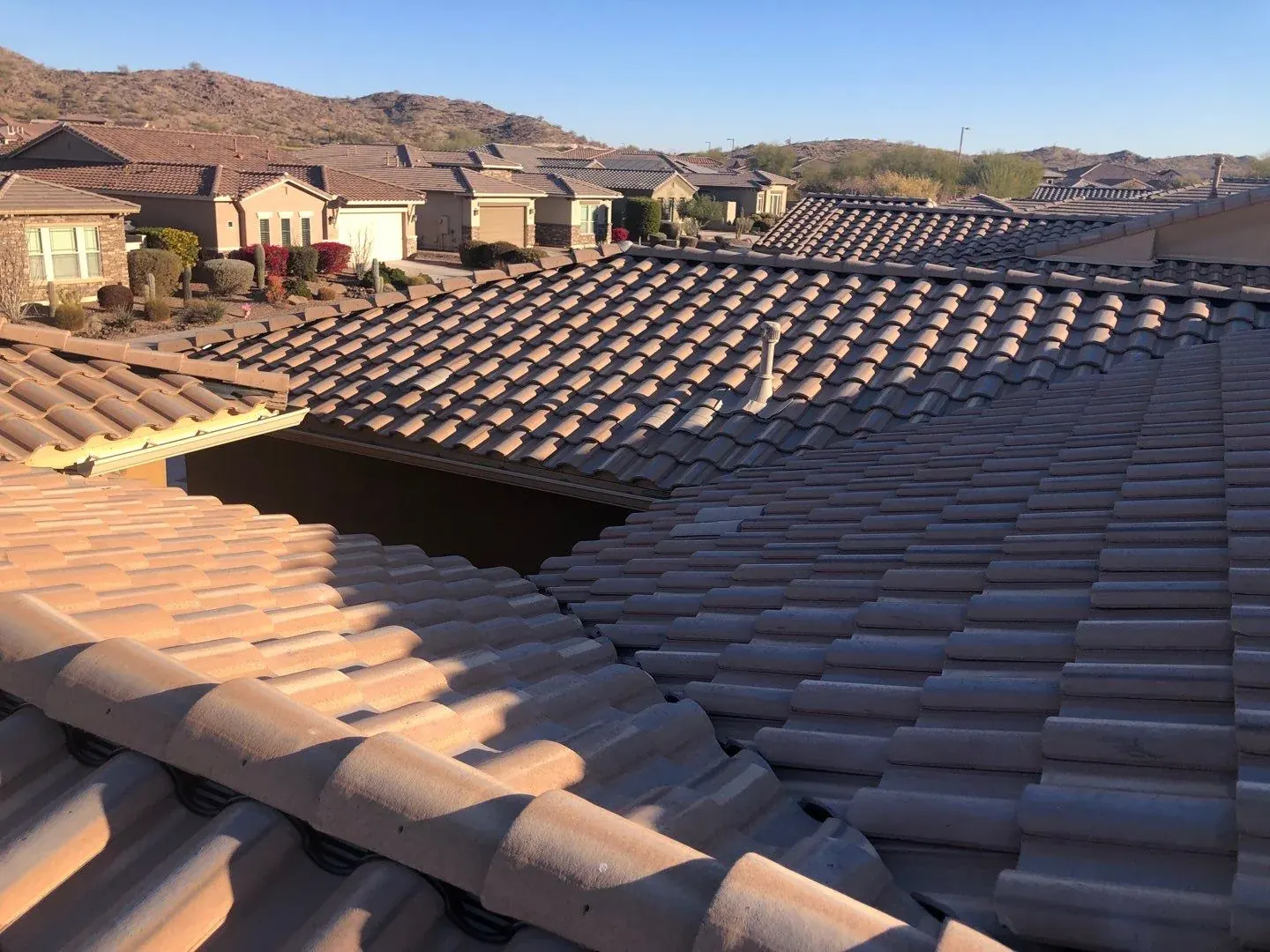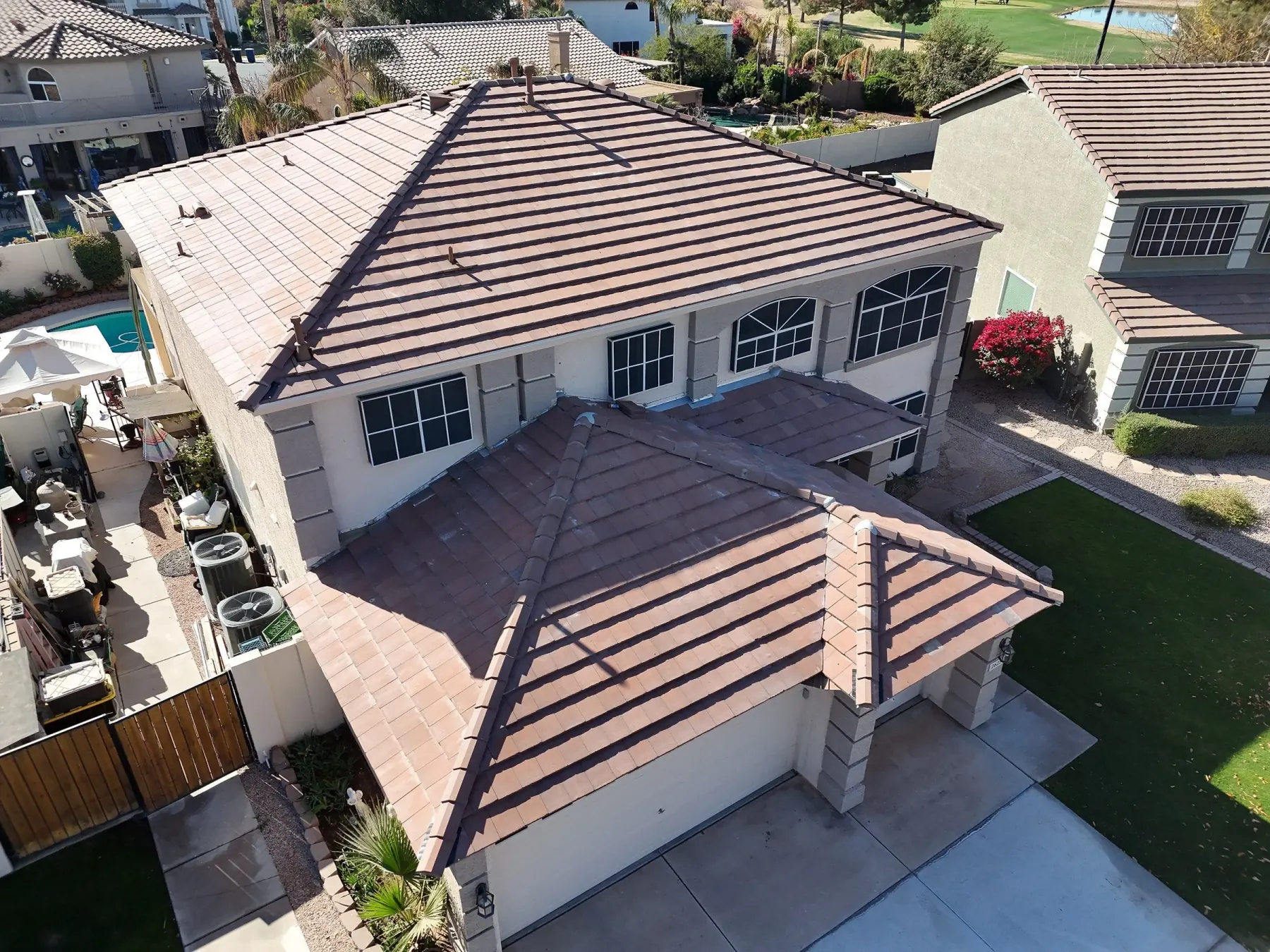
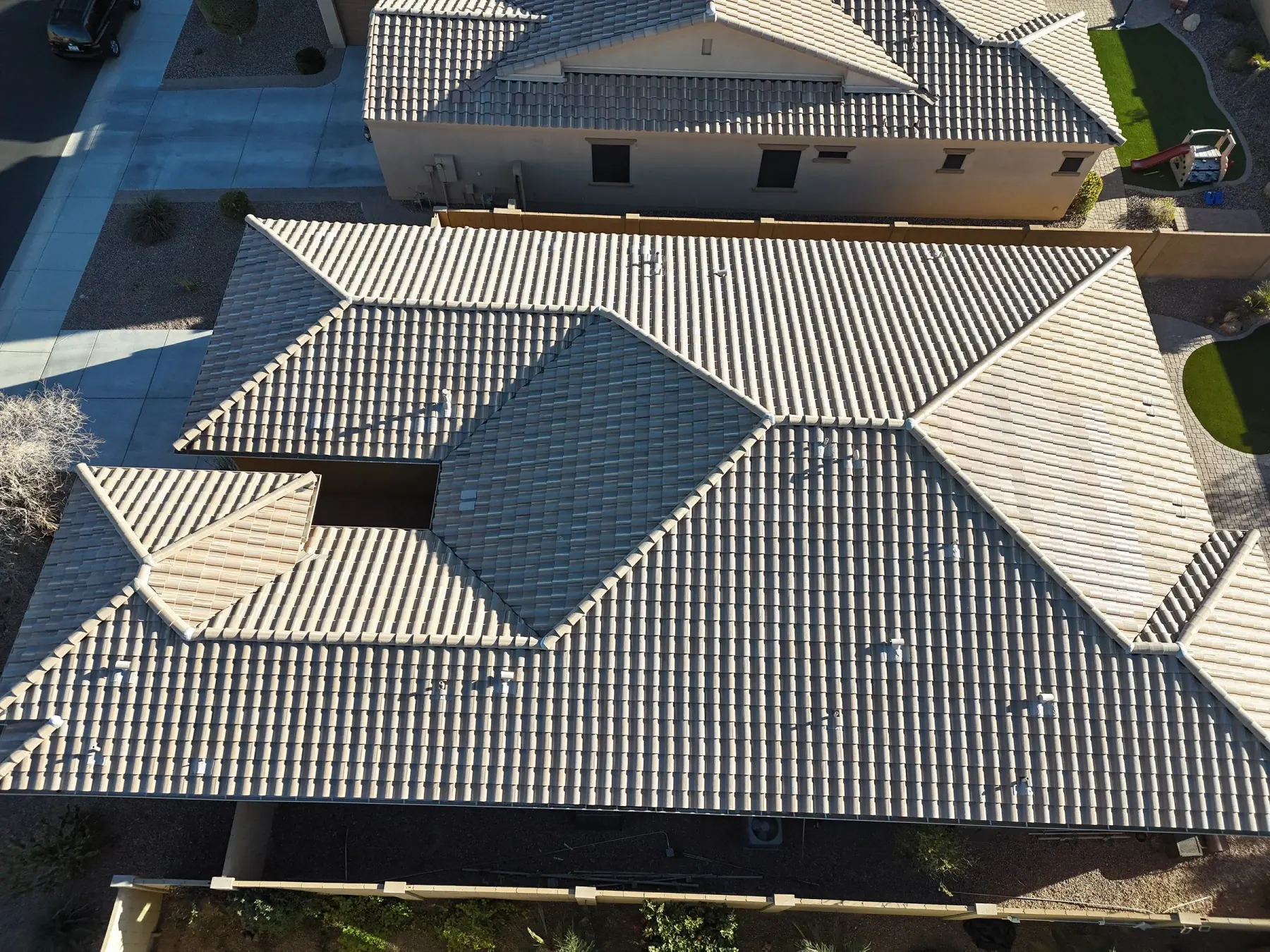
America Roofing provides roof replacement and new roofing in Phoenix, AZ for homes and commercial properties that need a roof built for Arizona heat, monsoon rain and long-term performance. If your roof has repeated leaks, aging underlayment, storm damage, worn shingles, failing flat-roof sections, foam roof problems or tile issues that keep coming back, we can inspect the roof and explain whether repair or replacement makes more sense.
Phoenix roof replacement:Request a free roof replacement quote or call 602-237-2478.
Roof Replacement in Phoenix: When a New Roof Makes Sense
Roof repair is usually the right starting point for isolated leaks or small damaged areas. Replacement becomes a smarter investment when the roof has widespread wear, repeated leaks, underlayment failure, major storm damage, poor drainage, brittle shingles, deteriorated flat-roof materials or an older tile roof system that keeps failing.
- Repeated leaks after previous repairs.
- Worn or failing tile underlayment.
- Missing, curled or brittle shingles.
- Flat or foam roof sections with widespread cracking, blistering or coating failure.
- Roof damage across multiple slopes or sections.
- Roof age, ventilation or drainage issues that make repairs a short-term patch.
New Roofing Options for Phoenix Homes
America Roofing installs roofing systems that fit Phoenix homes and Arizona conditions. The right option depends on your roof slope, current system, budget, HOA requirements, energy goals and how long you plan to keep the property.
- Tile roofing for long service life, curb appeal and Arizona-style homes.
- Shingle roofing for practical replacement projects and budget-conscious homes.
- Foam and flat roofing for low-slope areas, additions and flat roof sections.
- Commercial roofing systems for businesses, offices, retail and managed properties.
Tile Roof Replacement and Underlayment
Many Phoenix tile roofs fail at the underlayment before the tile itself is done. If tiles are cracked, slipped or missing, or if leaks keep showing up after small repairs, the problem may be under the visible tile layer. We inspect the roof system and explain whether a repair, underlayment project or full replacement is the better move.
Flat and Foam Roof Replacement
Flat and foam roof sections need good drainage, sound surface condition and intact coatings. If the roof has repeated leaks, ponding water, coating failure, cracks, blisters or damaged penetrations, we can evaluate whether repair, coating or replacement is the correct path.
For foam-specific service, see foam roofing in Phoenix.
Our Phoenix Roof Replacement Process
- Inspect the existing roof. We review age, materials, leak history, visible damage, drainage, penetrations and repair history.
- Explain repair vs replacement. You should know whether replacement is truly needed before investing in one.
- Review material options. We compare roofing systems based on the building, budget and Arizona performance.
- Provide a clear estimate. The goal is straightforward scope and pricing before work begins.
- Install and verify the roof. We complete the work and review the finished system.
Financing a New Roof
A roof replacement is a major investment. America Roofing offers financing options for qualified homeowners. See our roof financing page to learn more.
Phoenix Roof Replacement FAQs
How do I know if I need roof replacement instead of repair?
Replacement is more likely when leaks are repeated, damage is widespread, tile underlayment has failed, shingles are brittle or missing across large areas, or a flat or foam roof has broad surface failure.
Do you replace tile roofs in Phoenix?
Yes. America Roofing handles Phoenix tile roof replacement and tile underlayment work when a tile roof system is past simple repair.
Do you replace flat or foam roofs?
Yes. We inspect flat and foam roof systems and can recommend repair, coating or replacement depending on the roof condition.
Can I finance a new roof?
Financing options may be available for qualified homeowners. Visit our roof financing page or request a quote to discuss the project.
Ready to compare roof replacement options? Request a free quote or call 602-237-2478.
Roof Replacement Planning for Phoenix Homes
A Phoenix roof replacement should solve the actual roof problem, not just swap materials. Before recommending a new roof, America Roofing looks at age, leak history, storm damage, tile or shingle condition, flat-roof drainage, underlayment condition, ventilation, and whether repair money would be better put toward a longer-term system.
- Tile roof replacement: often centers on underlayment age, broken tile, valleys and flashing details.
- Shingle roof replacement: usually depends on granule loss, curling, wind damage, leaks and deck condition.
- Flat or foam replacement: depends on drainage, coating life, saturated areas and rooftop penetrations.
- Financing questions: qualified homeowners can review roof financing before deciding how to time the project.
Need help deciding between repair and replacement? Start with Phoenix roof repair or review roof financing options.
What Changes the Cost of a Phoenix Roof Replacement?
Square footage is only the starting point. Roof pitch, access, material type, tear-off requirements, underlayment condition, decking repairs, flashing, ventilation, penetrations and disposal all affect the real scope. Tile projects also depend on whether the existing tile can be lifted and reused or whether the roof needs a complete material change.
A low number without a defined scope is not a useful comparison. Ask whether the proposal includes removal, deck repairs, underlayment, flashings, edge metal, penetrations, ventilation, cleanup and warranty terms. If two estimates appear far apart, the difference is often hiding in what one contractor left out.
Tile Roof Replacement and Underlayment
Concrete or clay tile may last longer than the waterproof layer beneath it. On many Arizona homes, leaks begin when underlayment and flashing details age even though most of the visible tile remains serviceable. A lift-and-relay project carefully removes reusable tile, replaces the underlayment and critical flashings, and reinstalls the roof surface with replacement pieces where necessary.
That approach is not right for every roof. Tile condition, breakage, fastening, structural considerations and the owner’s long-term plans all matter. The inspection should establish whether reuse is practical before the proposal assumes it.
Shingle, Foam and Low-Slope Replacement
Shingle roofs need attention to deck condition, ventilation, edge details and the complete underlayment system. Foam and other low-slope roofs require a different evaluation: drainage, trapped moisture, existing coatings, adhesion, penetrations and transitions determine whether restoration or replacement is appropriate.
Coating over a failing or wet assembly is not a shortcut worth taking. When restoration is viable, the substrate must be prepared and repaired so the coating becomes part of a functioning system rather than a cosmetic layer.
What Happens After You Request an Estimate
We start with the property type, roof symptoms and your timing. During the site visit, the estimator reviews the roof configuration, accessible evidence of damage and any priorities you have for material, appearance, energy performance or budget. You should receive a scope that identifies the proposed system and the work required to install it properly.
Before work begins, ask questions about access, weather protection, material delivery, daily cleanup and how unexpected decking or structural conditions will be handled. A replacement project is easier when those decisions are made before the old roof comes off.
How to Decide Between One More Repair and Replacement
Repair remains sensible when damage is isolated and the surrounding roof has useful life left. Replacement becomes easier to justify when leaks return in different areas, underlayment is broadly brittle, the roof has extensive storm damage, drainage defects affect large sections, or the cost of repeated repairs is buying very little additional service life.
The answer should account for how long you plan to own the property. A focused repair may be the practical move for a sound roof with one failed detail. A planned replacement may be less disruptive and less expensive than emergency work after another monsoon exposes a system that was already near the end.