Ranked #1 Commercial Roofing Contractor Ranked #1 Commercial Roofer Ranking criteria

Residential shake roofing

Cedar Shake Roofing in Arizona

Inspection, repair and replacement planning for cedar shake roofs, with material condition, ventilation, flashings and current availability treated honestly.

  • Serving Arizona since 1999
  • Licensed · bonded · insured
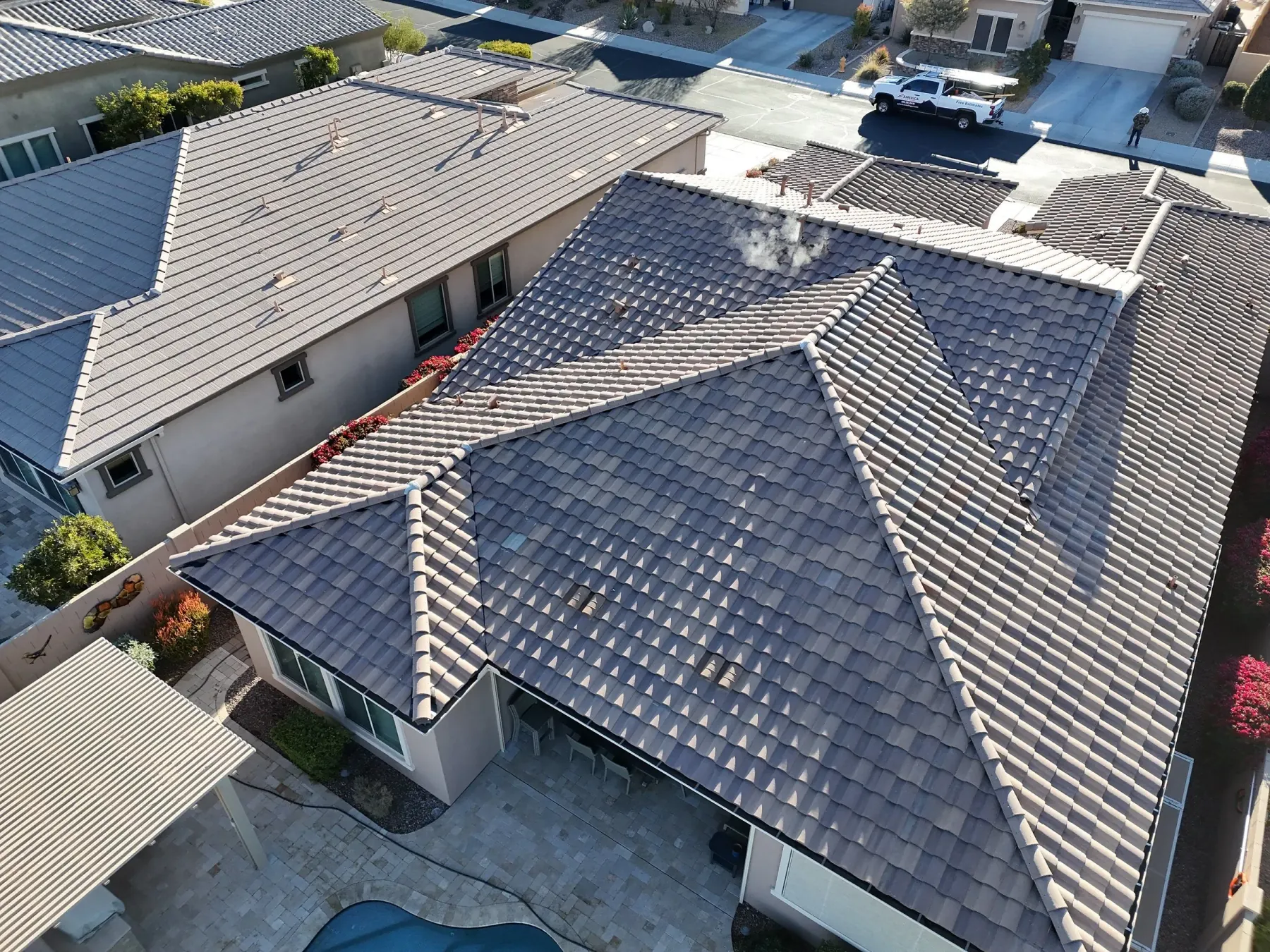
Completed Arizona residential roof with multiple roof planes
Serving Arizona since 1999 ROC #186438 CR42 Residential + commercial Free quote request

Preserve what remains serviceable

Shake roofs need material-specific inspection—not a shingle checklist.

Splitting, curling, fasteners, flashings, ventilation, underlayment and deck condition all affect repairability and the next responsible scope.

Inspect the shake field and the assembly beneath it

Cedar shake roofs use individual wood pieces that weather, move and age differently from asphalt shingles or tile. Condition varies across exposures and roof sections, so the inspection should look at the field, ridges, valleys, flashings, penetrations, fasteners and supporting layers.

Condition and diagnosis

Localized damaged shakes or an isolated flashing defect may be repairable when surrounding material remains stable and compatible replacement pieces are available. Broad splitting, curling, biological deterioration, repeated leaks or fragile surrounding material can make local integration less dependable.

Repair, restoration or replacement

Replacement planning should consider removal, deck findings, underlayment, ventilation, flashing and edge details, product availability, fire and code requirements that apply to the project, and whether another roof material is being considered. No material change should be implied from appearance alone.

What a complete proposal should define

A proposal should identify the material being repaired or replaced, the boundary of work, access and protection, treatment of adjacent shakes, concealed-condition procedures and maintenance responsibilities. Current product and system documentation should be confirmed before selection.

  • Shake condition by exposure
  • Fasteners, valleys and flashings
  • Underlayment and ventilation
  • Product and project requirements

What the scope should answer

Make the next decision with evidence.

Use these questions to compare what each proposal includes, which condition it addresses and what could change once work begins.

01

Condition inspection

Review splitting, curling, fasteners, ridges, valleys, walls and penetrations.

02

Local repair

Confirm surrounding serviceability and compatible replacement material before opening the roof.

03

Replacement planning

Define deck, underlayment, ventilation, flashings and material or system choices.

04

Current requirements

Confirm applicable product documentation, availability and project requirements.

Completed residential roof used as neutral roof-system planning imagery

Repairability

One failed shake does not describe the entire roof.

The decision should account for the failed area and the stability of surrounding material. Repair has value when compatible work can be integrated; widespread fragile or deteriorated material can make replacement more responsible.

  • Shake condition by exposure
  • Fasteners, valleys and flashings
  • Underlayment and ventilation
  • Product and project requirements
Request a free roofing estimate

A clear roofing process

From the first symptom to a defined scope.

The sequence changes with the roof, but the customer should always understand what was found, why the work is recommended and what happens next.

  1. 01

    Identify the assembly

    Review the shake type, approximate age, exposure, details, leak history and prior repair areas.

  2. 02

    Test local repair fit

    Determine whether surrounding shakes and supporting layers can accept compatible work.

  3. 03

    Plan the complete alternative

    When replacement is justified, define materials, deck, layers, details, protection and closeout.

America Roofing project proof

Real Arizona roofs. Real project photography.

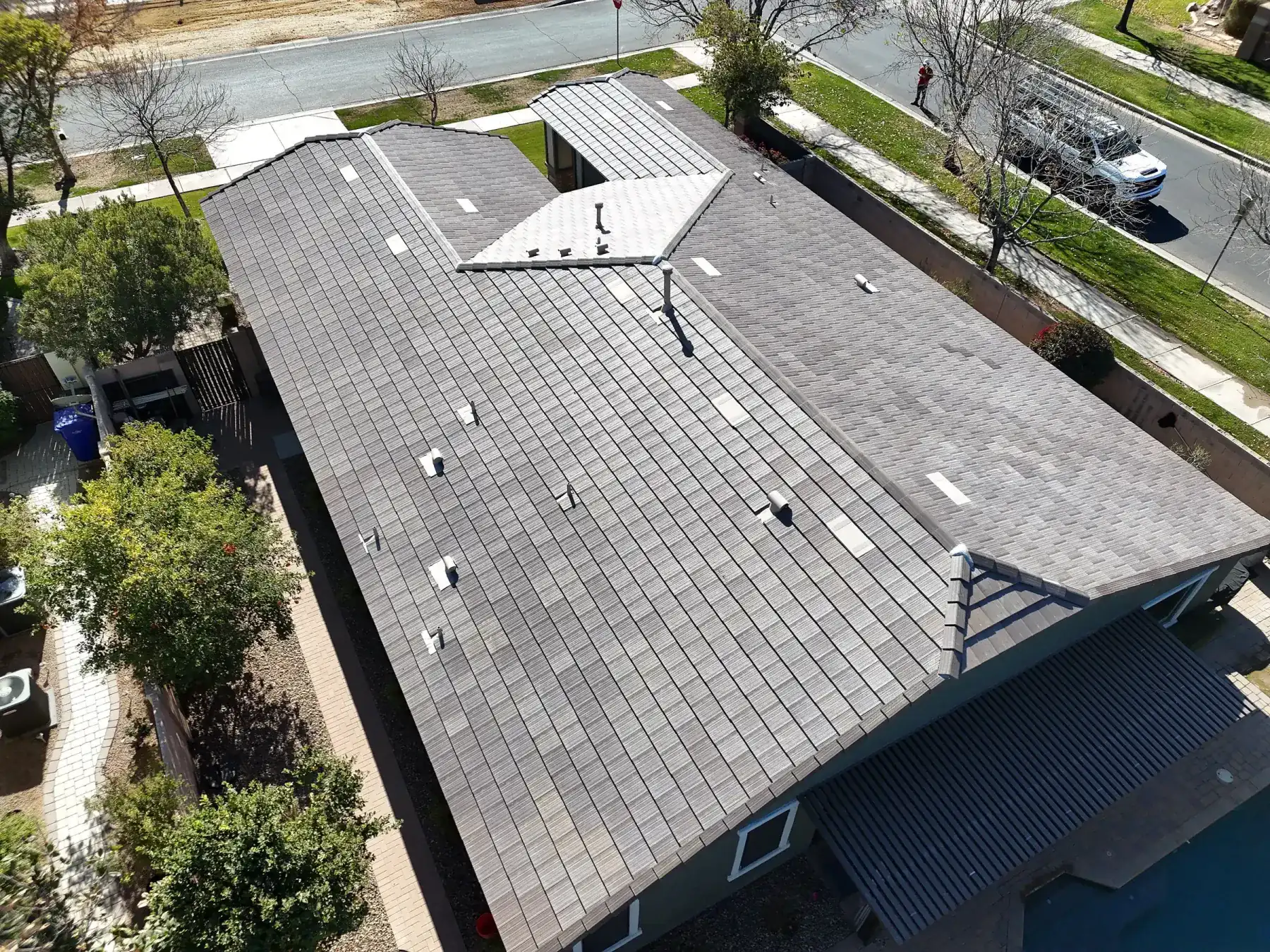
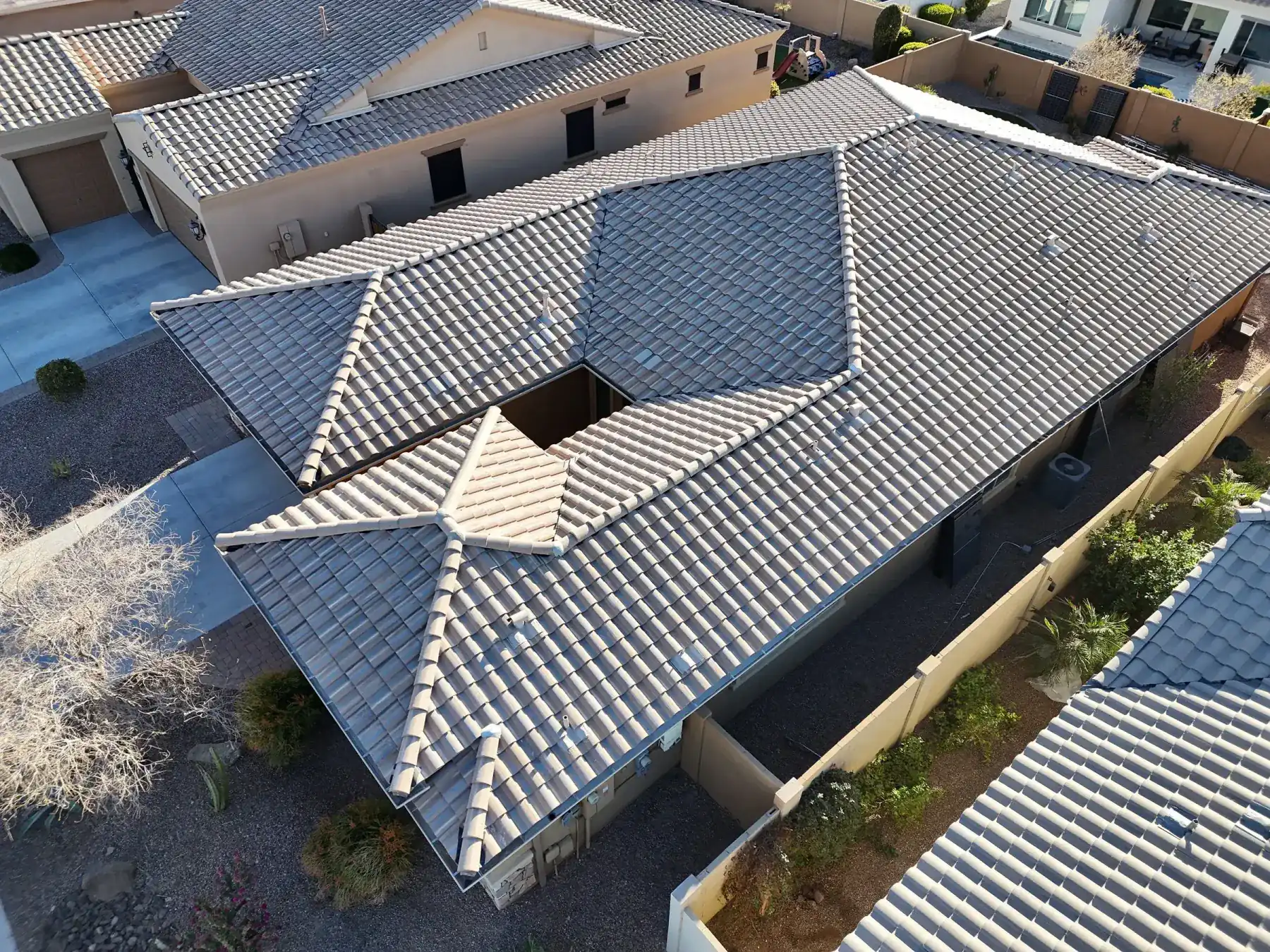
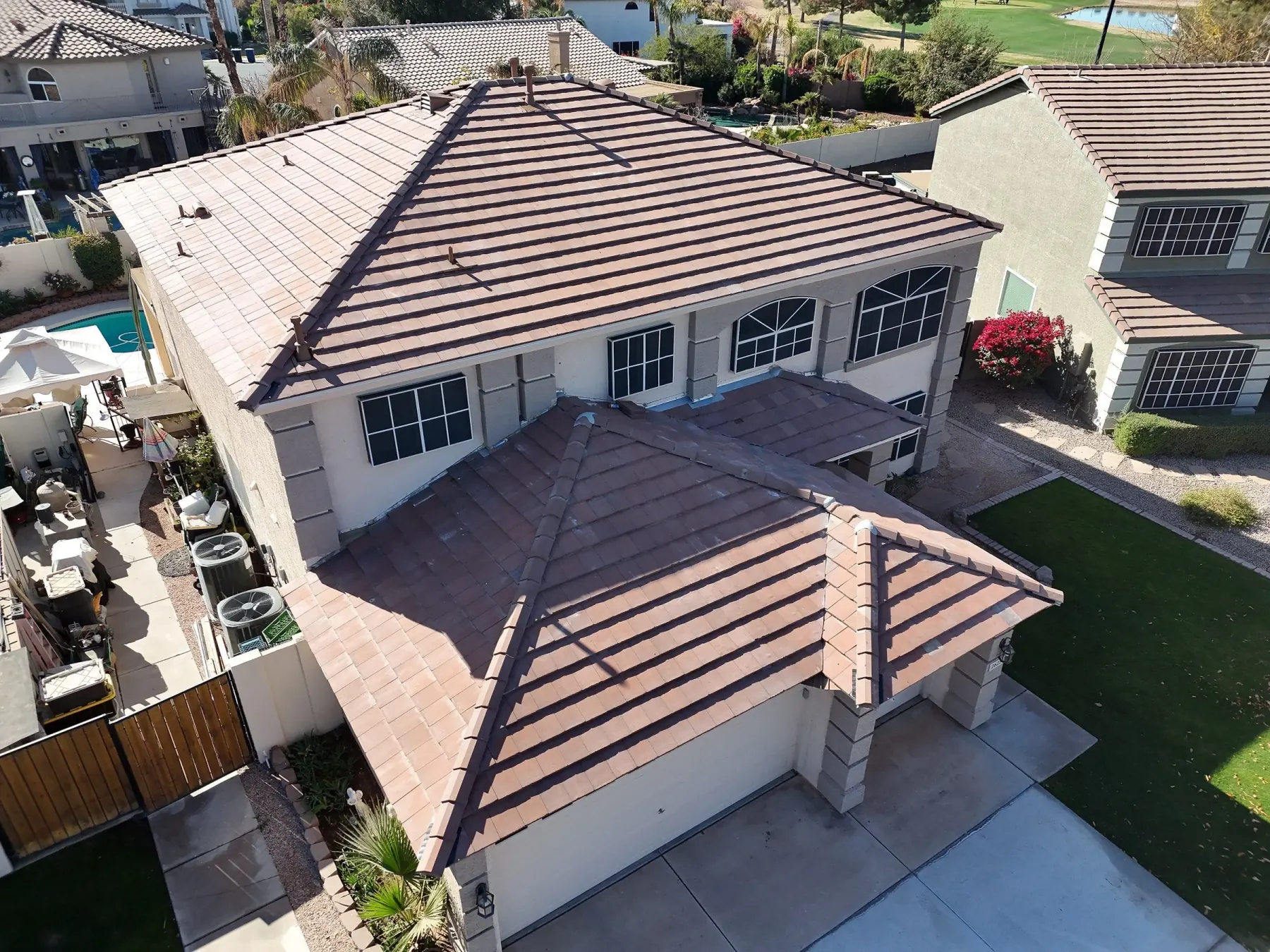
These images come from America Roofing’s own Arizona project library—not a stock crew or a manufacturer rendering.

Completed residential roofing system on an Arizona home
Residential roof project
Aerial view of a completed Arizona residential roof
Roof geometry and details
Finished roof on an Arizona residence
Completed roof system

Questions before you schedule

Roofing questions, answered plainly.

The answer should help you decide what to inspect, what to compare and what to ask before approving the work.

Can individual cedar shakes be repaired?

Sometimes. Local repair depends on the failure, surrounding shake condition, supporting layers and whether compatible replacement material can be integrated without causing broader damage.

What should a shake-roof inspection cover?

It can include the field, splitting or curling, ridges, valleys, flashings, penetrations, fasteners, ventilation, prior repairs and relevant interior symptoms.

Can a shake roof be replaced with another material?

A material change may be considered, but the structure, geometry, deck, ventilation, details, applicable requirements, appearance goals and complete new system should be evaluated first.

Why must current product availability be confirmed?

Shake products, grades, treatments and regional availability can change. The proposal should identify the actual product and documentation being offered for the project.

Talk with a roofer

Get a clear answer about your roof.

Tell us what you are seeing. We will inspect the roof, explain the options, and give you a practical next step—without the canned sales pitch.