
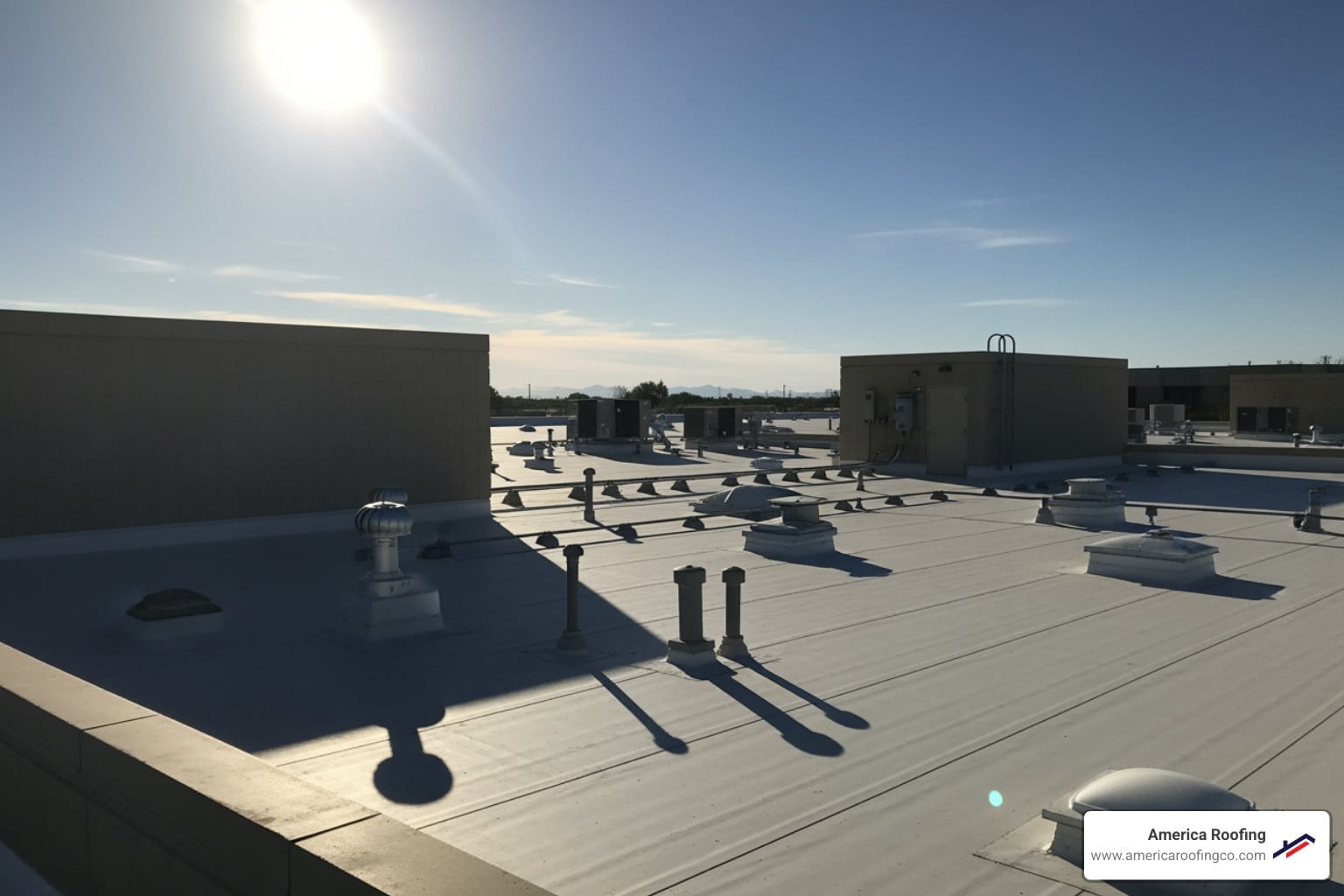
Why Your Commercial Roof is Critical in Arizona's Extreme Climate
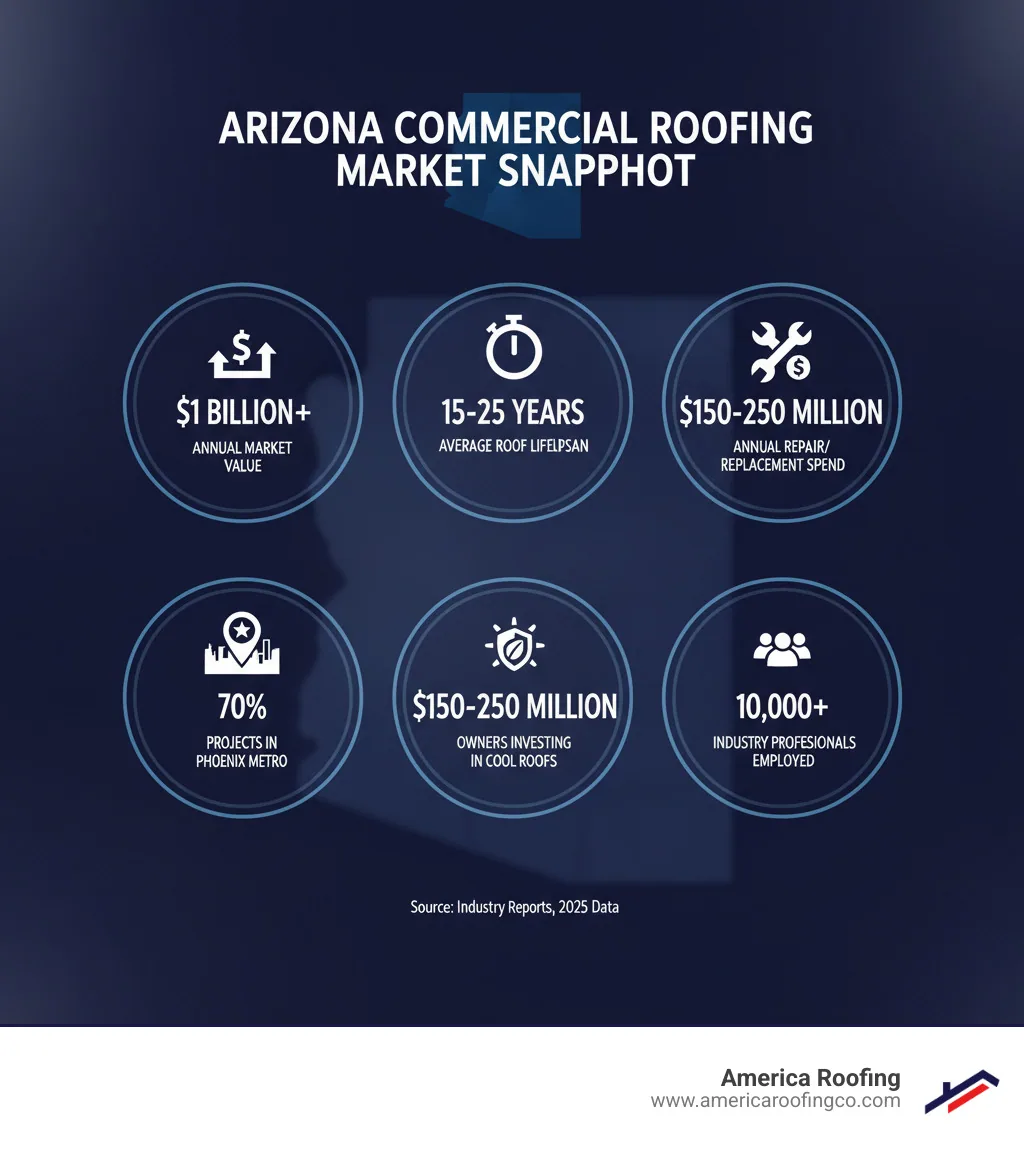
Arizona commercial roofing protects more than just the structure above your business—it safeguards your operations, assets, and employees from one of the harshest climates in the country. With an estimated market value exceeding $1 billion annually, commercial roofing in Arizona is a critical investment for property owners across the state.
Quick Answer: What You Need to Know About Arizona Commercial Roofing
- Primary Systems: Spray Polyurethane Foam (SPF), TPO, PVC, Modified Bitumen, and Metal roofing
- Climate Challenges: Extreme UV exposure, temperatures exceeding 115°F, thermal shock, and intense monsoon storms
- Key Services: Installation, repair, maintenance, re-roofing, and emergency leak response
- Typical Lifespan: 15-25 years with proper maintenance in Arizona's climate
- Annual Repair Costs: $150-$250 million spent statewide on commercial roof repairs and replacements
- Contractor Requirements: Valid Arizona ROC license, liability and workers' compensation insurance
Arizona's commercial roofing sector employs over 10,000 professionals, with the Phoenix metropolitan area accounting for approximately 70% of the state's total market value. The demand for energy-efficient roofing solutions continues to rise—about 60% of commercial property owners have already invested in or are considering cool roofing technologies to combat high temperatures and rising energy costs.
Your roof faces a brutal combination of challenges that few other regions experience. Intense UV radiation breaks down materials faster than almost anywhere else in the country. Extreme heat cycles cause expansion and contraction that stress seams and fasteners. Summer monsoons bring sudden downpours, high winds, and dust storms that can damage even well-maintained systems.
The consequences of roof failure extend far beyond repair costs. Leaks damage inventory, disrupt operations, and create safety hazards for employees and customers. Emergency repairs are expensive and disruptive. Regular maintenance and timely replacements protect your business continuity and your bottom line.
Top Commercial Roofing Systems for Arizona's Climate
Choosing the right roofing system for your Arizona commercial property isn't just about picking the cheapest option—it's about finding a solution that can handle what Mother Nature throws at it year after year. The relentless sun, scorching heat, and violent monsoon storms demand materials and installation techniques that go beyond what works in milder climates.
When we talk about arizona commercial roofing, we're really talking about two main categories: flat roofs and pitched roofs. While you might picture pitched roofs on houses, many commercial buildings across Arizona—warehouses, retail centers, office complexes, and industrial facilities—actually use flat or low-slope roofing systems. Each approach has its own strengths depending on your building's design and purpose. If you're curious about which might work best for your property, you can find more info about flat roofs and more info about pitched roofs on our site.
Key Considerations for Arizona Commercial Roofing Materials
Finding the right roofing material means balancing several factors—upfront investment, how long it'll last, energy efficiency, and what kind of maintenance you'll need to budget for. We work with commercial property owners across Phoenix, Tucson, Mesa, and throughout Arizona to match buildings with the systems that make the most sense for their specific needs and budgets.
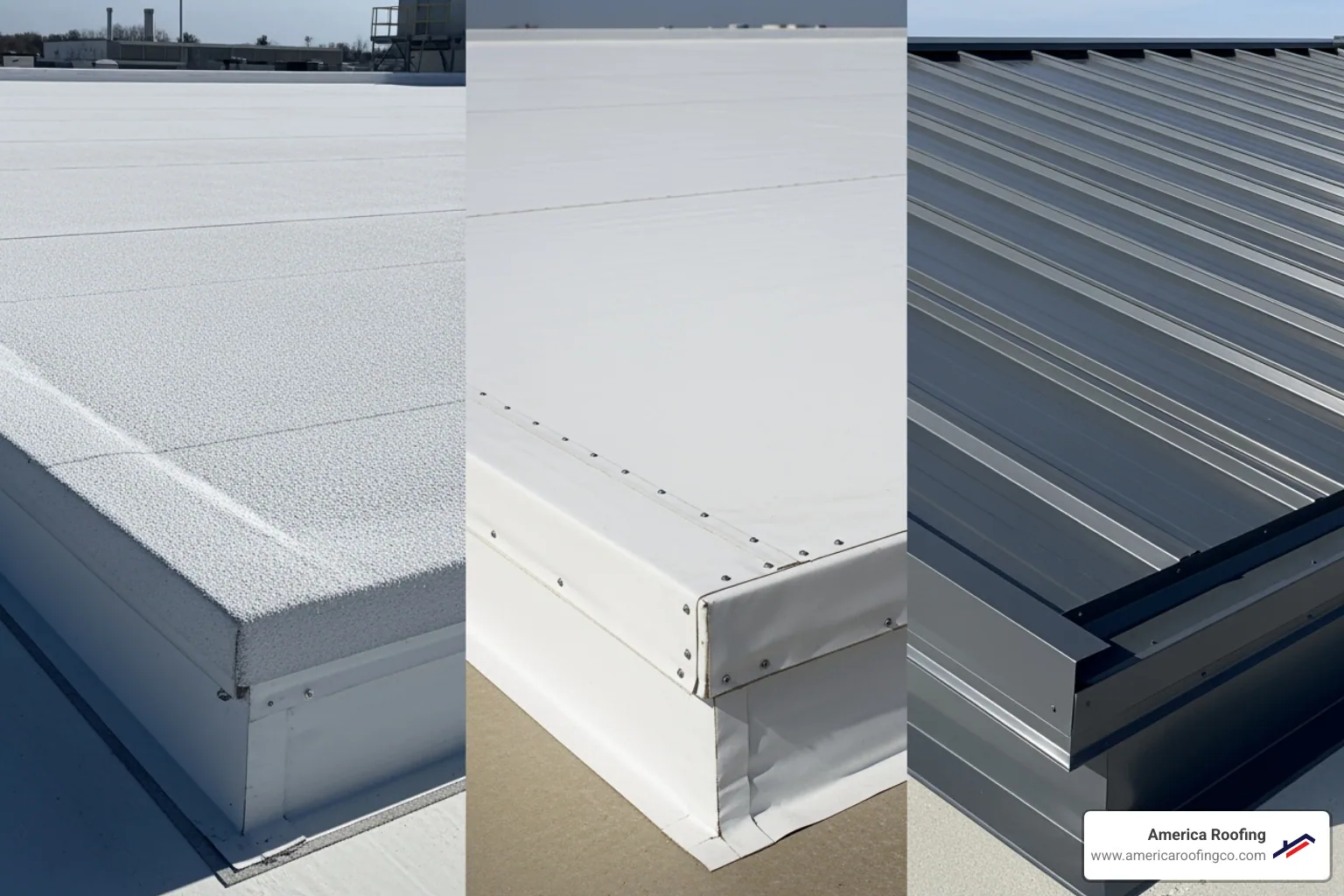
Here's how the top materials stack up against each other:
| Material | Lifespan (Years) | Initial Cost (Relative) | UV Resistance | Maintenance Needs |
|---|---|---|---|---|
| Spray Polyurethane Foam (SPF) | 20-30+ | Medium | Excellent | Regular coating, semi-annual inspection |
| TPO & PVC Membranes | 20-30 | Medium | Excellent | Seam inspections, occasional cleaning |
| Modified Bitumen | 15-20 | Low-Medium | Good | Seam and flashing repair, granule loss monitoring |
| Metal Roofing | 30-50+ | High | Excellent | Coating/repainting, fastener checks |
Spray Polyurethane Foam (SPF) Roofing
If there's a roofing system that seems almost custom-designed for Arizona's climate, it's Spray Polyurethane Foam. This remarkable material starts as a liquid that's sprayed directly onto your roof deck, where it expands and hardens into a solid, seamless layer of protection. That seamless application is a meaningful advantage—without seams or joints, there are far fewer places where water can sneak through.
What really sets SPF apart is its superior insulation properties. The foam creates an exceptional thermal barrier that helps keep your building cool even when it's 115°F outside. Your HVAC system doesn't have to work nearly as hard, which translates directly to lower energy bills month after month. Once the foam has cured, we apply a reflective coating—typically bright white—that bounces sunlight away from your building rather than absorbing it.
This reflective coating benefit creates what's known as a "cool roof," helping reduce the urban heat island effect that makes Phoenix and Tucson even hotter during summer months. Despite its impressive insulation capabilities, SPF is surprisingly lightweight, adding minimal load to your building's structure. It's also quite durable, standing up well to foot traffic and minor impacts when properly maintained.
Single-Ply Membranes (TPO & PVC)
Walk around any commercial district in Mesa, Glendale, or Scottsdale, and chances are you're looking at buildings protected by single-ply membrane systems. Thermoplastic Olefin (TPO) and Polyvinyl Chloride (PVC) have become incredibly popular for good reason—they deliver excellent performance at a reasonable price point.
These systems consist of large, flexible sheets that get mechanically fastened or adhered to your roof deck. The real magic happens at the seams, where specialized equipment heat-welds the membrane sheets together, creating a watertight barrier that's actually stronger than the membrane itself. It's like welding metal, but with plastic—creating bonds that hold up year after year.
Both TPO and PVC offer high UV resistance, which is absolutely critical when your roof is getting hammered by Arizona sun 300+ days a year. Their light colors—usually white or light gray—naturally reflect solar radiation rather than absorbing it. Many TPO products carry Energy Star ratings, meaning they've been independently tested and proven to reduce cooling costs.
PVC has an additional advantage for certain businesses: it's highly resistant to chemicals, oils, and grease. If you operate a restaurant with grease exhaust or an industrial facility with chemical exposure, PVC can handle what would damage other roofing materials. These single-ply systems are known for their longevity and relatively straightforward maintenance requirements, making them a smart long-term investment for arizona commercial roofing projects of all sizes.
Battling the Elements: How Arizona's Climate Impacts Your Roof
If you've lived in Arizona for any length of time, you know our weather can be brutal. We enjoy 300+ days of sunshine, but that same sunshine—along with our extreme temperatures and dramatic monsoon storms—takes a serious toll on commercial roofs. Understanding these climate challenges is the first step in protecting your arizona commercial roofing investment.
The Sun's Assault: UV Degradation and Heat
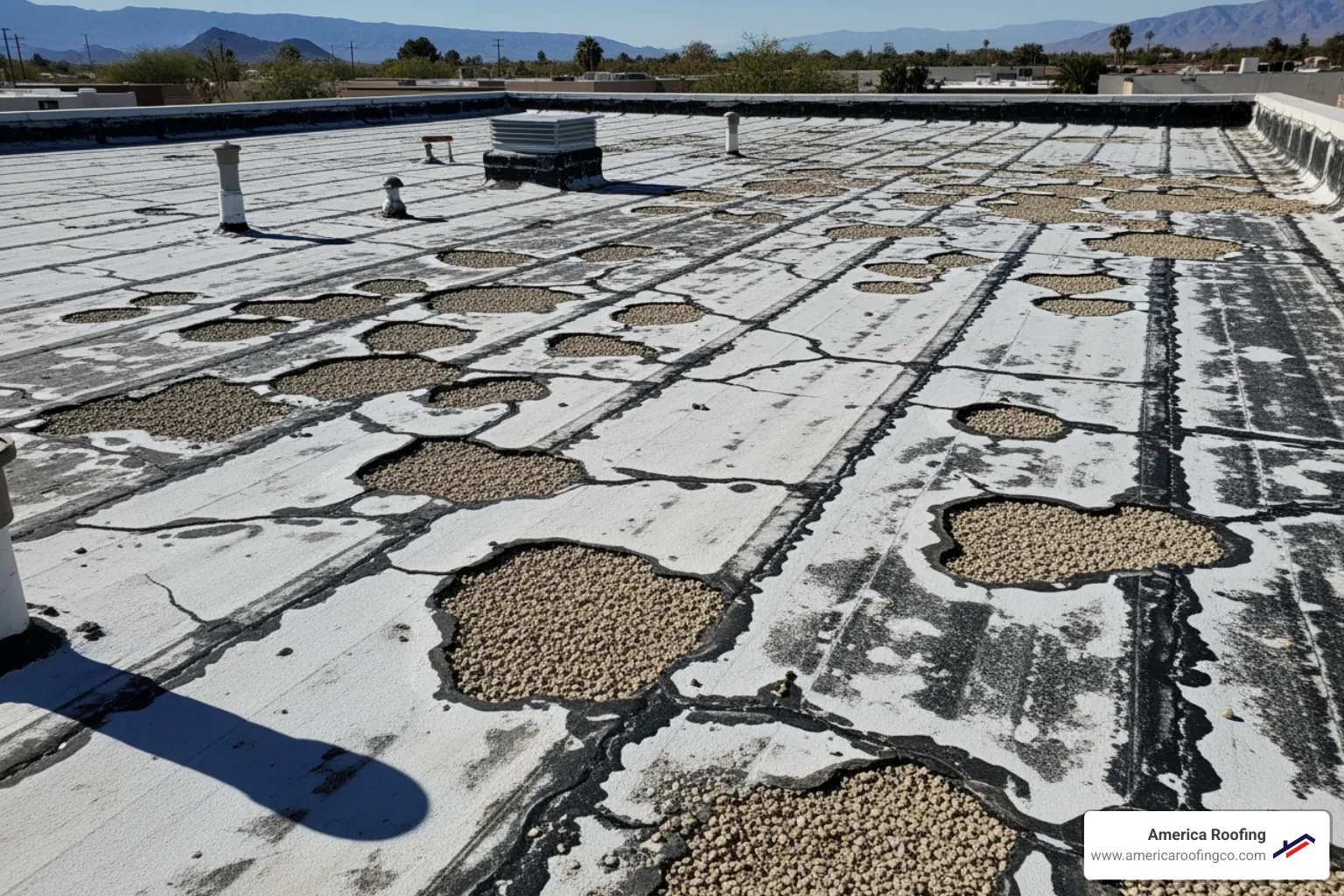
Arizona's desert sun doesn't just give us beautiful sunsets—it's also waging a constant battle against your roof. The intense UV radiation that bathes our state year-round is one of the most destructive forces your commercial roof will face. These powerful rays penetrate roofing materials, breaking down their chemical bonds and causing material breakdown from the inside out.
You'll often see this damage manifest as cracking and blistering on the roof surface, particularly on older systems. The material might start to chalk or fade, losing its protective qualities. What starts as cosmetic damage quickly becomes structural, compromising your roof's ability to keep water out and protect your business.
But UV damage is only part of the story. When temperatures soar above 115°F in places like Phoenix, Chandler, and Peoria, your roof expands. Then, when the sun sets and temperatures drop 30 or 40 degrees overnight, it contracts again. This daily cycle of expansion and contraction creates what we call thermal shock—constant stress on seams, fasteners, and flashing that eventually leads to fatigue and failure.
The heat doesn't just damage your roof—it hits your wallet too. A roof that absorbs rather than reflects heat forces your HVAC system to work overtime, leading to increased building cooling costs that can add thousands to your annual energy bills. And with this constant assault from sun and heat, it's no wonder that the typical impact on roof lifespan in Arizona is significant, often reducing what might be a 30-year roof elsewhere to just 15-25 years here.
Monsoon Mayhem: Wind, Rain, and Debris
Just when you think the relentless sun is the only thing your roof needs to handle, monsoon season rolls around—typically from June through September—bringing an entirely different set of challenges. These aren't gentle spring showers. We're talking about sudden, violent storms that can drop inches of rain in minutes.
When that much water hits your roof at once, drainage systems can quickly become overwhelmed, creating ponding water risks. Standing water is never good news for a commercial roof. It finds its way into the smallest cracks and seams, accelerating deterioration and often leading to leaks that can damage inventory, equipment, and operations below.
The wind uplift forces during monsoon storms are equally concerning. Sustained winds of 40-50 mph, with gusts even higher, can lift and tear at loose flashing, compromise roof edges, and even peel back entire sections of membrane roofing. If your roof wasn't properly installed with adequate fastening, these winds will find and exploit every weakness.
Then there are the haboobs—those massive dust storms that roll across the valley like something from a movie. The damage from dust storms might seem less dramatic than wind or water damage, but these walls of sand and debris scour roof surfaces, clog drains and gutters, and deposit abrasive material that accelerates wear. After a major haboob, your drainage system might be completely blocked, setting the stage for ponding problems during the next storm.
This is why the importance of proper drainage cannot be overstated. A well-designed drainage system with adequate scuppers, drains, and gutters—all kept clear of debris—is your first line of defense against water damage. Regular inspections and maintenance become even more critical as monsoon season approaches. We've put together a comprehensive guide to help you prepare your roof for monsoons so you can face storm season with confidence.
Essential Services for Arizona Commercial Roofing
Your commercial roof isn't a "set it and forget it" kind of investment. It needs expert attention throughout its life—from the day it's installed to its final replacement decades later. That's where comprehensive arizona commercial roofing services come in, and we're here to walk you through what your roof needs to thrive in our demanding climate.
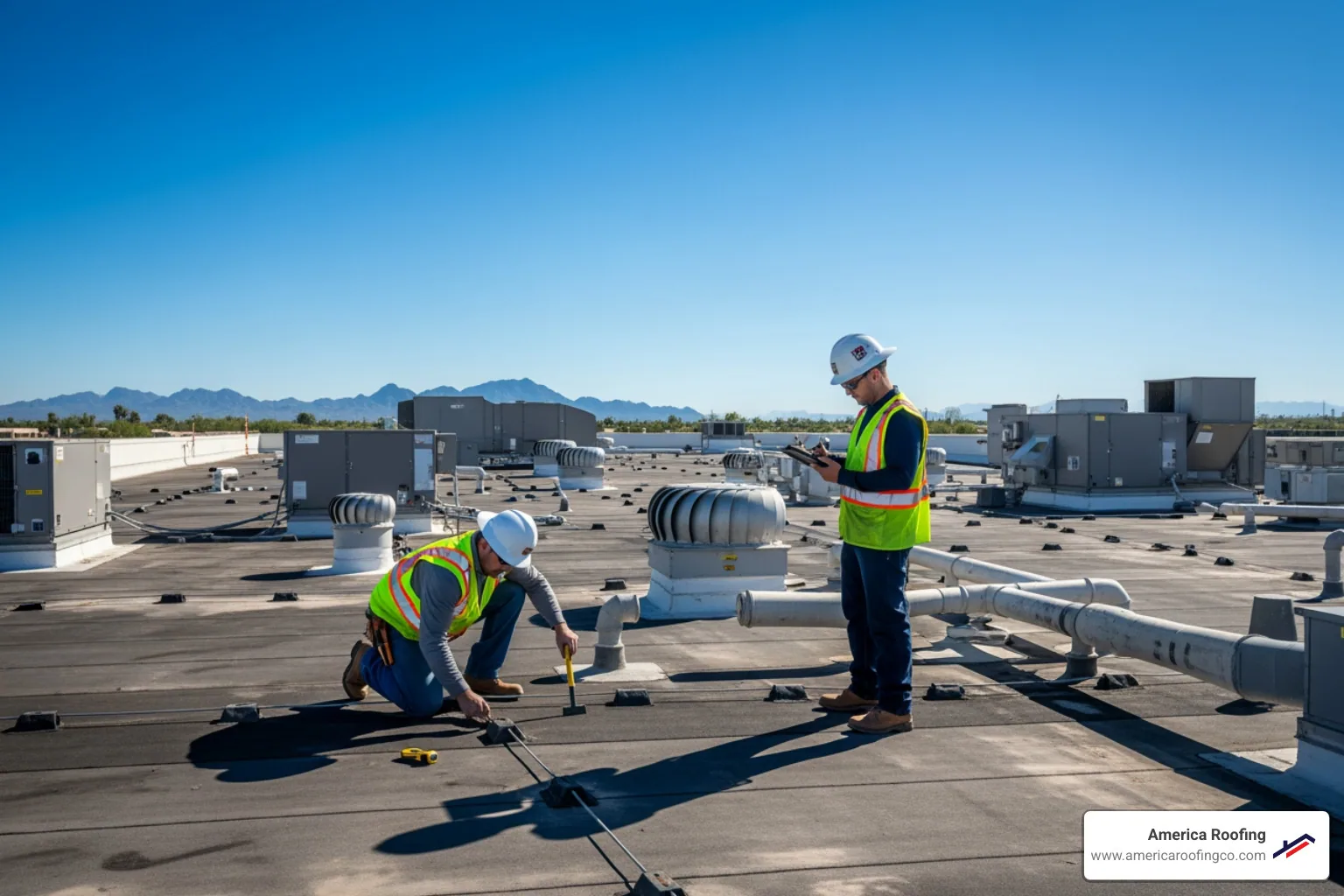
New Roof Installation and Replacement
Starting fresh with a new roof is exciting, whether you're breaking ground on a new warehouse in San Tan Valley or finally replacing that aging system on your Queen Creek retail center. New construction projects give us the opportunity to design and install a roofing system perfectly matched to your building and Arizona's unique challenges from day one.
For existing buildings, we handle full roof tear-offs when your current system has reached the end of its useful life. This means removing everything down to the deck and starting with a clean slate. Sometimes, though, re-roofing over existing systems makes more sense—we can install a new roof right over your current one, saving you time and disposal costs while still giving you a fresh, reliable system.
Every installation we complete meets the highest industry standards because we know your roof needs to perform flawlessly for decades. Curious about the process? Check out what to expect during installation on our site. Ready to move forward? You can get a new commercial roof by reaching out to our team.
Commercial Roof Repair and Leak Services
Even the toughest commercial roofs occasionally need repairs—it's just the reality of facing Arizona's brutal sun and surprise monsoons. When problems pop up, speed matters. That's why our emergency leak detection services use advanced techniques to find the exact source of water intrusion, even when it's nowhere near where you're seeing the leak inside.
We handle all the common culprits that plague Arizona roofs. Punctures and tears from flying debris or foot traffic? We've got you. Seam and flashing failures caused by our extreme temperature swings? That's our bread and butter. The key is catching these issues early, before a small problem turns into water damage, inventory loss, or business disruption.
Don't wait until that small drip becomes a waterfall during the next monsoon. Schedule a roof repair with us at the first sign of trouble, and we'll get your roof back in fighting shape.
The Power of Preventative Maintenance
Here's the truth: preventative maintenance is hands down the smartest investment you can make in your commercial roof. Think of it like changing your car's oil—a small expense now saves you from a catastrophic failure later.
The cost savings compared to emergency repairs are substantial. When you catch minor issues during routine inspections, you're paying for a quick fix instead of a major restoration project. You're also avoiding business disruption—no scrambling to move inventory, no closing sections of your building, no unhappy customers dealing with buckets catching drips.
Regular maintenance directly translates to extending your roof's lifespan. While most Arizona commercial roofs last 15-25 years, proper care can push that number higher, maximizing your return on investment. Plus, most manufacturer warranties require documented maintenance to remain valid, so you're protecting your warranty compliance too.
What does maintenance actually involve? We're talking about cleaning debris from drains, inspecting seams and flashing, checking for early signs of UV damage, and making minor repairs before they become major headaches. It's proactive care that keeps your roof performing year after year. Want to know more? We've shared our commercial roof maintenance details to help you understand what goes into keeping your roof in peak condition.
Choosing a Contractor and Understanding Your Investment
Finding the right arizona commercial roofing contractor isn't something you want to rush. Your roof is one of your biggest investments, and the team you choose will directly impact how well it protects your business for decades to come. We've seen too many property owners learn this lesson the hard way, so let's talk about what really matters when making this decision.
Finding a Licensed Contractor for Arizona Commercial Roofing
First things first: licensing is non-negotiable. Every legitimate commercial roofing contractor in Arizona must hold a valid license from the Arizona Registrar of Contractors. This isn't just bureaucracy—it means the contractor has met specific bonding, insurance, and competency requirements. We're proud to be fully licensed and insured (ROC# 186438 CR420), and we encourage you to verify any contractor's credentials. You can easily Consult the Registrar of Contractors website to check license status and see if there are any complaints or disciplinary actions on file.
Beyond licensing, insurance coverage is your safety net. Make sure your contractor carries both general liability insurance and workers' compensation coverage. General liability protects your property if something goes wrong during the project. Workers' comp ensures you're not liable if a worker gets injured on your roof. Ask to see current certificates of insurance—reputable contractors will provide them without hesitation.
Company reputation tells you what the paperwork can't. Look for contractors with a solid track record in Arizona's unique climate. How long have they been in business? Do they have experience with buildings similar to yours? Check online reviews, ask for references, and talk to other property owners if you can. Professional affiliations matter too. You can Find members of the Arizona Roofing Contractors Association to see which contractors are committed to industry standards and continuing education. As a veteran-owned company, we take pride in our integrity and the relationships we've built throughout the Phoenix metro area and beyond.
Understanding Commercial Roofing Warranties
A warranty is only as good as what it actually covers, so let's cut through the confusion. Commercial roofing warranties typically come in two flavors: manufacturer warranties and workmanship warranties. The manufacturer warranty covers defects in the roofing materials themselves—things like premature cracking, blistering, or deterioration that shouldn't happen under normal conditions. These usually run anywhere from 10 to 30 years, depending on the material and manufacturer.
The workmanship warranty comes from your contractor and covers the quality of the installation. This is crucial because even the best materials will fail if they're not installed correctly. A solid workmanship warranty demonstrates that your contractor stands behind their team's craftsmanship and will make things right if installation issues arise.
For larger commercial projects, you might encounter No Dollar Limit (NDL) warranties. These are the gold standard. An NDL warranty typically covers 100% of both material and labor costs to repair or replace your roof for the entire warranty period, with no depreciation and no caps on repair costs. If your roof needs work five years or fifteen years down the line, you're fully covered.
When reviewing any warranty, pay attention to the fine print. What specific problems are covered? Is it just materials, or does it include labor costs? What's the actual duration? Most importantly, what can void the warranty? Many warranties require documented regular maintenance—skip those inspections, and you might find yourself without coverage when you need it most.
We make sure every client understands exactly what their warranty covers before we shake hands on a project. Your commercial roof is a major investment in your business's future, and you deserve protection that's clear, comprehensive, and backed by a company that will still be here when you need us. That's why we focus on durable, climate-resilient solutions designed specifically for Arizona's demanding environment, delivered with the exceptional customer service that's earned us the trust of businesses throughout the state.
Innovations in Cool and Energy-Efficient Roofing
Here in Arizona, where the sun beats down relentlessly for most of the year, cool and energy-efficient roofing isn't just a trendy buzzword—it's a smart business decision. Rising energy costs have prompted approximately 60% of commercial property owners across the state to seriously consider or already invest in cool roofing technologies. And honestly, once you understand the benefits, it's easy to see why this shift is happening so rapidly.
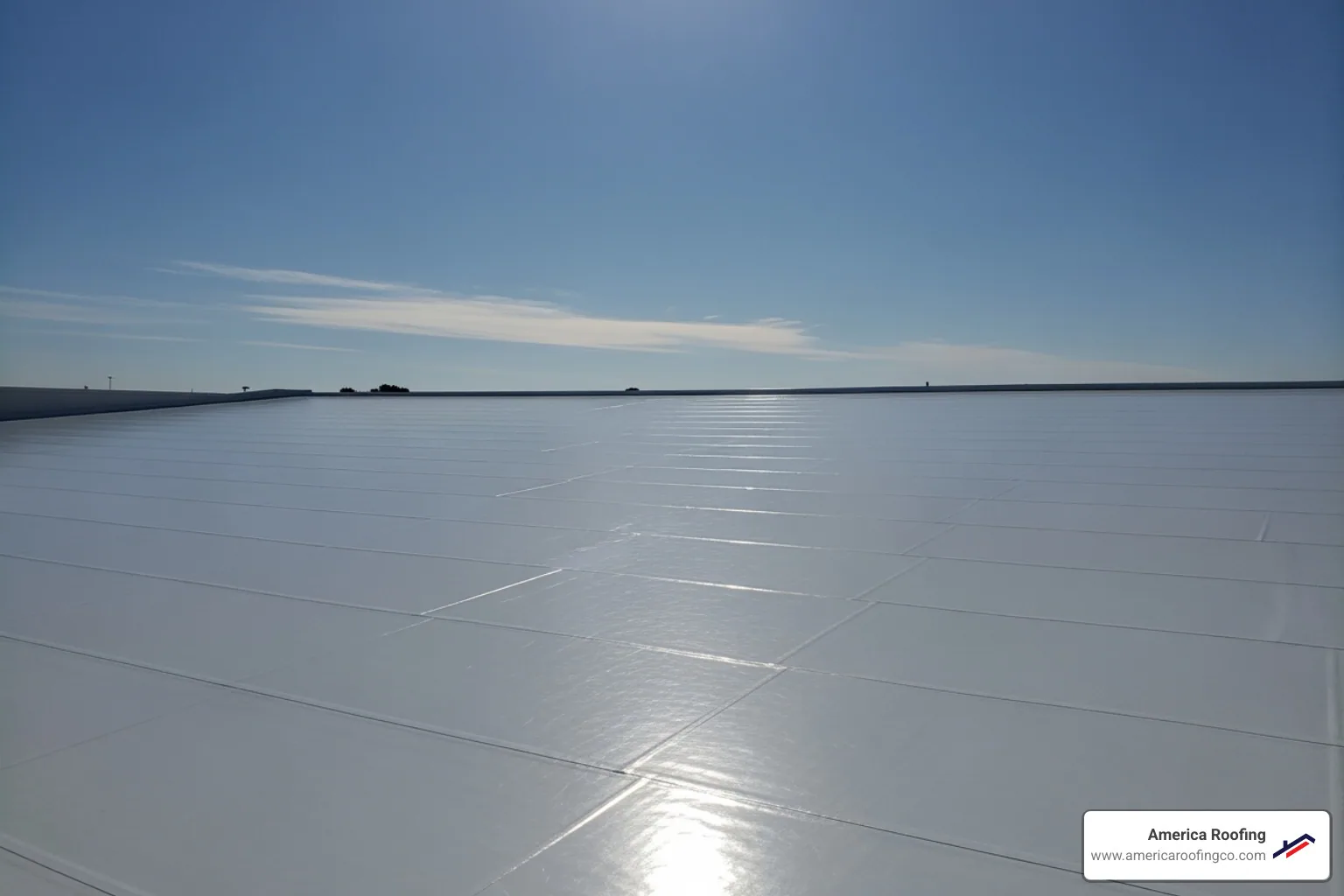
What is a "Cool Roof"?
The concept behind a cool roof is beautifully simple. Instead of absorbing the sun's intense heat like traditional dark roofing materials, a cool roof reflects that sunlight back into the atmosphere. This cooling effect comes from two important properties that work together: high solar reflectivity (sometimes called albedo) and high thermal emittance.
Solar reflectivity measures how much of the sun's rays bounce right off your roof without being absorbed. The higher the reflectivity, the cooler your roof stays. Thermal emittance refers to your roof's ability to release whatever heat it does absorb back into the air, rather than letting it soak down into your building.
You have several options when it comes to arizona commercial roofing cool roof systems. Reflective coatings can be applied over many existing roofing systems, including SPF and modified bitumen, giving your current roof a new lease on life. White TPO membranes are another popular choice, naturally reflecting sunlight thanks to their bright, light-colored surface. The difference these systems make is remarkable—your building stays noticeably cooler, and your energy bills reflect that change.
Tangible Benefits for Arizona Businesses
Let's talk about what cool roofing actually means for your bottom line and daily operations. The most immediate benefit you'll notice is lower energy bills. When your roof isn't absorbing massive amounts of heat during our brutal summers, your air conditioning system doesn't have to work nearly as hard. Those savings add up quickly, especially in cities like Phoenix, Tucson, and Mesa where cooling costs can represent a substantial portion of your operating expenses.
Beyond the direct cost savings, cool roofs reduce the strain on your HVAC system. Your equipment runs less frequently and at lower intensities, which extends its lifespan and delays costly replacement. That's money staying in your pocket instead of going toward emergency HVAC repairs or premature system replacements.
Your employees and customers will appreciate the improved indoor comfort as well. A cooler building means more consistent temperatures throughout your space, fewer hot spots near the ceiling, and an overall more pleasant environment. Happy employees are productive employees, and comfortable customers tend to stick around longer.
There's also a bigger picture benefit worth mentioning. Cool roofs help mitigate what's called the urban heat island effect—the phenomenon where metropolitan areas become significantly hotter than surrounding rural areas. When thousands of commercial buildings reflect sunlight instead of absorbing it, the ambient temperature of our cities drops. It's a small way each business can contribute to making our Arizona communities more livable for everyone.
We've seen how these innovations transform properties across our service areas. The combination of environmental responsibility and financial sense makes cool roofing one of the smartest investments you can make in your commercial property.
Conclusion
Your commercial roof isn't just another line item in your maintenance budget—it's the shield that protects everything you've built. Throughout this guide, we've walked through the realities of arizona commercial roofing: the punishing sun, the sudden monsoons, and the specialized systems like SPF, TPO, PVC, and metal roofing that stand up to our extreme climate. We've covered the essential services your roof needs, from professional installation and emergency repairs to the preventative maintenance that truly makes the difference between a roof that barely survives and one that thrives for decades.
Arizona's unique climate demands more than generic roofing solutions. It requires contractors who understand that a roof in Phoenix faces different challenges than one in Seattle or Miami. The extreme UV exposure, temperatures that regularly exceed 115°F, and violent summer storms aren't just statistics—they're daily realities that impact your building's performance and your operating costs.
That's why partnering with the right roofing professional matters so much. A licensed, insured contractor with deep Arizona experience doesn't just install a roof—they engineer a climate-specific solution that protects your investment for the long haul. The shift toward cool roofing technologies isn't just about being environmentally conscious (though that's important too). It's about making smart financial decisions that lower your energy bills, reduce HVAC strain, and improve comfort for everyone who works in or visits your building.
As a veteran-owned company, we bring military-grade attention to detail and a commitment to doing things right the first time. We're fully licensed and insured (ROC# 186438 CR420), and we've built our reputation serving businesses across Phoenix, Tucson, Mesa, Gilbert, Chandler, Scottsdale, Peoria, Tempe, Glendale, San Tan Valley, and Queen Creek. Whether you need a complete roof replacement, emergency leak repair, or a maintenance plan that extends your roof's life, we're here to help.
Your commercial property deserves a roofing partner who understands both the technical demands of our climate and the business realities you face. We're not just here to fix problems—we're here to prevent them, saving you money and headaches down the road. Ready to protect your investment with a team that truly understands arizona commercial roofing? Explore our comprehensive commercial roofing services and let's start a conversation about keeping your business covered.