
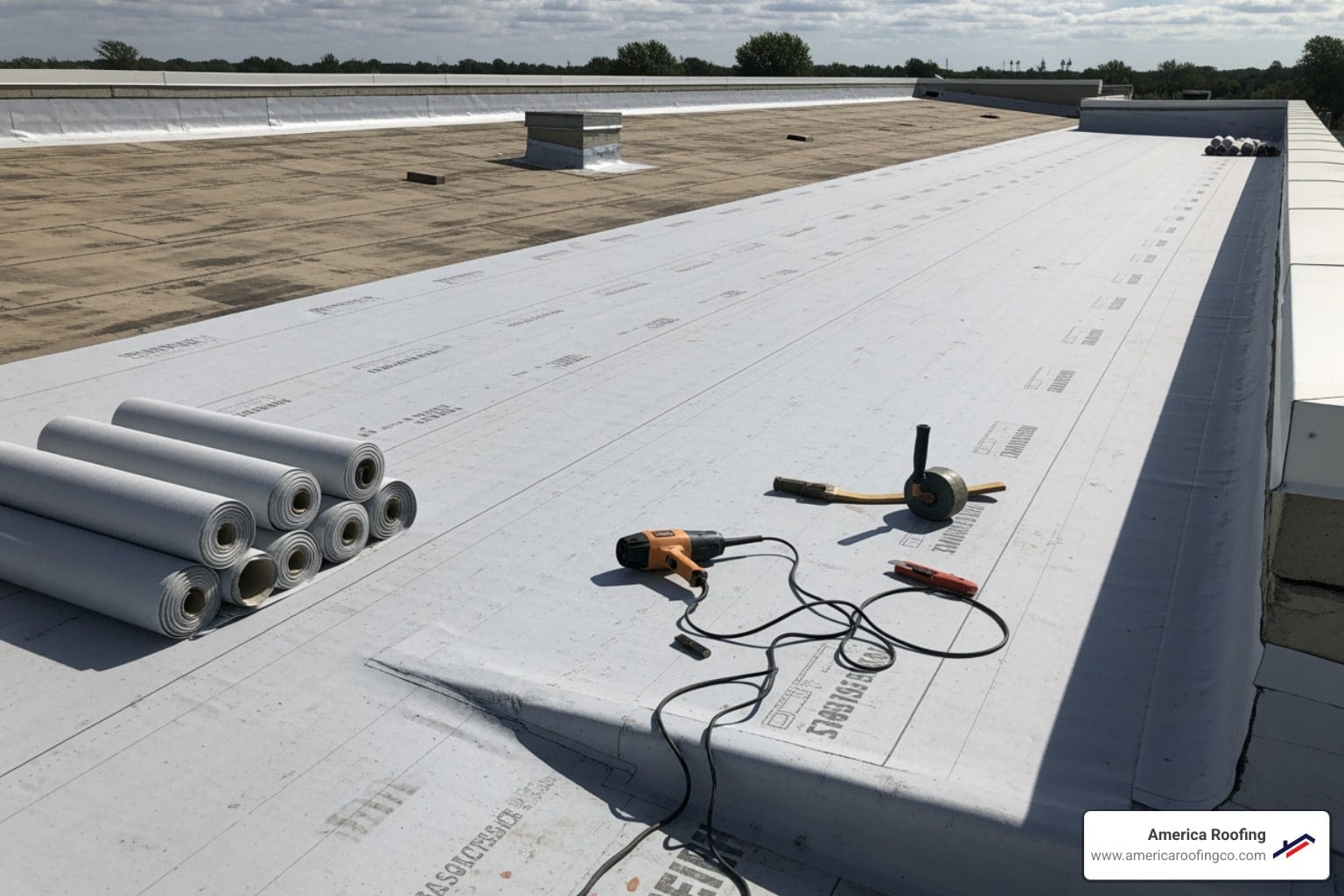
“Flat roof” is a geometry description, not a material. Replacement might involve TPO, PVC, EPDM, modified bitumen, built-up roofing, spray polyurethane foam or another approved assembly. Costs differ because the components and installation methods differ.
Start by identifying the existing assembly
An inspection should determine:
- Surface material and number of existing layers
- Attachment method
- Insulation type and thickness
- Deck type and accessible condition
- Primary and overflow drainage
- Parapets, walls, curbs and penetrations
- Existing coating or prior repairs
- Evidence of trapped moisture
An estimate built around the wrong system identification is not useful.
Tear-off, recover or recoat are different projects
Full tear-off
Existing roofing and affected insulation are removed to expose the deck. This provides the best view of concealed conditions but adds demolition, disposal and interior-protection scope.
Recover
A new approved assembly is installed over a suitable existing roof. The contractor must confirm layer, moisture, attachment, height, drainage and manufacturer requirements. Covering wet or unstable material is not a shortcut.
Foam recoat
A serviceable spray-foam roof may need repaired foam and a renewed protective coating rather than complete removal. The Spray Polyurethane Foam Alliance explains that SPF roofing includes a protective covering and requires regular inspection and maintenance. Recoating does not correct saturated substrate or structural failure.
Wet insulation can change the budget
Moisture may travel beneath a membrane farther than the visible leak. Infrared scanning, test cuts or other investigation can help define the affected area, but some conditions remain concealed until removal.
The contract should state:
- Included removal and replacement quantities
- How wet materials will be identified
- Unit pricing for additional insulation or deck work
- Who documents and approves changes
- Whether interior protection or drying is included
Drainage work is part of replacement
A new membrane will not fix a structural low spot or undersized blocked outlet by itself. The estimate should address:
- Drains and strainers
- Scuppers and conductor heads
- Emergency overflow
- Crickets or tapered insulation
- Raised penetrations and curbs
- Ponding evidence
Positive drainage may require more than replacing surface material in kind.
System selection changes cost and maintenance
Single-ply membrane
TPO, PVC and EPDM are sheet systems with welded or bonded seams and system-specific flashings. The EPDM Roofing Association describes fully adhered, mechanically attached and ballasted EPDM assemblies. Those attachment methods are not interchangeable line items.
Modified bitumen and built-up roofing
These asphalt-based low-slope systems use plies, sheets or surfacing configured for the project. Existing layers, attachment, fire safety and flashing details affect replacement scope.
Spray polyurethane foam
SPF is applied to form insulation and a continuous roofing layer, then protected by coating or aggregate. Substrate preparation, application conditions, thickness and coating are central to performance.
The NRCA guidance library separates low-slope systems and details because one generic “flat roof” specification is not enough.
Reflectivity is a product property, not a waterproofing guarantee
Reflective membranes and coatings can reduce solar heat absorption. The CRRC directory reports tested solar reflectance and thermal emittance for exact products.
Those ratings do not prove seam quality, drainage, adhesion or compatible flashing. Compare radiative performance after confirming the waterproof assembly.
Access and rooftop equipment affect labor
Replacement around HVAC units, solar equipment, pipes, skylights and parapets can require specialized coordination. Roof height, crane or lift access, occupied spaces and limited staging also affect production and property protection.
A proposal should state who handles equipment disconnection, curb changes and warranty responsibility.
Warranty and maintenance belong in the cost comparison
A lower installation total can require a different maintenance schedule or provide narrower coverage. Ask who inspects the roof, how often drains and penetrations should be checked, when coatings or sealants require renewal, and which records preserve warranty rights.
Separate material coverage from contractor workmanship. Confirm whether the warranty includes labor, removal, access, interior damage or only replacement material. Also identify exclusions for ponding, unauthorized penetrations, rooftop traffic and missed maintenance.
For commercial or occupied buildings, include the cost of safe recurring access and protection around equipment. A roof that cannot be inspected without disrupting operations may have a different ownership cost than its installation price suggests.
Compare complete proposals
Ask each bidder to identify:
- Existing and proposed roof assembly
- Tear-off, recover or recoat scope
- Insulation and attachment
- Drainage corrections
- Flashing and penetration details
- Wet-insulation and deck allowances
- Equipment coordination
- Reflective coating or membrane product
- Material and workmanship warranties
- Maintenance required to keep coverage in force
Avoid national cost tables with no date, roof size or included scope. America Roofing can inspect the assembly through its Arizona flat-roofing service and prepare a measured proposal that separates confirmed work from concealed-condition allowances.
Primary references
Sources used for this guide
- Roofing Guidelines National Roofing Contractors Association
- What Is EPDM? EPDM Roofing Association
- SPF Roofing Installation and Maintenance Spray Polyurethane Foam Alliance
- CRRC Rated Roof Products Directory Cool Roof Rating Council