
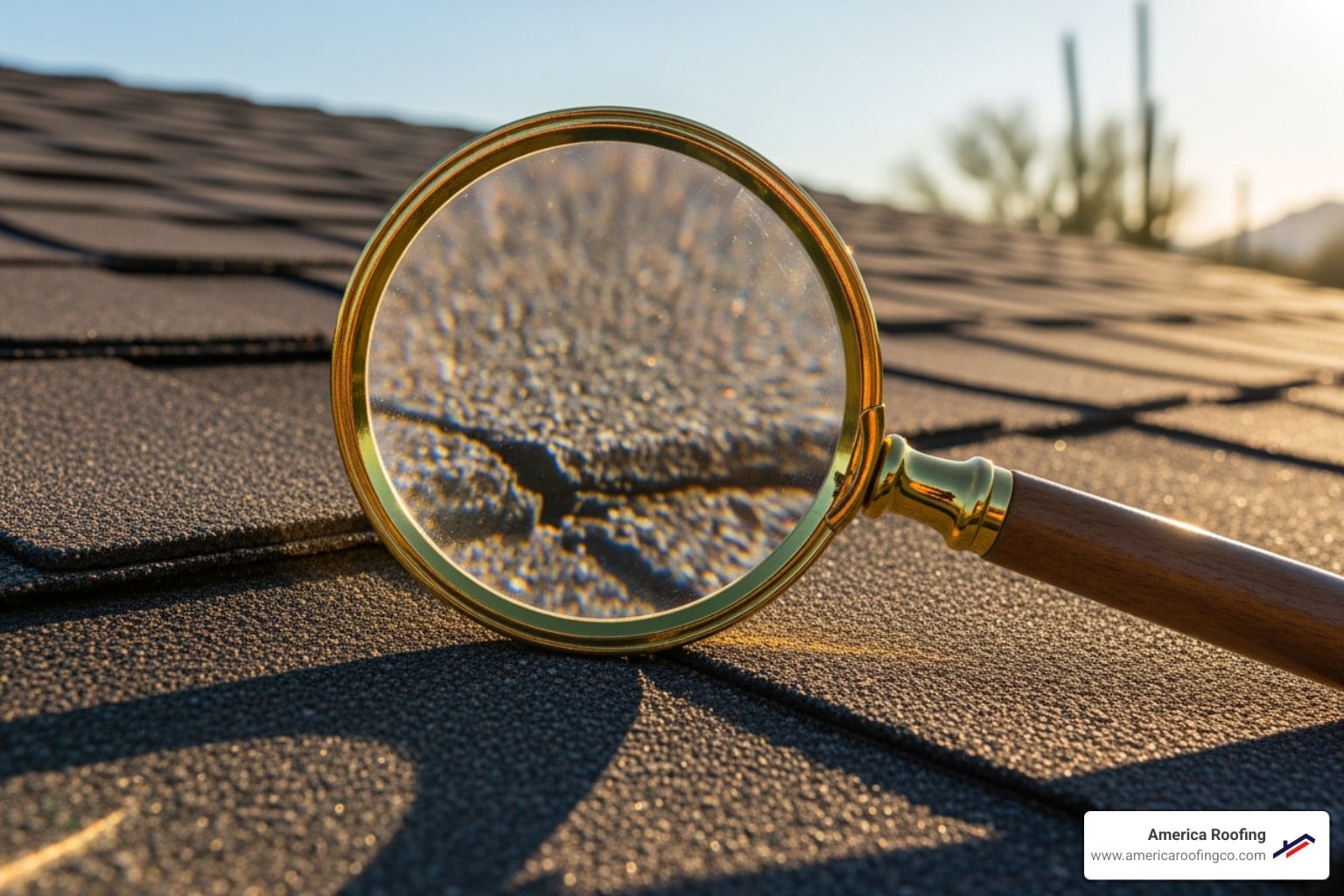
The credential is specialized training, not a substitute for evidence
Haag Education provides specialized training in roof and damage assessment. Its certification tracks are discipline-specific, so a residential-roof credential should not be casually represented as every available Haag credential or as a license to perform every type of engineering, insurance or construction work.
Haag's educational resources distinguish residential-roof, commercial-roof and wind-damage programs. That specialization is useful context when hail, wind or another reported cause must be distinguished from aging, installation defects or maintenance problems.
A responsible inspection still needs to show its work. The useful deliverable is not the logo after an inspector's name; it is a report that identifies the roof assembly, documents observed conditions, separates damage from deterioration, explains limitations and connects recommendations to photographs and roof-specific evidence.
What to verify before relying on the credential
Ask the inspector to provide enough information to confirm:
- The inspector's full name and current certification
- Whether the credential applies to residential roofing, commercial roofing, wind damage or another discipline
- The inspection date and exact property areas evaluated
- Any inaccessible or concealed areas that limited the conclusion
- Whether the inspector is acting as a roofer, consultant, engineer, adjuster or another professional
Certification does not guarantee that an insurer will approve a claim, that a roof requires replacement or that every observed condition resulted from one storm. Those decisions involve the documented facts, the policy or contract, and the professional role of the person making the determination.
What a useful roof assessment should answer
For an Arizona property, ask the inspector to distinguish among storm impact, heat and ultraviolet aging, foot-traffic damage, installation defects, worn sealants or flashings, tile displacement, underlayment exposure and ordinary maintenance. The report should explain whether the evidence supports an isolated repair, more investigation or broader replacement—not jump from one mark to a predetermined sales conclusion.
When Haag training is particularly relevant
Specialized damage-assessment training can be useful after hail or high wind, during a disputed cause-of-loss discussion, or when several people have offered conflicting opinions about the same marks. It can also help a property buyer or manager ask better questions about whether visible conditions are acute damage, long-term deterioration or a construction detail that never performed correctly.
The credential is less important than the work product when the assignment is a routine maintenance inspection. A careful non-Haag roofer may provide excellent documentation, while a credentialed inspector can still produce a weak report. Compare the scope, photographs, measurements, exclusions and reasoning—not only the initials after a name.
Keep roofing, insurance and engineering roles clear
A roofing contractor can evaluate roofing condition and prepare repair or replacement scope. An insurance carrier interprets its policy and claim. A licensed engineer addresses engineering conclusions when that professional role is required. A Haag certificate does not merge those responsibilities or guarantee a claim outcome.
If the inspection concerns an insurance claim, preserve date-stamped photographs, weather information, temporary-protection invoices and written reports. Ask each participant to state whether a conclusion is based on observed roof evidence, policy language, engineering analysis or a proposed construction scope. That separation makes the final decision easier to audit.
What the credential does not establish
Haag certification does not by itself prove that a company holds an active Arizona contractor license, that the inspector is a licensed engineer or adjuster, or that a specific repair recommendation is correct. Verify those separate qualifications when the assignment requires them.
It also does not turn a visual inspection into destructive testing. Concealed underlayment, deck, insulation and structural conditions may remain unknown unless the scope includes access, test openings or another investigation method. The report should state those limitations plainly.
Questions to ask before scheduling
- Which Haag discipline or other credential applies to this roof?
- Is the assignment a condition inspection, storm-damage assessment, repair estimate or another service?
- Will the report include photographs and identify inaccessible areas?
- Who owns the report and who may receive it?
- Are engineering, testing or destructive investigation excluded?
- Will the inspector explain repairable conditions separately from replacement recommendations?
America Roofing's Arizona roof-inspection service can document roof conditions and explain roofing scope. When insurance, engineering or legal interpretation is involved, the appropriate licensed professional must make that part of the decision.
Primary references
Sources used for this guide
- Haag Certified Inspector Education Haag Education
- Haag Educational Resources Haag Global