

A free roof inspection can be useful after a monsoon blast, a hot spell, or one of those Phoenix and Tucson days when a roof starts looking tired all at once. The problem is that “free” doesn't automatically mean thorough, and it doesn't automatically mean unbiased.
A legitimate inspection should give a real read on roof condition, not just a sales pitch with a ladder. For Arizona homeowners and commercial property managers, the value is knowing what was checked, what was photographed, and what still needs a second opinion before anyone approves repair or replacement.
What a Free Roof Inspection Actually Covers
A real free roof inspection has a limited scope, and that should be clear before anyone goes up a ladder. The visit is usually limited to readily accessible areas and leaves out invasive testing, removal of roof components, detailed structural review of hidden areas, and anything the inspector considers unsafe or out of reach. That matters on steep tile roofs, flat low-slope sections, and parapets common in Phoenix and Tucson.
Scope should be clear before anyone climbs up
That boundary separates a screening visit from a forensic investigation. A homeowner can still get useful information from a surface-level inspection, but hidden decking problems, concealed underlayment failure, and internal leak paths will not be confirmed without more access or additional testing.
Practical rule: if a contractor says they can inspect everything without limiting the visit to visible and accessible areas, the scope should be questioned.
The first conversation should be simple. Ask what areas are included, what is excluded, and whether the final report separates visible damage from anything that cannot be verified without opening the roof system.
For Arizona buildings, that matters more than it does in milder climates. Tile roofs shift, flat roofs hide drainage issues, and roof edges or penetrations cannot be judged well from the ground. A surface-only visit can still catch a problem early, but it should not be sold as a complete diagnosis.
For anyone who wants a more formal read on roof condition, a certified roof inspection is the better path when the goal is documentation, not a quick sales visit. That is the standard homeowners should use when they evaluate any free offer, including the kind of terms described in Roofix Solutions terms and conditions for free roof inspections. If you want to see how clients describe that kind of fieldwork, see what clients say about aerial roof.
What Roof Inspectors Look For Step by Step
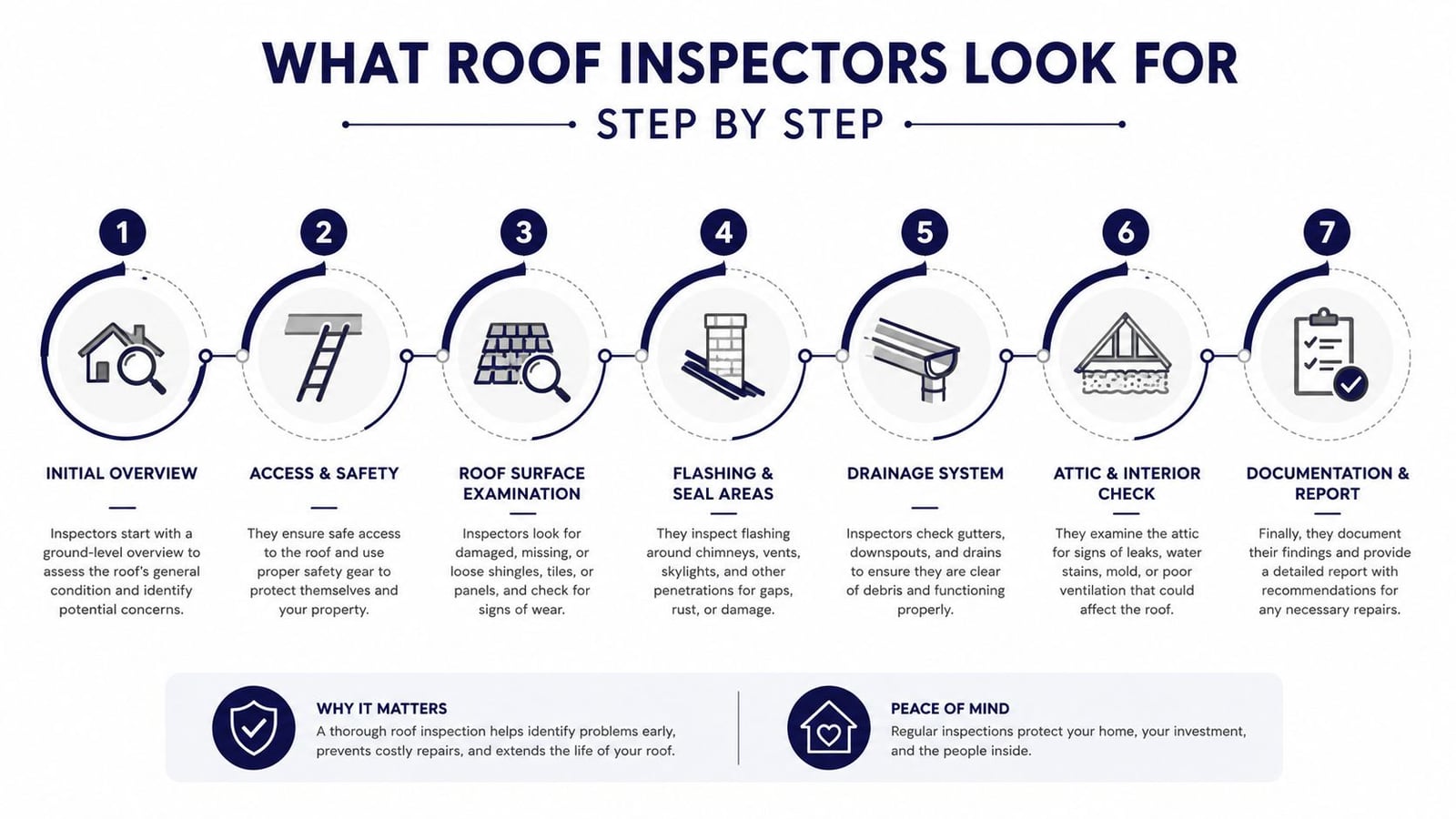
A real inspection starts with a full look at the roof system, not a quick glance from the street. The inspector should spend time on the roof, take close-up photos, and leave a written report that shows what was seen and what could not be confirmed from the outside. In practice, a residential visit often covers several roof components and enough detail to separate a simple repair from a wider concern.
The roof surface and transition points
The first pass should focus on the main roof covering, then move to the places where leaks usually start. That means shingles, tile condition, membrane condition, valleys, ridges, flashing, penetrations, and any obvious breakage, lifting, or movement.
Speed is the enemy here. A careful walk across the roof is what turns a routine visit into a useful diagnosis, because the loose tile, lifted flashing, worn sealant, or membrane wrinkle is often small when it first shows up and expensive later.
Drainage and moisture paths
The water-management check tells you a lot about how the roof is performing. Gutters, downspouts, roof drains, and ponding areas need attention because blocked or damaged drainage keeps water where it should not sit, which raises the chance of membrane failure, flashing problems, and long-term structural damage.
That check is also where a homeowner can separate a cosmetic issue from a real maintenance problem. If the roof sheds water the wrong way, the rest of the system gets stressed even when the surface still looks serviceable.
Interior clues and documentation
A proper inspection also looks for attic moisture signs and other clues that point to an active leak instead of a past stain. The report should include close-up photos and plain notes that explain whether the issue looks like a small seal repair or something that points toward broader roof work.
If the visit is done well, the paperwork matters as much as the walk. A clear report gives you something to compare against another contractor, and it gives you the kind of documentation that helps when you need to decide between repair, monitoring, or a claim.
Homeowners who want a basic reference point for a solid walkthrough can also check your roof between visits with a simple visual check from the ground, then leave the hard parts to a roofer. For a separate look at how field documentation is presented after a remote inspection, see what clients say about aerial roof.
Arizona Roof Problems That Demand Attention
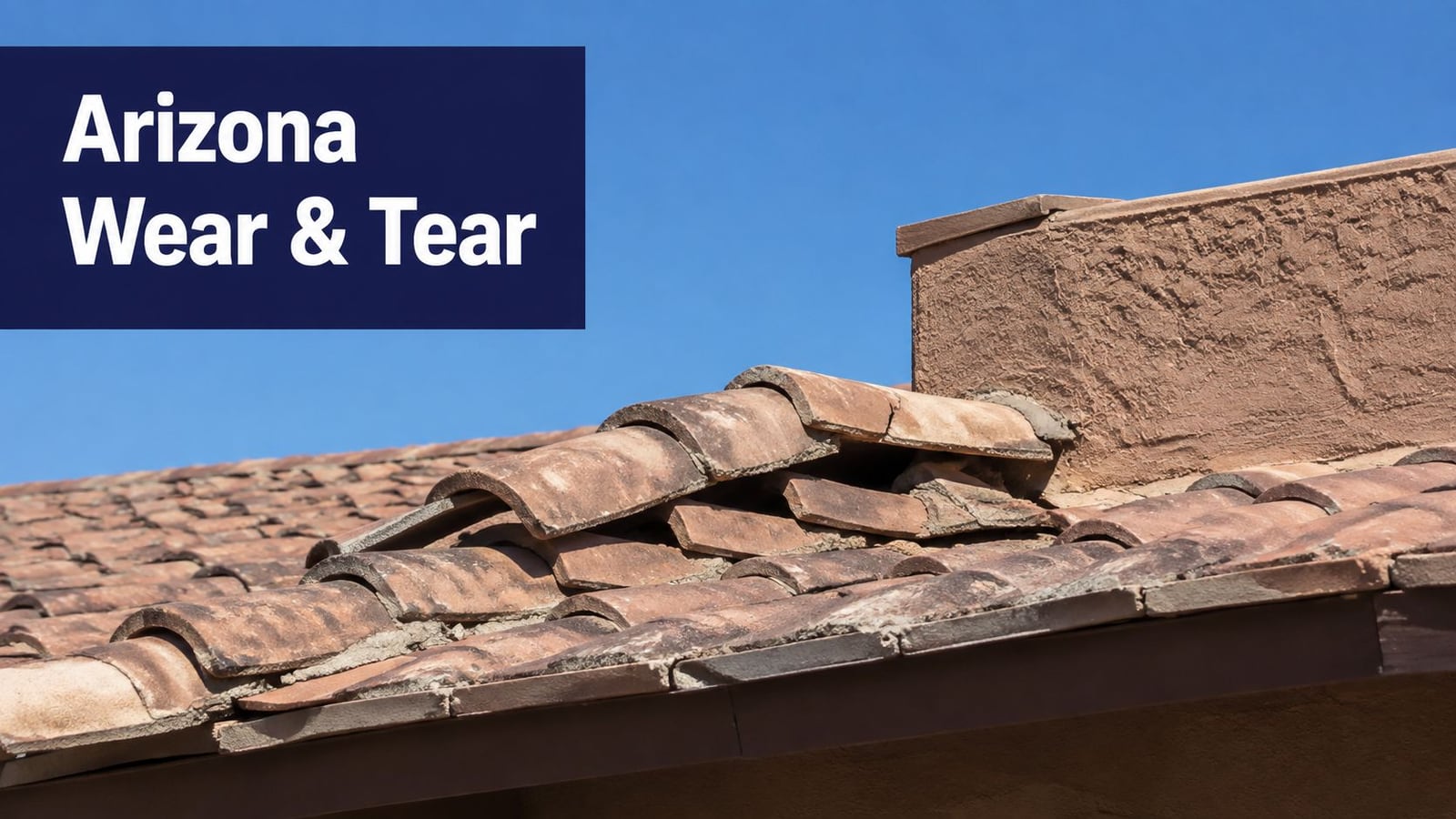
Arizona roofs fail in patterns that come from the climate itself. UV exposure, heat cycling, dust, monsoon wind, and sudden rain all stress roof systems in different ways, so a real inspection has to match the roof type and the exposure it has taken.
Tile roofs wear out in different ways
On tile roofs, the surface can look sound while the underlayment is already near the end of its useful life. Cracked tiles, slipped tiles, broken corners, and damaged ridge areas are obvious concerns, but the hidden risk often sits below the tile, where heat and water keep working on the layers underneath.
A homeowner can miss that until the next storm exposes it. That gap between appearance and condition is one reason a free roof inspection has to include more than a quick look from the driveway.
Flat roofs need drainage discipline
Flat and low-slope roofs in Phoenix and Tucson need close attention on ponding, drains, seams, and coatings. Standing water is a repair issue, not a cosmetic one. Water sitting at weak points shortens service life and opens leak paths that can spread beyond the first visible spot.
For a broader local context on weather-driven wear, it helps to review the Arizona weather impact on roofs before deciding whether a visible issue is maintenance or a repair problem. Seasonal sun and storm exposure change how fast small defects turn into active leaks.
Foam and coated systems need close seal checks
Foam roofing and coating systems depend on surface integrity and sealed transitions. When coatings thin out or penetration seals start to fail, the roof can still look serviceable from a distance while moisture starts to find the weak spot. A technician doing a legitimate inspection should call out those failure points, not just note that the roof “looks okay.”
On Arizona roofs, failure often starts where two materials meet, not in the middle of the field.
That is why local experience matters. The same visual clue can mean something different on a tile roof, a commercial flat roof, or a foam system. A generic inspection that ignores roof type misses where the damage started and what it is likely to do next.
Property owners who want a practical example of a service approach built around local conditions can also look at America Roofing for residential and commercial roof repair, replacement, tile roofing, flat roofing, foam roofing, and coating work across the Valley.
A good report also needs usable photos, not just a gallery of close-ups. For a practical standard on field documentation, 2026 construction photo documentation guide shows the kind of record that helps a homeowner compare options, file paperwork, and decide whether a repair can wait.
The Documentation and Photos You Should Receive
A good inspection report should read like a defect map, not a sales flyer. It should show roof type and material, flashing, drainage, penetrations, attic or underlayment indicators, and photos that match what the inspector found.
What a useful report includes
That format matters because roof leaks usually start at transitions and penetrations, not across the whole field. A useful report points to the weak spot and shows whether the right response is a repair, a monitor, or a replacement decision.
Photos should do more than look impressive
Good photo documentation should let a homeowner or property manager understand the problem without standing on the roof. Wide shots, close-ups, and context photos together tell the story, and that matters whether you are comparing bids, talking to an adjuster, or planning maintenance. A practical standard for that kind of record is outlined in the 2026 construction photo documentation guide, which shows how clear images and notes make field records easier to use.
A report also needs a written summary that ties the photos to the findings. If the inspector only leaves images with no explanation of the affected component, the likely cause, or the next step, the report is hard to use for a repair decision.
For owners who want a local maintenance-oriented framework, America Roofing's inspection guide is a useful reference point for comparing what a real inspection should cover against the report in hand.
Storm Damage, Insurance Claims, and When to Act
A lot of free inspections in Phoenix and Tucson happen right after wind, rain, or hail. That timing makes sense. After a storm, homeowners need to know whether they are dealing with a simple repair, a larger claim, or a roof that needs immediate attention. A real inspection helps sort that out before the evidence gets buried by debris, later weather, or half-finished patch work.
Why storm timing matters
Storm damage often hides under lifted edges, cracked tile, torn membrane, or displaced flashing that does not leak right away. By the time water shows up inside, the damage may already be wider than the spot that first got hit.
That is why a fresh inspection matters more than a casual look from the driveway. The earlier the roof is documented, the easier it is to separate storm-related damage from older wear that just happens to show up later.
What makes documentation stronger
Photos of broken tile, lifted flashing, torn membrane, or damaged coating lines help show what changed and where it changed. Written notes matter too, because adjusters and contractors need more than pictures. They need a clear explanation of the affected area, the likely cause, and whether the condition points to a repair or a broader claim discussion.
For homeowners comparing claim readiness and repair urgency, the Arizona insurance claim roof damage guide helps frame how to organize findings before speaking with a contractor or adjuster.
When action should be immediate
If there is an active leak, visible interior staining, or obvious storm displacement, the roof should not wait for a casual follow-up. It needs attention while the source is still visible and the damage can still be traced with confidence.
A roof can look fine from the street and still carry storm damage at a seam, edge, or penetration.
The practical takeaway is simple. Inspection after a storm is not just a courtesy visit. It creates a dated, photographed record before weather and time erase the clues. For Phoenix and Tucson owners, that record can be the difference between a contained repair and a much bigger claim conversation.
How to Prepare for Your Roof Inspection
A good roof inspection starts before the inspector climbs a ladder. The roof needs clear access, the property should be easy to enter, and the inspector should know where the problem areas have already shown up.
Simple prep that helps the visit
- Clear access points: Open gates, driveways, and parking areas so the contractor can get equipment close to the building.
- Note leak history: Point out interior stains, active drips, or rooms where moisture has shown up before.
- Secure pets and limit distractions: The inspection goes better when the inspector is not working around animals or repeated interruptions.
- Flag prior repairs: Show patched areas, coating work, or recent tile replacements so those spots get checked closely.
- For commercial sites, identify rooftop equipment: Mark parapet access points, drains, and equipment zones before the visit starts.
Property managers should also be ready to describe the roof's age, repair history, and any trouble spots that keep coming back. That background helps the inspector focus on the right areas during the inspection window, which is often enough time for a careful look but not enough for guesswork NRCIA roof inspection report template.
The inspector will usually ask about past leaks, previous patch work, and any recent weather event that could have changed the roof's condition. Those answers matter because they help separate a one-time storm event from a longer maintenance problem.
For buildings with multiple roof sections, prepare to show which areas are occupied, which are sensitive, and which sections have had repeat service calls. That saves time and helps the report reflect the actual use of the property rather than just the visible roof surface.
A clean handoff also helps when the inspection is part of a larger repair decision. If the report needs to move fast, a speed-to-lead AI tool like this one can help sort notes and follow-up so the roofer does not lose the thread between the visit and the estimate.
Next Steps and Choosing the Right Roofer
A free inspection should lead to a decision, not more questions. The report should point toward targeted repair, coating restoration, monitoring, or full replacement, depending on how far the damage has spread and how the roof system is aging.
Use the price context wisely
A professional roof inspection usually carries a separate fee, and that fee varies with the roof type, access, and whether extra testing is needed. Infrared scans cost more than a standard visual assessment, which is one reason many contractors include the inspection in their sales process, but homeowners still need to compare the findings before approving major work. If you want a broader sense of how inspection pricing is discussed in the market, First Roof Guide roof inspection cost is a useful reference point.
Judge the roofer by the report, not the pitch
A real roofing professional should explain what was seen, what could not be reached, and what still needs confirmation. If the recommendation jumps from a few visible defects straight to a full replacement without showing the chain of reasoning, slow down and compare the report with another opinion.
For Phoenix and Tucson property owners, the next step is to verify credentials, ask for photos, and request a written estimate that separates immediate repair from longer-term planning. That matters most when a roof has mixed conditions across different slopes, additions, or older repairs, because those differences change the work that makes sense.
For teams that need quick follow-up after an inspection, a good speed-to-lead AI tool can help sort requests and keep callbacks from slipping, but it still cannot replace a solid roof report or an experienced field eye.
If the roof needs a second opinion, a repair estimate, or a replacement conversation, America Roofing handles residential and commercial roofing across Phoenix and Tucson, including tile, shingle, flat, foam, coatings, storm damage, and leak repair. Call 602-237-2478 or request a roofing estimate when the report shows a problem that should not wait.
If the inspection showed a leak, storm damage, or a roof that is past simple patching, America Roofing can review the findings and give a straight answer on repair versus replacement. Visit America Roofing to request a quote, and get a practical roof assessment for your Phoenix or Tucson property before the next storm turns a small issue into a larger one.