

A monsoon cell moves through Phoenix or Tucson, the wind drives dust and debris across the roof, and a leak shows up a few hours later. That's when most homeowners start searching for insurance claim roof damage help, usually while trying to figure out whether the storm itself caused the problem or just exposed an older weak spot.
In Arizona, that distinction matters. A clean claim usually depends on quick mitigation, careful documentation, and a roofer who understands tile, flat, and foam systems in this climate.
After the Storm - Immediate Steps for Your Roof
The first job is safety. The second job is stopping further damage without making the roof harder to inspect later.
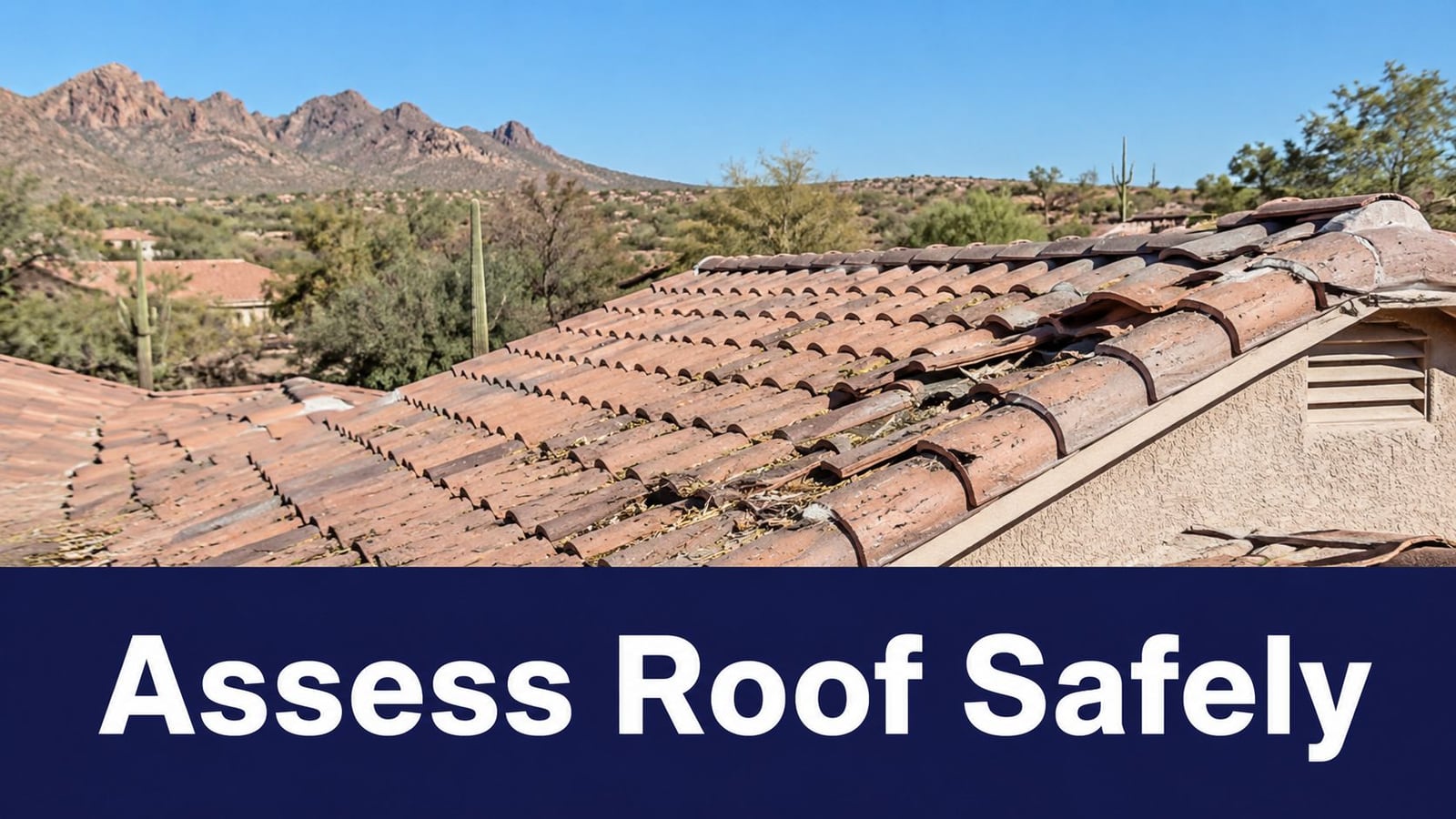
Start with hazards on the ground
Before anyone looks up, check the area around the house or building.
- Watch for power issues: Stay clear of downed lines, damaged service masts, and anything touching metal gutters or fencing.
- Check for falling debris: Broken tiles, loose branches, and sheet metal can slide off after the storm passes.
- Keep people off wet roofs: Tile gets slick fast, and flat roofs can hide soft spots under standing water.
A homeowner doesn't need to prove bravery to protect a claim. Insurers care whether the property was reasonably protected from further harm. They don't expect unsafe roof access.
Practical rule: Mitigation means preventing additional damage now. It doesn't mean starting permanent repairs before the claim is documented.
What mitigation looks like in Arizona
On a tile roof, mitigation usually means covering an exposed area if tiles broke or slid out of place. That has to be done carefully. Walking directly over damaged field tile can crack adjacent pieces and create more issues than the storm did. If a tarp is necessary, it should be secured without scattering more broken tile or punching unnecessary holes in underlayment and flashing.
On a flat roof, the priority is different. If water is ponding near a drain, scupper, seam, or penetration, the main concern is interior intrusion and membrane damage. Clearing loose debris from drains at ground-accessible edges may help, but no one should step into ponded areas or start cutting blisters, coatings, or membrane sections.
For a broader post-storm checklist, this guide on steps for homeowners after roof storm damage is a useful companion to the immediate triage steps above.
Practical actions that help the claim
A short list works best right after the storm:
- Move belongings away from leaks. Protect flooring, furniture, electronics, and inventory.
- Catch active drips. Use buckets, towels, and plastic sheeting inside.
- Photograph the condition before temporary covering. Take a few ground-level shots first.
- Tarp only exposed areas if it can be done safely. If it can't, leave it for a roofer.
- Save debris that hit the roof if it's relevant. Branches or broken rooftop components can help show what happened.
Arizona homeowners who want a plain-language triage reference can use this Arizona homeowner's roof repair guide before deciding what should wait for a professional.
What not to do
Some decisions make later claim discussions harder.
The right pace is controlled, not delayed. Protect the building. Preserve the evidence. Leave technical diagnosis for the inspection phase.
Documenting Everything for a Stronger Claim
A roof claim is easier to defend when the homeowner builds a case file instead of sending a few random photos. Adjusters look for pattern, location, timing, and whether the damage is consistent with a storm event.
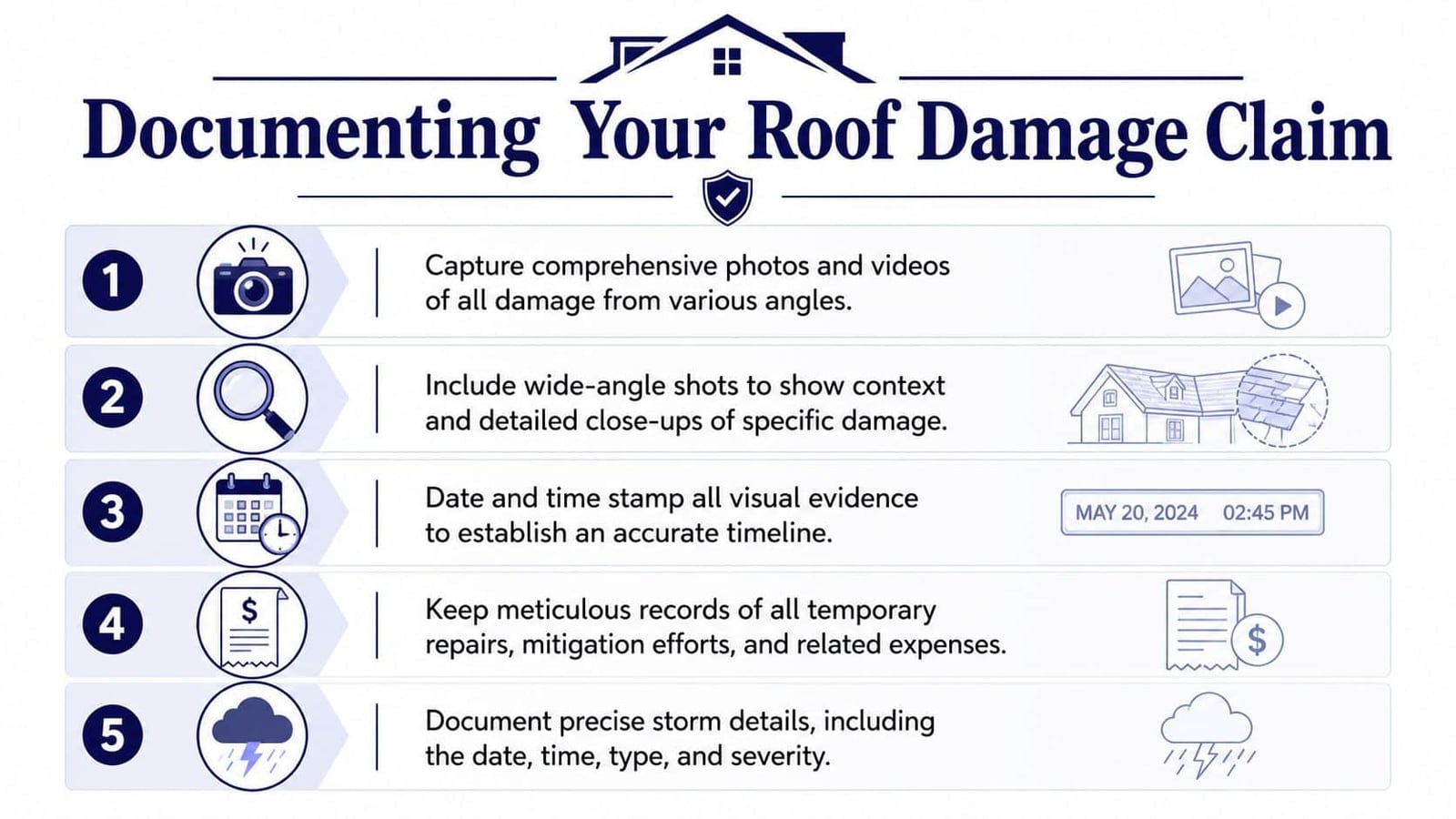
Capture the roof like an adjuster will review it
The strongest file includes both context and detail. One close-up of a cracked tile isn't enough by itself. One wide shot from the driveway isn't enough either.
Use this checklist:
- Wide shots first: Take photos of each roof slope, elevation, parapet line, and visible debris field to show the overall pattern.
- Close-ups second: Get clear images of cracked or displaced tiles, lifted shingles, damaged ridge components, punctures, denting, split seams, or coating impact points.
- Transitions and edges: Photograph flashings, valleys, wall tie-ins, skylights, vents, scuppers, drains, and pipe penetrations.
- Ground evidence: Document fallen tile pieces, metal fragments, branches, and blown-off components.
- Interior evidence: Water stains, bubbling paint, wet insulation, ceiling damage, stained drywall, and active drips all matter.
For Arizona roofs, details should match the system. A tile roof file should show the surface damage and any indication that underlayment or flashing may have been affected. A flat or foam roof file should show impact marks, splitting, open seams, punctures, drain conditions, and where water tracked inside.
Damage photos should answer three questions without extra explanation. Where is it, what failed, and how widespread is it?
Keep a written record with the photos
Photos alone leave gaps. Notes make them usable.
Record these items in one running log:
- Storm date and time: Note when the wind, hail, or heavy rain occurred.
- First sign of damage: Record when the leak or visible roof issue was noticed.
- Mitigation steps taken: Write down tarping, debris removal, interior protection, and who did the work.
- Expenses: Save receipts for temporary materials, labor, hotel stays if relevant, and cleanup directly tied to the roof event.
- Conversations: Log claim number, adjuster name, inspection date, and what was discussed.
Homeowners who don't already have a property record often find that a simple digital inventory for insurance claims helps organize photos, receipts, and timestamps in one place.
A simple message template that keeps the file organized
This format works well when sending information to the insurer or roofer:
Property address:
Date of storm:
Type of event: wind, hail, heavy rain, debris impact
First visible roof damage:
Interior damage observed:
Temporary mitigation completed:
Attached files: wide roof photos, close-up damage photos, interior leak photos, receipts, video clips
That kind of summary keeps the claim focused on facts instead of scattered updates.
Why Arizona documentation needs extra care
Arizona roofs age differently than roofs in milder climates. UV exposure, heat cycling, dust buildup, and drainage issues can already be present before a storm arrives. That's why the photo set should show both the damaged area and the surrounding field condition.
For homeowners trying to understand what a thorough inspection should include, this article on preventing costly roof damage helps clarify what a roofer is looking for during documentation.
A stronger insurance claim roof damage file doesn't need dramatic language. It needs clean evidence, good notes, and a timeline that makes sense.
Contacting Your Insurer and a Roofer
Once the property is stabilized and the evidence is organized, two calls should happen early. One goes to the insurer. The other goes to a local roofer.
Those are separate roles. The insurer opens the claim and assigns the process. The roofer gives the homeowner an independent roof-specific view of what may need repair.
What to say on the first insurance call
Keep the first report simple and factual.
Have these items ready:
- Policy information
- Property address
- Date of loss
- Type of storm event observed
- Brief description of visible damage
- Whether temporary mitigation was performed
Stick to observed facts. It's fine to say there are broken tiles, staining on a ceiling, or ponding near a drain. It's better not to guess at full replacement, hidden structural damage, or exact cause before the inspection.
Why the roofing call matters just as much
Arizona roofs often present mixed conditions after a storm. The first monsoon storm in Arizona often doesn't damage most roofs but instead exposes pre-existing problems such as small cracks, worn shingles, and loose flashing that were already there, according to this Arizona monsoon roofing note.
That's why a local roofing inspection matters early. The homeowner needs help separating three things:
- New storm-created damage
- Older wear that the storm exposed
- Areas that are repairable versus areas that need broader work
On tile roofs, this can mean the field tiles still look mostly intact while the underlayment or flashing details are the primary issue. On flat roofs, the surface may show only minor marks while the actual concern is at seams, drains, or penetrations.
Why local Arizona experience changes the outcome
A local roofer understands common regional failure points. That includes brittle underlayment under older tile, drainage issues on flat commercial sections, foam wear in high UV exposure, and wind-driven rain entering where the roof meets stucco, parapets, or equipment curbs.
America Roofing handles residential and commercial roof inspections, storm-related repairs, tile roofing, flat roofing, foam systems, coatings, reroofing, and leak repair in Phoenix and Tucson. For storm-specific service context, homeowners can review Phoenix storm damage roof repair.
The earlier the homeowner gets a roof-specific opinion, the less likely the claim file gets shaped by assumptions made from the ground.
What the homeowner gains by doing both at once
Calling only the insurer puts the homeowner in a waiting position. Calling only a roofer delays the formal claim. Doing both early gives better control of the timeline.
The insurer opens the file. The roofer helps define the actual roof scope. That combination usually leads to a cleaner adjuster meeting and fewer surprises later.
Navigating the Insurance Adjuster Meeting
The adjuster meeting is where many claims start to drift off course. Not because anyone necessarily intends that, but because roof systems in Arizona are easy to oversimplify from the surface.

What the day usually looks like
The adjuster arrives, reviews the reported loss, walks the exterior, checks the roof if access allows, and looks at interior signs of water intrusion. The homeowner points out what was noticed after the storm. The adjuster takes measurements, photos, and notes for the estimate.
The adjuster's role is to evaluate the claim for the insurance company. The homeowner's role is to make sure the roof's actual condition is fully seen and accurately described.
That's where having a roofing contractor present often helps. A roofer can point out slope-specific damage, underlayment concerns beneath broken tile, membrane failures on low-slope sections, and areas where the visible surface isn't the whole problem.
Arizona-specific details that get missed
Wind claims are a good example. In Arizona, winds over 45 mph can cause minor roof damage, while severe damage typically occurs when gusts exceed 60 mph, which aligns with a Severe Thunderstorm Warning threshold for damaging winds of 60 mph or higher, according to Arizona wind damage guidance.
That doesn't mean every claim turns on one number. It means the damage pattern should make sense for the weather event and roof type.
A few examples:
- Tile roofs: The visible break may be limited, but adjacent fasteners, mortar details, ridge attachments, or underlayment exposure can matter.
- Flat roofs: The issue may center on uplift at edge metal, open laps, punctures from debris, or drainage backup after wind-driven debris clogged flow paths.
- Commercial roofs: Rooftop equipment curbs, penetrations, and parapet transitions often deserve close attention.
For homeowners who want a contractor-led assessment before or during this step, a professional roof inspection in Arizona can provide the technical baseline.
Good questions to ask the adjuster
A short list keeps the conversation productive:
- Which roof areas were included in the inspection?
- Was the claim decision based on surface-only damage, or were underlying components considered?
- What items were excluded from the estimate?
- Will interior damage be handled in the same claim file?
- What is the process if additional damage appears during repair?
A calm, organized meeting usually produces a better record than an argumentative one. The goal is clarity, not confrontation.
The homeowner doesn't need to use technical roofing language perfectly. The roofer should. That's often the difference between a narrow estimate and a repair scope that matches the roof.
Understanding Estimates and Supplemental Claims
After the inspection, the paperwork starts. Many homeowners then feel like the claim was approved but still don't know what the numbers mean.

The core estimate terms in plain language
Most roof estimates include a few standard terms.
A homeowner doesn't need to memorize the estimate software language. The practical question is simpler. Does the approved scope match what the roof needs?
For readers who want broader property insurance context around valuation, the reinstatement cost assessment process offers a useful background overview.
Why initial estimates are often incomplete
An initial estimate is often based on what was visible at inspection time. Roofing work exposes conditions that can't always be confirmed from the surface.
Common examples include:
- Tile roof hidden damage: Underlayment deterioration or broken fastening details discovered once tile is lifted
- Flat roof concealed issues: Saturated insulation, hidden seam separation, or substrate problems near drains and penetrations
- Leak path mismatch: The interior stain shows up in one room, but the actual breach is higher up the roof assembly
- Code-related scope gaps: The estimate may address a damaged area without accounting for the full assembly needed to complete the repair correctly
That's where a supplemental claim becomes important. It isn't a second claim for a new event. It's a request to revise the original claim because the true scope turned out to be larger than the first inspection showed.
Why timing matters in Arizona
After an initial settlement is issued, homeowners often miss the critical window, typically 12–18 months, to file a supplemental claim when additional damage emerges after the adjuster inspection. According to National Roofing Coalition data cited here, Arizona homeowners lose $12,000 annually on average due to delayed supplemental filings.
That's a serious paperwork problem, not just a roofing problem.
A homeowner may think the claim is finished once the first payment arrives. Then the repair starts, hidden damage appears, and the supplement deadline is closer than expected. In some markets, policy and carrier practices can tighten those timelines even more. That's why the supplement conversation should begin before work starts, not after the roof is already open.
If the roof crew finds legitimate hidden damage, the homeowner should pause, document it, and submit the supplement while the evidence is visible.
What supports a supplemental claim
The best supplements are specific. They usually include:
- New photos from tear-off or opened roof areas
- A revised scope from the contractor
- Notes tying the added work to storm-related damage
- A clear explanation of why the condition wasn't fully visible during the initial inspection
This is one of the points where an experienced local roofer adds practical value. The contractor documents what was uncovered, explains why it affects proper repair, and helps the owner avoid closing out the job with an underfunded scope.
Common Claim Mistakes and How to Fight a Denial
An initial denial or weak approval isn't always the end of the claim. Homeowners often assume it is, and that's one of the costliest mistakes in the process.
Approximately 80% of homeowners face initial denial of roof damage insurance claims, but with a rigorous appeals process and thorough documentation proving actual structural damage, 95% of those denied claims are subsequently approved, according to this claims documentation discussion.
The mistakes that cause the most trouble
Some patterns show up repeatedly:
- Signing too quickly with storm-driven contractors: Homeowners under pressure often agree to paperwork before they understand the roof scope or claim status. This is one reason it helps to review who to trust for storm damage repair.
- Treating a cosmetic finding as final: On Arizona roofs, cosmetic and functional damage aren't always the same thing. A dent, crack, or displaced component may look minor but still affect water shedding, underlayment protection, drainage, or system life.
- Accepting the first scope without line-by-line review: A small omission in flashing, underlayment, drains, or transitions can create a major repair gap later.
Cosmetic versus functional damage in Arizona roofs
This issue matters on both residential and commercial systems.
On tile roofs, purely surface marks may be cosmetic. Broken tile that exposes underlayment, changes water flow, or compromises attachment is functional. On flat roofs, a visible mark may be cosmetic if the membrane or coating still performs as intended. It becomes functional when the surface damage leads to puncture risk, seam weakness, drainage problems, or water entry.
Arizona homeowners also run into cosmetic denials on hail claims. Recent reporting cited in this Arizona roof damage coverage article states that 38% of Arizona hail claims were denied for cosmetic reasons, often without clear guidance on the threshold for repair eligibility.
A workable path after denial
A denial should trigger a more structured response:
- Request the denial reason in writing
- Compare it to the roof inspection findings
- Collect better photo evidence and repair explanation
- Submit an appeal focused on functional damage, not emotion
A good appeal shows how the roof system was compromised. It doesn't just repeat that the homeowner disagrees.
The most persuasive appeals connect visible damage to performance failure. If the issue is hidden under tile, at a seam, around a drain, or behind flashing, the report needs to explain that clearly.
Your Next Step to a Secure Roof
A roof claim in Arizona usually turns on a few basic decisions. Protect the property right away. Document the roof and interior thoroughly. Get the insurer involved early, but don't go into the process without a roofer who understands Arizona weather, roof materials, and how supplemental claims can affect the final scope.
For homeowners and property managers in Phoenix and Tucson, the process is manageable when each step is handled in order. The goal isn't to make the claim dramatic. The goal is to make it accurate, complete, and repairable.
If a roof in Phoenix or Tucson has storm damage, active leaking, cracked tile, flat-roof water intrusion, or an insurance estimate that doesn't match what the roof appears to need, America Roofing is one local option to inspect the condition and document repair scope. To move forward, call 602-237-2478 or request a roofing estimate through the online form.