
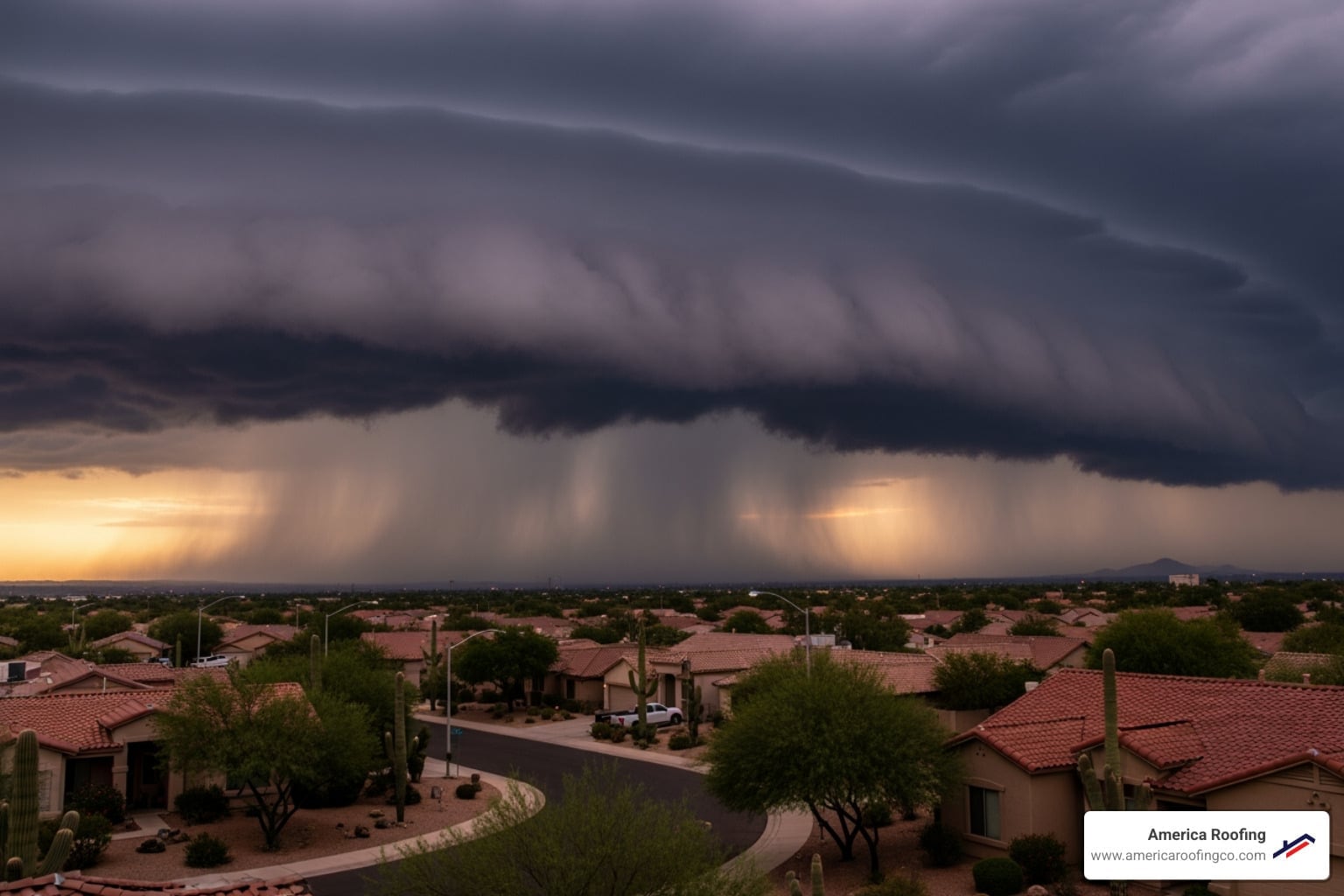
After a Phoenix monsoon, protect people first, document damage from a safe location and arrange a roof inspection. Wind, hail and debris can damage the covering or the layers below it. Temporary protection and a permanent repair are different scopes, and insurance coverage depends on the policy and documented conditions.
What You Need to Know About Roof Storm Damage Repair in Phoenix
A storm assessment should identify the affected roof system, the path water can take and whether surrounding materials remain serviceable. An isolated flashing or covering defect may be repairable. Wet layers, distributed damage or repeated leaks can require a broader scope. Start with the condition at the property rather than a standard price, age cutoff or percentage of roof damage.
If you're dealing with storm damage to your roof in Phoenix, here's what matters most:
Immediate Actions:
- Keep people away from active water near electrical equipment, sagging ceilings and unstable materials. Get emergency help for immediate hazards.
- Photograph accessible interior stains, ground debris and visible exterior damage without climbing onto the roof. Record the storm date and when symptoms appeared.
- Ask a qualified roofer about safe temporary protection and an inspection. Roof access and tarping should be left to trained crews when conditions permit.
- Contact your insurer promptly to confirm reporting requirements, deadlines and the documentation required by your own policy. Save photos, repair records and receipts.
Common Storm Damage Types:
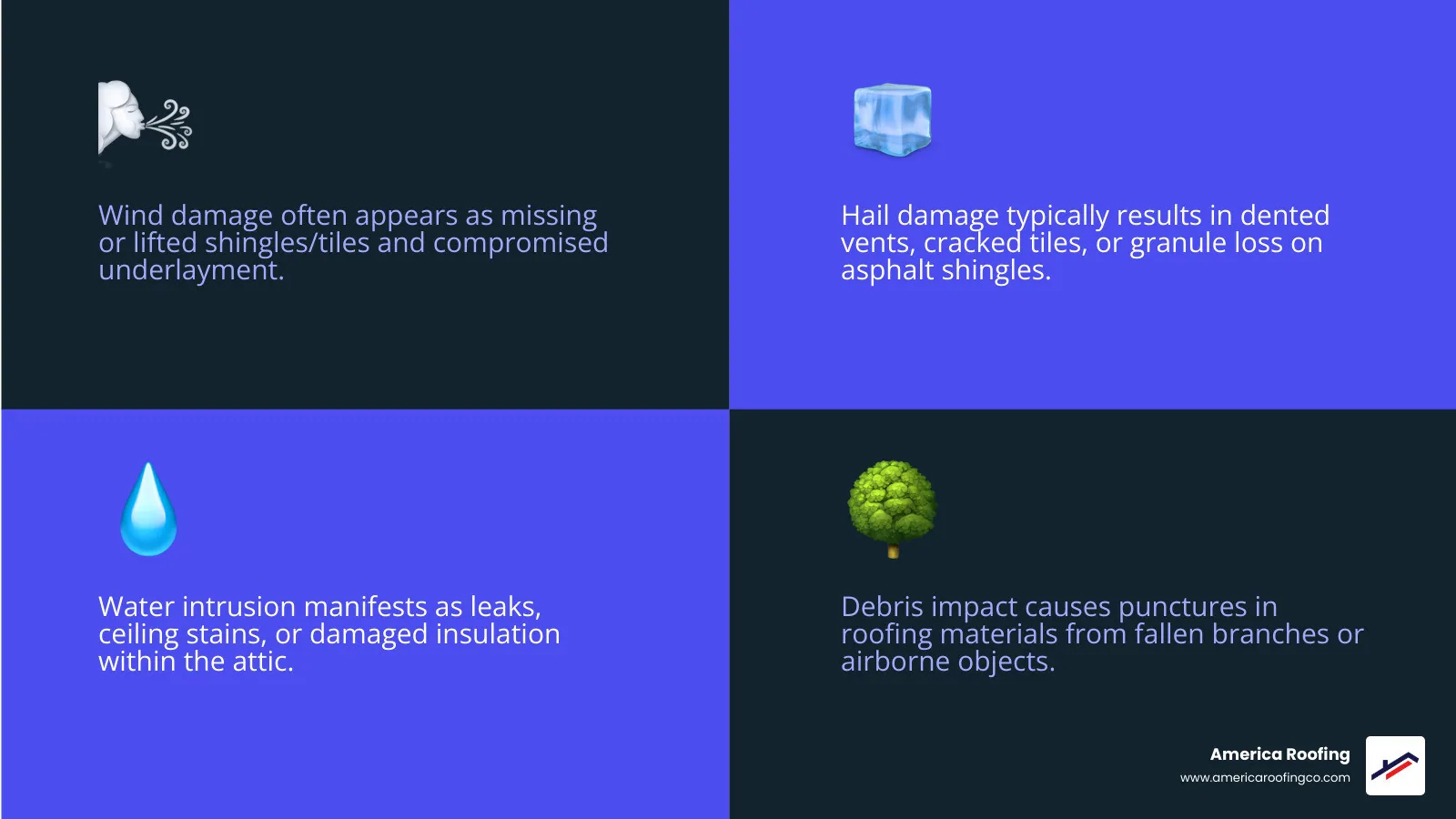
- Wind damage - Missing or lifted shingles/tiles, compromised underlayment
- Hail damage - Dented vents, cracked tiles, granule loss on asphalt shingles
- Water intrusion - Leaks, ceiling stains, damaged insulation
- Debris impact - Punctured materials from fallen branches or airborne objects
Repair Scope at a Glance:
| Condition | Possible next step | What to confirm |
|---|---|---|
| One damaged flashing or localized covering defect | Compatible repair if surrounding layers remain sound | Failed detail, repair boundary and water-entry path |
| Water beneath the covering or damaged deck | Investigate and remove affected layers before closing the repair | Moisture extent, safe access and concealed-damage approval |
| Repeated leaks or distributed deterioration | Compare broader repair with replacement planning | Serviceability, compatible integration and complete written scope |
Start with an Arizona roof inspection to document conditions, then compare the residential repair scope. For impact-related questions, read the hail-damage inspection guide and hail versus normal wear comparison. These resources support the inspection decision rather than determining insurance coverage.
Choosing a Contractor:
- Verify Arizona ROC license and insurance
- Choose local, established companies over out-of-state "storm chasers"
- Check BBB ratings and recent Google reviews
- Get detailed written estimates before any work begins
- Ensure they use materials rated for Arizona's extreme climate
Identifying Storm Damage and Taking Immediate Action
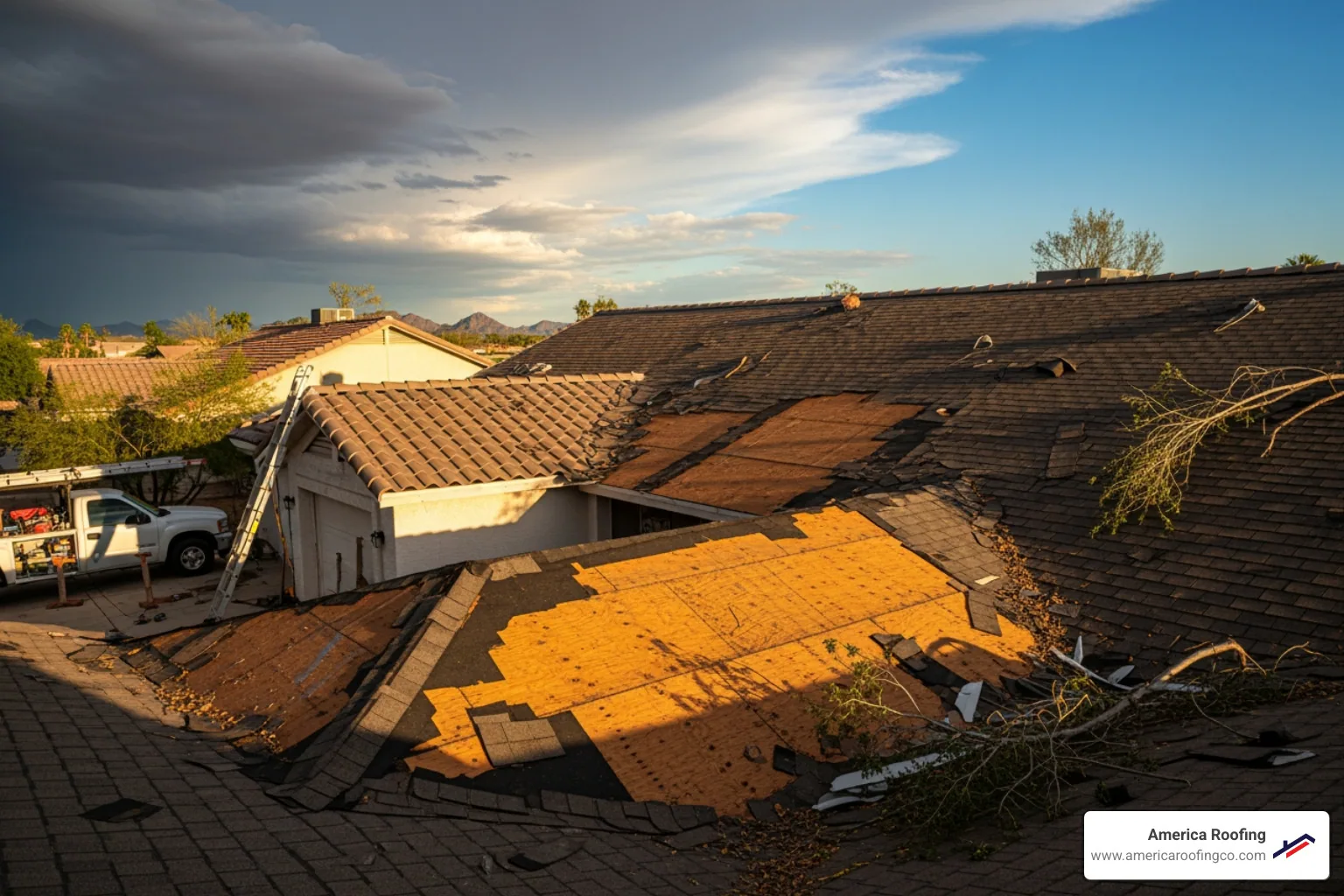
Separate immediate safety concerns from the later repair decision. A dry-looking roof can still have damage, while marks on a surface do not by themselves prove a leak or an insurance-covered loss. Document what can be seen safely and leave roof access to qualified crews.
Common Types of Storm Damage Affecting Phoenix Roofs
Phoenix weather, especially during monsoon season, brings a few key threats to your roof. Understanding them helps you know what to look for. Curious how monsoons work in our desert climate? Check out ASU's overview of Arizona monsoon basics.
- Monsoon Winds: Strong winds and microbursts can lift shingles, dislodge tiles and expose the underlayment. Assess the actual displaced material and connected flashing rather than estimating damage from wind speed alone.
- Hail Damage: Hail can be devastating, causing granule loss on shingles (which look like sand in your gutters), cracking tiles, denting metal components, and puncturing foam roofs. This damage compromises your roof's ability to protect your home from water and UV rays.
- Heavy Rain: Torrential monsoon rains will exploit any existing weakness in your roof, leading to water intrusion, ceiling stains, and potential mold growth. Overwhelmed gutters can also cause water to back up under your roofline.
- Debris Impact: Strong winds and haboobs can turn tree branches and other objects into projectiles that puncture or gouge your roofing materials.
Different roofing materials have unique vulnerabilities. Tile is durable but can crack from hail. Shingles are prone to wind lifting and granule loss. Foam is great for insulation but can be punctured. Metal is tough but can be dented, though this is often cosmetic.
A Homeowner's Checklist for Spotting Roof Damage
Stay on the ground when checking exterior conditions. Some major damage is visible there, but hidden moisture and small flashing defects can require professional inspection. Do not climb onto a wet, unstable or storm-damaged roof.
- Ground-Level Inspection:
- Scan the Roof: Look for missing/lifted shingles or cracked/displaced tiles.
- Check Gutters & Ground: Are there excessive shingle granules (looks like coarse black sand)? Are gutters dented or bent?
- Inspect Metal Parts: Check roof vents, flashing, and AC units for dents. Hail damage here is a strong sign your roof was also hit.
- Look for Debris: Are there tree limbs or roofing materials in your yard?
- Interior Inspection:
- Check for Leaks: Look for new water stains on ceilings or walls, especially after rain.
- Inspect the Attic: Check for moisture, wet insulation, or daylight coming through the roof deck.
Immediate Steps After Finding Storm Damage
Found damage? Acting quickly can prevent a minor issue from becoming a major disaster.
- Document Everything: Photograph accessible damage from a safe location and save the original images with the storm date and symptom history. Do not enter an unsafe attic or climb onto the roof for a photograph.
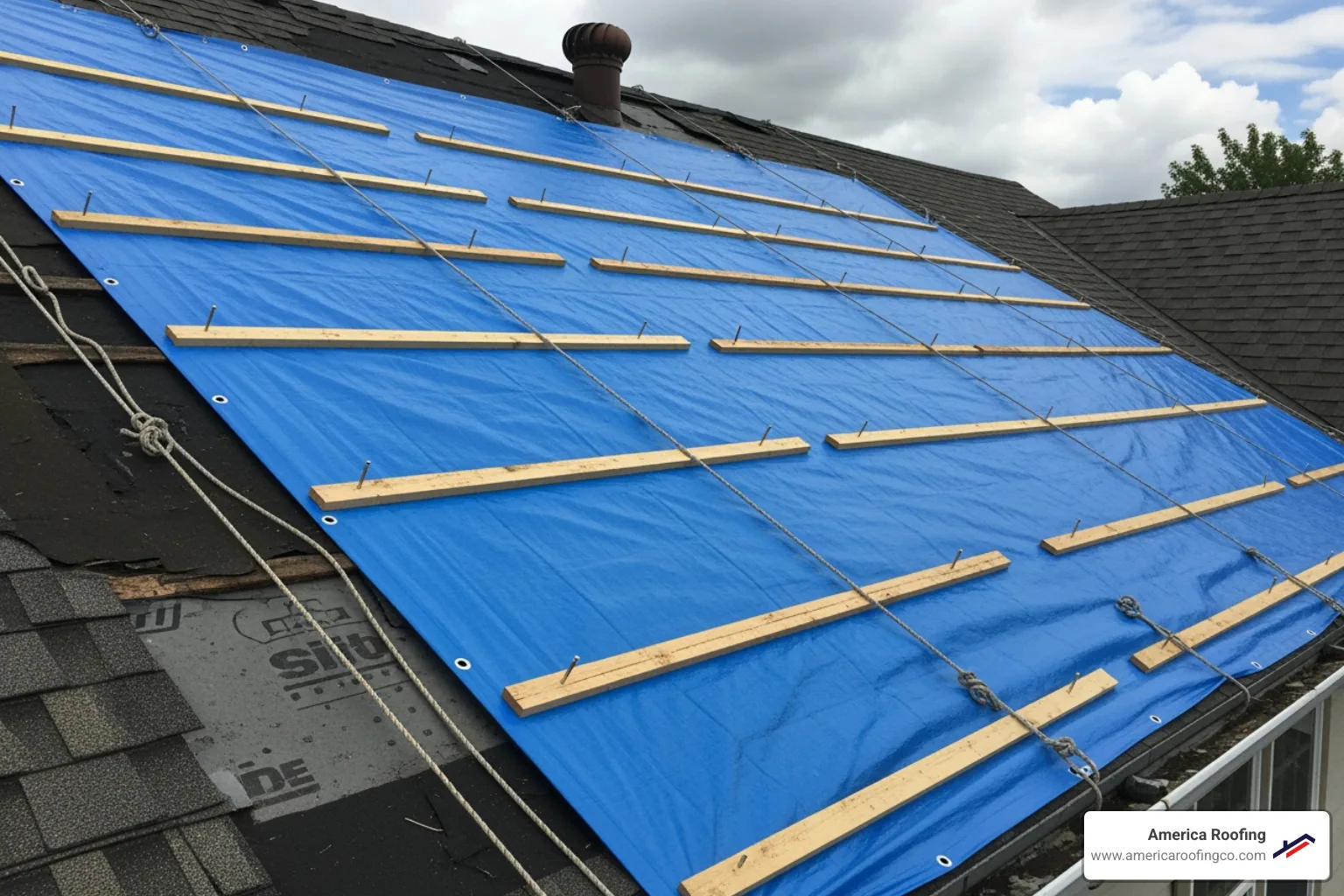
- Prevent Further Damage: Isolate affected interior areas and protect belongings only when safe. Ask trained roofing crews about temporary dry-in or tarping once safe roof access is possible. Temporary protection does not replace diagnosis or permanent repair.
- Call a Professional Roofer: Contact a qualified local roofer promptly, describe active leaks or safety hazards and confirm availability. Do not treat a suggested inspection interval as a response-time guarantee.
- Contact Your Insurance Company: Contact your insurer promptly and ask which reporting and repair deadlines apply to your policy. Coverage, exclusions and required documentation vary.
- Don't Ignore It: Even small issues can lead to big problems like mold, rotted wood, and a shortened roof lifespan. Addressing damage quickly is the smartest financial decision.
Your Complete Guide to Roof Storm Damage Repair in Phoenix
Once the immediate hazards are controlled, organize the inspection findings, repair proposal and insurance documents. Keep temporary work, permanent roofing scope and the insurer's coverage decision distinct so each can be checked against the evidence.
The Insurance Claim Process: A Step-by-Step Guide
Dealing with insurance can feel daunting, but a methodical approach makes it manageable.
- File Your Claim: Contact your insurance provider immediately to open a claim. Provide the date of the storm and a description of the damage.
- Meet the Adjuster (With Your Roofer): Ask whether your roofer can provide findings or attend the adjuster visit if appropriate. Inspection photographs and a defined repair scope can help explain observed conditions, but they do not guarantee coverage.
- Understand Your Policy: Ask your insurer how deductibles, replacement-cost or actual-cash-value terms, depreciation, exclusions and policy limits apply. Do not assume a policy pays the full replacement cost.
- Review the Report: Go over the adjuster's report with your contractor to ensure it's accurate and complete. If it's not, you can appeal the decision.
- Know the Rules: Confirm your policy's reporting deadlines and ask the insurer how a claim may affect the policy. Do not rely on a universal hail-claim deadline or a promise that rates cannot change.
Repair or Replace? Signs to Help You Decide
This is one of the biggest questions homeowners face. The answer depends on the age of your roof and the extent of the damage.
Consider Repair if:
- The failed area is localized and surrounding roof layers remain serviceable.
- New repair materials can integrate with the existing roof and its flashings without creating broader damage.
- The proposed repair addresses the water-entry path and any affected concealed layers, not only the visible stain.
Consider Replacement if:
- Leaks or material failures are distributed across several sections.
- The covering, underlayment, attachment or deck cannot support dependable localized work.
- The expected value of repeated repairs is poor compared with a clearly defined broader scope.
Replacement is a larger scope, not an automatic result of roof age or a particular damage percentage. Compare removal, deck work, material compatibility, disruption and actual written warranty terms before deciding.
| Factor | Localized repair | Broader replacement planning |
|---|---|---|
| Damage extent | A defined defect with serviceable surrounding layers | Distributed failures or incompatible surrounding material |
| Condition | Stable deck and workable moisture limits | Wet layers, unstable substrate or failing attachment require investigation |
| Estimate comparison | Define repair boundary, materials, access and exclusions | Define removal, deck assumptions, system, transitions and discoveries |
| Warranty | Confirm the exact repaired-area terms in writing | Confirm eligible system, workmanship terms and exclusions in writing |
An honest, professional assessment is the best way to make the right choice for your home and budget.
Choosing a Qualified Local Roofer in Phoenix
When your home is damaged, who you hire is your most important decision.
Verify the contracting company, license, insurance, written scope and local contact details before authorizing storm work. Be cautious of pressure to sign immediately, vague insurance promises or a proposal that does not identify who will complete and stand behind the work.
The Value of a Local Expert
America Roofing serves Phoenix and Tucson and has served Arizona since 1999. For storm repair, the useful comparison is how the contractor documents roof conditions, defines compatible repairs and communicates the limits of the scope. Ask how temporary protection, concealed findings and final repair photographs will be handled.
When choosing a contractor, always:
- Verify Their License and Insurance: We are fully licensed and insured (ROC#186438). You can also confirm any contractor's status using the Arizona ROC license lookup.
- Check Their Reputation: Look at recent Google reviews and their BBB rating.
- Get a Detailed Written Estimate: A transparent contract protects you.
- Ask About Warranties: A reputable roofer stands behind their work with strong material and labor warranties.
Choose a contractor who can explain the observed failure, the recommended scope and what remains uncertain. Compare the written work and exclusions rather than treating a low price or an insurance promise as proof of a complete repair.
If you're facing storm damage, don't hesitate. Get a free, no-obligation estimate for your roof repair.