
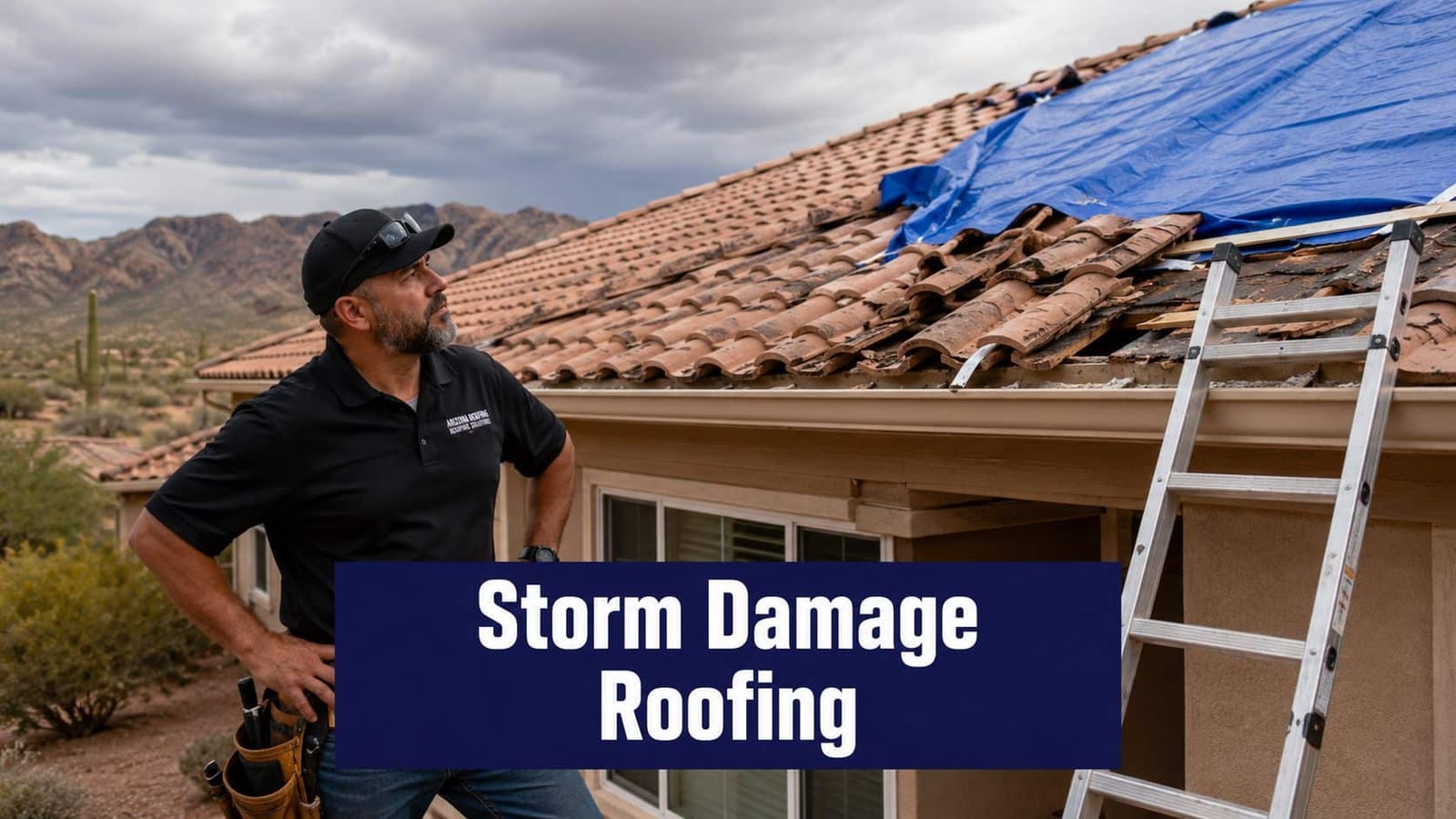
A monsoon cell just moved through Phoenix or Tucson, the patio is wet, branches are down, and the roof looks fine from the driveway. That's exactly when homeowners and property managers make expensive mistakes. A good storm damage roofing company helps in the right order, protects the building first, and keeps the insurance process from starting on a weak file.
After the Storm Your First 48 Hours
The first job isn't climbing a ladder. It's keeping people safe and stopping more water from getting in.
In Arizona, roof damage often stays hidden until a ceiling stain or active leak shows up, and by then significant water penetration may already be underway, which is why ground-level checks after a major storm matter so much according to guidance on detecting roof damage after a storm. Tile roofs, shingle roofs, foam roofs, and commercial flat roofs can all take storm damage that isn't obvious from the street.
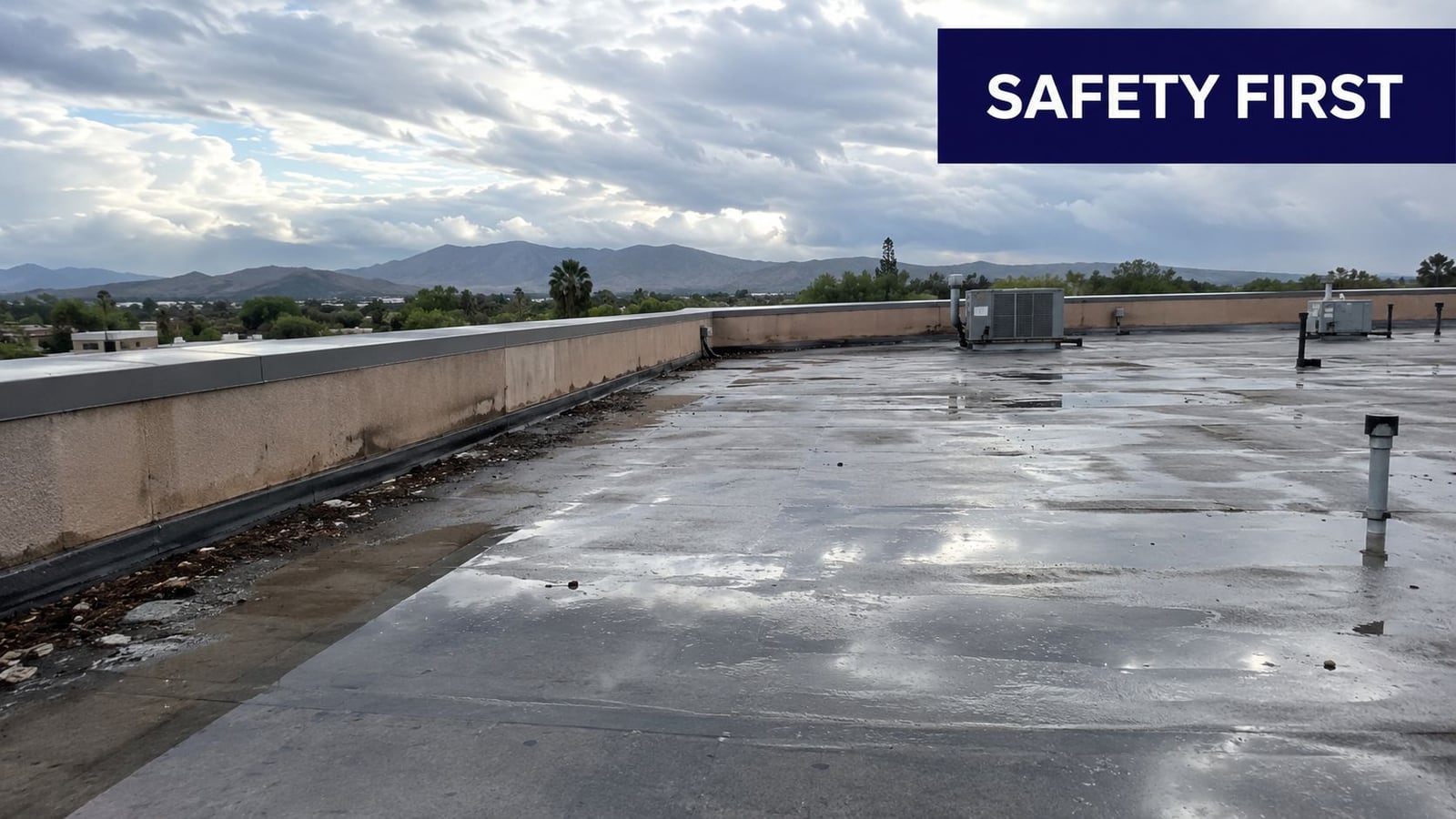
Start with a ground check
Walk the full perimeter of the building and look up from different angles.
- Look for debris lines: Branches, tile fragments, shingle pieces, metal flashing, or unusual granules around downspouts and gutters can point to roof impact.
- Check edges and corners: Wind damage often shows up at eaves, ridges, parapet edges, and roof transitions first.
- Scan the inside right away: Ceiling discoloration, damp drywall, soft paint, or a musty smell may be the first visible sign of roof failure.
- Notice drainage problems: On flat and low-slope roofs, standing water, clogged drains, and overflow marks around scuppers deserve fast attention.
Practical rule: Stay off the roof after a storm. Wet tile, slick coatings, loose gravel, and hidden soft spots turn a simple check into a fall hazard.
Don't wait on temporary protection
A lot of owners assume they can “watch it for a few days.” That usually backfires. Reputable local roofers often book up within days after regional hail events, and wait times can stretch to 2–4 months depending on damage severity and material availability, while non-local “stormer” crews flood the market during the wait. That same report warns that emergency tarping matters because mold can begin within 24–48 hours if water keeps entering the building, as noted in this article on roofers being backed up after storms.
That's why temporary dry-in work matters. Tarping a puncture, sealing an exposed transition, or protecting an open area around broken tile can prevent a repairable problem from turning into interior damage, insulation replacement, decking issues, or tenant complaints.
For a practical overview of what temporary protection should look like while waiting on a crew, review these steps for emergency roof repairs.
What works in the first two days
A storm damage roofing company should push this sequence:
- Secure people and property
- Document visible conditions from the ground
- Protect openings or active leak areas
- Schedule a professional inspection quickly
- Avoid signing with the first door knocker
What doesn't work is waiting for an interior leak to “prove” there's damage. By then, the roof problem has already spread into the building envelope.
How to Document Roof Damage for Your Insurance Claim
Good documentation isn't just a pile of phone photos. It's a record that shows location, type of damage, likely cause, and timing.
After hail storms in Arizona, damage can show up as dents or bruising on shingles, granule loss in gutters, cracked shingle edges, water stains on ceilings, and damage to flashing, vents, or gutters. Some of that still won't be visible from the ground, which is why professional inspections matter for claim documentation and for deciding whether repair or replacement makes more sense, as explained in this guide to hail storm roof damage in Arizona.
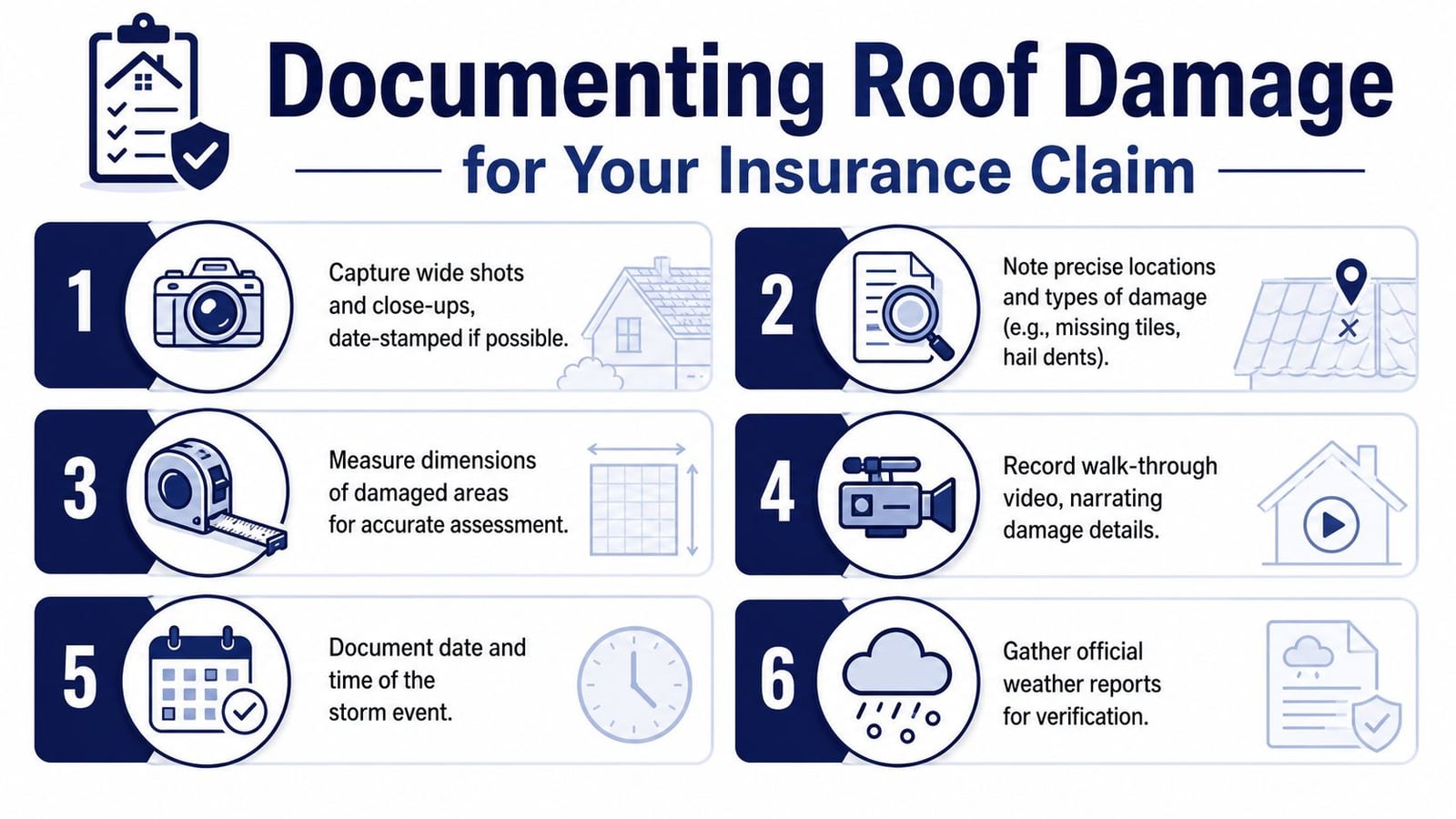
Build a clean photo record
The best claim files show the whole roof system, not just one dramatic close-up.
- Start wide: Take full shots of each elevation, each roof slope you can see, and the overall property condition.
- Move closer: Photograph damaged tiles, lifted shingles, punctures, flashing separations, dented metal, and displaced rooftop accessories.
- Include context: If a gutter was hit, show the gutter and the roof section above it. If water entered inside, show the ceiling stain and the exterior roof area tied to it if possible.
- Add scale: A measuring reference helps. That makes close-up damage photos easier to understand later.
- Capture collateral damage: Downspouts, fence lines, window screens, rooftop equipment screens, and detached metal trim can support the storm timeline.
Keep a written log
Photos help. Notes make those photos useful.
A simple claim log should include:
For owners collecting dozens of images from tenants, staff, or multiple buildings, organized folders matter. Tools built for streamlined image sharing for photographers can also help property teams keep storm photos sorted by date and address instead of losing key images in text threads.
Save original files if possible. Cropped screenshots and compressed message attachments can make documentation look incomplete.
Match the documentation to the roof type
Arizona roofs fail differently.
On tile roofs, the visible problem may be broken or slipped tile while the bigger issue sits underneath at the underlayment or flashing. On shingle roofs, edge lift, impact bruising, and granule loss deserve close attention. On flat and foam roofs, look for punctures, split seams, lifted terminations, crushed drains, or impact points around rooftop equipment.
A professional report should pull those conditions into one file. That's where a certified roof inspection becomes useful. It gives the insurance claim a technical starting point instead of a casual opinion.
The Right Way to File a Roof Insurance Claim in Arizona
Most property owners think the first call should go to the insurer. In practice, that often starts the claim before the damage has been properly identified.
The better sequence is simple. Call a qualified storm damage roofing company first, get the roof inspected, collect the evidence, and then file. That order protects the claim from gaps that are hard to fix later.

Why the sequence matters
Poor timing hurts claims. According to this article on storm damage insurance and roof repairs, 30–40% of storm-damage claims are initially denied or reduced because of poor documentation timing. The same source says homeowners who involve a contractor early can recover 25% more in settlements in Valley-area case studies, because hidden damage such as daylight penetration or soft decking gets documented before the insurer locks into an incomplete scope.
That doesn't mean a contractor replaces the insurer. It means the building owner starts with a real damage assessment instead of a rushed first notice.
The stronger filing order
A disciplined claim process usually looks like this:
- Schedule the roof inspection first
Get a documented assessment of storm-related conditions, likely affected areas, and immediate mitigation needs. - Review the evidence
The owner should understand what is visible, what may be hidden, and what temporary work is needed to stop additional damage. - File the claim with documentation in hand
This changes the quality of the initial conversation. The report is no longer vague. - Have the roofer available for the adjuster visit
That keeps the discussion tied to actual roof conditions, material details, and scope items on site. - Address supplements promptly if hidden damage appears during tear-off
Decking damage, wet insulation, and concealed flashing failure don't always show up until the roof is opened.
What gets missed when owners call too soon
Arizona roofs can hide damage in places desk handling doesn't catch well.
- Tile systems: Broken field tile may be easy to spot, but underlayment damage and disrupted flashings can be the actual leak path.
- Flat commercial roofs: Punctures and membrane or coating damage near penetrations can be easy to overlook without a close inspection.
- Foam roofs: Surface impact may look minor until water finds a breach and starts moving laterally.
- Steep shingle roofs: Creased or edge-lifted shingles can be missed if no one inspects the slope directly.
A clear outside explanation of Pipeline On roofing claims can help owners understand the moving parts of the insurance side, but the most important decision happens before that paperwork starts.
Call the roofer first. File second. That one choice often determines whether the claim starts with evidence or assumptions.
For owners who want the step-by-step version of that workflow, this guide to understanding the roofing insurance process is the right next read.
Vetting Your Storm Damage Roofing Company
After a major storm, the market gets noisy fast. Trucks appear overnight, door knockers start working neighborhoods, and low-price promises sound tempting when the building is exposed.
That's exactly when owners need to slow down and vet the company, not just the estimate.
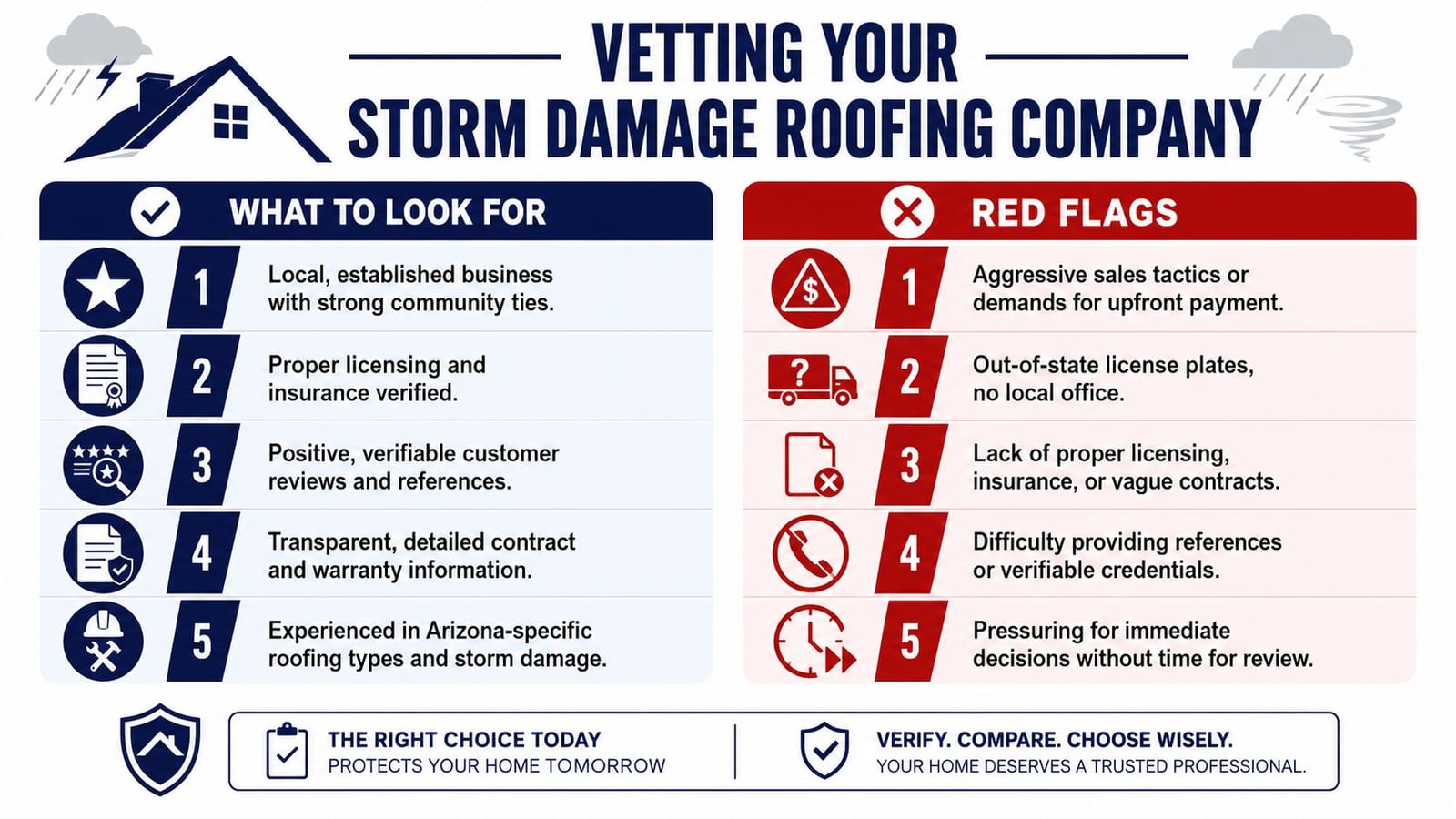
Local contractor versus storm chaser
The cheapest proposal often carries the most risk. The Insurance Information Institute notes that choosing contractors solely on low price is a common pitfall, often tied to storm chasers asking for large upfront lump-sum payments and disappearing before the work is complete, while reputable companies provide detailed cost breakdowns and avoid pressure tactics. That warning appears in this article on storm-resistant roof efforts and contractor pitfalls.
A side-by-side comparison helps.
Questions worth asking before signing
The answers should be specific and easy to verify.
- Ask about Arizona licensing: The company should be able to provide licensing details without hesitation.
- Ask for proof of insurance: General liability and workers' compensation shouldn't be treated as optional paperwork.
- Ask where the office is: A real local presence matters when warranty issues, punch-list items, or follow-up leaks show up later.
- Ask who will do the work: Subcontractor-heavy projects aren't automatically bad, but the owner should know who supervises the crew.
- Ask how temporary dry-in is handled: This matters in the gap between inspection, approval, and full repair.
- Ask what happens if hidden damage is found: Good companies explain change documentation and supplements clearly.
Red flags that deserve a hard no
Some warning signs are immediate.
- Pressure at the door: “Sign now before the neighborhood fills up” is not a professional process.
- Large upfront cash demand: That's one of the most common ways owners get trapped.
- Vague promises about insurance: No one should promise a specific outcome before inspection, documentation, and carrier review.
- No detailed scope: If the proposal doesn't state what areas are affected and what system components are included, the owner can't compare bids fairly.
- No local references or verifiable contact path: If it's hard to reach the company before the contract, it won't get easier after.
Good roofing companies don't need panic to close a job. They need a documented roof, a clear scope, and a signed agreement the owner has time to read.
Responsiveness matters after the sale too
Post-storm work creates a lot of inbound calls, which is why communication systems matter. For owners evaluating who will answer when leaks reopen or schedules change, it helps to understand how an AI receptionist for home services fits into call handling. The point isn't the technology itself. It's whether the company has a reliable process for returning calls, scheduling inspections, and keeping customers informed when the area is busy.
A deeper local comparison of storm chasers vs local roofers can help owners sort out who's built to stay in Phoenix and Tucson after the storm cycle ends.
What to Expect During the Roof Repair or Replacement
Once the inspection is complete, the claim is moving, and the contractor is chosen, most owners want to know what the project will feel like on site.
The answer depends on roof type. A tile repair on a steep residential slope moves differently than a commercial flat reroof with drains, parapets, and rooftop equipment. But the rhythm is usually similar. Materials get staged, access is set up, protection goes down around the property, damaged roofing is removed or opened up, and the crew rebuilds the affected sections before final cleanup.
What the job looks like on site
The noisy part is usually tear-off and prep. On tile roofs, crews may remove and stack tile before addressing underlayment or flashing below. On shingle roofs, tear-off creates the biggest debris load early. On flat and foam roofs, prep often includes removing wet materials, cleaning the surface, and rebuilding details around penetrations and edge conditions.
Owners should expect:
- Noise during work hours
- Crew traffic around access points
- Dump trailers or material deliveries
- Protective measures for landscaping, walkways, and parking areas
- Daily cleanup, with final magnetic and visual cleanup at completion
For commercial buildings, access coordination matters as much as the roofing itself. Tenant notices, delivery windows, restricted parking, and protecting entries all need to be planned before work starts.
Why hidden damage can change the scope
Arizona storm damage often isn't obvious until the roof is opened. As noted earlier in this article, leaks can show up only after water has already penetrated the system. That's why soft decking, wet insulation, deteriorated underlayment, and failed flashing details sometimes appear during tear-off even when the original leak looked small.
When that happens, the contractor documents the newly exposed conditions and updates the scope. On insured projects, supplements may then come into play. The best-run jobs don't treat that as drama. They treat it as documentation and process.
A roof project goes more smoothly when the owner expects two things. The visible damage starts the job, and the opened roof tells the full story.
Repair versus replacement
Not every storm leads to full replacement. The decision usually comes down to extent, system condition, and whether the damaged area can be repaired without leaving the building with weak transitions or mismatched performance.
A focused repair often makes sense when damage is isolated and the rest of the roof still has serviceable life. Replacement becomes more likely when damage is widespread, multiple details have failed, or the storm exposed an already aging system that was close to the end of its useful life.
For Phoenix and Tucson properties, the material matters too. Tile roofs may be repairable if the field damage is limited and the underlying components are still sound. Flat and foam systems need close review around drains, seams, parapets, and penetrations because one weak detail can keep leaking long after a visible patch is made.
Making the Right Roofing Decision for Phoenix and Tucson
The best storm response is methodical. Stay off the roof, check the property from the ground, document everything clearly, and get a qualified roof inspection before opening an insurance claim. That order gives homeowners, property managers, and commercial building owners a much stronger position.
Phoenix and Tucson roofs deal with more than one storm event. They deal with heat, UV exposure, dust, drainage stress, aging underlayment, and the way monsoon weather finds weak transitions fast. That's why the right storm damage roofing company isn't just available. It understands tile systems, flat roofs, foam roofing, coatings, leak paths, and the practical difference between a quick patch and a durable repair.
For anyone weighing the next move, the safest path is local, documented, and deliberate. A dependable Phoenix and Tucson roofing company should be able to inspect the damage, explain the trade-offs, and help the owner decide whether temporary protection, repair, or replacement makes the most sense.
If storm damage has put the next step in doubt, America Roofing can help with practical guidance for residential and commercial roofs in Arizona. Call 602-237-2478 or request a roofing estimate to schedule an inspection in Phoenix or Tucson.