
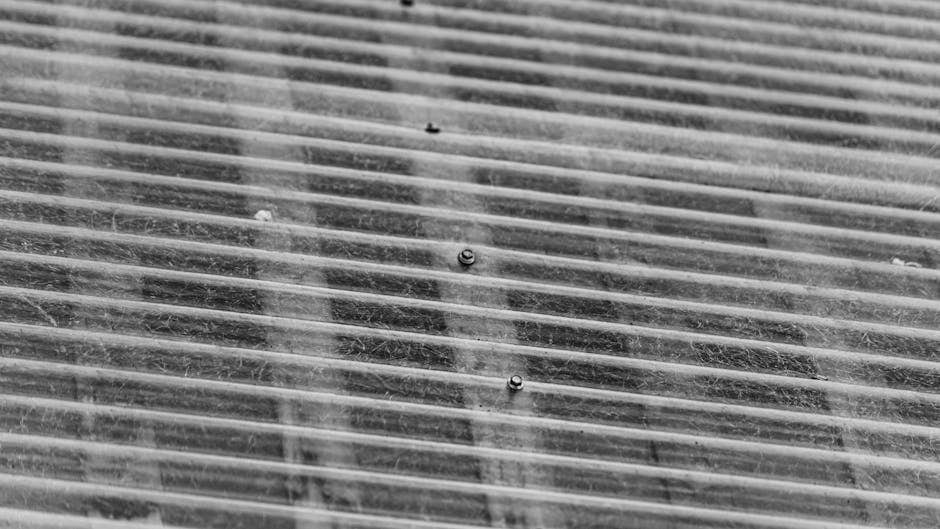
A dripping sound from the ceiling is a homeowner's nightmare, signaling a breach in your home's primary defense against the elements. For homes with iron sheet roofing, these leaks can seem daunting, but they are often manageable with the right knowledge and tools. This handbook will guide you through every step, from identifying the source of the leak to applying a lasting repair, ensuring your home stays safe and dry.
Why Iron Sheet Roofs Leak (And How to Stop Them)
Finding the right iron sheet leakage solution is critical for protecting your home from water damage, mold growth, and costly structural repairs. Whether you're dealing with a small crack or a persistent seam leak, the most effective solutions include high-quality sealants (silicone, polyurethane, or butyl rubber), waterproof tapes, metal patches, and proper surface preparation to ensure lasting adhesion.
Quick Iron Sheet Leak Solutions:
- Small holes and cracks - Clean the area, apply silicone or polyurethane sealant
- Fastener leaks - Replace corroded screws, add washers, seal with high-solids sealant
- Seam failures - Apply butyl tape with polyester scrim, seal with compatible caulk
- Larger holes - Use a metal patch (overlap 2+ inches), secure with screws and sealant
- Widespread damage - Consider professional replacement if rust or holes are extensive
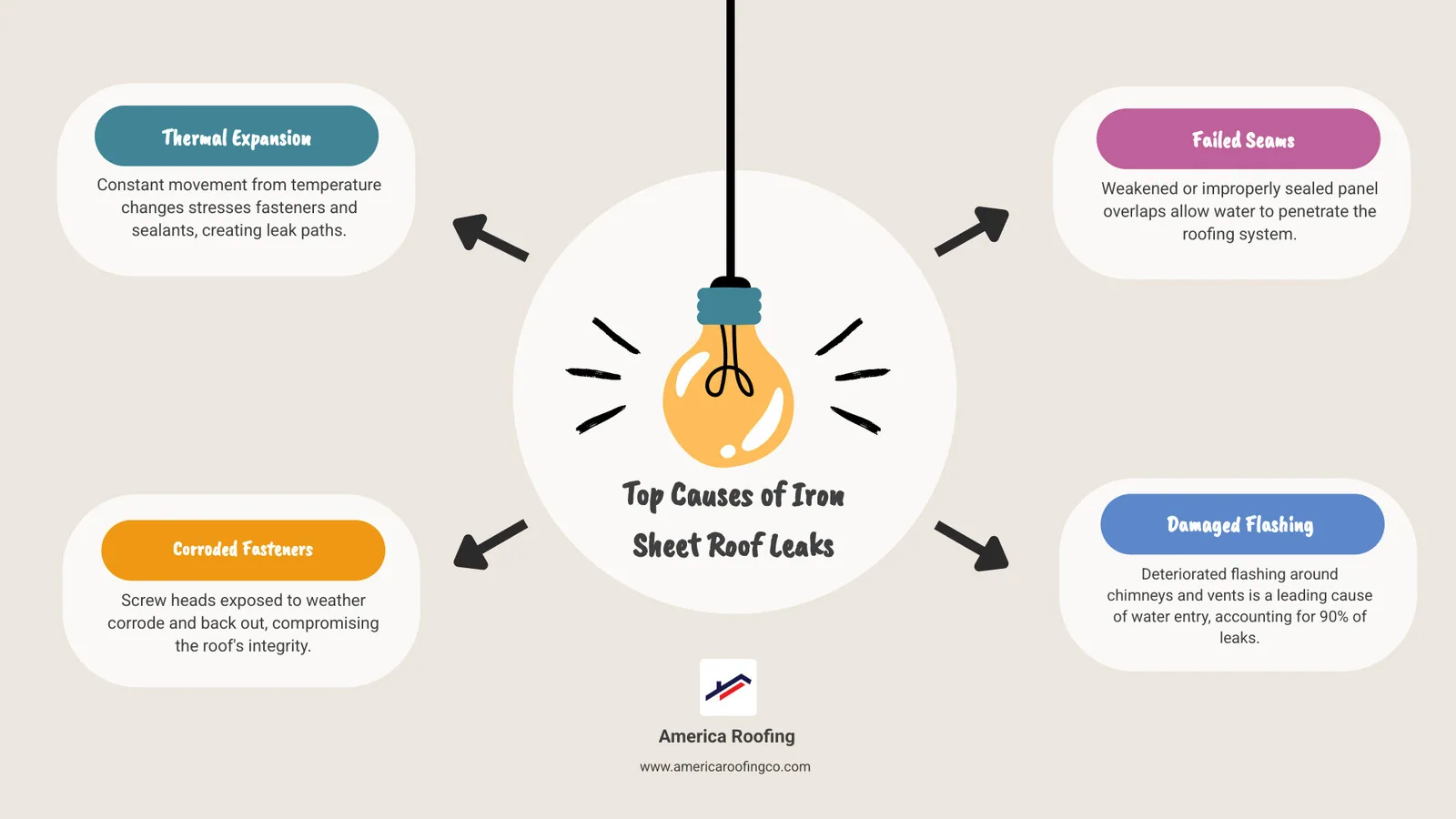
Metal roofs are built to last, but they're not invincible. Research shows that metal roofs have a high coefficient of expansion, meaning they expand and contract significantly with temperature swingsa daily reality under Arizona's scorching sun and cool desert nights. This constant movement stresses fasteners, causing screws to back out over time, and puts pressure on sealants at seams and flashing points, creating pathways for water to sneak in.
The most common culprits behind iron sheet leaks include corroded fasteners (especially around screw heads exposed to weather), failed seams where panels overlap, damaged or deteriorated flashing around chimneys and vents, and debris accumulation that traps moisture against the metal surface. Poor installation ranks as a leading cause too, with an estimated 90% of all roof leaks occurring at or around faulty flashing, according to industry data.
Left unaddressed, even a small leak can trigger a cascade of problems. Water infiltration leads to rust that weakens the metal panels themselves, mold growth in your attic and walls, stained ceilings, andduring Arizona's intense monsoon seasonpotentially catastrophic interior flooding. The good news? Most iron sheet leaks are repairable if you catch them early and use the right materials and techniques.
Key iron sheet leakage solution vocabulary:
Understanding the Enemy: Common Causes and Signs of Iron Sheet Leaks
Iron sheet roofs are tough, lasting 40 to 70 years with proper care. But even they have limits against Arizona's relentless sun, monsoons, and dramatic temperature swings. Understanding why your roof might be leaking is the first step toward a lasting iron sheet leakage solution.
The Science Behind Metal Roof Leaks
One of the biggest threats to your roof is the daily cycle of expansion and contraction. Metal has a high coefficient of expansion, meaning it changes size with temperature shifts. An iron sheet roof baking at 180 degrees in Phoenix and cooling overnight experiences a massive swing. This constant movement creates stress throughout the system.
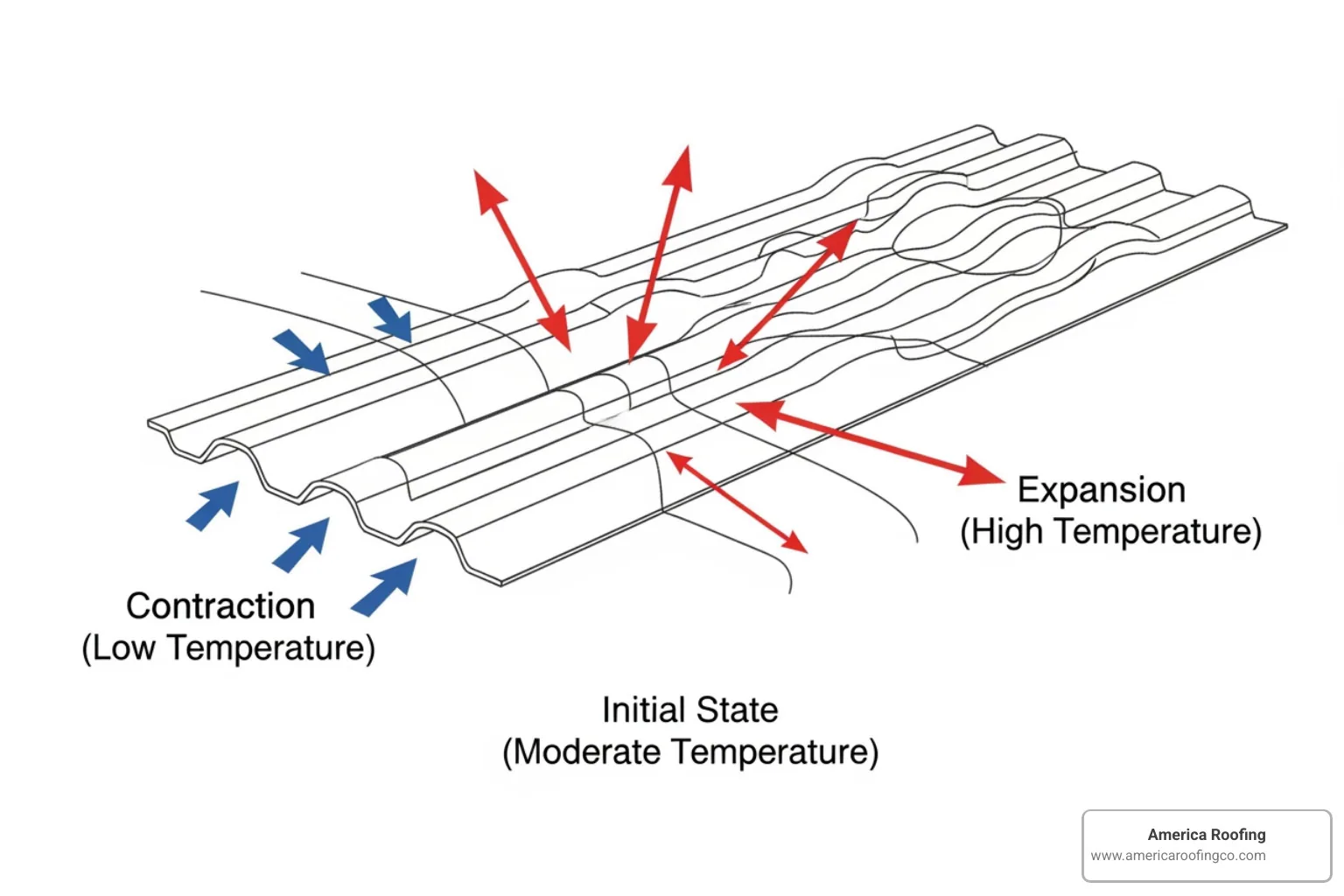
This movement causes sealants at seams and flashing to crack or lose their grip. While designed to last 10-20 years, Arizona's thermal cycling can shorten that lifespan. Fastener loosening is another common result, as screws work themselves loose, leaving enlarged holes for water. Corrosion around fastener heads worsens the problem. Finally, seam failure occurs when overlapping panels separate or their sealants fail due to thermal stress. Understanding these forces, detailed in The Science of Roofing How Weather Affects Your Roof, explains why even well-maintained roofs eventually need attention.
Telltale Signs of a Leaking Iron Roof
Your roof usually gives warning signs before a small problem becomes a disaster. Catching these early is key to an effective iron sheet leakage solution.
- Water stains on ceilings or walls: Look for discoloration, damp spots, or bubbling paint, especially after rain. Stains may appear far from the actual leak.
- A musty or damp smell: An odor in your attic or upper rooms signals hidden moisture and potential mold, even without visible water.
- Visible rust or corrosion: Inspect your roof for rust, particularly around fasteners, seams, and edges. Rust weakens the metal and creates pinholes.
- Punctures or holes: Damage from branches, hail, or previous work creates direct water pathways.
- Damaged flashing: Since 90% of all roof leaks happen at or around faulty flashing, inspect flashing around chimneys, vents, and skylights for cracks, gaps, or corrosion.
- Peeling paint: This can indicate trapped moisture or a failing protective coating, leading to corrosion.
- Higher utility bills: Unexplained increases could mean gaps in your roof are letting conditioned air escape.
Learn more about spotting problems with our guides on How to Spot and Prevent Roof Leaks and 7 Signs Your Roof Needs Repair. Ignoring these signs can lead to costly issues, as explained in 5 Things That Can Happen If a Damaged Roof Is Neglected.
Your Repair Toolkit: Choosing the Right Sealants and Tapes
Once you've found a leak, having the right materials is key to a successful iron sheet leakage solution. Not all products are created equal, and the wrong choice can lead to a failed repair within months.
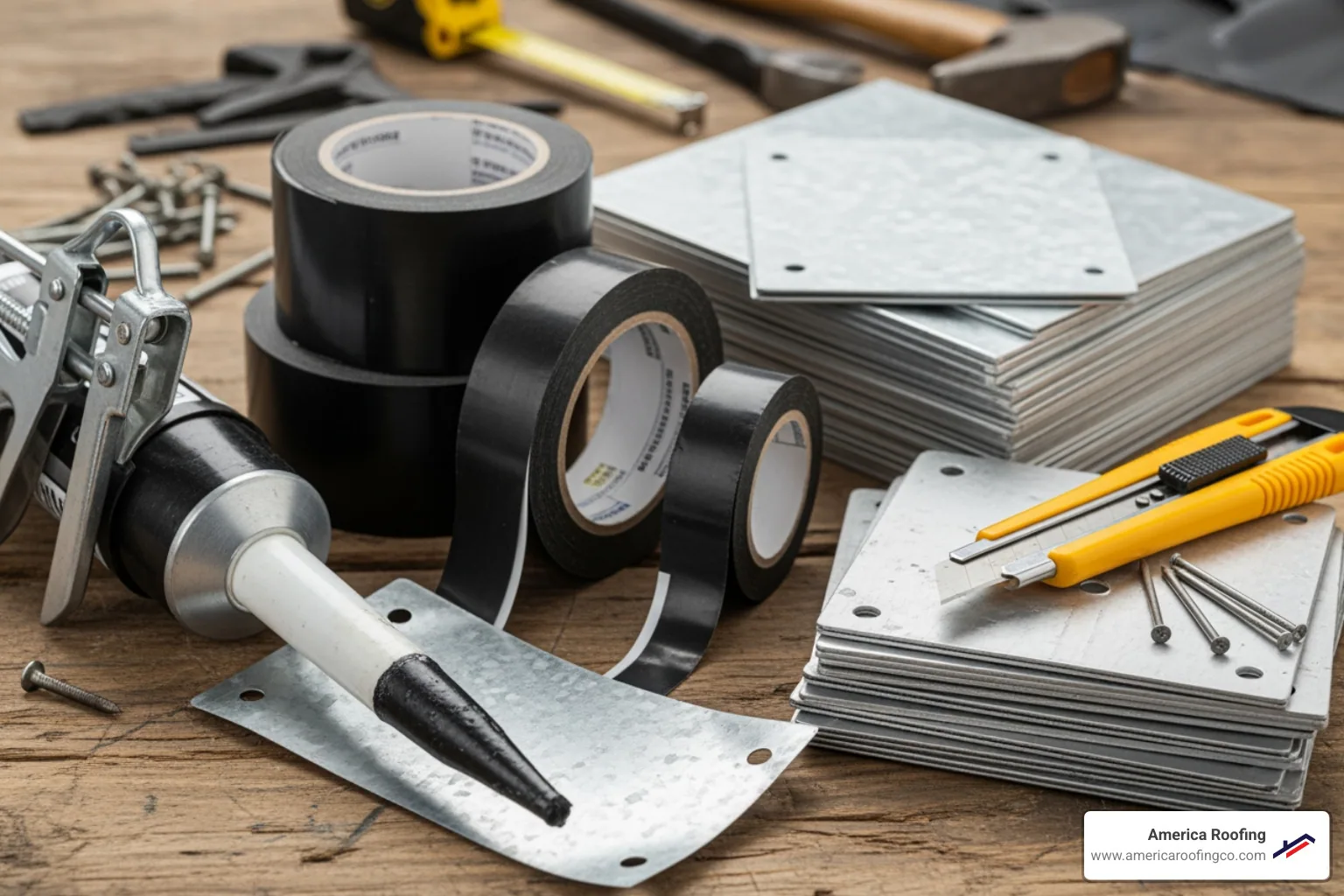
When choosing a product, focus on four factors: material compatibility (must bond with iron/galvanized steel), UV resistance (non-negotiable in Arizona), flexibility (to handle thermal expansion), and strong adhesion. A sealant must remain bonded through monsoon rains and triple-digit heat. For more guidance, consult resources on choosing a metal roof sealant.
Comparing Your Sealant Options
Understanding the three main sealant types is crucial for finding the right iron sheet leakage solution.
- Silicone Sealants: Often the gold standard for hot climates due to excellent flexibility and outstanding UV resistance. They are ideal for small holes, cracks, and sealing around fasteners and flashing. Brands like Geocel 4350 offer strong, flexible seals with a 10-20 year lifespan.
- Polyether Sealants (including Polyurethane): Provide strong adhesion and good UV resistance, making them suitable for fastener heads and seams. High-solids formulas excel in demanding applications. However, some types require a primer on metal, an often-skipped step. They typically last 10-20 years.
- Butyl Rubber Sealants: Known for excellent flexibility and high tack, they are ideal for creating gaskets between trims and sealing seams. Their performance in areas with significant movement makes them a smart choice, with a 10-20 year lifespan.
The Role of Waterproofing Tapes
Waterproofing tapes are the quick-response team of iron sheet leakage solutions—fast, effective, and versatile.
Butyl tape is the workhorse. This tacky, self-fusing rubber mastic creates an instant, water-resistant seal that stays flexible in extreme temperatures. This instant seal is invaluable for emergency repairs during a storm when you can't wait for a liquid sealant to cure. Products like Gibraltar butyl tape provide a professional-grade bond.
Butyl tape is also excellent for gutter repair, seam sealing (especially tapes reinforced with polyester scrim), and flashing repairs. It's often easier for DIYers to apply correctly than liquid sealants.
The Ultimate Iron Sheet Leakage Solution: A Step-by-Step Repair Guide
Now that you know the causes and materials, it's time to repair the leak. But first, a word on safety.
Safety is non-negotiable. Metal roofs are slippery, get dangerously hot in the Arizona sun, and working at heights is always risky. Review our guide on Roofing Safety What Every Homeowner Should Know before you start. If you're uncomfortable with heights, the roof is steep, or the damage is extensive, call a professional. It's the smartest choice and far cheaper than a fall or a botched repair.
Preparing the Roof Surface for Repair
Proper surface preparation is the single most important step for a lasting repair. A great sealant will fail on a dirty, rusty, or greasy surface.
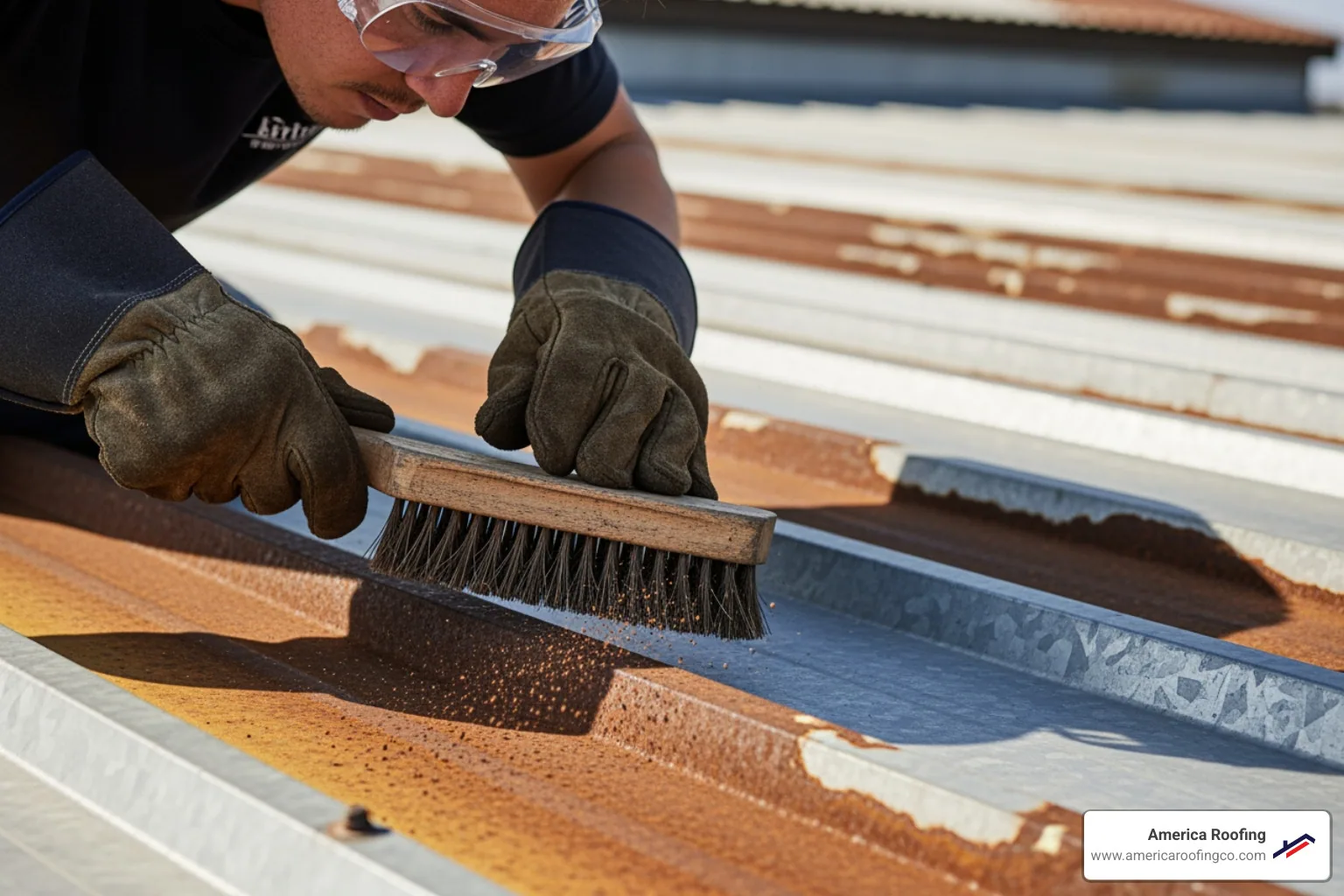
- Clean: Clear away all loose debris like leaves, twigs, and dirt with a stiff brush or blower.
- Degrease: Use a mild detergent to clean any grease or oil, then rinse and dry completely.
- Remove Rust: Use a wire brush or sandpaper to remove all loose and flaking rust. Sand the area smooth.
- Scuff: Lightly scuff the metal surface with a wire brush or sandpaper to improve adhesion.
- Prime: If dealing with significant rust or bare metal, apply an anti-corrosive primer.
Skipping preparation is one of the 5 Common Roof Repair Mistakes and How to Avoid Them. For more details, see How to Clean Your Roof Correctly.
A DIY Iron Sheet Leakage Solution for Small Holes and Cracks
Small punctures, pinholes, or hairline cracks can often be fixed in under an hour with a quality sealant or waterproof tape.
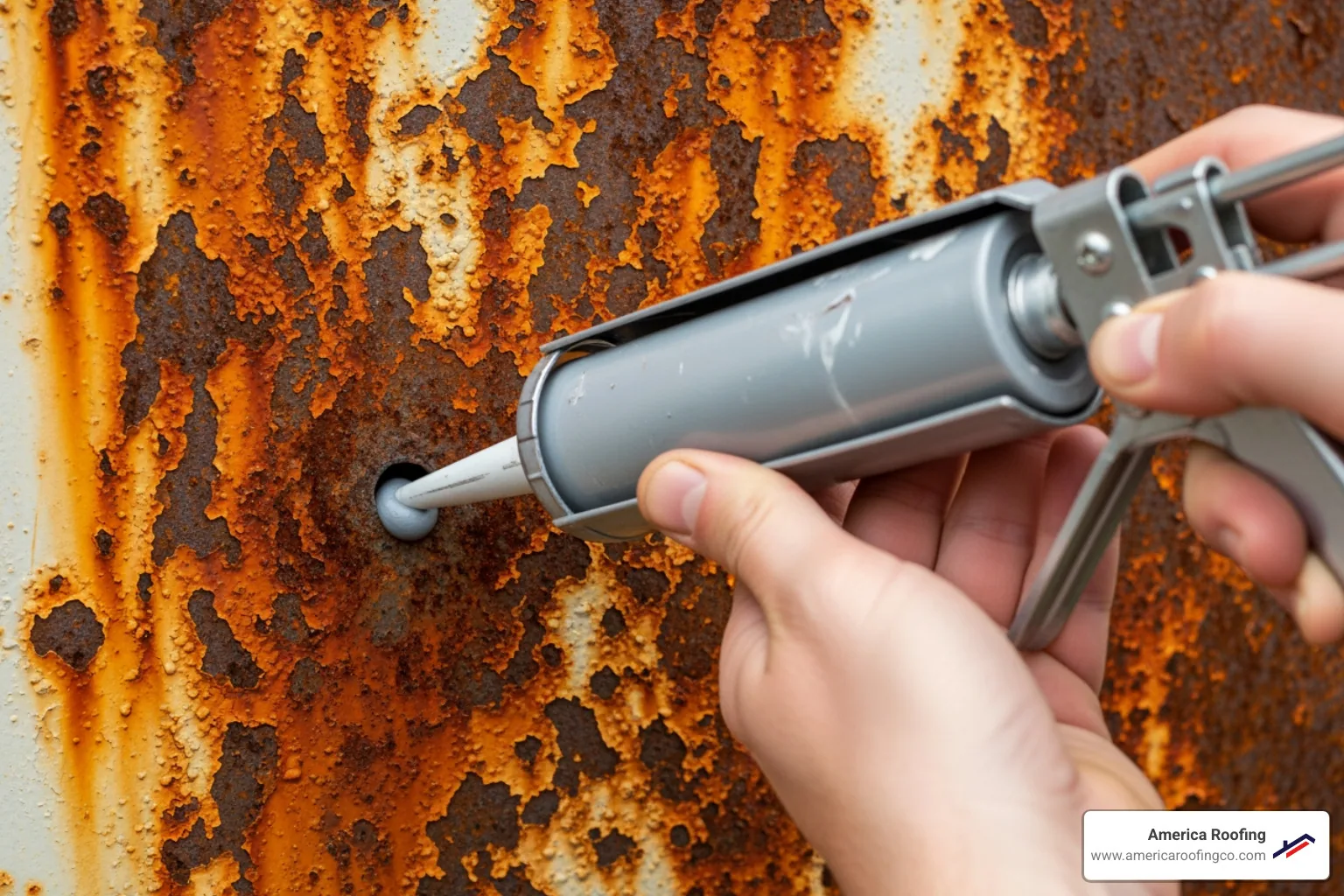
After preparing the surface, apply a consistent bead of silicone or polyether sealant directly over the damage, overlapping slightly onto the sound metal. Use a wet finger or putty knife to smooth and feather the edges. For butyl tape, cut a piece that extends at least two inches beyond the damage, peel the backing, and press it down firmly from the center outward to avoid air bubbles. These quick fixes are surprisingly effective, as detailed in our guide 12 Tips for Fixing Common Roof Leaks in Minutes.
Tackling Larger Damage: An Iron Sheet Leakage Solution Using Patches
A metal patch is the go-to iron sheet leakage solution for larger holes, tears, or heavily corroded areas.
- Prepare the surface thoroughly around the damaged area.
- Cut a metal patch that matches your roof and overlaps the damage by at least two inches on all sides.
- Apply a generous layer of sealant to the underside of the patch, focusing on the edges.
- Position the patch over the hole and press firmly to squeeze out excess sealant.
- Secure the patch with self-tapping metal screws with rubber washers, spaced about four inches apart.
- Seal each screw head with a dab of sealant to prevent new leaks.
Once cured, you can paint the patch to match your roof for a seamless look and extra UV protection. For a visual guide, this video is helpful: How to repair your leaking METAL ROOF quickly using ... - YouTube.
Proactive Protection and Professional Expertise
A solid iron sheet leakage solution doesn't end with the repair; it includes preventative maintenance and knowing when to call for backup.
Preventing Future Leaks: Best Practices
The best leak is one that never happens. A little proactive attention can prevent major headaches.
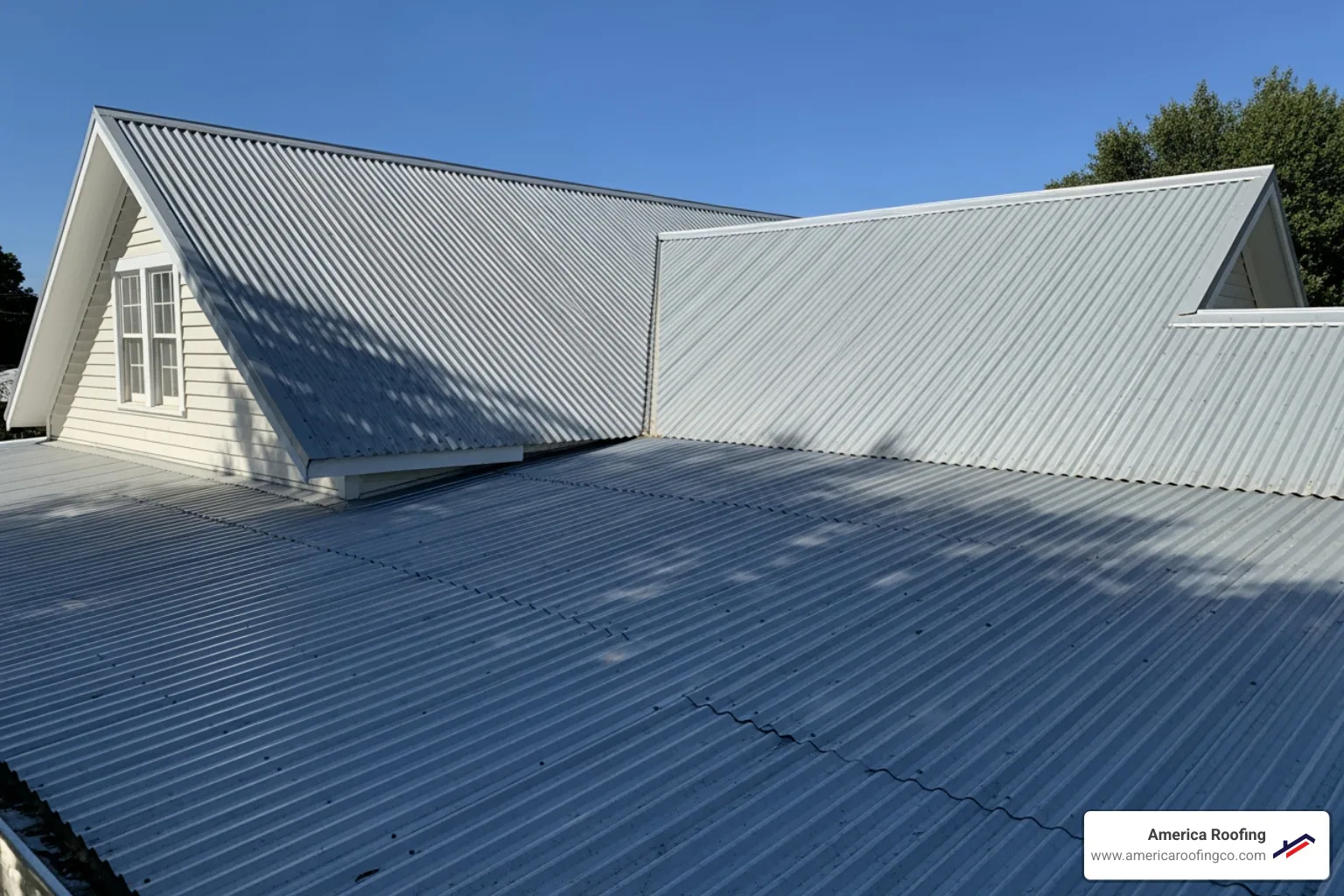
- Regular Inspections: Check your roof twice a year and after major storms for loose fasteners, cracked sealant, or rust.
- Clear Gutters: Clogged gutters cause water to back up and pool on the roof, accelerating corrosion. Learn more about The Role of Gutters in Roof Health.
- Remove Debris: Piled-up leaves and branches trap moisture, creating a perfect environment for rust.
- Trim Trees: Overhanging branches can scratch or puncture your roof during storms.
- Check Fasteners: Tighten any loose screws and replace corroded ones. A dab of sealant over the heads adds extra protection.
Use our Roofing Maintenance Checklist Keeping Your Roof in Top Shape to stay organized.
Repair or Replace: Making the Right Call
How do you know when to stop patching and consider replacement? Look for these signs:
- Widespread corrosion: If rust covers multiple panels and the metal feels thin or brittle.
- Extensive physical damage: Large holes, severe buckling, or numerous punctures.
- Age: If your roof is nearing the end of its 40-70 year lifespan and leaks are frequent.
- Cost analysis: If the cumulative cost of repairs approaches the cost of a new roof.
- Multiple leaks: Leaks in different areas suggest systemic failure.
Our article Roof Repair or Roof Replacement What Is Better can help you weigh the factors.
When to Call a Professional Roofer
Recognizing when you need professional help is smart, not weak.
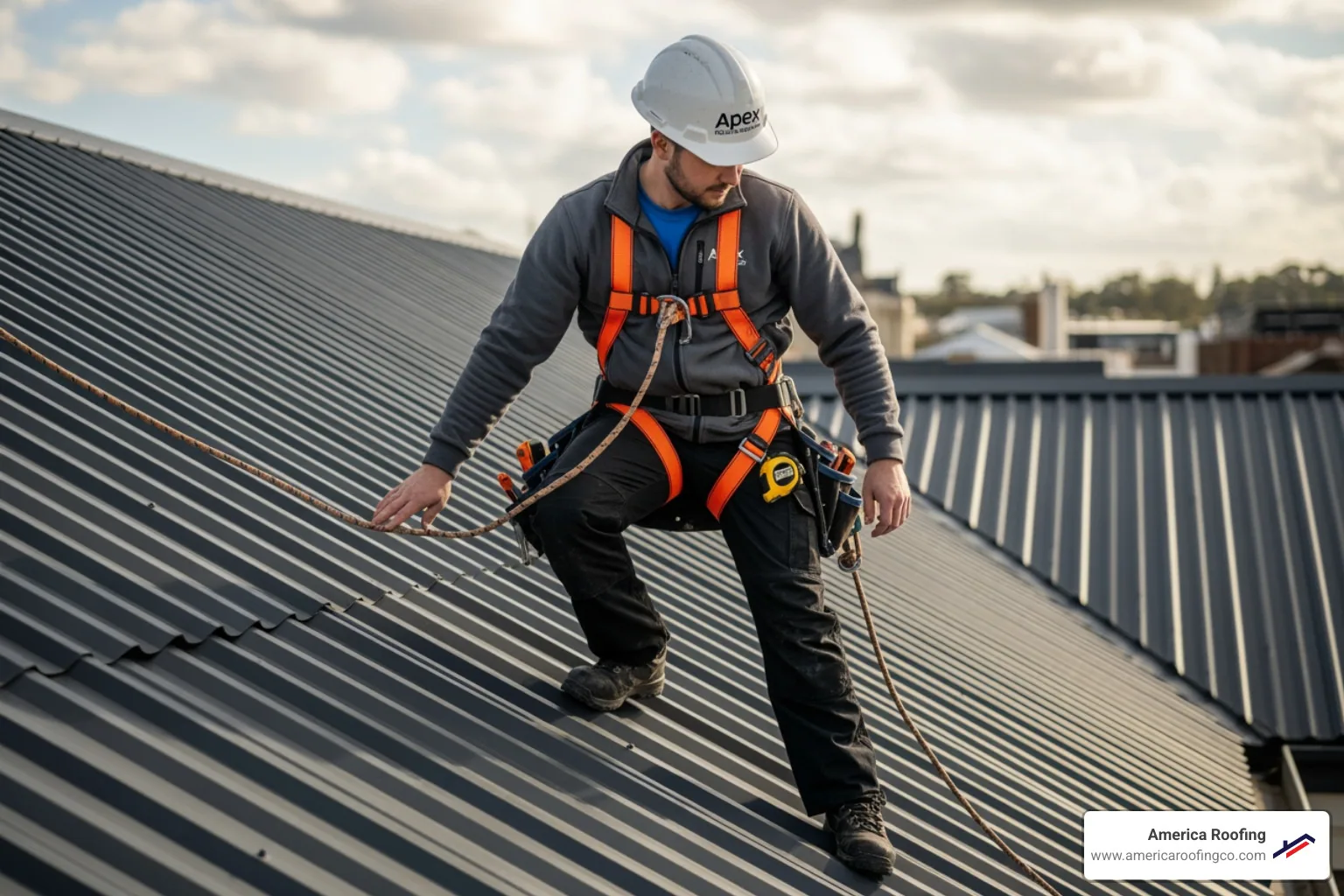
Call a pro for:
- Extensive damage: Large corroded sections or structural issues require expert tools and materials.
- Safety concerns: If your roof is steep, you're uncomfortable with heights, or you lack safety gear.
- Complex roof lines: Intricate flashing around chimneys, valleys, and skylights is tricky. 90% of roof leaks happen at or around faulty flashing.
- Lack of experience or time: Hiring a pro ensures the job is done right the first time.
- Warranty considerations: DIY repairs can void your roof's warranty.
- Local expertise: Arizona's unique weather presents challenges that local pros understand best.
For more insight, see DIY vs Professional Roof Repairs What You Need to Know.
Conclusion
Your iron sheet roof is your home's first line of defense against Arizona's elements. A leak, no matter how small, is an urgent issue that can quickly escalate into rust, mold, and costly water damage. Armed with this guide, you now understand the iron sheet leakage solution for your situation. You know that thermal expansion is the primary enemy, and you can spot warning signs like water stains, rust, and damaged flashing. You have a roadmap for repairs, from applying high-quality sealant to a small crack to securing a metal patch over a larger hole.
However, not every leak is a DIY project. If you're facing widespread corrosion, extensive damage, or feel unsafe working at heights on a hot, slippery metal surface, calling a professional is the wisest and most cost-effective decision.
The experts at America Roofing have protected Arizona homes since 1999. As a veteran-owned, family-run company with over 25 years of local experience, we know exactly how Phoenix-metro weather affects metal roofing. We've seen every type of leak and know which iron sheet leakage solution will last in our unique climate.
Whether you need a professional inspection, emergency repairs, or a full roof replacement, our team offers honest, no-pressure advice and fully transparent pricing. We are fully licensed and insured (ROC#186438), and our reputation as the highest-reviewed roofer in the Phoenix area reflects our commitment to flawless craftsmanship and legendary customer service.
Don't let a small leak become a catastrophe. Contact us today for expert roof repair in Arizona, and let's keep your home safe and dry for years to come.