
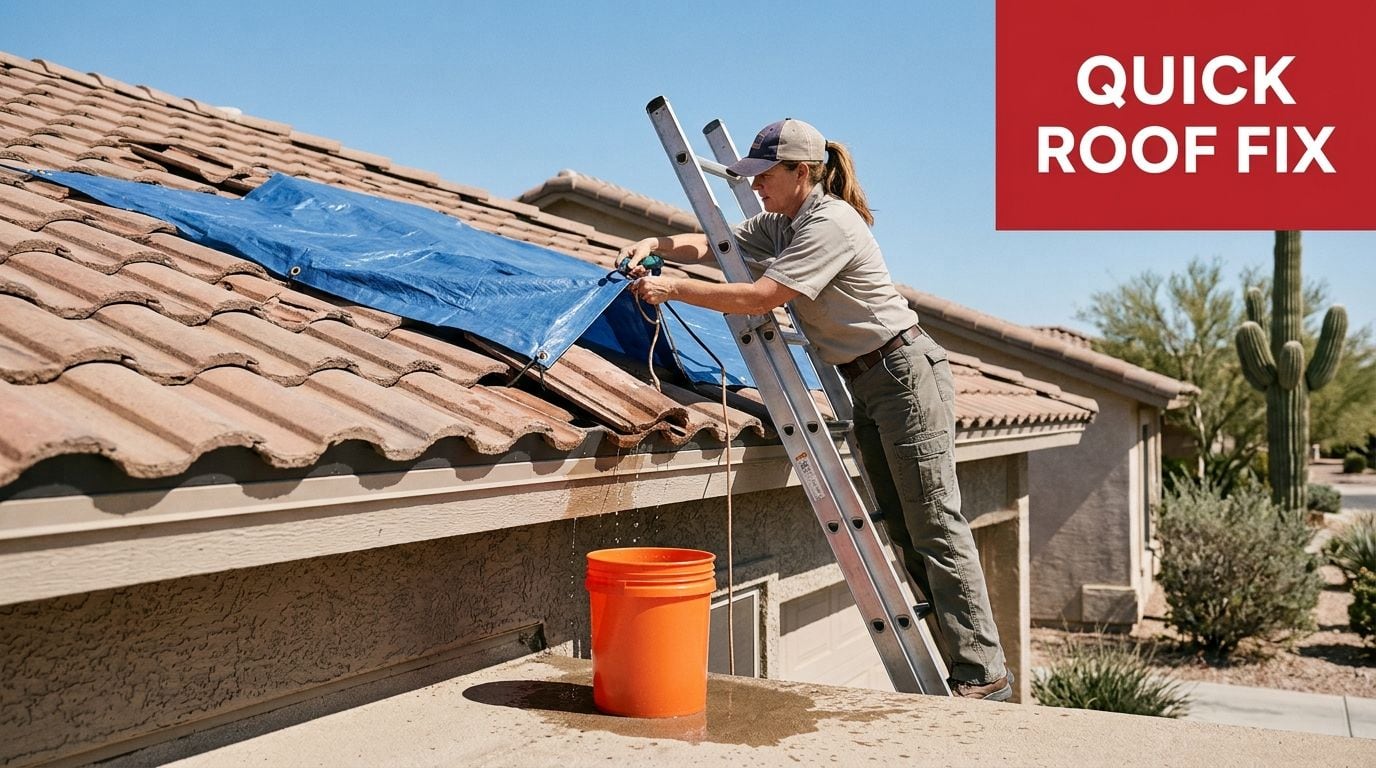
A ceiling stain after a monsoon storm gets attention fast in Phoenix or Tucson, especially when the drip shows up in a hallway, a warehouse office, or a room that stayed dry all summer. The right response is calm triage, not a guess-and-patch job, because roof leaks in Arizona can move from a small intrusion to a larger structural problem quickly.
When water gets into insulation, decking, or interior finishes, the repair bill changes in a hurry, and the difference between a simple fix and a major project is often whether the source gets found early. That's why leaking roof repair has to start with diagnosis, then move to the right scope for the roof system that's on the building.
Why Leaking Roof Repair Demands Immediate Action
A homeowner in Phoenix spots a brown ring on the bedroom ceiling the morning after a monsoon burst. A property manager in Tucson notices a damp spot in a top-floor suite, then hears the tenant say the stain was smaller last week. Those are the kinds of warnings that deserve immediate attention, because the leak may already be moving beyond the roof surface and into insulation, framing, or interior finishes.
The reason is simple. Water damage is one of the most consequential home-loss problems tied to roof failure, and about 22.6% of home insurance claims were for water damage or freezing, with an average claim cost over $15,000 and up to $25,000 from just 1 inch of water water damage statistics. Once a leak has been ignored, it is rarely limited to the first stain.
Arizona adds its own pressure. Heat, UV exposure, thermal movement, dust, and monsoon-driven water intrusion can all turn a small opening into a larger failure point. A roof that looked fine through the dry months can start showing damage as soon as storm water finds brittle sealant, stressed flashing, or aging underlayment.
Practical rule: if water is already inside the building, the clock is running on hidden damage, not just the visible stain.
The financial curve is uneven too. A basic repair can start around $150, with many U.S. leak repairs averaging $650 to $900, while more involved repairs with decking or structural damage can rise to $1,500 to $3,000+ or even $24,000 if a full roof replacement is needed roof repair cost guide. That spread is why a delay in Phoenix or Tucson can turn a small repair into a much larger scope than the first stain suggests.
The first step is to record what you see before cleanup changes the evidence. For teams that manage multiple sites, a workflow like how Recepta.ai helps roofers can support lead intake and routing, but the building still needs a human inspection and a real repair plan. If the building has a fresh leak, the right next move is to match the damage to the roof system and choose the scope that fits, or use storm damage roof repair options when the situation calls for immediate response.
Emergency Leak Triage Before the Roofer Arrives
The first job is to protect the interior. Move furniture, electronics, and paper records away from the drip line, then place a bucket or container where the water is landing. If the stain is bulging, the area below it should be kept clear because wet drywall can fail without much warning.
Photos matter before anything gets wiped down. Take wide shots of the room, then close-ups of the stain, any bubbling paint, and any damp materials on the floor. That documentation helps a roofing contractor, and it also gives a property manager a clean record if an insurance claim or tenant report is needed.
A safe attic check can be useful if there's easy, dry access and no one has to walk near wet insulation or unstable framing. Look for damp wood, visible daylight around penetrations, and water trails on framing members. If the attic is hot, cramped, or already wet enough to make footing uncertain, the safer move is to stay out and wait for a pro.
Do not climb onto a roof just because the leak is active. Monsoon winds, slick tile, loose granules, and lightning make DIY roof work a bad trade.
A temporary exterior tarp can help in the right conditions, but only if the area is reachable without taking risks. That kind of stopgap should never replace a real repair, and it should never be used as proof that the problem is solved. The goal is to reduce immediate damage until inspection and repair happen.
For urgent cases, it helps to have a roofer who can respond with storm-damage triage. The most relevant next step is storm damage roof repair options, especially when the leak followed wind, debris impact, or a heavy rain event. Keep the focus on safety, documentation, and getting the roof checked before the next storm cycle.
Diagnosing the Source of Your Roof Leak
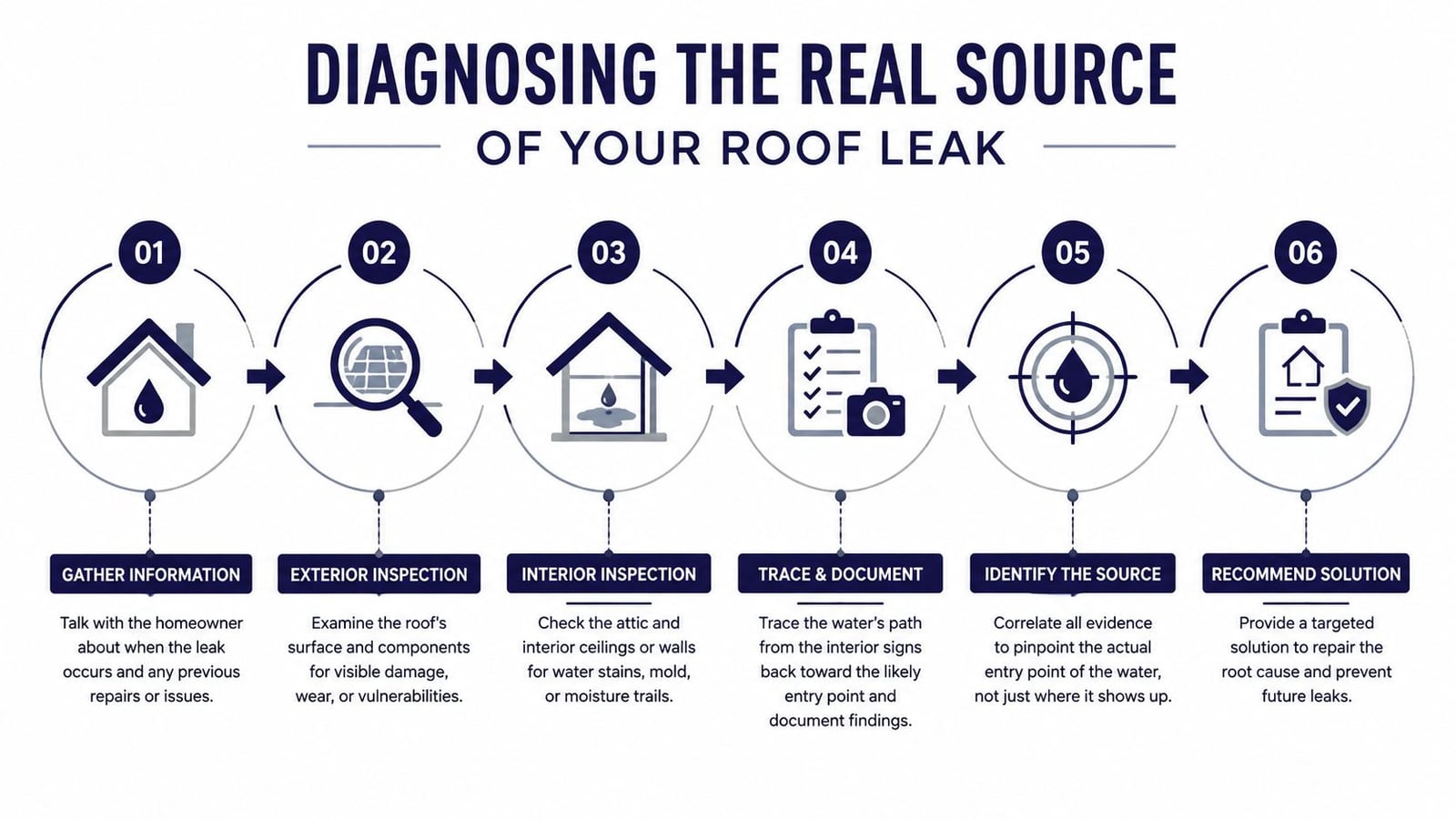
The stain on the ceiling is usually not the entry point. Water can travel along decking, framing, and other building materials before it shows up indoors, so the wet spot inside is often several feet away from the actual opening. A proper leak search starts above the stain, not at the place where the water finally appeared.
A solid diagnosis starts in the attic when access is safe. Trace the stain upslope, look for drips on the underside of the roof deck, then inspect flashing, vents, valleys, skylights, and other penetrations. A controlled hose test can narrow the source when it is done on small roof sections, with one area wetted at a time and enough waiting time to see whether water enters before moving on.
A separate question matters just as much in Arizona, especially in homes with older ventilation or mixed roof assemblies. The problem may be active roof penetration, but it may also be attic condensation or another interior moisture source. Industry guidance lists excess attic humidity or condensation as a common cause of roof leaks, which is why moisture signs in the attic need to be read carefully instead of assumed to be roof failure how to repair a leaky roof.
Decision point: if the attic shows moisture without a clear roof opening, the diagnosis has to separate roof failure from condensation before any repair money gets spent.
That distinction matters more after a hot day followed by a cool evening, because ceiling staining can appear after temperature swings even when the roof covering itself is not the only issue. In those cases, ventilation, insulation condition, and attic humidity need to be considered alongside roof penetrations. If the wrong problem gets patched, the staining can return and the actual source stays hidden.
For homeowners who want a deeper diagnostic framework, tips from America Roofing are useful because they focus on hidden leak paths and roof-specific observation rather than just surface staining. A good roofer will not stop at the visible damage. The right inspection follows the water.
If you need a contractor after the leak source is identified, roofer lead generation strategies matter to the companies trying to stay responsive during monsoon season, because the fastest callbacks usually come from crews that have a steady intake process and can keep inspection slots open.
Permanent Repair Options by Arizona Roof Type
A permanent repair starts with removing the failed material and checking what is underneath it. On a real roof job, that usually means pulling back damaged roofing, inspecting the deck, replacing soft or rotted sheathing when needed, reinstalling underlayment, and tying the new materials back into the existing system so water sheds the right way. A surface patch can buy time, but if the substrate is already compromised, it usually fails again at the next monsoon.
Arizona roofs do not fail the same way. Tile roofs often hide underlayment wear until wind or rain exposes it. Flat roofs tend to show seam breakdown, drainage trouble, or ponding. Foam roofs and coated systems usually fail at stressed transitions or where the coating has worn thin. Shingle roofs more often fail at flashing, exposed fasteners, or tabs that no longer seal after years of heat.
The repair has to match the roof system, not just the leak location. For homeowners trying to fix concrete tile roofs in Arizona, the work often means lifting tile carefully, replacing failed underlayment, then resetting or replacing damaged tile without disturbing the surrounding field. Flat and foam roofs need a different sequence, because the weak point is often a seam, a transition, or a drainage detail that needs to be rebuilt, not just sealed. A bid worth considering should spell out what gets removed, what gets replaced, and what gets checked after the repair.
Repair scope also changes when the building is commercial. Roof access, equipment, parapet conditions, and the way water moves across the roof can change the job quickly, especially on flat roofs that keep ponding in the same spots. A proposal that only says “seal leak” without explaining the failure mode usually leaves too much unanswered.
The cost curve matters once the damage is real. A simple flashing or pipe-boot repair may stay near the low end, while work that reaches underlayment, decking, or interior finishes climbs fast. The repair cost range spans from about $150 for small work to $650 to $900 on average, then $1,500 to $3,000+ when structural damage enters the picture, and up to $24,000 for a full replacement. That spread is why a leak that looks minor from inside can still be expensive to fix the right way.
For companies that need the marketing-side lesson, roofer lead generation strategies matter because steady intake keeps inspection slots open during monsoon season. The roof still has to be repaired based on the actual failure mode, not the speed of the callback. America Roofing handles that kind of residential and commercial diagnosis in Phoenix and Tucson, including leak repair, flat roof work, and reroofing decisions when the damage has gone beyond a small patch.
When Repeated Leaks Signal Roof Replacement
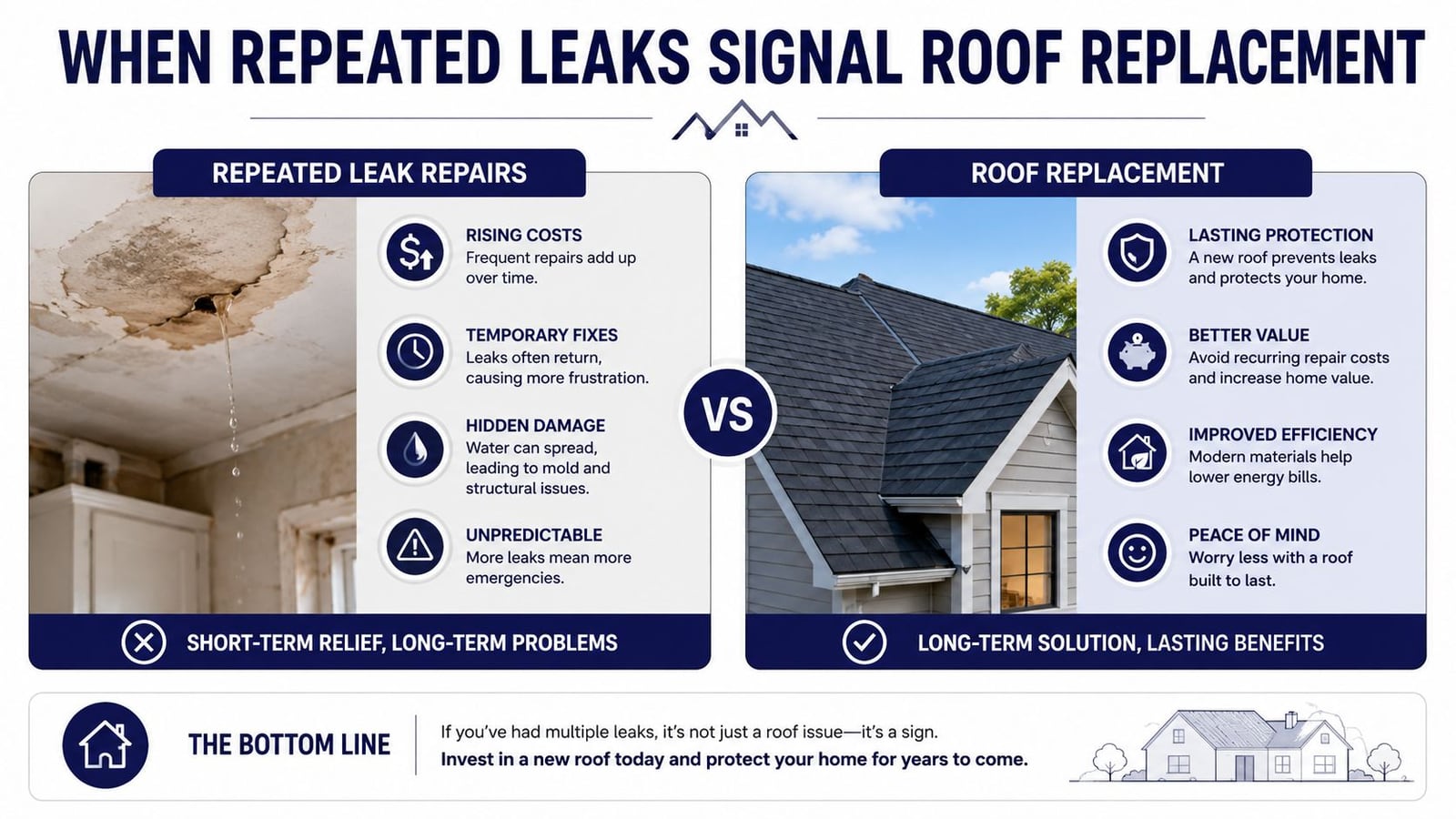
Repeated leaks in the same valley, flashing line, or penetration usually mean the roof system is wearing out in that spot, not that the last repair was careless. A roof can still look patchable from the ground and yet be at the stage where every fix only buys a short delay. That is where repair economics matter.
A simple flashing or pipe-boot fix may stay near the low end, but once water reaches underlayment, decking, or interior finishes, costs climb fast. The repair cost range spans from about $150 for small work to $650 to $900 on average, then $1,500 to $3,000+ when structural damage enters the picture, and up to $24,000 for a full replacement. That spread is why repeated repairs can become poor value before the leak looks dramatic from inside.
The practical threshold is not one number, because roof age, material type, and storm history all matter. If repairs keep showing up in the same areas within a 12 to 24 month planning window, the roof deserves a replacement-level review rather than another surface patch. That is especially true on older Arizona roofs that have taken strong UV exposure, dust, and monsoon stress.
When the same roof keeps leaking in different places, the problem is often system-wide fatigue, not a missed spot.
A full replacement can make more sense when repair access is difficult, the roof covering is brittle, or the deck has been compromised enough times that patching keeps chasing new failures. For owners weighing that turn, Phoenix roof replacement becomes the right conversation instead of another temporary fix.
A smart owner does not have to choose between panic replacement and endless tar and caulk. The choice is whether the roof can still give dependable service after the next rain cycle. If the answer is uncertain, planning for replacement is usually better than waiting for the next interior stain.
Getting a Professional Roof Inspection and Quote
A professional roof inspection should begin with the leak history, not just the roof surface. Good documentation includes photos of the interior stain, notes about when the leak appeared, any previous patch locations, and the approximate age of the roof. For commercial buildings, it also helps to note whether the problem appears after wind events, heavy rain, or a certain drainage path on the roof.
The goal is a quote that explains scope clearly. A proper estimate should identify whether the issue is a localized repair, a broader section repair, or a replacement conversation, and it should make clear what materials and labor are included. If the building has a tile system, a foam roof, a flat roof, or a shingle roof, the scope should match that system instead of relying on a generic sealant answer.
A trained inspector matters because the leak source is often remote from the ceiling stain, and because hidden damage can sit under the visible problem. For owners comparing proposals, professional roof inspection is the right standard to look for when they want more than a quick look from the ladder. The best next step is to ask for a diagnosis that ties the stain to the roof assembly, not just to the room below.
For Phoenix and Tucson homeowners, America Roofing can review leak damage, repair scope, and replacement planning for residential and commercial roofs. To move forward, call 602-237-2478 or use request a roofing estimate.
America Roofing handles leaking roof repair, roof replacement, tile, flat, foam, and commercial roof work across Phoenix and Tucson with a focus on what failed, not just what's visible inside. If the roof is staining, leaking after monsoon weather, or cycling through repeat patches, visit America Roofing and request a quote so the problem gets diagnosed and repaired before the next storm does more damage.