

Roof leaks in cement sheet roofing can escalate quickly—especially in Arizona's extreme heat and monsoon seasons. This guide explains practical, proven fixes you can do now, when to call a pro, and how to prevent future leaks. Start here to diagnose the source, choose the right materials, and protect your home for the long term.
Understanding the Enemy: Common Causes and Hidden Dangers of Roof Leaks
A persistent drip from your ceiling is more than just an annoyance; it's a warning sign that your home's primary defense against the elements is compromised. For homes with cement sheet roofing, especially in the harsh Arizona climate, a small leak can quickly escalate into a major problem, threatening your property's structural integrity and your family's health. This guide provides a complete roadmap to identifying, repairing, and preventing leaks in your cement sheet roof.
A cement sheet leakage solution starts with understanding that you have several proven options, from quick DIY patches to comprehensive professional repairs, depending on the severity and location of your leak. For most homeowners facing water stains on their ceiling, the fastest path forward involves cleaning the damaged area, identifying the exact leak source, and applying a flexible sealant or cementitious coating designed for Arizona's extreme heat and UV exposure. If the damage is widespread, older sheets have become porous, or you're seeing repeated failures, a professional assessment will determine whether targeted repairs or full sheet replacement offers better long-term value.
Quick Cement Sheet Leakage Solutions:
- Immediate DIY Fix - Clean the area, apply a primer, and seal small cracks with an elastomeric liquid membrane or polyurethane caulk (works for hairline cracks and single damaged sheets)
- Professional Repair - For multiple damaged sheets, failed flashing, or hard-to-reach areas, a licensed roofer will lift and reset tiles, replace battens, and install high-temp underlayment (typical for roofs aged 15+ years in Arizona)
- Preventative Maintenance - Apply a protective coating every 5-10 years, keep gutters clear, and schedule annual inspections to catch small issues before monsoon season arrives
- Full Replacement - When more than 30% of your roof shows damage, sheets are brittle from decades of sun exposure, or repairs become frequent, replacement with modern materials provides 20-30 years of worry-free protection
What Makes a Cement Sheet Leakage Solution Effective:
- Surface preparation is crucial - the repair surface must be clean, dry, and free of loose material for sealants to bond properly
- Material selection matters - Arizona's 100+ temperatures demand UV-resistant, flexible products that won't crack or peel
- Proper application technique - building up multiple thin coats and extending coverage beyond the damaged area prevents future failures
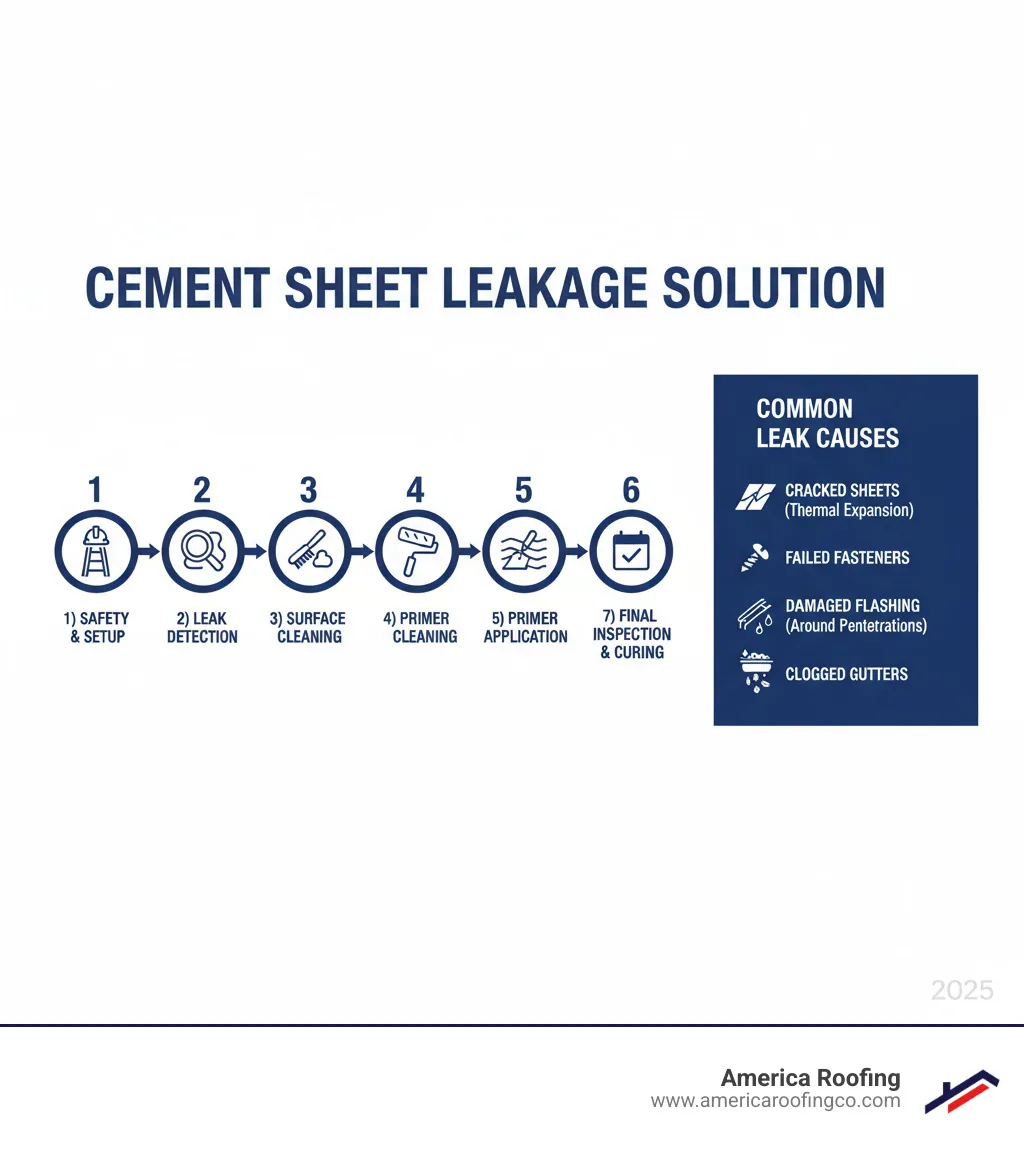
Cement sheet roofs in the Valley face a unique combination of threats that most homeowners don't fully appreciate until water drips onto their kitchen ceiling. About 80% of property owners complain about some kind of leakage in roofs, and in Arizona, the problem accelerates faster than almost anywhere else in the country.
Your roof battles an enemy on multiple fronts. Phoenix and Tucson experience long stretches of 100+ days where thermal expansion makes concrete and clay sheets grow and shrink daily, gradually loosening fasteners and creating microscopic cracks. The UV index runs high most of the year, turning flexible underlayment brittle and causing protective coatings to break down. Then monsoon season arrives with intense downpours that exploit every weakness, while haboobs sandblast exposed surfaces and deposit debris that clogs drainage paths.
The hidden damage happens where you can't see it. Long-term water erosion causes internal reinforcement corrosion, weakening the load-bearing capacity of your roof structure and potentially threatening the overall stability of your home. The long-term action of water accelerates concrete carbonation, damaging the integrity of the concrete structure and shortening the overall service life of your roof by years or even decades.
When water penetrates your roofing system, it doesn't just create ceiling stains. It compromises insulation, drives up AC bills during our brutal summers, creates ideal conditions for mold growth in your attic, and forces you into a cycle of frequent repairs that drain your budget while never truly solving the problem.
Know your cement sheet leakage solution terms:
The Alarming Reality of Roof Leaks
It's easy to dismiss a minor drip, but the statistics paint a stark picture: about 80% of property owners complain about some kind of leakage in roofs. This isn't just an inconvenience; it's a structural and financial threat.
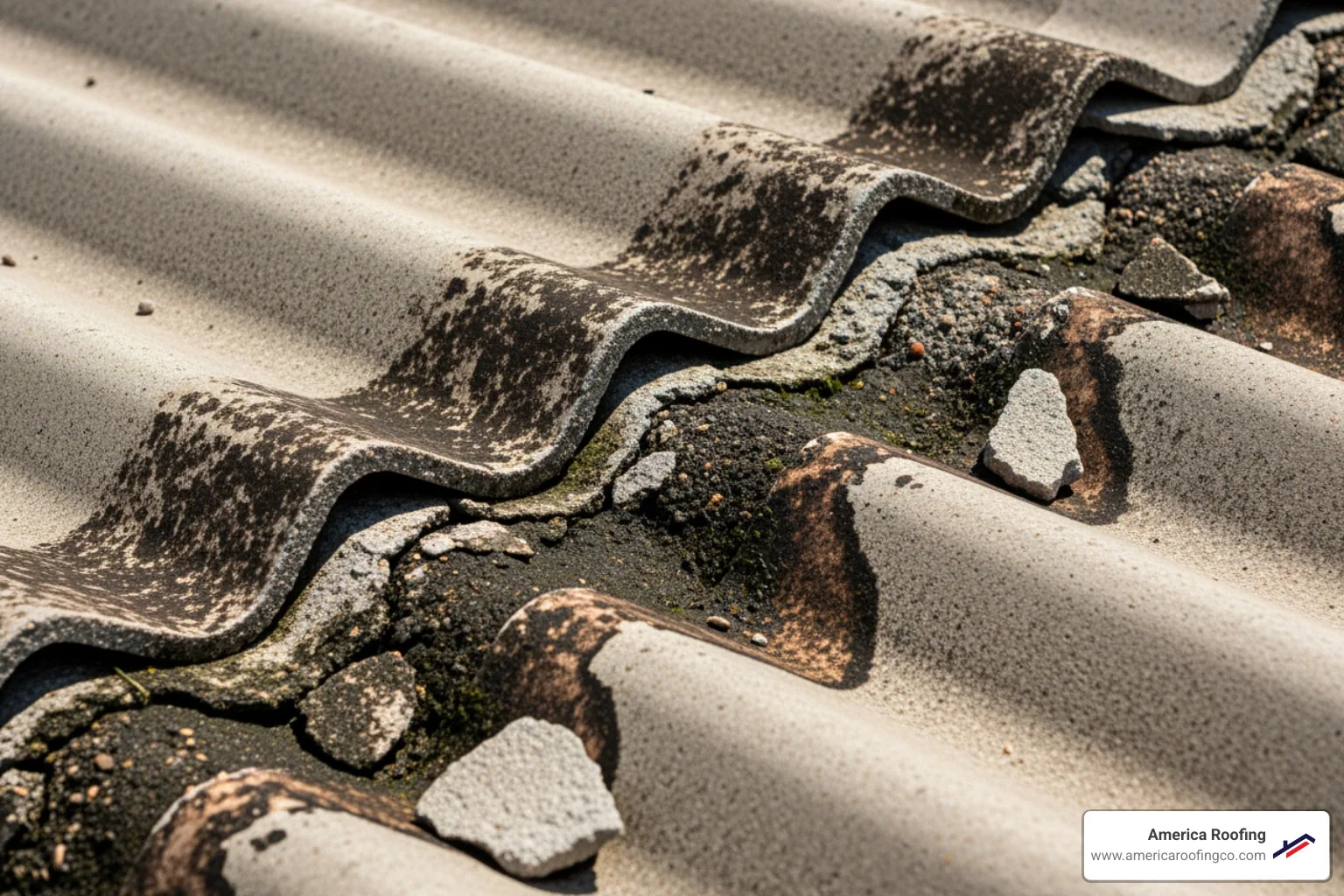
Common causes of leaks in cement sheet roofs include:
- Age-related wear: Over time, cement sheets can become brittle, developing hairline cracks or becoming more porous.
- Damaged flashing: Flashing, especially around chimneys, skylights, and vents, can lift due to storms or age, creating gaps for water entry.
- Loose or failed fasteners: Cement sheets are often joined by bolting or screwing. These fasteners can corrode or loosen, creating direct pathways for water.
- Clogged gutters: In Arizona, monsoon debris can quickly clog gutters, causing water to back up and seep under roof edges or into fascia. The Role of Gutters in Roof Health and Simple Ways to Prevent Clogged Gutters are critical reads here.
- Physical impact damage: Hail, falling branches, or even foot traffic can crack or dislodge cement sheets.
- Poor drainage design: Lack of proper slope planning for roofs and balconies can lead to water ponding, exacerbating material degradation.
- Inadequate sealing at joints: Gaps between sheets, around penetrations, or at wall junctions are prime entry points.
The hazards associated with these leaks are severe. According to a study on the causes and prevention of roof leakage in concrete structures, long-term water erosion causes internal reinforcement corrosion, weakening the load-bearing capacity of the structure and potentially threatening the overall stability of the building. This is especially true for concrete elements within your roof system. Furthermore, leakage necessitates frequent repairs, generating additional maintenance costs and potentially affecting project schedules if the damage becomes extensive. The long-term action of water accelerates concrete carbonation, damaging the integrity of the concrete structure and shortening the overall service life of the building.
Neglecting these issues can lead to:
- Structural damage: Weakening of trusses, rafters, and ceilings.
- Mold and mildew growth: A significant health hazard, especially in enclosed attic spaces.
- Compromised insulation: Wet insulation loses its effectiveness, leading to higher energy bills.
- Increased utility bills: As your home struggles to maintain temperature with damaged insulation.
- Shortened roof lifespan: Requiring premature and costly replacement.
As we often say, 5 Things That Can Happen If a Damaged Roof Is Neglected are far worse than addressing the initial problem.
Your Step-by-Step Cement Sheet Leakage Solution
When you're staring at a water stain, it's easy to feel overwhelmed. However, most cement sheet repairs follow a straightforward process. The key is taking it one step at a time and knowing when to call in the professionals.
Safety First: Essential Precautions
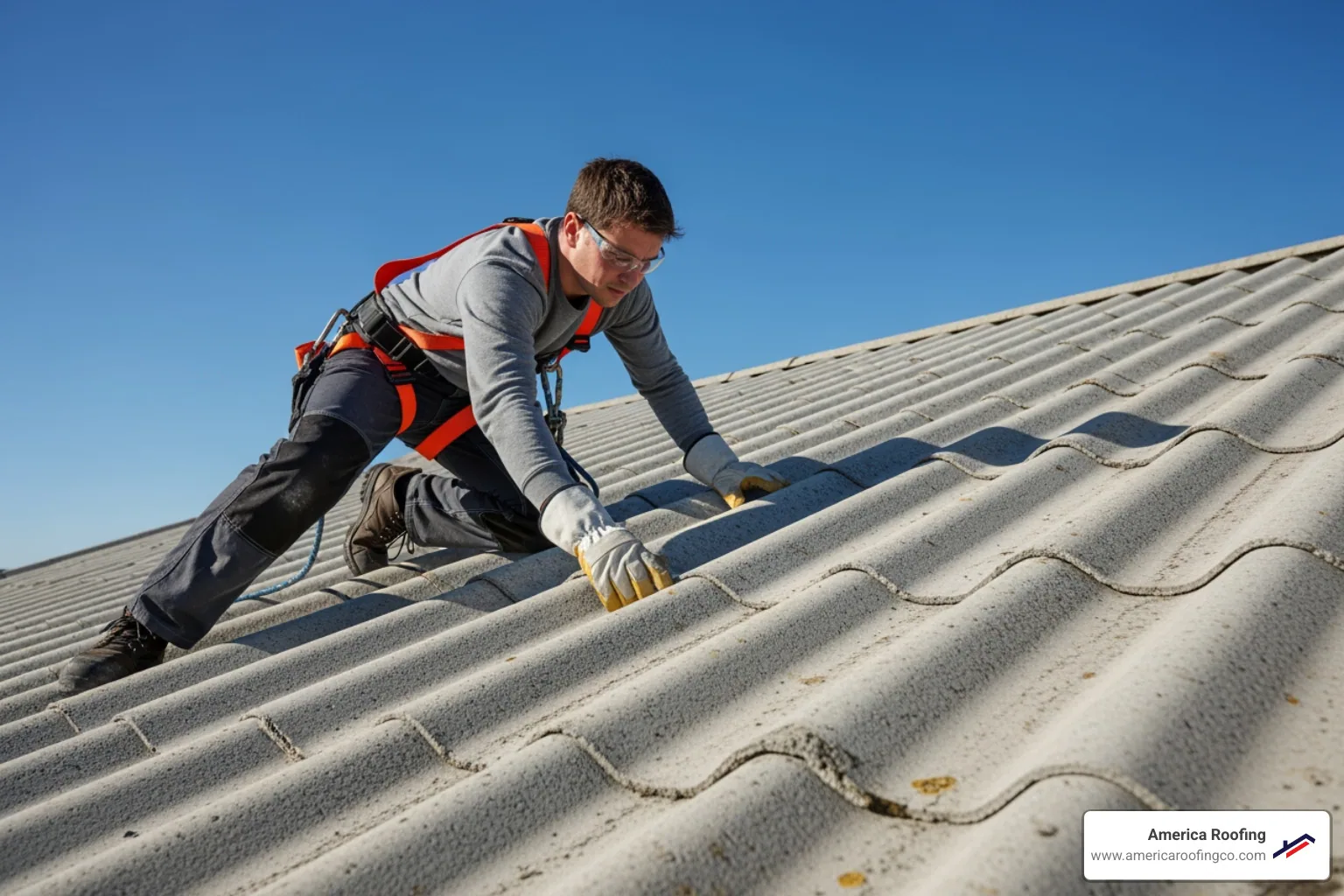
Roof work is dangerous, especially in Arizona's extreme conditions. Before you start, prioritize safety.
- Gear Up: Always wear sturdy, non-slip footwear, work gloves, and eye protection. Cement sheets in the Phoenix sun can cause burns.
- Ladder Safety: Place your ladder on level ground, extending it three feet above the roofline. For steep roofs or heights over ten feet, use a safety harness. Have a spotter.
- Weather Awareness: Never work on a wet roof. Avoid the hottest part of the day in summer to prevent heatstroke. Do not start if monsoon storms are possible.
- Electrical Hazards: Be aware of power lines and solar panel wiring. Shut off power if working near electrical components or call a professional.
If you're uncomfortable, the roof is steep, or the damage is extensive, hire a pro. Our guides on Roofing Safety: What Every Homeowner Should Know and DIY vs. Professional Roof Repairs: What You Need to Know can help you decide.
Step 1: Pinpointing the Leak's Source
Finding a leak's source can be tricky, as water often travels from its entry point. Start inside by locating the water stain, then head to the attic with a flashlight. Look for water trails, dark spots on wood, or wet insulation, and trace them back to their origin, paying close attention to roof penetrations like vents and chimneys.
Next, conduct an exterior inspection. Carefully examine the corresponding section of your roof for cracked or broken sheets, damaged flashing, and loose or rusty fasteners. Flashing failures are common in Arizona due to extreme temperature swings. If the source is still unclear, a controlled hose test can help. Have someone in the attic while you spray water on the roof, starting low and working your way up, to simulate rainfall and expose the entry point. Our DIY Roof Inspection: Steps to Assess Your Roof's Condition guide provides more detail.
Step 2: Preparing the Roof Surface for Repair
Poor surface preparation is a primary cause of DIY repair failure. A lasting cement sheet leakage solution requires a clean, dry, and stable surface.
Use a stiff wire brush to remove all loose debris, dirt, and crumbling cement. Sweep the area clean. If you find any moss or algae, treat it with a roof cleaner, rinse, and let it dry completely. The surface must be bone dry before applying any sealant. In the Arizona sun, this usually happens quickly, but give it extra time in shaded areas. Smooth any rough or broken edges of cracks to ensure a stable surface for the sealant.
For more on proper cleaning, see Understanding Roof Cleaning Techniques for a Spotless Look and How to Clean Your Roof Correctly.
Step 3: Applying the Sealant
Patience is key during the application phase. Rushing this step will lead to premature failure.
- Prime First: If the sealant requires a primer, don't skip it. Primer ensures a strong bond between the cement sheet and the sealant. Apply a thin, even coat and let it dry according to the manufacturer's instructions.
- Fill Voids: For larger cracks, use a polymer-modified repair mortar or roofing cement. Work it firmly into the void with a trowel. For cracks wider than a quarter-inch, embed reinforcement fabric (like fiberglass mesh) into the first coat of sealant for added strength.
- Apply Thin Coats: Apply your sealant in multiple thin coats, not one thick one. This allows for proper curing and better adhesion. Follow the manufacturer's recommended drying time between coats.
- Feather the Edges: Extend your repair a few inches beyond the visible damage and feather the edges to prevent water from pooling at the boundary.
Allow the final coat to cure completely as directed before exposing it to foot traffic or rain. For more general advice, see our guide on How to Repair a Roof Leak.
Choosing Your Weapon: Comparing Sealants and Repair Materials
Walking into a home improvement store for a cement sheet leakage solution can be confusing. Not all sealants are created equal, especially for Arizona's relentless sun and weather.
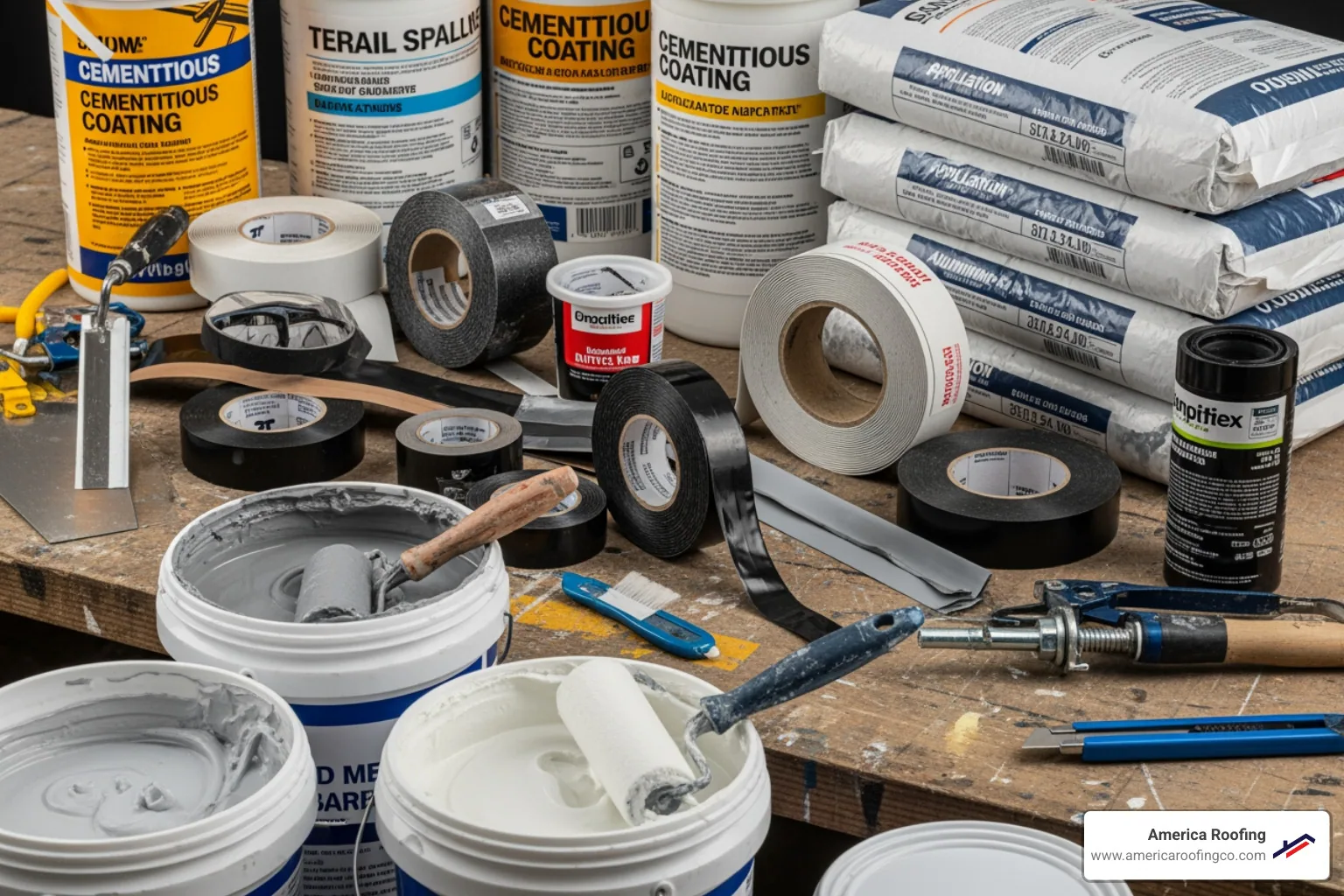
Choosing the Right Materials for Your Cement Sheet Leakage Solution
The right material for your repair depends on factors critical for Arizona homeowners. Climate suitability is paramount; a product must handle 115-degree days and monsoon rains. UV resistance is non-negotiable, as the Arizona sun degrades inferior products quickly. Flexibility is also key, as your roof expands and contracts with temperature swings. A rigid sealant will crack, but a flexible one moves with the roof. Finally, balance durability with affordability and your own DIY-friendliness. Professional-grade products cost more but provide years of protection. Our article on Choosing the Right Roofing Material for Your Climate explains why this matters in our desert environment.
| Solution Type | Pros | Cons | Best For |
|---|---|---|---|
| Liquid Membranes | Excellent flexibility, seamless application, high UV resistance, durable, forms a strong bond, ideal for large areas. | Higher cost, requires careful surface prep, can have longer curing times, professional application often recommended for best results. | Large roof areas, flat or low-slope roofs, broad crack networks, complete surface waterproofing. |
| Cementitious Coatings | Good adhesion to concrete, fiber-reinforced options offer crack bridging, can be applied to damp surfaces (some types), durable. | Less flexible than liquid membranes, can be brittle if not polymer-modified, may require multiple coats, less UV resistant if not top-coated. | Hairline cracks, minor surface imperfections, general waterproofing of concrete surfaces, especially where a rigid bond is desired. |
| Butyl Tapes | Easy and quick application, immediate seal, strong adhesion to many surfaces, good for small, specific leaks, UV stable options. | Limited to specific crack/joint sizes, not suitable for large areas, can be less aesthetically pleasing, long-term durability can vary with product quality and sun exposure. | Sealing seams, small cracks, around fasteners, pipe penetrations, and flashing junctions. |
| Polyurethane Sealants | Excellent adhesion, very flexible, durable, good for movement joints, strong resistance to weathering and abrasion. | Can be more expensive, strong odors during application, some types are sensitive to moisture during curing, requires precise application to avoid trapping water (as noted in research for metal sheets, adaptable here). | Filling gaps around penetrations (pipes, vents), sealing construction joints, bonding dissimilar materials, small, isolated cracks where flexibility is key. |
| Roofing Cement/Tar | Very affordable, readily available, quick temporary fix for small holes. | Messy to apply, limited lifespan, can become brittle in extreme heat, not aesthetically pleasing, often a short-term solution. | Emergency, temporary patches for small holes or cracks when a quick, cheap fix is needed until a more permanent solution can be applied. |
| Neutral Cure Silicone | Excellent flexibility, good adhesion to smooth surfaces, UV stable, resistant to extreme temperatures, often used for sealing joints. | Can be more expensive, less suitable for large areas, requires very clean and dry surfaces for optimal adhesion. | Sealing around roof features like skylights, vents, and chimneys; flexible joints where movement is expected. |
Liquid membranes are the gold standard for comprehensive repairs, creating a seamless, rubber-like barrier that flexes with your roof. They are ideal for large or multiple damaged areas but are pricier and require skillful application.
Cementitious coatings are great for hairline cracks, bonding aggressively to concrete. Polymer-modified versions offer some flexibility but need a UV-resistant top coat in our climate.
Butyl tapes are perfect for quick, targeted repairs around fasteners, seams, and small penetrations, providing an immediate seal.
Polyurethane sealants offer a great balance of flexibility and strength, making them ideal for sealing gaps around pipes and vents where different materials meet.
Roofing cement and tar should only be used as a temporary, emergency stopgap. Arizona's heat will make it brittle quickly.
Neutral cure silicone stays flexible in extreme temperatures, making it perfect for sealing around roof features like skylights and vents.
Proactive Protection: Maintenance and Prevention Strategies
The best cement sheet leakage solution is preventing the problem before it starts. Regular maintenance is the difference between a roof that lasts for decades and one that requires frequent, expensive emergency repairs.
We recommend inspecting your roof at least twice a year—in spring and fall—and after any major weather event like a monsoon or haboob. Look for loose sheets, cracked sealants, damaged flashing, and debris. Keeping your gutters clear is one of the most critical prevention tasks. Clogged gutters force water under roof edges, creating leaks. Our Top Gutter Maintenance and Cleaning Tips to Protect Your Roof Arizona Roofing Experts guide can help.
Also, clear debris from the roof surface and trim tree branches back at least six feet from your roofline. For peace of mind, consider a professional maintenance plan. Our team can spot subtle warning signs most homeowners miss, saving you from costly future repairs. Refer to The Importance of Proper Roofing Maintenance and our Roofing Maintenance Checklist for more details.
Long-Term Prevention: Beyond a Quick Cement Sheet Leakage Solution
True protection involves strategies that extend your roof's lifespan. Applying a high-quality waterproof coating, like an elastomeric one, reflects UV rays and provides a flexible barrier against water. Reapplying these every 5-10 years maintains protection. Proactively using elastomeric sealants on vulnerable areas like seams and flashing also reinforces your roof's defenses. For new installations, a secondary water barrier beneath the cement sheets offers an extra layer of insurance against intense monsoon downpours.
Proper attic ventilation is also crucial. It regulates attic temperatures, reducing heat stress on roofing materials and preventing moisture buildup. An unventilated attic in Phoenix can reach 150°F, accelerating material deterioration. Learn more in The Importance of Proper Roof Ventilation: Tips for a Healthy Roof.
Special Considerations for Older and Asbestos Roofs
Older cement sheet roofs, especially those from before the 1980s, may contain asbestos and require a cautious approach. As sheets age, they become more porous and brittle, making them vulnerable to water absorption and breakage. If you suspect your roof contains asbestos, do not disturb it. Airborne asbestos fibers are a serious health hazard. All work must be handled by licensed professionals following strict safety protocols.
We always recommend professional evaluation for roofs over 30 years old or where asbestos is a concern. Our team can assess the material's condition and recommend the safest cement sheet leakage solution, whether it's repair, coating, or replacement. For more on this topic, see Roofing for Historic Homes: Preserving the Past, Protecting the Future.
The Impact of Arizona's Climate on Your Roof
Arizona's climate is uniquely punishing to roofs. Understanding these challenges helps in choosing the right solutions.
- Extreme Heat: Roof surface temperatures can reach 160-180°F, causing constant expansion and contraction that cracks materials and loosens fasteners.
- UV Radiation: Our high UV index breaks down materials, making them brittle.
- Monsoon Rains: Sudden, violent downpours driven by high winds can force water into the smallest openings. Preparing Your Roof for the Upcoming Monsoon Season is essential reading.
- Haboobs: These massive dust storms abrade surfaces and clog drainage paths.
Understanding How Does Arizona's Weather Affect Your Roof? is key to selecting materials and strategies engineered for our environment.
Repair or Replace? Making the Smart Financial Decision
This is the critical question for any homeowner facing a leak. When is a cement sheet leakage solution enough, and when is it time for a full replacement? The answer depends on a few key factors.
- Extent of Damage: A single cracked sheet is a simple repair. Multiple leak points or damage to the underlying structure suggest replacement may be better. If more than 30% of your roof is damaged, replacement often offers better long-term value.
- Roof's Age: Cement sheet roofs in Arizona typically last 20-30 years. If your roof is nearing the end of its lifespan, investing in major repairs may not be cost-effective compared to a replacement.
- Frequency of Repairs: If you're patching new leaks every year, it's a sign that the entire system is failing. The cumulative cost of frequent repairs can quickly approach the price of a new roof with a long-term warranty.
- Cost Analysis: Get professional estimates for both options. A repair might cost $800-$2,500, while a replacement could be $8,000-$15,000+. A new roof provides 25+ years of protection, making it a better investment if you plan to stay in your home long-term.
- Long-Term Value: A new roof does more than stop leaks. It improves curb appeal, improves energy efficiency (lowering AC bills), and comes with valuable warranties and peace of mind.
Our articles Roof Repair or Roof Replacement: What Is Better? and 5 Signs Your Roof Needs to Be Replaced, Not Repaired can help you make an informed decision.
Frequently Asked Questions about Cement Sheet Leakage
Homeowners across the Valley often have the same questions about their cement sheet roofs. Here are straightforward answers to the most common inquiries.
What is the best waterproof material for a cement sheet roof?
For Arizona's climate, elastomeric liquid membranes and polymer-modified cementitious coatings are the best choices. Their key advantages are flexibility and UV resistance. They can expand and contract with the roof during extreme temperature swings without cracking and are engineered to withstand our intense sun. This makes them far superior to rigid or non-UV-stable sealants that fail quickly in Phoenix, Scottsdale, or Gilbert.
How long does a cement sheet roof repair last?
The lifespan of a repair depends on the quality of materials and the thoroughness of the surface preparation. A professional-grade repair using high-quality sealants can last 5 to 10 years or more if the underlying roof is in good condition. In contrast, a temporary fix with cheap roofing tar might only last a single Arizona summer. Regular maintenance, like keeping the roof clean, will always extend the life of any repair.
Can I paint over a cement roof sealant?
Yes, most modern elastomeric and acrylic-based roof sealants are paintable, but it's crucial to follow the rules. First, check the manufacturer's instructions to ensure compatibility. Second, wait for the sealant to cure completely (24 hours to several days) before painting to avoid trapping solvents. Using a compatible, exterior-grade, reflective light-colored paint can also reduce roof surface temperatures, lowering your AC costs—a significant benefit for any Phoenix-metro homeowner.
Your Trusted Partner for a Leak-Free Roof
Tackling a cement sheet leak can feel daunting, but you can protect your home. We've walked you through every step of an effective cement sheet leakage solution, from finding the leak to choosing the right materials for Arizona's climate. For minor issues, a DIY repair is often a cost-effective option. You have the roadmap to clean the area, select a quality UV-resistant sealant, and apply it with care.
However, it's important to know when to call in professionals. If you're facing widespread damage, brittle and aging sheets, suspected asbestos, or are simply uncomfortable working at height, your safety comes first. These situations require the experience and equipment of a licensed roofer.
At America Roofing, we've served Phoenix, Mesa, Chandler, and communities across the Valley since 1999. As a third-generation, family-owned, veteran-operated company, we specialize in roofing solutions engineered for Arizona's extreme climate. We understand how to protect your home from 115-degree heat, monsoon downpours, and haboobs.
When you work with us, you get honest advice on whether to repair or replace, transparent pricing, and premium materials. We are fully licensed and insured (ROC#186438), and our reputation as the highest-reviewed roofing company in Maricopa County is built on decades of quality craftsmanship and customer-first service.
If your roof needs expert attention, we're here to help. Contact us for a professional roof repair in Arizona and let our team give you the peace of mind that comes with a truly leak-free roof.