

A
tile roof replacement
is a significant investment that protects your Arizona home for decades. Knowing when to replace, what materials to choose, and how to hire the right contractor makes all the difference.
Quick Answer: When to Replace Your Tile Roof
- Age: Clay tiles last 75-100+ years and concrete tiles 50-75 years, but the underlayment beneath them fails after just 15-50 years.
- Visible Damage: Cracked, broken, or slipped tiles; widespread color fading; or deteriorating mortar.
- Performance Issues: Recurring leaks, water stains in the attic, a sagging roof deck, or increased energy bills.
- The 25% Rule: If over 25% of your roof needs repair in one year, local codes may require a full replacement.
Tile roofs are durable and beautiful, handling Arizona's intense heat and resisting fire. However, while the tiles can last a century, the underlayment, flashing, and fasteners underneath have a much shorter lifespan. Many Phoenix homeowners find their "lifetime" tile roof needs major work after 20-30 years because these hidden layers have failed under the stress of the Arizona sun and monsoon rains. A replacement involves understanding material options, ensuring proper installation according to local codes, and choosing a contractor who knows Arizona's climate challenges.
Is It Time for a New Roof? Key Signs of Failure
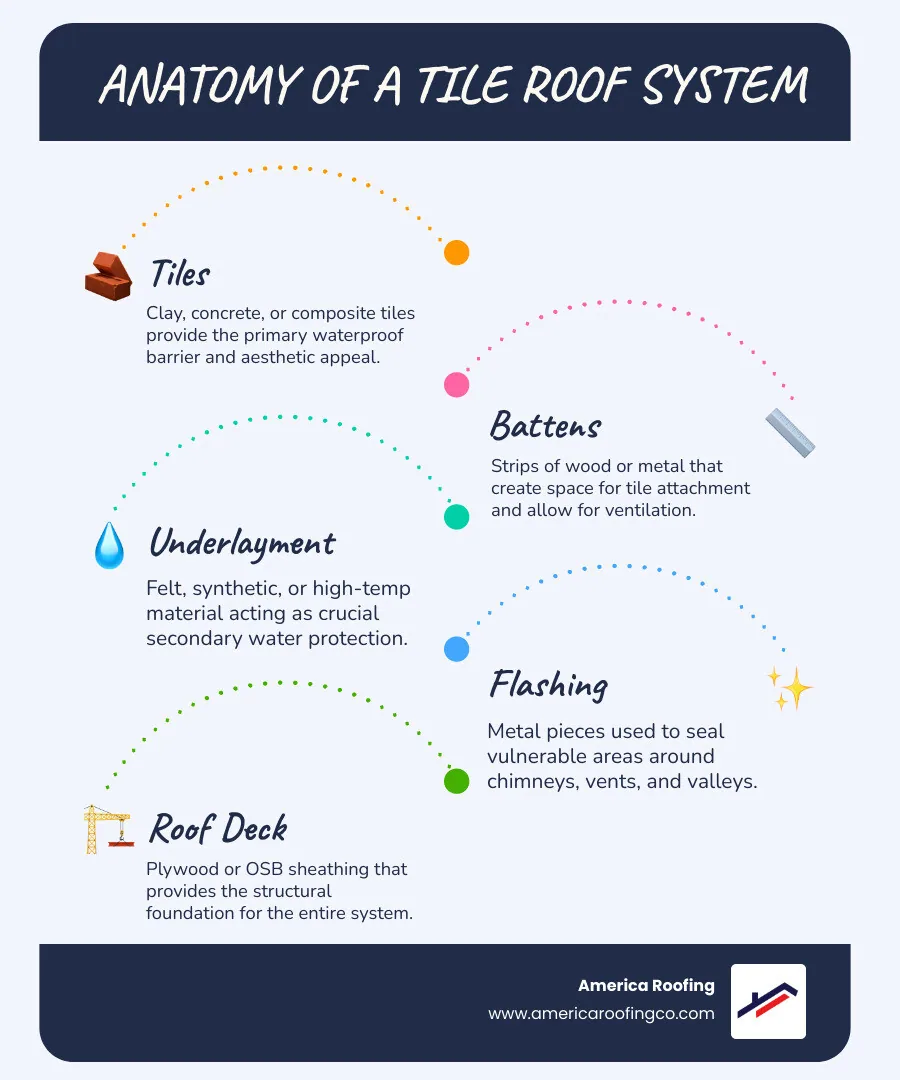
While your clay or concrete tiles can last 50 to 100+ years, the hidden components—especially the underlayment—give out much sooner. Here are the key signs that your tile roof may be failing:
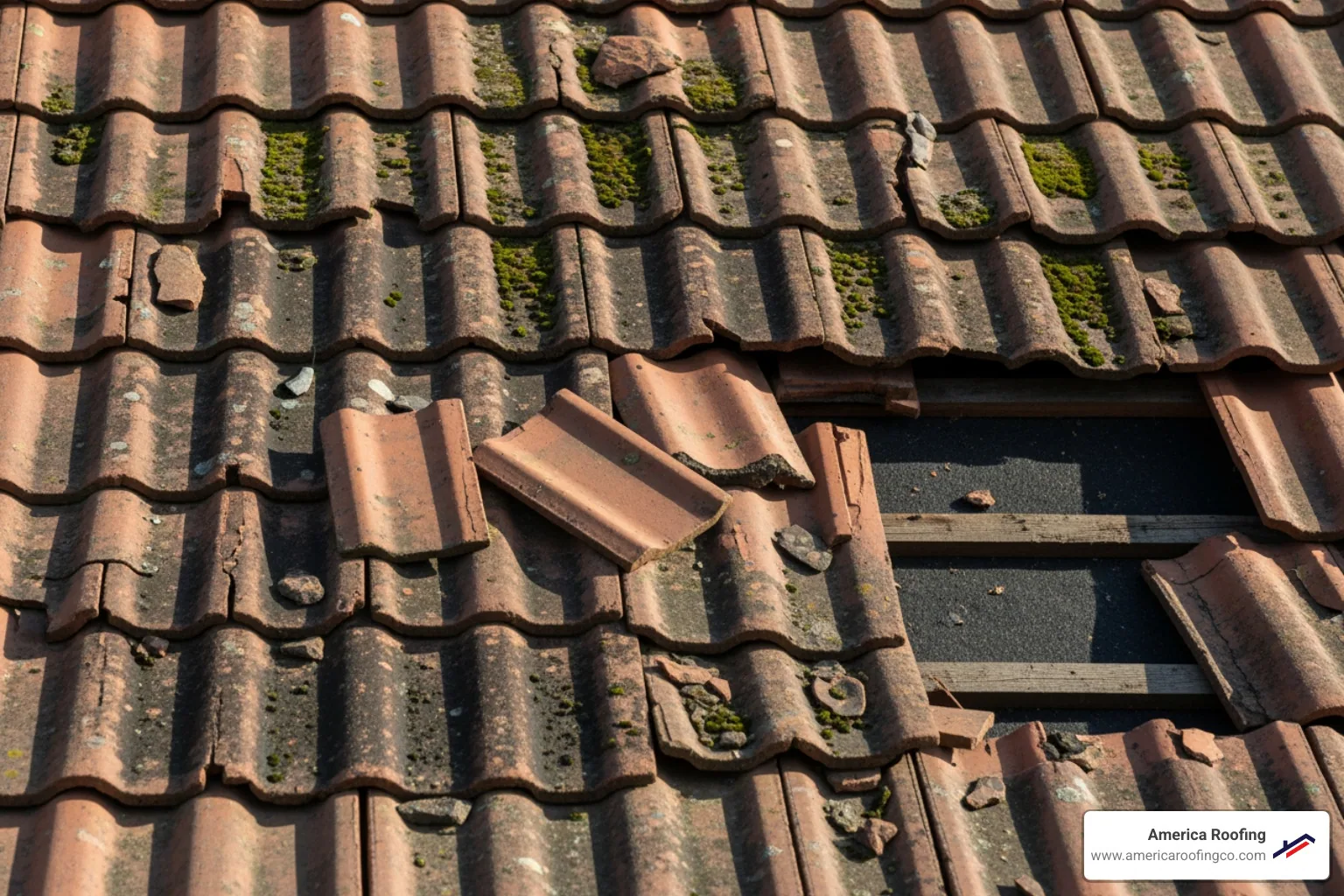
- Widespread Damage: A few cracked tiles after a storm is normal, but large sections of broken, missing, or slipped tiles indicate a larger problem, such as age, severe weather damage, or poor installation.
- Underlayment Failure: This is the silent culprit. The waterproof membrane beneath your tiles can deteriorate, allowing water to seep through even if the tiles look fine. This can lead to water stains on your ceiling or mold in your attic.
- Age: If your roof is 20-30 years old, the underlayment is likely nearing the end of its life (15-50 years), even if the tiles (50-100+ year lifespan) still look great.
- Leaks and Water Damage: Water stains on walls or ceilings, mold in the attic, or streaks on fascia boards are urgent calls for help. By the time you see them, significant damage may have already occurred.
- Sagging Roof Deck: A sagging or dipping roofline is the most serious warning sign. It indicates water has rotted the underlying wood or there's a structural problem that needs immediate inspection.
Repair vs. Full Tile Roof Replacement: Making the Right Call
Deciding between repair and a full
tile roof replacement
depends on the extent of the damage.
- The 25% Rule: While Arizona lacks a statewide rule like Florida's, many Phoenix-area municipalities have codes that can trigger a full replacement if more than 25% of a roof section is repaired or replaced within a year.
- Underlayment Failure: To replace failed underlayment, all the tiles must be removed. At this point, a full tile roof replacement is often more cost-effective than paying for the labor to reinstall old tiles.
- Multiple Repairs: If you're constantly calling a roofer for small fixes, those costs add up. A single investment in a new roof can be more economical long-term.
- Structural Integrity: If the roof deck has rot or water damage, repairs are not enough. A full replacement is necessary to fix the foundation and ensure the structure is sound.
- Algae and Moss Growth: Though uncommon in Arizona's dry climate, widespread algae or moss indicates poor drainage and warrants a professional inspection.
The Critical Role of Underlayment
Your underlayment is the primary waterproof barrier protecting your home. In Arizona's heat, where roof surfaces can exceed 150°F, choosing the right material is critical.
- Felt Underlayment: An older option lasting 10-20 years. Most contractors now use more durable materials.
- Synthetic Underlayment: The modern standard, lasting 25-40 years. It's tear-resistant and handles weather well.
- Rubberized Asphalt Underlayment: Offers excellent waterproofing and lasts 25-35 years, creating a superior seal.
- High-Temp Self-Adhered Underlayment: The gold standard for Arizona, engineered for extreme heat. It lasts 30-50 years and maintains its seal when temperatures soar.
The lifespan gap between underlayment (15-50 years) and tiles (50-100+ years) is why most
tile roof replacements
occur. A professional inspection can determine the health of your underlayment before a small issue becomes a major leak.
Choosing Your New Tile: Materials, Lifespan, and Style
For a
tile roof replacement
, your material choice impacts your home's aesthetics, structural needs, and budget for decades. The right tile depends on your home's style, what the structure can support, and your long-term plans. Key factors include aesthetics, durability against sun and monsoons, and weight, as tile is heavy and may require structural reinforcement. While the upfront cost is higher than for shingles, the 50- to 100-year lifespan of tile often makes it more economical over time. Tile is also an environmentally friendly choice, made from natural materials and reducing landfill waste. Here's how the most common tile materials compare:
| Tile Type | Lifespan (Avg) | Weight (lbs/sq ft) | Installed Cost/Sq. Ft. | Key Features |
|---|---|---|---|---|
| Concrete | 50-75 years | 750-950 (standard) 600-750 (lightweight) | $7-$19 | Most affordable; versatile styles; some color fading over time |
| Clay | 75-100+ years | 800-1,000 | $8-$22 | Classic Spanish/Mission style; excellent color retention; fire-resistant |
| Composite | 50+ years | 250-450 | $12-$26 | Lightweight; Class 4 impact rating; eco-friendly options; modern look |
| Slate | 100-200 years | 800-1,500 | $10-$45 | Premium appearance; longest lifespan; natural material; very heavy |
Clay and Terracotta Tiles
Clay tiles offer a classic look that is perfect for Arizona's desert landscape. With a lifespan of 100 years or more, the tiles themselves rarely fail. The popular Spanish and Mission styles are not only beautiful but also functional, channeling monsoon rains efficiently and allowing for ventilation. Clay is naturally fire-resistant, a key feature for Arizona homes, and its color deepens with age rather than fading in the sun. Maintenance is simple: periodic cleaning and prompt replacement of any broken tiles.
Concrete Tiles
Concrete tiles are a cost-effective and reliable choice, offering the perfect balance of durability and affordability. They are highly versatile and can be manufactured to mimic the look of clay, wood shakes, or slate at a lower price point. A quality concrete roof will last 50 to 75 years—two to three times longer than asphalt shingles. While standard concrete tiles are heavy, lightweight options are available that may not require structural reinforcement. The primary drawback is that colors can fade slightly over decades of sun exposure.
Slate and Composite Tiles
For a premium, statement-making roof, natural slate is best, with a lifespan of up to 200 years. Each tile is unique, creating a visually stunning appearance. However, slate is extremely heavy and expensive. Composite tiles offer a modern alternative, replicating the look of slate or wood shakes without the weight or cost. Made from recycled materials, they are lightweight (250-450 lbs per square) and often carry a Class 4 impact rating for hail resistance. This makes them an excellent choice for homes that cannot support the weight of natural slate without significant and costly structural reinforcement.
The Tile Roof Replacement Process: From Tear-Off to Installation
Understanding the
tile roof replacement
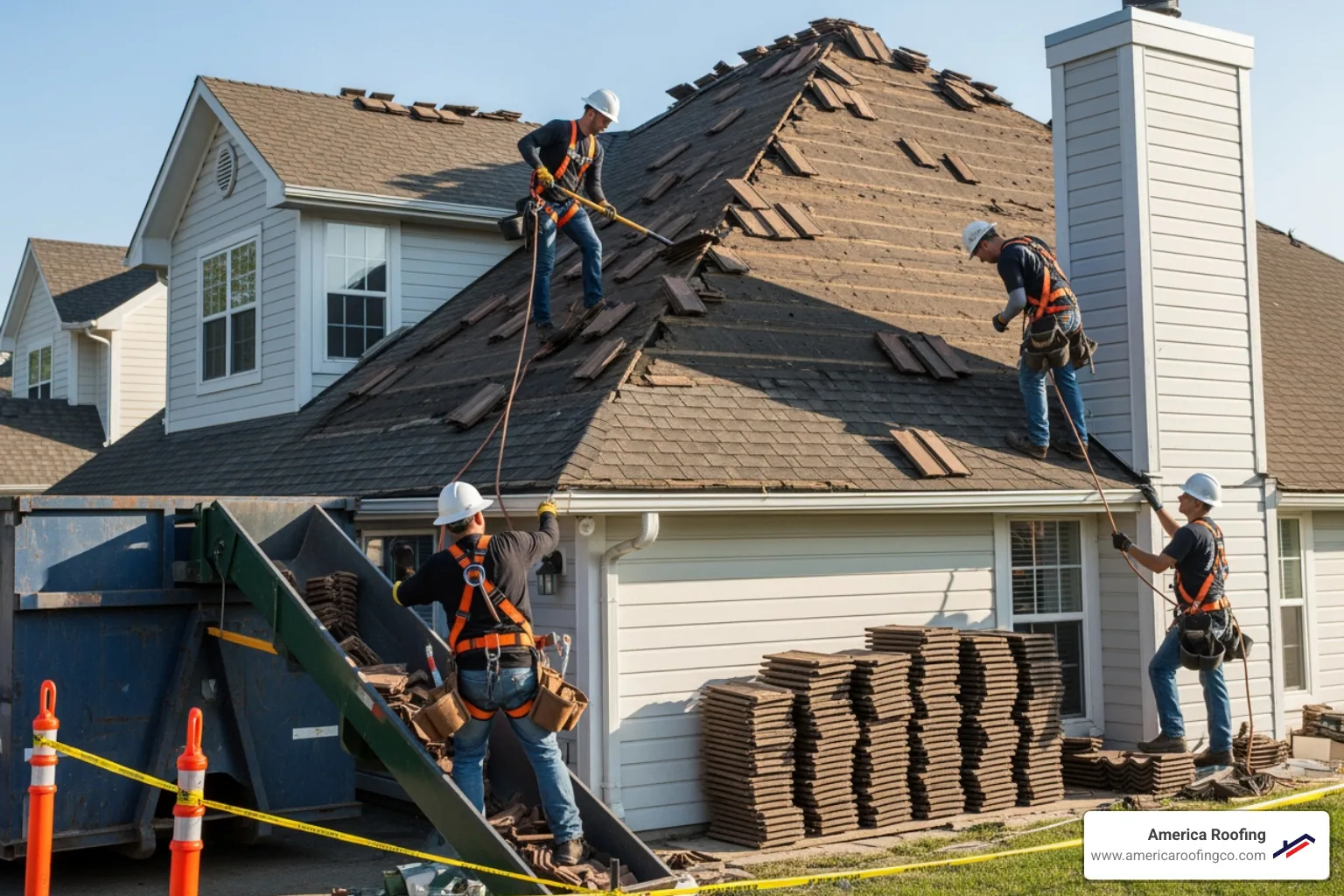
process can help ease any concerns. A typical project takes 1 to 3 weeks, depending on the roof's size, complexity, and weather. Safety is our top priority, and we use guardrails and proper protective gear. We also manage debris removal continuously throughout the project to keep your property clean.
Step 1: Initial Inspection and Structural Assessment
We begin with a thorough inspection of the entire roof system. After removing old materials, we evaluate the plywood or OSB roof deck for soft spots, water stains, or rot caused by underlayment failure. Any damaged wood is marked for replacement. Because tile is heavy (600 to 1,500 pounds per 100 sq. ft.), we also verify your home's structural weight capacity. If you're upgrading from a lighter material like asphalt shingles, your home's framing may need reinforcement to support the new load.
Step 2: Tear-Off and Deck Preparation
Our crew methodically removes the old tiles and underlayment to expose the bare roof deck. This allows for a full inspection and any necessary repairs. We replace rotted wood sections with new, matching materials, ensuring a solid foundation for the new roof. Finally, the entire deck is swept clean of all nails and debris to ensure a smooth surface for the new underlayment.
Step 3: Installing Underlayment and Flashing
This step creates the roof's primary waterproof barrier. We install high-temperature self-adhered underlayment, which is essential in Arizona as it's engineered to withstand extreme heat without degrading. Valleys, where roof slopes meet, receive extra layers of protection to handle heavy water flow during monsoons. We also install new, custom-fitted metal flashing around all chimneys, vents, and skylights to direct water away from these vulnerable areas. A metal drip edge is installed along the roof's perimeter to protect the fascia and guide water into the gutters.
Step 4: Tile Installation and Finishing Touches
With the waterproof foundation in place, we begin laying the new tiles. Our roofers work from the bottom up, ensuring proper overlap and spacing according to manufacturer specifications and local wind codes. Each tile is fastened with corrosion-resistant hardware. The hip and ridge tiles that cap the roof's peaks are set in a specialized mortar or adhesive designed for Arizona's climate. After a thorough final inspection to ensure every detail meets our standards, we perform a comprehensive site cleanup, leaving your property and new roof looking pristine.
Budgeting for Your Project: Understanding the Costs
A
tile roof replacement
is a major home investment. Most Arizona homeowners spend between
$8,202 and $24,645
, with an average project costing around
$16,000
. While the upfront cost is significant, a tile roof's 50- to 100-year lifespan makes it a sound long-term investment compared to materials that need replacing every 15-20 years. Typically, materials account for 55-65% of the total cost, with the remainder covering skilled labor. We recommend getting at least three detailed estimates from licensed contractors to compare the scope of work, material quality, and overall cost.
Key Factors in Your Tile Roof Replacement Cost
Several factors influence the final price:
- Roof Size and Pitch: Larger and steeper roofs require more materials and labor, increasing the cost.
- Tile Material Choice: Concrete is the most budget-friendly option, while clay, composite, and premium natural slate have higher price points.
- Labor Rates: Specialized skills are required for tile installation in Phoenix, and labor rates reflect this expertise.
- Structural Reinforcement: If your home's framing cannot support the weight of tile, reinforcement will be needed, adding to the cost.
- Permit Fees: Cities like Phoenix, Mesa, and Gilbert require permits for roof replacements, which typically cost a few hundred dollars.
- Old Roof Disposal: The cost to haul away several tons of old tile and debris is included in your estimate.
Comparing Installed Costs
These are typical
installed costs per square foot
, including materials and labor:
- Concrete Tiles: $7–$19 per sq. ft. The most accessible option for durability and style.
- Clay Tiles: $8–$22 per sq. ft. A bit more for authentic style and 100+ year longevity.
- Composite Tiles: $12–$26 per sq. ft. Lightweight, durable, and can save on structural costs.
- Slate Tiles: $10–$45 per sq. ft. The premium choice for a roof that can outlast the house itself.
Hiring a Phoenix Pro: Codes, Warranties, and Finding the Right Contractor
Choosing the right contractor for your
tile roof replacement
is as important as selecting the right materials. You need a team that understands Arizona's climate, follows local codes, and delivers quality installation.

Local Building Codes and HOA Rules
In Phoenix and surrounding cities, a
permit is required for a major roof replacement
. This ensures your new roof is inspected and meets current building codes designed for Arizona's intense heat and monsoon storms. Proper installation techniques, like those outlined in guides such as the
Hurricane Retrofit Guide - Tile Roofs
, are crucial for wind resistance. If you live in a
Homeowners Association (HOA)
, you will also need their approval for materials and colors to maintain community standards.
Understanding Warranties
A new roof comes with two key protections:
- Manufacturer Warranty: This covers defects in the roofing materials themselves. Lifespans vary by material (50 years for concrete, 100+ for clay). Read the fine print, as some are prorated.
- Workmanship Warranty: This is provided by your contractor and covers the quality of the installation. It protects you from installation errors. Ask if the warranty is transferable, as this can be a selling point if you move.
Warranties typically do not cover damage from natural disasters (which is for your homeowner's insurance) or issues from a lack of maintenance.
Vetting Your Roofing Contractor
Protect yourself from unqualified operators by following these steps:
- Check the License: Every Arizona roofing contractor must be licensed by the Arizona Registrar of Contractors (ROC). Our ROC license is 186438 CR420. You can verify any contractor's license on the ROC website.
- Verify Insurance: Your contractor must have liability insurance and workers' compensation. Without it, you could be held financially responsible for accidents. Ask for proof of insurance.
- Read Reviews: Check Google, Yelp, and the BBB to see how the company performs and handles issues.
- Ask for Local References: A reputable contractor with a track record in communities like Phoenix, Tucson, and Mesa will be happy to provide references.
- Get a Detailed Written Contract: Before work begins, insist on a contract that outlines the scope of work, materials, timeline, payment schedule, and warranty details.
Frequently Asked Questions about Tile Roofs
Here are answers to common questions about
tile roof replacement
.
How long does a tile roof last in Arizona?
The lifespan depends on the material and underlayment. The tiles themselves last a long time (100+ years for clay/slate, 50-75 years for concrete). However, the
underlayment is the weak link
, typically lasting only 15-50 years in Arizona's harsh sun. Most replacements are due to underlayment failure, not tile failure. Using high-temp underlayment is key to maximizing lifespan.
Can I switch from a tile roof to asphalt shingles?
Yes, this is possible. Your home's structure was built to support a heavy tile roof (600-1500 lbs/square), so it can easily handle lighter asphalt shingles (250-400 lbs/square). While shingles have a lower upfront cost, they have a much shorter lifespan (15-30 years) and are less durable in extreme heat, which may negate long-term savings. You must also check if your HOA permits the aesthetic change.
How much does it cost to replace a few broken tiles?
Replacing a few tiles is a repair, not a replacement. The cost can range from $40-$200 per tile, or an average of $9-$21 per square foot for clay and concrete, depending on the tile type and roof accessibility. Most roofers have a minimum service fee, which can make a very small repair seem costly. Also, be aware that new tiles may not perfectly match the color of your existing weathered roof.
Protect Your Investment with an Expert Installation
A
tile roof replacement
is a valuable investment in your Arizona home, providing superior protection, curb appeal, and decades of performance when installed correctly. The long-term value and low maintenance of a quality tile roof far outweigh the initial cost. At America Roofing, a licensed and insured (ROC# 186438 CR420) veteran-owned company, we specialize in residential and commercial roofing across Phoenix, Tucson, Mesa, and more. We deliver durable, climate-resilient solutions with exceptional service. Don't wait for a small leak to become a major problem. Protect your home with a professional
tile roof replacement
from a team you can trust.