
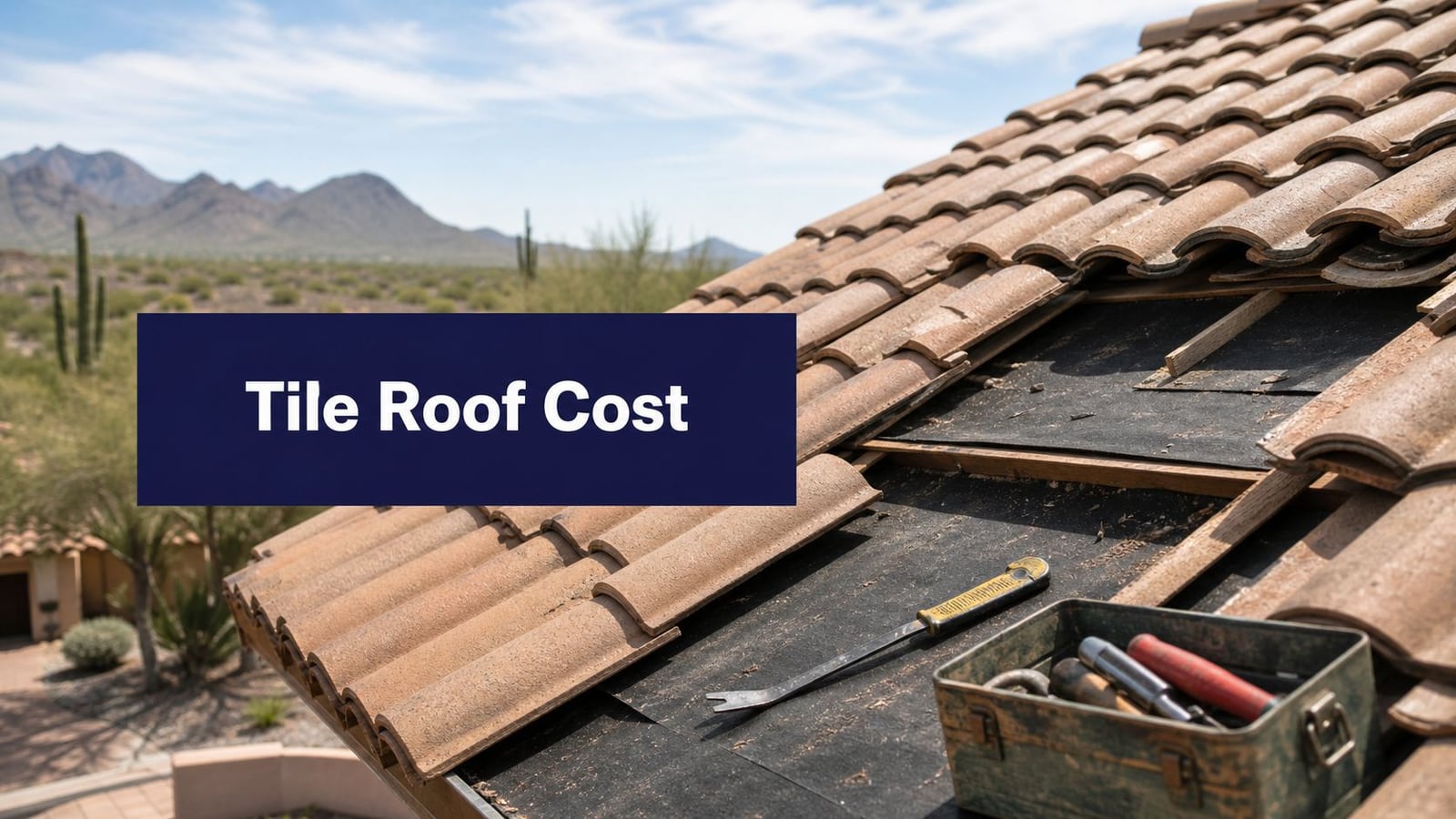
For most Arizona tile roofs, the cost to replace underlayment usually lands around $4 to $6 per square foot installed, and a 2,000-square-foot roof often comes in between $8,000 and $12,000. That price sits above a basic underlayment-only job because tile work means removal, staging, inspection, and careful reinstallation, not just swapping a membrane.
A roof can look fine from the street in Phoenix or Tucson and still be past the point where the underlayment is doing its job. After a few monsoon seasons, that hidden layer becomes the part that decides whether the roof needs a targeted relay or a much bigger repair bill.
What Arizona Homeowners Should Expect to Pay
A homeowner standing on a Phoenix or Tucson curb can be looking at a roof that still has good tile and still needs major work underneath it. That's the hard part with tile systems, the surface can hold up while the hidden layer fails. For a 2,000-square-foot tile roof, the useful Arizona benchmark is $8,000 to $12,000, or roughly $4 to $6 per square foot installed for underlayment replacement drytoproofingaz.com.
The number matters because tile roofs aren't priced like a simple patch job. The crew has to lift and stage the tiles, protect reusable pieces, inspect the deck, install new underlayment, then put the tile back without creating new breakage. That's why a tile system costs more than a basic membrane swap on a different roof type, the labor is the project.
Practical rule: if a quote treats tile underlayment replacement like a quick material change, it probably isn't accounting for the real work.
What “replacement” usually includes on a tile roof is more than most homeowners expect. It means tile removal, deck inspection, new membrane installation, flashing attention where needed, and careful reinstallation of the existing tile. That's also why the final price can move fast once a contractor sees what's under the first course of tile.
For anyone comparing bids, the right question isn't just “what's the membrane cost?” It's “what happens once the tiles come off?” The rest of this article breaks down the line items, the warning signs, and the parts of the quote that matter so a homeowner can tell a realistic scope from a lowball number.
For a broader breakdown of replacement planning, see the tile roof replacement cost guide.
National vs Arizona Cost Ranges
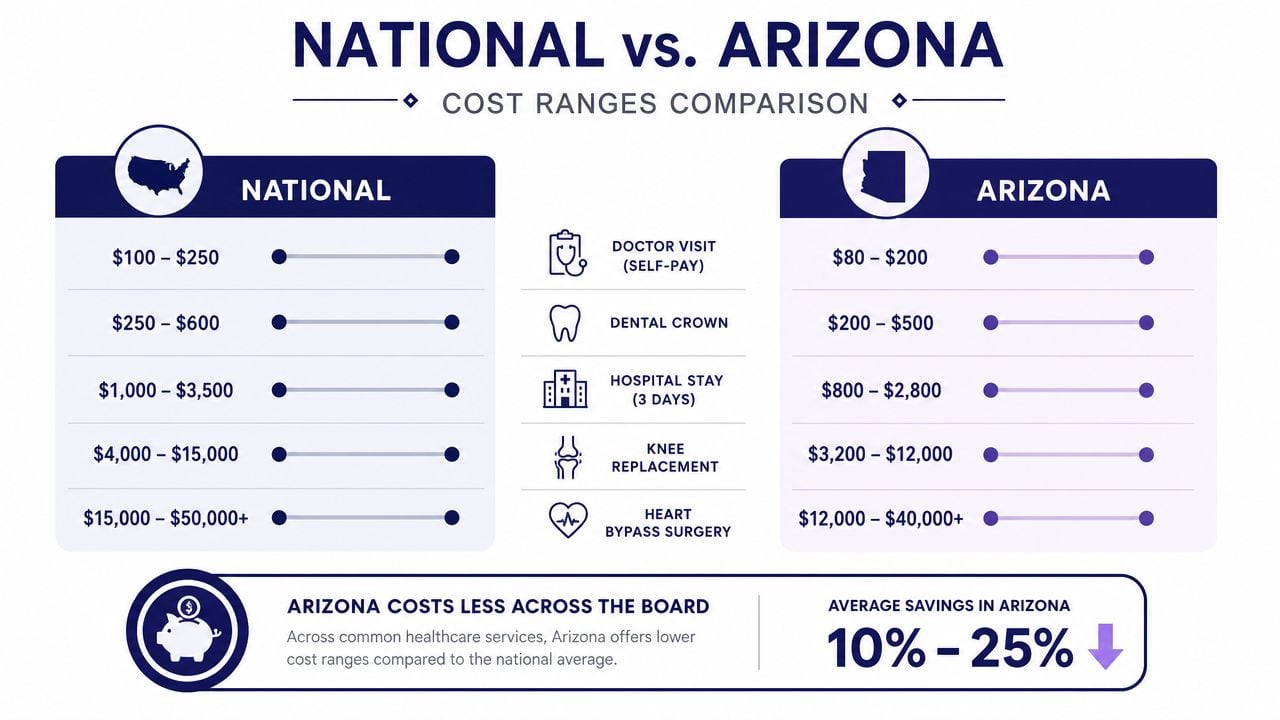
The national numbers for roof underlayment replacement give a starting point, but they do not describe what a tile roof in Arizona usually costs. One benchmark puts the broad national average at about $800 to $1,200 for roof underlayment replacement, and another independent cost source places the average around $3,300 for typical projects Fixr Angi. Those figures help frame the market, but they mostly reflect simpler jobs or broader roof categories, not the labor-heavy tile relay Arizona homeowners usually face.
Tile-specific pricing runs higher because the job is not just replacing a membrane. One source places a 2,000-square-foot tile roof at $6,000 to $10,000 for underlayment replacement, and notes that larger or more complex roofs can exceed $12,000 and reach $25,000 or more depending on size, accessibility, and condition Fixr. That range lines up with what tile crews see after tear-off, because the tile has to come off, get staged, and go back on without creating more breakage.
Arizona pricing sits toward the upper end for a simple reason, labor does most of the heavy lifting on these projects. Installed pricing in the state is commonly reported at roughly $4 to $6 per square foot, with a 2,000-square-foot roof often landing at $8,000 to $12,000 depending on membrane choice and complexity drytoproofingaz.com. Another Arizona-focused source gives a similar picture, with felt often installed at $2 to $3 per square foot and higher-performance options at $6 to $8 per square foot installed drytoproofingaz.com.
For a homeowner comparing quotes, the takeaway is simple. A national underlayment average and an Arizona tile-roof quote are not the same project. If you want a local reference point for budgeting, the guide by America Roofing is a useful starting place.
What Actually Drives the Final Invoice
Tile underlayment pricing changes once the roof is open, because the visible roof and the hidden roof are not priced the same way. The membrane matters, but the invoice is shaped by labor, access, and what the deck looks like after tear-off. In Arizona, a contractor is paying for careful disassembly and reassembly as much as for the waterproof layer itself.
The work behind the number
Tile removal and reinstallation are the biggest moving parts. Crews have to stage tiles safely, keep reusable pieces organized, and account for breakage during handling. On many tile projects, labor can run $2,000 to $7,000 depending on pitch, access, and deck condition, and labor often makes up around 60% of a tile roof replacement project.
That labor share explains why the cheapest bid can be the most misleading one. If a quote leaves out tile staging, cleanup, or a written allowance for deck repair, it may look low only because it has not priced the roof accurately. Property managers and homeowners usually need a scope that says what happens if the crew finds damaged decking, broken flashings, or hard-to-reach areas after the tiles come off.
A low bid that excludes hidden conditions is often a pricing sketch, not a project plan.
The smart way to read a quote is to look for the following line items, even if they are bundled in the final price:
- Tile handling and staging, because every reusable tile has to come off and go back on without unnecessary breakage.
- Underlayment type, since the membrane choice changes the material line but usually does not dominate the total.
- Deck repair allowance, because damaged sheathing turns a neat scope into an open-ended one.
- Access and pitch, since steeper or more complex roofs slow the crew down.
- Disposal and cleanup, which often get underwritten in a cheap bid.
- Flashing adjustments, which are small on paper and costly when ignored.
The best quotes make those assumptions visible. The least accurate quotes hide them. For a closer look at why the membrane matters but does not tell the whole story, it helps to understand roof underlayment benefits.
Underlayment Material Options Compared
A tile roof in Arizona can be stripped down to clean decking or expose a mix of age, heat damage, and patchwork repairs. The underlayment choice has to fit that reality. Felt, synthetic, and rubberized membranes all show up on bids, but the material by itself does not decide whether the job will hold up. The install method, flashing work, and how the crew handles the tile matter just as much.
Material cost versus installed cost
Material pricing stays in a fairly tight band. Felt underlayment runs about $0.15 to $0.55 per square foot in material cost, synthetic underlayment about $0.25 to $0.65, and rubberized underlayment about $0.25 to $0.75 Fixr. Those figures can look low because the membrane is only one piece of the invoice.
Installed cost is where Arizona roofs move away from the material chart. One Arizona source says felt underlayment often lands around $2 to $3 per square foot installed, while higher-performance options can reach $6 to $8 per square foot installed drytoproofingaz.com. That spread comes from labor, tile handling, and the time needed to tie everything back in correctly.
On Phoenix and Tucson roofs, the membrane has a hard job. Heat builds under the tile, monsoon water looks for weak seams, and the crew has to walk the roof again during reinstall without tearing up the new work. A better membrane can stretch the service life, but only if the roof detail work around it is done right.
Choosing the right membrane for Arizona
- Felt: Lowest material cost, but usually the least forgiving in heavy heat and long service cycles.
- Synthetic: A common middle choice, often selected when the crew wants stronger durability without moving into the highest-priced option.
- Rubberized membranes: Higher cost, but useful where water intrusion risk and temperature stress justify the upgrade.
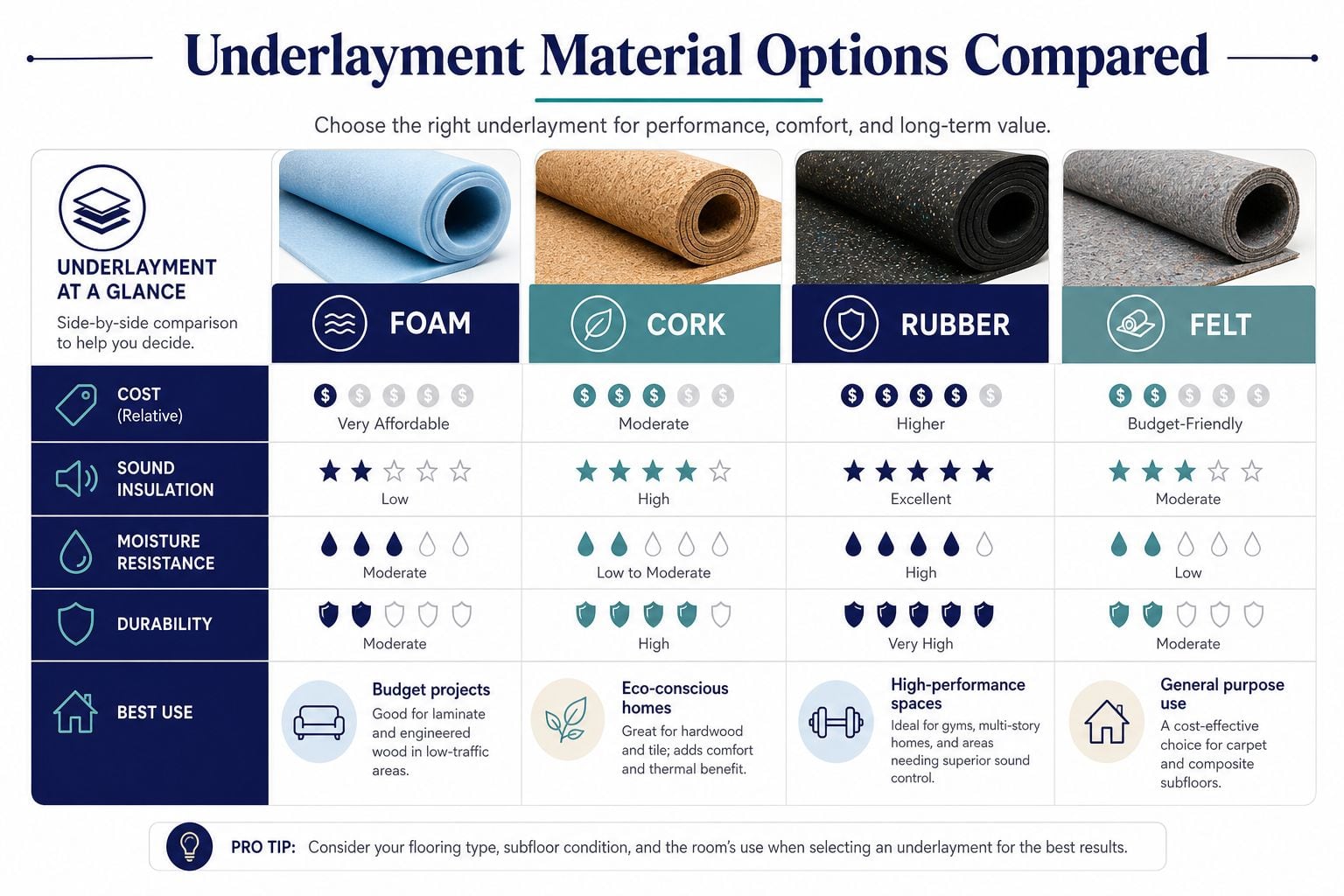
A practical choice comes down to roof condition, expected service life, and how much risk the owner wants to absorb on the next repair cycle. Some homes need a basic membrane because the rest of the roof is straightforward. Others justify a better product because the roof has repeated leak points, hotter exposures, or a history of worn tile coverage. For a broader look at material trade-offs, see America Roofing's material options and the guide to roof cleaning in Flagstaff, since roof condition often shapes what kind of replacement makes sense.
Warning Signs That the Underlayment Is Failing
The roof usually gives clues before the underlayment turns into a bigger repair. The trick is knowing which clues matter and which ones are just surface noise. On a tile roof, the failure often hides under good-looking tile, so the warning signs tend to show up indoors, at the eaves, or in the pattern of repeat leaks.
What homeowners can spot without climbing the roof
Ceiling stains after monsoon rain are the obvious one, especially when they return in the same spot after a “small repair.” That usually means water is getting through the tile assembly, not just a single loose tile. Daylight visible through tile gaps from an attic or upper window can point to displaced tile or worn membrane coverage near vulnerable areas.
Brittle or crumbling felt visible at the eaves is another strong clue. When the underlayment has aged out, the edges can dry, crack, and stop shedding water the way they should. Slipped or cracked tiles can expose the membrane directly, which speeds up failure during wind-driven rain.
Plan-ahead sign: a roof that looks fine from the street but keeps staining the same ceiling area usually needs a deeper inspection, not another ceiling patch.
When it moves from monitoring to calling a roofer
Water staining around fireplace flashing or vent flashing means the vulnerable spots may already be active. That's the point where waiting usually costs more than inspecting. Recurring ceiling spots that “get fixed” but keep coming back are a strong sign the underlayment, not the interior finish, is the core problem.
For property owners who also manage exterior appearance, routine roof maintenance still matters. A practical guide to roof cleaning in Flagstaff is useful as a reminder that debris and surface buildup can hide early roof issues, even though cleaning itself doesn't solve underlayment failure.
Safety and diagnosis limits
Walking a tile roof is not a casual DIY job. Tiles break, slip, and conceal weak spots, and an inspection should come from a qualified roofing contractor who can get onto the deck safely. For leak triage and prevention ideas, the spot and prevent roof leaks guide is a useful starting point, but it doesn't replace an on-roof inspection.
Sample Estimates for Common Roof Sizes
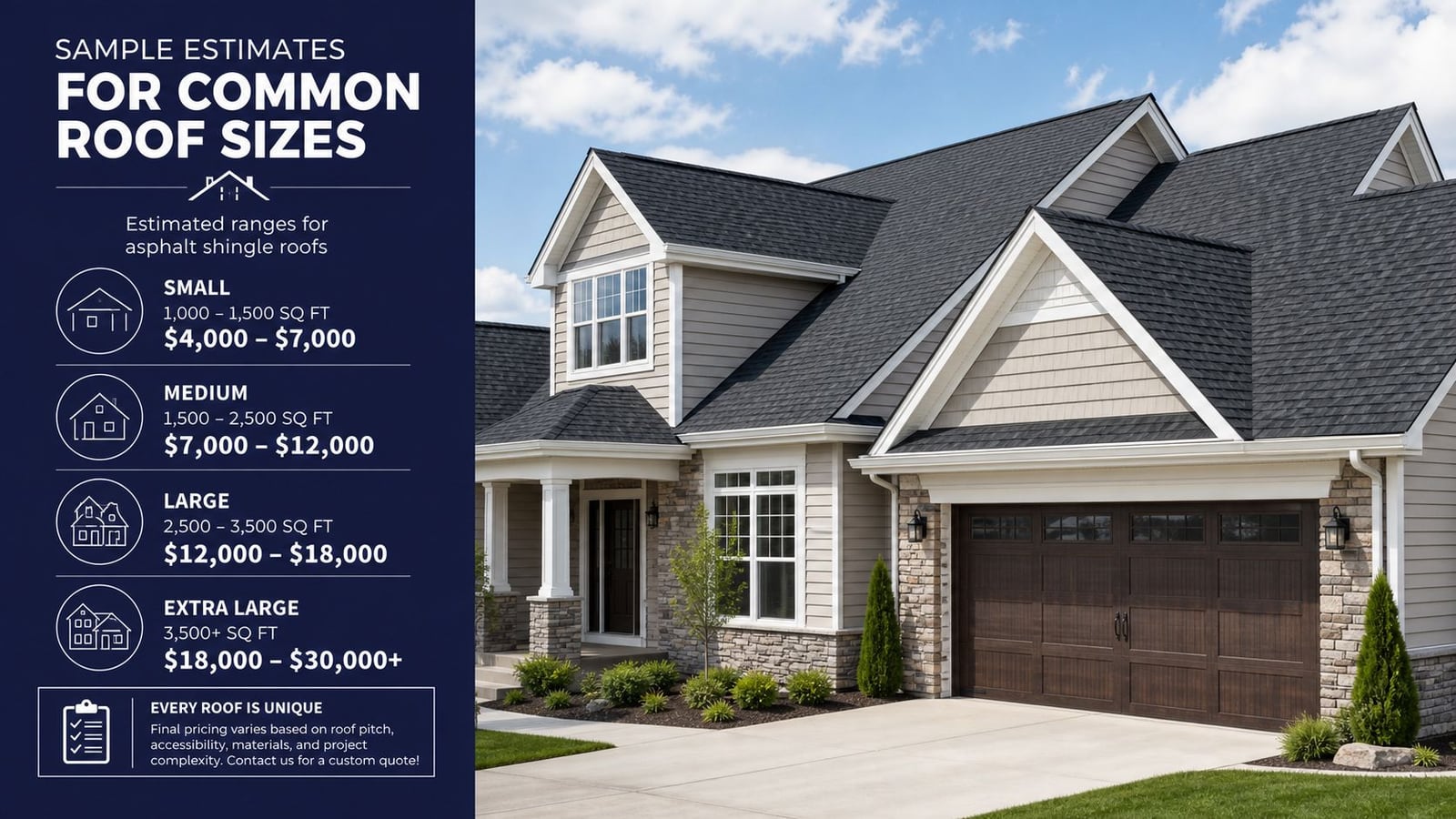
These examples use Arizona tile-roof pricing patterns, not a one-price-fits-all shortcut. The goal is to help a homeowner compare a real quote to a realistic roof size and complexity. Roof shape, story height, access, and hidden repair needs all move the final number.
Small roof, simpler access
A 1,500-square-foot tile roof with straightforward access and limited damage often lands near the lower end of the Arizona range. A practical budgeting band is about $6,000 to $9,000, assuming the tile comes off and goes back on cleanly and the deck does not need major repair. Broken tiles, tight staging areas, and older flashing that needs attention can push that number higher.
Typical Phoenix or Tucson home
A 2,000-square-foot tile roof in Phoenix or Tucson often falls between $8,000 and $12,000 for underlayment replacement, with easier access at the lower end and premium membrane choices or more labor-heavy conditions at the higher end. That lines up with the patterns reported by Fixr and with Arizona reroofing experience on tile homes. This is the range many single-family homeowners end up using for budget planning.
Larger two-story roof
A 3,000-square-foot tile roof usually starts to feel the labor premium faster, especially when the roof is steep, multi-level, or broken up by valleys and penetrations. Once access gets harder, staging gets tighter, or deck repairs show up after tear-off, the project can move above the usual range. The hidden cost is not the tile itself, it is the time it takes to move it safely.
Larger property or small commercial assembly
A 5,000-square-foot roof assembly can move into much higher project totals because labor, staging, and disposal scale with the roof, not just the membrane. On bigger roofs, the question shifts from square footage alone to how many sections, edges, and access points the crew has to manage. If the roof has complicated drainage or several areas of patchwork repair history, the quote can climb quickly once the work is opened up.
Arizona property owners get a better read by comparing the quote against roof size and layout, not against a generic national average. A good estimate should show why the low end is low and what would push the job to the high end. As noted earlier, tile roofs reveal more once the crew lifts the field tiles, so the safest budget includes room for the surprises that only show up after tear-off.
Ways to Lower Cost Without Cutting Corners
The best savings on a tile underlayment project come from planning, not from shaving off scope. That matters in Arizona because tile crews get busy quickly, and a vague quote can become the expensive one once hidden conditions appear. Cost control works best when the owner asks for a complete scope before the first tile comes off.
Practical ways to keep the budget honest
Start by bundling underlayment work with other planned roof repairs. If a roof already needs flashing corrections or leak repair, addressing those items together can avoid repeat setup and repeat labor. The next best move is to choose the membrane for the actual roof conditions, not for the cheapest line on the page.
A written allowance for deck repairs matters more than many owners realize. If a proposal says “as needed” without a number or clear scope, the final bill can drift once the crew finds soft decking. The same goes for a written tile breakage allowance, since broken tiles are part of real-world tear-off and reinstall work.
Budget rule: the cleanest-looking quote isn't always the smartest one if it hides the work that tile roofs reliably reveal.
Timing, warranty, and insurance
Scheduling can matter too. Work done outside peak monsoon response windows tends to be easier to coordinate, and crews usually have a clearer sense of what's urgent versus what's planned. For warranty protection, the membrane installed should match the manufacturer terms for that specific product, not a generic promise from the proposal.
If the job is tied to storm damage, documentation should start before tear-off. Photos of the roof and ceiling stains help show what was there before the work began, and the homeowner's insurance carrier should be notified when the scope belongs in a claim file. The best price in the market doesn't help if the proposal leaves out the repair conditions the roof is likely to expose.
Next Steps and How America Roofing Can Help
A tile roof that's 20-plus years old, keeps staining ceilings after storms, or has visible slipped or cracked tiles should be treated as a replacement-planning job, not a hunt for another small leak fix. On these roofs, underlayment replacement is a capital repair, because the waterproof system under the tile is the part that has reached the end of its useful life. Budgeting should account for the work that happens after the tiles come off, not just the membrane line alone.
Arizona tile underlayment work is a core service lane for America Roofing, and the right next step is a roof inspection that documents deck condition, access, and scope before anyone talks numbers. For Phoenix repair situations, the Phoenix roof repair page is a good place to start, and the tile budgeting guide gives a fuller view of replacement planning.
If your tile roof is leaking, aging, or already showing signs that the underlayment is failing, America Roofing can inspect the roof, document what's under the tile, and give a written scope that matches the actual condition. Call 602-237-2478 or request a roofing estimate through America Roofing to get a clear next step for your Phoenix or Tucson property.