
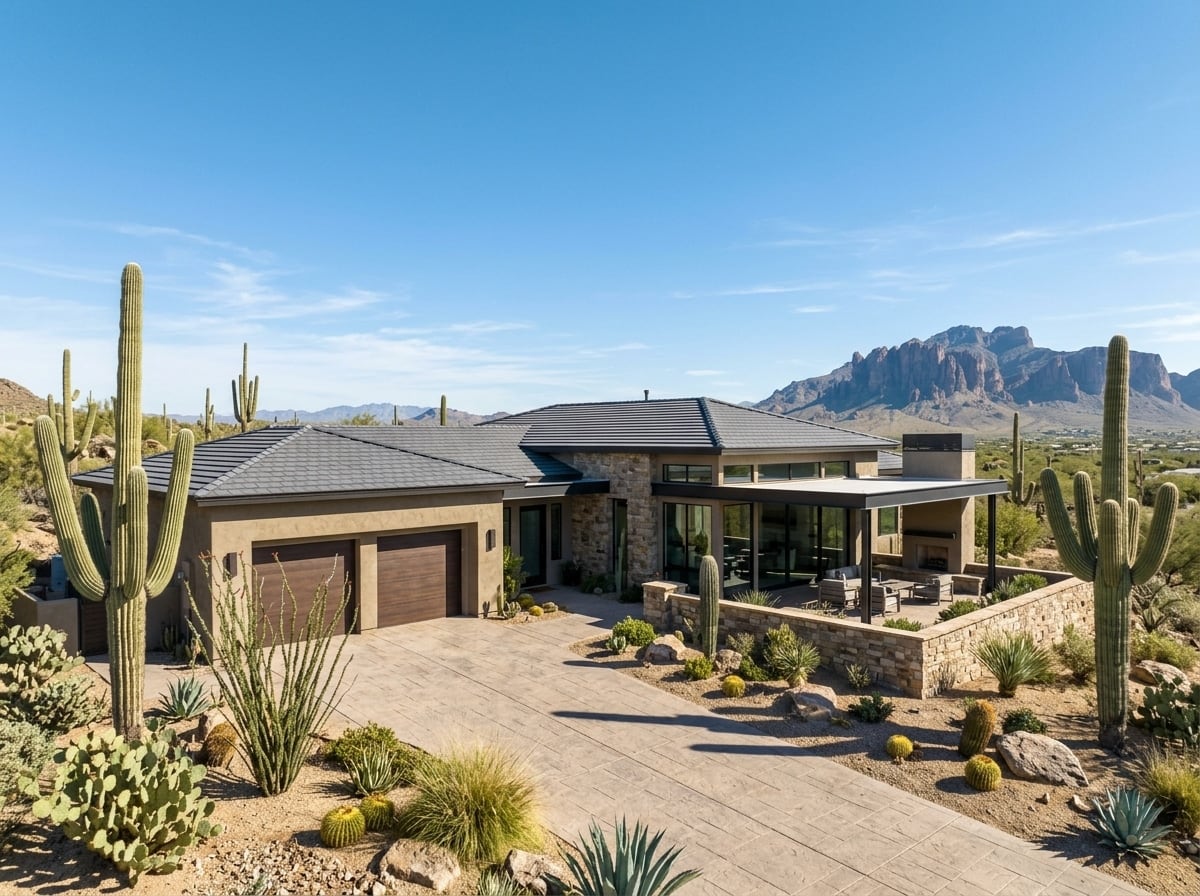
Choosing the right material for your home is a major decision that impacts both your property value and your protection against the elements. In the desert Southwest, concrete tile roofing has become the gold standard for homeowners seeking a blend of timeless Mediterranean aesthetics and rugged durability. Honestly, when you consider the extreme heat and monsoon winds we face, there is simply no better way to ensure your roof lasts for decades.
Why Concrete Tile Roofing Is the Smart Choice for Arizona Homes
Concrete tile roofing is one of the most durable and beautiful roofing options available to homeowners today. In Arizona's harsh climate — with blistering heat, intense UV rays, and powerful monsoon winds — your roof needs to be tough. Concrete tiles deliver exactly that.
Here's a quick answer if you want the essentials right away:
What is concrete tile roofing? Concrete roof tiles are made from a blend of Portland cement, sand, water, and pigments. They are molded into various shapes and fired to create a dense, durable roofing material that can last 50 years or more.
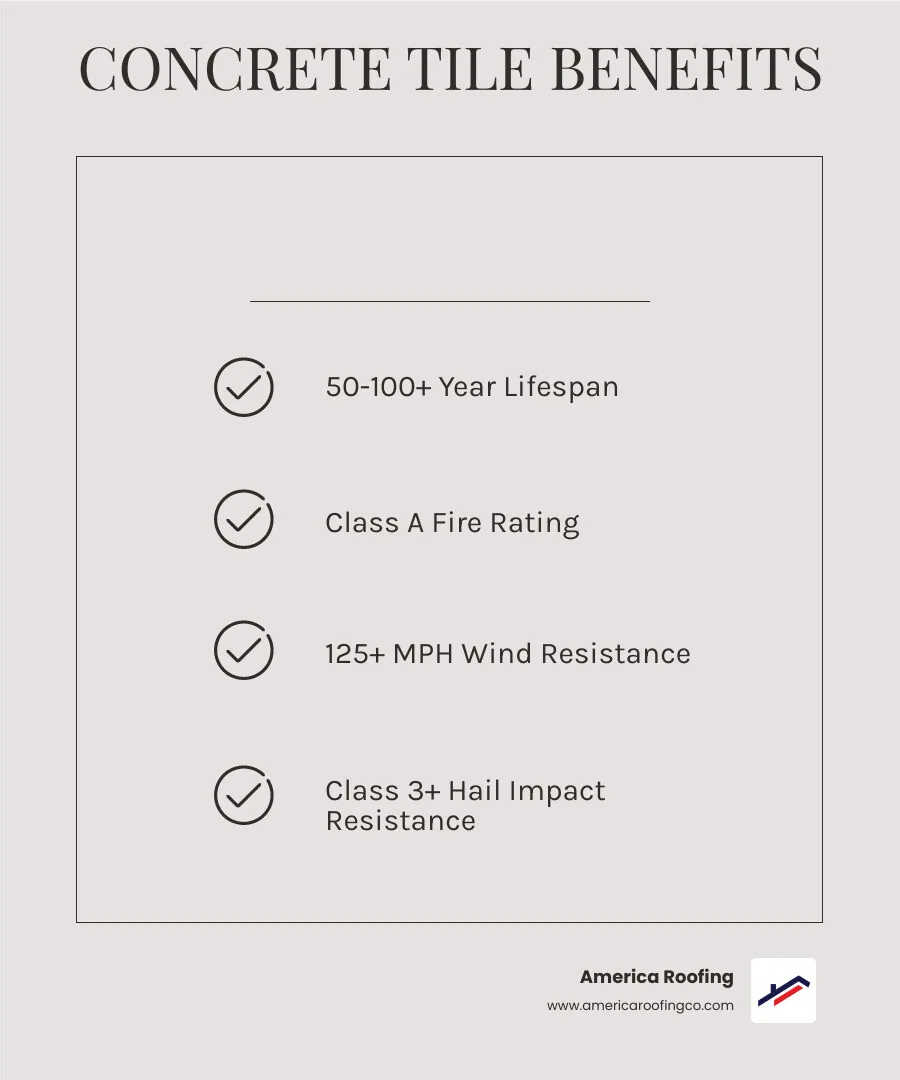
Key benefits at a glance:
- Lifespan — 50 to 100+ years with proper care
- Fire resistance — Class A fire rated
- Wind resistance — Withstands winds over 125 mph
- Hail resistance — Minimum Class 3 impact rating
- Energy efficiency — Thermal mass slows heat transfer into your home
- Low maintenance — Occasional cleaning and annual inspections
- Curb appeal — Available in dozens of styles, profiles, and colors
- Cost — $300 to $600 per square installed (roughly $7,500 to $15,000 for a full roof)
Honestly, when you stack those benefits up against asphalt shingles or even metal roofing, concrete tiles win on almost every front — especially here in the Valley where the sun and storms push every roofing material to its limit.
The Unmatched Benefits of concrete tile roofing
When we talk about concrete tile roofing, we aren't just talking about a roof; we’re talking about a structural shield. Research from the Portland Cement Association shows that concrete tiles actually become stronger with age. Just like concrete bridges and high-rise foundations, these tiles cure over time, hardening against the elements.
Weather Resistance and Safety
In Arizona, "weather resistance" is a nice way of saying "surviving a haboob or a 115-degree July afternoon." Concrete tiles are Class A fire rated, which is the highest rating possible. This means they are non-combustible and can resist ignition from flying embers—a critical feature for homes near desert preserves.
Furthermore, these tiles are built to stay put. Most high-quality concrete tiles can sustain winds in excess of 125 miles per hour. During monsoon season, when microbursts can rip shingles off a house in seconds, a tile roofing system provides unparalleled peace of mind.
Energy Efficiency: The "Thermal Mass" Advantage
You know what? Most people don't realize that concrete tile roofing is actually one of the most energy-efficient options for the desert. Let me explain: concrete is a dense material with high "thermal mass." It absorbs heat very slowly during the day and releases it slowly at night.
When installed with a ventilated system, the air space between the tiles and the roof deck acts as an extra layer of insulation. This reduces the heat transfer into your attic, keeping your AC from working overtime. Some modern tiles even come with "Cool Roof" ratings, using special pigments to reflect UV rays.
Environmental Impact
Concrete tiles are environmentally friendly. They are often made from locally sourced materials (sand, cement, and water) and are fully recyclable at the end of their long life. Unlike asphalt shingles, which are petroleum-based and end up in landfills every 15–20 years, concrete tiles are a "forever" product.
| Feature | Concrete Tile | Asphalt Shingles | Clay Tile |
|---|---|---|---|
| Lifespan | 50-100 Years | 15-25 Years | 60-100+ Years |
| Cost (per Sq) | $300 - $600 | $150 - $350 | $700 - $1,000 |
| Fire Rating | Class A | Class A | Class A |
| Wind Resistance | 125+ mph | 60-110 mph | 125+ mph |
| Maintenance | Low | Moderate | Low |
| Weight | High | Low | High |
Diverse Styles and Profiles of concrete tile roofing
One of the biggest misconceptions about concrete tile roofing is that it only comes in that classic "orange" Spanish style. While we love a good Mediterranean look, the versatility of concrete is staggering. Manufacturers like Eagle Roofing and Bartile have turned tile manufacturing into an art form.
Popular Profiles:
- S-Tile (High Profile): This is the iconic "double-S" shape that creates those beautiful, rolling shadow lines. It’s perfect for Mediterranean, Spanish, or Tuscan-style homes.
- Medium Profile (Malibu): A slightly subtler curve that offers a classic look without being too aggressive. It’s a versatile choice for many Phoenix ranch-style homes.
- Flat Tile: These tiles are designed to mimic wood shakes, slate, or even stone. If you want the look of a high-end New England slate roof but need the durability of concrete, flat tiles are the way to go.
- Shake and Slate Mimics: Some tiles are textured with ragged edges and deep grooves to perfectly simulate hand-split wood shakes, but without the fire hazard or rot issues.
Color Technology: Color-Thru vs. Slurry-Kote
Here’s a pro tip: when choosing your tiles, ask about the coloring method.
- Color-Thru: The pigment is mixed directly into the wet concrete before the tile is molded. If the tile gets chipped by a stray golf ball or a heavy hailstone, the color remains consistent all the way through.
- Slurry-Kote: A concentrated layer of pigment and cement is baked onto the surface of the tile. This allows for incredibly vibrant colors, but if the tile chips, you might see the gray concrete underneath. In the intense Arizona sun, color-thru tiles are often preferred for their long-term color retention.
Structural Weight and Support Considerations
Let’s be honest: concrete tile roofing is heavy. We’re talking 900 to 1,100 pounds per "square" (a 10' x 10' area). To put that in perspective, a standard 2,500-square-foot roof might be carrying over 25,000 pounds of tile.
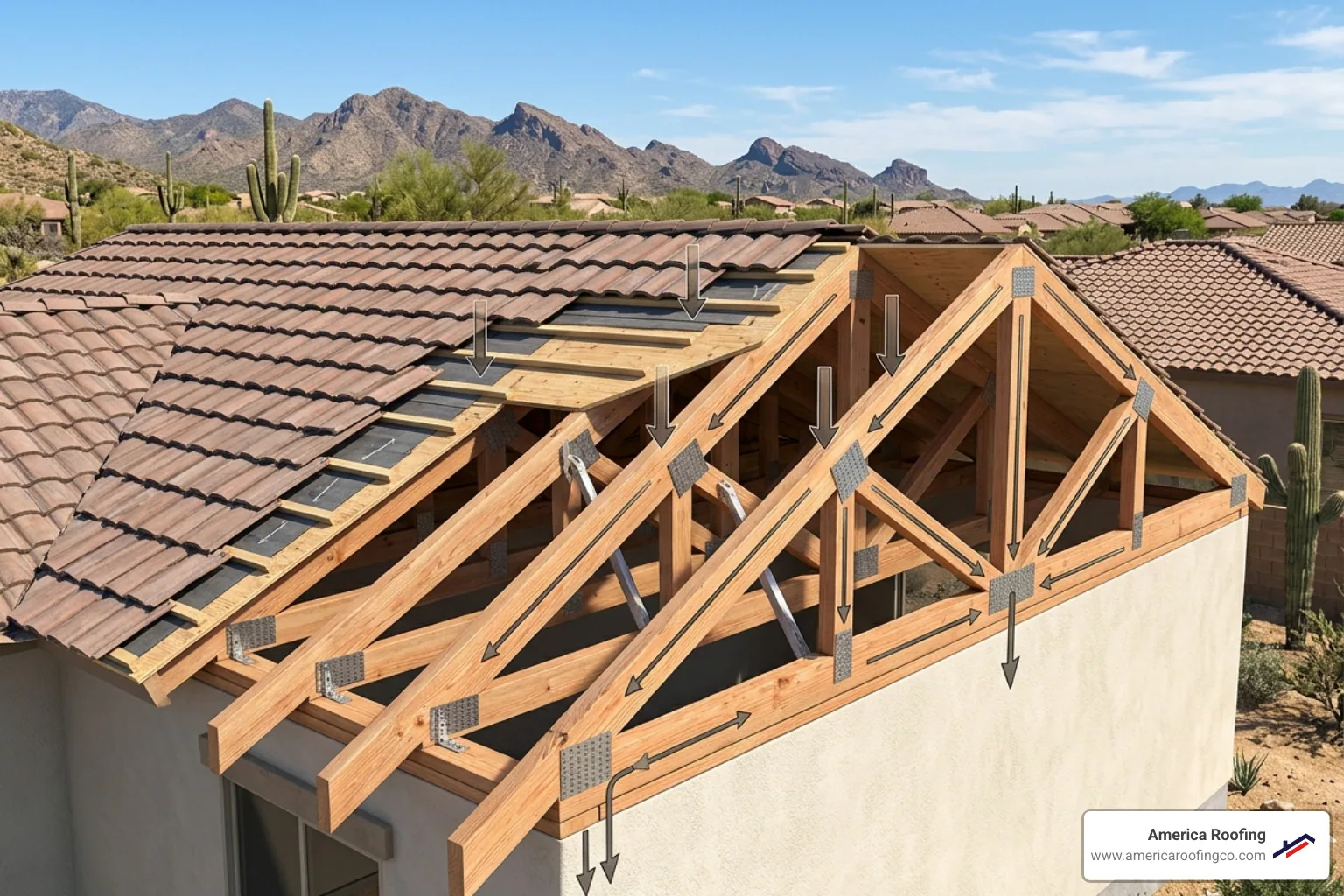
Before we ever start a tile roof replacement, we must ensure the home's structural framing is rated for that load. Most homes built in Arizona after the 1970s were designed with tile in mind, but if you are switching from shingles to tile, you may need a structural engineer to sign off on the trusses.
What if my house can't handle the weight? Don't worry! There are "lightweight" concrete tiles available. These are made with expanded shale or porous clay to reduce the weight by up to 30% while maintaining much of the durability. However, standard-weight tiles are generally more durable and less prone to breaking when walked upon by service technicians (like AC repairmen).
Understanding the Role of Underlayment
This is perhaps the most important section of this guide. If you remember nothing else, remember this: The tile is the "water shedder," but the underlayment is the "waterproofer."
In Arizona, we often see concrete tile roofing that looks perfect from the street, but the roof is leaking inside. Why? Because the underlayment has reached the end of its life. While the concrete tiles can last 75 years, the asphalt-based underlayment beneath them typically lasts 12 to 20 years in our heat.
When we perform a tile roof replacement cost analysis, we focus heavily on the quality of the underlayment. We recommend high-performance synthetic underlayments or self-adhering modified bitumen membranes. These materials can withstand the "superheating" that occurs under the tiles, ensuring your home stays dry for decades.
Professional Installation and Maintenance Standards
Installing concrete tile roofing is not a DIY project. It requires specialized knowledge of flashings, weight distribution, and water flow. At America Roofing, we follow the strictest standards to ensure your roof is "monsoon-proof."
The Step-by-Step concrete tile roofing Installation Process
A proper installation is a symphony of layers. Here is how we do it:
- Tear-Off and Inspection: We remove all old materials down to the wood deck. We inspect for rot and ensure the structural integrity is sound.
- Underlayment Installation: We apply premium underlayment, often using a "two-ply" system or high-temp synthetic. This is the heart of your roof's waterproofing.
- Flashings and Valleys: We install heavy-duty metal flashings around chimneys, vents, and in the valleys. These are the areas most prone to leaks, so we don't cut corners here.
- Batten Strips: We install wood or plastic batten strips. The tiles "hook" onto these strips. We use elevated battens to allow water and debris to flow freely underneath the tiles toward the eaves.
- Tile Layout: We install the tiles from the bottom up. We maintain a specific "headlap" (the amount one tile overlaps the one below it) to ensure water stays on top of the system.
- Perimeter Security: We use mortar or specialized adhesives to secure the perimeter tiles (the "rakes" and "ridges"). This prevents the wind from getting under the tiles and lifting them during a storm.
- Finishing Touches: We install bird stops and eave closures. These prevent birds and pests from nesting under your tiles—a common problem in the Phoenix metro area.
For those curious about technical specs, we always adhere to the concrete roof tiles minimum pitch requirements, which usually require a minimum 2.5:12 or 3:12 slope, depending on the specific tile and underlayment used.
Cleaning and Long-Term Care
One of the reasons homeowners love concrete tile roofing is that it's relatively low maintenance. However, "low maintenance" doesn't mean "no maintenance."
Annual Inspections: You should have a professional look at your roof once a year, ideally before the monsoon season starts. We look for cracked or slipped tiles. A single cracked tile can expose the underlayment to UV rays, which will cause it to brittle and fail prematurely.
Debris Removal: Leaves and branches can get trapped in the valleys or behind chimneys. This creates "dams" that force water to back up under the tiles. Keeping your roof clean is the simplest way to prevent leaks.
Professional Cleaning: If you live in a shadier part of Scottsdale or Peoria, you might notice algae or moss growth on your tiles. While this doesn't usually hurt the concrete, it can look unsightly. We recommend professional pressure washing—but be careful! If done incorrectly, high pressure can damage the tile surface or flood the underlayment.
For more tips on keeping your roof in top shape, check out our concrete tile roof repair guide.
Selecting an Expert Arizona Roofing Partner
When it comes to your home, "good enough" isn't good enough. You need an authority. America Roofing is a third-generation, family-owned, and veteran-owned company. We’ve been serving Maricopa County since 1999, and we understand the unique demands of Arizona tile roofing.
We don't just "slap on" some tiles. We engineer a roofing system. From the selection of premium materials to our flawless craftsmanship, we ensure that every roof we touch is built to last a lifetime. Whether you are in Phoenix, Mesa, Chandler, or Scottsdale, we provide honest, no-pressure advice and fully transparent 2025 pricing.
Our team specializes in:
- Concrete tile roof repair: Fixing leaks and replacing broken tiles before they cause major damage.
- Full roof replacement: Giving your home a total makeover with the latest in tile technology.
- Preventative maintenance: Helping you get the maximum possible life out of your current roof.
Honestly, we treat every home as if it were our own. That’s the veteran-owned difference. We aren't just contractors; we are your neighbors.
Frequently Asked Questions About Concrete Tiles
How much does a concrete tile roof cost in Phoenix? Typically, you can expect to pay between $300 and $600 per square. For an average 2,500-square-foot home, the total cost usually falls between $7,500 and $15,000, though high-end custom tiles or complex roof shapes can increase that.
Can I walk on my concrete tile roof? We don't recommend it. While concrete is strong, it can be brittle under the weight of a person, especially if you step on the "lugs" or the center of the tile. If you must get on the roof to change a lightbulb or clean a gutter, try to stay in the valleys or walk on the overlapping sections where the tile is supported.
Do concrete tiles fade? All materials fade slightly when exposed to 300 days of Arizona sun, but "color-thru" concrete tiles hold their appearance remarkably well for decades.
How do I know if I need a new roof or just a repair? If your tiles are in good shape but you have multiple leaks, your underlayment likely needs a "tile-off" reset. This is where we remove the tiles, replace the underlayment, and then reinstall the original tiles. It’s a cost-effective way to get another 20 years of life out of your roof.
You know what? Investing in a high-quality roof is the best way to protect your family and your biggest investment for the next fifty years. If you are ready to experience the durability and beauty of a professional installation, contact our team at 602-237-2478. We are here to help you, so feel free to Request a Free Quote today.