
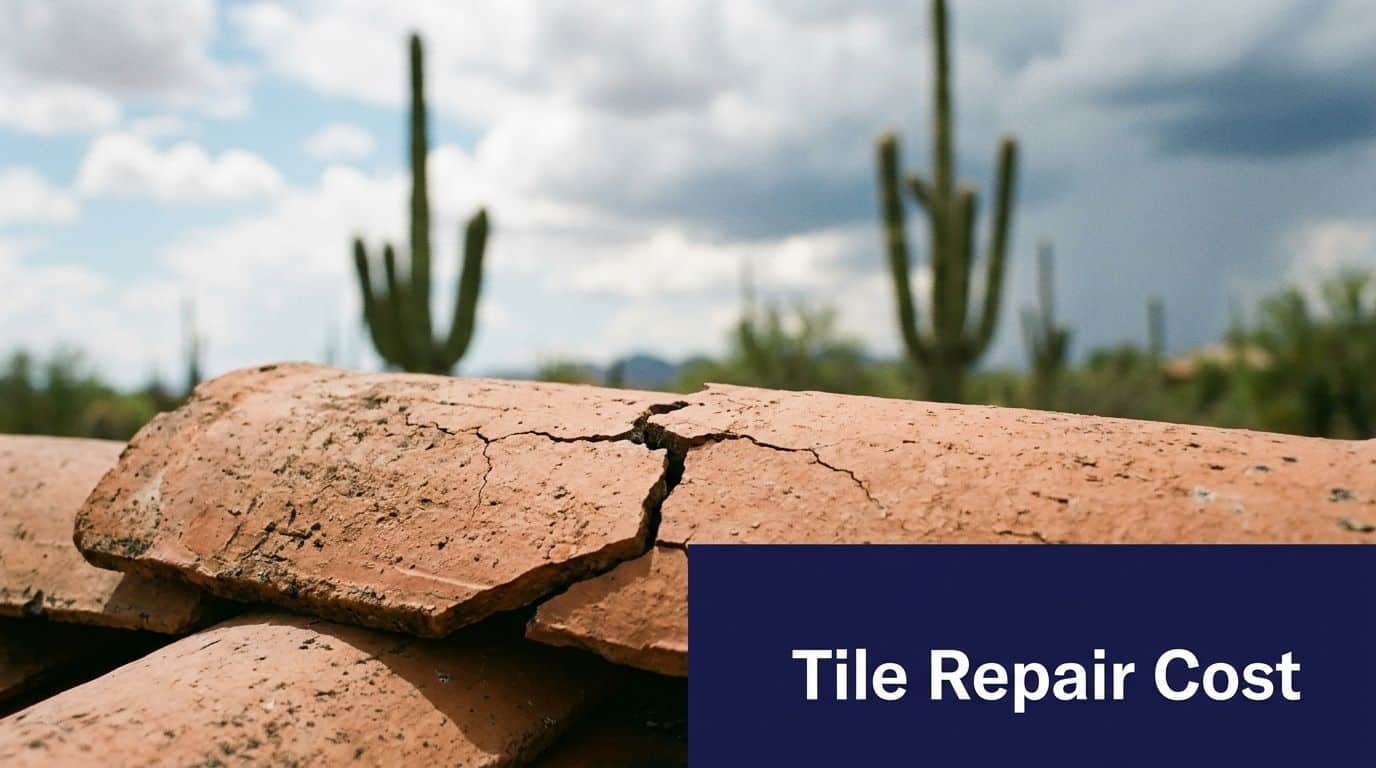
Minor cracked roof tile repair commonly lands in the hundreds of dollars, while broader homeowner projects often move into the low thousands. The final price depends on roof access, tile matching, and whether water has already damaged the underlayment beneath the visible crack.
A homeowner in Phoenix or Tucson can see one broken tile after a monsoon, notice a ceiling stain a week later, and still not know whether the roof needs a quick swap or a layered leak repair. That's a significant issue with tile roofs in Arizona; the visible damage is often only the first clue.
What Cracked Roof Tile Repair Usually Costs
A cracked tile on a hot, dusty Arizona roof rarely tells the full story from the driveway. The same visible break can mean a simple tile swap, or it can mean hidden water intrusion that turns a small job into a broader repair.
For minor cracked roof tile repair cost expectations, the most widely cited U.S. benchmarks cluster around $300 to $1,000 for minor repairs and $900 to $2,500 for most homeowner projects (Angi). Guides also put the per-square-foot range at $8 to $25, while individual cracked or missing tiles often price at $26 to $137 per tile and smaller repair jobs may start as low as $150 to $600 depending on access, tile matching, and whether the underlayment is damaged.
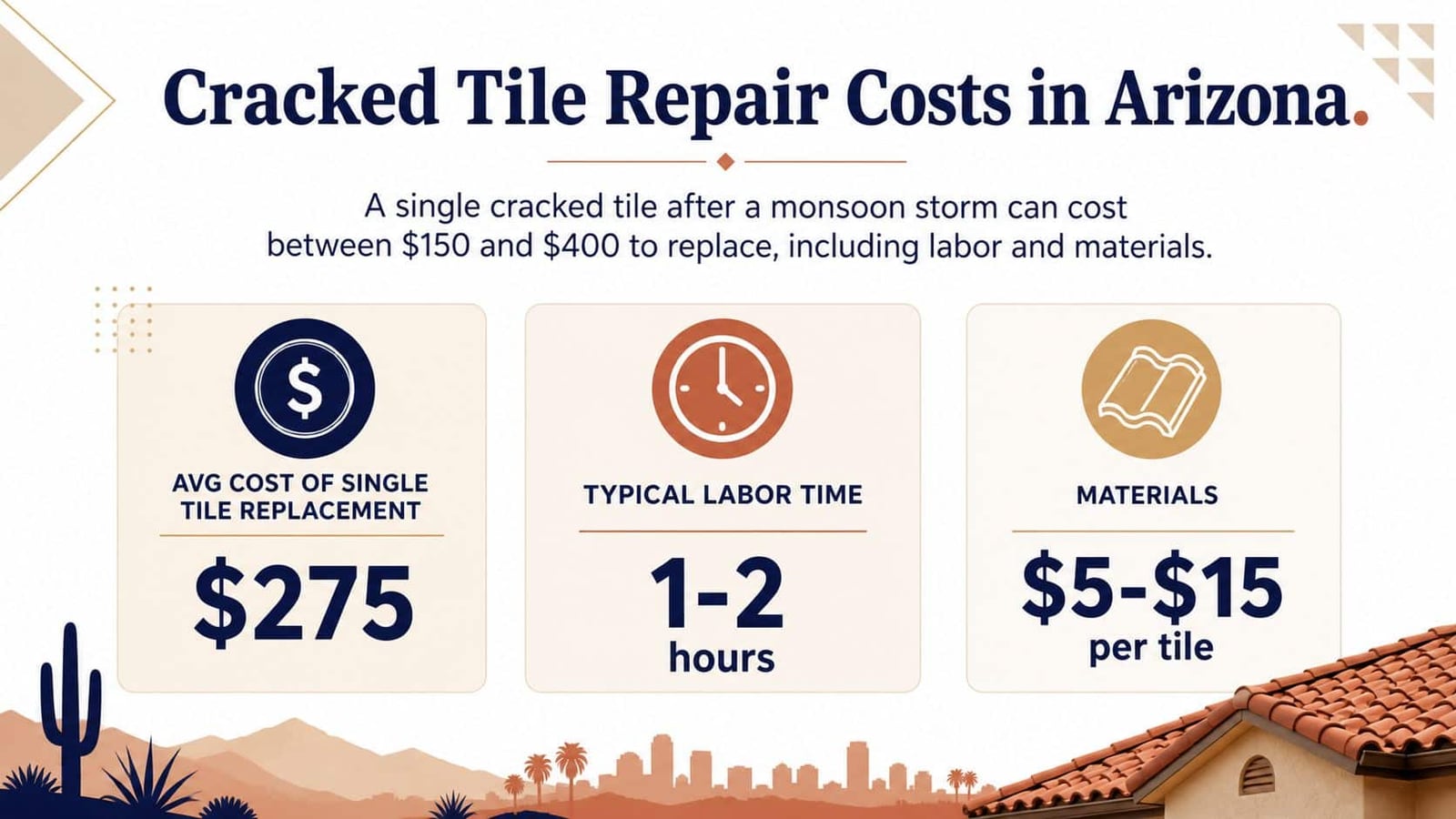
Practical rule: a visible crack is not the same thing as a small repair once water intrusion is involved.
Typical cost scope
That is why a contractor should never price a cracked tile by the tile alone. A roof inspection has to answer three questions before the quote makes sense. Is the tile damage isolated, can nearby tiles be removed without causing more breakage, and has moisture already reached the layer underneath?
If the roof is close to replacement territory, the decision belongs in a broader planning conversation, not a patch-and-pray repair. America Roofing has a useful tile roof replacement cost guide for owners who need to compare the repair line against a full replacement scenario.
Why a Cracked Tile Is Only Part of the Problem
A tile roof works like a hard outer shell over a waterproof system beneath it. The tile sheds sun, debris, and most rain, but the underlayment, flashing, valleys, and details below the tile are what keep water out when the roof gets stressed by Arizona heat and monsoon weather.
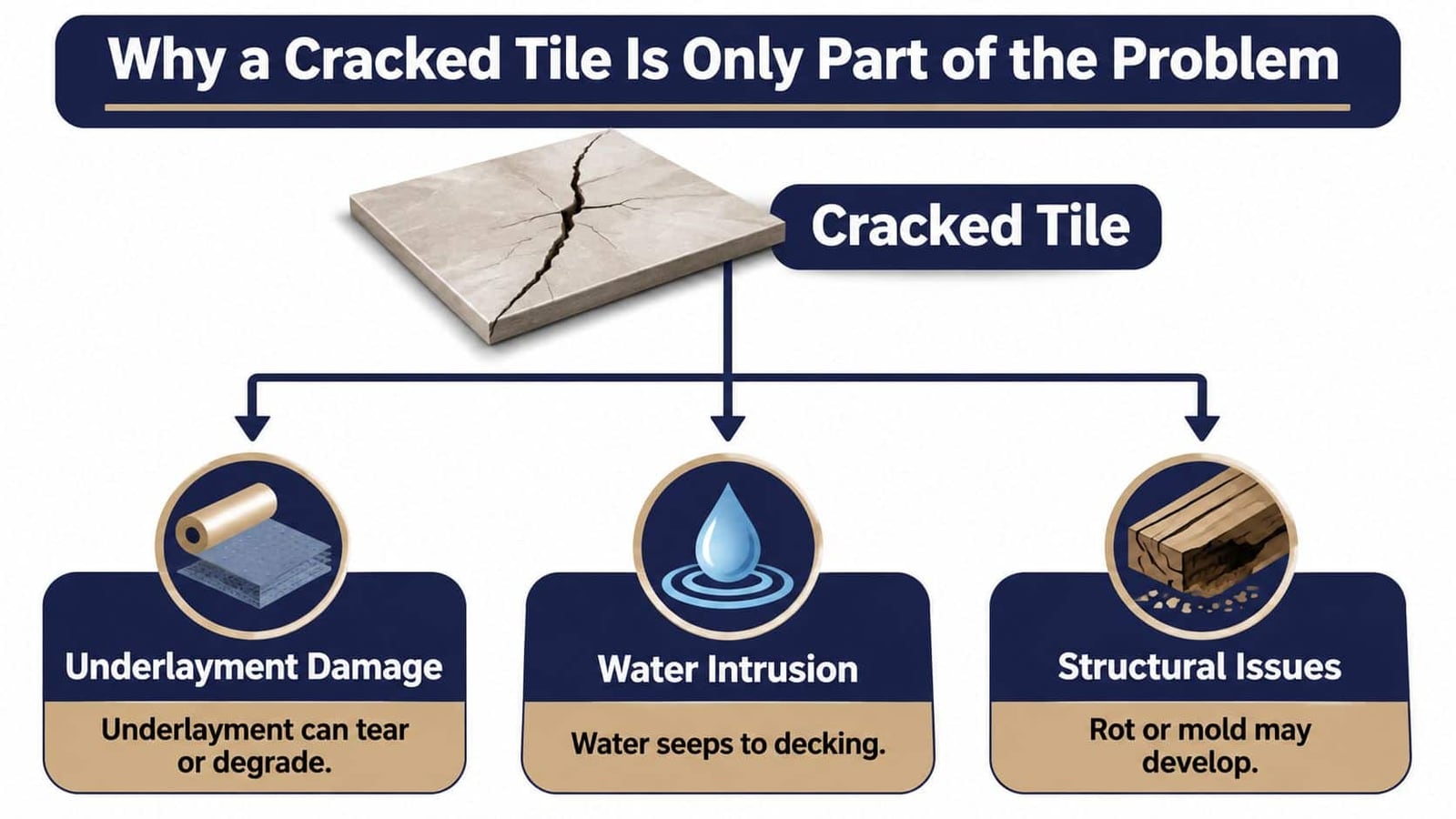
What the visible crack can hide
A tile can crack from impact, movement, or age, but the leak path often starts below the surface. Water can travel under surrounding tiles, follow a valley, and show up on drywall or insulation far from the original opening. That's why a stain inside the house doesn't automatically point to the tile you can see from the ground.
Arizona roofs take a beating from intense heat, UV exposure, dust, and seasonal temperature swing. Those conditions don't just age the tile surface, they can also stress the materials underneath it, which is why a small visible crack deserves more scrutiny than a homeowner might expect.
Signs that deserve a professional look
- Displaced or cracked tiles, especially after wind or debris impact.
- Staining on ceilings or upper walls, even if the stain is not directly below the crack.
- Damp insulation or recurring interior marks, which usually mean water is finding a repeat path.
- Debris buildup in valleys, where water movement is concentrated.
- Leaks that appear after wind-driven rain, a common pattern when the roof covering has shifted.
The tile is the warning sign. The underlayment is usually the decision point.
For Arizona owners who want the underlayment side of the problem addressed plainly, Arizona tile roof underlayment costs is the more useful planning question than the cracked tile itself. A ground-level photo can help document damage, but it can't confirm whether moisture has already moved below the tile layer.
Repair or Replace the Damaged Tile
The right move depends on what the roof is telling a roofer after inspection, not what the tile looks like in one photo. A focused repair makes sense when the damage is isolated, but a broader section repair or replacement becomes the smarter choice when the roof keeps failing in the same place.
Decision guide
A good example is a homeowner who spots one broken tile after a storm. The first estimate may look small, but once the roof is opened, the contractor finds damaged underlayment and matching issues around neighboring tiles. The job is no longer a simple tile swap. It's a layered leak repair that needs a broader scope.
For owners comparing a repair now versus a bigger decision later, Phoenix roof replacement advice is a better frame than chasing the cheapest repair number. The same logic applies to commercial properties, though flat roofs, foam roofs, and coated systems are a different category and shouldn't be judged by tile roof assumptions.
A useful outside comparison for homeowners weighing whether to hold the property or fix the roof is sell as is in Arizona. That kind of planning becomes relevant when the repair scope keeps growing instead of shrinking.
What Changes the Price of a Tile Repair
The price moves because of labor, access, matching, and what's happening below the tile. Tile itself is only part of the bill, and in Arizona the labor side often matters more than people expect.
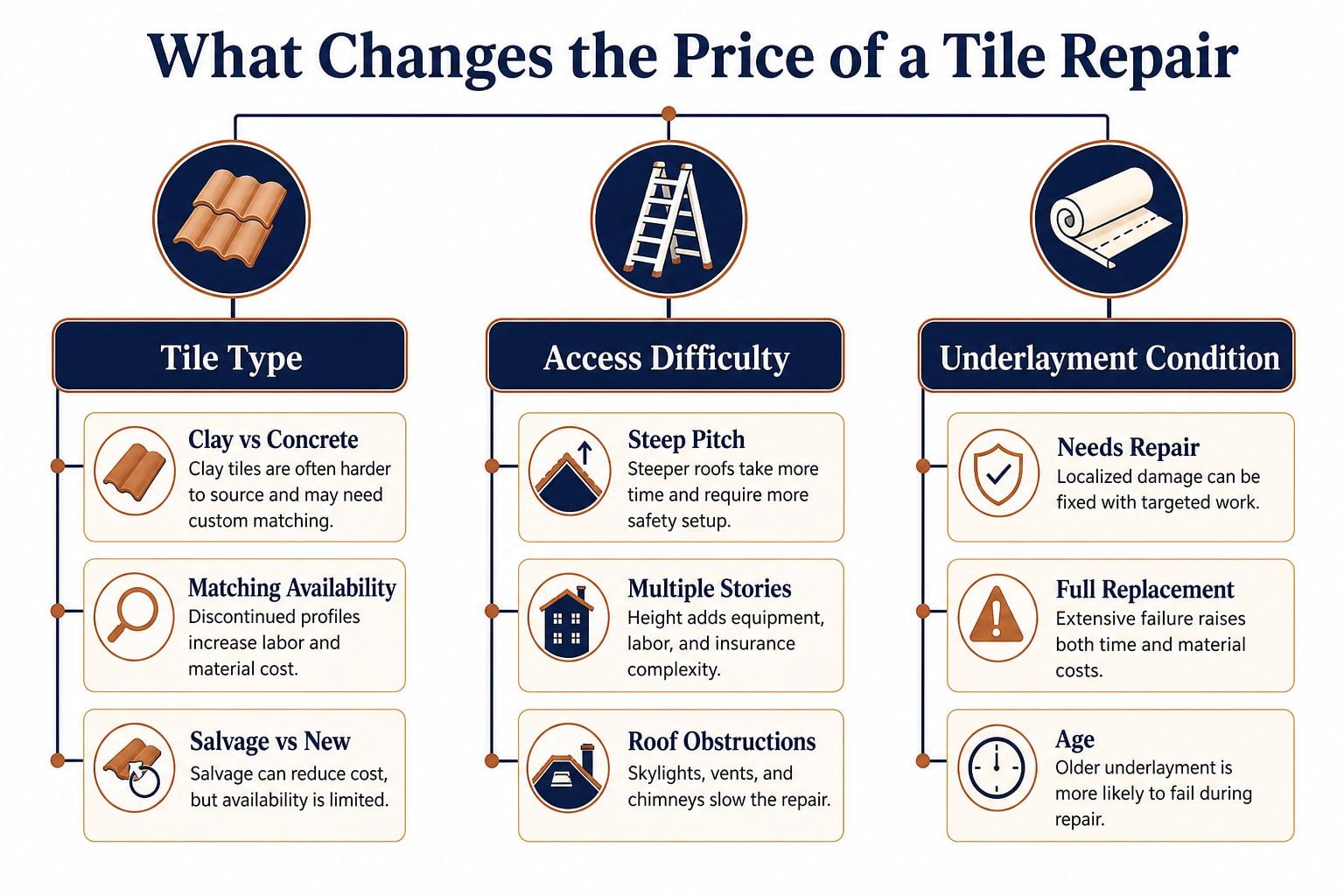
The biggest cost drivers
- Tile type and availability. Clay and concrete tile don't always match easily, and discontinued styles can force a search for salvage pieces or special-order material.
- Access difficulty. A one-story roof with open access is a very different labor job than a steep or obstructed roof with tight staging.
- Roof pitch and story height. The steeper and taller the roof, the more care the crew needs just to move safely and remove surrounding tiles.
- Surrounding tile removal. If the cracked tile can't be reached cleanly, the contractor may need to lift adjacent tiles to avoid breaking more pieces.
- Underlayment condition. A tile swap is one thing. A patch or replacement below the tile is a different scope.
- Flashing and valley details. Those areas often create the primary leak, even when a cracked tile is what first gets noticed.
- Cleanup and disposal. Broken material has to be handled, removed, and carried off the roof safely.
- Commercial logistics. On commercial properties, rooftop equipment, tenant access, occupied spaces, and coordination around service hours can change how the work gets scheduled.
For a homeowner or manager trying to compare bids, it helps to compare roof repair prices on scope, not just on total. A low number that skips underlayment inspection or flashing review is not a clean comparison.
Ask for the repair scope in writing, especially if the quote only says “replace tile.” That phrase can hide a much bigger job.
One extra Arizona reality matters here. Dust and sun make many roofs look stable from the ground, but once a contractor gets up there, access, brittle tile edges, and hidden movement can change the work fast. The quote should spell out what was inspected, what was removed, and what was left untouched.
When DIY Is Not a Safe Roofing Plan
A property owner can document damage without climbing the roof. That's the boundary. Once the work turns into walking tile, prying up adjacent pieces, or smearing sealant over a suspected leak, the roof can get worse fast.
Tile breaks under foot traffic more easily than many owners expect, especially when the roof is hot or the tile has already been stressed by age. A temporary surface treatment can also hide the symptom while the underlayment keeps leaking below it.
Safe homeowner actions are limited and useful:
- Look from the ground, including from a safe distance after a storm.
- Check ceilings and upper walls for new stains or damp areas.
- Keep dated photos and notes so changes are easy to track.
- Call for an inspection when leaks, sagging, widespread movement, or hard-to-reach roof sections are involved.
The roof's value isn't in being touched first. It's in being diagnosed correctly first. In Phoenix and Tucson, that matters even more because debris, dust, and heat can make the roof look manageable when the actual repair problem is hidden at the tile layer below.
Insurance and Storm Documentation in Arizona
Storm documentation should start immediately after it's safe to do so, but it should stay grounded in facts, not assumptions. The goal is to capture what happened, what changed, and where the damage appears before the roof gets repaired or covered up.
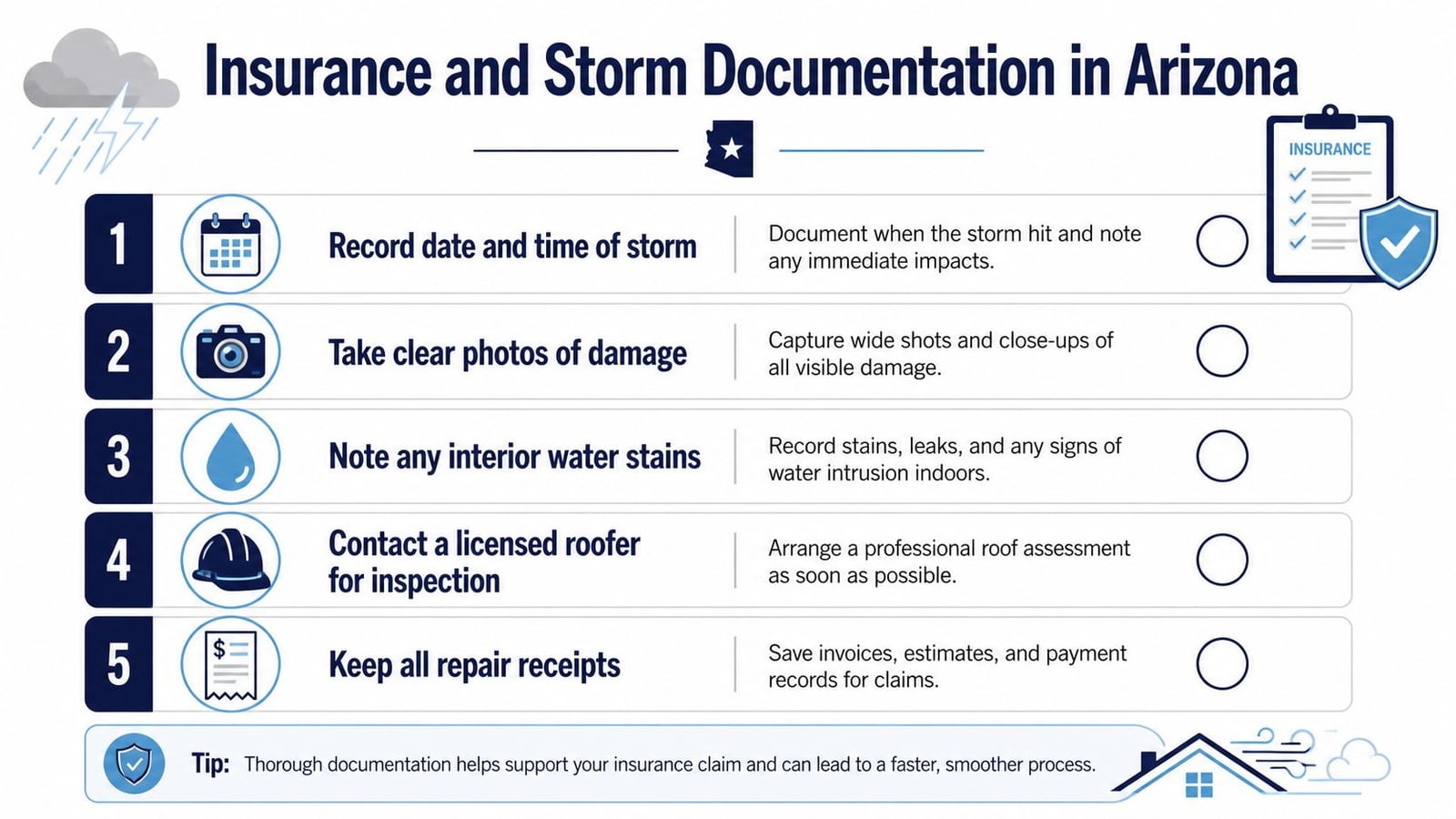
Immediate storm checklist
- Record the storm date and time. Save any weather alerts or service notices that help anchor the event.
- Take clear photos from safe ground. Wide shots, close shots, and repeat angles all help.
- Note interior stains or drips. Mark the room, ceiling area, and the first time it appeared.
- Contact a licensed roofer for inspection. The contractor can document roof conditions and explain likely repair scope.
- Keep receipts and records. Save any emergency mitigation or temporary protection paperwork.
A roofing contractor can document visible roof conditions and produce photos or an estimate, but coverage questions belong with the policyholder's insurer and policy language. The roof side and the claim side are not the same task.
Phoenix and Tucson property owners should also separate residential tile damage from any commercial roof areas on the same site if the property has mixed systems. A tile roof, a flat roof, and a coated roof don't all fail the same way, and the documentation should reflect that difference.
The key point is simple. Insurance photos can support the claim conversation, but they don't replace an inspection that checks the tile, the surrounding roof area, and the layer beneath it. A complete repair estimate still depends on what's found on the roof, not just what's visible in a folder of pictures.
How to Get an Accurate Phoenix or Tucson Quote
A useful quote starts with useful information. The more clearly the contractor understands the roof, the easier it is to compare bids that cover the same work.
What to provide before the visit
- Roof type and system. Tile roof, flat roof, foam roof, coating, or a mixed property with more than one system.
- Approximate roof age. Not as a guarantee, just as planning context.
- Visible crack locations. Front slope, valley line, near a wall, or near roof equipment.
- Leak symptoms. Ceiling stains, active dripping, or recurring moisture.
- Recent storm timing. Wind, monsoon rain, or debris impact can change the likely scope.
- Access constraints. Gates, rooftop obstructions, steep sections, or height issues.
- Property type. Residential or commercial, because coordination and logistics differ.
The next step is to compare the written scope, not the headline price. America Roofing's Phoenix roof repair page is a practical local reference point for repair service context, while a broader replacement conversation should use the earlier tile replacement guide when the roof condition points that way.
Quote comparison checklist
For a fast, practical next step, homeowners and property managers can get a roof estimate once they've gathered the roof type, leak symptoms, and storm timing. That makes it much easier to tell whether each bidder is solving the same problem.
The Next Step for Arizona Property Owners
A single cracked tile can be a focused repair if the rest of the roof and the layers beneath it are sound. If there's a leak, repeated cracking, hard access, or underlayment concern, the right move is a broader inspection and a scope that matches the problem, not just the tile.
That's true for Phoenix and Tucson homes, and it's just as true for commercial properties with separate roof systems. The next step is to document the damage, request an inspection, compare written estimates, and decide whether repair or replacement protects the roof better over time.
America Roofing handles roof repair, roof replacement, tile roofing, flat roofing, foam roofing, leak repair, storm damage, and commercial roofing across Phoenix and Tucson. If a cracked tile has turned into a leak concern, reach out by calling 602-237-2478 or use the request a roofing estimate form to get the roof looked at before the damage spreads. Visit America Roofing to take the next step.