
Introduction
A commercial building inspection should identify structural concerns, water intrusion, deferred maintenance and safety issues before a purchase. The findings help a buyer understand immediate repairs, longer-term capital needs and conditions that require specialist review.
When you are buying, selling, or leasing commercial property in Arizona, the stakes are incredibly high. Unlike residential properties, commercial assets are complex financial vehicles with massive operational overhead. A single overlooked structural defect, an outdated electrical panel, or a failing low-slope roof can easily wipe out your projected returns.
That is where a professional commercial building inspection comes into play. It is not just a regulatory hurdle or a box to check for your lender; it is your ultimate risk mitigation tool. By thoroughly assessing the physical condition of a property, you gain a clear, unbiased picture of your upcoming capital liabilities.
Here's the thing: you must understand how these properties differ from residential ones. For instance, commercial roofing systems face completely different structural stresses, drainage requirements, and thermal dynamics than a standard home. If you want to dive deeper into these structural differences, you can check out this guide on commercial vs residential roofs.
The Complete Guide to Commercial Building Inspection
To get the most value out of your inspection, it helps to understand the standards that govern the industry. Professional commercial property inspections are not performed on a whim. Instead, they rely on highly structured, internationally recognized guidelines to ensure consistency and thoroughness.
The primary standard used across the industry is the ASTM E2018 standard for Property Condition Assessments (PCA). Another widely respected framework is the ComSOP (Commercial Standards of Practice) established by the Certified Commercial Property Inspectors Association (CCPIA). You can review the complete ComSOP guidelines to see exactly how these rigorous standards protect your investments.
These standards apply to a wide range of commercial property types, including:
- Office Buildings: From single-story professional offices in Gilbert to multi-story corporate complexes in downtown Phoenix.
- Retail Spaces: Shopping centers, strip malls, and standalone retail stores.
- Industrial & Warehouses: Distribution centers in Mesa, manufacturing facilities in Tempe, and flex spaces.
- Multi-Family Housing: Apartment complexes and condominium buildings where property managers must balance tenant safety with long-term maintenance.
What Does a Standard Commercial Building Inspection Cover?
A standard commercial inspection is an all-encompassing visual and physical evaluation of the building’s primary systems. Let's explain what a typical inspector will evaluate during their walkthrough:
- Structural Frame and Building Envelope: The inspector examines the foundation, load-bearing walls, columns, and exterior cladding for signs of distress, cracking, or settlement.
- HVAC Systems: Commercial heating, ventilation, and air conditioning systems are massive and expensive. Inspectors check the age, operational status, and maintenance history of these units.
- Electrical Systems: This includes assessing main panels, distribution boards, wiring, and emergency lighting to ensure code compliance and safety.
- Plumbing Systems: Inspectors check for active leaks, water pressure, backflow prevention, and the overall condition of supply and waste lines.
- Fire and Life Safety Systems: This covers fire sprinklers, alarms, fire doors, and emergency exit routes.
To help you visualize the difference between commercial and residential inspections, we have put together this comparison table:
| Inspection Component | Residential Inspection | Commercial Inspection |
|---|---|---|
| Primary Standard | State-level residential SOPs | ASTM E2018 / ComSOP |
| Roofing Focus | Pitched roofs (shingles, concrete tile) | Flat or low-slope systems (TPO, foam, built-up) |
| HVAC Complexity | Standard split systems or heat pumps | Package units, chillers, cooling towers, VAV boxes |
| Electrical Load | 100–200 Amp single-phase | High-voltage, three-phase power distribution |
| Safety Systems | Smoke detectors, fire extinguishers | Sprinkler mains, fire pumps, integrated alarm panels |
| Reporting Goal | Immediate safety and repair items | 5-to-10-year capital expenditure forecasting |
The Commercial Building Inspection Process and Standards
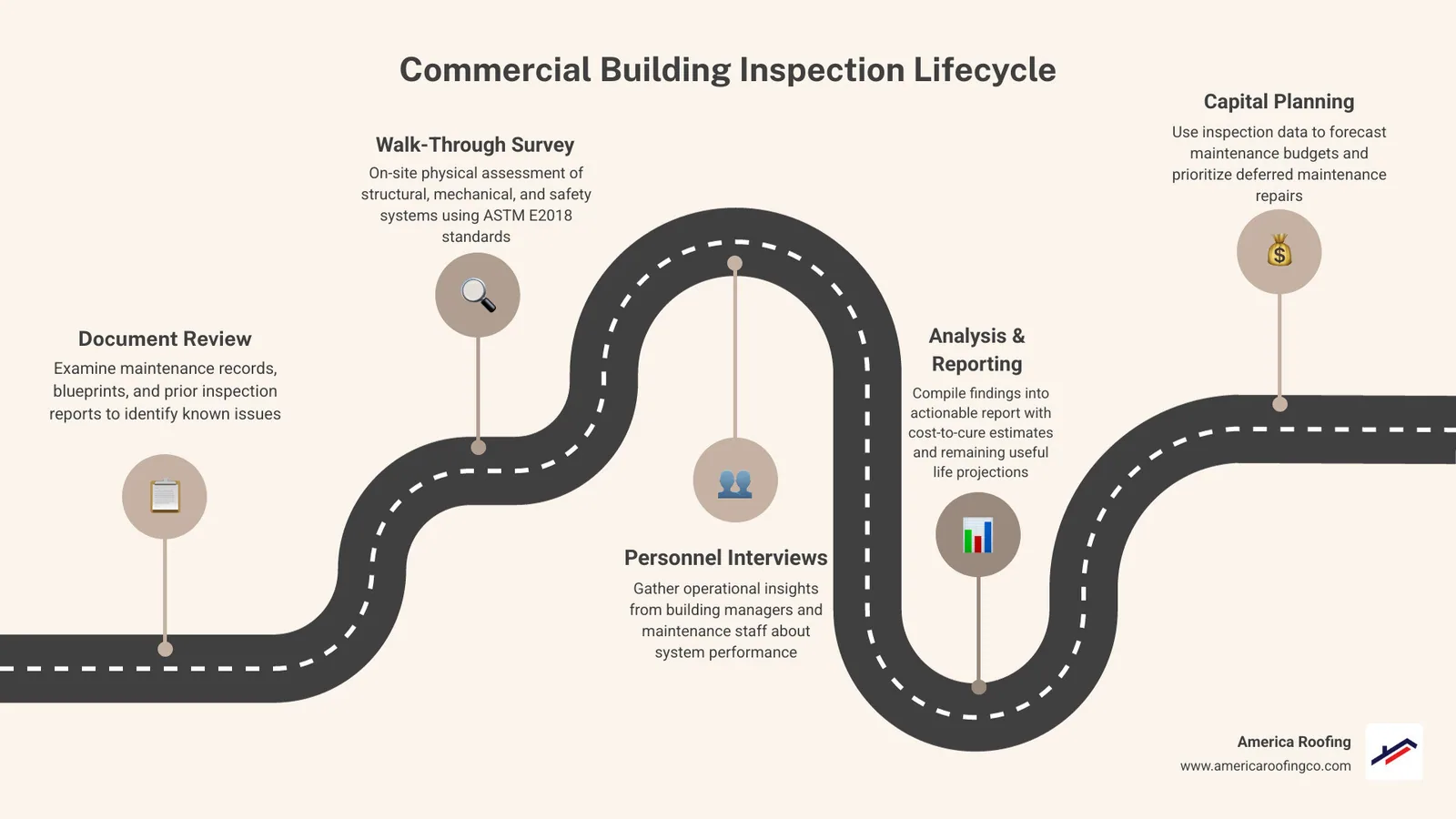
The inspection process is highly systematic and consists of three core phases: the walk-through survey, document review, and personnel interviews.
- The Walk-Through Survey: The inspector conducts a comprehensive visual assessment of the interior, exterior, and roof. They document physical deficiencies, safety hazards, and signs of deferred maintenance using high-resolution photography.
- Document Review: You know what? A building's history is just as important as its current physical state. Inspectors review certificates of occupancy, historical maintenance records, building permits, and prior repair invoices.
- Personnel Interviews: Inspectors will speak with on-site building managers, maintenance staff, or long-term tenants to uncover recurring issues that might not be visible during a single-day walkthrough.
By adhering to the ASTM E2018-08 (or the latest updated ASTM E2018 version), the inspector generates a comprehensive Property Condition Report (PCR). If you are looking to coordinate a major transaction, you can learn more about nationwide commercial inspections and how these professional due diligence reports are structured.
Understanding Commercial Building Inspection Costs and Factors
Honestly, one of the first questions every investor asks is: "How much is this going to cost me?"
There is no single flat rate for a commercial building inspection. Instead, pricing is highly customized based on several key factors:
- Square Footage: Larger buildings require more time on-site and more extensive reporting.
- Building Age: Older properties, such as mid-century retail centers in Phoenix or historic warehouses in Tucson, often have complex layers of renovations that require extra scrutiny.
- Property Complexity: A simple warehouse with four walls and a flat roof will cost significantly less to inspect than a medical office building filled with specialized plumbing and HVAC zones.
On average, commercial building inspections cost between $0.10 and $0.30 per square foot. For most standard commercial properties, the total cost ranges from $1,250 to $2,500. While this might seem like a significant upfront expense, it pale in comparison to the cost of discovering a failed $50,000 commercial HVAC unit or a structural foundation issue after you have already closed escrow.
Who is Qualified to Perform a Commercial Property Assessment?
You should never hire a standard residential home inspector to evaluate a commercial asset. Commercial properties require a completely different level of expertise.
When searching for a qualified professional, look for inspectors who hold credentials from the Certified Commercial Property Inspectors Association (CCPIA) or are licensed structural engineers. These professionals have undergone rigorous training to understand commercial building codes, high-voltage electrical systems, and complex mechanical setups. They also have access to a vast professional network of specialty consultants — such as commercial roofing experts, elevator technicians, and environmental engineers — whom they can bring in for highly specialized assessments.
Specialized Add-Ons: Commercial Roof Inspections and Beyond
While a standard building inspector will perform a visual check of the roof, they are often generalists. In Arizona's extreme climate, the roof is your building's first line of defense against blistering UV rays, intense monsoon winds, and haboobs. A specialized commercial roof inspection is often the most valuable add-on you can request.
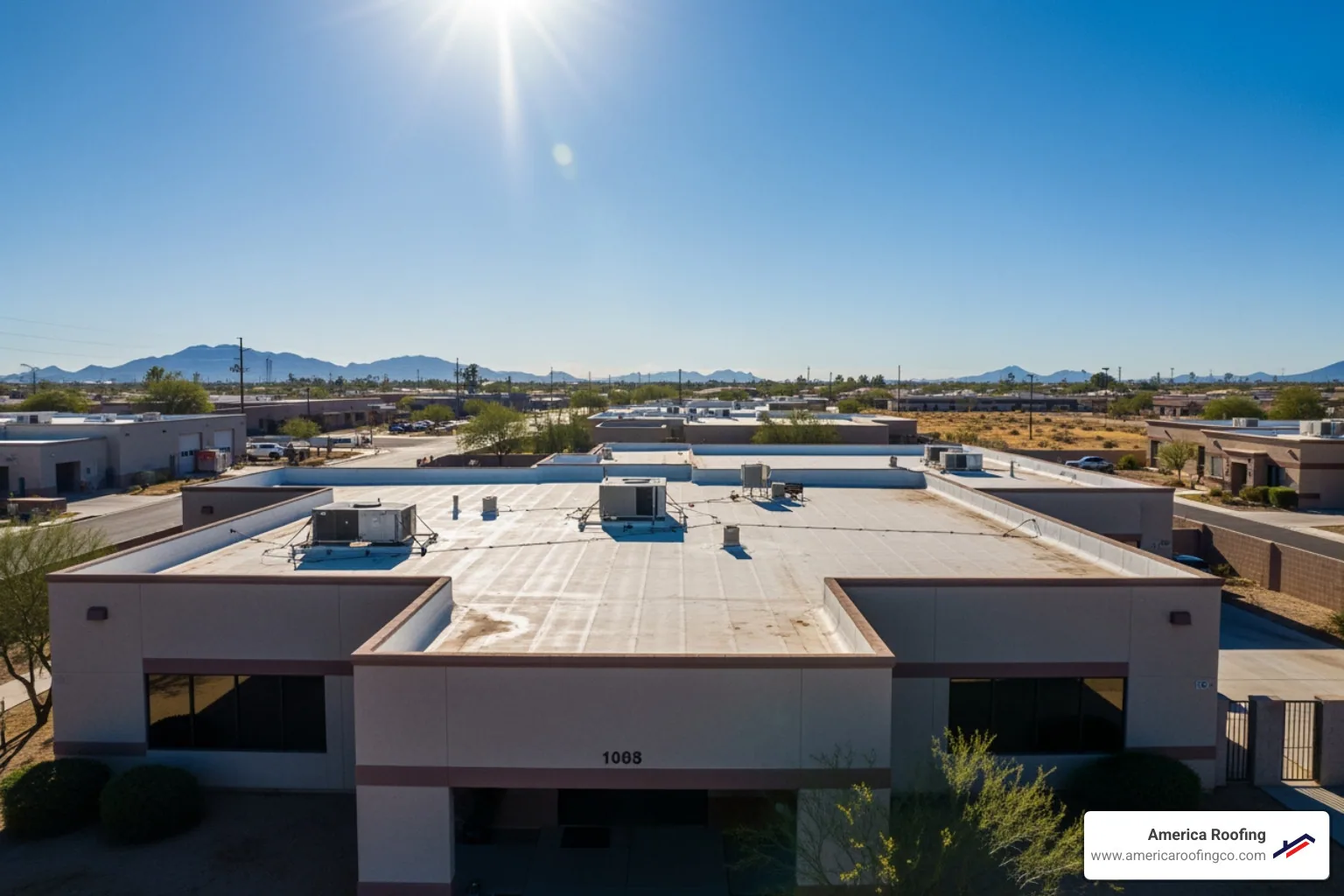
Commercial roofs are typically low-slope or flat systems, such as TPO, polyurethane foam (SPF), or modified bitumen. These systems are highly susceptible to ponding water and hidden moisture intrusion.
To combat this, specialized inspectors use advanced diagnostic tools:
- Thermal Imaging: Infrared cameras scan the roof surface after sunset to detect temperature differences. Wet insulation holds heat longer than dry insulation, allowing us to pinpoint hidden leaks without tearing up the roof membrane.
- Drone Inspections: High-resolution aerial drones can safely map massive roof areas in a fraction of the time, documenting drainage paths and equipment damage.
If you suspect your building's roof has storm damage or is nearing the end of its lifespan, you can learn more about Arizona commercial roof inspections to protect your physical assets.
How to Use Your Inspection Report for Capital Planning
Once the inspection is complete, you will receive a detailed Property Condition Report. But what do you actually do with it?
A great commercial inspection report is not just a list of problems; it is a strategic financial tool. The report will categorize findings into immediate repairs (such as safety hazards or active leaks) and deferred maintenance. Most importantly, it will outline the Remaining Useful Life (RUL) of your major systems and provide a cost-to-cure forecasting model.
This allows property owners and managers to build a realistic 5-to-10-year capital expenditure (CapEx) budget. For example, if the report shows your commercial roof has an RUL of three years, you can start setting aside capital now rather than facing an emergency replacement down the road. Understanding these long-term projections is essential, and you can read more about the financial benefits of replacing commercial roofs when the time comes to update your asset.
Conclusion: Protecting Your Commercial Investment
Investing in Arizona commercial real estate is an incredible opportunity, but it requires diligent risk management. From the extreme heat of Glendale and Peoria to the heavy monsoons of Tucson and Chandler, our local climate puts immense stress on commercial properties.
At America Roofing, we are proud to be an Arizona-based, fully licensed and insured (ROC#186438) veteran-owned roofing company. As a third-generation, family-owned Maricopa County roofing authority established in 1999, we specialize in concrete tile roof repair, flat roof maintenance, and commercial roof replacements engineered specifically for the desert's extreme UV exposure and seasonal storms. Whether you need a specialized roof assessment or a complete property evaluation, we are here to provide honest, no-pressure advice and fully transparent pricing.
If you also own residential rental portfolios, we can assist with those as well; read more about residential and commercial roof inspections in Arizona. To protect your commercial investment and schedule a thorough assessment, call us today at 602-237-2478 or visit our website to Request a Free Quote.