
A monsoon leak in Phoenix or Tucson usually starts small, then shows up at the worst possible time, a stained ceiling, a wet tenant space, or a drip near rooftop equipment after a hard storm. On a commercial building, that's rarely just a patch job problem. It's often the point where a commercial roof replacement plan needs to be built around real roof condition, drainage, permits, and budget.
The right move is usually not to guess from the ground. It's to inspect the roof, confirm what's wet, then decide whether the building needs targeted repair, a partial scope, or a full replacement package.
Understanding Roof Condition and Scope
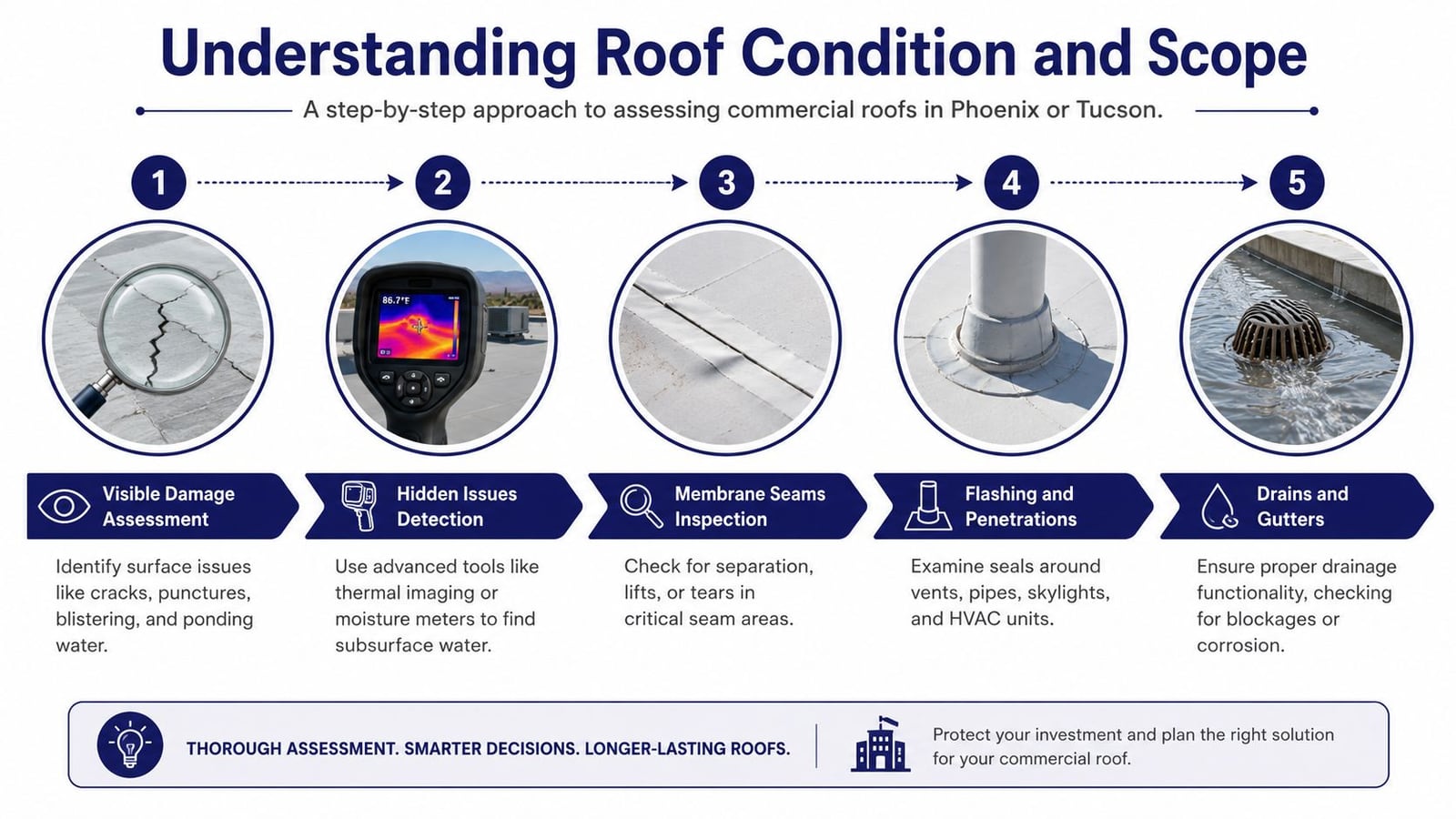
A monsoon leak on a flat roof can look like a seam failure, but the underlying issue might be wet insulation spread wider than the drip line. That's why a commercial roof replacement should start with a condition assessment, not a sales quote. On Arizona low-slope roofs, the visible leak point is often not the only damaged area, especially after wind-driven rain pushes water under flashing or around penetrations.
Start With What You Can See
Walk the roof and document the obvious trouble spots first. Look closely at membrane seams, flashings, roof drains, scuppers, parapet details, and any rooftop equipment curbs. Photograph cracked seams, punctures, lifted edges, ponding water, and areas where dust has trapped moisture or blocked flow.
A good field check also includes the roof's history. If leaks keep showing up in the same area, the roof is telling a story about movement, drainage, or substrate failure. After a storm, check whether water is clearing as designed, or sitting long enough to stress seams and fasteners.
Practical rule: don't define scope from the ceiling stain alone. Find the roof condition that created it, then map the damage outward.
Confirm the Hidden Damage Before Tear-Off
A technically rigorous commercial roof replacement starts with a full-condition assessment that includes visual inspection, core cuts, and drainage review; core cuts verify roof assembly depth, insulation type, deck condition, and trapped moisture, while infrared moisture scans can non-destructively locate wet insulation before tear-off. That approach matters because it keeps the project from becoming a patch over hidden rot or saturated insulation. The inspection method used for that sequence is outlined in this commercial building inspection resource.
Core samples are especially useful when the roof has multiple layers, unknown history, or long-term leak points. Infrared scans help non-destructively identify wet insulation before demolition starts. The point is simple, if the substrate is compromised, the replacement package needs to account for it up front.
A solid scope also notes where the wet areas are concentrated, what the drains are doing, and which sections still appear dry enough to keep. That prevents a contractor from pricing only the visible membrane and then adding change orders later when the hidden damage shows up.
Evaluating Commercial Roofing Systems
Arizona roof decisions get expensive when the building owner shops only on first cost. Commercial roofing is often priced by square foot, and a 2026 commercial roofing cost review reported typical project pricing of $4.00 to $12.00+ per square foot, with many jobs landing around $5.50 to $8.00 per square foot. That pricing structure matters because system choice changes the whole budget, not just the material line item.
For Phoenix and Tucson buildings, the essential comparison is how the roof handles UV exposure, heat, runoff, and maintenance access over time. A membrane that looks affordable on day one can cost more if it needs more seam work, more recoating, or more frequent service visits.
Match the System to the Building, Not the Trend
Flat and low-slope buildings usually lean toward single-ply membranes, built-up systems, spray foam, coatings, or metal retrofit approaches. Each has trade-offs. Single-ply systems can be efficient to install, but seam quality and substrate dryness matter. Foam offers continuous coverage and strong insulation potential, but it depends on correct installation and later recoating. Coatings make sense when the existing roof is still worth preserving, not when the deck is already compromised.
For metal roofs, accessory details matter too. Proper closure and flashing pieces around terminations and transitions help reduce water entry points, especially where old panels meet new work. A useful example is Dek Cap flashing for metal roofs, which shows how small metal details can matter as much as the field material itself when a system is being repaired or replaced.
The choice should be driven by service life, drainage, rooftop traffic, and maintenance tolerance. If the building has frequent access for HVAC service or tenant work, the roof surface needs to handle that reality. If the deck has irregular slopes or many penetrations, a continuous or more adaptable system can reduce leak-prone transitions.
When comparing bids, the strongest question isn't “What's cheapest?” It's “What will this roof cost to own over the next stretch of Arizona heat, dust, and monsoon weather?”
Planning Budget Permits and Insurance
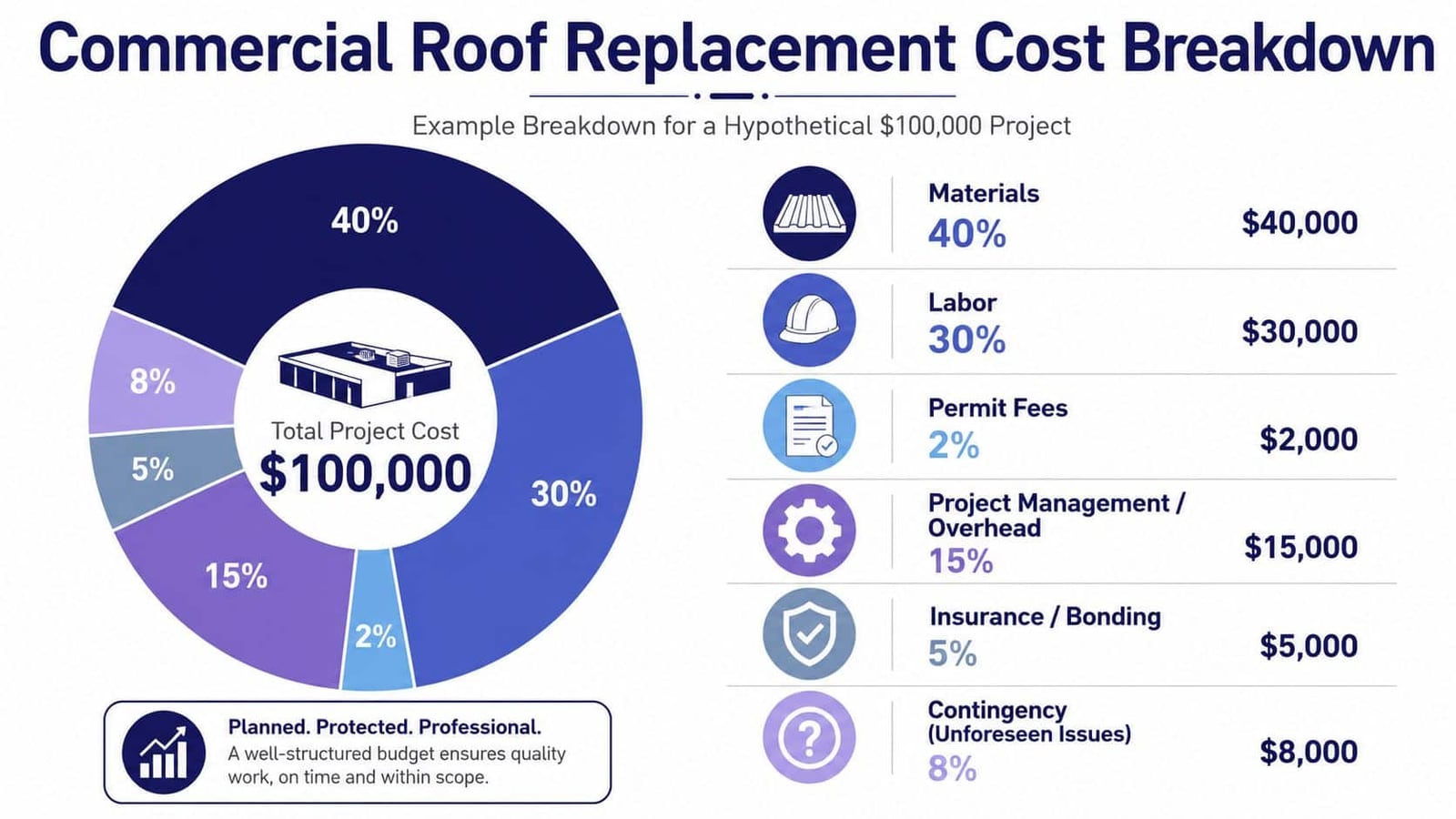
Budgeting for a commercial roof replacement needs more than a square-foot price. The final number usually changes once the contractor accounts for substrate repairs, drainage corrections, permit submittals, and the way the building is being classified for accounting and insurance purposes. That's why two projects with similar roof areas can come in very differently.
Build the Budget Around the Full Project
The square-foot rate gives a baseline, but the project also needs room for inspections, equipment staging, access limitations, and any hidden damage found after tear-off. On larger buildings, the final cost often shifts when crews discover wet insulation, damaged decking, or details that don't match the original plans. Planning for that possibility is smarter than pretending the hidden work won't exist.
A permit isn't optional in most places. Industry guidance says that in nearly every jurisdiction, a permit is needed before replacing a commercial roof, and those permits verify that materials, design, and methods meet local code requirements for insulation, slope, drainage, and fire ratings (permit guidance).
Get the Paperwork Ready Early
Local review can be more detailed than many owners expect. In Albuquerque's commercial re-roof process, applicants must submit two sets of legible drawings of the new roof, including dimensions and a drainage plan (Albuquerque re-roof requirements). That's a useful model for how thorough the submittal package may need to be in other cities too.
Keep the permit package aligned with the actual roof scope, not the estimate title. If the drawings, drainage plan, and product selection don't match, review slows down.
Insurance documentation matters as well when storm damage is involved. Leak history, dated photos, and repair records help show whether the roof failed from a sudden event or long-term wear. If the scope becomes a full tear-off, remember that the work is often treated as a capital improvement rather than a simple repair, which affects how the project is handled financially. For cost planning, America Roofing's guide to roof costs is a useful internal reference for owners comparing project variables.
Choosing and Vetting Contractors
A good roofing system can still fail if the contractor misreads the roof or installs the details badly. That's why contractor vetting has to be more than a price check. On commercial work, the crew's ability to manage safety, sequencing, documentation, and code compliance matters as much as the product on the truck.
Check the Basics Before the Walkthrough
Start with the paperwork. Verify licensing, bonding, and insurance, then confirm that the contractor regularly works on commercial flat roofs, foam systems, or whatever system the building needs. Ask for references from similar buildings, not just general roofing jobs. A contractor that handles steep residential shingle work may not be the right fit for a large low-slope reroof with multiple drains and parapet details.
A strong bid should spell out the scope in plain language. That includes tear-off depth, substrate repairs, flashing replacement, cleanup, staging, and how the roof will be protected if weather changes mid-project. If the quote leaves those items vague, the owner is taking on unnecessary risk.
Compare the Details That Usually Get Missed
The best bid comparison comes from consistency, not the lowest number. Look at how each contractor handles:
- Safety Planning: Ask how crews will manage access, debris control, and rooftop staging.
- Monsoon Readiness: Confirm how the roof will be secured if weather interrupts the work.
- Scope Clarity: Make sure the quote identifies what's included and what triggers extra cost.
- Experience With the System: Verify the crew has real experience with the membrane or coating being installed.
- Cleanup and Handover: Check that the contractor will remove debris and complete final inspection work.
For property managers comparing service providers, a commercial roofing contractor should be able to explain those points without jargon. If the answers stay vague, that's usually a warning sign.
If a bidder can't explain how the roof will be protected during a surprise storm, that bid isn't ready for a commercial building.
Planning Timeline and Replacement Phases
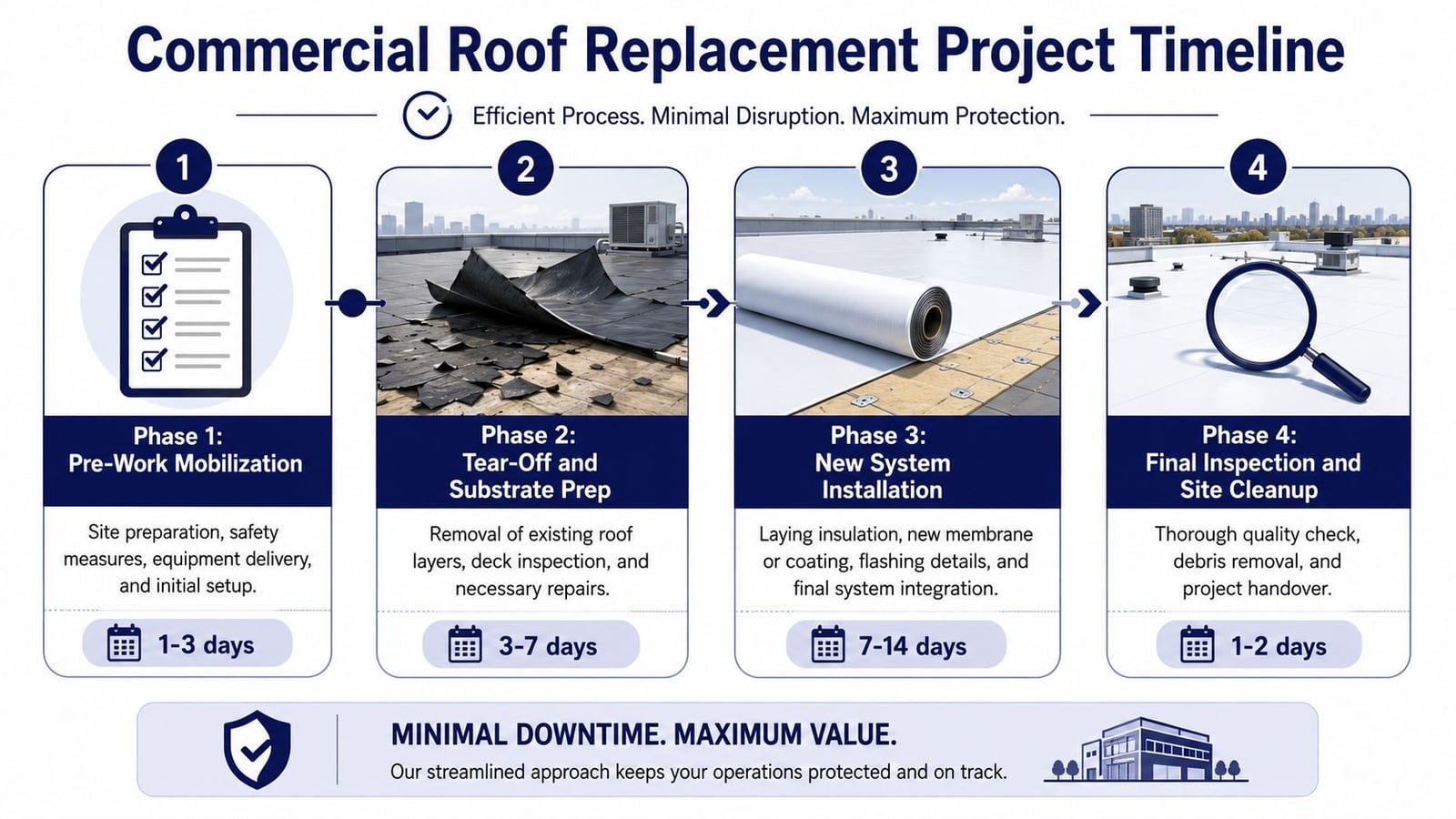
Commercial roof replacement on an occupied building works best when the schedule is broken into clear phases. That keeps tenants informed, limits downtime, and reduces the chance that a weather delay turns into a larger disruption. In Arizona, the calendar matters too, because summer heat and monsoon timing shape how crews sequence the job.
Pre-Work Sets the Tone
The first phase covers mobilization, safety setup, equipment delivery, and staging. For many projects, that window is short, but it still needs coordination with the building owner, tenants, and any on-site managers. If the roof has sensitive access points or active tenant areas below, the crew should know that before the first pallet arrives.
Tear-off and substrate prep usually take the most planning. Once the old roof comes up, the crew can see what the deck is really doing. That's where hidden moisture, failed insulation, and damaged transitions show up, and that's also where the schedule can change if the project wasn't scoped correctly.
Installation and Closeout Need Their Own Buffer
New system installation follows the substrate work. Depending on the roof size, complexity, and weather window, this phase can move quickly or slow down if the roof has many details, penetrations, or drainage corrections. Final inspection and cleanup should never be treated as an afterthought. Debris removal, edge checks, seam review, and final walkthroughs are part of the actual handoff.
A practical repair-vs-replace decision rule in commercial roofing is the 25% to 50% threshold. If repair bids rise above roughly a quarter to half of the cost of full replacement, replacement is often the better long-term investment. The same logic becomes stronger when recurring leaks keep showing up in different spots.
That threshold helps owners stop chasing the same problem across multiple service calls. A phased schedule makes the replacement easier to manage, but it only works if the roof is ready for the chosen system.
Warranty Maintenance and Arizona Considerations
Phoenix heat, Tucson UV exposure, dust, and monsoon runoff punish roofs in ways that cooler markets don't. A roof that looks fine after installation can still fail early if the owner treats maintenance as optional. That's why warranty terms and seasonal upkeep need to be part of the replacement decision, not something discussed after the contract is signed.
Warranty Language Has to Match the Roof's Real Risks
Owners should read warranty coverage closely and make sure it fits the system being installed. Seam performance, membrane failure, flashing transitions, and workmanship quality all matter on a commercial roof, especially where the building sees regular rooftop traffic or fast temperature swings. For more detail on coverage language and workmanship expectations, see understanding roof workmanship warranties.
Seasonal maintenance should be simple and repeatable. Clear drains, inspect flashings, check seams after heavy weather, and look for debris that can trap water. On foam or coated roofs, recoating and touch-up work need to happen before surface wear becomes a leak path. The roof doesn't need attention every day, but it does need scheduled attention.
Tax Treatment and Long-Term Planning Matter Too
IRS Tangible Property Regulations generally classify a full roof tear-off and replacement as a capital improvement that must be capitalized and depreciated over time instead of expensed immediately. That classification affects budgeting, owner approval, and how the project gets handled inside a capital plan. It's another reason the replacement scope should be built carefully from the start.
Roof maintenance in Arizona is cheaper than roof neglect. Once seams open, drains clog, or flashing separates, heat and monsoon water make the repair window narrower.
For owners who want one crew to handle inspections, leak repair, reroofing, coatings, and ongoing commercial roof service in Phoenix or Tucson, America Roofing is a practical option to include in the bidding process. The right plan is the one that matches the roof type, the building's schedule, and the climate the roof lives in.
If the roof is leaking, aging out, or already showing repeated repair failures, the next step is to inspect it properly and compare repair against replacement with real numbers, not guesswork. Property managers in Phoenix and Tucson can call 602-237-2478 or request a roofing estimate from America Roofing to get the roof condition, scope, and timeline on the table before the next storm hits.