

Commercial flat roof installation is a high-impact investment that shapes building protection, energy performance, and operating costs for years to come. This guide explains the leading systems, real-world costs, lifespans, and the professional steps that separate a roof that lasts decades from one that fails early. Use it to choose the right materials and partner for Arizona's heat, UV, and monsoon conditions.
Understanding Commercial Flat Roof Systems
Commercial flat roof installation is one of the most critical investments a property owner can make, directly impacting building protection, energy efficiency, and long-term operational costs. Whether you own a warehouse, office building, retail center, or apartment complex, understanding the systems, materials, and installation process can save you thousands of dollars and decades of headaches. The right commercial flat roofproperly installedcan last 15 to 50 years depending on the material, while a poor installation can fail in just a few seasons, especially under Arizona's punishing sun and monsoon storms.
Quick Answer: What You Need to Know About Commercial Flat Roof Installation
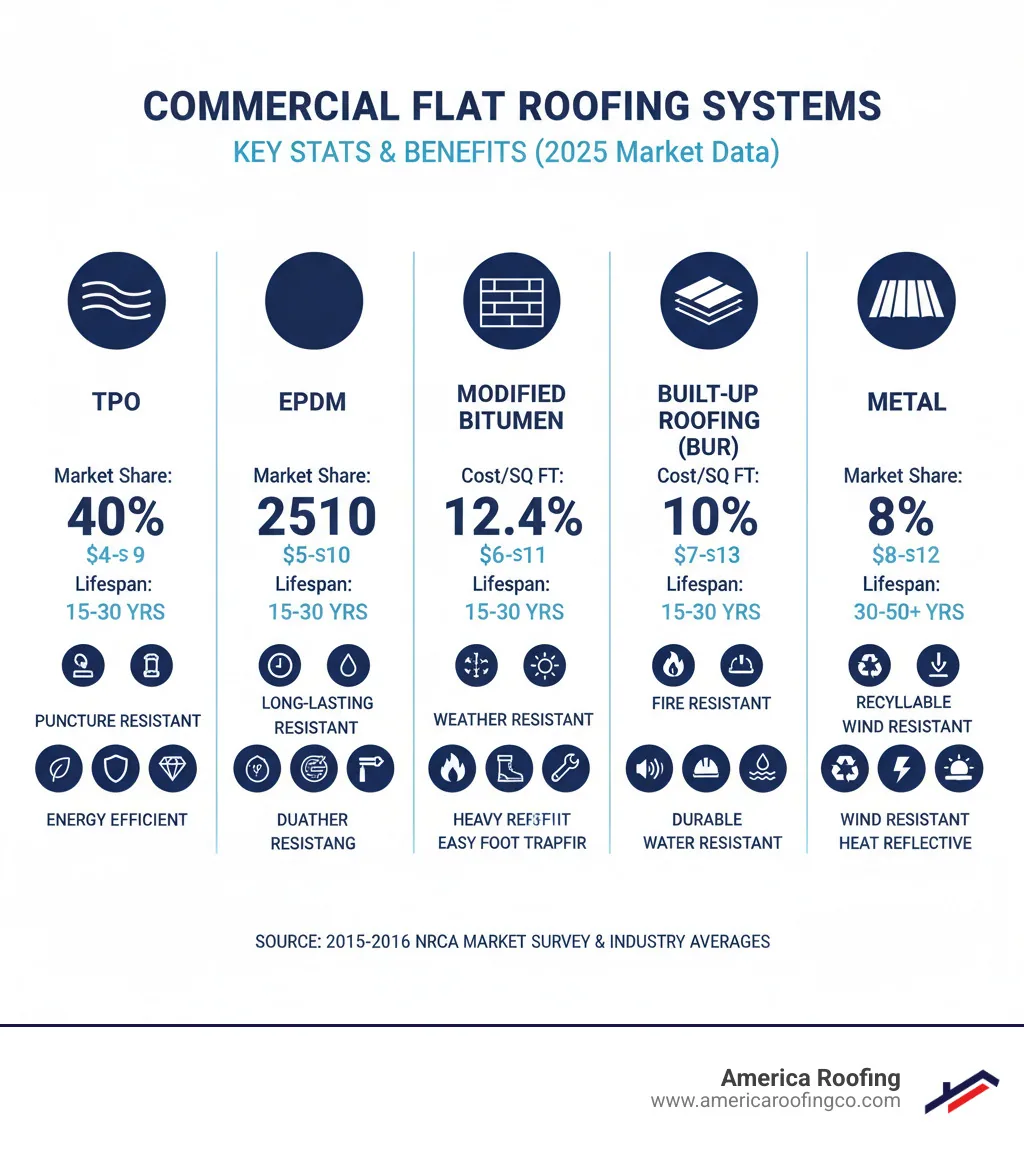
- Primary Systems: TPO (40% market leader), EPDM (22% market share), Modified Bitumen (12.4%), Built-Up Roofing (BUR), and Metal are the most common commercial flat roofing systems.
- Typical Costs: Expect $4 per square foot, with total replacement costs ranging from $3,100 to $10,000 for a 1,000 sq ft roof (average ~$6,500).
- Lifespan by Material: EPDM lasts 400 years, TPO and Mod Bit last 150 years, and BUR lasts 150 years.
- Essential Installation Steps: Thorough inspection, structural repair, vapor barrier and insulation installation, proper drainage design, membrane installation with heat-welded seams, and final quality inspection.
- Critical Success Factors: Proper drainage (preventing ponding water), structural integrity, quality materials, and professional installation are non-negotiable for long-term performance.
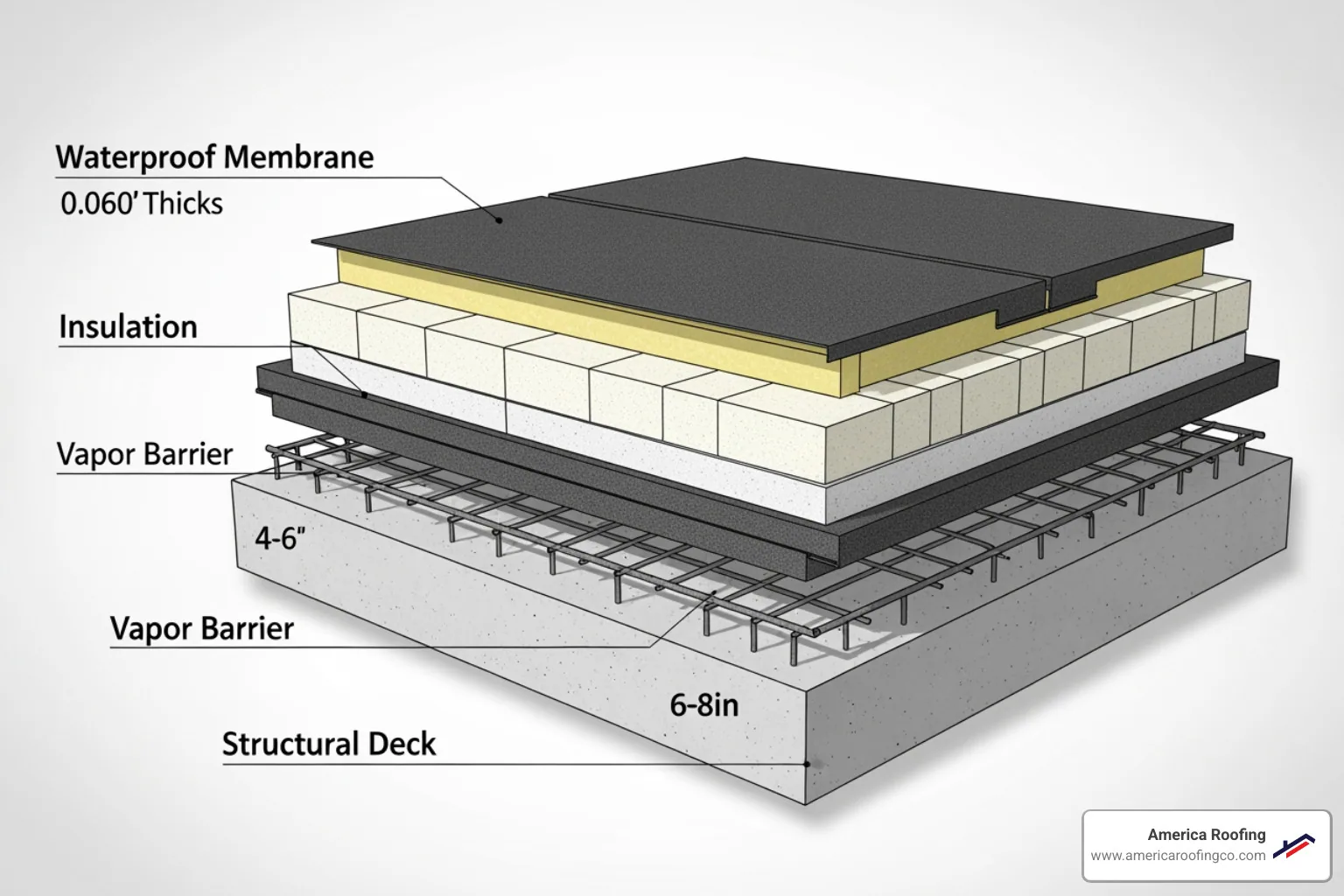
Commercial flat roofs differ dramatically from residential systems in scale, materials, and complexity. Most commercial buildings feature flat or low-slope roofs (pitches from :12 to 3:12) designed to accommodate HVAC systems, provide usable space, and maximize interior square footage. The installation process involves multiple specialized layersfrom the structural deck and vapor barrier to insulation and the final waterproof membraneeach requiring precise execution to ensure decades of reliable protection.
Why proper installation matters so much: Arizona's extreme conditionsrelentless UV exposure, thermal cycling from 120F days to cool nights, sudden monsoon deluges, and occasional hailput extraordinary stress on commercial roofing systems. A poorly installed flat roof can develop leaks within months, leading to water damage, mold growth, ruined inventory, and sky-high repair bills. Conversely, a professionally installed system with quality materials and proper drainage can provide maintenance-free protection for 200+ years.
The commercial flat roofing market has evolved significantly over the past 40 years. Single-ply membranes like TPO and EPDM have grown exponentially, driven by their ease of installation, energy efficiency, and proven durability. According to the 2015-2016 NRCA Market Survey, TPO now dominates with 40% of new construction and 30% of reroofing projects, while EPDM captures 22% of new construction and 26% of reroofing. Traditional systems like Modified Bitumen and Built-Up Roofing still hold 124% market share, particularly for buildings requiring heavy foot traffic or extreme puncture resistance.
Choosing the right commercial flat roofing system is arguably the most important decision a building owner makes during a commercial flat roof installation. Unlike residential roofs, which often prioritize aesthetics and shedding water quickly, commercial flat roofs are designed for durability, energy efficiency, and often to support heavy equipment like HVAC units or even green spaces.
The primary types of commercial flat roofing systems available include single-ply membranes (TPO, EPDM, PVC), multi-ply bituminous systems (BUR, Modified Bitumen), and metal roofing. Each system offers unique advantages and disadvantages, making the "best" choice highly dependent on your specific building's needs, budget, and the challenging Arizona climate.
Commercial roofing is distinct from residential roofing in several ways, from materials to maintenance. While both aim to protect a building, commercial roofs often cover much larger areas, typically have a low slope, and must withstand significant foot traffic for maintenance of rooftop equipment. Understanding the difference between commercial and residential roofs is crucial for making informed decisions.
The main goal of any commercial roof system is to maintain the watertight integrity of a building and keep its contents dry. However, today's variety of flat or low slope commercial roofing options has grown considerably. We find flat roofs on factories, warehouses, big and small box stores, apartment buildings, and large public structures across Phoenix, Mesa, Chandler, and beyond. Flat roofing solutions: Pros, cons, and maintenance tips can help you weigh your options.
Single-Ply Membrane Roofing (TPO & EPDM)
Single-ply membrane roofing systems are flexible sheets of compounded synthetic materials manufactured in a factory. They offer strength, flexibility, and long-lasting durability, and have seen exponential growth in popularity over the last 40 years.
- TPO (Thermoplastic Polyolefin): TPO is currently the low-slope market leader, capturing 40% of the new construction market and 30% of the reroofing market. It's a single-ply membrane known for its very low installation cost and ability to be installed over almost any surface. TPO is a thermoplastic, meaning it can be heat-welded at the seams, creating a monolithic, watertight surface. It's typically white and highly reflective, which significantly contributes to energy efficiency by reducing cooling costsa major benefit in Arizona's extreme heat. Learn more about TPO roofing systems. TPO flat roofing has a lifespan of 15 to 30 years.
- EPDM (Ethylene Propylene Diene Monomer): Often referred to as "rubber roofing," EPDM is another popular single-ply option, capturing 22% of the new construction market and 26% of the reroofing market. EPDM is a thermoset membrane, meaning its chemical structure is set during manufacturing and cannot be re-melted and reshaped. Seams are typically sealed with specialized adhesives or tapes. EPDM is best known for its rubber membrane that makes it highly resistant to UV rays and extreme weather conditions, offering excellent fatigue and scratch resistance. EPDM rubber roofing has an impressive lifespan of 40 to 50 years, making it one of the longest-lasting options. Explore EPDM systems further. While black EPDM absorbs heat, white EPDM options or reflective coatings can improve energy savings.
Both TPO and EPDM offer robust protection against Arizona's UV exposure, but TPO's heat-welded seams and natural reflectivity often give it an edge for energy savings in our climate. PVC, another thermoplastic single-ply, is also highly reflective and resistant to chemicals, oils, and fats, making it ideal for restaurants or food production facilities.
Multi-Ply & Bituminous Roofing (BUR & Modified Bitumen)
These systems represent a more traditional approach to commercial flat roofing, built up in multiple layers.
- Built-Up Roofing (BUR): This is one of the oldest commercial roofing types, often called a "tar and gravel" roof. A BUR system is constructed from alternating layers of roofing felt (or ply sheets) and asphalt (bitumen), creating a strong, durable, and redundant seal. The more layers, the stronger the built-up roof. The top layer is typically a surfacing material like gravel, slag, or a reflective coating, which protects the asphalt from UV degradation and weathering. BUR systems offer superior fire resistance and excellent tolerance for building stress. Understand what a built-up roof is. Built-Up Tar roofs typically have a lifespan of 15 to 30 years.
- Modified Bitumen (Mod Bit): Mod Bit roofing is an evolution of BUR, incorporating synthetic rubberized polymers (like APP or SBS) into the asphalt. This modification improves the asphalt's flexibility and performance, particularly in extreme temperatures. Mod Bit systems are installed in layers, similar to BUR, but the membranes are typically factory-fabricated sheets. Installation methods can include torch-down (heat-welded), cold-applied adhesives, or self-adhering sheets. Mod Bit roofs offer improved durability, better resistance to cold temperatures, and increased puncture resistance compared to traditional BUR. They are also relatively easy to repair. Modified Bitumen roofs have a lifespan of 15 to 30 years.
Both BUR and Mod Bit systems provide excellent protection, with Mod Bit often chosen for its improved flexibility and easier installation methods, which can be advantageous during Arizona's cooler "winter" months when traditional hot-mopped BUR can be more challenging.
Metal and Specialty Roofing Systems
While not always considered "flat" in the traditional sense, low-slope metal roofing is a robust and increasingly popular option for commercial buildings.
- Metal Roofing: Metal roofing, particularly standing seam systems, is a preferred low-slope solution for commercial, institutional, and industrial buildings. It boasts exceptional durability, a long lifespan (often 30-50+ years), and superior fire resistance. Metal roofs can also be highly reflective, helping to boost HVAC efficiency by reflecting the sun's raysa significant advantage in Arizona. They are often recyclable and can withstand high winds. Find more information on low-slope metal roofs.
- Green Roofs (Vegetative Roof Systems): Though less common in Arizona due to water considerations, green roofs are gaining traction for their environmental benefits. These systems involve installing living plants in tray systems over a waterproof membrane. Benefits include improved insulation, reduced HVAC costs, stormwater management, and even improved aesthetics. Consider installing a green roof for sustainability and energy efficiency. While not a primary waterproofing layer, they protect the underlying membrane from UV rays, extending its life. Green roofs require careful planning for structural load and irrigation, especially in our arid climate.
The Professional Commercial Flat Roof Installation Process
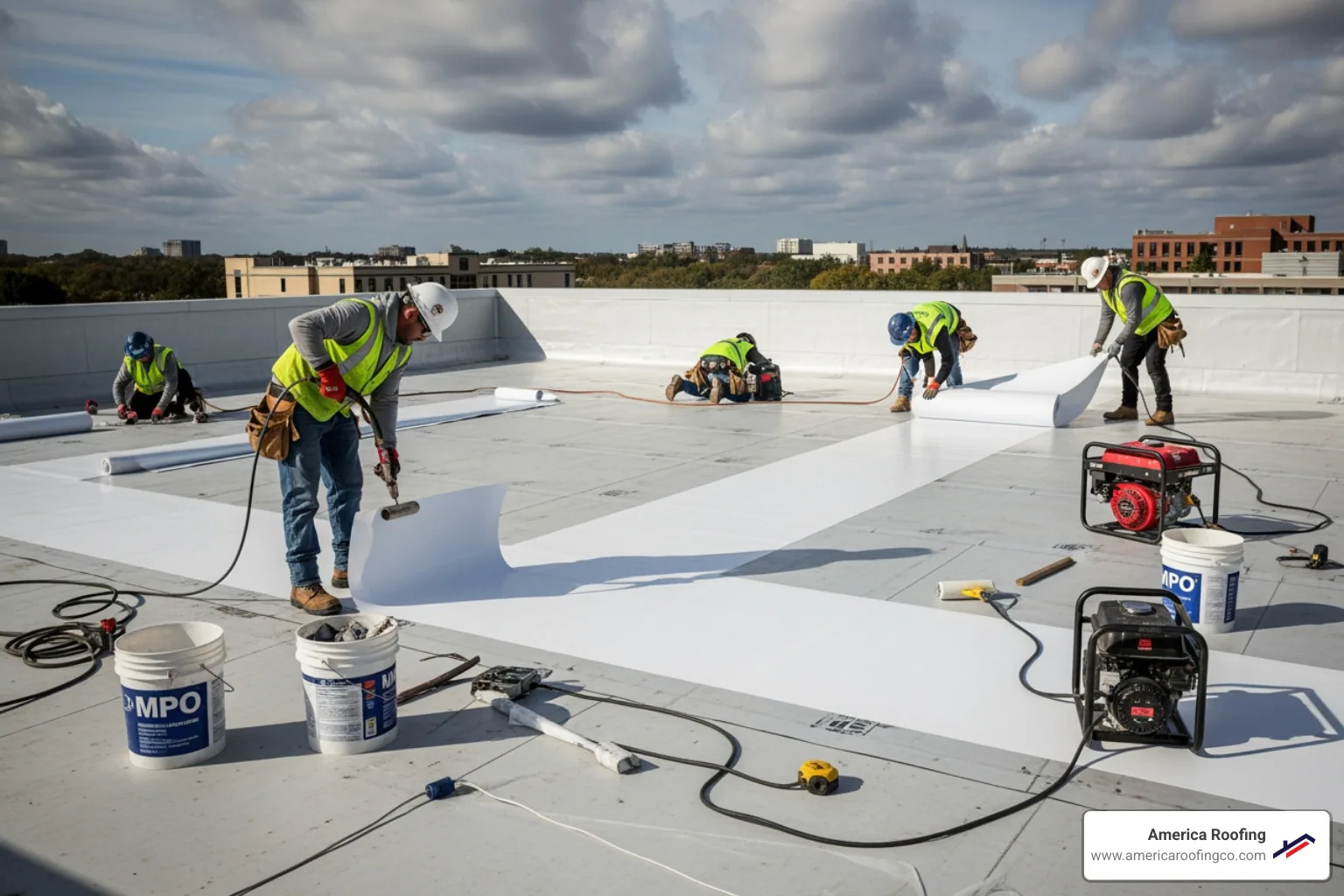
A successful commercial flat roof installation is a meticulous, multi-stage process that ensures a watertight, energy-efficient system that lasts for decades. Cutting corners leads to leaks and costly repairs, a risk no Arizona business owner should take during monsoon season. Understanding your expectations about commercial roof installation helps ensure a transparent and successful project.
Two factors are absolutely critical for success: proper drainage design and structural integrity. Flat roofs require a slight slope (at least ¼ inch per foot) to prevent ponding water, the number one enemy of any flat roof system. The roof deck must also be structurally sound to support the new system, equipment, and environmental loads. A professional contractor never compromises on these foundational elements.
Step 1: Initial Inspection and Preparation
Every quality installation begins with a comprehensive inspection of the existing roof, structural deck, and drainage systems. Our professionals identify water damage, structural weaknesses, and failed flashing, paying special attention to UV and monsoon-related stress common in Arizona. This assessment is crucial for proper planning and is the first step in any project. Schedule a commercial roof inspection in Arizona to start the process correctly.
Based on the inspection, we recommend the best material for your building, budget, and energy goals, ensuring all plans meet local codes in Phoenix, Mesa, or your specific city. The next step is typically a complete tear-off of the old roofing material down to the structural deck. This allows for a thorough inspection of the substrate and repair of any hidden damage. While a roof-over is sometimes possible, a tear-off provides the best foundation for a long-lasting system.
Finally, we perform any necessary substrate repairs, replacing damaged deck sections and reinforcing the structure. This foundational step ensures the deck is sound and ready for the new roof system.
Step 2: Insulation and Underlayment
Once the deck is prepared, we install the insulation and vapor barrier, which are critical for performance and energy efficiency.
The vapor barrier is installed first to prevent moisture from inside the building from migrating into the roof assembly, where it could condense and saturate the insulation. This is especially important in Arizona, where air conditioning creates a significant temperature differential.
Next, the insulation layer is installed to reduce heat flow, keeping your building cooler in the summer and lowering energy costs. Polyisocyanurate (polyiso) is a popular choice for its high R-value (thermal resistance). The insulation can also be installed in tapered panels to create the proper slope for drainage, directing water toward drains and preventing ponding. This precision work is what separates a roof that lasts 30 years from one that fails in five.
Step 3: Membrane Installation and Seaming
This step involves applying the primary waterproofing membrane—your building's first line of defense against rain and UV exposure. The membrane can be fully adhered with adhesives, mechanically fastened with plates and screws, or ballasted with gravel, depending on the system and building structure.
For single-ply membranes like TPO, heat-welded seams are a critical feature. We use hot-air welders to fuse the membrane sheets together, creating a molecular bond that is often stronger than the membrane itself. This results in a monolithic, completely watertight surface. For other systems like EPDM or Modified Bitumen, seams are sealed with specialized, durable adhesives or tapes.
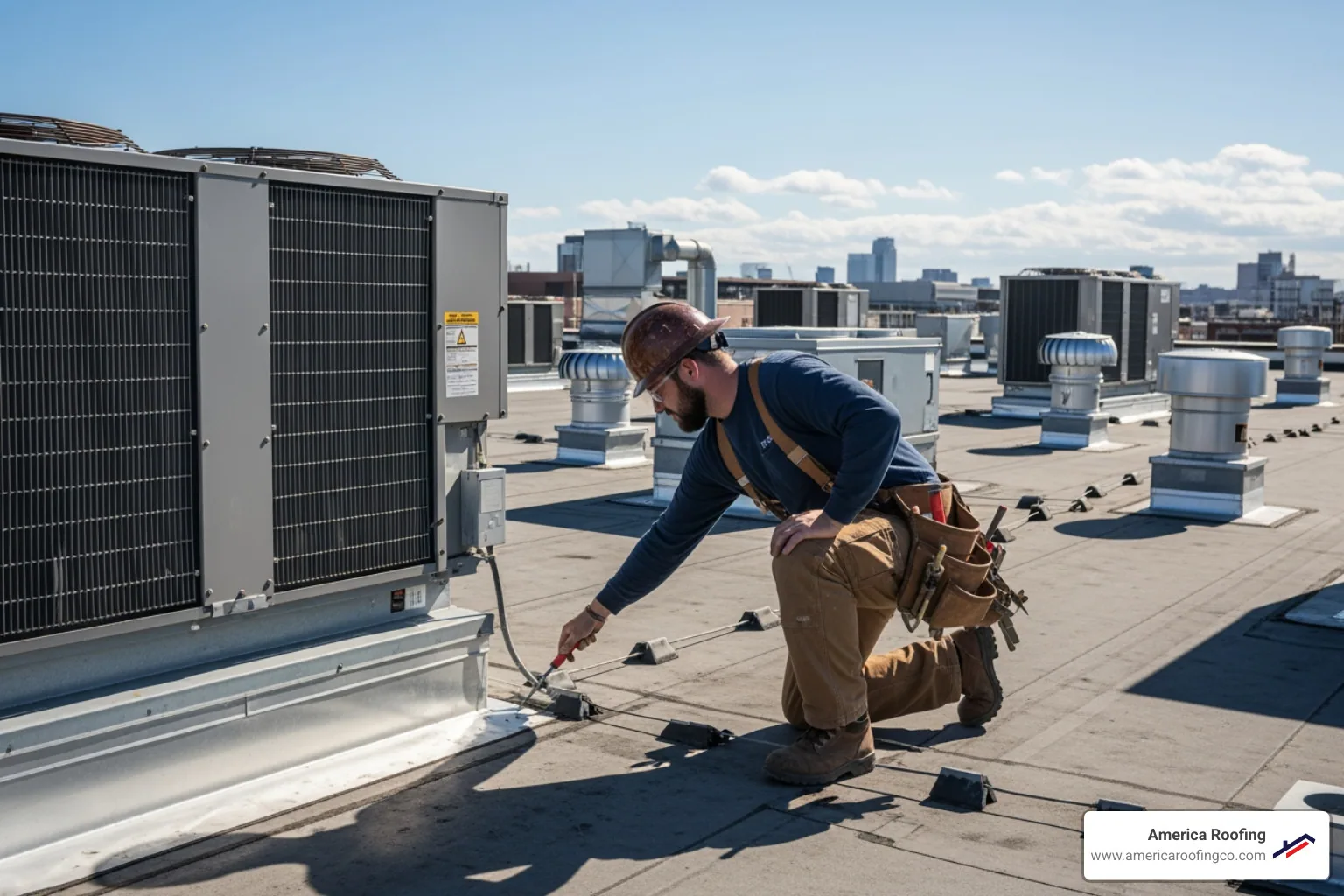
Proper flashing installation is just as important as the main membrane. Flashing seals the roof at all perimeters and around every penetration, such as HVAC units, vent pipes, and drains. These transition areas are where most leaks occur if not detailed correctly. Our experienced crews carefully seal every vulnerable point to create a truly watertight envelope, followed by a final quality check to ensure every detail meets our exacting standards. A commercial flat roof installation isn't complete until we've guaranteed its integrity.
Cost, Lifespan, and Long-Term Maintenance
Understanding the upfront cost, expected lifespan, and ongoing maintenance is essential when planning a commercial flat roof installation. In Arizona, where extreme weather tests every component of a roofing system, making informed decisions about these factors protects your long-term investment. Discover commercial roof maintenance details disclosed to learn how to maximize your roof's performance.
Cost Considerations for Commercial Flat Roof Installation
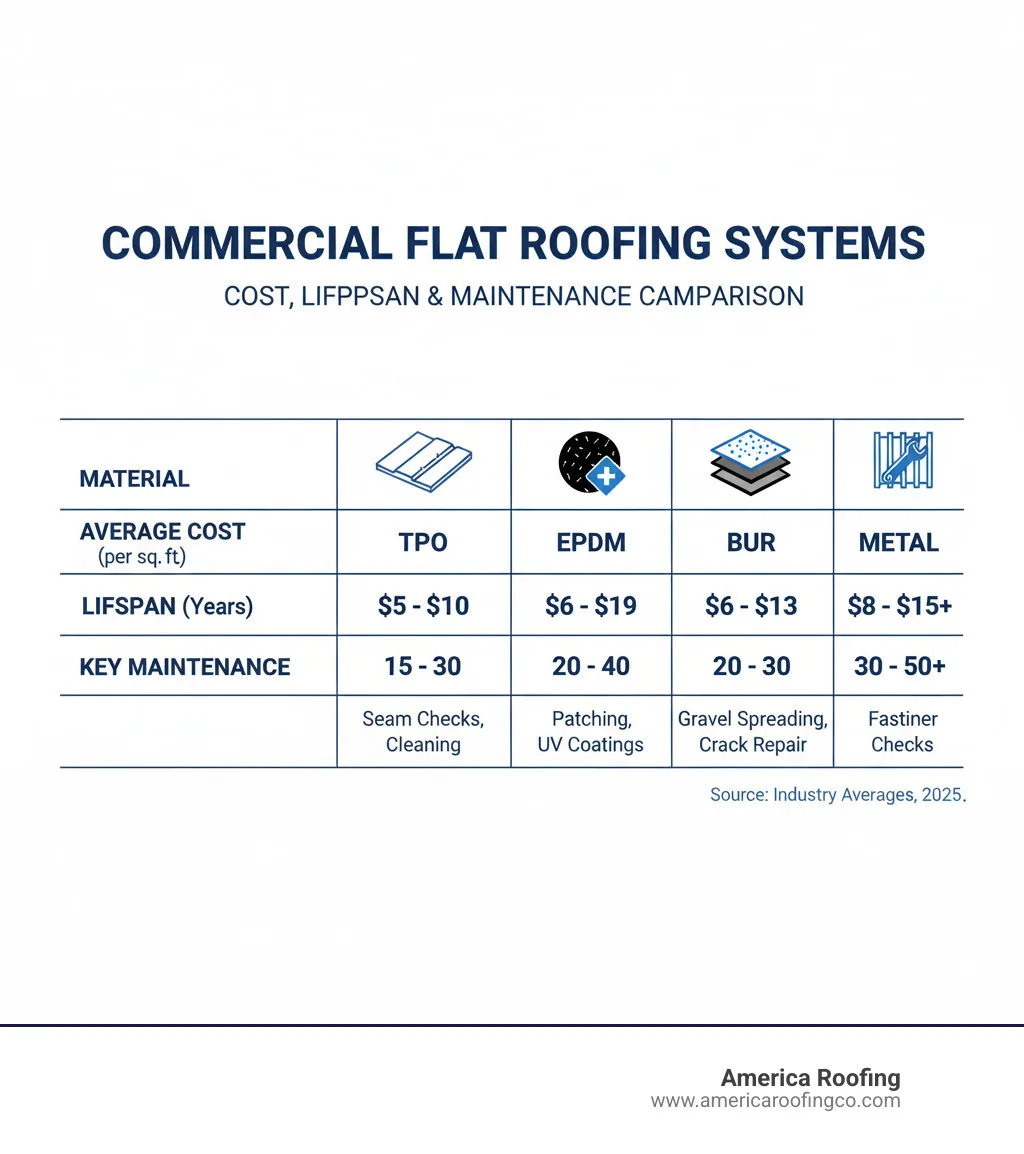
Budgeting for a commercial flat roof installation typically means planning for $4 to $13 per square foot. For a 1,000-square-foot roof, this translates to a total cost of $3,100 to $10,000, with an average around $6,500. For a 10,000-square-foot building, costs can range from $40,000 to $130,000.
Several factors influence the final price:
- Material Choice: EPDM ($5-$13/sq ft) and Metal are premium options, while TPO ($3-$7/sq ft) and Modified Bitumen ($4-$8/sq ft) are more budget-friendly.
- Building Size and Complexity: Larger roofs cost more overall, and numerous penetrations like HVAC units or skylights increase labor costs.
- Existing Roof Condition: A full tear-off of multiple layers or significant deck repair will add to the project cost.
- Labor Costs: Skilled, professional installation is a significant part of the budget but is essential for a long-lasting roof and is not an area to cut corners.
The cheapest bid is rarely the best value. A quality installation that lasts is a smarter investment than a low-cost roof that fails prematurely. Understand the 5 factors that affect commercial roof replacement costs to make an informed choice.
Lifespan and Warranty Expectations
How long will your new roof last? It depends on the material and quality of installation. EPDM rubber roofing leads with a 40 to 50-year lifespan. TPO, Built-Up Roofing (BUR), and Modified Bitumen typically last 15 to 30 years. Metal roofing systems often last 30 to 50+ years.
These lifespans are achievable with regular maintenance. Your investment is protected by two warranties: the manufacturer's warranty, which covers material defects, and the contractor's workmanship warranty, which covers the quality of the installation. At America Roofing, we stand behind our craftsmanship. Understanding the terms of both warranties, which often require professional maintenance, is crucial. Learn more about understanding roofing warranties to ensure you're fully protected.
The Importance of Professional Maintenance
A perfectly installed roof needs professional care to reach its maximum lifespan, especially in Arizona's harsh climate. A proactive maintenance plan is essential insurance for your investment.
Regular maintenance extends your roof's life, potentially deferring a costly replacement by years. It allows for early detection of minor issues like small cracks or loose flashing before they become catastrophic leaks. It also preserves your roof's energy efficiency by keeping reflective surfaces clean and intact, which is critical for lowering cooling costs in our desert climate. Finally, most manufacturer warranties require regular professional maintenance to remain valid.
Professional maintenance includes:
- Debris removal from the roof surface.
- Drain and gutter cleaning to ensure proper water flow.
- Seam and flashing inspection to check for weak spots.
- Minor membrane repairs to address punctures or blisters.
We recommend inspections twice a year—before summer and after monsoon season. Commercial roof repair in Arizona should always be handled by experienced professionals who understand our climate.
Making the Right Choice for Your Arizona Property
Choosing the right commercial flat roof installation for an Arizona building requires balancing climate demands, building use, and budget. What works in a mild climate can fail quickly under the Phoenix sun. Our state's extreme heat, intense UV radiation, and sudden monsoon deluges demand roofing systems built for resilience.
Reflective materials like white TPO are essential for reducing cooling costs. Your roof must also feature watertight seams and excellent drainage to handle monsoon downpours, and it needs to be flexible enough to withstand daily temperature swings without cracking.
Key Factors in Your Commercial Flat Roof Installation
Beyond climate, several factors influence the best choice for your property:
- Building Use: Roofs with heavy foot traffic from HVAC maintenance benefit from tougher systems like Modified Bitumen or designated walkways on single-ply membranes.
- Energy Efficiency: A combination of reflective membranes and proper insulation can significantly slash cooling costs, offering a strong return on investment.
- Local Building Codes: We ensure your project meets all requirements for insulation, drainage, and materials in Phoenix, Mesa, Chandler, and other local jurisdictions.
- Structural Load Capacity: Your building's structure must be able to support the weight of the chosen system, especially heavier options like ballasted roofs.
- Budget vs. Value: The cheapest upfront option is rarely the best long-term value. Investing in a durable, energy-efficient system pays for itself through lower utility bills and fewer repairs.
Your guide to choosing the best commercial roofer can help you find a contractor who understands these local realities.
Repair or Replace? How to Decide
Deciding whether to repair or replace your commercial roof can be difficult. While repairs seem more affordable, they can sometimes be a poor investment that only delays an inevitable replacement.
Consider replacement if you see these signs:
- Widespread Failure: Frequent leaks in multiple locations, extensive blistering, or large areas of deterioration indicate the system has reached the end of its life.
- Age of the Roof: If your roof is approaching the end of its expected lifespan (e.g., a TPO roof at 25 years), replacement is often more cost-effective than ongoing repairs.
- Cost-Benefit Analysis: If repair costs over a few years approach 30% of the replacement cost, you are likely throwing good money after bad.
- Energy Inefficiency: An old, degraded roof can dramatically increase cooling costs. A new, reflective, and properly insulated roof can provide significant energy savings.
A professional assessment is the best way to make an informed decision. We provide honest evaluations, recommending strategic repairs when possible or replacement when it's the most cost-effective long-term solution. Hiring a licensed roofing contractor with local experience ensures you get advice custom to Arizona's unique challenges.
Frequently Asked Questions about Commercial Flat Roofs
Property owners across Phoenix and Mesa often ask the same questions about commercial flat roof installation. Here are straight, honest answers to the most common concerns.
What is the biggest challenge with a flat roof?
The single biggest challenge is ensuring proper drainage to prevent ponding water. Though called "flat," these roofs must have a slight slope (at least ¼ inch per foot) to direct water to drains. Standing water accelerates wear, adds weight, and can find its way through the smallest imperfections. A professional installation prioritizes effective drainage design from the start.
How long does a commercial flat roof last?
Lifespan depends heavily on the material, installation quality, and maintenance. Here are typical ranges:
- EPDM: 40 to 50 years
- TPO, Modified Bitumen, & BUR: 15 to 30 years
- Metal: 30 to 50+ years
Regular maintenance is critical for any system to reach its maximum potential lifespan, especially in Arizona's demanding climate.
Can you install a new flat roof over an old one?
Sometimes, yes. This process, called a roof-over or recover, can save on tear-off costs. It's only an option if the structure is sound, there's only one existing roof layer, and local codes permit it.
However, a full tear-off is generally the better long-term investment. It's the only way to inspect the structural deck for hidden moisture or damage that could compromise your new roof. A tear-off ensures you aren't trapping old problems under your new investment and provides the best foundation for decades of performance.
Secure Your Investment with an Expert Installation
Your commercial flat roof installation is a major investment in your property's future, and getting it right the first time is critical. A commercial roof is only as good as the team that installs it. In Arizona, where extreme heat, UV exposure, and monsoons are relentless, professional installation is the only way to ensure long-term performance.
At America Roofing, we have been protecting Arizona businesses with expert craftsmanship since 1999. As a third-generation, family-owned and veteran-owned company, we understand the unique challenges of our desert climate. We are fully licensed and insured (ROC#186438) and are proud to be the highest-reviewed roofing authority serving Phoenix, Mesa, Chandler, Gilbert, Scottsdale, and communities across the valley.
When you partner with us, you get decades of experience, premium materials, and a commitment to honest, transparent service. We don't use high-pressure sales tactics—just straightforward advice and workmanship we stand behind. Whether you need a new installation, are weighing repair vs. replacement, or want an honest assessment of your current roof, we are here to help.
Don't wait for a small leak to become a major disaster. Protect your business and your peace of mind with a professionally installed commercial flat roof from Arizona's most trusted roofing authority.