
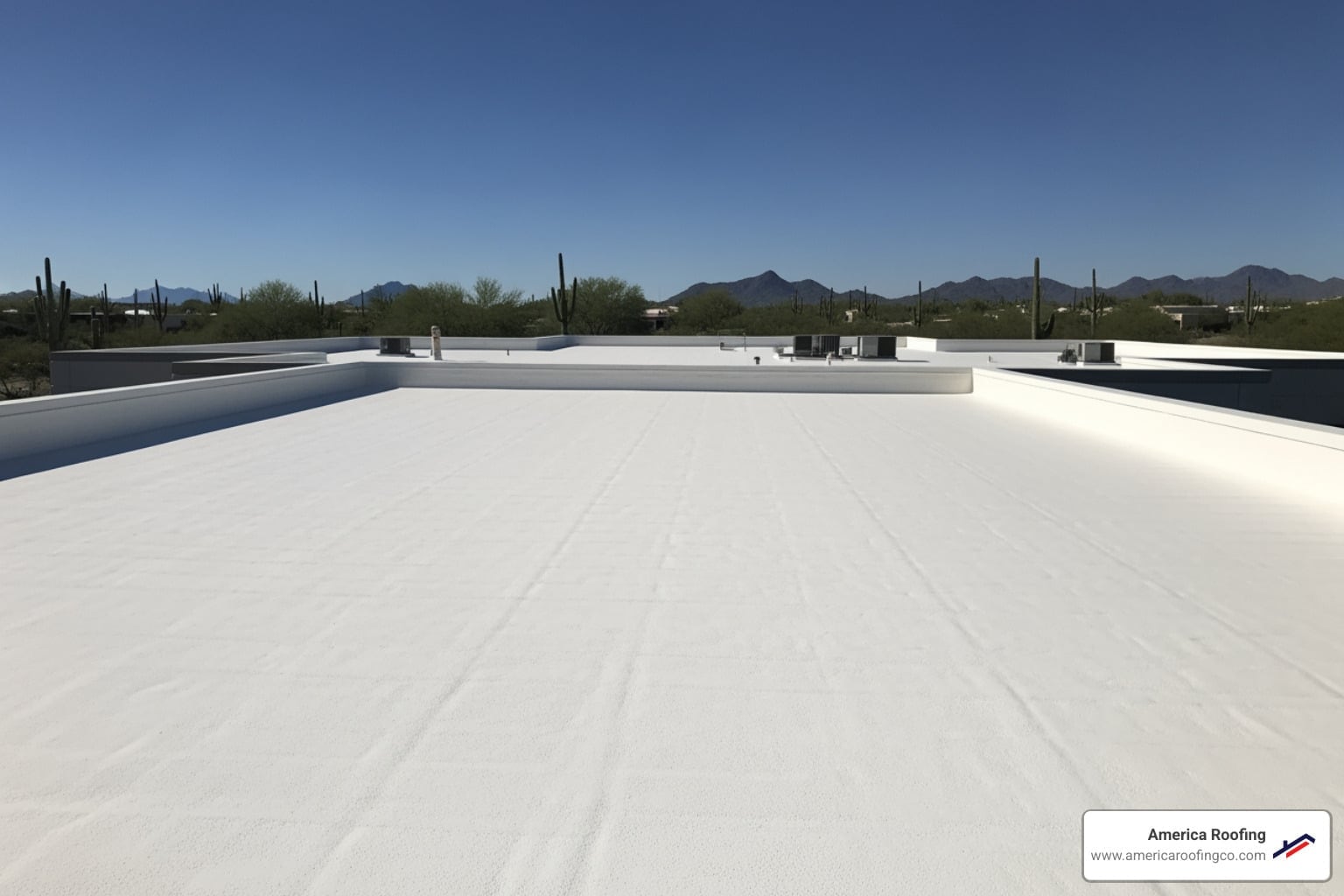
Understanding commercial foam roof repair is mission-critical for Arizona property managers and business owners. Let me explain how catching small issues early can protect your operations, keep energy costs in check, and prevent costly surprises.
Why Commercial Foam Roof Repair Matters for Arizona Businesses
Commercial foam roof repair is essential knowledge for any business owner or property manager responsible for maintaining a spray polyurethane foam (SPF) roofing system. Whether you're dealing with a small puncture from dropped equipment or noticing worrying signs of UV degradation, understanding how to address these issues quickly can save you thousands of dollars and prevent major disruptions to your operations.
Quick Answer: Commercial Foam Roof Repair Essentials
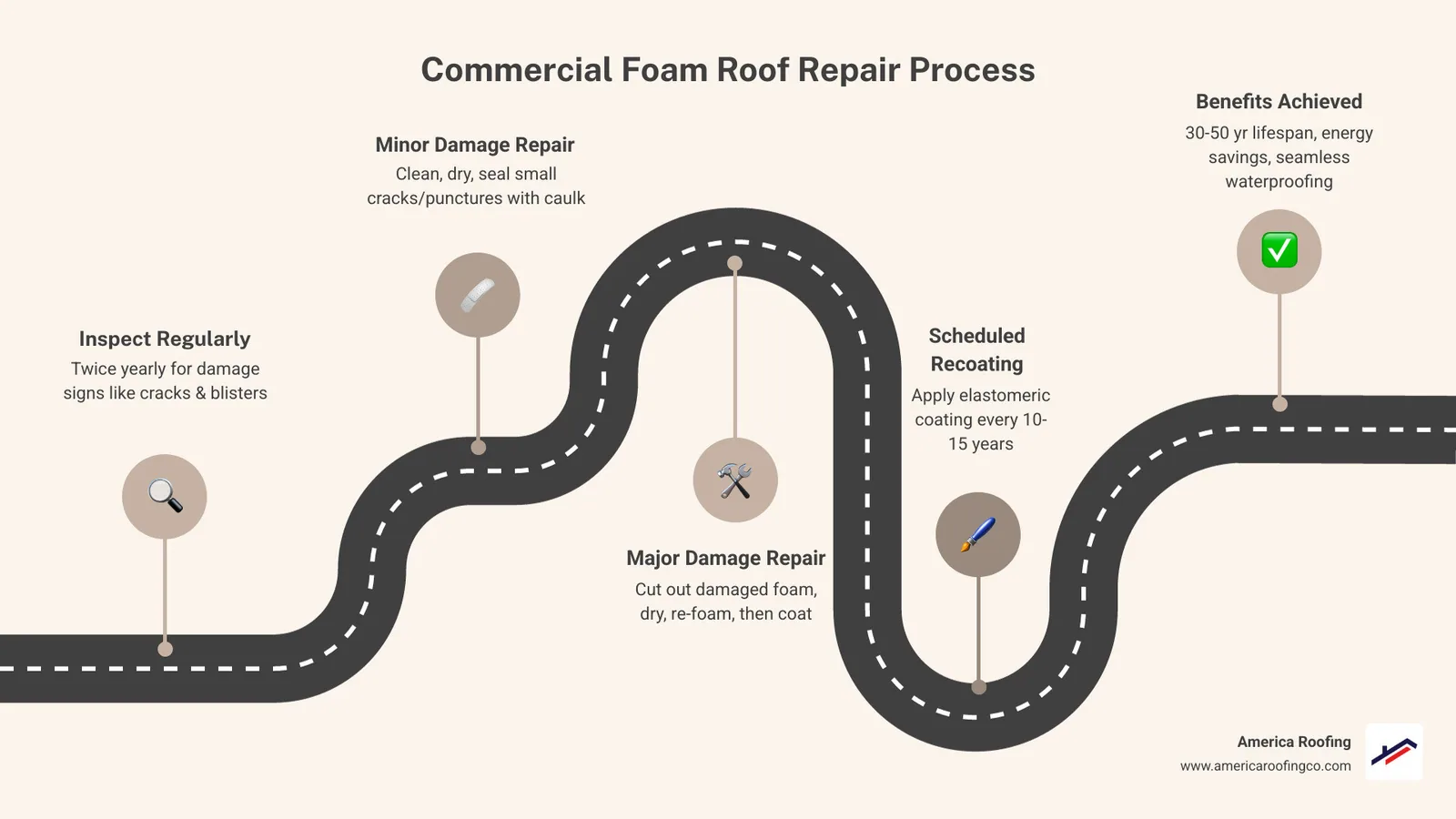
- Minor damage (small cracks, punctures under golf-ball size): Clean area, dry thoroughly, apply urethane caulk or silicone sealant, smooth and cure
- Major damage (large blisters, saturated foam, delamination): Cut out damaged foam at 45-degree bevel, dry substrate completely, re-foam area, apply protective coating
- Recoating schedule: Every 10-15 years to protect from UV damage and extend roof life by 20-30 years
- Inspection frequency: At least twice yearly, plus after major weather events like monsoons
- Repair timeframe: Address damage within 6 months to prevent foam deterioration
- When to call pros: Blisters larger than a baseball, water intrusion, structural concerns, or warranty work
Here's the thing: spray foam roofs are incredible systems when properly maintained, but they're not invincible. The intense Arizona sun, monsoon rains, and extreme temperature swings put unique stress on these roofing systems. A properly maintained SPF roof can last 30-50 years, but neglecting repairs can cut that lifespan in halfor worse, lead to catastrophic failure that requires complete replacement.
The good news? Most foam roof damage is repairable if caught early. Small punctures from HVAC work, minor cracks from thermal expansion, or surface weathering can all be addressed with straightforward repair techniques. The key is knowing what to look for and acting fast.
Foam roofs are particularly vulnerable to:
- UV damage - The protective coating breaks down over time, exposing the foam underneath to degradation
- Mechanical damage - Dropped tools, foot traffic, and rooftop equipment can puncture the foam layer
- Water intrusion - If coating fails, moisture can seep into the foam, causing deterioration within 6 months
- Thermal cycling - Extreme temperature changes cause expansion and contraction, leading to cracks
- Ponding water - Poor drainage accelerates coating breakdown and can saturate the foam
Honestly, the difference between a $500 repair and a $50,000 replacement often comes down to catching issues during routine inspections. That's why understanding the basics of commercial foam roof repair isn't just helpfulit's essential for protecting your investment.
Commercial foam roof repair glossary:
Identifying and Understanding Foam Roof Damage
A commercial foam roof is a marvel of modern roofing, but even the best systems can sustain damage. Knowing what to look for is the first step in effective commercial foam roof repair.
Common Causes and Telltale Signs of Failure
What exactly causes damage to these roofs? A variety of factors, many exacerbated by Arizona's climate, can take a toll.
Common Causes of Damage:
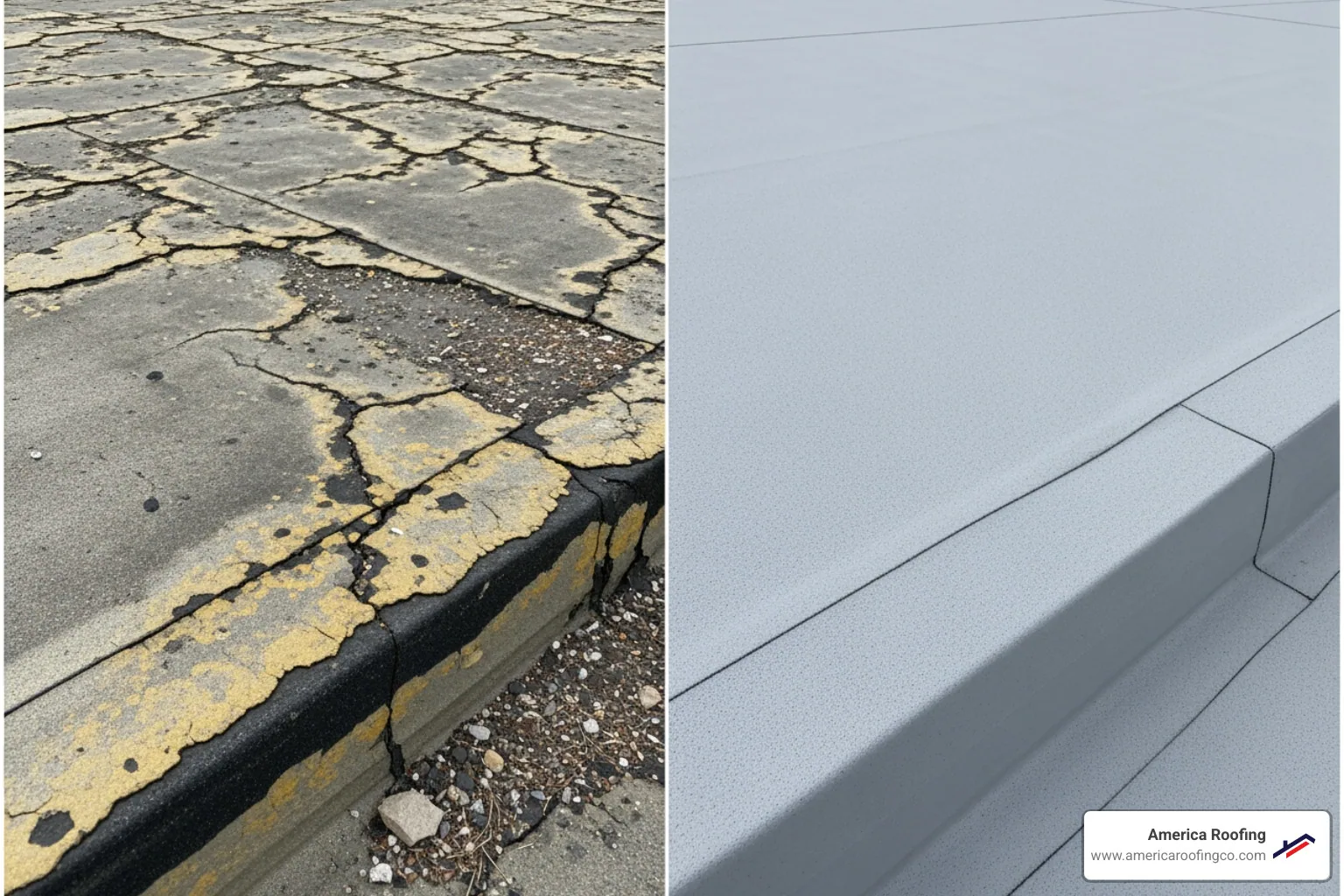
- UV Degradation: The silent killer. Without a protective coating, the Arizona sun breaks down the foam, which you'll see as a brownish-yellow color.
- Mechanical Damage: Dropped tools, foot traffic, or even sharp tree branches can cause punctures.
- Hail Damage: Severe hail can cause dents or small punctures, especially on an older, thinner coating.
- Bird Pecking: Birds pecking at the surface can create small holes, exposing the foam to UV rays and moisture.
- Thermal Expansion: Extreme temperature swings cause the roof to expand and contract, leading to stress cracks.
- Ponding Water: Areas where water collects accelerate the breakdown of the coating and can lead to water intrusion.
- Delamination: This occurs when layers of the roof system separate, often due to trapped moisture, creating domes or bubbles.
Signs That Your Commercial Foam Roof Needs Repair:
How do you know if your foam roof is crying for help? Here are the most common indicators:
- Exposed Yellow Foam: A critical sign. The protective coating has worn away, leaving the foam vulnerable.
- Cracking or Crazing: Fine, spiderweb-like cracks on the surface indicate weathering and degradation.
- Bubbles or Blisters: Usually a sign of trapped moisture or air. Large blisters can rupture and expose the foam.
- Water Stains on Ceilings: The most obvious sign of a leak, indicating a compromised roof.
- Increased Energy Bills: A sudden spike could mean your foam is saturated and has lost its high R-value insulating properties.
- Soft Spots: Spongy areas can indicate water-saturated foam underneath.
Here's a list of the top 5 signs your foam roof needs immediate attention:
- Exposed Yellow Foam: The protective coating is gone.
- Visible Leaks or Water Stains Inside: Your roof has failed.
- Large Cracks or Blisters: Open invitations for water.
- Sudden Spike in Energy Bills: Your insulation is compromised.
- Soft or Spongy Areas: Indicates water-saturated foam.
The Critical Role of Roof Inspections and Maintenance
You know what? Many of these issues can be caught early with a robust maintenance program. Proactive maintenance is essential for extending the lifespan of your SPF roof in Arizona.
How Often Should Commercial Foam Roofs Be Inspected?
SPF roofs need inspection at least twice a year, ideally in the spring and fall. We also recommend an additional check after any major weather event, like a monsoon.
What Should Inspections Entail?
- Professional Assessment: A pro can spot subtle wear and use tools like infrared scanners to find hidden moisture. A your guide to choosing the best commercial roofer can be invaluable.
- Visual Checks: Look for exposed foam, cracks, blisters, or ponding water.
- Debris Removal: Regularly clear leaves, branches, and trash to prevent drainage issues.
- Drain Cleaning: Ensure all gutters, drains, and scuppers are clear.
- Penetration Seals: Check the seals around vents, pipes, and HVAC units, as these are common leak spots.
Routine maintenance is paramount. It ensures small problems don't turn into major headaches. For more insights, check out our article on commercial roof maintenance details disclosed.
Your How-To Guide for Commercial Foam Roof Repair
Alright, let's get down to business. The process for commercial foam roof repair depends on the severity of the damage. Using compatible materials is always key to a lasting fix.
Key Materials Used in Foam Roof Repair:
- Urethane/Silicone Caulk: Ideal for patching small holes and cracks.
- Elastomeric Coating: Silicone or acrylic coatings that protect the foam from UV rays.
- Polyester Fabric: Used to reinforce larger cracks or repairs.
- High-Density Repair Foam: A two-component froth pack used to fill in major repair sections.
Compatibility is crucial. Always ensure your repair materials work with your existing SPF system. For specific guidelines, you can refer to the Standard Guide for the Repair and Recoat of Sprayed Polyurethane Foam Roofing Systems.
Step 1: Repairing Minor Punctures and Cracks
Good news! Many minor damages (punctures smaller than a golf ball, hairline cracks) can be repaired by competent maintenance staff if caught early.
Process for Minor Repairs:
- Clean: Thoroughly clean the damaged area to remove all dirt and loose coating.
- Dry: This is critical. Use a towel and a heat gun on low if needed to ensure the area is bone-dry.
- Apply Sealant: Fill the hole or crack with a compatible silicone or urethane caulk.
- Smooth and Cure: Smooth the sealant flush with the roof surface and allow it to cure completely per the manufacturer's instructions.
These minor repairs are incredibly cost-effective. But if you're ever unsure, it's always best to call in the professionals. For comprehensive solutions, we offer commercial roof repair arizona services custom to your business.
Step 2: Addressing Major Damage (Blisters, Wet Foam, Delamination)
When it comes to significant issues like large blisters or water-saturated foam, professional help is almost always required. These problems indicate deeper issues that need specialized tools and expertise.
When to Call the Pros:
- Blisters larger than a baseball.
- Soft or spongy foam that indicates saturation.
- Foam that is lifting or separating from the deck (delamination).
- Persistent leaks that minor repairs haven't fixed.
Process for Major Repairs (Professional Intervention):
- Moisture Detection: Professionals use tools like infrared cameras to map out all trapped water.
- Cut Out Damaged Foam: The affected area is carefully cut out, often at a 45-degree angle to create a beveled edge for better adhesion of the new foam.
- Dry the Deck: The underlying roof deck must be completely dried.
- Re-foam the Area: New, high-density SPF is sprayed into the cavity in layers to match the original thickness.
- Apply Protective Coating: Once cured, a new elastomeric coating is applied over the repair, often with embedded polyester fabric for added strength.
This comprehensive approach restores the roof's integrity. For these complex jobs, you need experienced foam roofing contractors arizona who understand SPF systems.
Step 3: The Recoating Process After a Commercial Foam Roof Repair
Think of the protective coating on your SPF roof as its sunscreen. It needs to be reapplied periodically as part of routine maintenance, not just after a repair.
Why Recoat?
The elastomeric coating provides UV protection and waterproofing. Recoating every 10 to 15 years can extend the roof's life for another 20 to 30 years, making SPF a renewable system. The cost is typically 1/3 to 1/2 of the original installation, a huge saving over replacement.
The Recoating Process:
- Cleaning: The entire roof is power washed to create a clean, dry surface.
- Minor Repairs: Any remaining small cracks or punctures are sealed.
- Priming: A primer may be applied to ensure the new coating adheres properly.
- Applying New Coating: The new elastomeric coating is sprayed or rolled on to the specified thickness.
- Granule Broadcast (Optional): Roofing granules can be broadcast into the topcoat for added durability and UV protection.
A full recoat can renew your roof's warranty and is a critical part of enjoying the 5 benefits of foam roofing. It's the way to why a well-maintained SPF roof can last 30, 40, or even 50 years.
Protect Your Investment with Professional Expertise
So, what happens if you put off that needed commercial foam roof repair? Honestly, the long-term consequences are far more expensive than addressing issues promptly.
Long-Term Consequences of Neglecting Repairs:
- Structural Damage: Water intrusion can rot wooden decks and corrode metal ones.
- Mold Growth: Trapped moisture is a breeding ground for mold, posing health risks.
- Reduced R-value: Saturated foam loses its insulating properties, leading to higher energy bills.
- Interior Damage: Leaks can destroy inventory, equipment, and interior finishes.
- Total Replacement Cost: A neglected roof will eventually fail, forcing a full replacement at a much higher cost.
- Warranty Voidance: Most warranties require regular maintenance; neglecting it can void your coverage.
Repair vs. Replace: The Cost Implications
While SPF systems are highly repairable, there comes a point where replacement might be considered. However, for SPF, repair and recoating are almost always the more cost-effective choice.
| Action | Typical Cost (per sq. ft.) | Lifespan Extension | Key Benefit |
|---|---|---|---|
| Minor Repair | Low (e.g., $0.50 - $2.00) | N/A | Prevents small issues from escalating |
| Recoating | $2.00 - $4.00 | 20-30 years | Renews UV protection, insulation, and warranty |
| Full Replacement SPF | $5.00 - $8.00+ | 30-50+ years | New system, often over existing roof |
Note: These are estimated costs and can vary based on roof size, complexity, and specific materials.
Arizona Climate Challenges and Our Expertise
Arizona's extreme heat, intense UV exposure, and heavy monsoon seasons put constant stress on roofing systems. Our expertise in these conditions is paramount. We understand how to select the right coatings and design repairs that withstand 120+ degree temperatures and sudden monsoon downpours.
Our team at America Roofing is a third-generation, family-owned Maricopa County roofing authority established in 1999. We are a fully licensed and insured (ROC#186438) and veteran-owned company committed to delivering honest advice, transparent pricing, and flawless craftsmanship. We bring decades of experience and the highest reviews to every commercial project in Phoenix, Tucson, and the surrounding valleys.
When it comes to your commercial property, don't leave your roof's health to chance. Regular professional inspections and timely commercial foam roof repair are the best ways to protect your investment.
Ready to ensure your commercial foam roof is in top condition? Contact us today for a free roof assessment. We'll provide a detailed estimate and expert advice to help you find the best solution for your business.