
Finding the right roof in Arizona can feel stressful—especially when the sun is relentless and monsoon season is around the corner. If you’re comparing flat foam roofing companies arizona, you’re probably looking for a solution that’s seamless, energy-smart, and built for the desert.
Why Arizona Property Owners Trust Foam Roofing
Finding the right flat foam roofing companies arizona can feel like a daunting task when the desert sun is beating down on your home. Honestly, choosing a seamless, energy-efficient solution like spray foam is the smartest move you can make to protect your property from monsoons and extreme heat. Let me explain why this specific roofing system has become the gold standard for Arizona homeowners and businesses alike.
Flat foam roofing companies arizona offer homeowners and businesses the most energy-efficient, seamless solution to combat the state's brutal heat and monsoon seasons. You know what? Spray polyurethane foam (SPF) roofing isn't just a trend—it's the gold standard for protecting flat and low-slope roofs across Phoenix, Tucson, and the entire Valley.
Start with these contractor and system checks:
Top Foam Roofing Benefits for Arizona:
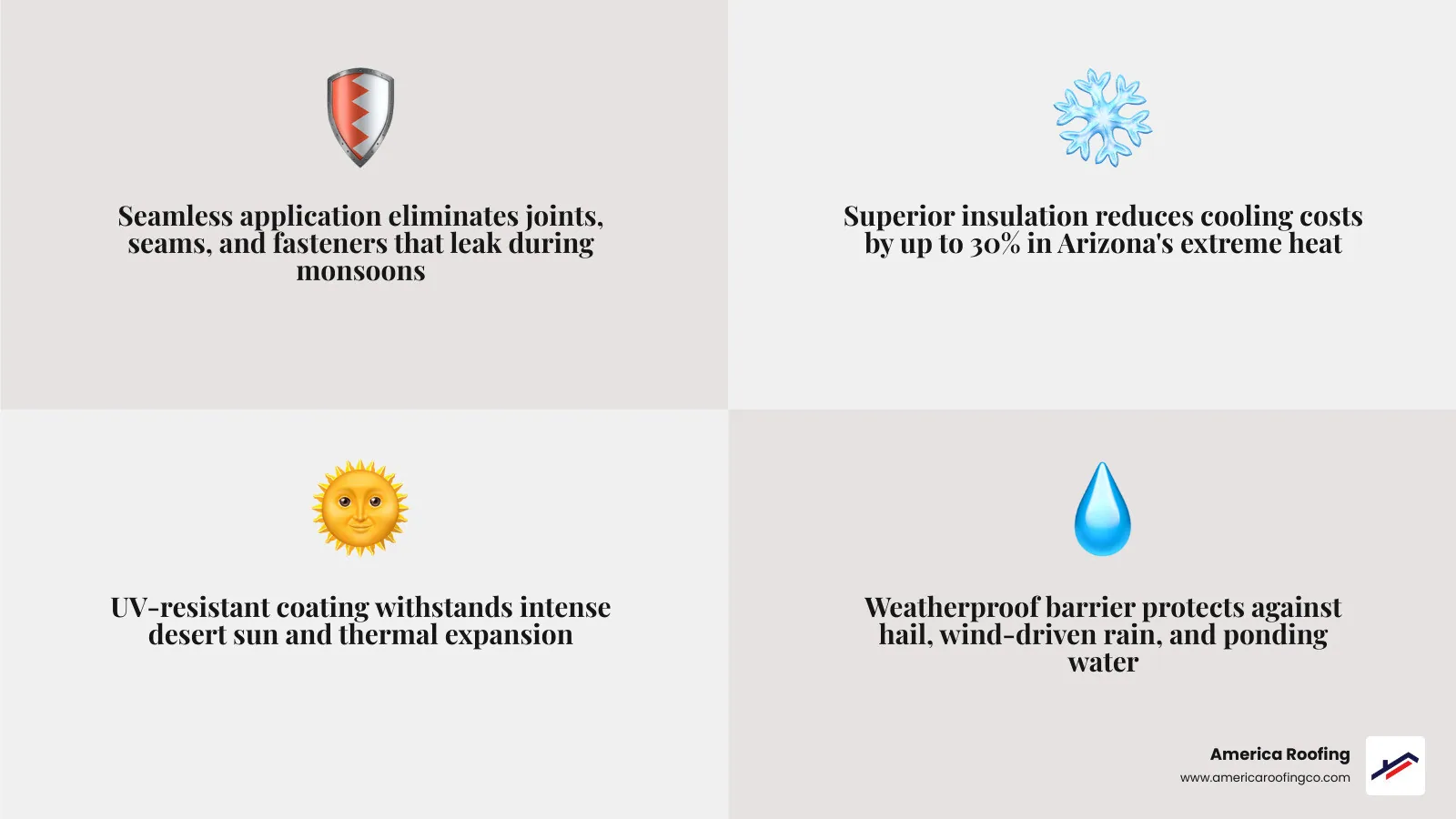
- Seamless Application – No joints, seams, or fasteners that can leak during monsoons
- Superior Insulation – Reduces cooling costs by up to 30% in extreme heat
- Long Lifespan – Lasts 50+ years with proper maintenance and recoating every 5-10 years
- Weather Resistant – Withstands UV rays, hail, wind-driven rain, and thermal expansion
- Lightweight & Versatile – Can be installed over existing roofs on any shape or slope
What to Look for in a Foam Roofing Contractor:
- Certification & Experience – Verify they're licensed (ROC), insured, and have 20+ years installing SPF systems
- Local Expertise – Choose contractors who understand Arizona's climate challenges (extreme heat, monsoons, haboobs)
- Transparent Pricing – Get detailed estimates with no hidden fees for materials, labor, and warranties
- Proven Track Record – Check BBB ratings, Google reviews, and references from past commercial and residential projects
- Maintenance Support – Ensure they offer annual inspections, recoating services, and long-term warranties (10-20+ years)
Here's the thing: foam roofing isn't just about stopping leaks—it's about changing your roof into a high-performance thermal barrier that slashes energy bills and protects your property for decades. Honestly, the seamless nature of spray polyurethane foam eliminates the weak points (seams, fasteners, gaps) that plague traditional flat roofing systems like TPO, EPDM, and modified bitumen.
Let me explain why this matters for Arizona. Our desert climate throws everything at your roof: 120°+ summer temperatures, intense UV exposure, sudden monsoon downpours, and dramatic temperature swings between day and night. A properly installed foam roof expands and contracts with these temperature changes, creating a continuous, airtight seal that keeps water out and conditioned air in.
Related content about flat foam roofing companies arizona:
Why Flat Foam Roofing Companies Arizona are the Top Choice for the Desert
When it comes to flat roofs in the Grand Canyon State, the competition isn't even close. Traditional roofing materials often struggle with the "thermal shock" caused by Arizona's 40-degree temperature swings. Flat foam roofing companies arizona specialize in a material that doesn't just sit on your house—it bonds to it.
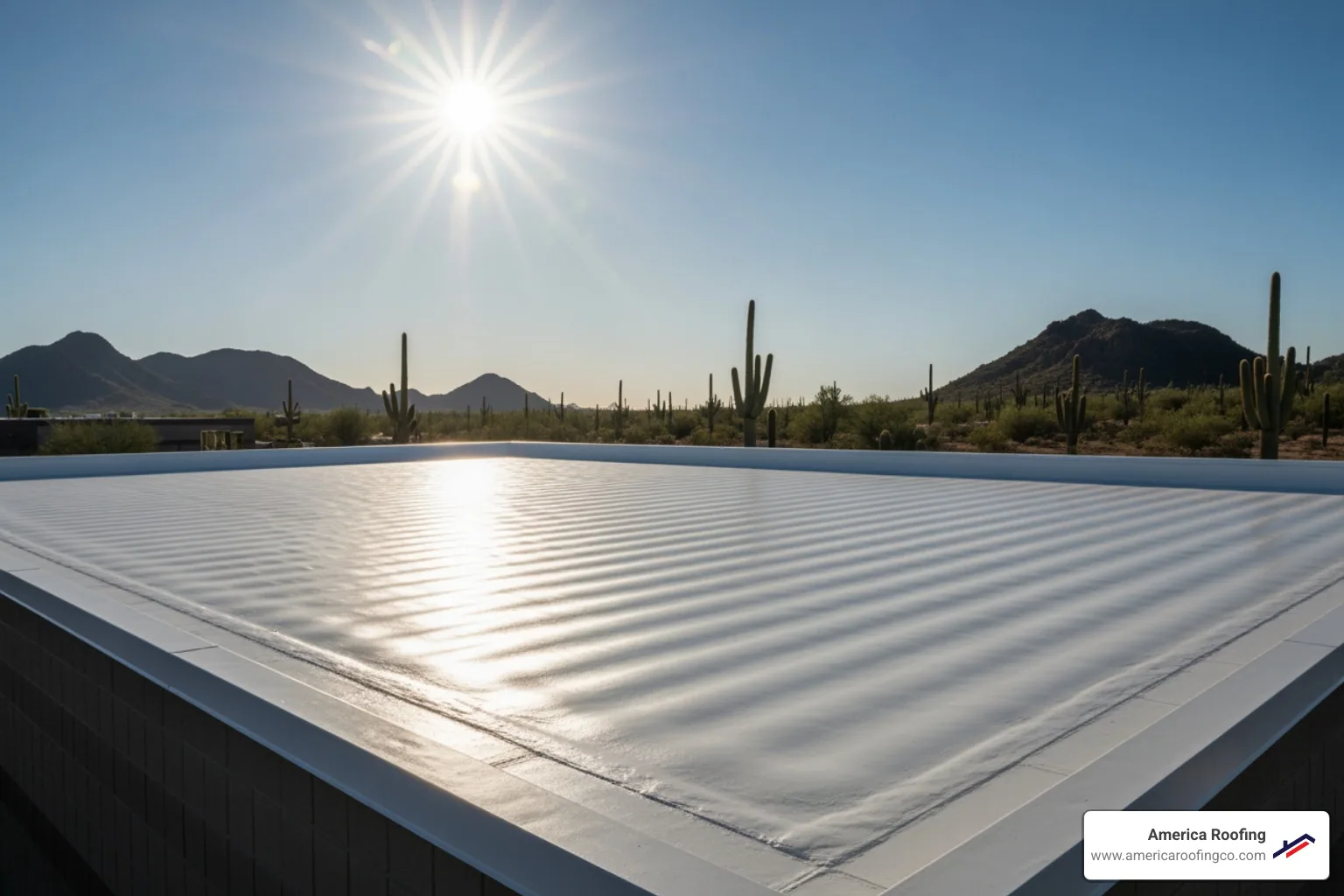
Spray Polyurethane Foam (SPF) is a liquid that expands into a solid, continuous layer. Because there are no seams, there are no places for water to penetrate. In a state where energy savings are a top priority, the high R-value of foam makes it the ultimate "cool roof." By reflecting UV rays and providing a thick layer of insulation, foam roofs keep your AC from working overtime.
The Science of SPF: Why It Beats the Heat
Let’s get a little technical for a second. SPF has one of the highest R-values (insulation power) of any roofing material. This is crucial because of "thermal bridging"—the process where heat travels through solid objects like fasteners or seams. Since foam is seamless and applied as a single monolithic layer, it eliminates these bridges.
Furthermore, foam is incredibly flexible. In the heat of a Phoenix afternoon, your house actually grows slightly. At night, it shrinks. Foam can expand and contract up to an inch without cracking. This durability is why many consider it the established choice in our foam-roofs-arizona-complete-guide.
Key Benefits of Hiring Flat Foam Roofing Companies Arizona
Why are so many neighbors making the switch? Beyond the 5-benefits-of-foam-roofing, including leak prevention and eco-friendliness, there’s the sheer convenience.
- Lightweight Application: Foam adds very little weight to your structure. In many cases, it can be installed directly over an existing roof, saving you the mess and cost of a full tear-off.
- Eco-Friendly: By avoiding tear-offs, we keep thousands of pounds of roofing waste out of Arizona landfills.
- Custom Contouring: Does your roof have weird angles, skylights, or AC curbs? Foam sprays around them perfectly, creating a custom-fit glove for your home. This is why res/foam-roof-arizona services are so popular for custom desert architecture.
Maintenance and Recoating: Making Your Roof Last 50 Years
Here is a secret the "big box" contractors won't tell you: a foam roof can be the last roof you ever buy. While a shingle roof might need replacing every 20 years, a foam roof is "renewable."
The foam itself is protected by an elastomeric coating. Over 5 to 10 years, the sun slowly wears down this top layer. Instead of replacing the whole roof, you simply perform routine repairs and apply a fresh topcoat. It’s like getting a brand-new roof for a fraction of the original cost. To keep things running smoothly, we always recommend following our flat-roof-repair-arizona-guide and scheduling annual inspections, especially after our legendary monsoon storms.
Choosing the Right Partner for Your Foam Roof Project
Not all flat foam roofing companies arizona are created equal. Since foam is mixed on-site, the quality of your roof depends entirely on the skill of the technician holding the spray gun. At America Roofing, we take that responsibility seriously.
We are a veteran-owned, third-generation family business (ROC#186438) that has served Maricopa County since 1999. Whether you are in Phoenix, Mesa, or Scottsdale, you need a team that understands the local building codes and the unique stresses our weather puts on a building. Our res/flat-roof-arizona specialists provide transparent pricing and honest, no-pressure advice.
Signs Your Flat Foam Roof Needs Professional Attention
How do you know if it's time to call us? Sometimes the signs are subtle, and sometimes they are... well, not.
- Cracks and Blisters: If you see "alligatoring" or small bubbles, the UV coating has likely thinned out.
- Peeling Coating: If you can see the yellow foam underneath the white topcoat, your roof is "sunburning."
- Spongy Texture: If the roof feels soft or "mushy" when you walk on it, water might be trapped inside the foam.
- Water Ponding: Flat roofs should drain. If you have "mini-lakes" staying on your roof for more than 48 hours after a rain, the slope needs to be corrected with more foam.
Ignoring these signs can lead to mold growth and structural damage. Check out our flat-roofing-solutions-pros-cons-and-maintenance-tips for a deeper dive into what to watch for.
Comparing Foam to TPO and Traditional Materials
You know what? Many people ask us about TPO (Thermoplastic Polyolefin) or EPDM (Rubber). While those are fine materials, they often struggle in the Arizona heat because they rely on seams and mechanical fasteners. Every seam is a potential leak point.
| Feature | Spray Polyurethane Foam (SPF) | TPO / EPDM | Modified Bitumen |
|---|---|---|---|
| Seams | None (Seamless) | Many (Glued or Welded) | Many (Overlapped) |
| Insulation (R-Value) | Very High (6.5+ per inch) | Low (Requires extra board) | Very Low |
| Installation Speed | Fast | Moderate | Slow |
| Lifespan | 50+ Years (with recoats) | 15-25 Years | 10-20 Years |
| Arizona Heat Rating | Excellent | Good | Fair |
What to Look for in Flat Foam Roofing Companies Arizona
When you're ready to hire, don't just go with the lowest bid. Look for BBB accreditation and membership in the Arizona Roofing Contractors Association (ARCA). These certifications show that a company is committed to industry standards and ethics.
Honestly, your roof is the only thing standing between you and a 115-degree afternoon. You deserve a partner who offers a workmanship guarantee and has a deep history in the community. We pride ourselves on being that partner for thousands of families across the Valley.
Here’s the thing: you deserve a roof that stands up to the heat, so call us at 602-237-2478 or Request a Free Quote today.
Consolidated guidance
From Mesa to Phoenix: Finding the Best Foam Roofing Solutions and Contractors
- AZ ROC License – Verify the contractor holds a valid Arizona Registrar of Contractors license (KB-1 or dual license)
- Insurance & Bonding – Confirm they carry liability insurance and workers' compensation coverage
- Manufacturer Certifications – Look for training and approval from major foam roofing manufacturers (e.g., BASF, GAF)
- Local Experience – Choose contractors with 10+ years serving Arizona's climate and familiar with monsoon challenges
- Customer Reviews – Check Google, BBB, Angi, and Nextdoor for consistent 5-star ratings and detailed feedback
- Written Estimates – Ensure you receive a detailed, transparent quote covering materials, labor, and warranty terms
- Warranty Coverage – Ask about both workmanship warranties (5-15 years) and manufacturer material warranties (15-30+ years)
Arizona's desert climate presents a unique challenge: intense UV exposure, triple-digit heat for months on end, and then sudden, violent monsoons with heavy rain and hail. Foam roofing handles all of it. The reflective elastomeric coating applied over the foam bounces back the sun's rays, keeping your home cooler and slashing energy bills by as much as 30-40%. And when the monsoons hit, that seamless surface sheds water like nothing else, protecting your home from leaks and water damage.
- Superior Insulation: SPF has a high R-value (a measure of thermal resistance), blocking heat transfer and keeping your building cooler.
- Reduced Cooling Costs: By improving insulation, your HVAC system runs less, saving you hundreds of dollars each summer.
- Lightweight Strength: The foam adheres directly to the roof deck without adding significant structural weight, making it ideal for older or commercial buildings.
- Durability: A properly maintained foam roof can last 30-50 years, far outlasting traditional shingles that may need replacement every 15-20 years.
- Wind Uplift Resistance: Because it's chemically bonded to the roof surface, SPF creates a monolithic layer that won't separate or blow off in high winds.
Choosing SPF is also an environmentally responsible decision. The lower energy consumption reduces your carbon footprint and strain on the power grid. As a sustainable material, SPF can often be applied over an existing roof, which means reduced landfill waste. Instead of replacement, the roof is simply recoated every 10-15 years, extending its life indefinitely. This long-term performance is detailed in our article on The Connection Between Roofing and Energy Efficiency.
- Roof Evaluation: A thorough inspection assesses the existing roof's condition to determine if SPF is the right solution and to provide a transparent, no-cost estimate.
- Surface Preparation: The roof is carefully cleaned, repaired, and dried to ensure the foam will adhere properly. A primer may be applied to improve adhesion.
- Foam Application: Polyurethane foam is sprayed as a liquid, expanding in seconds to form a solid, seamless, and insulating layer that fills every crack and gap.
- Elastomeric Coating Application: A protective coating is applied over the cured foam. This critical layer shields the foam from UV rays, adds waterproofing, and creates the reflective "cool roof" effect.
- Final Inspection: The new roof is examined to ensure consistent coverage, proper thickness, and a flawless finish before the property is cleaned of all debris.
- AZ ROC License: A valid license from the Arizona Registrar of Contractors (like our ROC#186438) is non-negotiable. It proves competency and financial responsibility.
- Proof of Insurance & Bonding: Insist on seeing current certificates for liability and workers' compensation to protect yourself from financial risk.
- Manufacturer Certifications: Certifications from companies like BASF or GAF show the contractor has specialized training and can offer valid manufacturer warranties.
- Local Experience with Arizona Climate: Choose a contractor with years of experience in the Phoenix metro area who understands our unique weather challenges.
- Positive Online Reviews: Check Google, the BBB, and Angi for consistent 5-star ratings and detailed testimonials about communication, cleanliness, and reliability.
- Detailed, Transparent Quotes: A professional provides a comprehensive, itemized estimate outlining all costs, materials, and warranty information.
- What is your experience specifically with SPF roofing in Arizona?
- Can you provide proof of your AZ ROC license, insurance, and bonding?
- What manufacturer certifications do you hold for SPF installation?
- What are the details of your workmanship and material warranties?
- Can you explain the recoating process and its required frequency?
- What is your typical project timeline?
- What safety protocols do you have in place?
What types of buildings are best for spray foam roofing?
Spray foam roofing is ideal for the flat and low-slope roofs common on both residential and commercial properties in Arizona. This includes many modern and southwestern-style homes, as well as warehouses, retail centers, and office buildings. If your building has a flat or low-slope roof, SPF is an excellent option for superior waterproofing and energy savings. It's a great solution for any commercial flat roof in Arizona.