
A lot of owners in Phoenix and Tucson start looking into flat roof waterproof coating after the same moment. A ceiling stain shows up after a monsoon storm, the roof is baking all summer, and someone says a coating might buy more life without a full tear-off. That can be true, but only when the roof underneath is still worth saving.
What Is a Flat Roof Waterproof Coating?
A flat roof waterproof coating is a liquid-applied roofing layer that cures into a continuous surface over an existing flat or low-slope roof. The simplest way to think about it is sunscreen plus weather skin for the roof. It's there to block water, reflect heat, and slow down the aging of the roof below it.
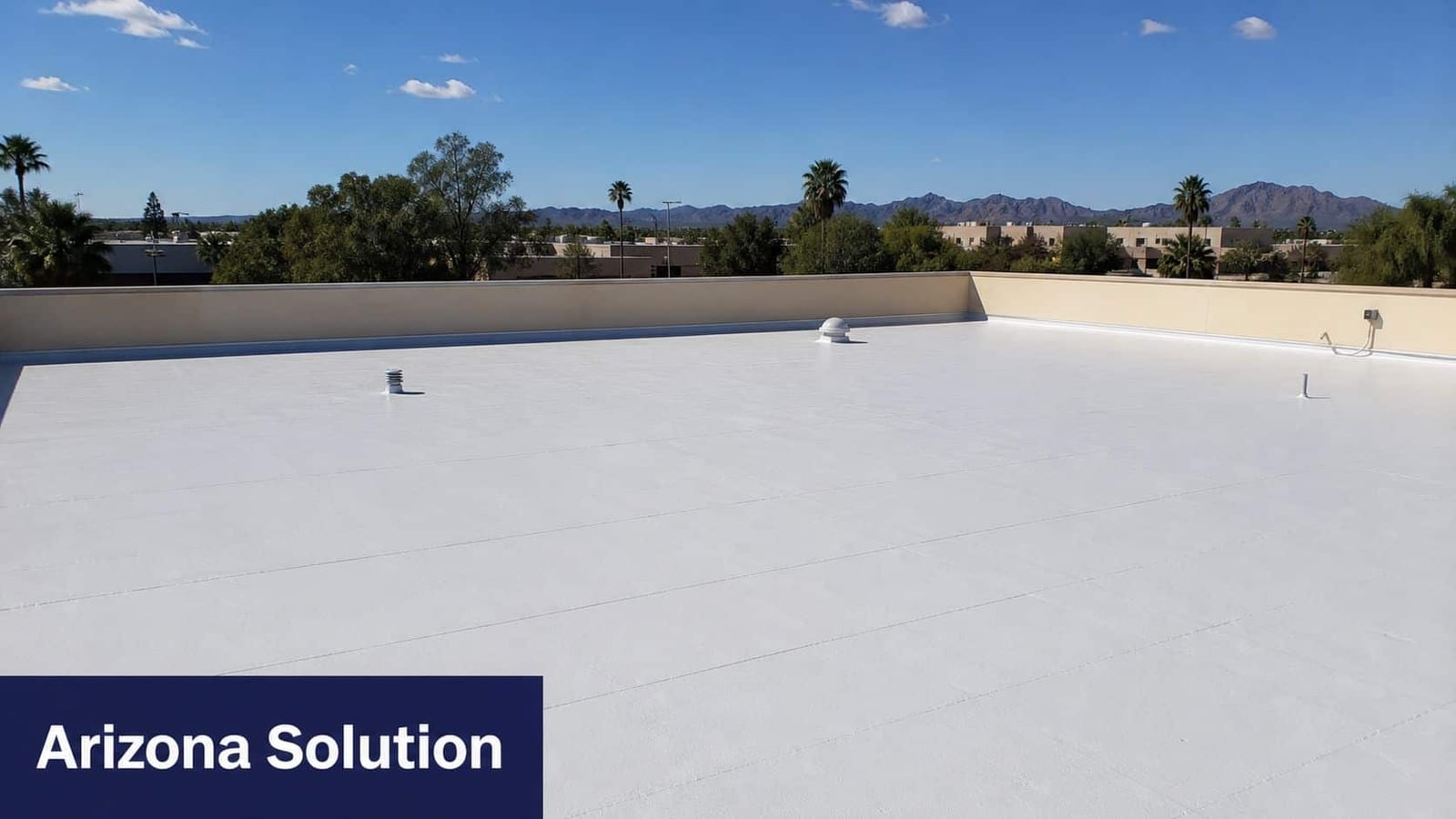
In Arizona, those three jobs matter more than most generic roofing articles admit.
It creates a seamless barrier
Flat roofs don't shed water like steep tile or shingle roofs. They rely on slope, drains, scuppers, and a membrane that stays intact around seams, penetrations, parapet walls, and rooftop equipment. A coating can create a monolithic surface over those trouble spots, which helps during monsoon rain when wind pushes water sideways and standing water can sit longer than it should.
It helps with heat and cooling load
On a Phoenix or Tucson roof, UV exposure is relentless. A reflective coating can reduce how much heat the roof surface absorbs, which lowers thermal stress on the roof system and can help the building stay more manageable during long hot stretches.
It can extend the life of a roof that's still structurally sound
That last part matters. Coatings aren't magic. They work best when the roof still has a good substrate, acceptable adhesion, and localized issues that can be repaired before the new coating goes on. For owners trying to sort through roof types first, understanding flat roofs for Arizona homes is a useful place to start.
Practical rule: A coating is a restoration system, not a shortcut around a failing roof.
This category isn't small or niche anymore. The global flat roof waterproofing systems market, which includes specialized liquid coatings, is projected to reach USD 5.9 billion by 2033, growing at a 6.1% CAGR, driven by demand for energy-efficient buildings in key markets like North America, according to Verified Market Reports.
For Arizona owners, the takeaway is simple. A coating makes sense when the roof needs protection and life extension, not when it needs a disguised replacement.
Comparing the Main Types of Roof Coatings
A Phoenix roof that looks fine from the parking lot can need a completely different coating than the one next door. One has clean drainage and wants reflectivity. The other holds water around scuppers after every monsoon storm and gets walked on every time the HVAC crew shows up. Same building type. Different coating decision.
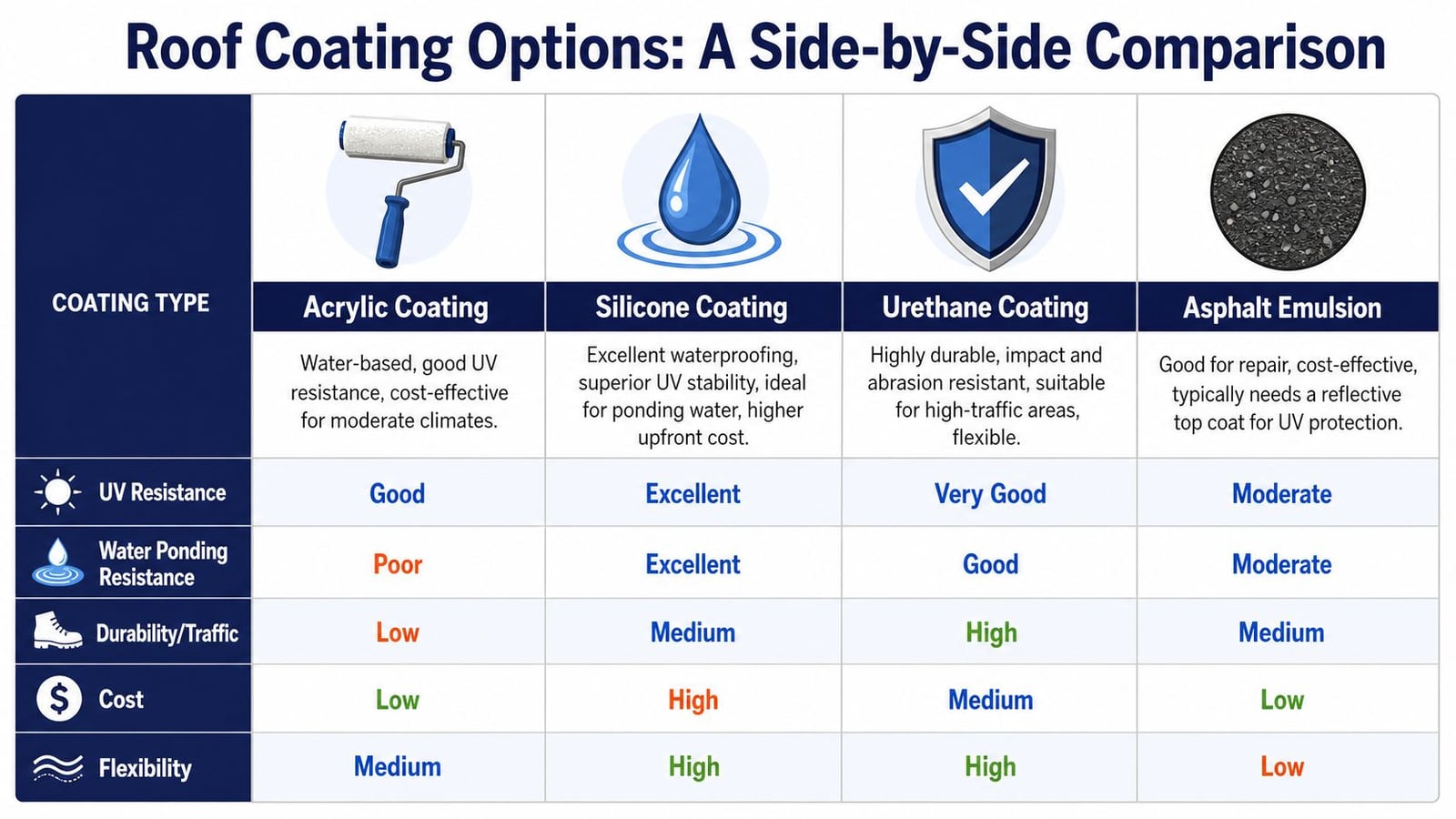
The right choice comes down to what is beating up the roof in Arizona. On some roofs, the main problem is UV and heat. On others, it is ponding water, foot traffic, or an aging surface that still has enough life left to restore. Coatings are not interchangeable just because they all go on as a liquid.
Arizona Flat Roof Coating Comparison
Silicone for roofs that keep holding water
Silicone earns its keep on low-slope roofs with drainage problems. If water sits in the same areas after storms, silicone is usually the safer call because it handles standing water better than acrylic.
That does not excuse bad roof design or poor drainage. If the slope is wrong, the slope is wrong. But on a roof that is still structurally worth saving, silicone often gives Arizona owners a more forgiving waterproofing layer where monsoon ponding is part of real life.
There is a trade-off. Silicone can attract dirt over time, and recoating later usually takes more prep than owners expect. I tell people the same thing every time. If you choose silicone for the right reason, usually ponding resistance, it makes sense. If you choose it just because someone said it is the premium option, that is not a good buying strategy.
Acrylic for dry, draining roofs
Acrylic works well on roofs that drain properly and take relentless sun. That makes it a practical fit on many Arizona buildings, especially where reflectivity and lower surface heat matter more than ponding resistance.
It is also one of the coatings owners misapply the most. An acrylic system on a roof with chronic low spots can turn into a callback job. On a roof with decent slope and solid prep, it can be a cost-effective restoration. On the wrong roof, it is just a cheaper mistake.
Urethane for service traffic
Commercial flat roofs in Phoenix and Tucson get used hard. HVAC techs, electricians, satellite crews, and maintenance teams all put wear on the same paths.
Urethane stands out in those traffic areas because it resists abrasion better than softer coatings. That matters on roofs where regular service access is part of the building's routine, not an occasional event.
Water resistance still matters, but wear is often what shortens the life of these areas first. If the roof has both traffic and drainage issues, the answer may be a system that uses different materials in different zones instead of forcing one coating across the whole surface.
Asphalt emulsion for targeted restoration work
Asphaltic coatings still have a place, especially in repair-oriented assemblies or restoration systems where the roof condition supports that approach. They are usually not the first choice for Arizona owners who want a bright reflective finish and the best heat performance at the surface.
In practice, these systems make more sense when the coating plan is tied to the existing roof condition, not when someone is trying to force a low-budget answer onto a roof that needs more than a coating. That is an important distinction.
Owners comparing a coating project with a membrane option should also get expert TPO roofing advice before making the call. Some roofs are good restoration candidates. Others are far enough along that a new membrane will produce better long-term ROI.
How Coatings Perform in the Arizona Climate
Arizona is where generic roof advice breaks down. A flat roof waterproof coating in Phoenix or Tucson has to survive intense sunlight, sharp daily temperature swings, dust, and monsoon weather that exposes every weak seam and low spot.
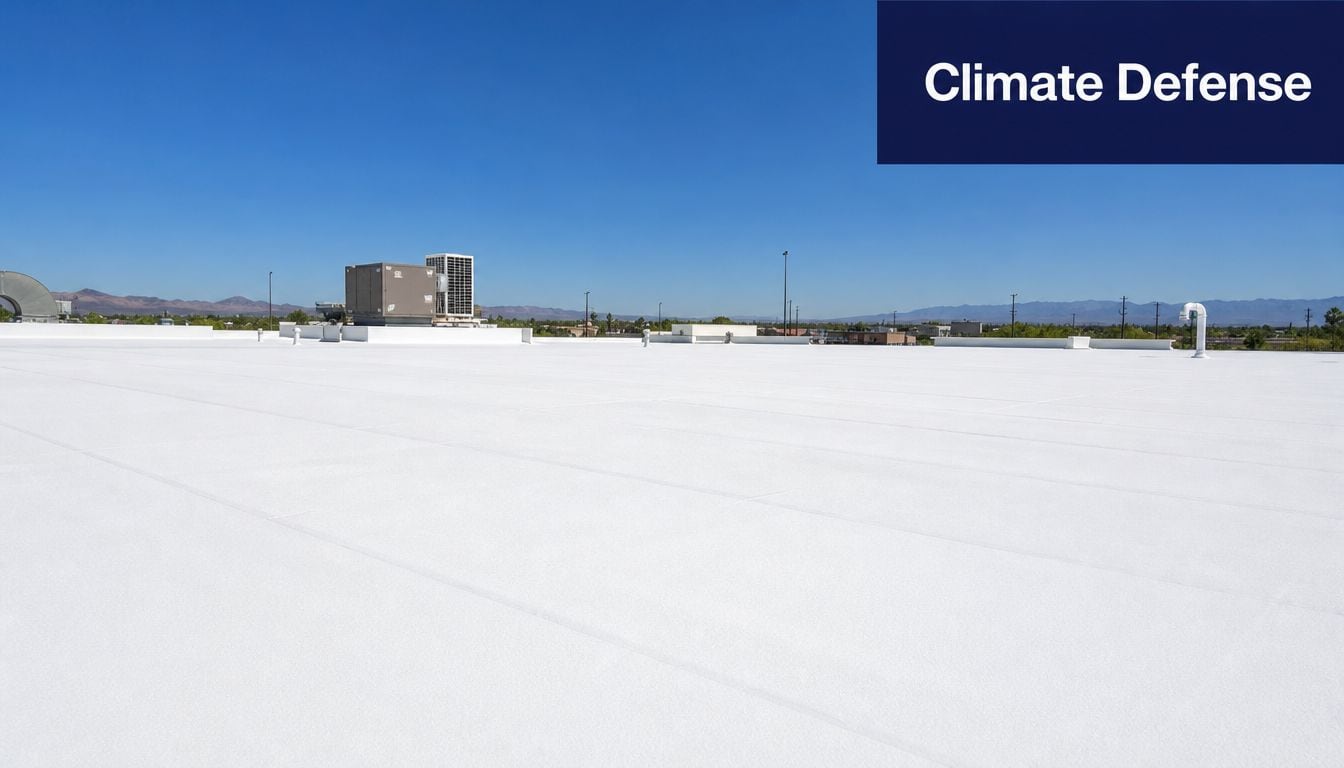
Heat and UV performance
The first enemy is sun. A dark, unprotected flat roof absorbs heat all day, then cools after sunset. That constant expansion and contraction puts stress on seams, flashings, penetrations, and older substrate conditions.
In Phoenix, elastomeric flat roof coatings reflect up to 85% of solar UV radiation and can reduce roof surface temperatures by 30–50°F, according to Fix AZ Roofs. That kind of temperature reduction matters because less surface heat means less thermal shock working into the roof system day after day.
For owners deciding between repair, coating, or replacement on low-slope buildings, flat roof solutions Phoenix can help frame what system fits the building instead of forcing one answer onto every roof.
Monsoon rain and ponding stress
Monsoon season is where roof coatings either prove their value or expose bad prep. Wind-driven rain hits parapet walls, curb flashings, and transitions hard. Water also finds low areas fast.
In Tucson conditions, properly applied elastomeric coatings form a continuous 20–30 mil membrane that resists infiltration even when standing water persists for 24+ hours because of poor drainage, and those systems must maintain continuity under wind-driven rain pressures exceeding 25 mph, according to Piper Family Painting.
That doesn't mean every coated roof is ready for monsoon season. The weak point is almost always workmanship. If drain bowls weren't addressed, cracks were skimmed instead of repaired, or transitions around penetrations were rushed, the coating won't save the job.
Dust and reflectivity loss
Arizona roofs collect dust, and dust changes performance. Even a reflective roof can lose some of its benefit if the surface gets dirty and stays dirty. This is especially relevant on commercial roofs with little slope, nearby traffic, or desert exposure around the building.
That's one reason maintenance matters after the coating is installed. A roof coating shouldn't be treated like a one-time event and forgotten. It needs periodic inspection, drain cleaning, and surface checks after major weather.
- Check drains and scuppers: Debris buildup turns a manageable rain event into ponding.
- Watch traffic paths: Repeated foot traffic around service areas can wear surface protection faster than the rest of the field.
- Inspect after storms: Wind can expose weak edges, flashing splits, or impact points that were easy to miss before the rain hit.
The Critical Decision To Coat or Reroof
This is the decision that affects the budget most. A coating can be a smart way to extend service life. It can also be wasted money if the roof underneath is wet, loose, or deteriorated beyond restoration.
Signs a roof is a good coating candidate
A coating usually makes sense when the roof still has a sound base and the problems are repairable.
- The substrate is dry: The existing roof needs to be dry enough to accept a new coating without trapping moisture below it.
- Leaks are localized: A few known trouble spots are different from leaks showing up across wide areas of the building.
- The roof is still attached well: If the existing system is holding properly and repairs can stabilize weak areas, restoration stays on the table.
- The owner wants life extension: Many owners aren't ready for a full reroof but still need meaningful protection and a more reflective surface.
- The roof plan includes maintenance: Coatings work best when someone will inspect drains, flashings, and penetrations after major weather.
A property manager building a long-term plan should also review best practices for commercial roof maintenance so the coating is treated as part of a maintenance program rather than a one-time fix.
Red flags that mean reroofing is the smarter move
Some roofs shouldn't be coated, even if coating sounds less disruptive.
Coating over a roof with widespread saturation or failed attachment isn't a viable solution because it traps moisture and forces the new layer to bridge active problems, leading to blisters or delamination. That risk is especially high in Arizona's monsoon climate, as explained by Coastal Roofing and Construction.
There are other hard stops too.
- Soft areas underfoot: That often points to wet insulation or deteriorated substrate.
- Recurring leaks in multiple zones: Broad moisture patterns usually mean the failure is deeper than the surface.
- Severe movement or separation: Open laps, failing edge metal, unstable penetrations, or substrate movement can overwhelm a coating.
- Old repairs over old repairs: If the roof has been patched repeatedly and no one has solved the underlying issue, coating may just bury the problem.
Aged roofs also need adhesion testing. In Phoenix and Tucson, coatings should be applied over surfaces with a minimum of 70% adhesion to the substrate. If adhesion falls below that threshold because of deterioration or contamination, removal and replacement of failed material are required before coating. Otherwise blistering and leaks can show up within 12–18 months, according to Tucson Roof Co.
A roof that needs replacement doesn't become a restoration candidate just because someone wants a lower upfront scope.
If the roof has crossed that line, it's time to look at reroofing in Phoenix instead of trying to stretch one more coating cycle out of a failing system.
The Coating Process from Prep to Final Coat
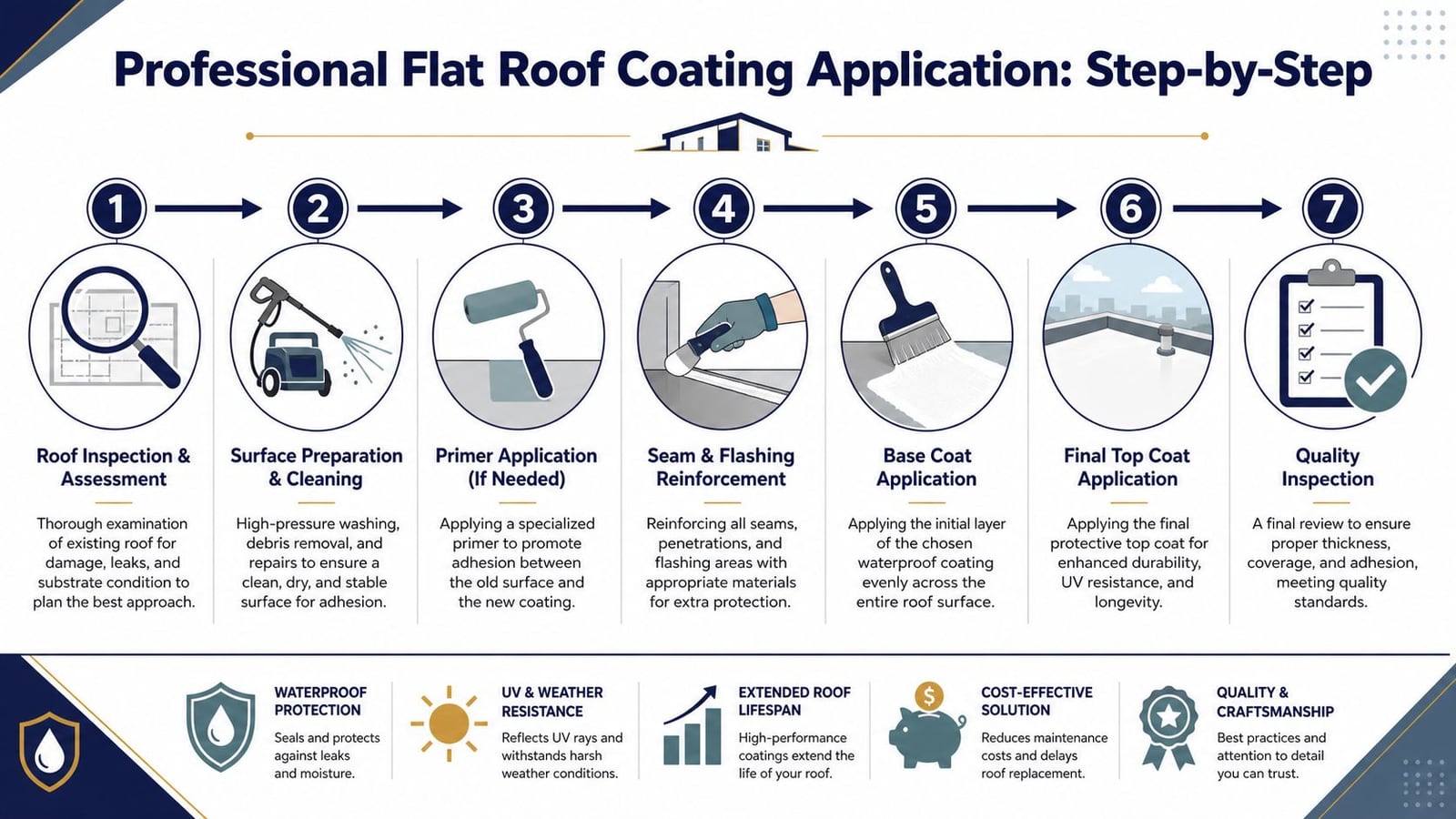
A professional coating job is mostly preparation. The coating itself gets the attention because it's visible. The prep work decides whether it bonds, cures, and holds through summer heat and monsoon weather.
Inspection and surface prep
The process starts with a close inspection of the existing roof. That means checking membrane condition, previous repairs, penetrations, drains, parapet transitions, ponding areas, and the overall dryness and stability of the substrate.
Then comes cleaning. Dust, chalking, loose granules, old debris, and biological buildup all interfere with adhesion. On Arizona roofs, dust alone can ruin a coating bond if the cleaning step is rushed.
Repairs before coating
A quality contractor doesn't coat first and hope second. Seams, flashing details, cracks, open areas, and penetration transitions need to be repaired and reinforced before field application starts.
For foam roofs and coated flat roofs common in this market, the Arizona flat foam roof repair guide gives owners a useful benchmark for what proper prep should include.
Thickness is not optional
Often, low-quality bids conceal the problem. A coating can look finished and still be too thin to perform.
To achieve a continuous, leak-free membrane, the total dry film thickness must reach 60–80 mils (1.5–2.0 mm), which typically requires 4–5 heavy coats, according to this product reference. That thickness is what helps bridge micro-voids and deal with thermal stress.
A separate coverage example shows why material calculations matter. Liquid butyl rubber covers 50 square feet per gallon on smooth surfaces to achieve 20 mils, and about 40 square feet per gallon on rougher surfaces, according to EPDM Coatings. The exact coating chemistry may differ from project to project, but the lesson is the same. Coverage rate and final thickness have to match the roof surface and the intended system.
If a proposal talks a lot about the product but says little about prep, repairs, and final thickness, that's a warning sign.
Warranties and Choosing a Qualified AZ Contractor
A lot of Arizona owners find out what their warranty is worth after the first hard monsoon. The roof still leaks, the coating contractor blames the product, the manufacturer points to the installation, and now the owner is stuck sorting out a problem that should have been settled before the job started.
That is why warranty language matters as much as coating choice.
Know what the warranty actually covers
There are usually two separate protections on a coating job. A manufacturer material warranty applies to the coating system itself under specific conditions. A contractor workmanship warranty applies to installation mistakes, flashing details, edge work, and other field issues tied to how the job was done.
Those are different obligations. Owners should read both.
In Arizona, the details matter more because heat, UV, rooftop traffic, and sudden storm exposure put weak installation work on display fast. A long warranty term sounds good on paper, but it has very little value if the roof was coated over wet insulation, loose seams, unstable parapet cracks, or failed drains. I tell owners to pay close attention to the exclusions, the maintenance requirements, and who is responsible for making a leak repair if something goes wrong.
What to ask before hiring
A qualified Arizona coating contractor should answer direct questions with direct answers.
- How do you confirm the roof is still a good coating candidate? The answer should cover moisture, substrate condition, soft areas, previous repairs, and whether the existing roof system is stable enough to restore.
- What is your written prep scope? Arizona roofs collect dust, chalking, ponding residue, and failed patch material. The proposal should spell out cleaning, repairs, reinforcement, primers if needed, and detail treatment.
- How do you verify installed thickness? If the contractor cannot explain this clearly, the owner is taking on unnecessary risk.
- How do you handle high-traffic areas and service paths? HVAC access and regular foot traffic wear out coatings faster, especially under Phoenix and Tucson sun.
- Who handles what under warranty? Get the split between manufacturer coverage and workmanship coverage in writing before the project starts.
Commercial owners usually have to coordinate roofing with the rest of the building. For teams looking at the full maintenance picture, this overview of IAQ solutions for commercial properties is a useful reminder that roof work affects more than the roof line.
The contractor checklist that protects ROI
The best coating contractors in Arizona are willing to walk away from the wrong roof.
That is a good sign. A contractor who says every aging flat roof should be coated is selling a product, not giving an honest assessment. Some roofs are good restoration candidates. Some need repair first. Some are too far gone, and coating them just delays a reroof while adding more cost later.
Look for a company that understands foam roofs, coated systems, drainage patterns, parapet movement, scuppers, penetrations, and service traffic in Arizona conditions. The bid should clearly describe the repair scope, the coating system, the areas of concern, and what happens if tear testing or inspection shows the substrate is not sound enough for restoration.
America Roofing handles flat roof coatings, repairs, and reroofing in Phoenix and Tucson, which gives owners a practical option if they want a site-specific assessment instead of a generic recommendation.
A good warranty starts with a contractor who is willing to tell you when coating the roof is a smart investment, and when it is a waste of money.
Phoenix and Tucson Flat Roof Coating FAQs
How much does flat roof waterproof coating cost in Arizona
The price varies by roof size, current condition, coating type, access, and how much prep or repair work the roof needs first. A clean, sound roof costs less to coat than a roof with drainage problems, old patchwork, soft spots, or extensive detail repairs. Any exact number without a site inspection should be treated carefully.
Can an existing coated roof be recoated
Sometimes, yes. It depends on what coating is already there, how well it's adhered, how dirty the surface is, and whether the existing system is still sound enough to accept another layer. Recoating can make sense, but only after inspection and compatibility review.
How often should a coated flat roof be inspected
At minimum, it should be inspected regularly and after major monsoon storms or wind events. Flat roofs need drain checks, surface review, and detail inspection around penetrations and parapets. Staying ahead of small failures is what protects the coating and supports warranty compliance.
If a flat roof in Phoenix or Tucson is leaking, overheating, or showing age, the next step is to find out whether coating is a smart restoration move or a delay tactic on a roof that really needs replacement. America Roofing can review the roof condition, explain the trade-offs, and help owners request a quote or call 602-237-2478 for a roofing estimate.