
A lot of Phoenix and Tucson property owners are looking at the same problem right now. The roof looks mostly fine from the ground, but summer heat has been relentless, monsoon rain is coming, and generic roofing advice doesn't match what holds up in Arizona.
Low slope roofing solutions have to be chosen differently here. Roofs in the desert don't just deal with sun. They deal with intense UV, extreme surface heat, dust buildup, drainage problems, and sudden heavy downpours that expose every weak seam, low spot, and shortcut.
What Defines a Low-Slope Roof in Arizona
A roof can look almost flat from the ground, make it through months of dry heat, and still show its real problems in the first hard monsoon storm. That is common on Arizona buildings.
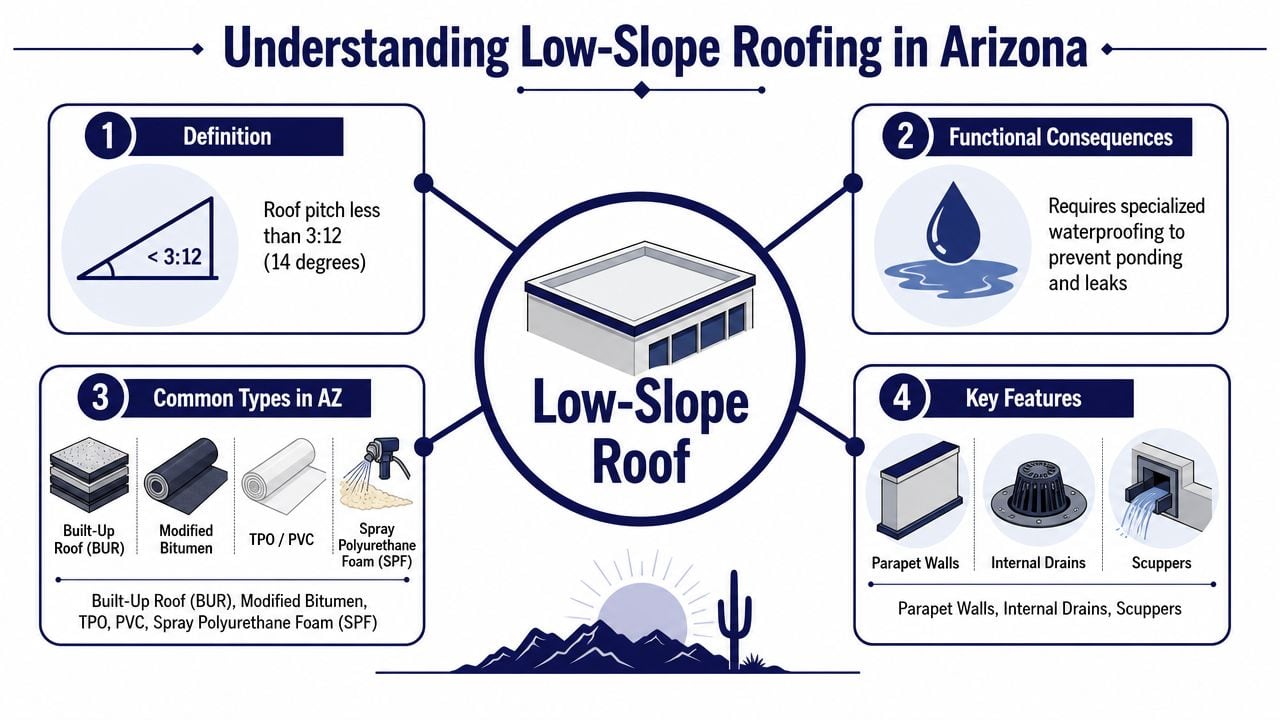
A low-slope roof is generally a roof with too little pitch to rely on fast water shedding the way a steep shingle roof does. In practical terms, once the slope gets shallow enough that drainage slows, the roof has to function as a waterproof assembly, not just a water-shedding surface.
Why the definition matters more in Arizona
In Arizona, low slope is not just a measurement issue. It is a performance issue.
A roof with minimal fall might look acceptable in dry weather, but heavy monsoon runoff exposes every weak point at once. Water slows down, collects around drains, sits at penetrations, and finds low spots that were easy to ignore in June. Then the same areas bake under extreme UV and high surface temperatures. That cycle is hard on seams, flashings, coatings, and any area that was never draining correctly to begin with.
The term property owners need to know is ponding water. If water stays on the roof long after a storm, the roof is telling you something is wrong with the slope design, drainage layout, or the condition of the system.
Why shingles usually fail on low-slope sections
I see this mistake on patio covers, additions, porches, and modern residential tie-ins. The section looks close enough to a regular roof, so someone treats it like one.
Shingles are built to shed water on a steeper pitch. On a low-slope section, they do not provide the continuous waterproofing that slower drainage requires. Under Arizona storm conditions, that gap shows up fast. Water can back up under laps, work through vulnerable transitions, and sit longer than the material was designed to handle.
Homeowners comparing options should pay attention to roof drainage and cost, because slope affects more than appearance. It changes what materials are appropriate, how the roof has to be installed, and how much maintenance the system will need.
What a low-slope roof needs to do
A good low-slope roof in Arizona has to meet three basic requirements:
- Provide continuous waterproofing: The system needs to resist standing and slow-moving water across the full field of the roof.
- Drain in a controlled way: Slope, crickets, drains, scuppers, and edge details all have to move water off the roof before it sits too long.
- Handle desert exposure: The assembly has to tolerate intense sun, repeated expansion and contraction, and sudden storm loading.
That is why low-slope sections are usually built with membranes, foam, coatings, or layered assemblies instead of standard residential shingle methods. On these roofs, the details decide whether the system lasts or becomes a leak source.
A Guide to Modern Low-Slope Roofing Materials
A low-slope roof in Arizona can look fine in dry weather and still fail the first time a monsoon drops hard rain faster than the drains can clear it. That is why material choice matters. Generic advice from milder climates often falls apart here, especially on roofs that bake all summer and then take sudden storm loading.
Low slope roofing solutions are a category, not a single product. The right fit depends on how the roof is built, how well it drains, how much foot traffic it gets, and whether the owner wants the lowest upfront cost or fewer headaches over the next 15 to 20 years.
Single-ply membranes
Single-ply systems use large sheets to create a continuous waterproofing layer over the roof surface. In Arizona, they are usually selected for buildings that need a relatively clean installation and consistent detailing around drains, curbs, parapet walls, and rooftop equipment.
The most common membrane categories are:
- TPO: A reflective membrane often chosen to reduce heat gain on buildings with high sun exposure.
- PVC: A single-ply option known for welded seams and good performance where rooftop use, grease exposure, or tougher service conditions are part of the equation.
- EPDM: A flexible sheet membrane that can work well on certain low-slope roof layouts, though Arizona owners often prefer lighter, more reflective options because of the heat.
Membranes can perform well here, but the details decide whether they hold up. Poor seam work, weak edge securement, bad flashing, or an uneven substrate will shorten the life of the roof fast under high UV and thermal movement.
Spray polyurethane foam
SPF is a sprayed-in-place system that forms a continuous surface across the roof. It is often a strong fit for Arizona buildings with a lot of penetrations, irregular geometry, or transitions that are harder to flash with sheet materials.
Its biggest advantage in this climate is that it combines roofing and insulation in one assembly. That can help on buildings that struggle with heat gain through the roof deck. Industry studies also note that SPF can reduce cooling demand when it is properly installed and maintained under a reflective coating.
On a complicated roof with multiple penetrations, a system without many field seams can make waterproofing details easier to control.
SPF also has a clear trade-off. The foam must stay protected with a coating system, and that coating has to be renewed on schedule. Once owners ignore that maintenance cycle, Arizona sun starts breaking the surface down, and the roof loses the benefit that justified the system in the first place.
For owners comparing system types in more detail, this guide to flat roof solutions for desert homes gives a useful Arizona-specific overview.
Modified bitumen and other traditional assemblies
Modified bitumen remains a practical choice on many Arizona low-slope roofs, especially where the owner wants a heavier, layered assembly instead of a single membrane. These systems use asphalt-based sheets in reinforced plies, which can provide good durability when drainage and installation are handled correctly.
This type of roof usually makes sense when the building needs:
- A proven assembly: Often useful on reroof projects where the existing structure and detailing already suit this type of system.
- Layered protection: Multiple plies can offer added redundancy in areas that see wear or occasional impact.
- Straightforward repairs: Localized service work is often easier than on some fully adhered sheet systems.
The trade-off is heat. Darker asphalt-based assemblies absorb more solar load unless they are finished with a reflective cap sheet or coating. On Arizona buildings, that surface temperature difference matters.
Coatings and restoration overlays
Coatings have a place, but only on roofs that still deserve to be saved. A coating can extend service life on a sound low-slope roof with a dry substrate and manageable defects. It will not correct saturated insulation, failed flashing, structural slope problems, or chronic ponding.
I see owners get into trouble when they treat a coating as a replacement for roof replacement. In Arizona, intense UV exposure and sudden monsoon downpours expose that mistake quickly. If the underlying assembly is already failing, a restoration overlay usually buys limited time and can make the eventual replacement more complicated.
Comparing Systems on Performance Cost and Lifespan
A low-slope roof in Arizona has to survive two very different tests. It has to sit under brutal sun for months without cooking itself apart, then shed a hard monsoon downpour without exposing every weak drain, curb, and flashing detail on the building. That is why owners here usually narrow the choice to a few practical questions first. Which system holds up best under heat and UV. Which one fits the building's traffic and equipment load. Which one gives a reasonable life cycle cost instead of just a lower bid.
The table below is a practical comparison of common low slope roofing solutions used in Arizona.
Low-Slope Roofing System Comparison for Arizona
What the table leaves out
System selection gets decided at the details.
I have seen owners compare membrane type, color, and warranty term, then lose money because the underlying problem was poor slope to drain, soft insulation under service paths, or weak flashing work around rooftop units. In Arizona, those mistakes show up fast. Long heat exposure hardens and stresses vulnerable areas. A monsoon storm then finds the opening.
A building with frequent HVAC service calls usually needs more than a good field membrane. It needs protected walk paths, durable attachment at traffic areas, and details that can handle repeated foot traffic. A low-slope residential section with awkward geometry often benefits from a system that handles irregular transitions cleanly and reduces the number of exposed seams and termination points.
A low-slope roof should be judged as a full assembly, not just by the name of the top layer.
Cost is a life-cycle question
The cheapest proposal on bid day often becomes the expensive roof three summers later. I look past membrane type first and ask what sits under it, how the perimeter is detailed, whether the drains are being corrected, and how much prep work is included.
A stronger assembly usually costs more up front for a reason. Cover boards can improve resistance to foot traffic and surface abuse. Better drainage corrections reduce the chance of standing water wearing out vulnerable areas. Thicker membranes and better flashing packages usually buy time in Arizona because heat cycling punishes thin, lightly built systems faster than generic national advice would suggest.
That is why two roofs with the same label can perform very differently. One may be priced as a basic recover with limited corrections. The other may include substrate repairs, upgraded edge metal, reinforced walk pads, and better drain work. Those are not small line items in this climate.
Lifespan depends on the building, not the brochure
National lifespan ranges can be useful as a starting point, but they do not answer the question Arizona owners care about. How long will this roof last on this building.
Service life here usually comes back to four jobsite variables:
- Drainage quality: Water has to move off the roof reliably during short, intense storms.
- Surface condition: Reflective finishes, coatings, and exposed asphalt surfaces age differently under extreme sun.
- Roof traffic: Units, hatches, and access routes create concentrated wear.
- Maintenance follow-through: Small splits, loose flashings, and failed sealant lines stay repairable only if someone catches them early.
That is why one SPF roof performs well for years while another breaks down early. The difference is often coating maintenance and how well penetrations were handled. The same is true for single-ply systems. A well-detailed membrane roof with proper drainage can outlast a poorly maintained foam roof. A neglected membrane with chronic ponding can disappoint just as quickly.
Owners who care about cooling cost and surface temperature often spend extra time comparing white membranes. This guide to energy-efficient TPO roofs helps explain where that system fits and what to look for beyond the marketing language.
Matching the roof to the property
A useful selection process usually looks at the property in plain terms:
- Residential low-slope section: Prioritize waterproofing reliability, clean tie-ins to walls and transitions, and a finish that works with visible roof lines.
- Commercial flat roof: Prioritize service traffic, equipment density, drainage performance, and repair access.
- Aging roof with isolated trouble spots: Determine whether the roof still has a dry, serviceable base or whether replacement is the sounder long-term spend.
- High heat exposure roof: Favor assemblies and surface finishes that limit heat absorption and hold up under prolonged UV exposure.
The right answer is usually the system that matches the building's actual stress points, the owner's hold period, and the level of maintenance the property will really receive.
Why Arizona's Climate Demands a Specialized Approach
A low-slope roof in Arizona can look fine in May, then fail hard in August. Weeks of brutal sun dry and stress the surface, then a monsoon cell dumps water fast enough to expose every weak seam, drain problem, and shortcut in the flashing.
Heat and UV change how roofs age
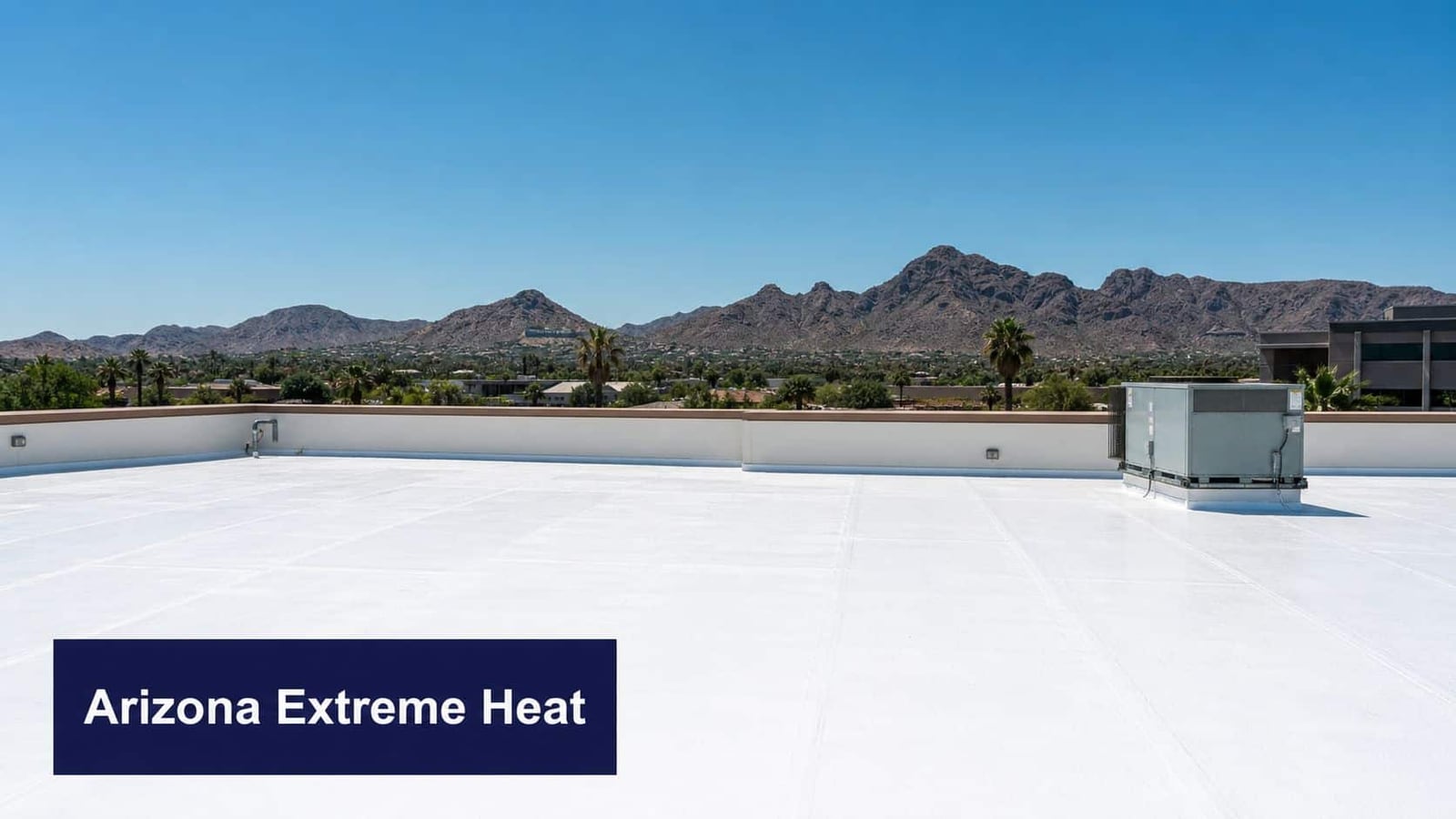
Generic roofing advice often assumes slower aging and gentler weather swings. That assumption breaks down in Phoenix and Tucson. Roofs here deal with intense UV, surface temperatures that climb far above the air temperature, windblown dust, and constant expansion and contraction.
The result is a different wear pattern than owners see in milder parts of the country. Membranes lose flexibility sooner. Coatings chalk, thin out, and stop protecting the layer below. Sealants around penetrations and terminations shrink and split. A detail that might hold up for years in a moderate climate can become a leak point much sooner here.
I see this most often around curbs, pipe flashings, skylights, and parapet transitions. Those areas move, bake, and dry out faster than many owners expect.
Monsoon storms expose drainage mistakes
Arizona rain is not usually an all-day event. It is often a violent test of whether the roof can shed water fast, keep drains clear, and stay watertight when wind pushes rain sideways.
That matters on low-slope roofs because small drainage issues get exposed all at once. A little debris at a scupper can turn into backed-up water. Minor ponding can become deep enough to find a weak seam or poorly terminated edge. Once water starts moving under a membrane or through a flashing break, the interior leak may show up far from the entry point.
Common monsoon failure points include:
- Blocked scuppers and drains: Dust, gravel, leaves, and trash collect during dry months, then restrict flow during a storm.
- Overflow at parapets and edge conditions: Roofs without enough drainage capacity force water to escape where it should not.
- Water entry at seams, penetrations, and transitions: Fast-moving runoff exposes weak details quickly.
- Hidden leak paths: Water can travel across the assembly before it appears inside.
Dust and roof traffic add another layer of stress
Desert dirt is not just cosmetic. It builds up in low spots, hides surface defects, and helps clog drainage paths. On buildings with rooftop equipment, service traffic wears the same paths over and over, especially near units, access points, and maintenance routes.
That is why Arizona roof design has to account for more than the membrane or coating itself. The roof needs practical drainage, reinforced details at high-movement areas, protected service paths where traffic is expected, and a maintenance plan that matches local weather patterns. Owners who want a broader local explanation can review how Arizona weather affects roofs.
In this climate, the roof system is only part of the answer. The details decide whether it holds up.
Maintenance Inspections and Extending Roof Life
A low-slope roof in Arizona rarely fails all at once. More often, it spends months giving warnings. Water stains after a monsoon, dirt packed around a drain, blistering around a curb, loose flashing at a penetration. Owners who catch those early usually pay for repairs. Owners who wait often end up paying for wet insulation, interior damage, and a larger roof scope than they expected.
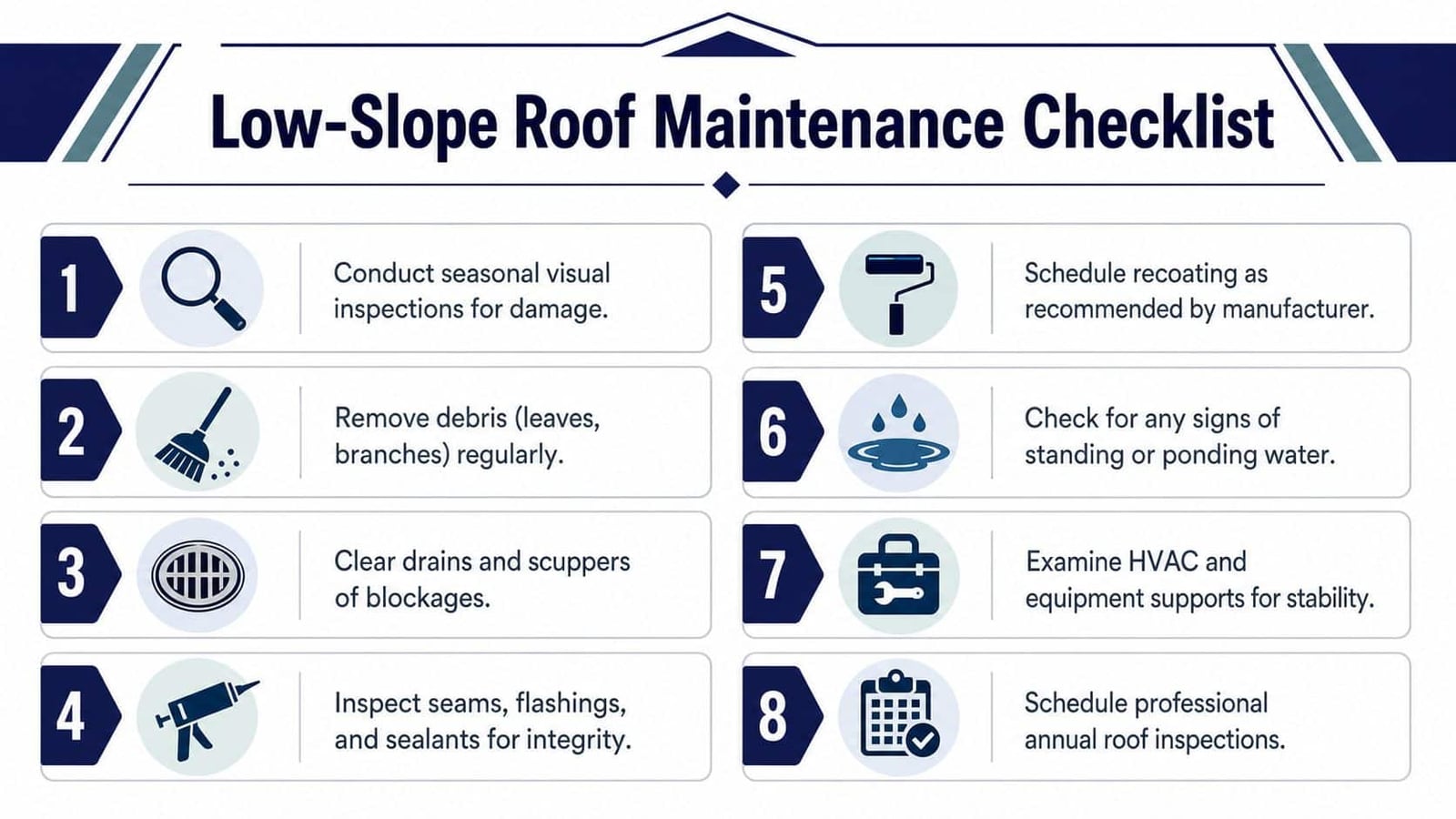
Arizona makes maintenance less forgiving. Extreme UV dries out exposed components and shortens the life of sealants. Summer heat pushes roof surfaces far past the air temperature, which increases movement at seams, curbs, and flashing lines. Then monsoon storms test every weak detail in a single afternoon.
What owners can check safely
A property owner or manager does not need to walk the roof to spot early trouble. Ground-level checks and safe access points are often enough to catch patterns before they become leaks.
Watch for:
- Standing water that stays too long: If water is still sitting well after a storm, the roof needs a drainage review.
- Staining on exterior walls: Overflow marks below scuppers, edges, or parapets usually point to poor drainage or blockage.
- Interior changes after rain: Ceiling stains, peeling paint, damp odors, or discolored drywall often show up before the leak source is obvious.
- Debris collecting at edges: Dust, leaves, and litter near discharge points usually mean the drainage path above is collecting the same material.
Transitions matter too, especially where a low-slope section meets a steeper edge or eave detail. If runoff control is part of the problem, this article on preventing water damage with aprons gives useful background on how edge metal helps direct water where it belongs.
What needs a roofing professional
Low-slope roofs hide problems well. A membrane can look acceptable from a distance and still have failed seams, soft insulation, or stressed flashing around rooftop equipment.
Professional inspection makes sense when you see any of the following:
- Open seams or lifted flashing
- Cracked, crazed, or worn coating surfaces
- Soft spots underfoot or visible deflection
- Leaks that keep returning in the same area
- Damage around penetrations, curbs, or equipment mounts
- Drainage problems after recent storms
I also tell owners to pay attention to traffic patterns. On Arizona buildings with regular HVAC service, the roof often wears out first near access paths, not in the middle of the field. Repeated foot traffic compresses insulation, scuffs coatings, and weakens details at units and curbs. Roofs with better support under the membrane and protected walk areas usually age more predictably.
Small defects near drains, curbs, and wall transitions usually do not stay small through an Arizona monsoon season.
A practical inspection routine
The best schedule is simple and repeatable.
- Before monsoon season: Clear drains and scuppers, check sealants and flashing details, and repair known weak spots.
- After major storms: Look for fresh ponding, overflow staining, displaced debris, and new interior leak signs.
- During cooler months: Plan repairs, coating work, or larger service items when crews can work in better conditions and materials are easier to handle correctly.
- Once a year: Have the roof inspected professionally and keep records so you can track changes instead of guessing.
Owners who want a clearer checklist before scheduling service can use this guide for Arizona roof inspection to understand what should be reviewed and documented.
Good maintenance does not guarantee the maximum lifespan on every roof. It does give you a better chance of getting the years you paid for, especially in a climate that punishes neglected details fast.
Choosing Your Solution and a Trusted Contractor
The right low-slope roof usually comes down to building use, drainage design, expected traffic, maintenance tolerance, and how visible the roof is from the ground. A simple detached structure may call for a different solution than a retail center, office building, multifamily property, or a home with a low-slope front elevation that needs to look finished from the street.
Match the system to the risk
For some owners, energy performance and heat reflectivity are the priority. For others, the deciding factor is durability around rooftop equipment, long-term serviceability, or appearance on a visible residential section.
Residential owners should also ask better warranty questions. Material warranties and workmanship warranties aren't the same thing. One covers the product under defined terms. The other covers installation quality from the contractor. Both matter, and neither should be assumed.
Some residential owners looking at membrane systems may also find a niche option worth discussing. As noted in this discussion of residential low-slope options, while EPDM and TPO dominate commercial conversations, some PVC systems are among the only single-ply options offering genuine 20-year residential warranties with color options, which can matter when homeowners want durability without sacrificing appearance.
What to ask before signing
A reliable contractor should be able to explain:
- Why this system fits the building
- How drainage issues will be corrected
- What substrate repairs are included
- How penetrations, parapets, and edge details will be handled
- What maintenance the roof will need
- What the warranty covers
If those answers stay vague, the proposal probably is too.
America Roofing serves homeowners, property managers, and commercial building owners in Phoenix and Tucson with practical roof repair, reroofing, flat roof, foam roofing, coating, and replacement work. For a site-specific recommendation, call 602-237-2478 or request a roofing estimate.