
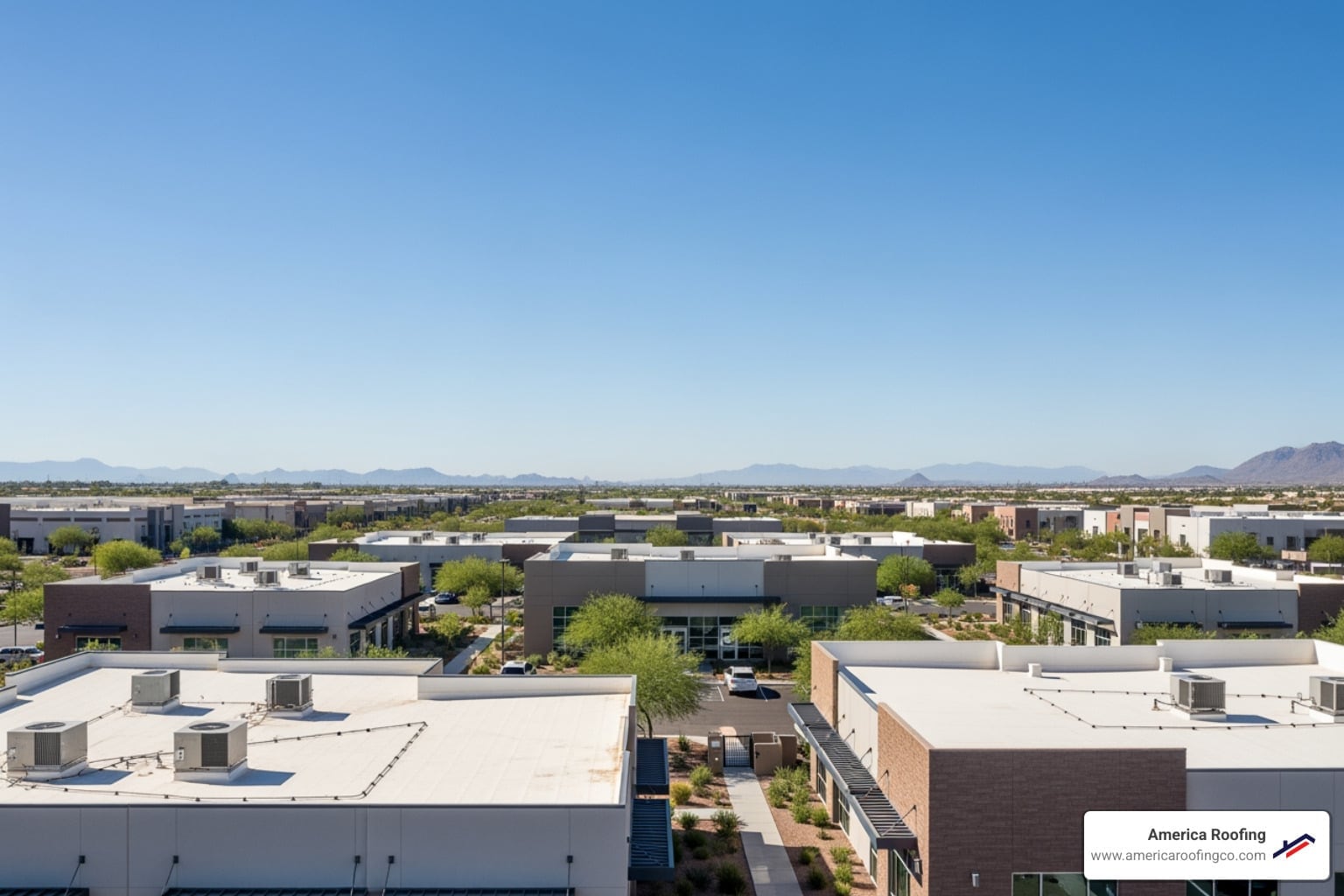
Finding the right roofing solution for your home in the Valley can be a challenge, but understanding the benefits of flat roofs in Arizona is a great place to start. Whether you are building a new modern home or maintaining an existing structure, these systems offer unique advantages for our desert climate.
Introduction
Flat roofs in Arizona are one of the most common roofing choices you'll see across the Valley — and for good reason. The dry desert climate, the Southwest architectural style, and the practical benefits all point in the same direction. But before you commit, it's worth knowing exactly what you're getting into.
Quick answer: Are flat roofs a good choice in Arizona?
| Factor | Flat Roof in Arizona |
|---|---|
| Climate fit | Excellent — low annual rainfall (7.22 in.) reduces ponding risk |
| Heat resistance | Good with reflective coatings (up to 25% cooling cost savings) |
| Lifespan | 15–30+ years depending on material and maintenance |
| Best materials | TPO, SPF foam, Modified Bitumen, EPDM, BUR |
| Biggest risks | UV damage, monsoon ponding, thermal expansion |
| Cost vs. pitched roof | Generally lower to install and maintain |
| Bonus uses | Solar panels, rooftop patios, HVAC access |
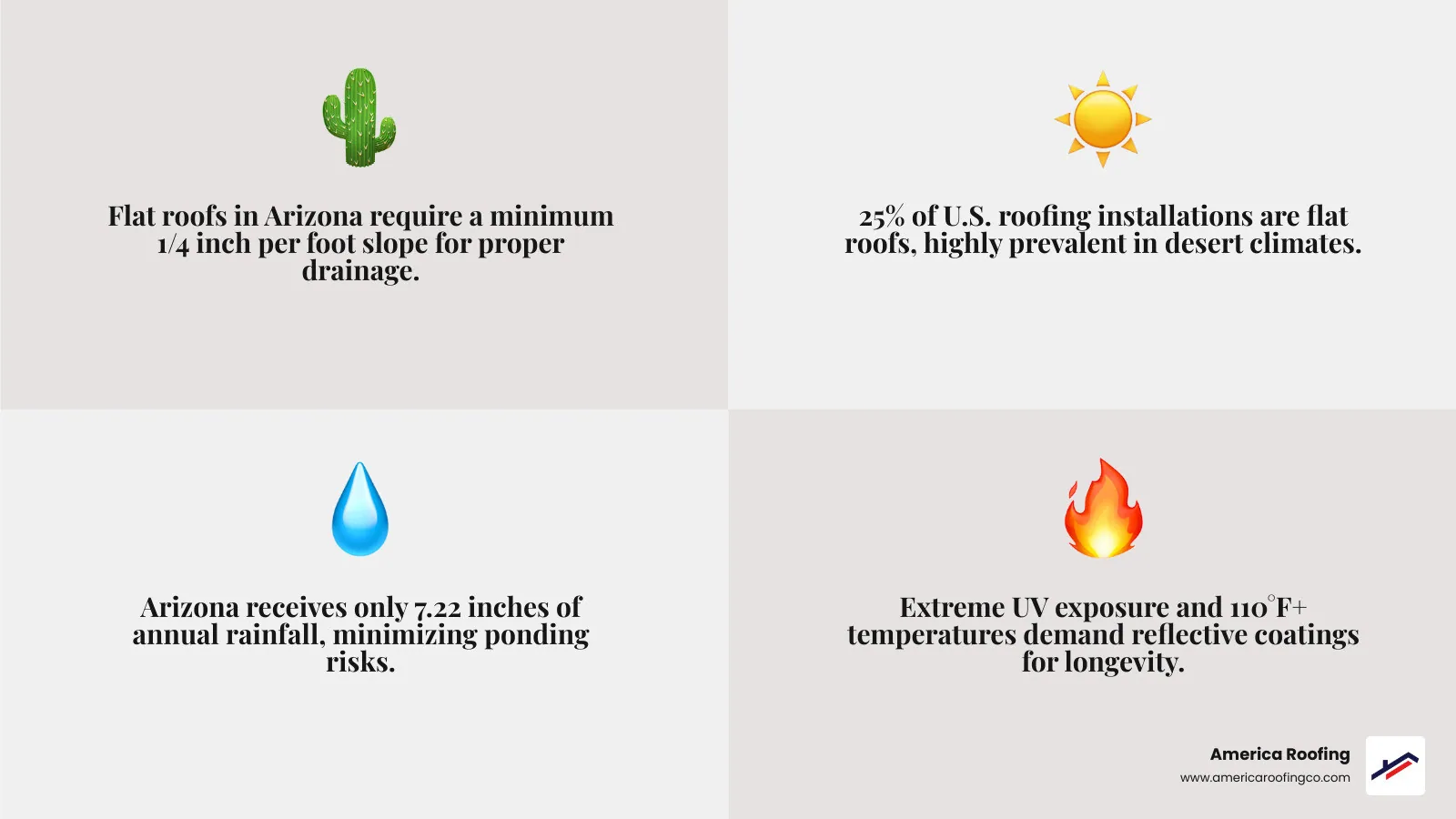
Here's the thing — flat roofs aren't completely flat. They carry a slight slope (about 1/4 inch per foot) to push water toward drains. That small detail matters a lot in Arizona, especially when monsoon season rolls in and dumps inches of rain in a matter of hours.
Flat roofs account for roughly 25% of all roofing installations in the U.S., and in Arizona's desert communities, they're even more prevalent. The clean lines fit perfectly with Southwest-inspired architecture, and the practical advantages — easier maintenance, usable rooftop space, and energy efficiency potential — make them hard to ignore.
But they do come with real challenges. UV exposure, thermal shock from dramatic day-to-night temperature swings, and the occasional haboob all take a toll. The right material and proper installation make all the difference between a roof that lasts 30 years and one that fails in five.
When you look across the skyline of Phoenix or Scottsdale, you’ll notice a distinct trend: horizontal silhouettes. This isn't just an aesthetic choice; it’s a functional response to our environment. In the roofing world, we often refer to these as "low-slope" systems. While a traditional pitched roof might have a steep angle to shed heavy snow, Arizona’s primary "precipitate" is intense sunlight.
What Defines a Flat Roof in the Desert?
Technically, no roof should be perfectly level. To meet building codes and ensure structural integrity, a flat roof must have a minimum slope of 1/4 inch per foot. This subtle incline is vital for urban drainage, guiding rainwater toward scuppers or internal drains.
In the Grand Canyon State, these roofs are often paired with parapet walls—short walls along the edge of the roof that hide HVAC equipment and contribute to the desert-style homes clean lines, modern appearance, and suitability for desert-style homes. This design creates a "box-like" look that is synonymous with Southwestern architecture. Understanding What You Need to Know About Flat Roofing starts with recognizing that while it looks horizontal, it is a highly engineered system designed to manage water runoff in a climate where rain is rare but intense.
Why flat roofs in Arizona are Perfect for Modern Homes
Honestly, the contemporary aesthetic of a flat roof is hard to beat. It offers a minimalist design that complements the natural desert landscape. But the beauty is more than skin deep. There are several 5 Advantages of Flat Roofs that make them a smart choice for Maricopa County homeowners:
- Cost-Effectiveness: They generally require fewer materials and less labor time than complex pitched tile roofs.
- HVAC Accessibility: In Arizona, we live and die by our AC. Flat roofs provide a stable, easy-to-access platform for heavy cooling units.
- Usable Space: Ever dreamed of a rooftop patio for stargazing? Flat roofs can be engineered to support foot traffic, gardens, or even outdoor kitchens.
- Energy Efficiency: With the right coatings, these roofs reflect a massive amount of solar radiation, keeping your home cooler.
The Pros and Cons of flat roofs in Arizona
Choosing a roof is all about balancing benefits against environmental realities. In Phoenix, our annual rainfall averages only about 7.22 inches. You might think that makes drainage a non-issue, but when that rain falls all at once during a summer storm, a flat roof's design is put to the ultimate test.
| Feature | Flat Roof | Pitched Roof |
|---|---|---|
| Installation Cost | Lower | Higher |
| Maintenance | Easier access, frequent checks | Harder access, less frequent |
| Drainage | Relies on scuppers/drains | Natural gravity runoff |
| Space Usage | Can be used as a patio/deck | Attic space only |
| Lifespan in AZ | 15–30 years (with coating) | 25–50 years |
One of the biggest Flat Roofing Solutions Pros Cons and Maintenance Tips involves managing ponding water. If water sits on a roof for more than 48 hours, it can accelerate material degradation and lead to structural load issues. Additionally, debris accumulation from our frequent dust storms can clog drains, making regular walkability and inspections a necessity.
Common Challenges: UV Damage and Monsoon Season
Arizona’s sun is relentless. With temperatures regularly soaring above 110°F, roofs experience "thermal shock"—expanding rapidly during the day and contracting at night. This can lead to membrane cracking over time.
Then there’s the monsoon season. These storms bring haboobs (massive dust storms) and microbursts. Dust and debris can quickly clog drainage systems, leading to the dreaded ponding water. Our Flat Roof Repair Arizona Guide emphasizes that most leaks occur because of neglected maintenance rather than material failure. Even in the cooler months, you need to be proactive; there are specific 3 Ways to Prepare Your Flat Roof for the Winter Season to ensure your home stays dry during winter rains.
Top Material Choices for flat roofs in Arizona
Let me explain why not all materials are created equal when it comes to the Arizona heat. Here are the heavy hitters we use at America Roofing:
- TPO (Thermoplastic Polyolefin): A single-ply white membrane that is fantastic for heat reflection. It uses seam welding to create a monolithic, waterproof barrier. It’s a top choice for those looking for a 20-30 year lifespan.
- SPF (Spray Polyurethane Foam): This is the gold standard for many desert homes. It provides a seamless layer of insulation. Check out our Foam Roofs Arizona Complete Guide to see why its R-6.5 insulation value is a meaningful advantage.
- Modified Bitumen: A modern take on the old "tar and gravel" roof. It's durable, budget-friendly, and often finished with a reflective coating.
- EPDM Rubber: While durable, its black color can absorb a lot of heat unless coated with a white top layer.
- PVC: Similar to TPO but even more resistant to chemicals and ponding water—ideal for Commercial Flat Roof Installation.
Choosing the Best Materials and Maintenance for Your Arizona Flat Roof
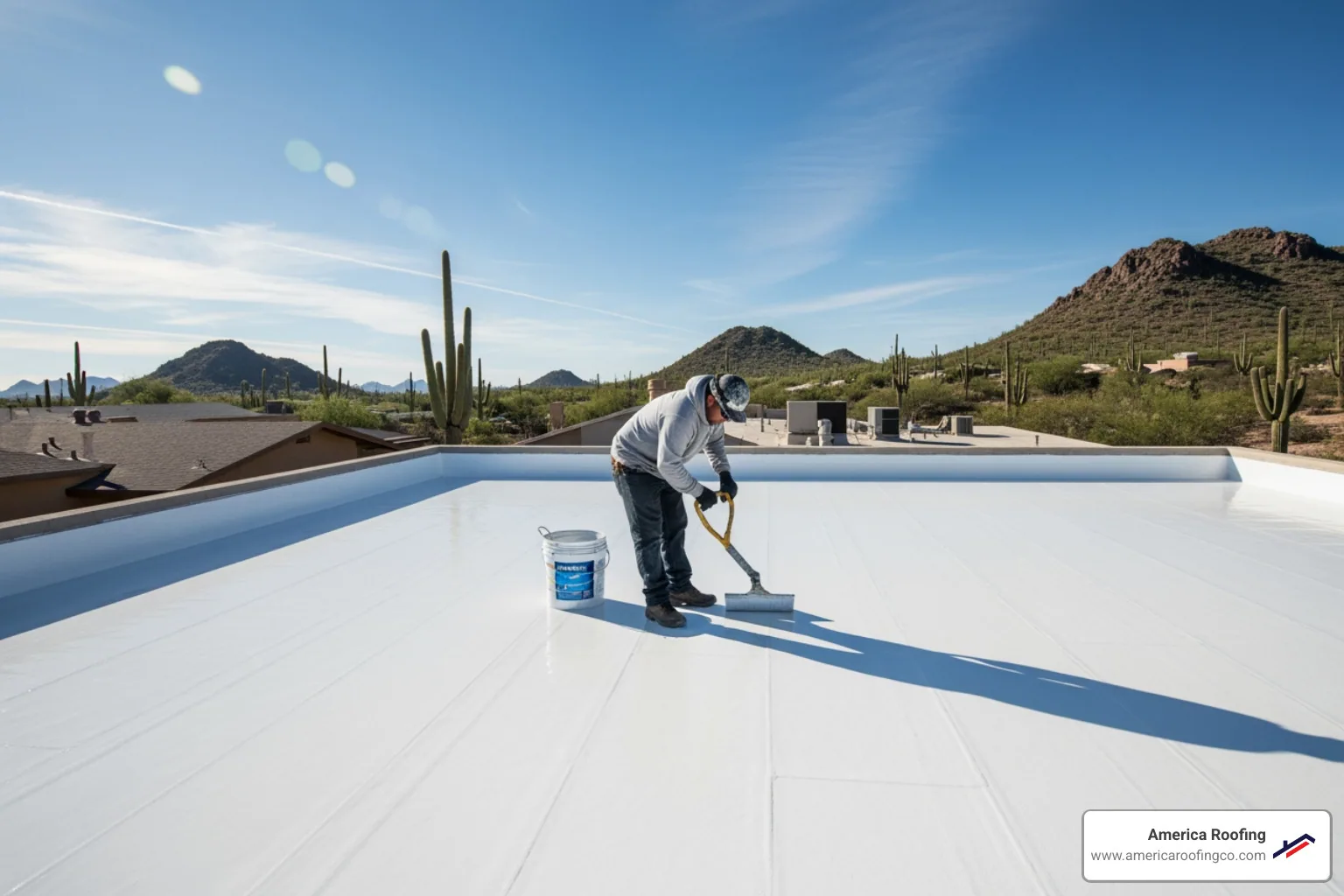
At America Roofing, we’ve seen it all since 1999. As a veteran-owned, third-generation family business, we understand that a roof in Peoria or Gilbert needs to be engineered differently than one in Seattle. We specialize in systems that provide up to a 25% cooling cost reduction through high-performance reflective coatings.
Whether you are looking for a Residential Flat Roof Arizona solution or a large-scale commercial project, our team applies Maricopa County standards to every job. We offer 2025 pricing transparency, meaning no hidden fees and no-pressure advice.
Maximizing Energy Efficiency and Rooftop Space
Let’s talk numbers. Each inch of SPF foam provides approximately an R-6.5 insulation value. When combined with reflective coatings, you can see an indoor temperature reduction of up to 15 degrees during the peak of summer. This is why Commercial Flat Roof Arizona systems are almost always white or light gray—they have a high Solar Reflectance Index (SRI).
For homeowners, this efficiency opens up possibilities. A well-insulated Residential Foam Roof Arizona can serve as a perfect platform for solar panels. Because the roof is flat, panels can be angled perfectly to catch the sun without the constraints of a pitched roofline.
When to Repair vs. Replace Your Flat Roof
Most flat roofs in Arizona have a lifespan of 15 to 20 years, though SPF systems can last 30+ years if recoated every decade. But how do you know when it’s time to call us?
- Recurring Leaks: If you’re fixing the same spot every monsoon, the underlying underlayment is likely compromised.
- Widespread Deterioration: Cracking, "alligatoring" (where the surface looks like lizard skin), or large areas of peeling coating.
- Ponding Water: If depressions have formed that hold water for days, the structural deck might be sagging.
- Energy Bill Spikes: If your AC is running non-stop and your roof feels like a heater, the insulation may have failed.
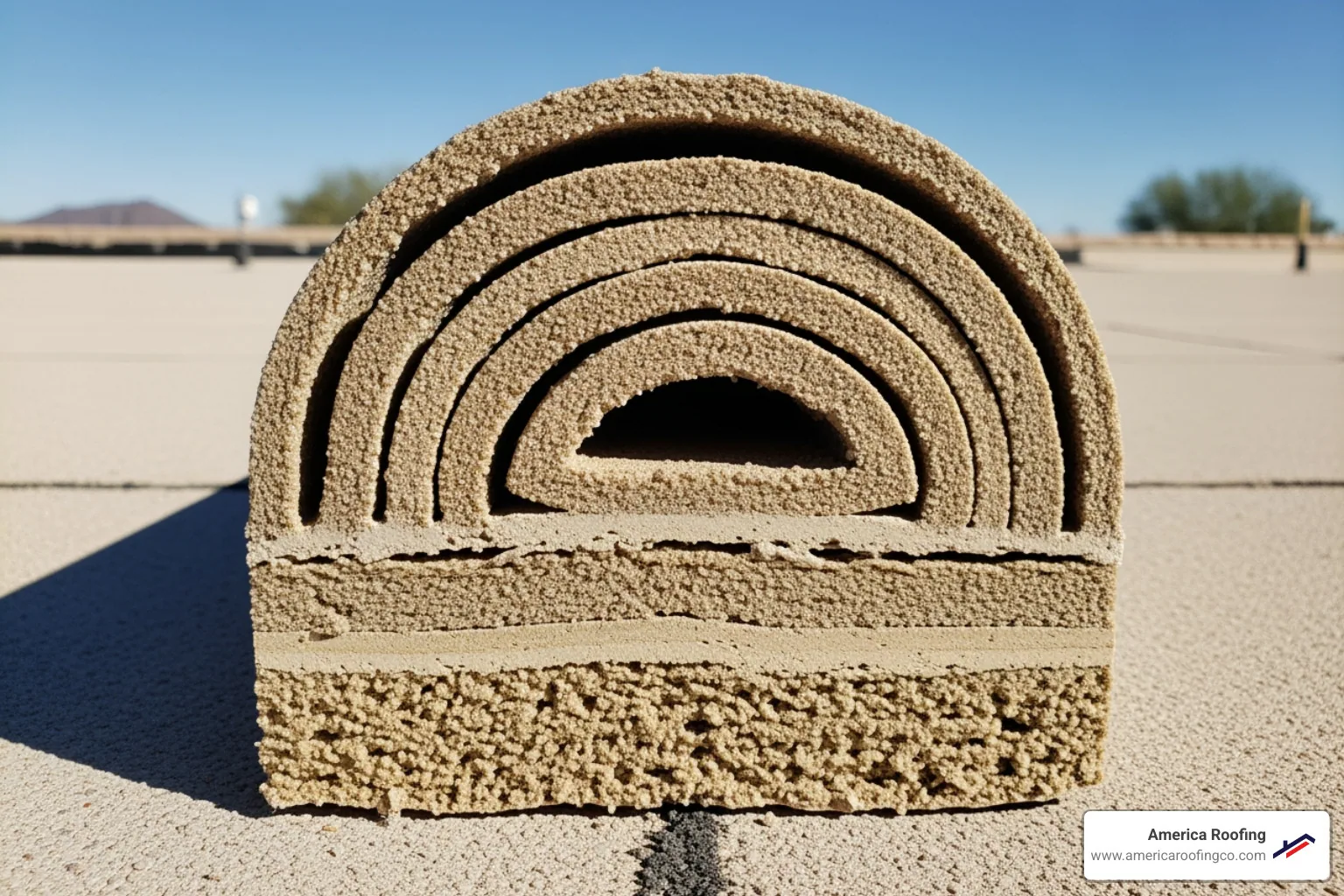
Our Flat Roof Replacement Cost Guide can help you budget, but a professional inspection is the only way to be sure. We use advanced techniques like core sampling—where we take a small vertical slice of the roof—to check for moisture in the insulation.
Honestly, keeping your home protected in the Valley of the Sun doesn't have to be a headache if you have the right team on your side. Whether you need a simple repair or a full system upgrade, our experts are ready to help you navigate the complexities of desert roofing. For honest advice and a roof that stands up to the heat, call us at 602-237-2478 or Request a Free Quote today.