A Foam Roof Is a Complete Low-Slope System
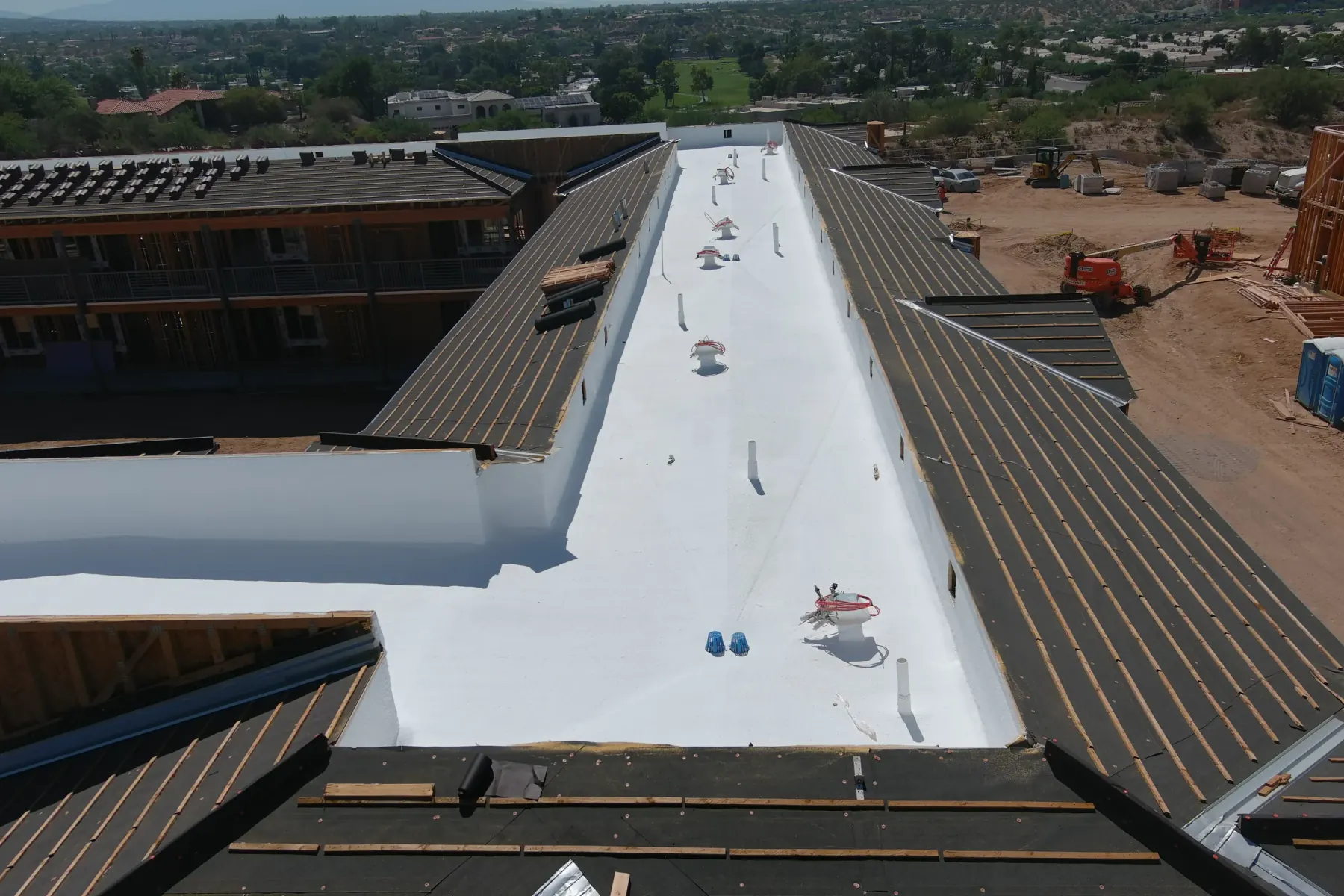
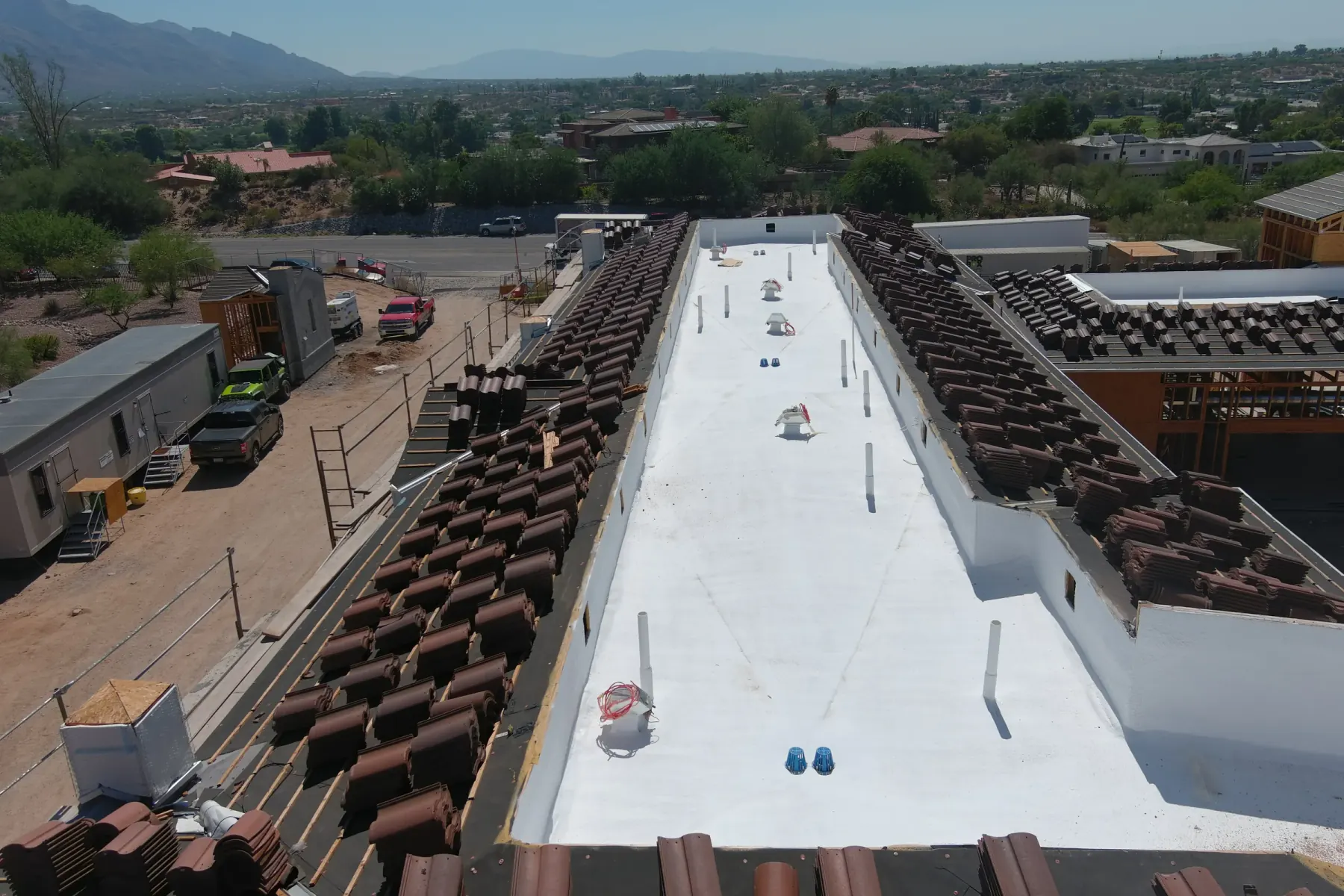
Spray polyurethane foam creates a continuous insulated surface over a qualified low-slope roof. The foam provides shape and insulation, while the protective coating shields it from Arizona ultraviolet exposure and weather. Flashings, scuppers, drains, parapet transitions, penetrations and rooftop equipment details complete the water-management system.
That layered construction is why a foam roof should not be judged only by the color of the coating. A chalky or weathered surface can need maintenance while the foam beneath remains serviceable. A roof that looks smooth can still have trapped moisture, poor drainage or failed attachment below. The inspection needs to separate surface maintenance from an assembly problem.
When a Focused Foam Roof Repair Makes Sense
A targeted repair can be the right answer when damage is confined to a puncture, small split, isolated penetration, edge detail or previous repair area. The surrounding foam should be dry, stable and well bonded. Repair materials must be compatible with the existing system, and wet or deteriorated material should not simply be sealed underneath a new surface.
Service traffic is a common source of localized damage. HVAC work, dropped tools and repeated foot traffic can crush or puncture the surface. Birds and wind-driven debris may also expose weak areas. A good repair rebuilds the damaged profile, restores the protective coating and explains whether a walkway or service-path change would help prevent a repeat.
Recoating Is Maintenance, Not a Cure-All
Recoating can extend the useful life of a sound foam system by restoring ultraviolet and weather protection. Before that work begins, the roof should be cleaned, inspected and repaired. Adhesion, coating thickness, exposed foam, cracks, blisters, drainage and transitions all matter. Adding coating over dirt, moisture or an unstable layer can hide the defect without solving it.
The interval between coatings is not one universal number. Product, exposure, original application, maintenance history, rooftop traffic and drainage all influence the schedule. The responsible recommendation comes from current condition and compatible manufacturer requirements—not a calendar alone.
Drainage Decides Whether the Repair Holds
Low-slope does not mean no slope. Water still needs a deliberate path to drains, scuppers or edges. Persistent ponding can stress coatings, expose low areas and reveal poor transitions around equipment or parapets. If the same area repeatedly holds water, another surface patch may buy little time unless the drainage problem is corrected.
Foam can sometimes be shaped to improve localized drainage, but that work has to tie correctly into the surrounding system. Large drainage or substrate problems may require a broader scope. The estimate should state whether it is correcting the cause, protecting a vulnerable area or only extending time before a larger project.
Repair, Restore or Replace
Repair is strongest when the defect is isolated. Restoration is strongest when the foam remains dependable and the coating needs broad renewal after repairs. Replacement becomes more likely when moisture is widespread, attachment has failed, the substrate is unstable, drainage defects are extensive or incompatible layers prevent another responsible restoration.
America Roofing works across Phoenix, Tucson and Arizona on foam and low-slope roofing decisions. The goal is not to force every roof into the same system. It is to identify what is still worth protecting, what has failed and which scope provides the clearest value for the property.