
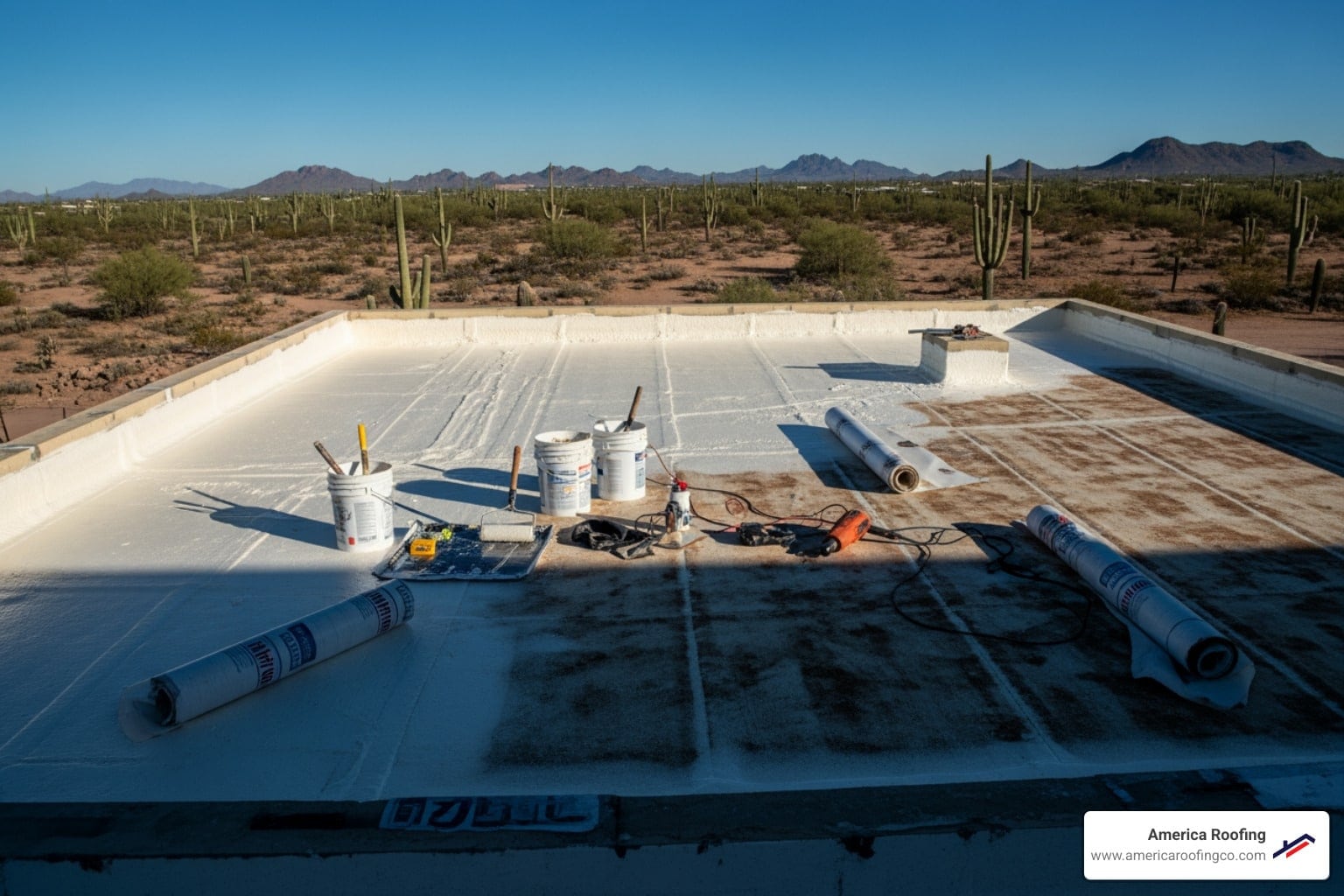
Living in the Grand Canyon State means enjoying plenty of sunshine, but that same intense climate can be tough on your home. For homeowners with flat roofs, understanding the specifics of flat foam roof repair in arizona isn't just helpful—it's essential for protecting your investment. This guide breaks down everything you need to know to keep your foam roof performing at its best.
Understanding Flat Foam Roof Repair Options in Arizona
Arizona's climate is uniquely harsh. Our foam roofs face relentless UV radiation, summer temperatures over 115°F, and sudden monsoon downpours. That's why spray polyurethane foam (SPF) roofing is so popular—its R-6.5 insulation per inch keeps homes cooler and energy bills lower. However, this efficiency depends on proper maintenance.
Common Repair Needs:
- Blisters and bubbles from trapped moisture
- Cracks from UV exposure and temperature swings
- Ponding water due to poor drainage
- Coating deterioration over time
- Leaks around vents, skylights, and HVAC units
Why Foam Roofs Need Special Care in Arizona
The unique challenges of maintaining a foam roof in Arizona are driven by three main factors:
- Intense UV Radiation: The sun's ultraviolet rays degrade the protective elastomeric coating, causing it to chalk, crack, and expose the underlying foam.
- Extreme Temperature Swings: Constant expansion and contraction from daily temperature changes stress the roof membrane, leading to cracks, especially around seams and penetrations.
- Monsoon Season: Torrential downpours can lead to ponding water on flat surfaces if drainage is not perfect. Water sitting for more than 48 hours is a clear sign of a problem and a precursor to leaks.
Despite these challenges, Spray Polyurethane Foam (SPF) roofing is incredibly effective here. It offers an impressive R-6.5 insulation rating per inch, which significantly cuts cooling costs. With proper maintenance and recoating, an SPF roof can last for decades, making it a durable, long-term investment. To learn more about the advantages, check out our Foam Roofs Arizona Complete Guide.
A Homeowner's Guide to Flat Foam Roof Repair in Arizona
Honestly, knowing what to look for is half the battle. Let me explain the most common issues and how to handle them.
Spotting Trouble: Common Signs Your Foam Roof Needs Help
Identifying problems early is crucial. Here are the red flags you should never ignore:
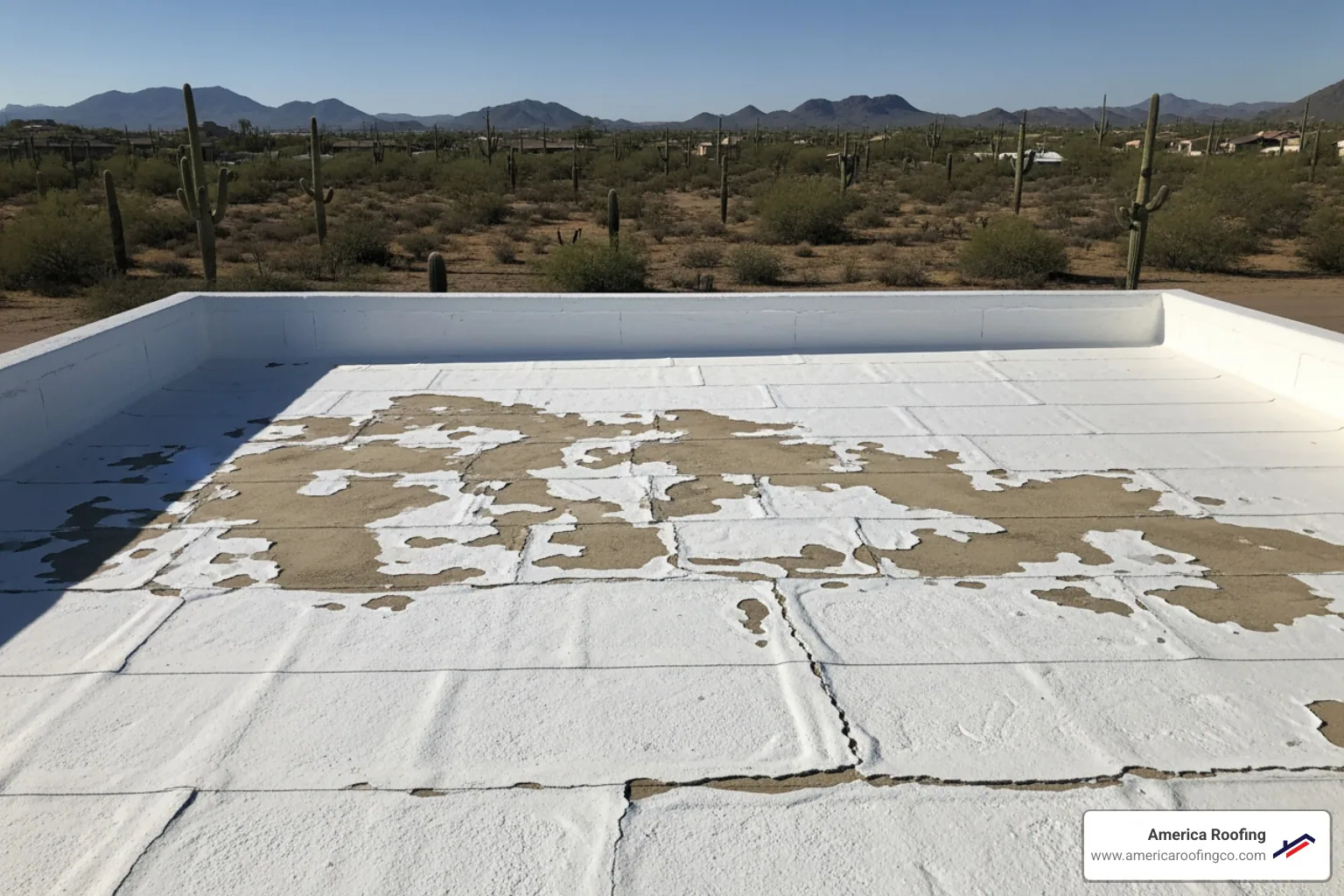
- Blistering: Bubbles on the roof's surface, often from trapped moisture. Large blisters need professional attention.
- Cracking: Fissures in the coating or foam from UV damage and temperature changes. They allow water intrusion.
- Peeling Coating: The protective layer separates from the foam, leaving it vulnerable.
- Ponding Water: Water standing for more than 48 hours after rain. It accelerates wear and can cause leaks.
- Soft Spots: A spongy feel when walking on the roof indicates water saturation underneath, a serious issue requiring immediate attention.
- Interior Water Stains: The most obvious sign of a leak, often indicating a long-standing problem.
Ignoring these issues can lead to severe water damage, mold, and costly structural repairs. It's essential to perform routine repairs as soon as damage appears.
DIY vs. Professional Repair: Making the Right Call
While small patch kits can handle minor cracks, professional repair is essential for larger issues. Here's why:
- Expertise: We understand how different materials react to Arizona's climate and use the right products for a lasting fix.
- Advanced Tools: We use tools like infrared scanners to find hidden moisture that the naked eye can't see.
- Comprehensive Solutions: We identify the root cause of the problem, inspecting flashing, drains, and penetrations, not just patching the symptom.
- Warranty Protection: DIY repairs can void your roof's warranty. Our professional work preserves it and often includes our own workmanship guarantee.
If your roof feels spongy, leaks are near vents or walls, or the damage is larger than a golf ball, it's time to call a professional. Don't risk your safety or your roof's integrity. For more advice, see our Flat Roof Repair Arizona Guide.
The Power of Protection: Coatings, Drainage, and Penetrations
Your roof's integrity depends on three critical elements:
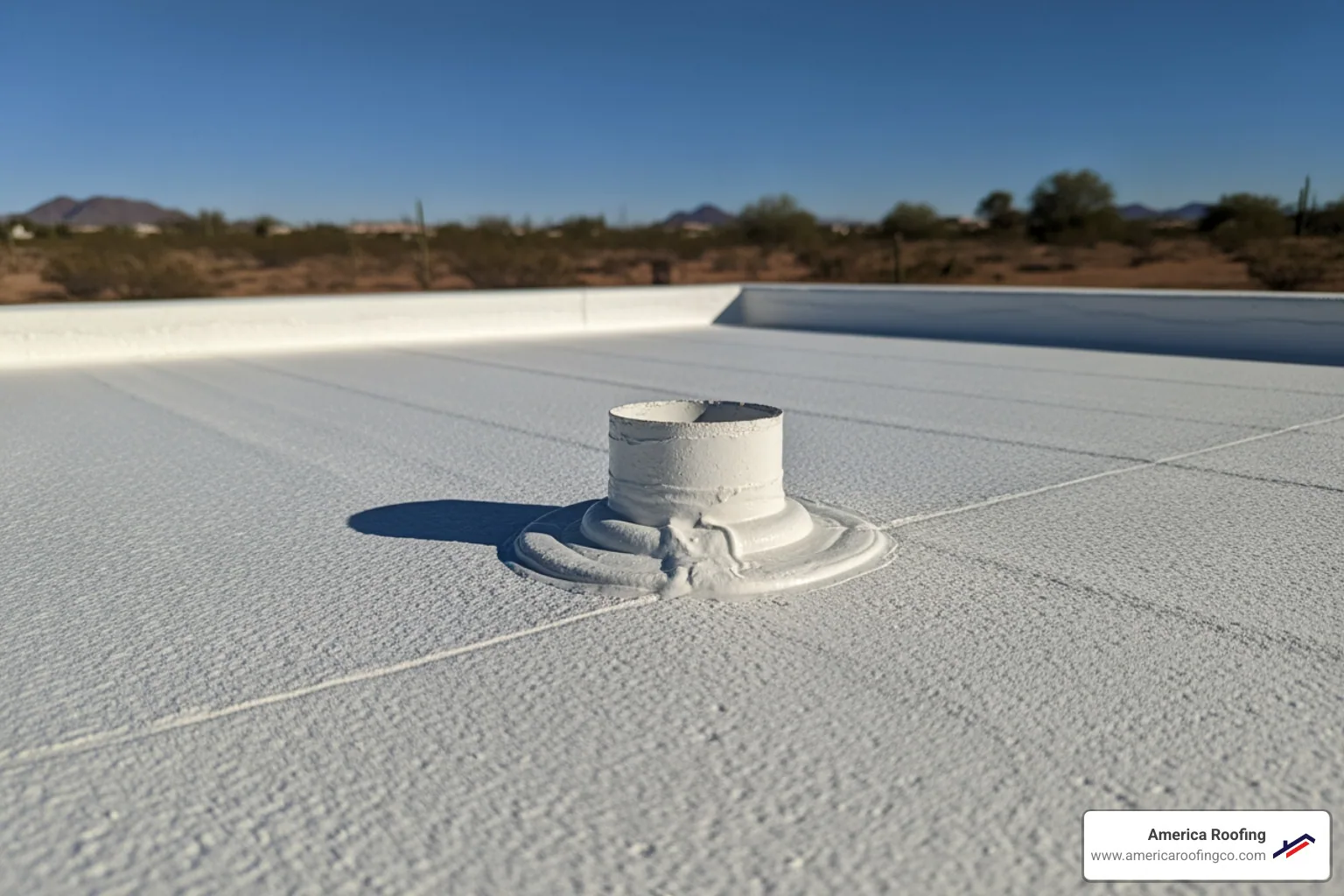
- Coatings: High-performance coatings act as your roof's sunscreen. Silicone coatings offer superior UV and ponding water resistance, while elastomeric (acrylic) coatings are a flexible, budget-friendly option. A reflective white coating creates a "cool roof," reducing surface temperatures and lowering energy bills. Recoating every 5-10 years is key to extending your roof's life.
- Drainage: Flat roofs must have a slight slope (at least 1/4" per foot) to prevent ponding water. Keeping drains and scuppers clear of debris is essential, especially during monsoon season.
- Penetrations: Vents, skylights, and HVAC units are the most common leak points. They require meticulous sealing and flashing to direct water away. These seals can dry out and crack over time, so they need regular inspection.
Long-Term Strategy: Maintenance, Recoating, and Replacement
Thinking long-term saves you money and headaches. A little proactive care goes a long, long way in Arizona.
Your Proactive Maintenance Plan
Our climate dictates a seasonal approach to maintenance. We recommend a simple, proactive plan:
- Twice-Yearly Inspections: Before and after monsoon season, do a thorough check. Clean off debris, especially from drains and scuppers. Look for cracks, blisters, or peeling in the coating, paying close attention to seals around vents and skylights.
- Post-Storm Checks: After a major storm, look for any new damage or areas of ponding water.
- Keep Records: Document inspections, repairs, and recoating dates with photos and receipts. This is invaluable for warranty claims and adds value to your home.
Recoating the roof every 5 to 10 years is the single most important maintenance task. It renews the UV-protective layer, preventing the foam from degrading and dramatically extending the roof's lifespan. For more on the benefits, see our guide on the 5 Benefits of Foam Roofing.
Repair or Replace? A Cost-Effective Decision Guide
One of the toughest decisions is whether to repair or replace. Here’s a simple guide:
| Factor | Repair is Best When... | Replace is Best When... |
|---|---|---|
| Extent of Damage | Damage is localized (under 25% of the roof) and superficial. | Damage is widespread (over 30%), or the foam/decking is saturated. |
| Age & History | The roof is under 15 years old with a good maintenance history. | The roof is over 20 years old and requires frequent, recurring repairs. |
| Cost | Repairs are infrequent and affordable. | The cost of accumulated repairs approaches 50% of a new roof's cost. |
While other flat roofing materials last 15-30 years, a well-maintained SPF foam roof can last over 50 years. If your roof is relatively young and damage is contained, repair is the way to go. But for older, extensively damaged roofs, a replacement offers better long-term value and the peace of mind of a new warranty. We can provide an honest assessment to help you decide. For expert advice, reach out to our Foam Roofing Contractors Arizona.
The Lasting Benefits of Professional Care
Investing in professional flat foam roof repair in arizona offers significant long-term advantages. As a third-generation, family-owned Arizona company, we understand our climate's unique challenges. We use the right materials and advanced tools to find the root cause of leaks, ensuring a durable repair that complies with all building codes.
We stand by our work with workmanship warranties, giving you peace of mind. Choosing professional care from a trusted local expert extends your roof's lifespan, preserves its energy efficiency, and protects your home. We hope this guide has empowered you to make informed decisions for your home.
If you have any questions or want to schedule a no-pressure inspection, don't hesitate to reach out. You can call us directly at 602-237-2478 or Request a Free Quote today.