
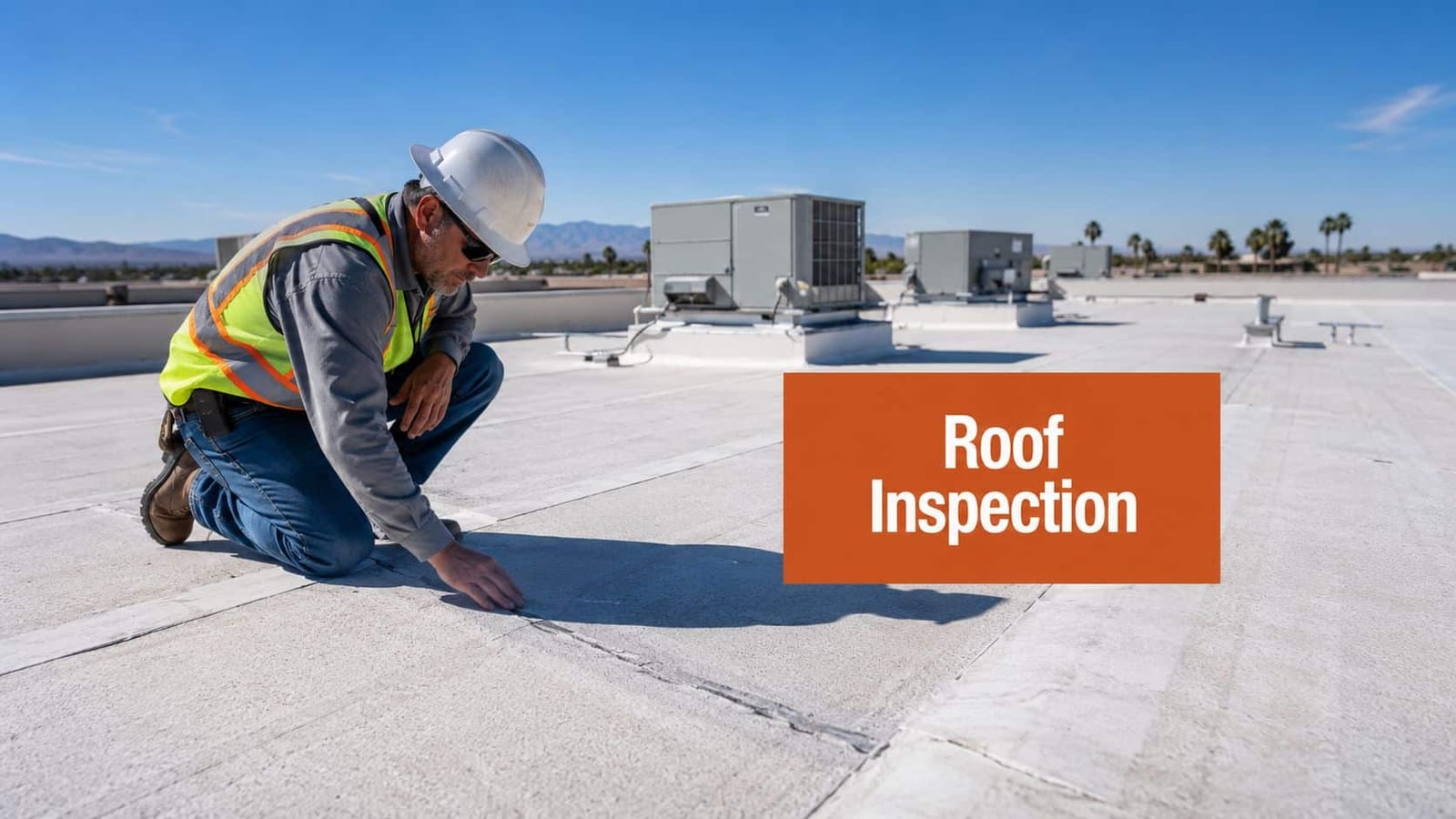
A ceiling stain after a monsoon puts a Phoenix property manager in a familiar spot. The leak may be in the roof, but the stain alone does not tell anyone where the failure started, how long it has been there, or whether the problem is at a flashing, drain, seam, or hidden wet insulation.
A real commercial roof inspection is built to answer those questions in order, with records, access, exterior checks, moisture testing when needed, and a documented report that stands up later if the roof becomes part of a repair dispute or insurance file.
What a Commercial Roof Inspection Actually Covers
A good inspection starts before anyone steps onto the roof. The first job is to identify the roof type, pull prior repair notes, and check warranty history, because a building with layered patchwork from earlier owners can hide its weak points in plain sight. That matters in Phoenix and Tucson, where UV exposure, heat cycling, dust, and sudden monsoon rain all push small defects into bigger ones faster than many owners expect.
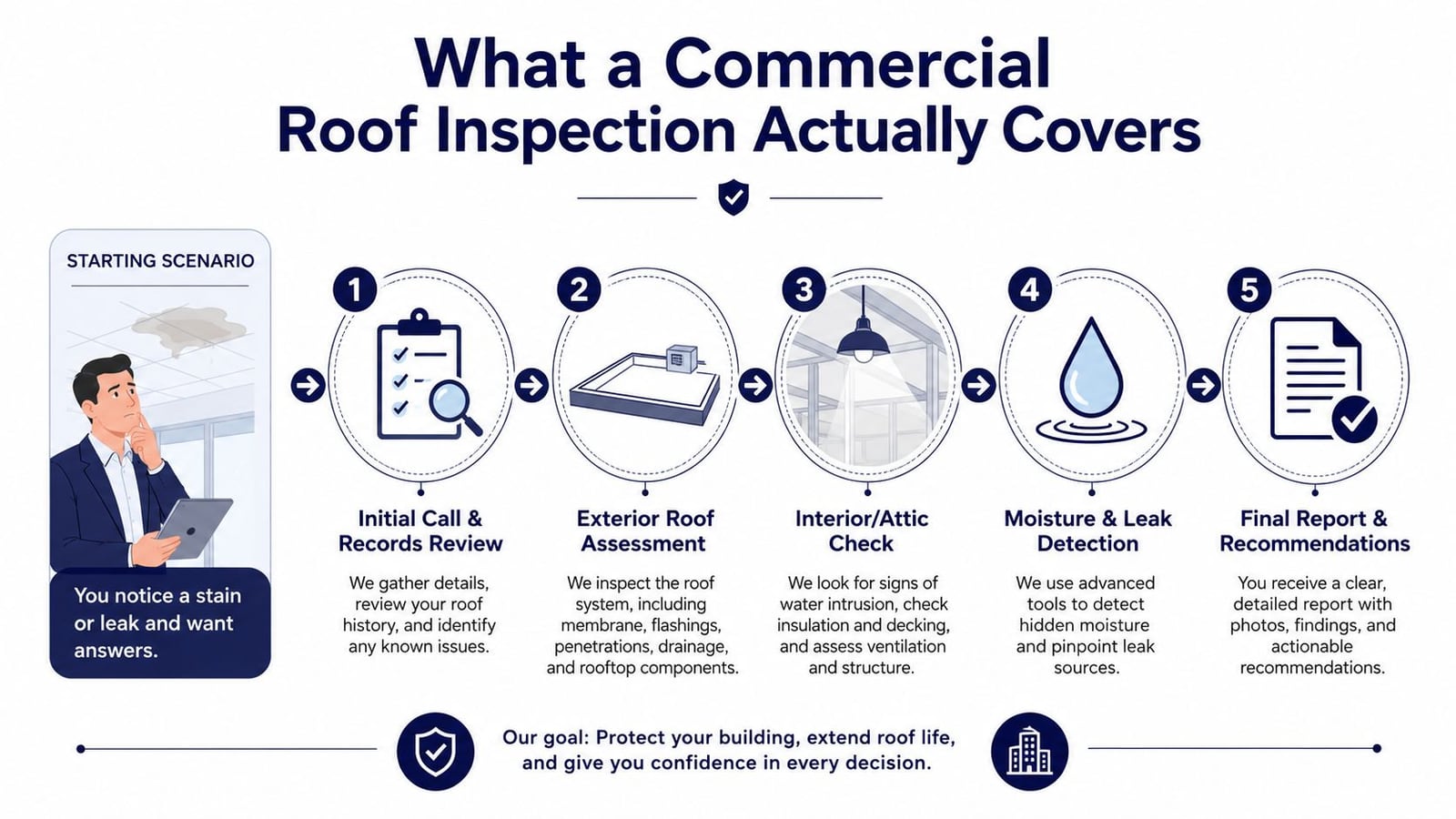
A staged inspection is more useful than a fast walk because it follows the roof from the outside in. That means a ground-level perimeter look for staining or structural movement, then a full surface review of the membrane, seams, flashings, drains, and penetrations, followed by interior verification if the findings point to hidden damage. The methodology is designed to catch trapped moisture and failure points that a visual inspection alone can miss, especially on flat and low-slope systems. See the broader service scope for commercial roofing in Arizona.
Practical rule: A roof can look serviceable from one corner and still fail at a drain, curb, or edge detail that only shows up when the whole system is checked in sequence.
A commercial inspection is not just a “roof looks okay” walk-through. It should end with a photo-documented report that labels findings by severity, because the value of the inspection is not the walk itself, it's the decision support that comes after it. For Arizona buildings, that documentation is especially useful when a leak appears weeks after a storm, because the inspection record helps separate a pre-existing defect from new storm-related damage.
Inspection Methods Compared From Walk to Drone to Moisture Scan
A roof inspection tool should match the roof, not the other way around. For a walkable flat roof, a full surface walk is still the baseline because it lets an inspector feel soft spots, check seam edges, and inspect drains and penetrations up close. On a sloped tile building or another access-restricted roof, walking every surface may not be the safest or even the right approach, so permanent access, ladders, or raised methods can be the better fit.
Walk inspections
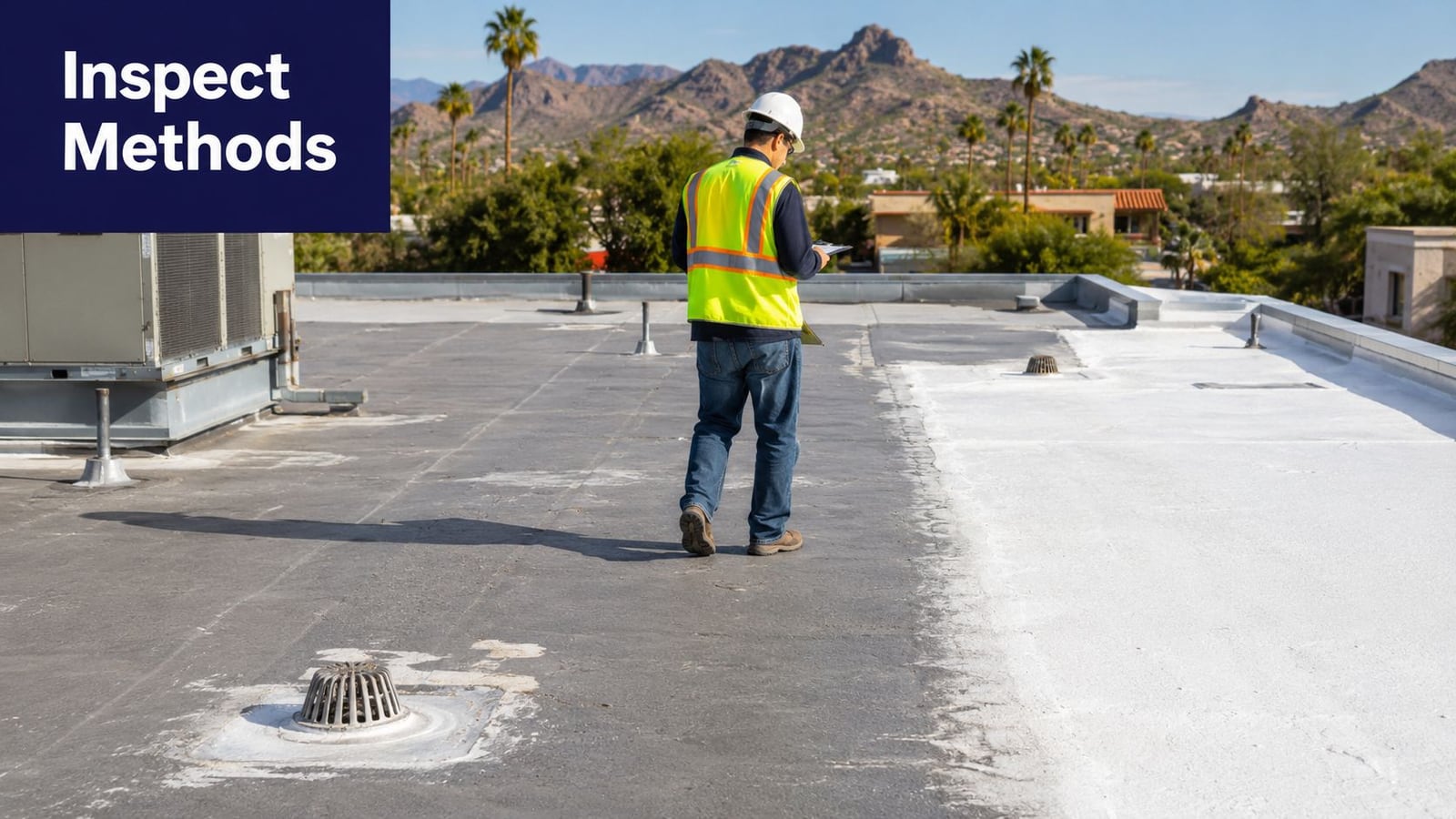
Walk inspections are still the most hands-on method. They work best on commercial flat roofs, foam roofs, and other surfaces where an inspector can safely move across the field and check flashing zones, drains, and rooftop equipment surrounds. They do less well when the roof is steep, fragile, or blocked by access limits.
Drone and ground-based inspections
Drone-based or other high-angle visual inspections help cover large footprints quickly and reduce exposure on hard-to-reach roofs. They're useful when parapets hide roof edges, when internal gutters and valleys can't be seen from the ground, or when rooftop plant and equipment block direct access. The trade-off is simple, they produce strong images, but they can't test for trapped moisture or identify a soft area under the membrane.
Moisture scans
Infrared thermography, core sampling, and nuclear moisture testing are the methods that reveal what the eye misses. They're most valuable when a roof looks decent on top but has suspicious stains, repeat leak locations, or an older assembly that may be holding water inside. A useful outside reference on inspection documentation and access planning is the guide to ReOC in Australia, which shows how regulated work often depends on clear procedures and defensible records, even in a different field.
For Phoenix and Tucson properties, the practical answer is usually a combination. Visual methods show where to look, and moisture testing confirms whether the problem is skin-deep or buried in the assembly. For commercial roof leak detection methods, that combination is what separates a temporary patch from a real diagnosis.
How a Commercial Roof Inspection Is Actually Performed
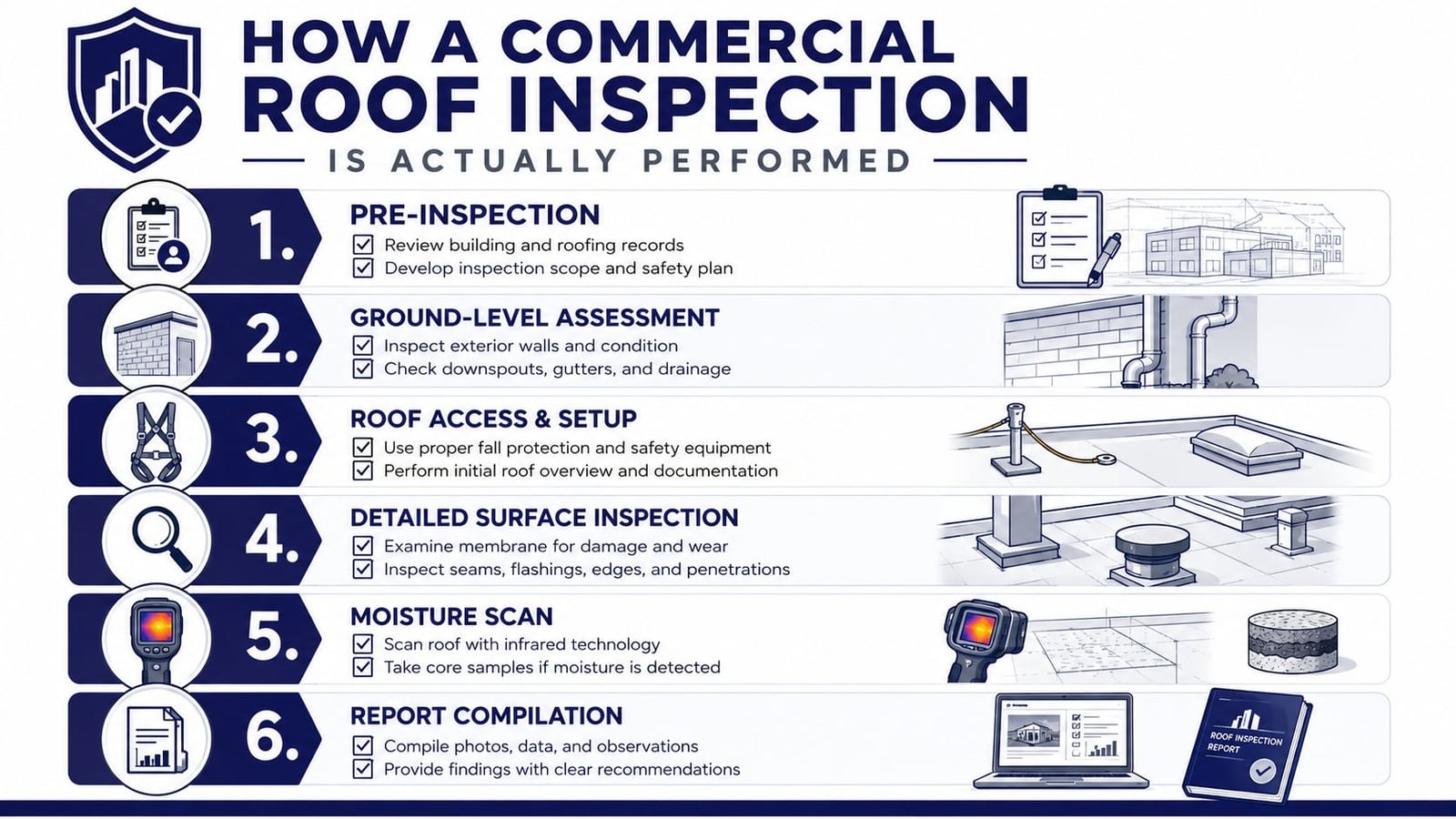
The sequence matters more than many realize. A contractor who skips records and jumps straight to the roof can miss the underlying cause of the leak, especially if the building has old repairs, warranty conditions, or recent rooftop work.
Records and perimeter review
The inspection should begin in the office or truck with the roof's age, type, warranty history, repair history, and any notes about previous leaks or contractor activity. Then comes the ground-level perimeter check, looking for staining, obvious displacement, settlement clues, and any sign that water is being pushed where it should not go.
Surface, detail, and transition checks
On the roof, the focus shifts to the places that fail first. That means seams, flashings, drains, scuppers, penetrations, curbs, and edge details, not just the open membrane field. In Arizona, sun-baked sealant, monsoon debris, and repeated service traffic around rooftop units are common causes of failure, and the problem often starts in a small detail that looks harmless from a distance.
Moisture confirmation and interior verification
If the visible findings are not enough, the inspector adds infrared thermography, core sampling, or nuclear moisture testing. That step matters because trapped moisture can sit inside the system long before it becomes an interior stain, and the visual surface can hide the damage below. The process finishes with an interior or underside check where access allows, then a report that includes photos, severity ratings, and the weather or site conditions tied to the findings.
A defensible report tells ownership what failed, where it failed, and how urgent the fix is. A vague report only tells them that someone visited the property.
Arizona buildings benefit from this order because the roof often carries a mixed history of patching, recoating, and emergency repairs. A clean workflow is what turns a one-time visit into a usable maintenance record, not just a file PDF.
Inspection Checklist by Roof Type for Arizona Buildings
Arizona commercial roofs don't fail in the same way, so the checklist has to start with the system, not a generic list. A flat roof, a foam roof, a tile roof, and a shingle roof each show different warning signs, and the inspection needs to match the failure pattern.
The highest-value checks are below, grouped by roof type and tied to what tends to break in heat, wind, and monsoon conditions. For a deeper look at commercial flat roof concerns, the same logic applies, but the details change with age, access, and rooftop equipment load.
Flat roofs
Flat roofs demand close attention at seams, drains, and the perimeter. Ponding water is a defect, not a normal condition, because it accelerates membrane degradation and can add structural load. Inspection also needs to include parapet walls, edge metal, and rooftop equipment curbs, since those are common leak points on commercial buildings.
Foam roofs
Foam systems need a different eye. The inspector should look for coating wear, blisters, cracks, and areas where UV exposure has thinned the protective surface. On Arizona roofs, the coating is often the first line of defense, so a worn surface is not cosmetic, it's a warning.
Tile roofs
Tile roofs are tricky because the visible tile is only part of the system. Broken, slipped, or displaced tiles matter, but the underlayment and flashing details often control whether water gets inside. Valley debris is another common issue, especially after wind-driven storms that push dust and plant material into drainage paths.
Shingle roofs
Shingle roofs on smaller commercial buildings or multifamily structures need a different checklist again. Granule loss, lifted tabs, wall flashing, and ventilation details matter more than a quick glance suggests. Heat and wind can age the exposed edges faster than people expect, especially on older buildings with repeated repairs.
How Often to Schedule a Commercial Roof Inspection in Arizona
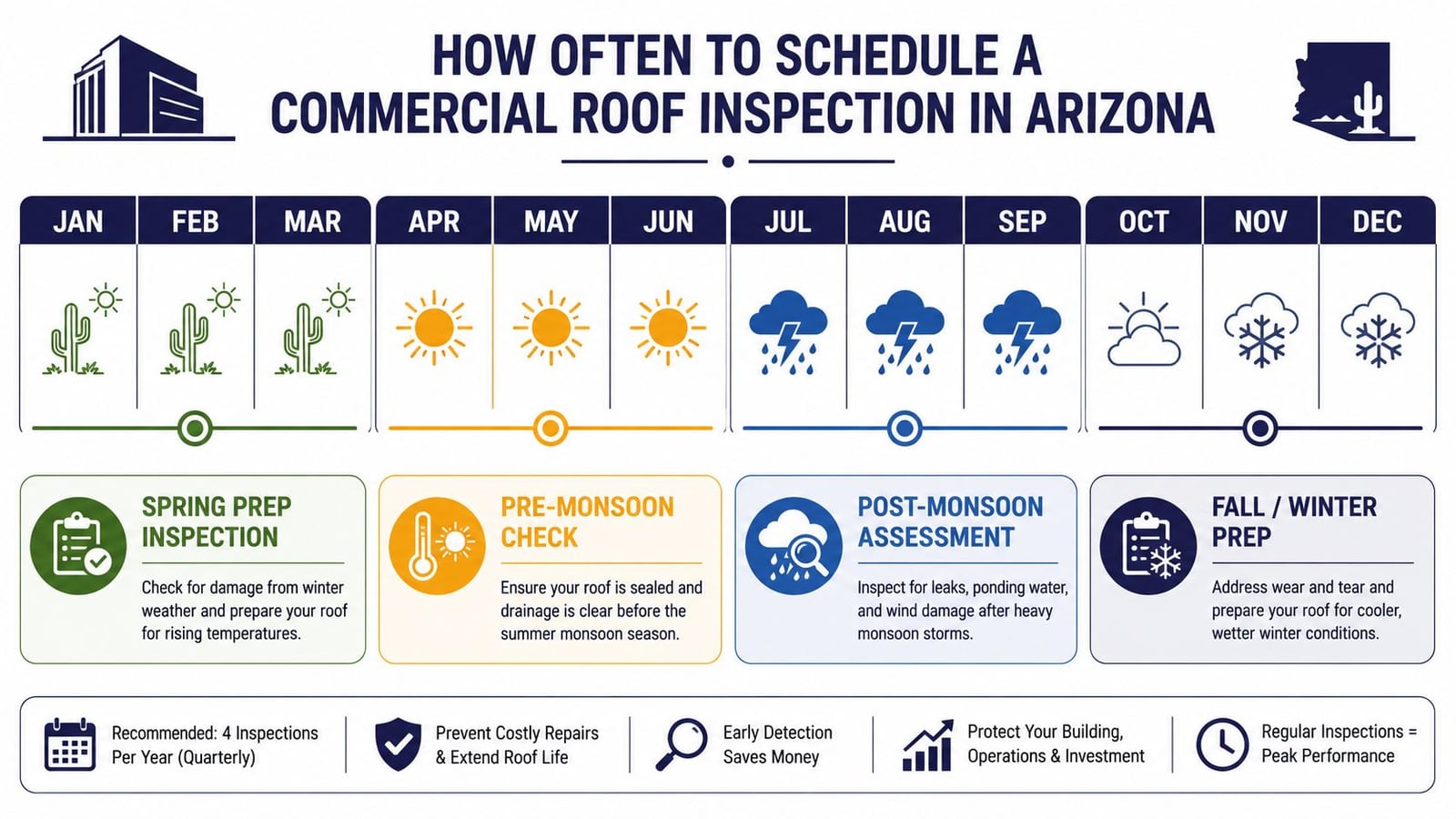
The safest schedule is risk-based, not calendar-only. For most commercial roofs, twice a year is the normal baseline, usually in spring and fall, because those visits help catch heat-related wear before monsoon season and check post-monsoon conditions before winter. That guidance also lines up with standard industry practice for semi-annual checks, with extra inspections after storms or construction activity, and quarterly checks for older roofs or known problem areas. See a broader real estate roofing checklist if the property file needs a wider maintenance view beyond the roof itself.
Storm and work-related inspections
A post-storm inspection should happen within 48 to 72 hours after major wind or rain so damage can be documented before it worsens. That timing matters in Arizona because monsoon debris, uplift, and drainage blockages can turn a small defect into a larger leak very quickly. Any rooftop work, including installation, service, or removal of equipment, should also trigger a check in the immediate work area.
Age-based frequency
Roofs older than 10 years or roofs with known trouble spots may justify quarterly inspections rather than waiting for the next seasonal visit. That isn't overkill, it's a response to the fact that older assemblies tend to show recurring weak points at the same seams, drains, and penetrations. For a building manager, the decision is less about the calendar and more about whether the roof has already earned a history of repeat repairs.
The right cadence also depends on how much rooftop activity the building sees. A roof that stays quiet all year can often follow a seasonal schedule, while a roof with regular service visits, patches, or storm exposure needs more frequent eyes on it.
Documenting Findings for Repairs and Insurance Claims
A useful inspection report does more than describe damage. It gives ownership and property management a record they can use later when repair decisions, warranty questions, or insurance claims come up after a storm.
A strong report includes dated photos with context, a written list of defects, severity ratings, weather notes, and a clear separation between immediate, short-term, and long-term actions. That format is what protects the building when the first leak shows up later, because the report shows whether the issue was already visible, whether it was worsening, and whether previous repair work was holding or failing. For the claims side, the roofing insurance claim guide is the kind of reference that belongs beside the inspection file, not after the fact.
A vague one-page note that only says the roof “looks good” usually causes the most trouble. It gives ownership no roadmap, no severity ranking, and no evidence if the leak expands or a warranty dispute starts. That's where detailed documentation matters most, especially after a monsoon when conditions can change fast and the building team needs to show what was present before the next weather cycle.
Best documentation habit: Photograph the defect, photograph the wider area around it, and label the exact roof zone. A close-up without context is easy to dispute later.
The same record also helps capital planning. If the same seam, drain, or flashing zone keeps appearing in reports, ownership has something concrete to use when deciding whether to keep repairing or move to a larger scope. For teams that want a more automated workflow around that record, Nolana AI's claims automation platform is a relevant example of how claim tracking can become more organized, though the core value still comes from the quality of the inspection itself.
When to Hire a Pro and What to Expect on Cost
A property manager can usually handle simple visual checks from safe access points, especially after a storm or after rooftop work. The line gets crossed when there's an active leak, ponding that doesn't drain, visible membrane damage, or fresh staining after monsoon weather, because those situations need a licensed commercial roofer who can diagnose the source without guessing.
If the roof needs a deeper review, storm damage roof inspection services are the safer path because they're built around documenting damage, not just spotting it. That matters when the building owner needs to decide between repair and replacement, or when the inspection has to support a claim.
Inspection cost is usually driven by a few practical variables. Roof size, roof type, access difficulty, whether moisture scanning is needed, and whether the visit is a one-off or part of a maintenance plan all affect the scope. A flat commercial roof with multiple penetrations and parapets takes more time than a simple visual perimeter review, and a roof that needs thermal or moisture testing will naturally require more equipment and documentation.
Recurring maintenance plans make more sense for roofs with age, repeat leaks, or heavy rooftop traffic. One-off inspections work for isolated events, but a scheduled program gives ownership a better record of what changed, what stayed stable, and what needs to be fixed before the next storm.
For Phoenix and Tucson buildings, the decision is straightforward. If the roof is dry, stable, and recently inspected, keep to the planned cadence. If the roof has a leak, standing water, storm staining, or a history of repeat patching, bring in a professional and document it properly before the next weather cycle turns a repair into a larger project.
America Roofing handles commercial roof inspections, leak diagnosis, flat roof repair, and reroofing work for Phoenix and Tucson buildings that can't afford guesswork. For a practical next step, visit America Roofing, call 602-237-2478, or use the online form to request a roofing estimate when the roof needs a documented inspection and a clear repair path.