
01
Leak investigation and repair
Trace likely water paths around seams, penetrations, curbs, walls and drainage areas before disturbing material or applying a surface patch.
Phoenix, Arizona · Commercial roofing
Commercial roof inspection, repair, maintenance and replacement planning for Phoenix buildings and occupied properties.
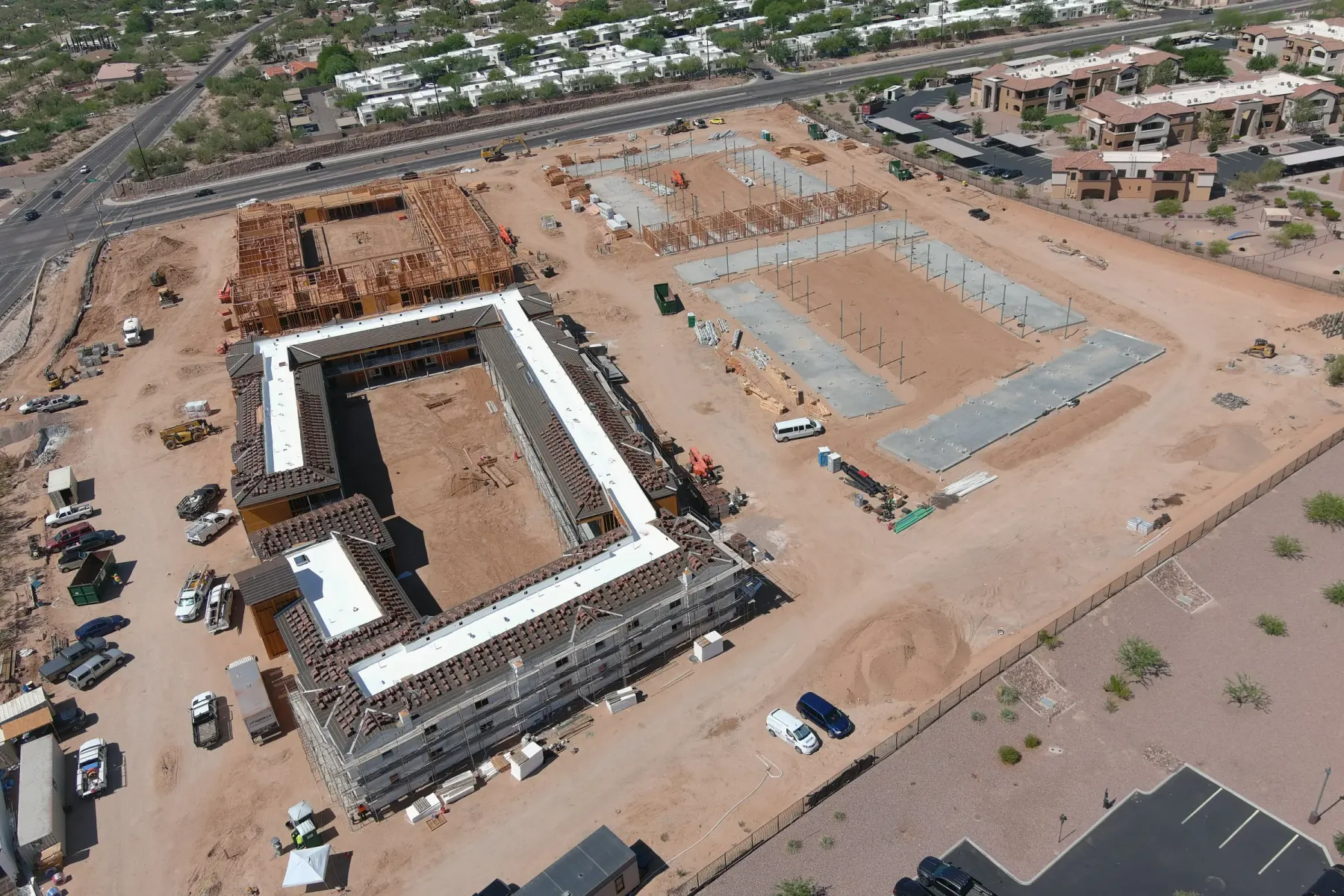
Protect the building and its operations
The useful starting point is a documented condition and a scope matched to the owner’s operating and capital-planning needs.
Trace likely water paths around seams, penetrations, curbs, walls and drainage areas before disturbing material or applying a surface patch.
Document accessible surfaces, flashings, drainage, equipment transitions and maintenance priorities for ownership, budgeting or transaction decisions.
Identify work that can extend a serviceable assembly and distinguish it from coatings or repairs that would only conceal broader failure.
Define removal or recover strategy, substrate assumptions, drainage, materials, equipment coordination, staging and protection of occupied areas.
Phoenix roofing context
Commercial roofing decisions have to account for the roof assembly and the building beneath it. Drainage, penetrations, rooftop equipment, occupied operations, access and staging all affect whether repair, restoration, maintenance or replacement is the right scope.
Phoenix commercial roofing requires attention to occupied operations, drainage, rooftop equipment, access, staging and the boundaries between repair, restoration and full replacement.
Phoenix commercial portfolios can place retail, restaurant, office, warehouse and multifamily roofs under one ownership plan even though their assemblies and operating constraints differ. A useful review separates building-by-building urgency from work that can be grouped into a planned maintenance or capital cycle.
Large roof areas make drainage and repetition important. One failed curb or open seam may be isolated; the same defect recurring across many penetrations can point to an assembly-wide detail problem. The scope should identify that difference before repair quantities or replacement assumptions are set.
Phoenix roofing work spans established neighborhoods, newer subdivisions, multifamily properties and a large commercial building inventory. That range matters because access, drainage, roof geometry and occupancy can change the right scope even when two roofs show similar symptoms.
Tile and shingle systems are common on pitched residential roofs, while foam, coatings and other low-slope assemblies appear across homes and commercial properties. The useful starting point is the actual assembly and failure point—not a one-size-fits-all material pitch.
Intense sun, long heat cycles, dust and monsoon weather can expose weak flashing, open penetrations, underlayment wear and drainage problems. America Roofing routes Phoenix requests through the Phoenix office and documents whether repair, monitoring or replacement is the appropriate next step.
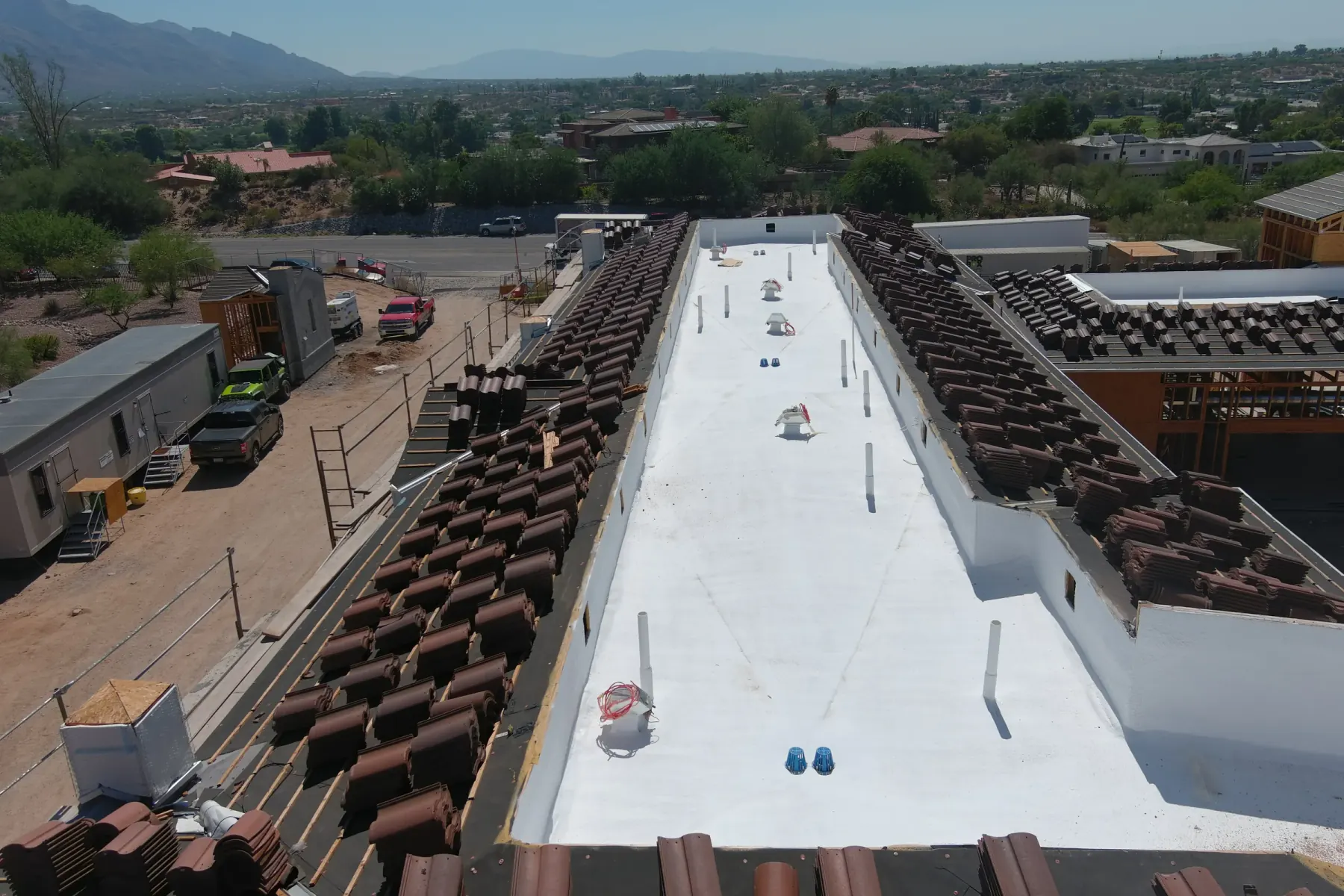 Decision before scope
 Make the next decision defensible
Commercial roof decisions should separate isolated defects from assembly-wide deterioration and consider the cost of repeated disruption.
A clear project path
Each step should reduce uncertainty and make the next decision easier to understand.
Document the assembly, reported problems, access, equipment, drainage and operating constraints affecting inspection and work.
Separate maintenance, repair, restoration and replacement options with clear assumptions, limits and expected outcomes.
Plan protection, staging and communication, complete the documented scope and provide closeout information for ownership records.
Roof-system fit
System labels matter less than whether materials and details are compatible with the existing assembly and building conditions.
Evaluate coating condition, exposed foam, cracks, penetrations, drainage and substrate moisture before repair or recoating decisions.
Review seams, flashings, curbs, walls, drains and membrane condition along with compatibility requirements for repairs or recover work.
Tile, shingles and other pitched systems require the same attention to underlayment, flashings, transitions and occupied-building protection as residential work—at commercial scale.
Arizona project proof
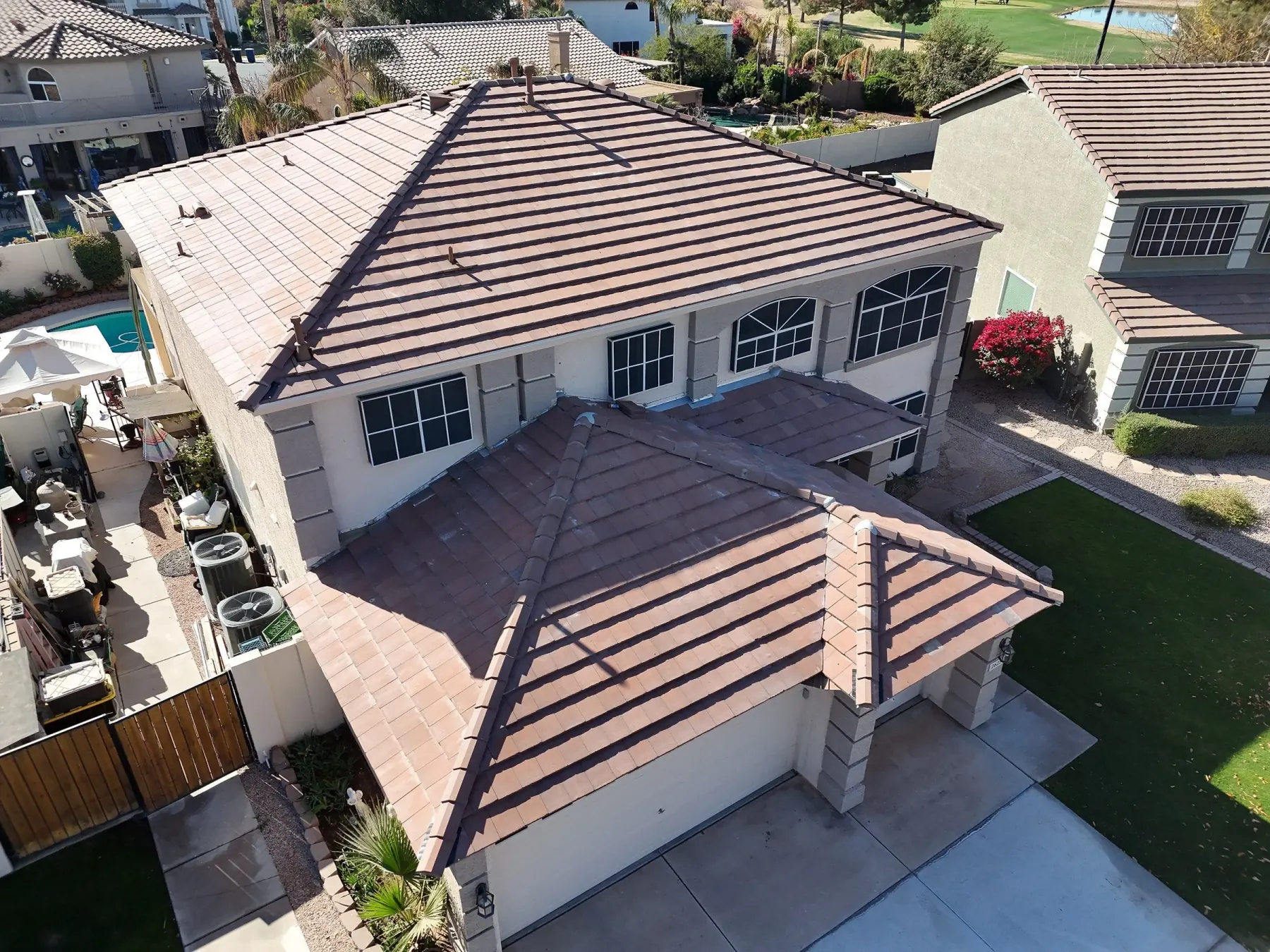
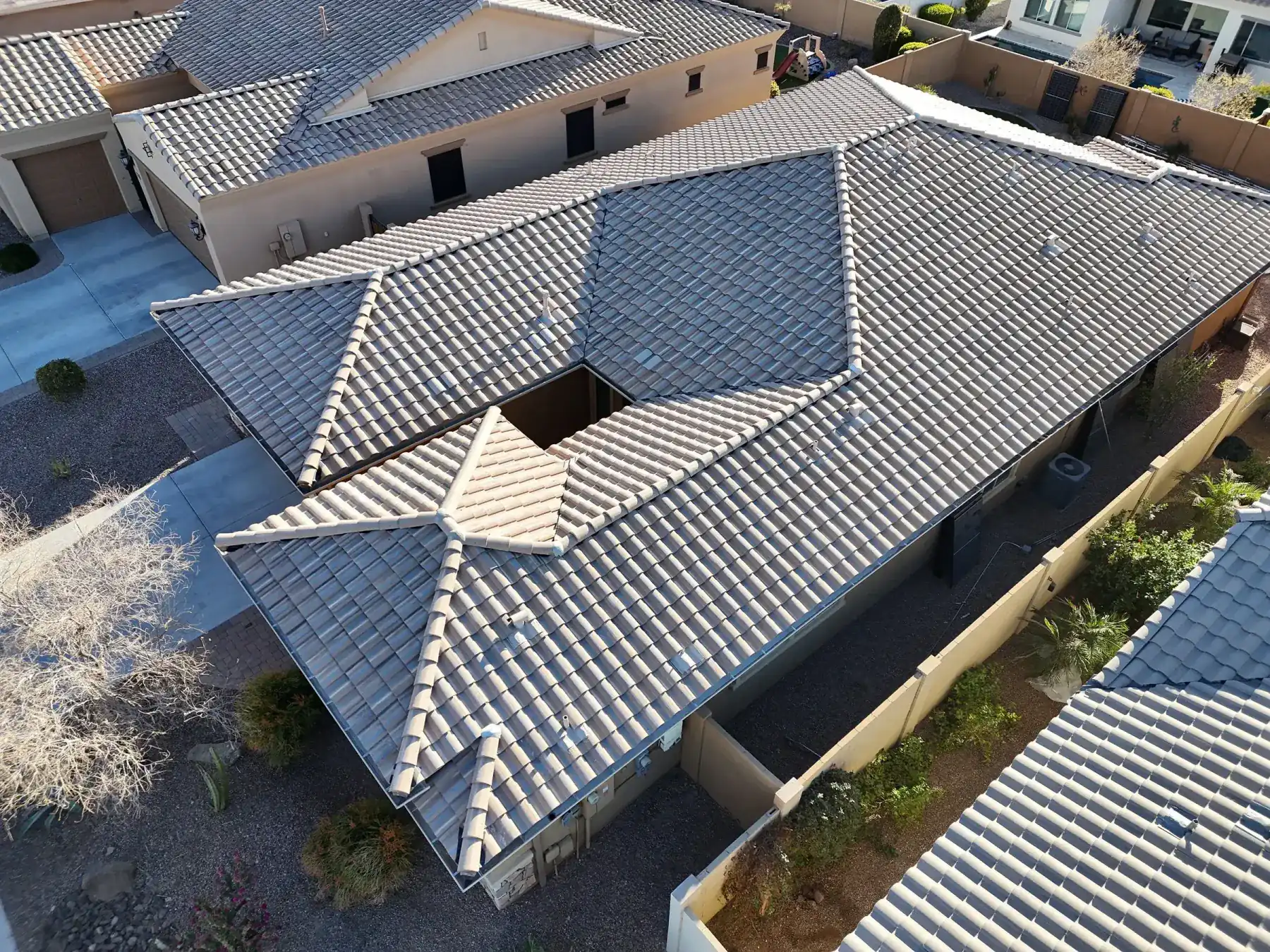
These photographs come from America Roofing’s Arizona project library. They demonstrate system experience without presenting every image as work from this specific city.
Phoenix commercial roofing questions
These answers define the decision. The property inspection defines the actual work.
America Roofing evaluates leak repair, inspections, maintenance, restoration and replacement for compatible commercial roof systems. The recommendation depends on condition, moisture, drainage, details and operating constraints.
Sometimes. Restoration requires a suitable existing assembly, manageable moisture conditions, compatible materials and details that can be integrated reliably. It should not be used to conceal broad failure or wet substrate.
The project plan should address access, staging, debris, rooftop equipment, tenant or operating schedules, interior protection and communication. Those constraints belong in the scope before work begins.
Useful documentation covers accessible surfaces, seams, flashings, penetrations, curbs, walls, drainage, prior repairs and conditions that affect maintenance, repair, restoration or replacement planning.
Call (602) 237-2478 or use the quote form. Include the property address, building use, known roof system, reported problems, access constraints and the decision or deadline the review needs to support.
Talk with a roofer
Tell us what you are seeing. We will inspect the roof, explain the options, and give you a practical next step—without the canned sales pitch.