
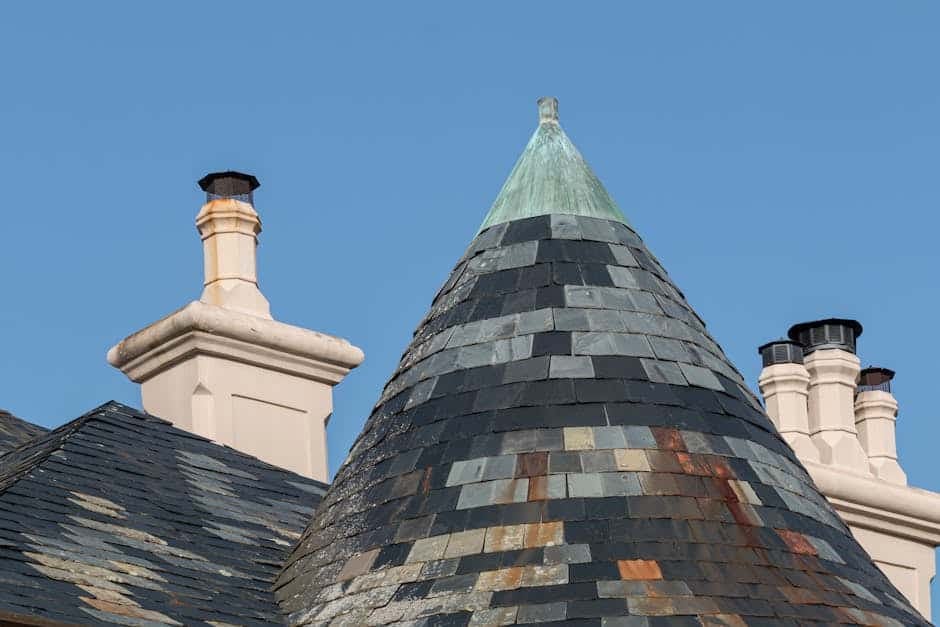
A well-built copper roof is more than a design feature - it is a long-term asset, and copper roof repair requires a level of skill most standard roofing work simply does not. Honestly, if you own a copper roof in Arizona, you need repairs that respect the metal, preserve the patina, and hold up to heat, UV, and monsoon winds.
At America Roofing, we understand that these systems are more than just shelter; they are a generational investment that demands precision and expert care.
What You Need to Know About Copper Roof Repair (Quick Answer)
Copper roof repair is one of the most specialized jobs in roofing - and if you own a copper roof, you already know it's not like fixing any other material.
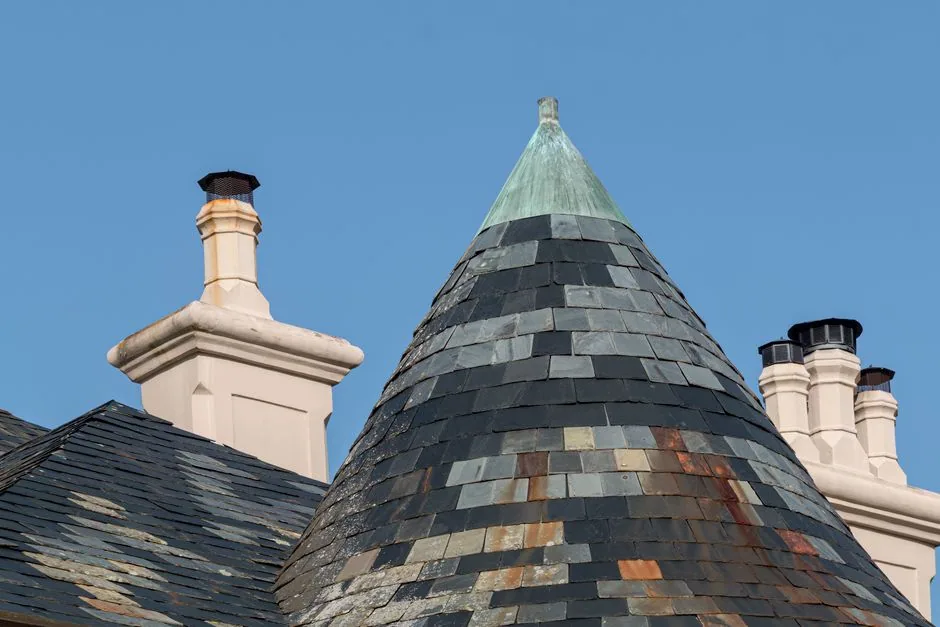
Here's a fast overview for anyone who needs answers now:
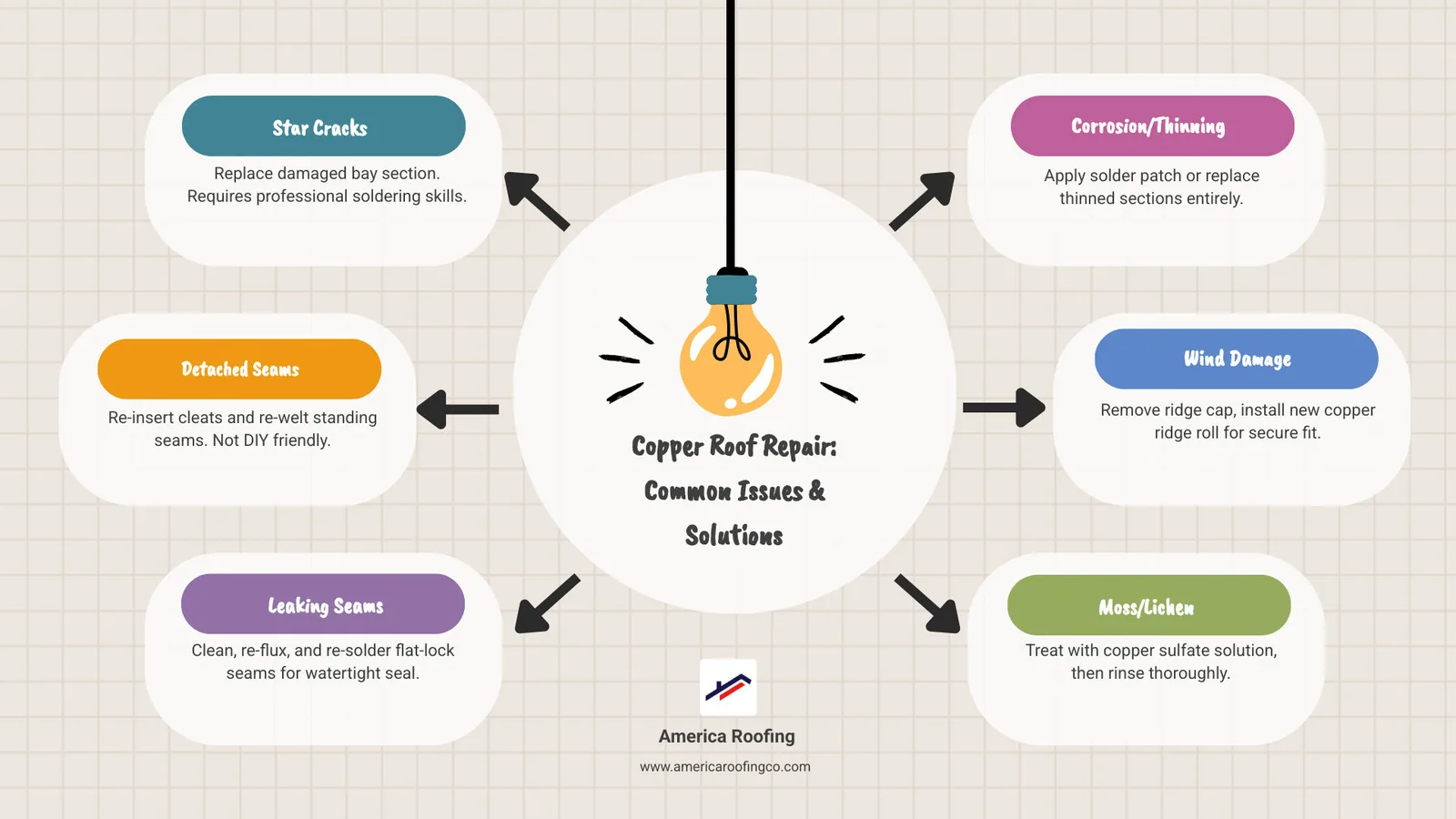
| Common Issue | Typical Repair Method | DIY Friendly? |
|---|---|---|
| Star cracks | Replace damaged bay section | No |
| Detached standing seams | Re-insert cleats, re-welt seams | No |
| Leaking flat-lock seams | Clean, re-flux, and re-solder | No |
| Corrosion / thinning | Solder patch or section replacement | No |
| Wind damage at ridge | Remove ridge, install new ridge roll cap | No |
| Moss / lichen buildup | Copper sulfate treatment, rinse | Limited |
Key things to know:
- Copper roofs can last 100+ years with proper care and quality installation
- Most repairs require soldering, specialized tools, and knowledge of copper's behavior
- Patina is not damage - it's a natural, protective layer you should preserve
- Never use caulk or asphalt compounds on copper - they cause more harm
- Galvanic corrosion happens when copper contacts dissimilar metals like steel or aluminum
- Costs range from $9-$14 per sq ft for materials, plus $5-$12 per sq ft for labor
Copper has been used in roofing for generations because it is durable, attractive, and low-maintenance when handled correctly. But when problems appear, the repair process demands far more precision than standard asphalt or tile work.
Here's the thing: copper is a living material. It changes color over time, reacts to its environment, and responds differently to heat, moisture, and other metals. Think of the Statue of Liberty - that famous blue-green color is the result of natural patina, not paint. Your roof goes through a similar process, and understanding that is essential to maintaining it properly.
Whether you're dealing with a leak, visible cracking, or long-term corrosion, getting the repair right protects both your home and the long-term value of the roof.
Quick copper roof repair definitions:
Common Problems with Copper Roofs and Their Causes
Even though copper is incredibly durable, it isn't invincible. Most issues we see in the Phoenix and Tucson areas stem from either improper initial installation or the sheer physical stress of our environment.
Star Cracks
You know what? Copper is a relatively soft metal. Over time, repeated flexing from wind loads or thermal expansion (especially with our 110-degree Arizona summers) can cause "star cracks." These are star-shaped fractures that usually appear at the intersections of diagonal fold lines. Once they start, they allow water and wind to penetrate, which can lead to the metal tearing or detaching.
Detached Standing Seams
A standing seam roof relies on "cleats" — small copper strips nailed to the roof deck that hold the panels down. If the wood deck shrinks (common in dry desert climates) or if the original installer used the wrong fasteners, those cleats can pull out. This leaves the seams loose and vulnerable to being caught by a monsoon gust.
Leaking Seams and Joints
In complex roof designs, such as those seen on historic homes in Scottsdale or Mesa, seams must be perfectly fitted and soldered. If a seam wasn't "pre-tinned" (coated with a thin layer of solder first) or if the solder didn't wick deep into the joint, it will eventually leak. We often see people try to fix these with caulk or "black goop" (asphaltic cement), but honestly, that just traps moisture and makes the eventual copper roof repair much harder.
Wind Damage at the Ridge
The ridge of a roof takes the brunt of wind force. If the ridge cap isn't strong enough, you'll see cracks in the pans or displacement of the seams. On many historic restorations, we find that replacing a standing seam ridge with a "ridge roll" provides much better wind resistance.
Corrosion and Thinning
While copper resists most corrosion, it can be thinned out by "acidic runoff." If you have a tile or slate roof that drains onto a copper valley, and that higher roof has moss or lichen on it, the rainwater becomes acidic. This acid eats away at the copper's protective patina, eventually leading to paper-thin metal and perforations.
What is Patina and How Does it Affect Maintenance?
Patina is the copper roof's "immune system." It is a layer of copper carbonate or sulfate that forms naturally as the metal reacts with oxygen and moisture.
The Stages of Aging
- Bright Copper: The shiny, new-penny look.
- Darkening: Within a year, it turns a dull, reddish-brown or "statue" bronze.
- Patchy Stage: The transition to green can look a bit uneven for a while.
- Mature Patina: The classic blue-green (verdigris) finish.
In Arizona’s dry climate, this process can take 20 years or more. Near coastal areas, it might happen in five. This layer is highly stable and actually protects the metal underneath from further corrosion. This is why you should never try to scrub the patina off or use harsh alkaline cleaners. If you do a copper roof repair and need the new patch to match the old roof, we can use chemical "accelerators" to age the new copper overnight.
Tools and Materials for Basic Copper Roof Repairs
If you’re looking at a minor roof leak repair, you need more than just a hammer. Copper work is more like jewelry making on a large scale.
- Soldering Iron: A heavy copper "iron" (often heated by propane) is needed to maintain enough heat to bond the metal.
- Solder: We typically use a 50/50 lead-tin roofing grade solder.
- Flux: A non-corrosive flux is essential to clean the metal so the solder sticks.
- Copper Snips and Hand Seamers: For cutting and bending the 16-oz or 20-oz copper sheets.
- Barbed Copper Nails: Never use steel or galvanized nails! They will cause a chemical reaction that destroys the roof.
- Wooden Mallets: These allow us to shape the copper without leaving the ugly "hammer dings" that a metal hammer would.
Repairing Common Issues: A Step-by-Step Guide
Let me explain: repairing copper isn't about "patching" in the traditional sense; it's about restoring the metal's integrity.
Fixing Star Cracks
When we find star cracks, we don't just put a dab of sealant on them. According to Repair Of Star Cracks In Copper Roofs, the best method is to cut out the damaged section and replace the bay. We often make the new bays narrower or shorter to reduce the amount of "flexing" the metal does in the wind.
Re-attaching Standing Seams
If a seam has detached, the metal has likely become "work-hardened" and brittle. We use a soldering iron to "anneal" (heat) the edges, making them soft and pliable again. Then, we insert new copper cleats spaced no more than 15 inches apart, nail them down with barbed nails, and re-fold (welt) the seam.
Stopping Seam Leaks
For a leaking flat-lock seam, the old solder or caulk must be completely removed. We use scrapers and wire brushes to get the joint down to "shiny copper." If it isn't shiny, the solder won't bond. We then apply flux, "pre-tin" the surfaces, and slowly flow new solder into the joint.
Handling Wind Damage
If a ridge is damaged, we often follow the GSA technical procedure for wind-damaged ridges. This involves removing the old ridge, installing new timber battens for strength, and welting on a new, heavy-duty copper ridge cap.
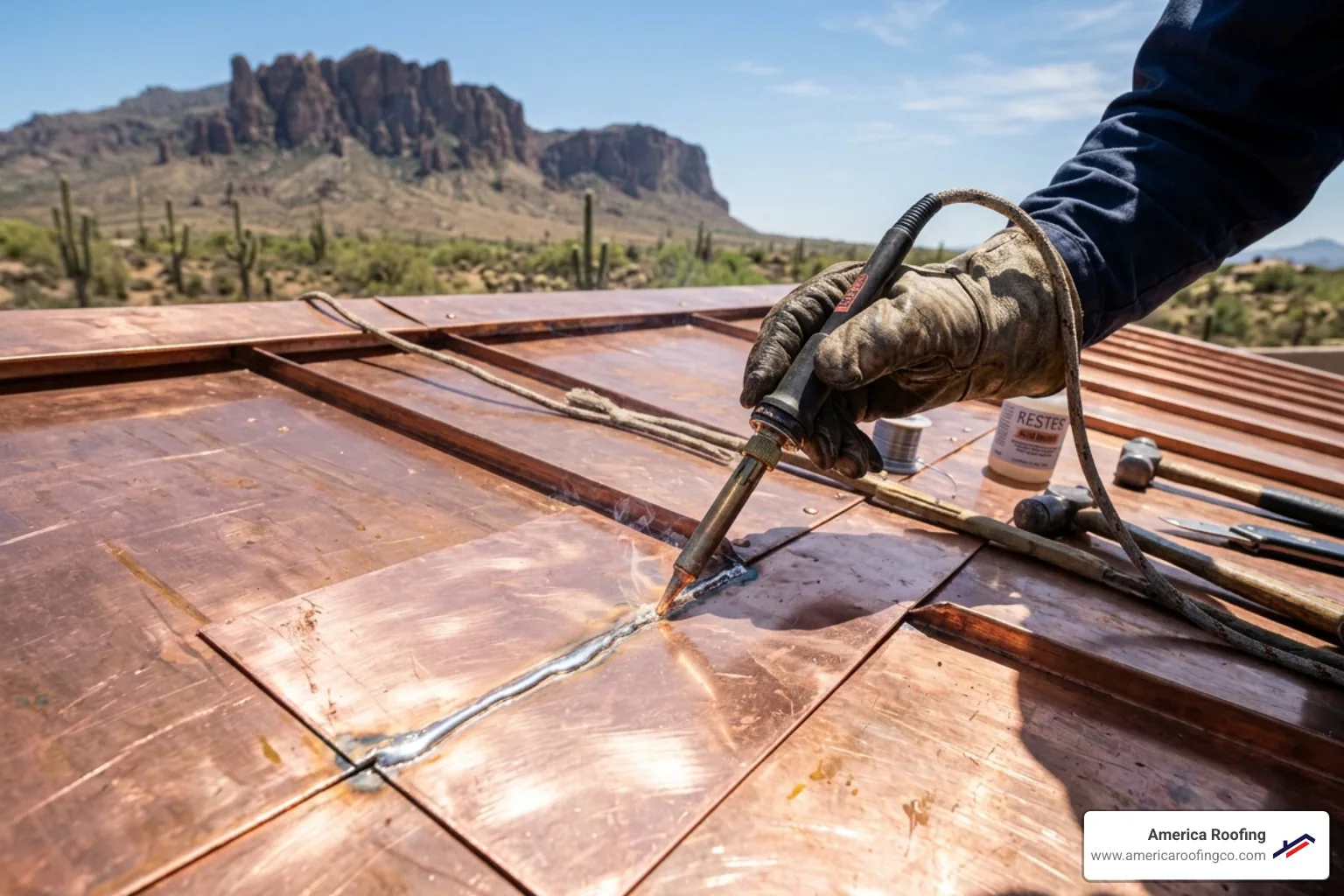
Soldering a Patch on a Damaged Section
Sometimes a roof gets a hole from a fallen branch or a misplaced tool. Here is the professional way to solder a patch:
- Preparation: Clean the area around the hole until it is bright, bare metal.
- Cutting the Patch: Cut a piece of copper (matching the weight of the roof) about 1/2 inch larger than the hole on all sides.
- Fluxing: Apply flux to both the roof and the underside of the patch.
- Pre-tinning: Apply a thin layer of solder to the edges of the hole and the edges of the patch.
- Soldering: Place the patch over the hole. Using a hot soldering iron, heat the patch until the solder "wicks" together.
- Cleanup: This is huge — you must wash the area with water and baking soda to neutralize the flux, or the flux itself will eventually cause corrosion.
Preventing Galvanic Corrosion
Here’s the thing about copper: it doesn't play well with others. When copper touches a "dissimilar metal" (like aluminum, zinc, or steel) and water is present, a battery-like reaction occurs. The other metal will corrode at an incredibly fast rate.
- The Runoff Rule: Never let water run off a copper roof into aluminum gutters. The copper-rich water will eat through the aluminum in a matter of months.
- Compatible Metals: Copper is generally safe with lead and stainless steel.
- Barriers: If you must have copper near another metal, use a non-absorbent sealant or a rubber gasket as a physical barrier.
Safety Precautions for Copper Roof Work
Roofing is dangerous; copper roofing is even more so. Copper is slick, especially when wet or covered in a fine layer of Arizona dust.
- Footwear: Always wear soft, rubber-soled shoes for maximum grip.
- Harnesses: Use a full-body harness and a secure anchor point.
- Heat Awareness: Soldering irons and copper in the Phoenix sun get hot enough to cause serious burns.
- Power Lines: Copper is an excellent conductor of electricity. Keep ladders and long copper panels far away from overhead lines.
When to Call a Professional vs. DIY
Honestly, while we love a good DIY project, copper roof repair is usually a job for the pros. Here’s why:
- The "One Shot" Rule: If you mess up a solder joint, it is very difficult to clean it well enough to try again.
- Specialized Equipment: Most homeowners don't have $500 soldering irons or heavy-duty seamers.
- Historic Integrity: If you have a historic home, an improper repair can actually lower your property value.
- Complexity: Tracing a leak on a copper roof is notoriously difficult because water can travel 20 feet under the panels before appearing inside. Check out our top 5 signs your roof needs professional attention for more guidance.
Proper Cleaning and Maintenance
You don’t need to do much to a copper roof, but "nothing" isn't the right answer either.
- Annual Rinsing: Use a garden hose to rinse off dust, salt, and bird droppings. Bird droppings are acidic and can cause localized pitting.
- Clear the Debris: Keep valleys and gutters clear. Standing water and rotting leaves create acids that can thin the copper.
- Kill the Moss: If you have moss on a higher roof section, treat it with a copper sulfate solution (1 part crystals to 10 parts water). This prevents the acidic runoff that causes corroded copper sheetmetal.
- Visual Inspections: Twice a year, look for loose panels, detached cleats, or areas where the patina looks "washed away."
Costs of Copper Roof Repairs vs. Alternatives
Copper is the "gold standard" of roofing, and the price reflects that.
- Materials: $9 to $14 per square foot.
- Labor: $5 to $12 per square foot (it takes longer than shingles).
- Full Replacement: For a 2,000 sq ft home, you’re looking at $33,000 to $59,000.
- The Alternative: Many people now choose painted metal panels that mimic the look of copper. These are 60% to 75% less expensive and can last 40-60 years. While they don't have the 100-year lifespan of real copper, they are a great middle-ground for many Arizona homeowners.
Climate and Location Influences: Arizona Focus
In the Phoenix-metro area, our copper roofs face unique challenges compared to those in New England.
- Extreme Heat: Copper expands and contracts significantly. If the installer didn't use expansion joints or sliding cleats, the roof will buckle and the seams will pop.
- UV Exposure: While UV doesn't "rot" copper, it does bake any sealants or underlayments used. We ensure our roof-repair-guide methods account for this high-heat environment.
- Monsoon Winds: Our "haboobs" and microbursts create intense uplift pressure. Ensuring your cleats are properly spaced (max 15 inches) is the only way to prevent your roof from becoming a giant copper kite.
Historic Copper Roof Restoration
If you live in one of the historic districts of Phoenix or Tucson, you have a responsibility to preserve the architectural heritage of your home. Historic restoration isn't just about stopping leaks; it's about using the same methods used 100 years ago. This includes using lead-free solder, traditional flat-lock seams, and matching the weight of the original copper.
A well-maintained copper detail can last a century. The quality of the installation is the only factor that determines if it will reach that 100-year milestone.
Conclusion
A copper roof is a generational investment. Whether it's a small accent over a bay window or a full standing seam system, it delivers a level of prestige and longevity few other materials can match. But when it needs attention, the repair has to be done correctly. From preserving patina to avoiding galvanic corrosion, proper maintenance is what helps a copper roof reach its full lifespan.
At America Roofing, we've spent decades understanding the art and science of copper roof repair in Arizona's demanding climate. We understand Scottsdale heat, Mesa monsoons, Phoenix dust, and the details that make specialty metal roofing last.
If you're seeing signs of trouble or just want an expert inspection, call 602-237-2478 to speak with our team. You can also Request a Free Quote and get honest, veteran-owned guidance for your copper roof.