Ranked #1 Commercial Roofing Contractor Ranked #1 Commercial Roofer Ranking criteria

Commercial flat roofing

Commercial Flat Roofing in Arizona

Inspection, repair, restoration and replacement planning for low-slope roofs—built around drainage, moisture and the details that interrupt the field.

  • Serving Arizona since 1999
  • Licensed · bonded · insured
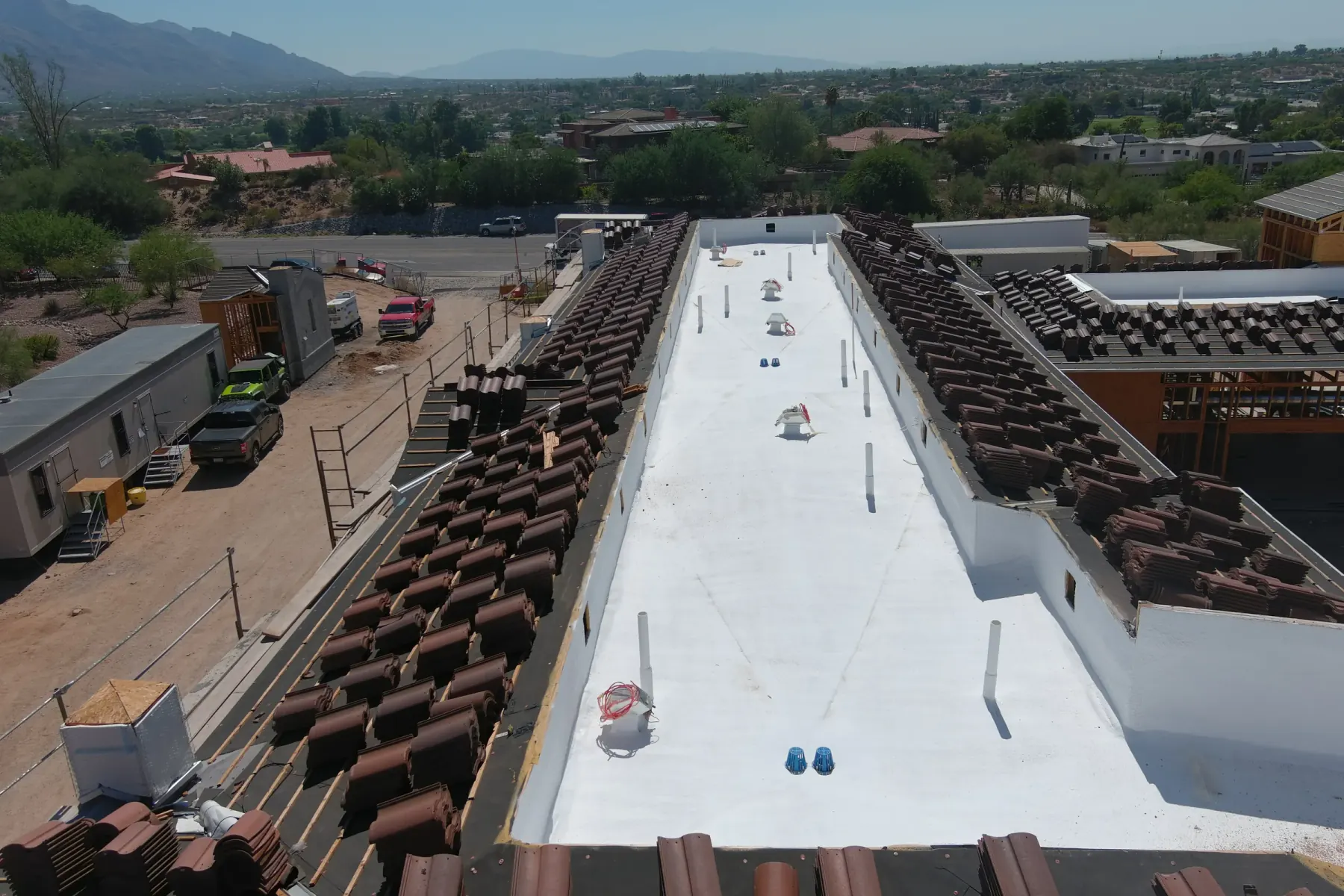
Completed white low-slope commercial roof beside tile sections
Serving Arizona since 1999 ROC #186438 CR42 Residential + commercial Free quote request

Low-slope system decisions

A flat roof still has to move water somewhere.

Drainage, seams, penetrations, walls, equipment curbs and material compatibility determine whether a localized repair, restoration system or replacement is responsible.

Evaluate the complete low-slope assembly

Commercial flat roofs include foam, coated assemblies, single-ply membranes, modified bitumen and mixed systems. The visible surface matters, but so do slope, drainage, substrate, insulation, flashings and every interruption through the field.

Condition and diagnosis

A leak near a ceiling location does not automatically identify the roof-side source. Water can move across deck or insulation before it appears indoors. Inspection should map drains, scuppers, seams, curbs, walls and prior repairs before the repair boundary is set.

Repair, restoration or replacement

Restoration can be practical when the existing assembly is dry, stable and compatible with the proposed system. Broad wet insulation, unstable substrate, widespread loss of adhesion or details that cannot be integrated can make replacement more responsible.

What a complete proposal should define

A complete proposal should define preparation, moisture assumptions, drainage corrections, penetration and edge work, materials, thickness or reinforcement where relevant, equipment coordination, access, protection and closeout. That is the level needed to compare commercial bids honestly.

  • Moisture and substrate condition
  • Drainage and ponding history
  • Detail and penetration failures
  • Remaining system compatibility

What the scope should answer

Make the next decision with evidence.

Use these questions to compare what each proposal includes, which condition it addresses and what could change once work begins.

01

Leak and detail repair

Trace the defect through seams, curbs, walls, penetrations and drainage areas.

02

Restoration review

Confirm substrate, moisture and compatibility before proposing a coating or foam path.

03

Replacement planning

Define removal, deck and insulation findings, drainage and complete system transitions.

04

Commercial operations

Coordinate access, equipment, tenants, weather exposure and work zones.

Commercial low-slope roof details near rooftop equipment

Repair, restore or replace

Let condition—not the sales pitch—set the path.

Flat-roof work should be selected after the assembly, moisture, drainage and surrounding material are understood. Restoration is not a cure for wet or unstable layers, and one isolated failure does not automatically justify replacement.

  • Moisture and substrate condition
  • Drainage and ponding history
  • Detail and penetration failures
  • Remaining system compatibility
Request a free roofing estimate

A clear roofing process

From the first symptom to a defined scope.

The sequence changes with the roof, but the customer should always understand what was found, why the work is recommended and what happens next.

  1. 01

    Map the roof

    Identify roof sections, drainage, penetrations, known leaks and prior repair areas.

  2. 02

    Test the options

    Compare repair, restoration and replacement against observed condition and compatibility.

  3. 03

    Define the operating scope

    State materials, access, protection, phasing, discoveries and closeout before work begins.

America Roofing project proof

Real Arizona roofs. Real project photography.

These images come from America Roofing’s own Arizona project library—not a stock crew or a manufacturer rendering.

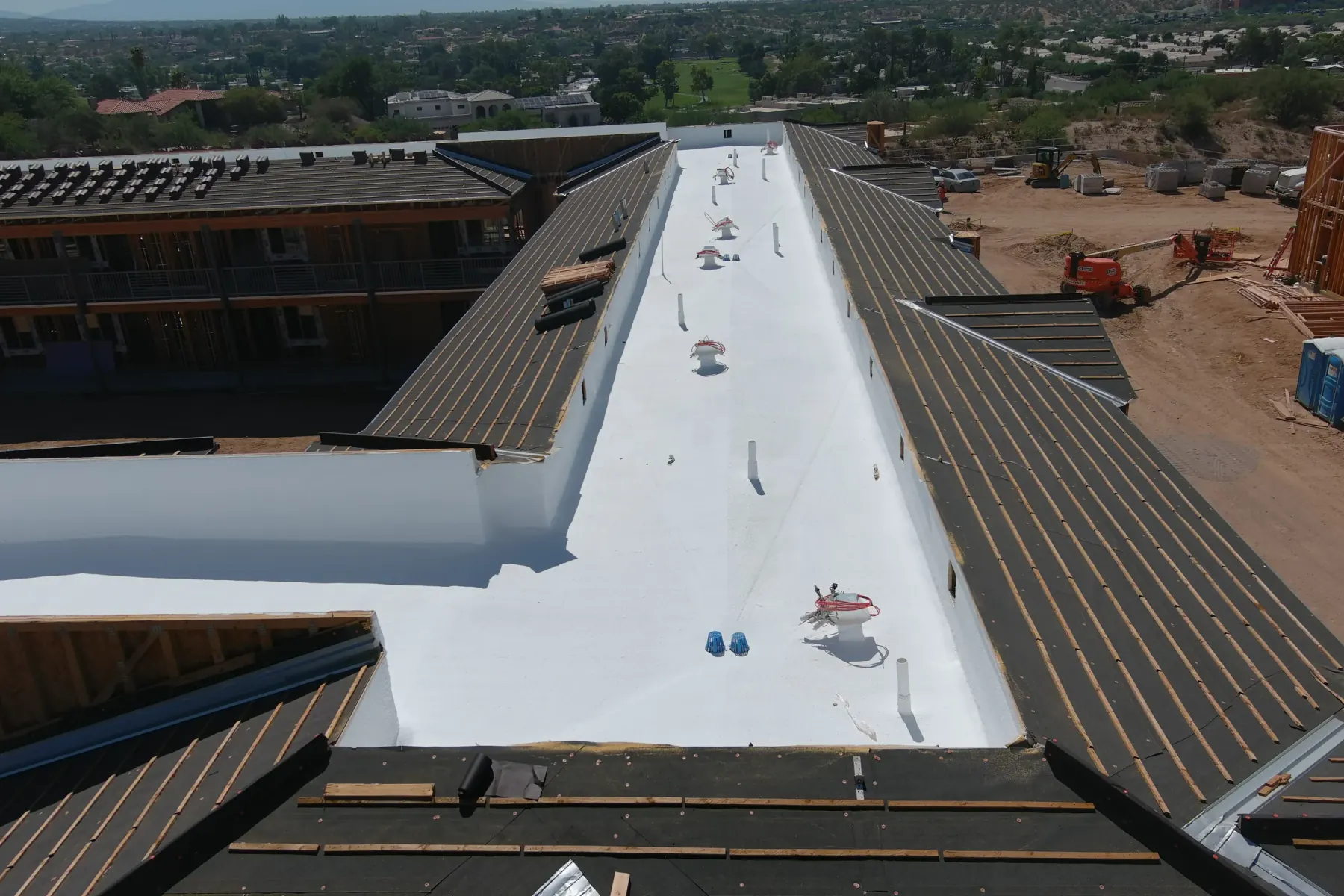
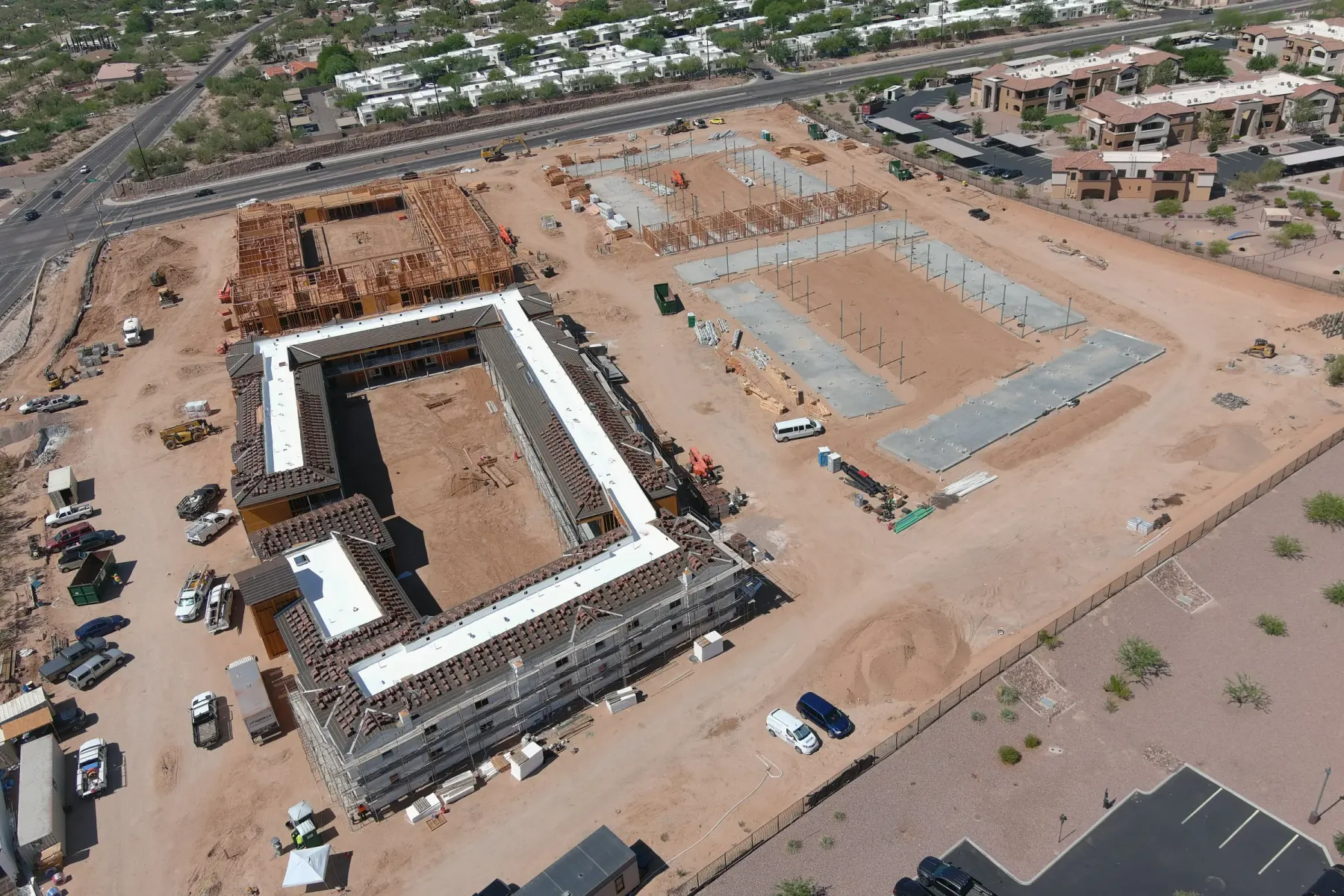
Completed Arizona commercial roofing project with pitched and low-slope sections
Commercial roof systems
Completed white low-slope roof beside tile roof sections
Low-slope roofing
Commercial roof area with drainage and equipment details
Roof details and drainage

Questions before you schedule

Roofing questions, answered plainly.

The answer should help you decide what to inspect, what to compare and what to ask before approving the work.

What kinds of commercial flat roofs does America Roofing evaluate?

America Roofing evaluates foam and coated systems, TPO-related planning, modified bitumen and other compatible low-slope assemblies. The existing roof and its details determine the repair or replacement method.

Can a commercial flat roof be restored instead of replaced?

Sometimes. Restoration requires a dry, stable and compatible existing assembly with details that can be integrated reliably. Widespread moisture or unstable layers can rule it out.

Why does drainage matter on a flat roof?

Low-slope roofs rely on designed slopes, drains, scuppers and overflow paths. Persistent ponding can expose weak seams, coatings, flashings and substrate conditions that a surface-only patch will not correct.

What should a flat-roof proposal include?

It should define preparation, moisture and deck assumptions, drainage work, penetrations, walls, edges, materials, access, protection, discoveries and closeout—not only a square-foot price.

Talk with a roofer

Get a clear answer about your roof.

Tell us what you are seeing. We will inspect the roof, explain the options, and give you a practical next step—without the canned sales pitch.