
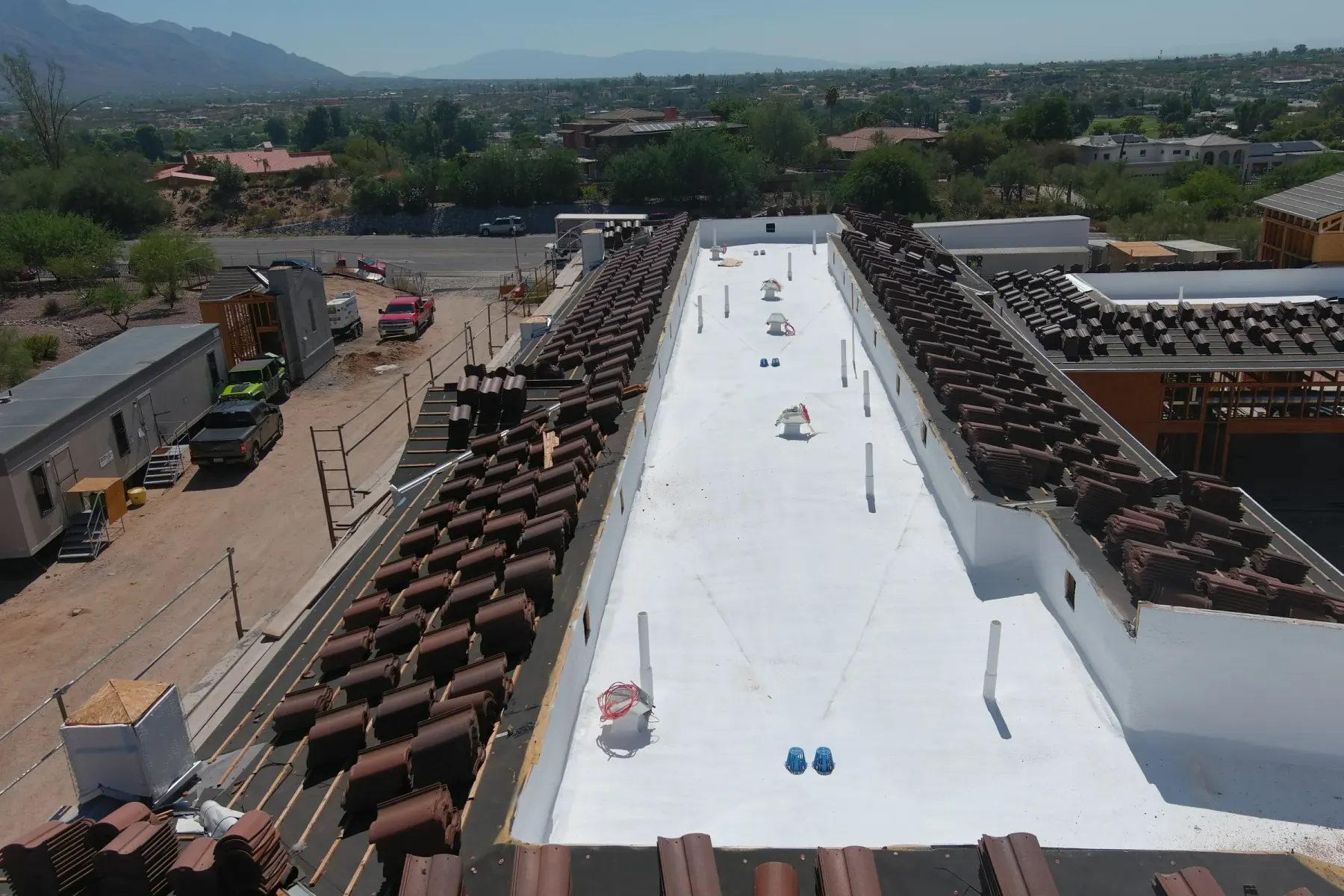
What a built-up roof actually is
Built-up roofing, often called BUR, uses multiple reinforcing layers bonded with bitumen to form a continuous roof covering. Tar-and-gravel is a familiar description, but the surfacing and exact materials vary. A gravel surface alone does not identify every layer below it.
Treat the covering, insulation, deck, drainage and perimeter details as one assembly. When comparing proposals, ask the contractor to identify the existing system rather than selecting a repair from a photograph of the surface.
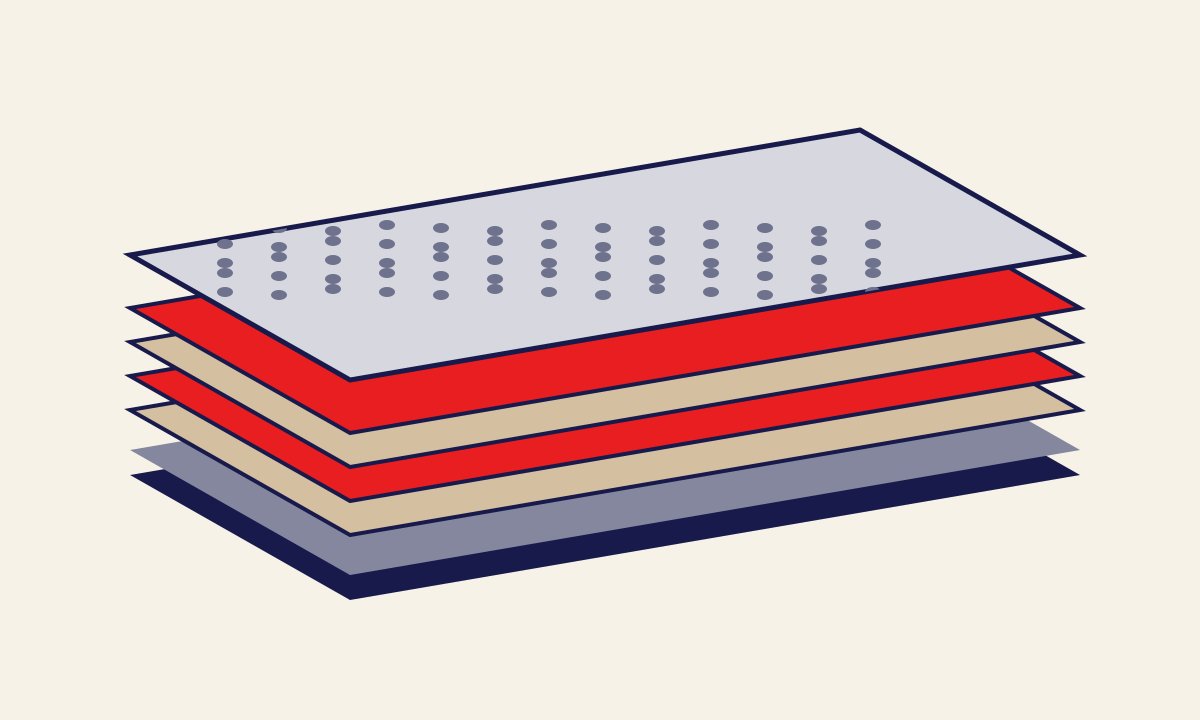
- Protective surfacing depends on the selected assembly.
- Repeated reinforcing layers illustrate the built-up concept, not a universal ply count.
- Deck, insulation, drainage and flashings need their own project-specific design.
Gravel, cap sheets and protective surfaces
The exposed surface protects the waterproofing below. Depending on the assembly, this can include aggregate, a mineral-surfaced cap sheet or a compatible coating. Surfacing cannot be swapped without checking the system design, substrate and manufacturer requirements.
A reflective finish may be one consideration, but it is not a repair for wet insulation, trapped moisture, unstable layers or failed flashings. Compatibility and preparation matter more than a universal promise about color or energy savings.
Where water and wear need attention
Inspection should include drains and scuppers, ponding history, transitions at walls, penetration flashings, edges, blisters, splits and previous patches. Water can travel through layers before appearing inside the building, so the interior stain may not locate the roof-side defect.
Do not walk a deteriorated roof or lift surfacing to investigate a leak yourself. Record accessible interior symptoms and drainage history, then have a qualified roofing professional assess the covering and what lies beneath it.
Repair, restoration or replacement
A local defect may be repairable when it can connect to sound, compatible material. Broad moisture, repeated incompatible repairs or widespread deterioration can change that conclusion. A new coating is not automatically an alternative to replacing a failed assembly.
Ask which findings support the recommended scope, whether testing or openings are needed, and what happens if concealed damage is discovered. Request written preparation, flashing, drainage, protection and closeout details rather than comparing only a surface product or square-foot price.
Questions for your Arizona roof review
Discuss building use, access, equipment, occupant protection, drainage and weather exposure before planning work. For an occupied property, the proposal should also explain how work areas and any disruption will be managed.
No single service-life figure or warranty applies to every BUR roof. Use the actual assembly, maintenance history and written product and installation terms to make the next decision.