
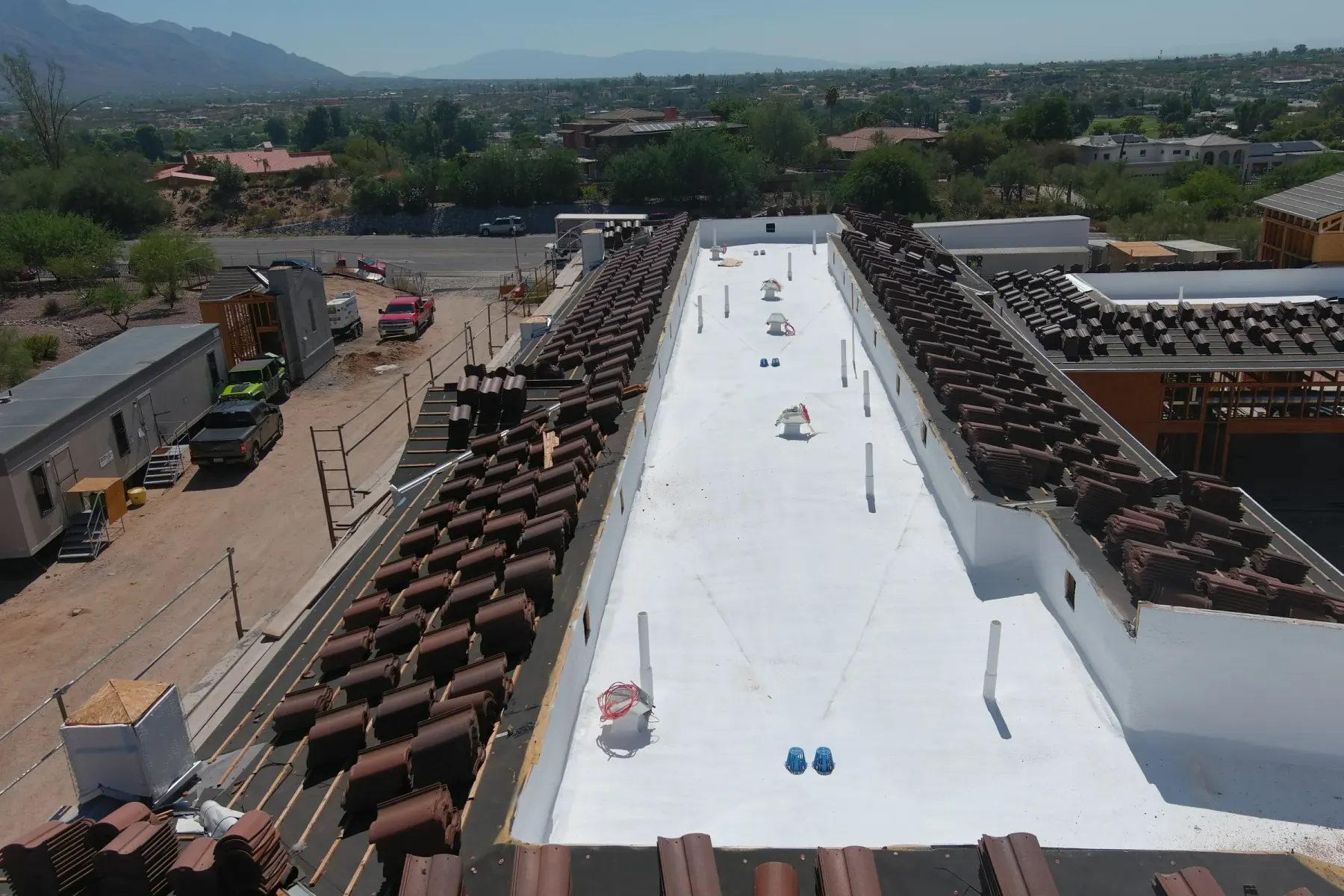
Begin with condition, not a preferred membrane
A multifamily low-slope roof decision should identify the existing covering, insulation, deck, drainage and leak history for each building. Water may move through the assembly before it appears in a unit, so a ceiling stain is not a complete diagnosis.
Map shared walls, penetrations, curbs, drains and overflows. Confirm management and association responsibilities before defining who approves the work and how interior or shared-property findings will be handled.
Built-up and modified-bitumen assemblies
Built-up roofing uses multiple reinforcing layers bonded into a covering. Modified-bitumen systems use reinforced bituminous sheets with product-specific application and detailing. They are related low-slope options, not interchangeable specifications.
Surfacing, flashings, compatibility and the condition below the finish matter. A coating or cap-sheet proposal must address its base and drainage rather than treating every existing roof as a sound restoration candidate.
Single-ply membranes and spray foam
Single-ply choices include TPO, PVC and EPDM families. Seams, attachment and flashing methods depend on the selected system. Spray polyurethane foam is a different assembly with its own protective coating, preparation and maintenance requirements.
These are comparison categories, not a promise that every system will be offered for every property. Have the project-specific options and current product scope confirmed after the roof is evaluated.
Drainage, access and occupied units
Review ponding history, drain and scupper condition, overflow paths and rooftop equipment. Correcting a surface without addressing the water path can leave the underlying problem in place. Design or structural concerns need the appropriate qualified review.
Plan work zones, resident access, parking, staging and communications with management. The proposal should state protection and phasing assumptions rather than guaranteeing that all roof types cause the same level of disruption.
Choose a documented repair or capital plan
Ask which findings support repair, restoration, recover or replacement and what further testing may be needed. Broad trapped moisture or unstable layers can change the feasible options.
Compare complete scopes, preparation, insulation and deck assumptions, flashings, drainage, closeout and current written maintenance/warranty requirements. Keep building-level records so future decisions are based on actual condition rather than an old lifetime or ROI claim.