
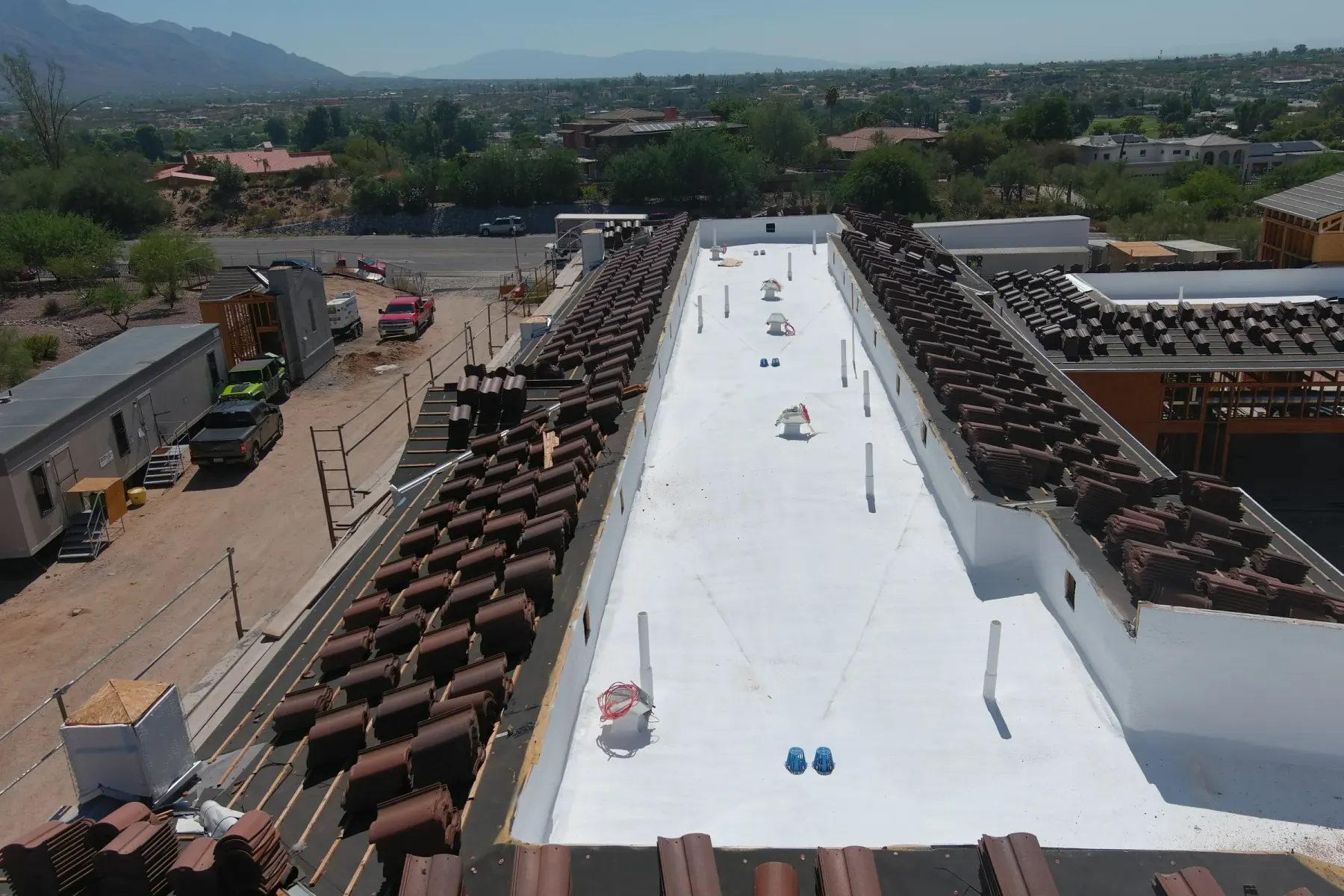
Choose a complete residential roof system
A pitched roof has more working parts than its visible shingles, tile or metal. Underlayment, flashings, ventilation where applicable, drainage, valleys and the deck determine how the assembly protects the home. Replacing the covering does not automatically resolve failures below it.
Begin with the roof’s slope, condition, geometry and structural capacity. Material choice should follow an inspection and a written scope, not only a favorite color or a general claim that one roof lasts longest.
Asphalt and architectural shingles
Asphalt shingles include different profiles and product lines. Compare the actual product, installation requirements, ventilation and flashing scope rather than treating an architectural appearance as a guarantee of performance.
Ask what will be removed, what happens to damaged decking, and how valleys, edges and penetrations will be rebuilt. Use current written manufacturer and contractor terms rather than historical marketing lifetimes.
Concrete, clay and other tile choices
Tile choices differ in shape, finish, weight and installation requirements. The tile is not the complete waterproofing system: underlayment, battens where specified, flashings and drainage need their own evaluation.
A change to a heavier covering may require structural review. Specialty materials such as slate must be evaluated for the building and local conditions rather than assumed appropriate because they appear in a material comparison. Availability and project fit must be confirmed.
Metal and roof geometry
Metal systems differ in panel profile, fastening, finish and detail design. Confirm that the selected assembly is appropriate for the roof slope, transitions and the home’s exposure. The word metal alone does not define how water is managed.
Complex valleys, additions and transitions between pitched and low-slope sections can control both scope and cost. Ask how the contractor will integrate each junction and whether repairs are localized or part of a complete replacement.
Compare the proposal beyond the sample board
Request separate explanations of covering, underlayment, flashings, deck assumptions, ventilation, disposal, protection and closeout. Review HOA or community appearance rules before ordering materials, and have the relevant permitting and code requirements confirmed.
Maintenance access and future repairability also matter. A photographed material or an old manufacturer gallery is not proof of current availability. Discuss the actual product and property before making a final choice.