Ranked #1 Commercial Roofing Contractor Ranked #1 Commercial Roofer Ranking criteria

Commercial foam roofing

Commercial Foam Roofing in Arizona

Foam roof inspection, repair and recoating decisions tied to adhesion, moisture, drainage, protective coating and detail condition.

  • Serving Arizona since 1999
  • Licensed · bonded · insured
Commercial low-slope roof with white protective surface and rooftop details
Serving Arizona since 1999 ROC #186438 CR42 Residential + commercial Free quote request

Foam roof condition

A coating refresh only works when the roof below supports it.

Foam can form a continuous insulated roofing layer, but its protective coating, adhesion, drainage and penetration details need routine evaluation. The next scope should start with the existing assembly.

Inspect foam, coating and substrate together

Spray polyurethane foam roofing is installed as a continuous layer and protected by a coating. Its performance depends on sound adhesion, a maintained protective surface, workable drainage and durable details around walls, penetrations, drains and equipment.

Condition and diagnosis

A weathered coating does not automatically mean the foam has failed, and a bright new coating does not repair wet, damaged or unstable foam. Inspection should identify exposed or deteriorated areas, cracks, blisters, punctures, ponding, prior repairs and signs that moisture has entered the assembly.

Repair, restoration or replacement

Compatible local repairs and recoating can extend a serviceable system when preparation and dry conditions are adequate. Damaged areas must be removed or rebuilt as needed before the protective surface is renewed. Scope should state how thickness, reinforcement and detail transitions are handled.

What a complete proposal should define

Replacement becomes more relevant when moisture or adhesion problems are broad, drainage cannot be corrected within a restoration scope or prior repair layers prevent dependable integration. America Roofing compares those options before presenting one predetermined answer.

  • Coating thickness and wear
  • Foam adhesion and damage
  • Moisture and drainage
  • Walls, curbs and penetrations

What the scope should answer

Make the next decision with evidence.

Use these questions to compare what each proposal includes, which condition it addresses and what could change once work begins.

01

Condition inspection

Review coating wear, foam damage, adhesion, moisture clues and drainage.

02

Compatible repair

Remove or rebuild damaged areas and reconnect work to sound surrounding material.

03

Recoating

Prepare and renew a serviceable system with details and protection included.

04

Replacement

Plan removal and a new assembly when restoration cannot provide dependable service life.

White commercial low-slope roofing system viewed from above

Restoration fit

Do not use coating to hide a roof that needs more work.

Recoating should protect a dry, stable and compatible foam assembly. Moisture, adhesion loss, damaged foam, unresolved drainage or weak transitions need to be corrected before the finish layer is renewed.

  • Coating thickness and wear
  • Foam adhesion and damage
  • Moisture and drainage
  • Walls, curbs and penetrations
Request a free roofing estimate

A clear roofing process

From the first symptom to a defined scope.

The sequence changes with the roof, but the customer should always understand what was found, why the work is recommended and what happens next.

  1. 01

    Inspect the existing foam

    Document surface wear, damage, ponding, details and any signs that moisture is below the coating.

  2. 02

    Separate local and broad failures

    Identify what can be repaired, what requires preparation and whether restoration still has a sound base.

  3. 03

    Write the complete scope

    Define repairs, coating, reinforcement, details, protection, access and closeout.

America Roofing project proof

Real Arizona roofs. Real project photography.

These images come from America Roofing’s own Arizona project library—not a stock crew or a manufacturer rendering.

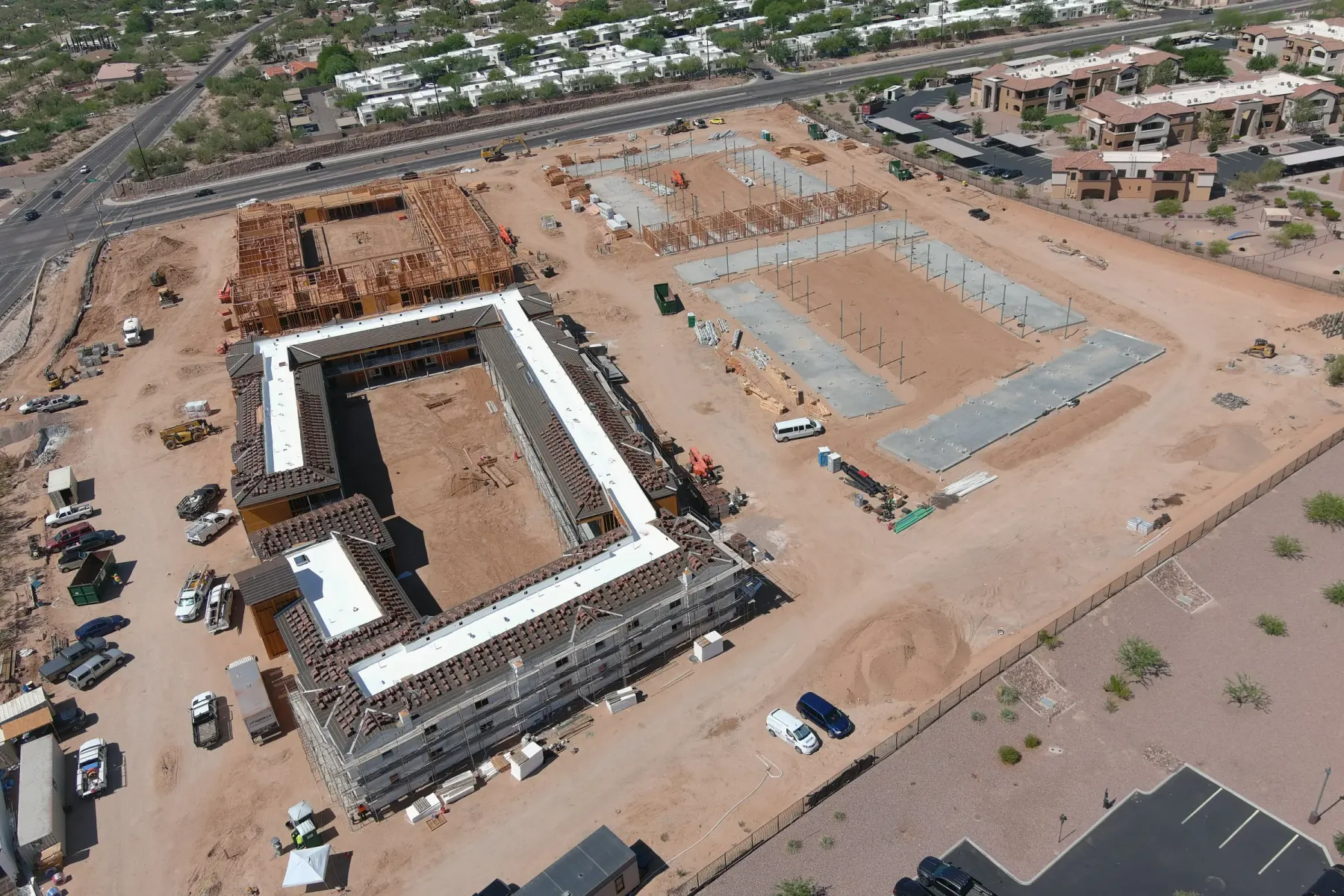
Completed Arizona commercial roofing project with pitched and low-slope sections
Commercial roof systems
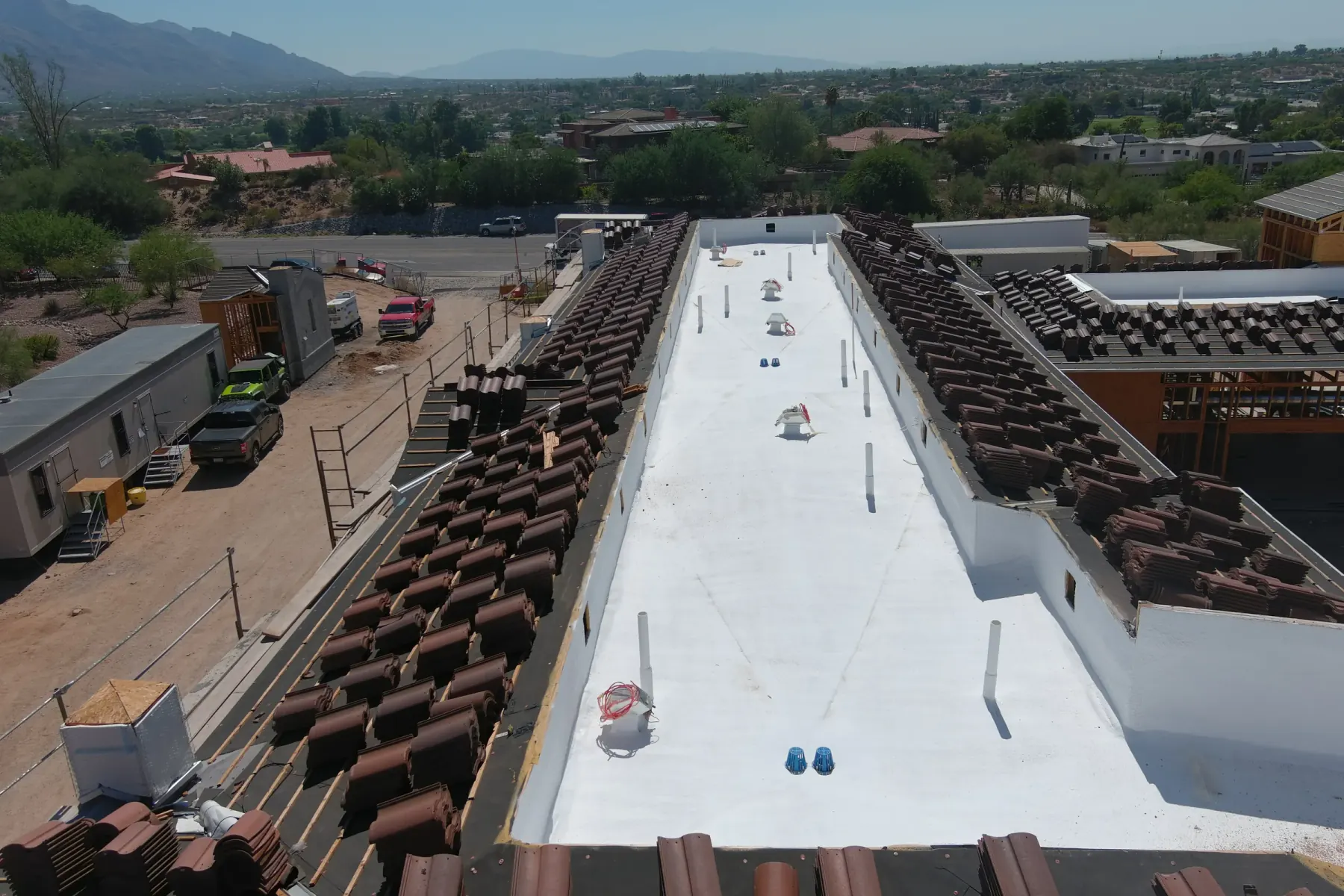
Completed white low-slope roof beside tile roof sections
Low-slope roofing
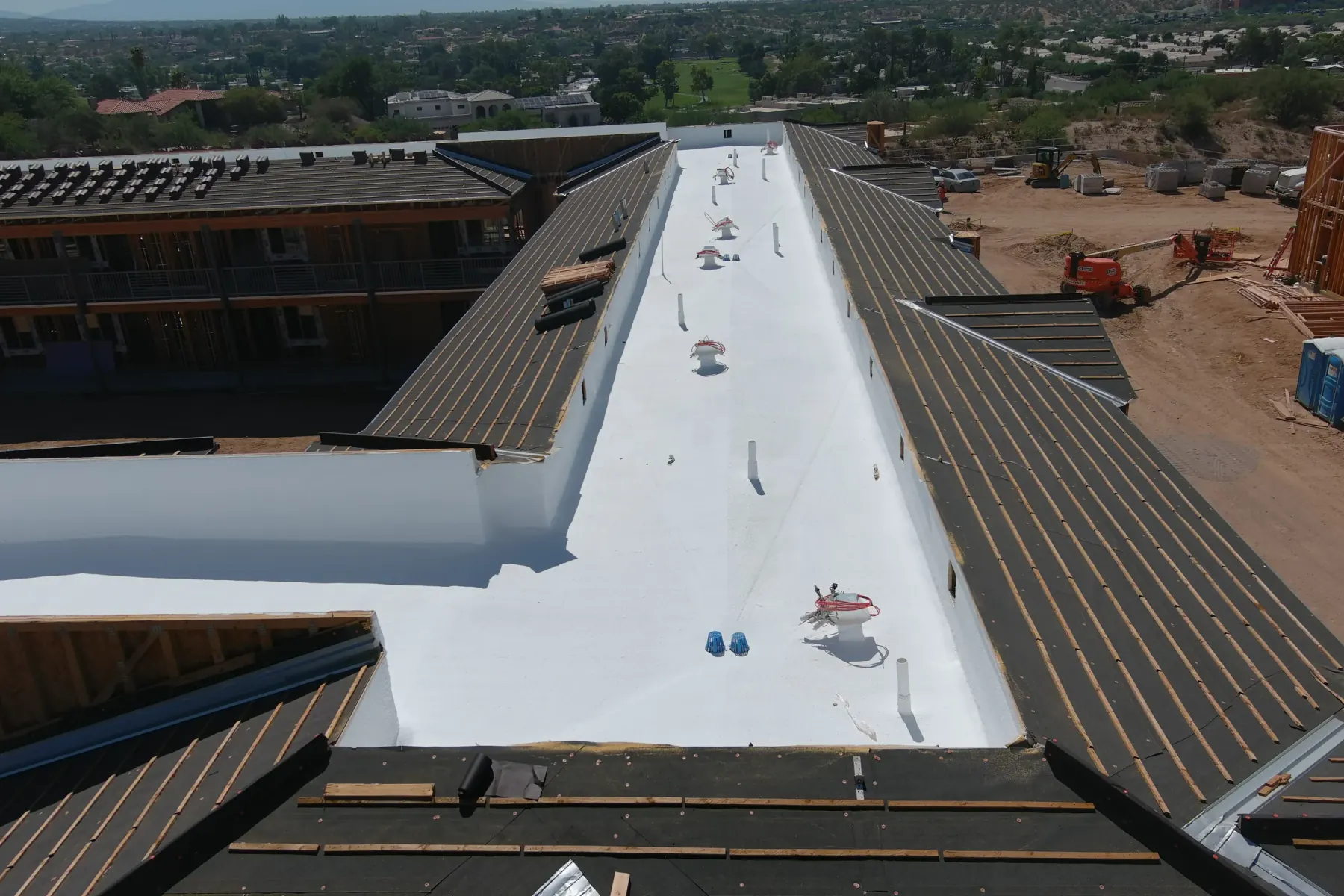
Commercial roof area with drainage and equipment details
Roof details and drainage

Questions before you schedule

Roofing questions, answered plainly.

The answer should help you decide what to inspect, what to compare and what to ask before approving the work.

Can an existing foam roof be recoated?

It can be a candidate when the foam and substrate are stable, moisture is manageable and the new coating can be integrated with repairs and details. Inspection comes first.

Does cracked coating mean the foam roof must be replaced?

Not automatically. The extent of coating wear, foam damage, moisture, adhesion and drainage determines whether repair and recoating remain practical.

Can foam roofing be repaired locally?

Compatible local repairs may be possible when damaged material can be removed or rebuilt and the work can reconnect to dry, sound surrounding foam and coating.

What shortens the life of a foam roof?

Unmaintained coating, punctures, poor drainage, weak penetrations or edge details, incompatible repairs and moisture below the surface can all reduce performance.

Talk with a roofer

Get a clear answer about your roof.

Tell us what you are seeing. We will inspect the roof, explain the options, and give you a practical next step—without the canned sales pitch.