

Why TPO Roofing Installation Details Matter for Arizona Commercial Buildings
Installing a TPO roof correctly is essential for protecting your commercial building from the elements, especially in a demanding climate. For anyone looking into this durable and energy-efficient option, understanding the professional tpo roofing installation details is the first step toward a long-lasting, leak-free roof. This guide will walk you through the critical steps, from preparation to final inspection, ensuring your investment is sound.
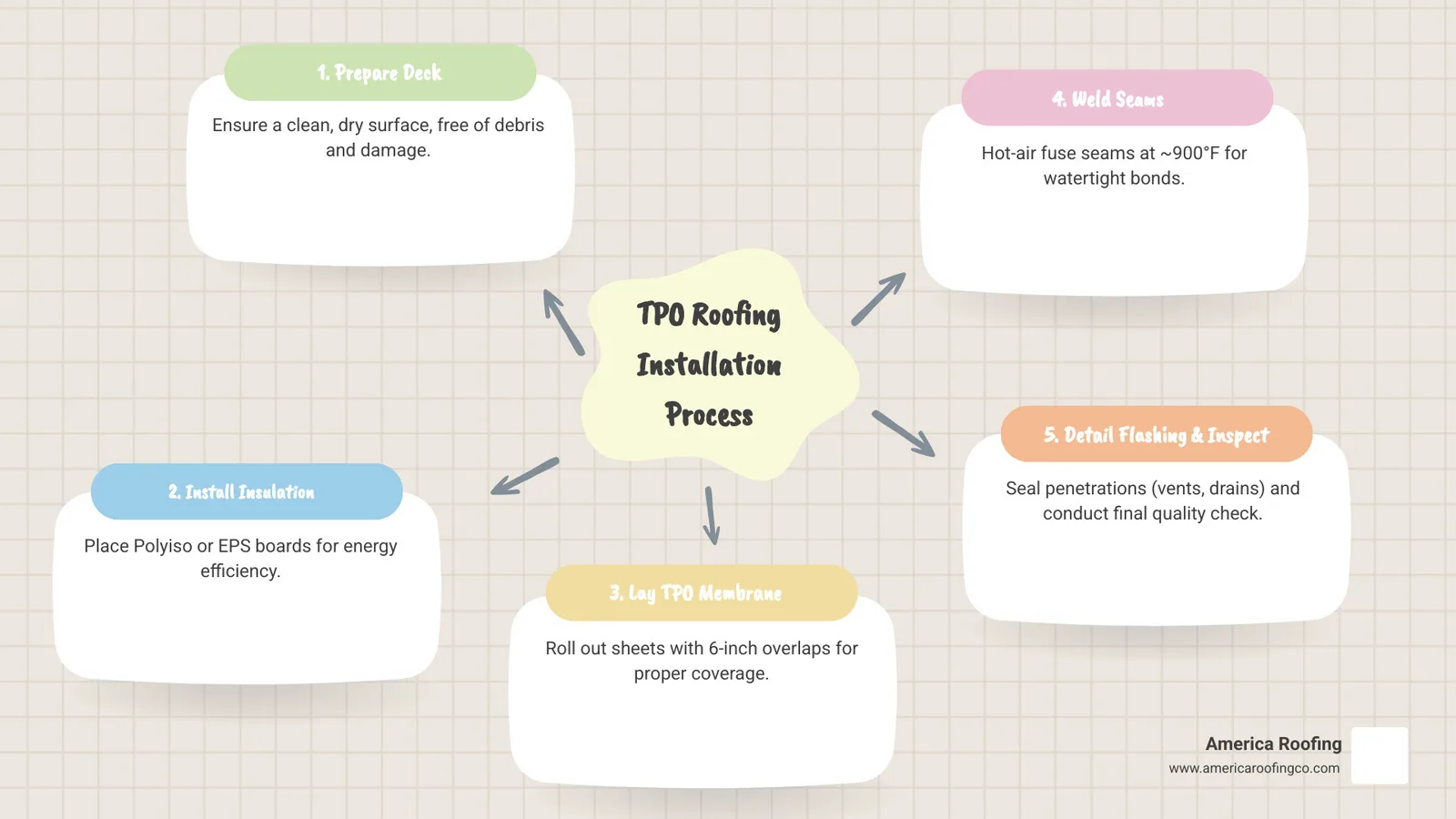
Tpo roofing installation details determine whether your commercial roof will last 20+ years or fail within a few seasons. Here's what proper TPO installation involves:
- Surface Preparation - Clean, dry deck free of debris and damage
- Insulation Layer - Polyiso or EPS boards for energy efficiency
- Membrane Installation - TPO sheets laid with 6-inch overlaps
- Hot-Air Welding - Seams fused at 900°F for watertight bonds
- Flashing Details - Waterproof seals around vents, drains, and penetrations
- Fastening Method - Mechanical, adhered, or ballasted systems
- Final Inspection - Seam testing and quality verification
The Arizona climate makes precision critical. Our intense UV exposure, monsoon rains, and extreme temperature swings from 115°F summers to freezing winter nights put extra stress on every seam and fastener.
Here's the thing: one poorly welded seam or improperly installed flashing can lead to water infiltration that damages insulation, causes interior leaks, and forces costly repairs. The difference between a TPO roof that protects your investment and one that fails comes down to following proven installation protocols.
Foundation First: Pre-Installation Steps for TPO Roofing
Before we even unroll the first sheet of TPO, a significant amount of preparation goes into ensuring a flawless and durable system. We believe that a strong foundation is key to a long-lasting roof, especially here in Arizona where the elements are constantly testing our craftsmanship.
What is TPO Roofing & Why is it Ideal for Commercial Buildings?
Let's start with the basics. TPO (Thermoplastic Polyolefin) is a single-ply roofing membrane that has become incredibly popular for commercial buildings, especially in the Phoenix metro area. It's an engineered blend of polypropylene and ethylene-propylene rubber, offering the best of both worlds: the heat-weldable properties of plastic and the flexibility of rubber.
Why do we recommend TPO for our commercial clients in Arizona? The benefits are clear:
- Energy Efficiency: TPO is typically manufactured in white or light colors, which means it's highly reflective. In our scorching Arizona summers, this is a meaningful advantage. A white TPO roof reflects the sun's UV rays and heat away from your building, significantly reducing interior temperatures and lowering your cooling costs.
- Durability: This material is built to last. TPO boasts excellent puncture and tear resistance, making it resilient against foot traffic and the harsh UV exposure we experience year-round.
- Cost-Effectiveness: While the initial investment is competitive, TPO's longevity and energy-saving properties make it a very economical choice over its lifespan.
- Eco-Friendliness: TPO is 100% recyclable, which aligns with our commitment to sustainable practices. When a TPO roof reaches the end of its life, the material can often be reprocessed, reducing landfill waste.
- UV Resistance: This is paramount in Arizona. TPO is specifically formulated to withstand prolonged UV radiation without deteriorating, ensuring your roof maintains its integrity for decades.
You know what? For commercial properties in Phoenix, Mesa, Chandler, and Glendale, TPO is often the smartest choice. Its ability to handle extreme heat, monsoons, and constant UV exposure makes it perfectly engineered for our unique climate challenges.
Preparing the Roof Deck, Drains, and Insulation
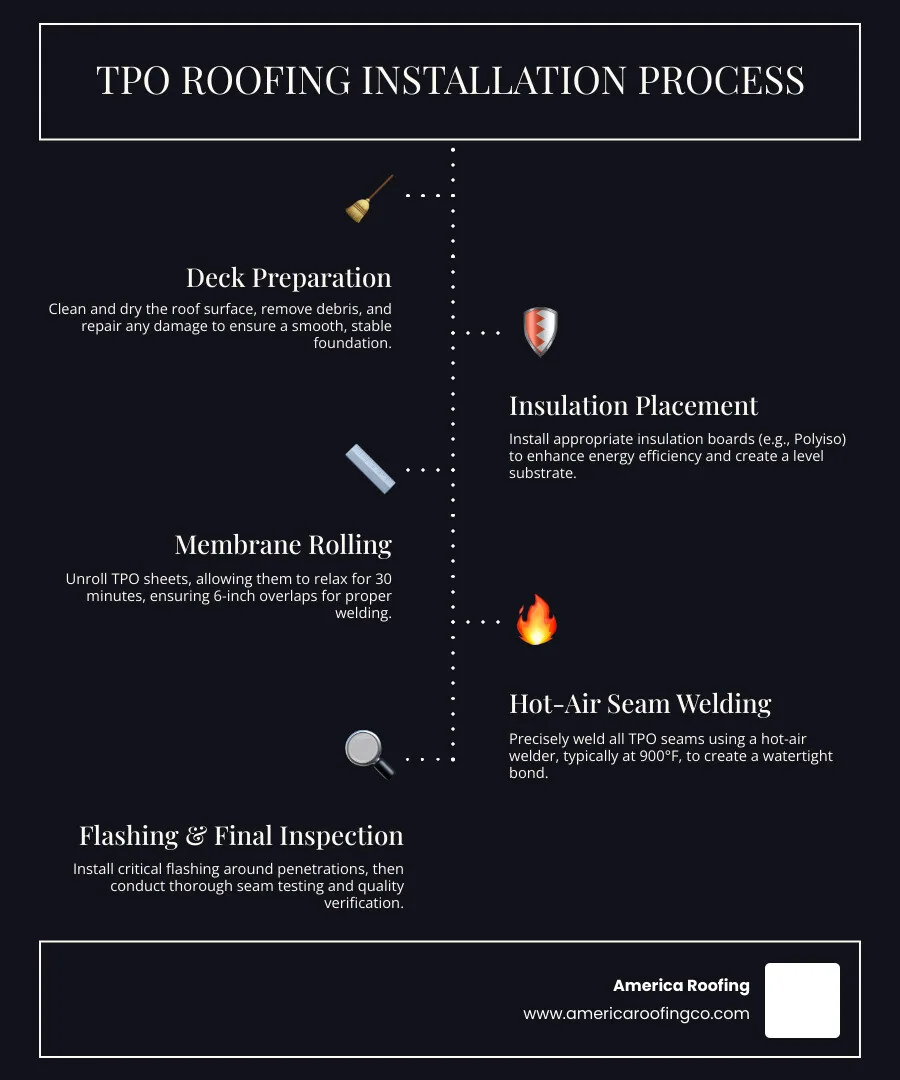
Before any TPO membrane touches your roof, we ensure the underlying structure is in perfect condition. This preparation phase is one of the most critical tpo roofing installation details.
- Clean Surface: We start by carefully cleaning the entire roof deck, removing all dirt, dust, and debris that could interfere with adhesion or create imperfections.
- Dry Substrate: A dry substrate is non-negotiable. Any moisture trapped beneath the TPO can lead to blistering, delamination, and mold growth.
- Damage Repair: We thoroughly inspect the existing roof deck for any damage or structural weaknesses. All necessary repairs are made to ensure a stable, smooth surface.
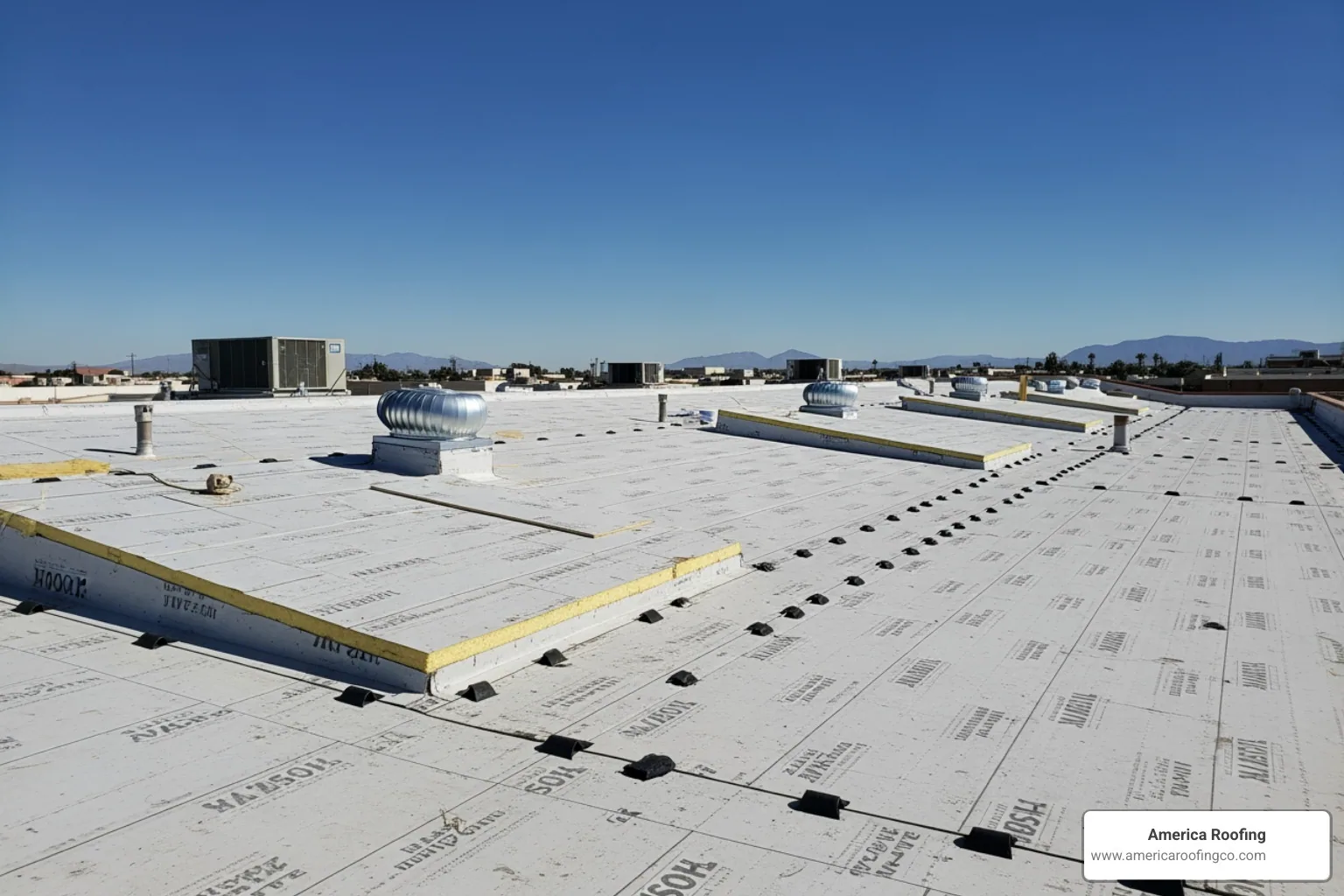
- Insulation Types: Once the deck is pristine, we install the insulation layer, typically Polyisocyanurate (Polyiso) or Expanded Polystyrene (EPS). This is vital for energy efficiency and provides a smooth surface for the TPO membrane.
- Drain Preparation: Proper drainage is paramount, especially when Arizona monsoons hit. We ensure all drains are clear and that the roof has the proper slope to guide water efficiently and prevent ponding.
Honestly, neglecting these initial steps is like building a house on sand. We've seen too many roofs fail prematurely because corners were cut during preparation.
Choosing Your Fastening Method: Adhered vs. Mechanical vs. Ballasted
One of the key decisions in tpo roofing installation details is how the membrane will be secured to the roof. The best choice depends on factors like the roof's structure, local building codes, wind uplift requirements, and your budget.
Here’s a comparison of the different fastening methods we employ:
| Fastening Method | Description |
|---|---|
| Mechanically Fastened | The TPO membrane is attached using screws and plates. This is a common and cost-effective method, especially for large roofs. |
| Fully Adhered | The membrane is glued to the insulation board below using a special adhesive. This creates a smooth, aesthetically pleasing finish and is often preferred for roofs with complex shapes or high wind uplift requirements. |
| Ballasted | The TPO membrane is laid loosely over the insulation and held in place with a layer of smooth, river-washed stones or concrete pavers. This method is less common now due to the added weight on the roof structure. |
The Professional Guide to TPO Roofing Installation Details
After the substrate and insulation are ready, membrane placement, fastening, heat-welded seams and penetration details determine whether the TPO system stays watertight.
Laying the Membrane and Perfecting Seam Welds
The true test of a TPO roof's integrity lies in its seams. This is where most failures occur if not done correctly, which is why we place such a strong emphasis on precision and technique in this area.
- Membrane Relaxation: We begin by unrolling the TPO membrane sheets and allowing them to relax for at least 30 minutes. This lets the material acclimate to the ambient temperature and release any stress from being rolled up, preventing wrinkles or shrinkage after installation. In Arizona's heat, this step is even more vital.
- 6-Inch Overlap: Each subsequent sheet of TPO is laid with a precise 6-inch overlap over the previous one. This overlap provides ample surface area for the crucial hot-air welding process.
- Hot-Air Welding: This is the heart of TPO installation. TPO seams are fused together using specialized hot-air welders that direct a stream of hot air (around 900°F) to melt the layers together. For large commercial roofs, we use automated robot welders to ensure consistent, strong welds.
- Test Welds: Before starting, we always perform test welds on scrap pieces of TPO. This allows us to fine-tune the welder's settings for the specific conditions of that day.
- Seam Probing: After the seams have cooled, our technicians carefully "probe" every inch of every weld with a pointed tool. This checks for any un-welded spots or voids, which are immediately re-welded to ensure a completely watertight seal.
Critical Flashing and Accessory TPO roofing installation details
While the main membrane covers the vast expanse of your roof, it's the flashing and accessory details that truly make it watertight. Any penetration or change in plane is a potential entry point for water, and our goal is to eliminate those possibilities.
- Flashing Importance: Flashing involves applying TPO material in specific ways around all roof penetrations (vents, skylights, HVAC units) and perimeters to create a seamless, waterproof barrier.
- TPO Accessories: To ensure speed, consistency, and a superior seal, we use a range of pre-fabricated TPO accessories:
- Pipe Boots: Pre-molded cones that fit snugly around pipes for a quick, reliable seal.
- Pre-molded Corners: These ensure a uniform, strong, and watertight seal at inside and outside corners, avoiding the inconsistencies of on-site fabrication.
- Flashing Tapes: Reinforced tapes used for extra protection and reinforcement.
- Installation Speed & Consistency: Using these specialized accessories not only increases the speed of installation but, more importantly, improves the consistency and quality of the finished product.
Let me explain: in a climate like Arizona, where we experience sudden, torrential downpours during monsoon season, even the smallest gap around a vent pipe can become a major leak point. Our careful approach to flashing ensures that every single penetration is sealed against the elements, protecting your building's interior from water damage.
Avoiding Pitfalls and Ensuring Longevity
A TPO roof, when installed correctly, is incredibly durable and designed to last for decades. However, common mistakes can compromise its performance. Our expertise at America Roofing is not just in doing it right, but in knowing what can go wrong and proactively preventing it.
Common Installation Mistakes and How to Prevent Them
We've seen our share of roofing issues over the years, and many could have been avoided with proper attention to tpo roofing installation details. Here are some of the most common pitfalls and how we ensure they don't happen on your America Roofing project:
- Improper Surface Preparation: A dirty, wet, or uneven substrate is a recipe for disaster. Our Prevention: We ensure the roof deck is carefully cleaned, completely dry, and perfectly smooth before any insulation or membrane is laid.
- Incorrect Fastening: Using the wrong type or number of fasteners can lead to membrane uplift during high winds. Our Prevention: We strictly adhere to manufacturer specifications and local Arizona building codes for fastening patterns.
- Poor Seam Welding / Cold Welds: This is arguably the most critical mistake. If seams aren't properly fused, they will eventually separate and allow water to infiltrate. Our Prevention: We use state-of-the-art hot-air welding equipment, perform test welds, and conduct thorough seam probing on every single weld.
- Neglecting Flashing Details: Inadequate flashing around penetrations is a primary source of leaks. Our Prevention: We use pre-fabricated TPO accessories like pipe boots and pre-molded corners to ensure consistent, strong seals, especially for areas prone to monsoon rains.
- Lack of Post-Installation Care: Neglecting routine maintenance can shorten your roof's lifespan. Our Prevention: We educate our clients on the importance of regular inspections and debris removal to prevent small issues from becoming major problems.
For more insights into proper TPO membrane installation, you might find this guide helpful: Your Guide to TPO Membrane Installation.
At America Roofing, our nearly 25 years of experience as a third-generation, family-owned business in Maricopa County has taught us the absolute importance of getting these details right. We understand the specific challenges of the Arizona climate – the relentless sun, the sudden haboobs, and the intense monsoon rains. Our installation processes are perfectly engineered to withstand these conditions, ensuring your TPO roof performs flawlessly for years to come. We’re not just installing a roof; we’re installing peace of mind for your business. For more information on our flat roof services custom for Arizona, please visit our dedicated page: More info about flat roof services.
When you choose America Roofing for your TPO installation, you're investing in a durable, energy-efficient system backed by legendary customer-first service and flawless craftsmanship. Ready to secure your commercial property with a TPO roof built to last in Arizona's toughest conditions? Don't hesitate to reach out to us at 602-237-2478 or Request a Free Quote today.