
Choosing the right tpo roofing material is one of the most important decisions you'll make for your commercial property's longevity and energy efficiency. Honestly, with the intense Arizona sun beating down, you need a solution that doesn't just cover your building but actively protects your bottom line. Let me explain why this specific membrane has become the go-to choice for smart owners across the Valley.
What Makes TPO Roofing Material Worth Knowing About
When it comes to protecting your commercial property from the relentless Arizona sun, choosing the right tpo roofing material is a meaningful advantage for energy efficiency and durability. This single-ply membrane has rapidly become the gold standard for flat roofs, offering a unique blend of rubber-like flexibility and plastic-like strength. Honestly, for building owners in the Phoenix-metro area, understanding this material is the first step toward a cooler, more resilient structure.
TPO roofing material is one of the fastest-growing choices for flat and low-slope commercial roofs in the country — and in Arizona's punishing heat, it's easy to see why. This single-ply membrane blends rubber-like flexibility with plastic-like toughness, making it a practical powerhouse for building owners who need performance without breaking the budget.
Here's a quick snapshot of what TPO roofing material is:
| Feature | Details |
|---|---|
| Full Name | Thermoplastic Polyolefin |
| Type | Single-ply roofing membrane |
| Common Thicknesses | 45-mil, 60-mil, 80-mil |
| Colors Available | White, tan, gray |
| Typical Lifespan | 20-30 years with proper care |
| Best For | Flat/low-slope commercial & industrial roofs |
| Key Strengths | Reflectivity, UV resistance, energy efficiency, durability |
| Installation Methods | Mechanically fastened, fully adhered, self-adhered |
| Cost Range | $5-$15 per square foot installed |
| Recyclable? | Yes, 100% recyclable |
Walk past almost any commercial building in the Phoenix metro and you'll likely spot a bright white roof catching the sun. That's almost certainly TPO.
TPO now accounts for roughly 40% of the commercial roofing market in the U.S. That kind of market share doesn't happen by accident. It's earned through real performance in real conditions — including the kind of extreme UV exposure, monsoon rains, and temperature swings that Arizona dishes out every single year.
For property managers like Elena in Tempe, or home builders like Carlos in Chandler, picking the wrong roofing membrane means leaks, higher energy bills, and costly repairs down the road. Getting familiar with TPO is simply smart business.
Tpo roofing material glossary:
Introduction
In commercial roofing, TPO (Thermoplastic Polyolefin) is the undisputed heavyweight champion of the modern era. Originally developed for the automotive industry to handle high-heat environments, it made its way into the roofing world about 30 years ago. Since then, it has revolutionized how we think about commercial flat roof installation.
Essentially, TPO is a synthetic, single-ply membrane that is rolled out across a roof deck and fused together. Its primary claim to fame is its incredible solar reflectivity. In cities like Phoenix and Tucson, where asphalt can reach temperatures high enough to fry an egg, a white TPO roof stays significantly cooler. This "cool roof" technology isn't just a buzzword; it’s a vital tool for reducing the "urban heat island" effect and keeping your HVAC units from working themselves to death.
Understanding TPO Roofing Material and Its Benefits
Why are so many businesses in Mesa and Scottsdale switching to TPO? Let me explain. The benefits go far beyond just looking clean and bright.
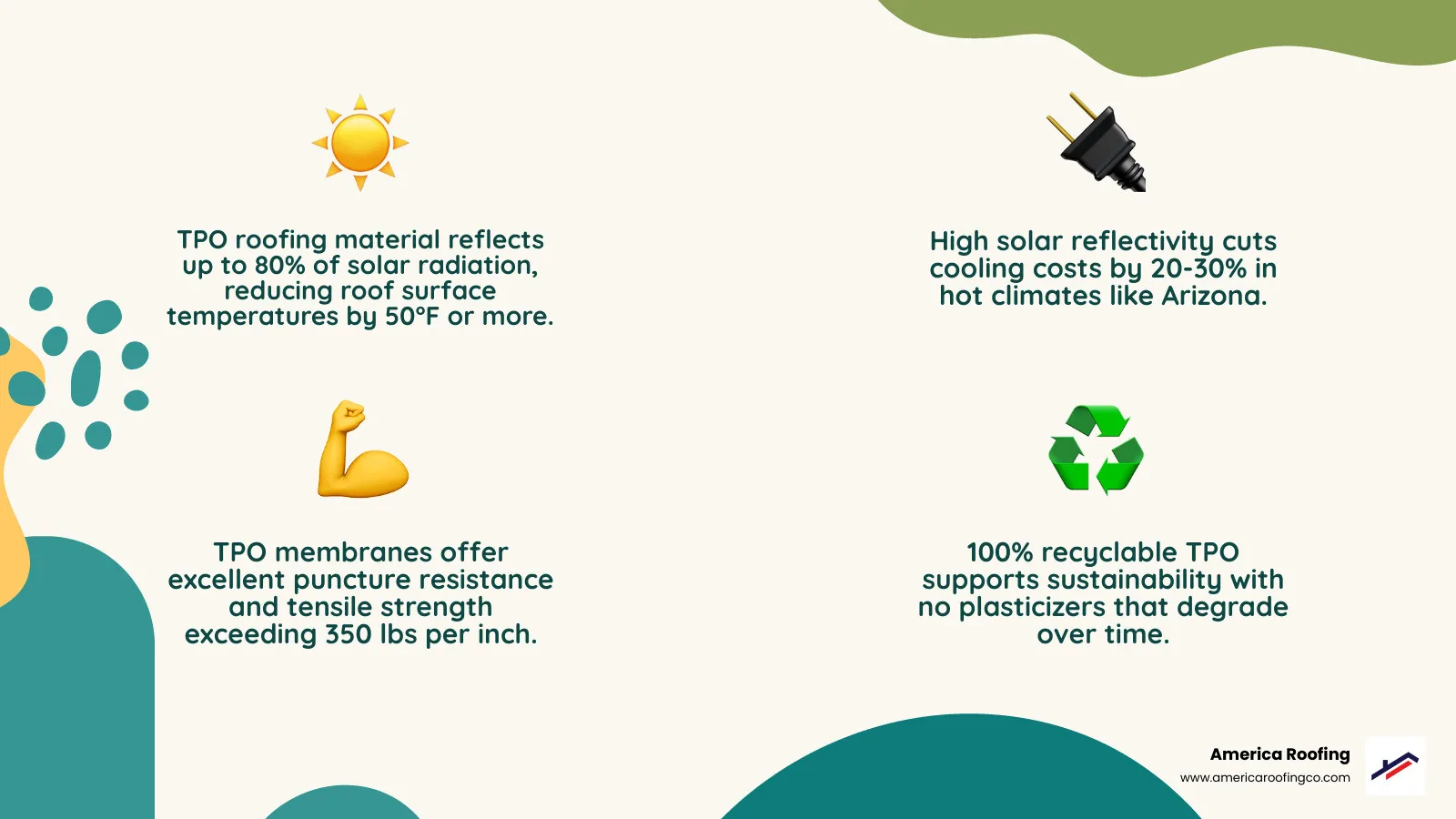
First, there's the energy efficiency. Because TPO is highly reflective, it bounces the sun’s UV rays back into the atmosphere rather than absorbing them into the building. Many TPO products are Energy Star rated, which can lead to substantial savings on cooling costs—sometimes as much as 30% during our peak summer months.
Then, there's the durability. Unlike older roofing types that might crack or peel, tpo roofing material is engineered to be puncture-resistant and flexible. It can handle the natural expansion and contraction of a building as temperatures fluctuate from 115°F in the afternoon to 70°F at night.
Perhaps the biggest technical advantage is the heat-welded seams. Instead of using tapes or glues that can fail over time, TPO seams are fused together with hot air. This creates a monolithic, watertight bond that is actually stronger than the membrane itself.
For a deeper dive into these technical advantages, check out our guide on TPO roofing details.
What is TPO Roofing Material and How is it Made?
You know what? Most people think TPO is just a sheet of plastic, but it’s actually a sophisticated sandwich of high-tech materials. It is typically manufactured using a hot-melt extrusion process that creates three distinct layers:
- The Base Layer: A polymer layer that provides the foundation.
- The Scrim: A polyester reinforced scrim (a heavy-duty fabric mesh) that gives the membrane its incredible tearing and breaking strength.
- The Top Ply: A specialized compound made of polypropylene and ethylene-propylene rubber. This top layer contains the UV inhibitors and weathering packages that allow the roof to survive decades of desert exposure.
This "scrim encapsulation" is critical. If the mesh isn't fully protected, the roof can delaminate. That’s why we only use premium membranes that exceed standard ASTM requirements. If you want to see how these layers are handled during a project, read our article on how to install TPO details for a durable system.
Key Properties of TPO Roofing Material
When we talk about the "quality" of a roof, we aren't just guessing. We look at specific performance metrics. Premium TPO membranes, like those used by America Roofing, often blow the minimum standards out of the water.
- Seam Strength: While the industry standard is 66 lbf, high-performance TPO can reach 150 lbf.
- Breaking Strength: Standard TPO is rated at 220 lbf, but premium versions can hit 365-445 lbf.
- Dimensional Stability: This measures how much the material shrinks or grows. Qualified TPO maintains a stability of 0.4%, which is more than twice as good as the 1% industry average.
- Thickness: TPO comes in various thicknesses, measured in "mils" (thousandths of an inch). While 45-mil is common for budget projects, we often recommend 60-mil or 80-mil for Arizona buildings to provide extra "wear thickness" against the sun.
For more on how these properties translate to real-world performance, see the TPO flat roof system: performance and durability.
TPO vs. EPDM and PVC: Which is Better?
Honestly, this is the question we get asked most often. "Should I go with the black rubber (EPDM), the plastic (PVC), or this TPO stuff?" Here’s the thing: each has its place, but in the Arizona desert, TPO usually wins.
| Feature | TPO | EPDM | PVC |
|---|---|---|---|
| Seam Method | Heat-Welded (Strongest) | Tape/Adhesive (Can fail) | Heat-Welded (Strong) |
| Reflectivity | Excellent (White) | Poor (Usually Black) | Excellent (White) |
| Chemical Resistance | Good | Poor (Oils/Grease) | Excellent |
| Puncture Resistance | High | Moderate | High |
| AZ Climate Fit | Best for Heat/UV | Better for Cold | Great for Restaurants |
While EPDM is a "tried and true" material used since the 1960s, its black color absorbs heat, making it less ideal for Phoenix. PVC is fantastic, especially for restaurants because it resists grease, but it often carries a higher price tag. TPO offers the "sweet spot" of performance and value. Learn more about these choices in our flat roofing solutions and maintenance tips.
Installation, Maintenance, and Long-Term Value
A roof is only as good as the hands that install it. Even the best tpo roofing material will fail if the seams aren't welded correctly or the drainage isn't planned out.
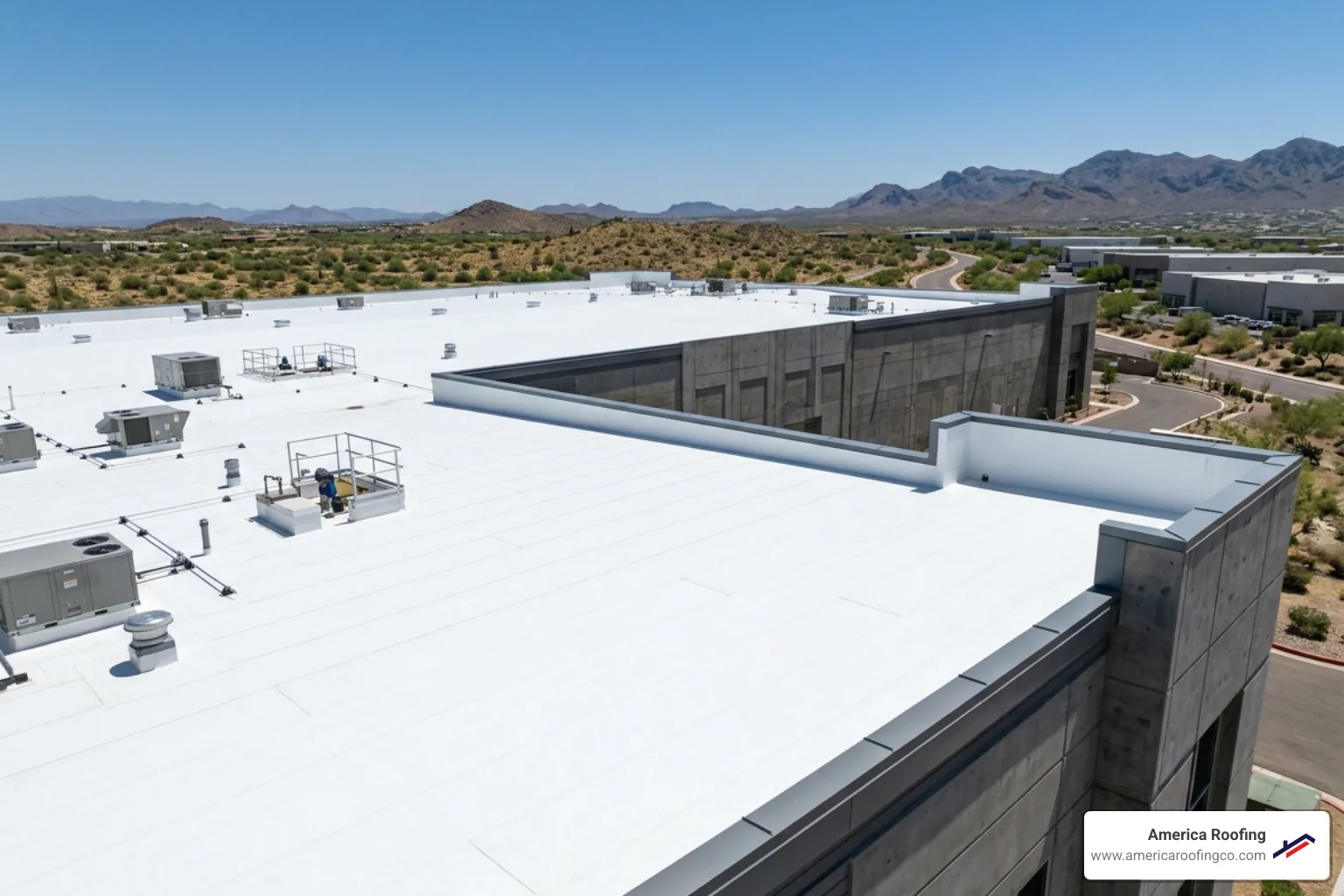
At America Roofing, we utilize several advanced installation methods:
- Mechanically Fastened: The membrane is screwed into the roof deck using specialized plates. This is cost-effective and very common.
- Fully Adhered: The membrane is glued down across the entire surface. This provides the best wind-uplift resistance and a smooth, aesthetic look.
- Induction Welding (RhinoBond): A specialized tool welds the membrane to the plates underneath using electromagnetic heat. It’s fast and incredibly secure.
Common Installation Methods for Single-Ply Systems
One of the coolest innovations lately is self-adhered membranes. These "peel and stick" systems can be installed up to three times faster than traditional methods and don't require smelly adhesives—perfect for hospitals or schools in Peoria and Glendale where VOC odors are a concern.
We also focus heavily on positive drainage. Arizona monsoons can drop inches of rain in minutes. If that water sits on your roof, it’s called "ponding," and it’s the enemy of any flat roof. We use tapered ISO crickets (sloped insulation boards) to ensure every drop of water finds its way to the drains or scuppers.
For high-stakes buildings, we even offer Electronic Leak Detection (ELD), a high-tech way to find a pinhole leak that the human eye would never see. Check out our Commercial/Flat Roof Arizona guide for more details.
Weather Resistance: Hail, UV, and High Winds
Arizona weather is no joke. Between the 115-degree "haboobs" (dust storms) and the violent monsoons, your roof takes a beating.
tpo roofing material is specifically designed to meet ASTM standards for weatherability. In fact, some specialized TPO systems are so tough they are eligible for hail guarantees up to 4 inches in diameter when combined with the right insulation. That’s essentially the size of a grapefruit!
When those high winds howl through the Valley, a properly fastened TPO system stays put. For more on protecting your roof from the elements, see our flat roof repair Arizona guide. You can also find additional insights in this comprehensive guide to TPO.
Longevity and Maintenance Tips
A TPO roof can easily last 20 to 30 years, but only if you treat it right. Think of it like a car; you wouldn't drive a truck for 20 years without changing the oil, right?
Here are my top maintenance tips for Arizona TPO roofs:
- Annual Inspections: Have a professional check the seams and flashings at least once a year, ideally before monsoon season.
- Debris Removal: Dust, leaves, and "haboob" silt can clog your drains. Keep them clear!
- Check the Seams: If you see a seam starting to "fishmouth" (open up), get it heat-welded immediately.
- Wash the Roof: Believe it or not, washing a TPO roof helps maintain its reflectivity. A dirty white roof doesn't save you as much money on energy!
For a full breakdown of what to look for, revisit the TPO flat roof system: performance and durability.
You know what? Investing in a high-quality roof is about more than just coverage; it’s about peace of mind during the next big monsoon. If you are ready to upgrade your facility with a system engineered for the desert, contact our expert team at 602-237-2478. We are here to help you protect your investment, so feel free to Request a Free Quote today.