
Introduction
Choosing the right material for your commercial or residential property is a major decision, especially when considering a tpo flat roof. This single-ply membrane has quickly become the industry standard for those seeking a balance between upfront affordability and long-term energy savings.
Choosing the right material for your commercial or residential property is a major decision, especially when considering a tpo flat roof. This single-ply membrane has quickly become the industry standard for those seeking a balance between upfront affordability and long-term energy savings.
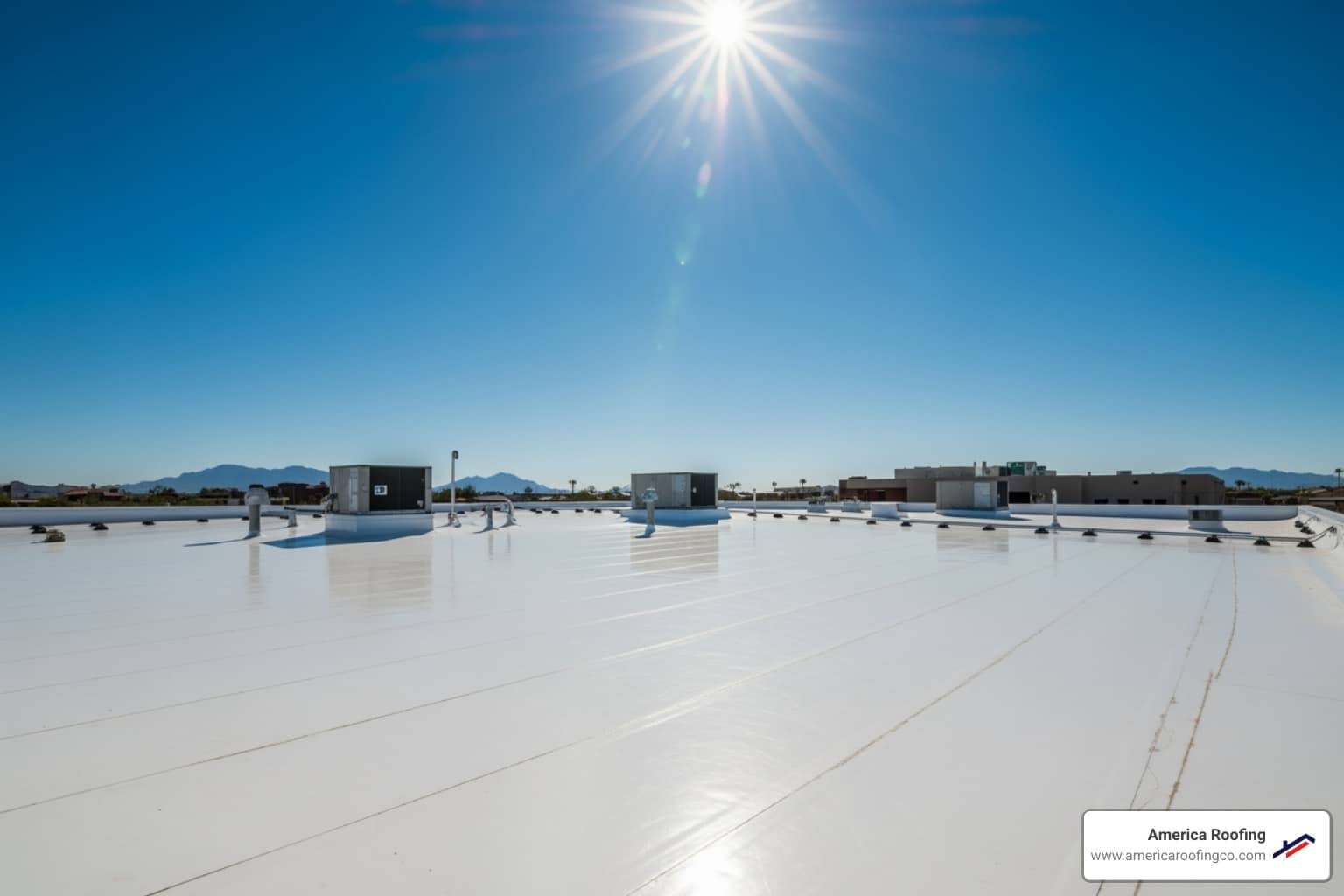
If you have spent any time driving through the Phoenix-metro area or looking down from a high-rise in Scottsdale, you have likely seen a sea of bright white roofs. You know what? There is a very good reason for that. Most of those are tpo flat roof systems. Thermoplastic Polyolefin (TPO) is a single-ply membrane that has revolutionized the roofing industry, particularly in sun-drenched regions like Arizona.
TPO commands a massive market share—valued at approximately USD 4.57 billion in 2021—and for good reason. It offers an incredible blend of energy efficiency, durability, and cost-effectiveness. In 2021 alone, thermoplastic membranes saw a 14% growth in the industry. But is it the best choice for your building? Honestly, it depends on your specific needs, but for many Arizona property owners, it is the gold standard for fighting back against extreme UV exposure.
Understanding the TPO Flat Roof System
Let me explain: TPO is not just "plastic." It is a highly engineered polymer blend designed to withstand the harshest environmental conditions. A tpo flat roof consists of a single layer of synthetics and reinforcing scrim used to cover flat or low-slope roofs.
The system is built on a foundation of material science. It combines the durability of EPDM rubber with the heat-welding capabilities of PVC, creating a membrane that is both flexible and incredibly strong at the seams. According to the International Building Code® 2018 Edition, these thermoplastic single-ply membranes require a minimum slope of ¼:12 for new construction to ensure positive drainage—a critical factor in preventing the "ponding water" that can plague flat roofs.
What is a TPO Flat Roof Made Of?
When we look at a cross-section of a TPO membrane, we see three distinct layers laminated together:
- A Top Polymer Layer: Contains UV stabilizers and fire retardants to protect against the sun and potential hazards.
- A Polyester Scrim Reinforcement: This center "mesh" provides the tearing strength and puncture resistance needed for foot traffic and weather events.
- A Bottom Polymer Layer: Engineered for consistent adhesion to the substrate.
TPO is typically manufactured in large sheets (10, 12, or 20 feet wide) to minimize the number of seams on your roof. You also have choices when it comes to thickness. Most manufacturers offer:
- 45-mil (1.1 mm): The entry-level, budget-friendly option.
- 60-mil (1.5 mm): The industry standard for a balance of cost and longevity.
- 80-mil and 90-mil: Premium thicknesses for heavy-duty protection and longer warranties.
For a deeper dive into these specifications, check out our TPO roofing details page.
Key Benefits and Energy Efficiency
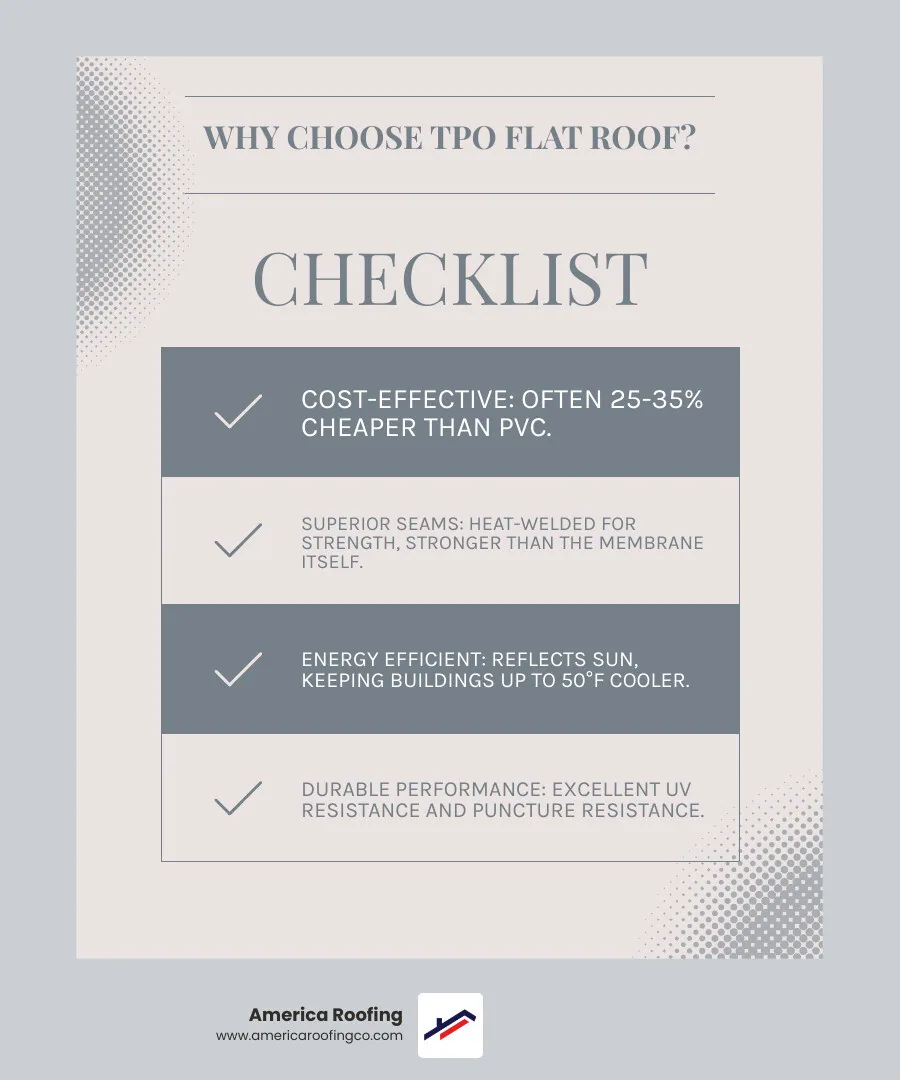
The biggest "selling point" for a tpo flat roof in the Arizona desert is its Solar Reflectance Index (SRI). Because these roofs are typically bright white, they reflect sunlight and heat away from the building.
Here is the thing: a black roof can reach temperatures of 170°F or more on a July afternoon in Mesa. A white TPO roof, however, can stay up to 50°F cooler. This "cool roof" technology directly translates to lower HVAC loads and significant energy savings. Beyond energy, TPO offers:
- Puncture Resistance: It stands up better to the occasional hail or fallen branch than EPDM.
- Class A Fire Rating: Many systems include fire retardants to meet strict safety codes.
- Eco-Friendliness: TPO is 100% recyclable and contains no added chlorine or halogens.
Understanding these perks is why many experts suggest you consider flat roofing for modern commercial designs.
Installation Methods for a TPO Flat Roof
How we put the roof on is just as important as the material itself. There are three primary ways to secure a tpo flat roof:
- Mechanically Fastened: This is the most common method. We use specialized plates and screws to secure the membrane through the insulation and into the roof deck.
- Fully Adhered: The membrane is glued to the substrate using a bonding adhesive. This provides the best wind-uplift resistance and is often preferred in areas prone to monsoons.
- Induction Welding: A newer technology that uses magnets and induction heat to weld the membrane to the plates underneath without penetrating the top layer.
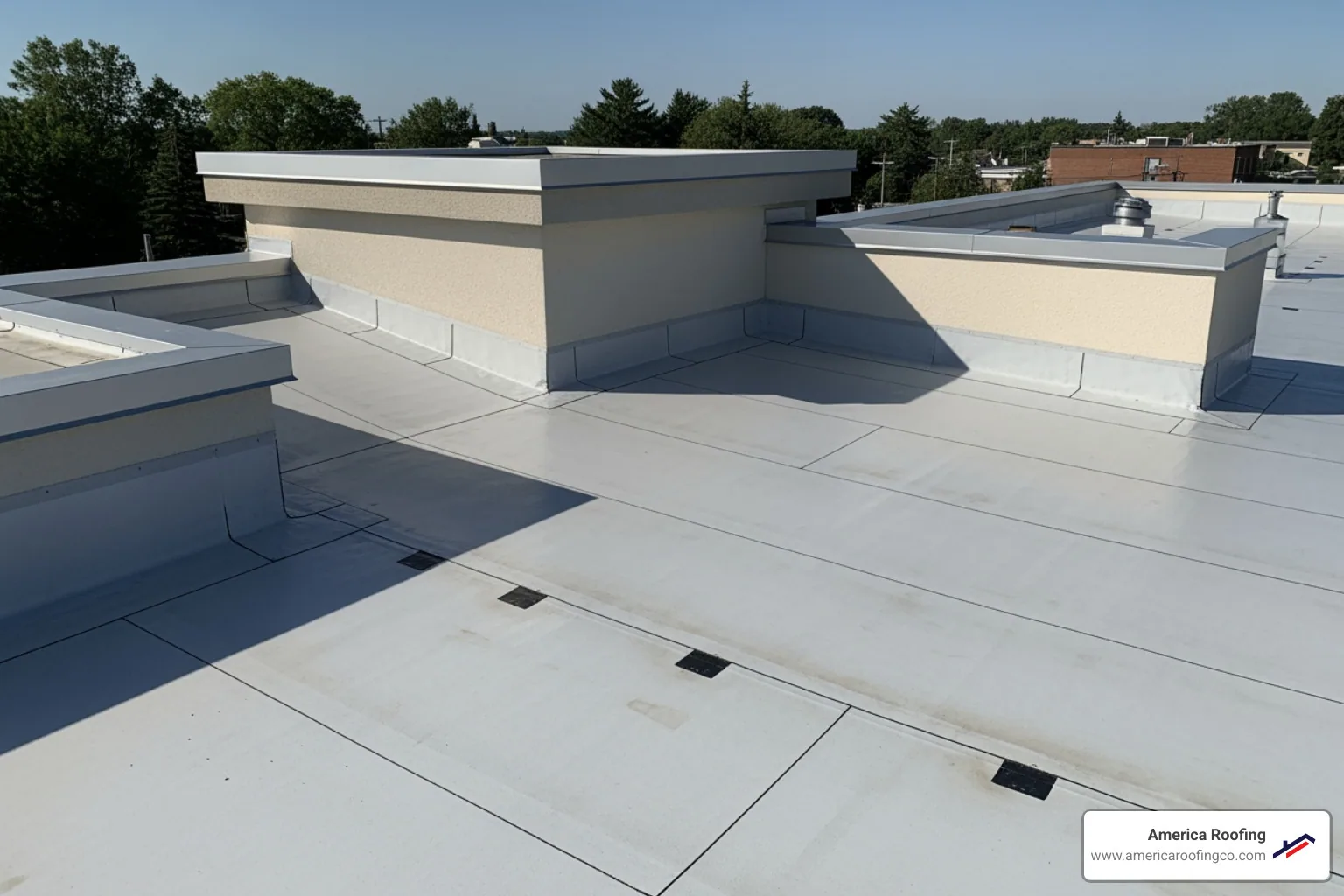
Regardless of the attachment method, the seams are always heat-welded. Using a hot-air gun, we fuse the sheets together at over 1,000°F. This creates a chemical bond that is actually stronger than the membrane itself! Before the membrane goes down, we also help you choose the right insulation (Polyiso, EPS, or XPS) to maximize your R-value. You can learn more about our specific commercial flat roof installation processes here.
Performance, Costs, and Long-Term Durability
When you are looking at the bottom line, TPO is hard to beat. It is generally 25-35% cheaper than PVC, its closest competitor. Typically, you can expect to pay between $6 and $12 per square foot for a full installation, depending on the complexity of the roof and the insulation requirements.
| Feature | TPO | EPDM | PVC |
|---|---|---|---|
| Average Cost (per sq ft) | $6 - $12 | $5 - $13 | $7 - $14 |
| Seam Type | Heat-Welded (Strongest) | Tape/Adhesive | Chemical/Heat Weld |
| UV Resistance | Excellent | Good | Excellent |
| Lifespan | 15 - 30 Years | 20 - 25 Years | 20 - 30 Years |
| Color | White, Tan, Gray | Primarily Black | White, Gray, Tan |
Let me explain why the lowest bid can be a costly mistake. TPO is a "younger" technology compared to EPDM. Because the chemical formulas vary between manufacturers, choosing a "bargain-bin" TPO can lead to premature aging or seam failure. If you want to see how TPO stacks up against every other system, you can download this eBook for a full comparison.
Comparing TPO to EPDM and PVC
You might hear some old-school roofers say EPDM is better because it has been around since the 60s. While EPDM is a "tried and true" rubber, its black surface is a heat magnet. In Arizona, that is a recipe for high electric bills.
PVC is another great "cool roof" option, but it comes with a higher price tag. TPO bridges the gap—offering the heat-welded seams and reflectivity of PVC but at a price point closer to EPDM. For those budgeting for a big project, our flat roof replacement cost guide offers more localized pricing insights.
Maintenance and Repair Strategies
A tpo flat roof is low maintenance, but it is not no maintenance. To get that 30-year lifespan, you need a plan.
- Annual Inspections: We check for "bridging" at the seams and punctures from debris.
- Infrared Moisture Detection: We use infrared cameras after sunset to see if any insulation has become saturated. If more than 25% of the insulation is wet, a full tear-off is usually required.
- Silicone Restoration: If your TPO is aging but the insulation is dry, we can apply a silicone coating to add 10-20 years of life to the roof.
- Cleaning: Keeping the roof white is key to its energy efficiency. Dirt accumulation can reduce reflectivity, so a soft-bristle broom and water are your best friends.
For those dealing with existing issues, our flat roof repair in Arizona guide covers everything from leak detection to emergency patches.
Climate Suitability and Professional Selection
Arizona presents a unique set of challenges. We don't just have heat; we have monsoons, haboobs (massive dust storms), and intense UV exposure that can degrade lower-quality materials in a heartbeat.
At America Roofing, we understand these challenges because we live here. We are an Arizona-based, veteran-owned, third-generation family business (ROC#186438). We have been serving Maricopa County since 1999, providing honest, no-pressure advice to our neighbors. Whether you are in Phoenix, Tucson, Mesa, or any of the surrounding valleys, we bring the expertise needed to ensure your TPO system is "Arizona-proof."
We proudly serve:
- Phoenix & Scottsdale
- Mesa, Chandler & Gilbert
- Peoria, Glendale & Surprise
- Tempe, San Tan Valley & Queen Creek
You know what? Choosing a local expert who understands the Phoenix-metro climate is the most important step in protecting your investment. A tpo flat roof is only as good as the technician holding the welding gun. If you are ready to secure your property with a high-performance system that saves you money on every utility bill, we are here to help.
Honestly, don't wait for the next monsoon to find out if your roof is up to the task. If you are ready to secure your property with a high-performance system, call us at 602-237-2478 or Request a Free Quote today.