
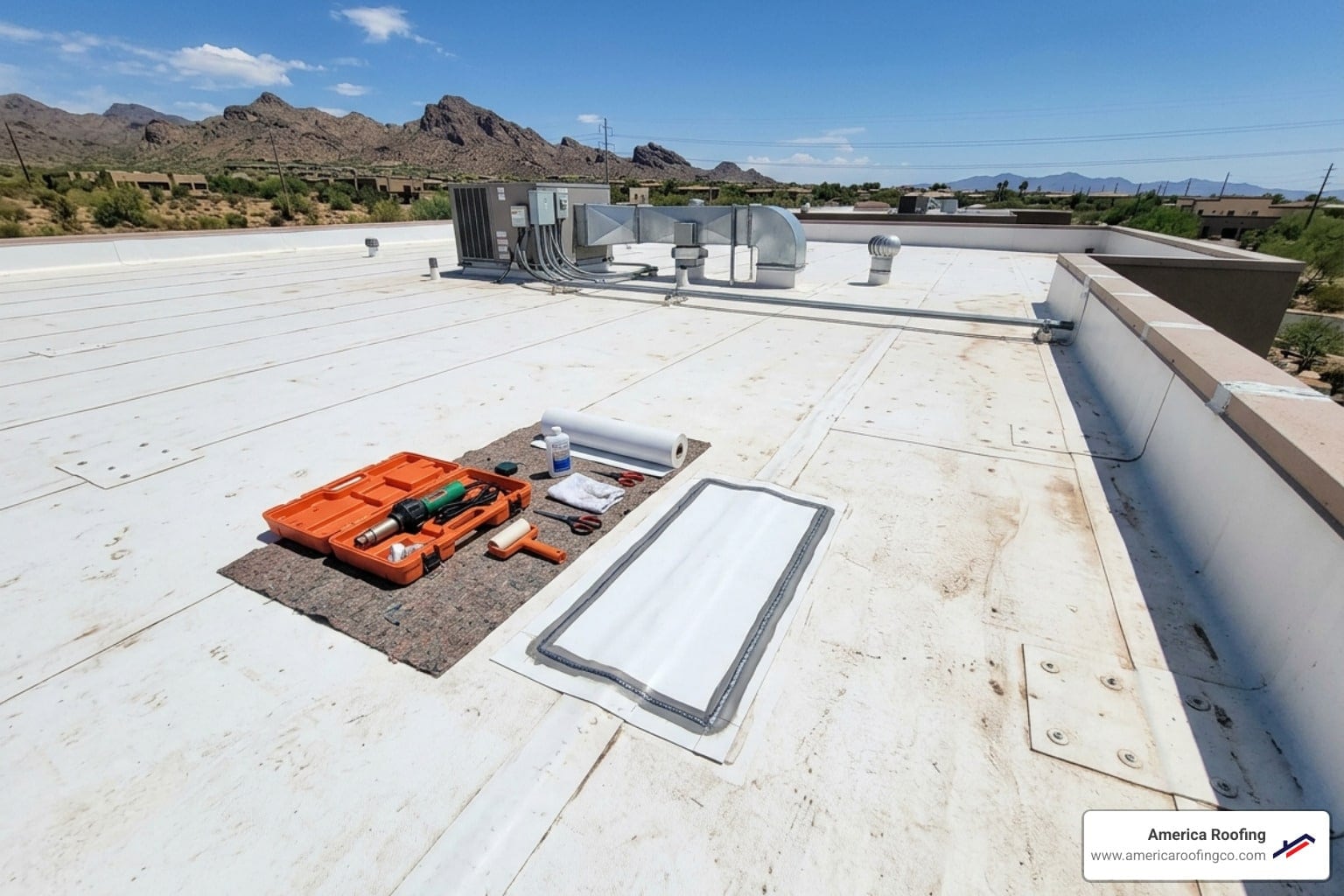
Maintaining a flat roof in the intense Arizona heat can be a significant challenge for any property owner, but understanding the nuances of tpo roofing repair is the first step toward protecting your investment. Whether you are dealing with a minor puncture from a monsoon storm or a failing seam caused by years of UV exposure, addressing these issues early ensures your building stays watertight and energy-efficient.
Introduction
TPO roofing repair is one of the most common challenges facing flat roof owners in Arizona — and when the monsoons hit or the summer sun pushes past 110°F, even a small seam failure can turn into a serious leak fast.
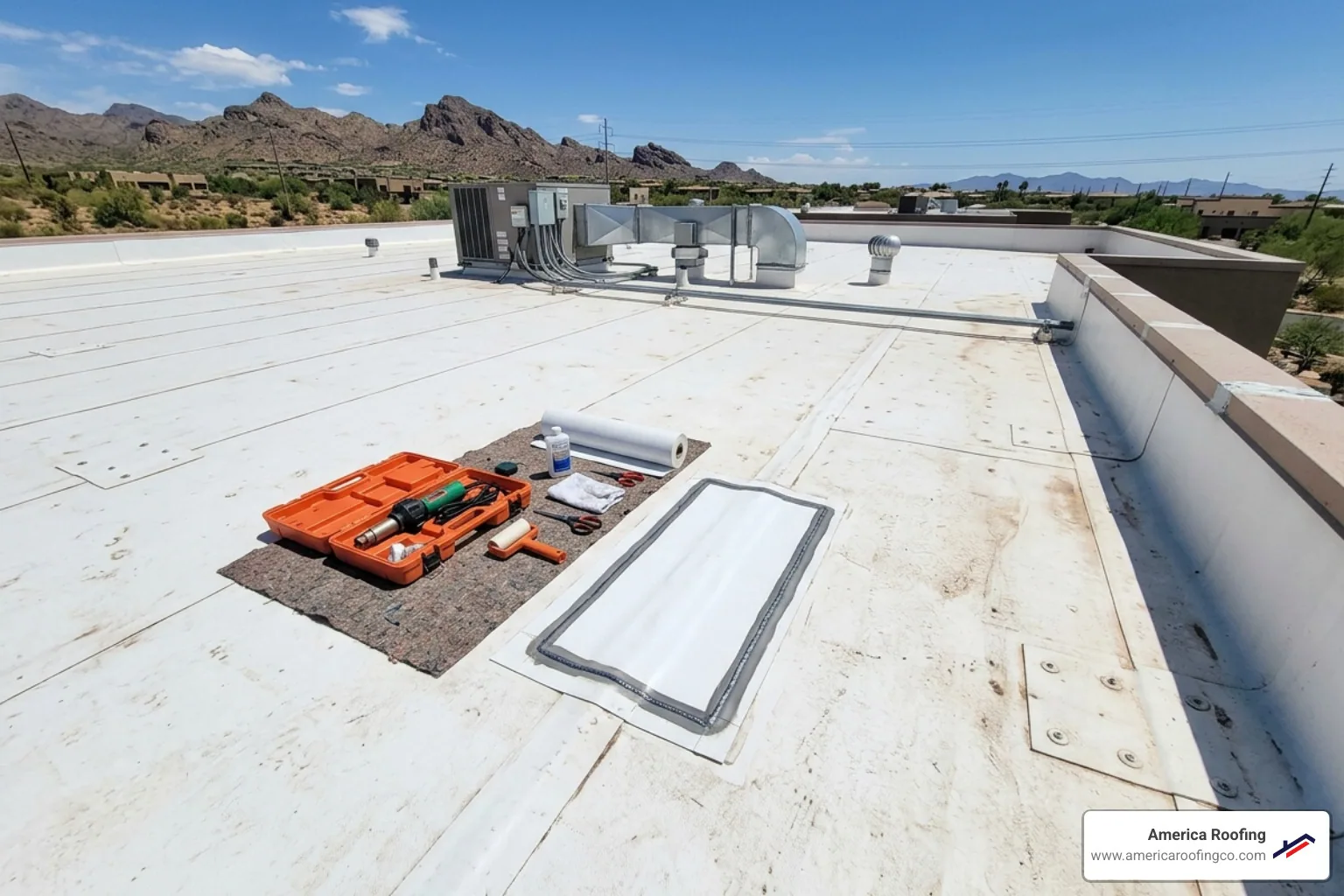
Here's a quick answer if you need it now:
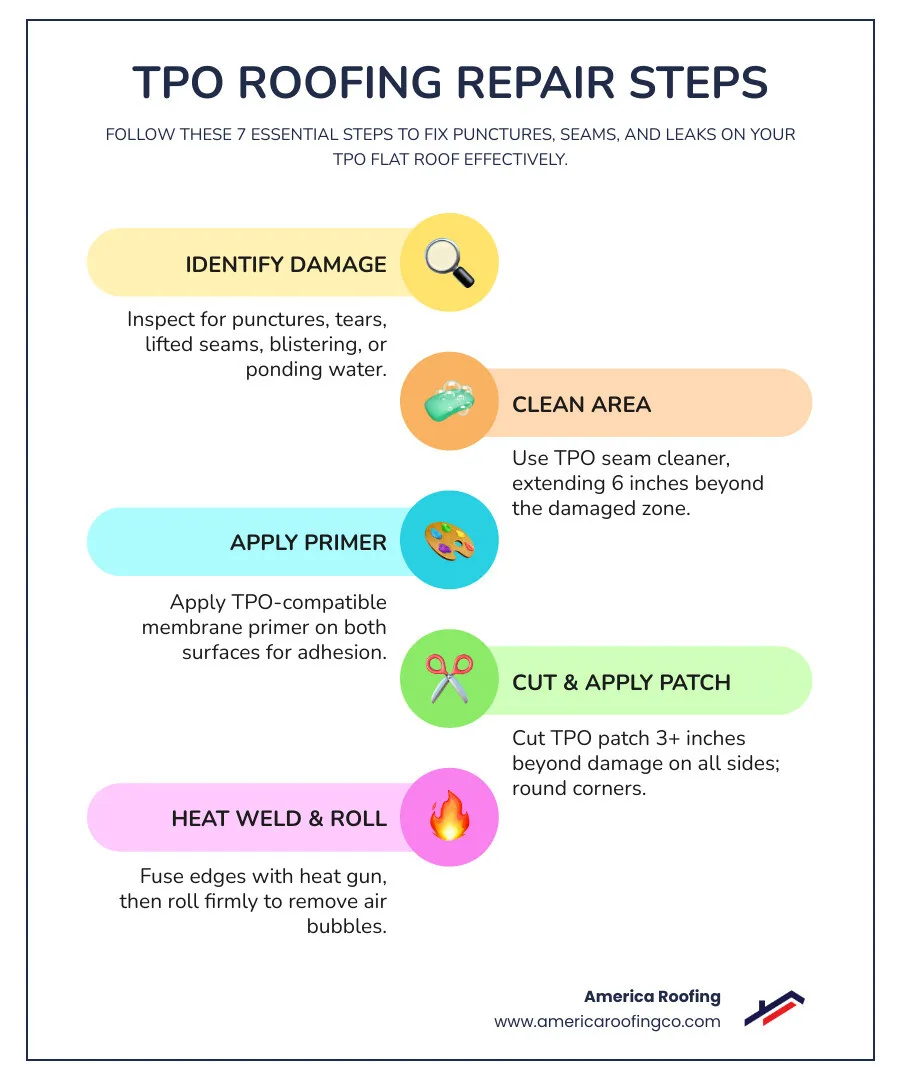
How to repair a TPO roof:
- Identify the damage - Look for punctures, tears, lifted seams, blistering, or ponding water
- Clean the area - Use TPO seam cleaner, extending 6 inches beyond the damaged zone
- Apply primer - Use a TPO-compatible membrane primer on both surfaces
- Cut and apply a patch - Cut a TPO patch at least 3 inches beyond the damage on all sides; round the corners
- Heat weld the edges - Use a heat gun to fuse the patch to the membrane
- Roll the seam - Press firmly with a silicone seam roller to eliminate air bubbles
- Test for leaks - Spray water on the repaired area to confirm a watertight seal
Typical TPO repair costs range from $500 to $2,500, or roughly $3 to $7 per square foot depending on damage size and labor.
You know what? Most TPO roof problems start small — a minor puncture from storm debris, a seam that wasn't welded quite right, or a low spot collecting water after every rain. Left alone, these issues compound quickly, leading to interior water damage, mold risk, and eventually a much bigger repair bill. The good news is that TPO is one of the more repairable flat roofing systems available, and catching problems early makes all the difference.
Tpo roofing repair terms to learn:
Thermoplastic Polyolefin (TPO) is a single-ply roofing membrane that has become the gold standard for commercial and residential flat roofs in cities like Mesa, Gilbert, and Chandler. Its popularity stems from its incredible energy efficiency; the white or light grey surface reflects a massive amount of solar radiation, keeping cooling costs down during our brutal July afternoons. However, while the material is durable, it isn't invincible. The combination of thermal expansion (the roof growing and shrinking as temperatures swing 40 degrees in a single day) and intense UV exposure can eventually stress the heat-welded seams or cause the membrane to become brittle over decades.
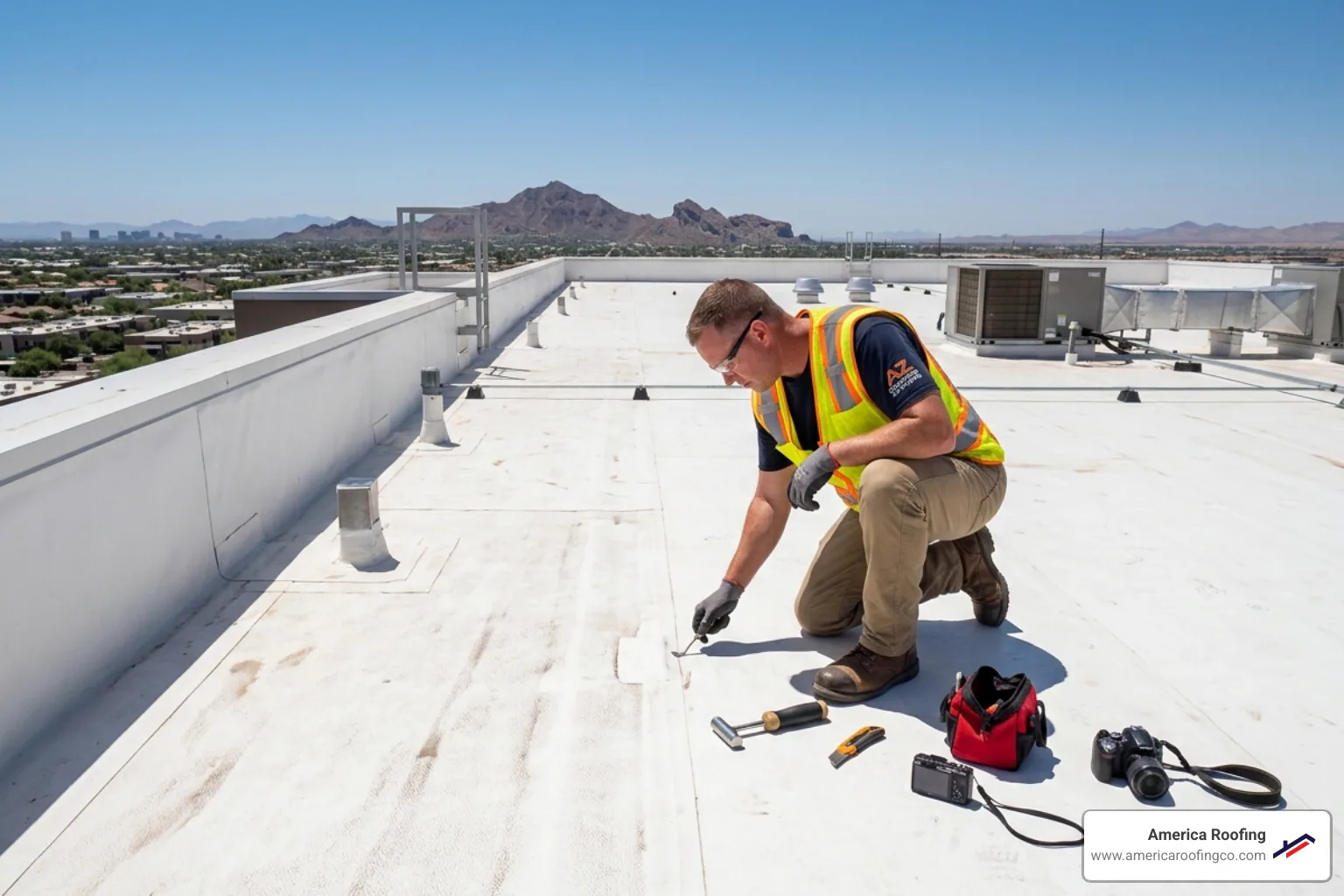
Understanding tpo roofing repair and Common Damage Signs
Before you can fix a problem, you have to find it. Honestly, TPO roofs are pretty good at "telling" you when they're in trouble, but you have to know what to look for. Because TPO is a TPO flat roof system, water doesn't always leak directly beneath the hole. It can travel along the insulation board and pop up ten feet away inside your building.
Common signs that you need professional help include:
- Seam Failure: This is the most common issue. If the original heat weld wasn't perfect, or if the building has shifted, the seams can "pop" or open up.
- Membrane Shrinkage: Over time, lower-quality TPO can pull away from the edges or "tents" at the flashings.
- Blistering: These look like small bubbles or humps in the roof. They usually indicate trapped moisture between the layers.
- Ponding Water: If water sits on your roof for more than 48 hours after a rain, it puts immense pressure on the seams and accelerates UV degradation. As noted by the National Roofing Contractors Association, standing water can significantly reduce the service life of a thermoplastic membrane.
Let me explain: TPO is a "thermoplastic" material, meaning it can be melted and re-fused. This makes it highly repairable compared to rubber (EPDM) roofs, which require tapes and glues. But here’s the thing—if the membrane has aged to the point of "burnout" from the sun, it may no longer be weldable, which is why early detection is critical.
Identifying Common TPO Failures (Punctures and Seams)
You know what? The anxiety of a leaking roof is something no property owner should have to endure, especially during a surprise haboob or monsoon. Most tpo roofing repair calls we handle in Scottsdale and Peoria involve one of the following:
- Punctures: Often caused by dropped tools, heavy hail, or bird peckings.
- Tears: Usually the result of wind-blown debris or sharp equipment being dragged across the surface.
- Loose Flashing: The metal or membrane bits around chimneys, HVAC units, and vents. You can find more TPO roofing details regarding how these should look when correctly installed.
- Edge Metal Issues: If the perimeter metal isn't secured, wind can get under the membrane and peel it back like a sardine can.
- Drainage Clogs: Leaves and debris in scuppers or drains cause water to back up, leading to the ponding issues mentioned earlier.
Repair vs. Replacement: Making the Right Call
Deciding whether to patch a hole or replace the whole system is a big financial decision. Honestly, knowing when to repair versus when to replace can save you a fortune in the long run. Here’s a quick breakdown to help you decide:
| Factor | Repair | Replacement |
|---|---|---|
| Cost | Lower initial cost ($500 - $2,500) | Higher initial cost ($5,000 - $24,000+) |
| Lifespan Added | Extends life by 1-5 years | Resets lifespan (15-30 years) |
| Scope | Addresses specific holes/leaks | Overhauls entire system & insulation |
| Warranty | Often for the repair area only | Comprehensive 15-20 year NDL |
| Disruption | Minimal (usually done in hours) | More significant (days of work) |
Here’s the thing: if more than 25% to 50% of your roof is covered in patches, or if the insulation underneath is "spongy" (meaning it's soaked with water), a full replacement often makes more sense. At America Roofing, we look at the thickness—whether you have a 45-mil, 60-mil, or 80-mil membrane—and the overall structural integrity before giving you an honest recommendation.
The Real-World Cost of tpo roofing repair
In the Phoenix and Tucson markets, tpo roofing repair costs are influenced by the size of the damage and how high the roof is.
- Minor Fixes: Small punctures or a single open seam typically range from $500 to $1,000.
- Moderate Repairs: Multiple leaks or section replacements often fall between $1,000 and $2,500.
- Per Square Foot: For larger commercial areas, expect to pay $3 to $7 per square foot for materials and labor.
We believe in transparent pricing. In 2025, labor and material costs have stabilized, but emergency service fees (like calling us in the middle of a Sunday night storm) will always carry a premium.
Step-by-step Guide to TPO Membrane Fixes
If you are handy and have the right equipment, some minor TPO fixes can be handled as a DIY project, though we always recommend professional help for anything involving a heat welder. Our professional standards at America Roofing ensure every fix is a lasting one, but here is the process we follow to ensure a watertight seal.
Essential Tools for tpo roofing repair
To do this right, you need more than just a bucket of tar (in fact, never put asphalt or tar on a TPO roof—it will eat the membrane!). You need:
- Heat gun: A high-powered hand-held hot air welder.
- Silicone seam roller: For pressing the melted layers together.
- TPO cleaner: To remove the "glaze" and dirt from the old membrane.
- Membrane primer: Essential for any adhesive-backed patches.
- Utility knife: For clean cuts.
- Patch disks: Pre-cut 8.5-inch round patches are great for small holes.
- Safety gear: Heavy gloves and eye protection.
How to Patch Punctures and Seal Failing Seams
Let me explain the welding process: it's a precise application of heat to melt and fuse the TPO layers, creating a monolithic, watertight bond. If you're using a patch, here is the professional way to do it:
- Surface Prep: Clean the area with a specialized TPO cleaner. If the roof is old, you might need to scrub away the oxidized top layer to get down to "fresh" material.
- Rounding Corners: Always cut your patches into circles or round the corners. Why? Because square corners are easy to snag and peel up over time.
- Welding: Insert the heat gun nozzle between the patch and the roof. When the material starts to look "shiny" or slightly melted, move the gun forward and follow immediately with the silicone roller.
- Pressure: Apply firm pressure. This eliminates "fish mouths" (wrinkles) or air bubbles that could trap water.
- Edge Sealing: For extra security, many pros apply a bead of lap caulk around the edge of the patch.
For more technical guidance, you can check our guide on how to install TPO roofing details.
Maintenance Tips to Prevent Future Damage
The best tpo roofing repair is the one you never have to make. Because we live in a climate with extreme UV and haboobs that dump pounds of dust on roofs, maintenance is non-negotiable.
- Annual Inspections: Check your roof every spring and fall. Look for those "popped" seams or backed-up drains.
- Debris Removal: Keep the roof clear of branches, trash, and desert monsoon debris.
- Tree Trimming: Ensure no branches are overhanging the roof. A falling limb can slice through TPO like a knife through butter.
- Walkway Pads: If you have HVAC technicians walking on the roof frequently, install reinforced walkway pads to protect the membrane from foot traffic punctures.
Industry best practices for TPO maintenance emphasize proactive care. America Roofing brings veteran-owned expertise, backed by ROC#186438 and 3rd generation quality, to every project across the Phoenix metro service area—from Surprise to Queen Creek. We understand exactly how the Arizona sun beats down on these systems, and we know how to make them last.
If you suspect your roof has reached the end of its lifespan or just needs a professional touch to survive the next haboob, don't wait for the next rain to find out. For expert guidance and a durable system that stands up to the Valley's extreme conditions, contact our team at 602-237-2478 or Request a Free Quote today.