
Introduction
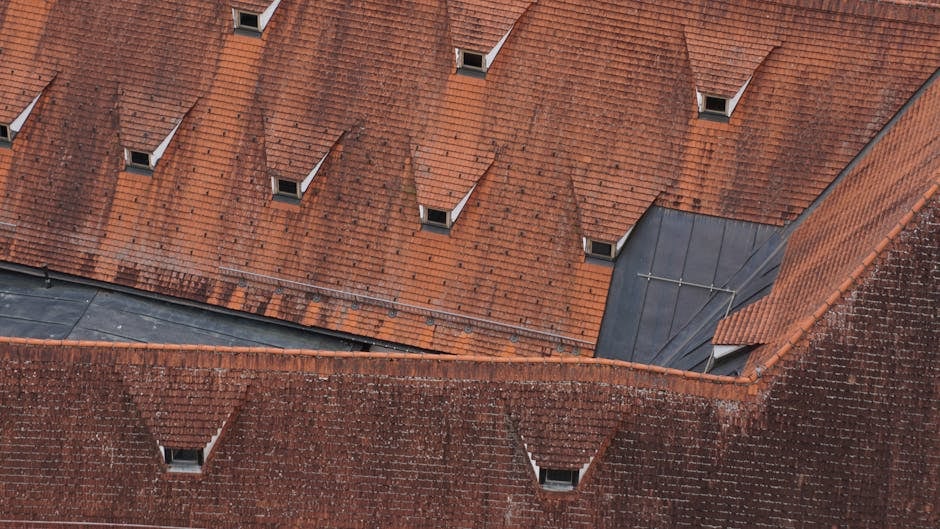
When you look at a complex home design, you're likely seeing the intersection of multiple architectural planes that rely on a pitched roof valley to function. Honestly, these V-shaped channels are the unsung heroes of your home, acting as the primary highway for water runoff during intense Arizona monsoons. Let me explain why understanding these junctures is the way to ensuring your roof lasts for decades rather than leaking during the next big storm.
When you look at a complex home design, you're likely seeing the intersection of multiple architectural planes that rely on a pitched roof valley to function. Honestly, these V-shaped channels are the unsung heroes of your home, acting as the primary highway for water runoff during intense Arizona monsoons. Let me explain why understanding these junctures is the way to ensuring your roof lasts for decades rather than leaking during the next big storm.
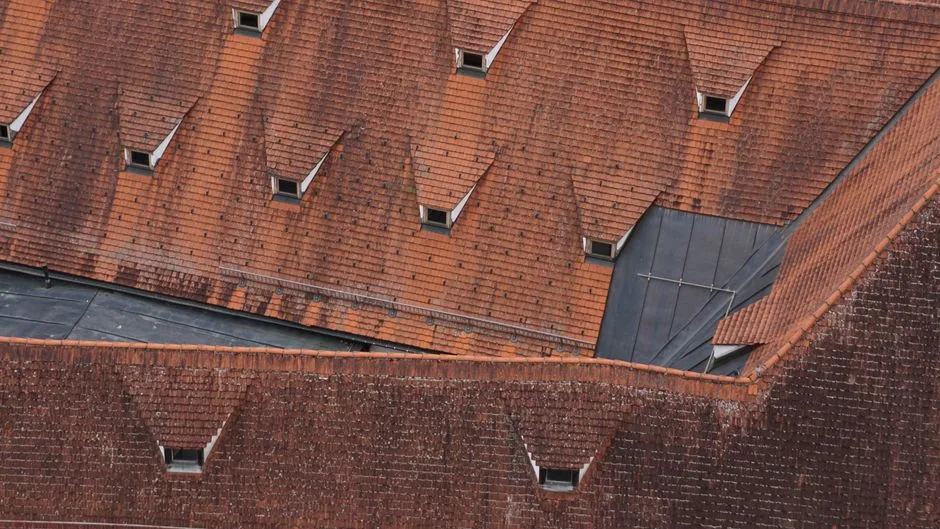
A pitched roof valley occurs at the inward joint where two sloping roof planes meet. Think of it as the "gutter" of your roof's surface. Because these areas are essentially the bottom of two hills, they collect and funnel a massive volume of water. In the Phoenix and Tucson metropolitan areas, where we experience sudden, violent monsoon downpours, the efficiency of these valleys is the only thing standing between a dry living room and a major structural headache.
Proper water management at these structural junctions is critical for roof longevity. If a valley is poorly constructed, water won't just flow; it will pool, backup under shingles or tiles, and eventually rot the wooden decking beneath. Understanding the anatomy of a Valley Roof is the first step in protecting your investment.
Understanding the Pitched Roof Valley: Types and Materials
Not all valleys are created equal. The choice between an open or closed style often depends on the roofing material used—such as the concrete tiles common in Scottsdale and Mesa—and the specific Roof Pitch of your home.
Open vs. Closed Valleys: Choosing the Right Pitched Roof Valley
The debate between open and closed valleys is a classic in the roofing world. Let's break down the differences:
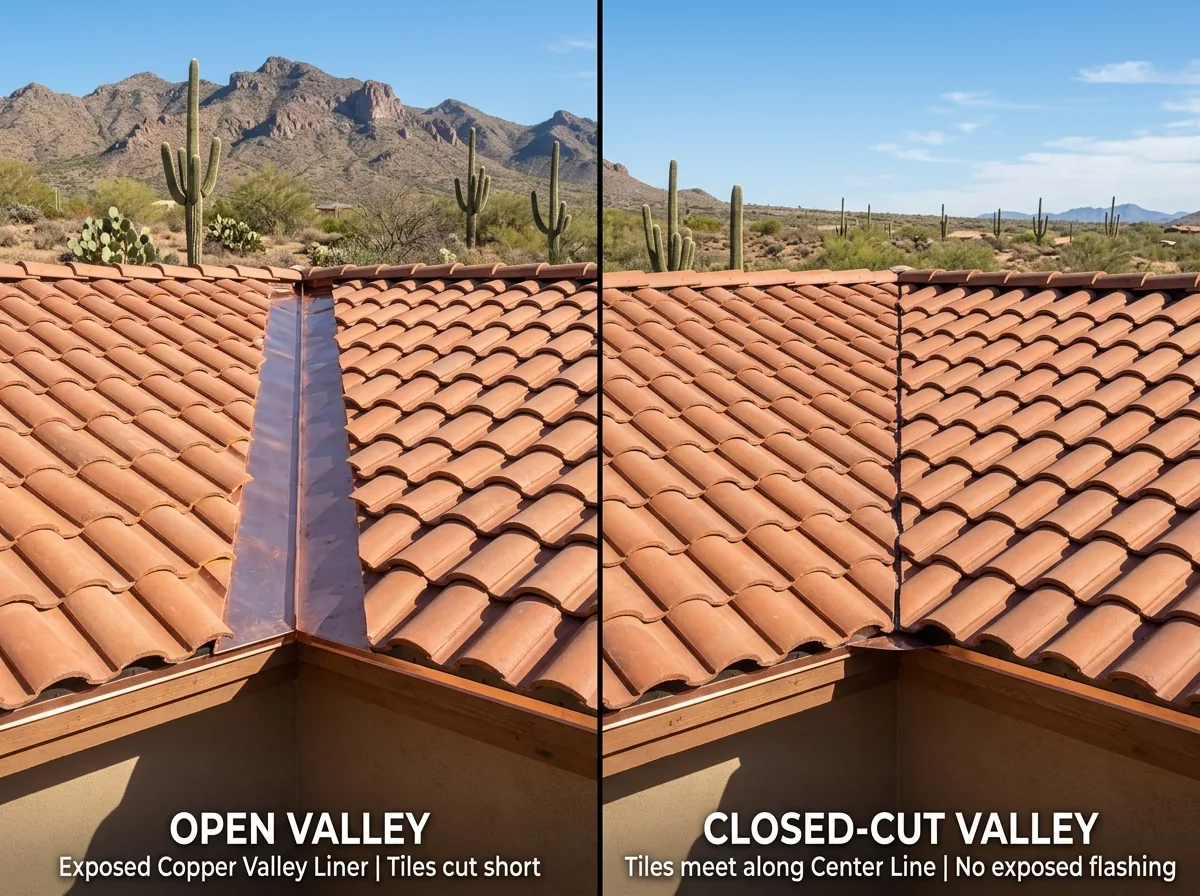
- Open Valleys: These feature a visible metal liner (often 24-gauge steel or copper) that remains exposed. The roofing material (shingles or tiles) stops several inches short of the center, creating a wide, smooth channel for water and debris.
- Closed-Cut Valleys: In this style, shingles from one roof plane are installed across the valley, and shingles from the second plane are cut in a straight line just past the center. This offers a cleaner, more uniform look.
- Woven Valleys: Here, shingles from both planes are woven together in an interlocking pattern. While aesthetically seamless, this is rarely used with modern architectural shingles because they are too thick to weave properly.
When considering The Pros and Cons of Pitched Roofing, we often recommend open valleys for Arizona homes. Why? Because our desert environment produces a lot of dust and debris that can easily clog a closed valley. According to the Roof Tile Association, open valleys provide superior drainage efficiency, which is vital during our "haboob" dust storms and subsequent rains.
| Feature | Open Valley | Closed-Cut Valley | Woven Valley |
|---|---|---|---|
| Visibility | Exposed Metal | Shingles Only | Shingles Only |
| Debris Shedding | Excellent | Fair | Poor |
| Durability | High (Metal Lining) | Moderate | Moderate |
| Best Use | Tile & Heavy Rain | Asphalt Shingles | Budget Projects |
Essential Materials for a Durable Pitched Roof Valley
The "invisible" parts of a pitched roof valley are just as important as the visible ones. Before the first tile is laid, a high-quality underlayment—specifically an ice and water shield—must be installed. This self-adhering membrane provides a secondary waterproof barrier.
For the flashing itself, we typically use 24-gauge or 26-28 gauge galvanized steel with rust-inhibiting coatings. A standard W-Valley flashing for a common 7/12 pitch roof should be at least 24 inches wide, providing 12 inches of protection on each side of the center. This ensures that even during a heavy downpour, water doesn't "splash" up under the adjacent tiles. Understanding Roofing 101: Understanding Roof Pitch and Slope is essential here, as the steepness of the roof dictates how wide that metal "pan" needs to be.
Specialized Junctures: Dead Valleys and Flared Gables
Sometimes, roof geometry gets complicated.
- Dead Valleys: These occur where two roof sections meet at a downhill edge, creating a nearly flat spot where water has nowhere to go. These are notorious "leak magnets" and require specialized treatment, such as heavy-duty membrane liners or custom-fabricated metal pans.
- Flared Gables: These are decorative features where the roof edge flares outward. While beautiful, they can trap debris and water if not flashed with precision.
Installation, Maintenance, and Preventing Common Leaks
Here’s the thing: you can buy the most expensive materials in the world, but if they aren't installed correctly, your pitched roof valley will fail.
Step-by-Step Installation and Pitch Considerations
Installation begins with marking a precise centerline from the ridge to the eaves. We then install the ice and water shield, followed by the metal flashing.
- Overlap: Metal joints must overlap by at least 6 inches, with the higher piece over the lower piece to ensure water flows over the seam, not into it.
- Nailing Zones: This is where many DIYers fail. Nails should never be placed in the center of the valley. In a closed-cut valley, nails must be kept at least 6 inches away from the center line.
- Pitch Specs: A roof with a 7/12 pitch (meaning it rises 7 inches for every 12 inches of horizontal run) requires specific "W" shaped flashing to break the force of water rushing down one side so it doesn't wash up under the shingles on the other side.
If you're already seeing damp spots, you might be interested in our guide on Fixing a Leaking Roof Valley.
Common Problems and Professional Maintenance
Honestly, the biggest enemy of your roof valley isn't just rain—it's debris. Leaves, twigs, and desert dust can create "dams" in your valleys. When water hits these dams, it backs up and finds the path of least resistance: usually into your attic.
- UV Damage: In cities like Peoria and Surprise, the intense UV exposure can cause shingles in a closed valley to become brittle and crack faster than the rest of the roof.
- Thermal Expansion: Metal valleys expand and contract in the heat. If they are pinned too tightly, they can buckle.
- Shingle Erosion: The high volume of water in a valley can literally wash away the protective granules on asphalt shingles over time.
Regular inspections are key. We recommend checking your valleys at least once a year, preferably before the monsoon season begins in June.
Conclusion: Protecting Your Arizona Home
At America Roofing, we’ve spent three generations understanding the art of the pitched roof valley. As a veteran-owned, family-operated business (ROC#186438), we understand that a roof in Phoenix or Chandler faces different challenges than a roof in the Midwest. Our expertise in Residential Pitched Roofing in Arizona ensures that every junction, hip, and valley is engineered for the extreme heat and sudden storms of the Sonoran Desert.
Whether you have a concrete tile roof in Scottsdale or a shingle roof in Glendale, the integrity of your valleys determines the lifespan of your entire home. Let me explain: a small leak in a valley today can lead to mold and structural rot tomorrow.
You know what? Most valley failures are completely preventable with the right expertise and high-quality materials tailored for our desert climate. If you’re worried about how your roof will handle the next haboob or monsoon season, don't wait for a ceiling stain to appear. Give us a call at 602-237-2478 or Request a Free Quote today to ensure your home stays dry and secure.