
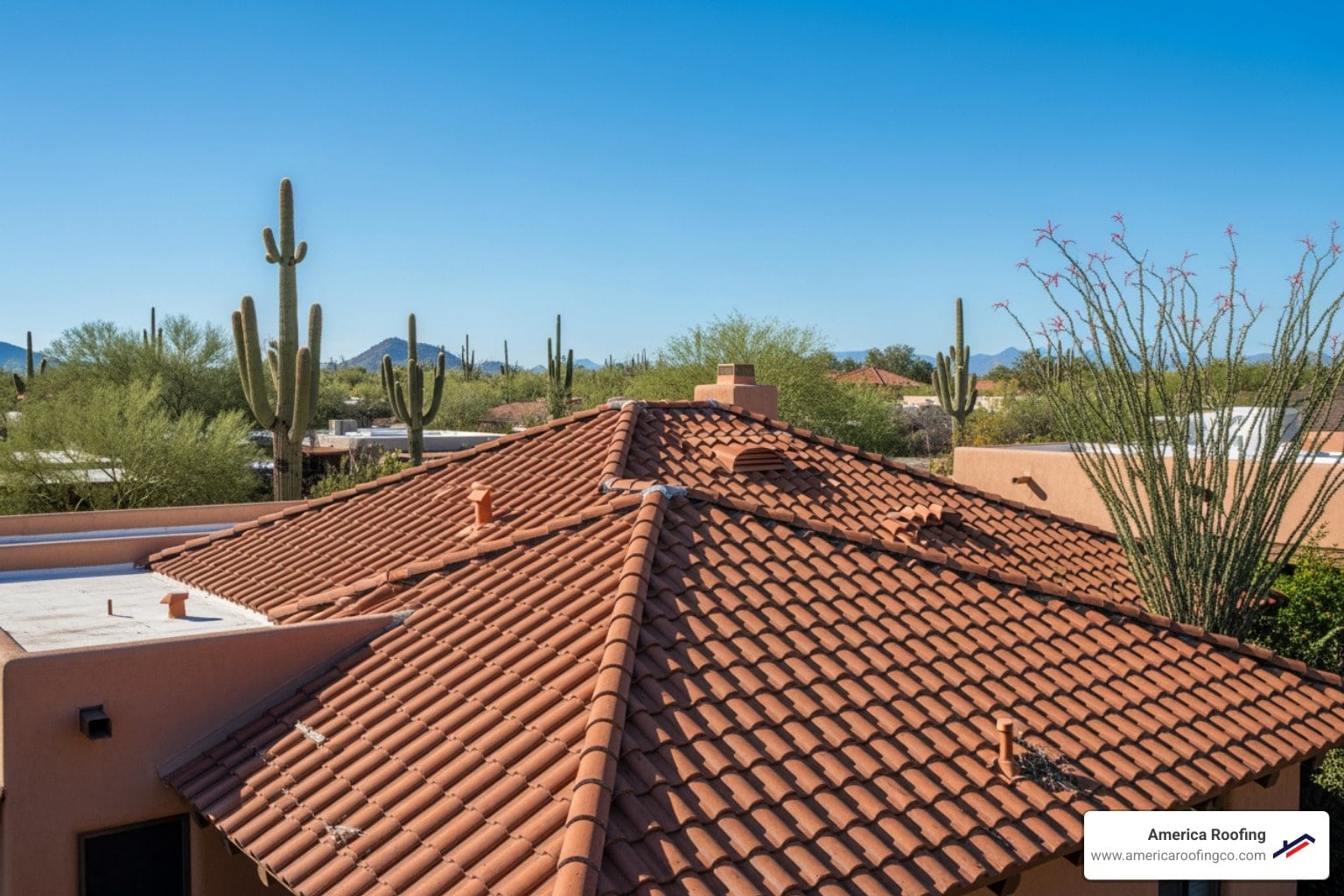
Choosing the right slope for your home can be the difference between a lifetime of comfort and a series of expensive maintenance headaches. A pitched roof is the most recognizable feature of a home, providing both aesthetic character and essential protection against the elements. Honestly, understanding the geometry and design of your roof is the first step toward a durable, energy-efficient home.
Introduction
If you've ever wondered why some roofs are flat while others angle sharply toward the sky, you're about to discover that a pitched roof is far more than just an architectural choice—it's a critical decision that affects drainage, durability, and your home's energy bills. In Arizona's extreme climate, where monsoons dump inches of rain in minutes and summer heat can warp inferior materials, understanding what makes a roof "pitched" is essential for every homeowner. This guide breaks down the geometry, types, and benefits of sloped roofing so you can make informed decisions for your home.
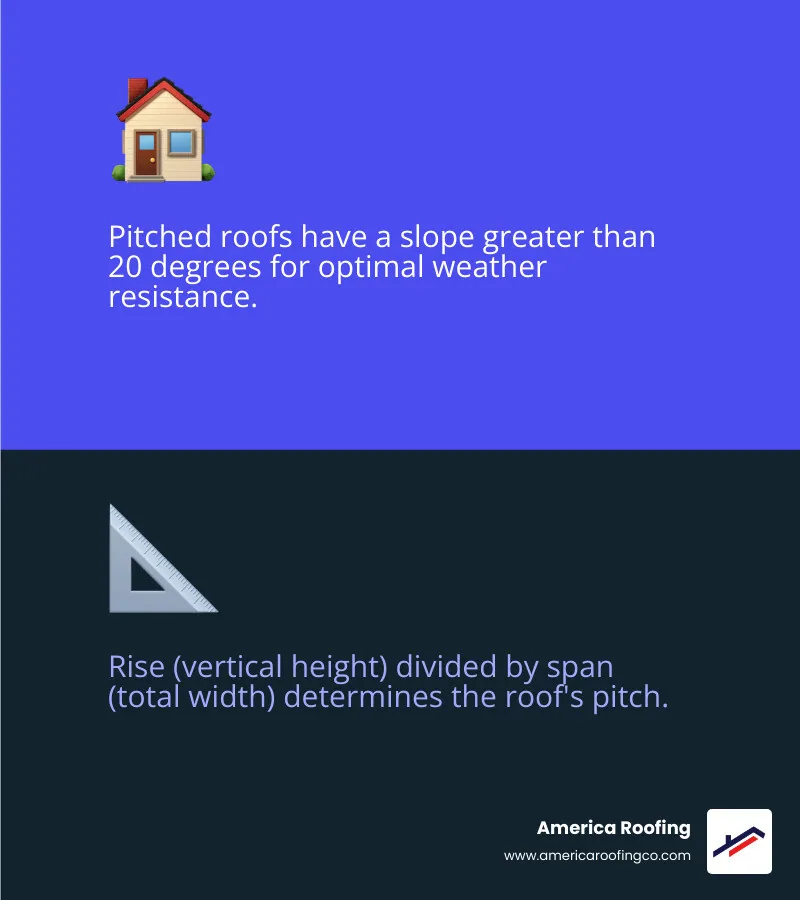
At its core, a pitched roof is defined as a roof that has a sloping surface or surfaces, typically with an angle of more than 20 degrees. The steepness of this slope is determined by the vertical rise (how high it goes) divided by the horizontal span (the total width of the building). While many modern commercial buildings opt for flat designs, the vast majority of residential homes utilize some form of pitch to ensure structural integrity and weather resistance.
According to Pitched roof definitions, these structures are favored because they naturally redirect environmental hazards. In a place like Phoenix or Mesa, where the "haboob" dust storms and sudden monsoons are part of life, a sloped design ensures that heavy rain and debris don't sit on your roof, which is the primary cause of premature material failure.
Understanding the Geometry of a Pitched Roof
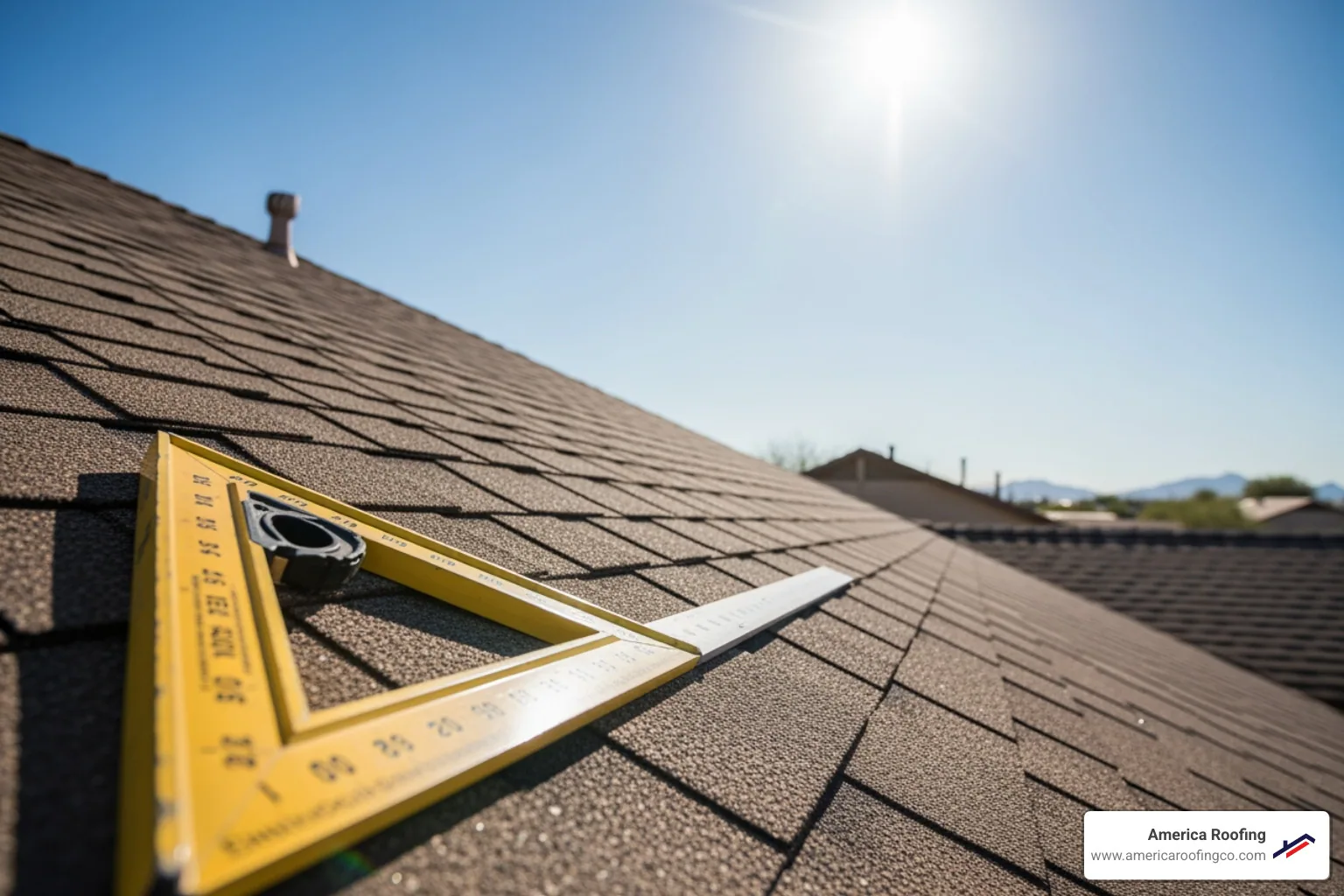
To understand how your roof works, we have to look at it through the lens of a right triangle. The rafters act as the hypotenuse, the horizontal distance is the "run," and the vertical height is the "rise." This geometry isn't just for show; it dictates what materials we can use and how well your home will breathe.
Pitch vs. Slope: What’s the Difference?
You’ll often hear roofers use these terms interchangeably, but they aren’t technically the same thing. Slope is the incline of the roof expressed as a ratio of the vertical rise to the horizontal "run" (which is always 12 inches in the US). For example, a "4 in 12" slope means the roof rises 4 inches for every 12 inches it moves horizontally.
Pitch, on the other hand, is the vertical rise divided by the entire span (the distance from wall to wall).
Here’s the thing: most framing squares and modern building codes focus on slope because it’s easier to measure from the rafters. If you want to dive deeper into the technicalities, you can find more info about roof pitch and slope on our specialized resource page.
| Feature | Pitch | Slope |
|---|---|---|
| Formula | Rise / Span | Rise / Run |
| Expression | Fraction (e.g., 1/3) | Ratio (e.g., 4:12) |
| Standard Denominator | Total width of building | Always 12 inches |
| Common Use | Architectural design/History | Construction & Building Codes |
To ensure accuracy, home inspectors often use Measuring Roof Slope and Pitch techniques involving levels and tape measures in the attic to verify that the roof meets local building codes.
How to Calculate Your Pitched Roof
Calculating your roof’s angle involves finding the tangent of the angle. By dividing the vertical rise by the run, you get a decimal that can be converted into degrees. For those who aren't fans of trigonometry, using a Roof pitch calculator is the fastest way to get your numbers.
Common residential pitch ratios include:
- Low Slope: 2/12 to 4/12 (Requires special underlayment)
- Conventional Pitch: 4/12 to 9/12 (Most common in Phoenix suburbs)
- Steep Slope: 10/12 and above (Often seen in Tudor or A-frame styles)
Types and Benefits of a Pitched Roof
The style of your pitched roof does more than provide curb appeal; it determines how much attic space you have and how your home handles the wind. In Arizona, where wind speeds during monsoons can be intense, the aerodynamics of your roof type matter.
Common Pitched Roof Styles
There are several ways to shape a slope, each with its own set of pros and cons:
- Gable Roof: The "classic" triangle shape. It’s cost-effective and offers great ventilation.
- Hip Roof: Slopes on all four sides. These are incredibly stable in high winds—perfect for the gusty outskirts of Gilbert or Surprise.
- Gambrel Roof: Often called a "barn roof," providing maximum headspace in the attic.
- Mansard Roof: A four-sided gambrel style that is popular in traditional architecture.
- Mono-pitch (Shed) Roof: A single sloping surface, often used in contemporary "desert modern" homes.
You know what? Many homeowners actually choose a "hybrid" approach, combining gable and hip sections to get the best of both worlds. You can find more info about pitched roofing types to see which one fits your home's aesthetic.
Why Homeowners Choose Sloped Designs
The debate between pitched vs flat roofing often comes down to longevity. While flat roofs are cheaper initially, pitched roofs typically last longer because they don't allow water to pool.
According to the 6 advantages of pitched roofs, the top benefits include:
- Natural Drainage: Gravity does the work, pulling water into gutters.
- Debris Reduction: Leaves and dust from haboobs are easily blown off or washed away.
- Extra Storage: The "V" shape creates usable attic space.
- Versatility: You can use everything from concrete tile to asphalt shingles.
Selecting the Right Pitch for Your Climate
In the Phoenix-metro area, selecting a pitch isn't just about looks; it's about survival. The intense UV exposure can degrade materials quickly if they aren't angled correctly to allow for proper airflow. Furthermore, building codes in some areas specify minimum slopes to ensure safety. For example, asphalt shingles generally require a slope of at least 2:12 to prevent water back-flow.
Understanding how slope affects materials is vital for Arizona residents. A steeper pitch might stay cooler by allowing heat to rise and escape through ridge vents more efficiently than a shallow slope.
Energy Efficiency and Insulation
Did you know that uninsulated pitched roofs can account for around 26% of total heat loss in a home? In Arizona, this works in reverse during the summer—an improperly designed or insulated roof allows the sun's heat to radiate directly into your living space.
Pitched roofs offer a natural cavity for high-quality insulation. At America Roofing, we recommend several eco-friendly and high-performance options to keep your Maricopa County home cool:
- Spray Foam (SPF): Excellent for sealing gaps in the roof deck.
- Fiberglass Batts: A cost-effective standard for attic floors.
- Blown-in Cellulose: Great for reaching tight corners in complex hip roofs.
- Reflective Radiant Barriers: Essential for bouncing Arizona's UV rays away from the attic.
Before making a final choice, it's wise to weigh the pros and cons of pitched roofing to ensure your investment pays off in lower monthly energy bills.
Whether you are dealing with the intense Arizona sun or preparing for the next monsoon season, ensuring your home has the right slope and material is vital. If you have questions about your specific home or need a professional assessment, you can reach our expert team at 602-237-2478. For a detailed estimate on your next project, Request a Free Quote today.