
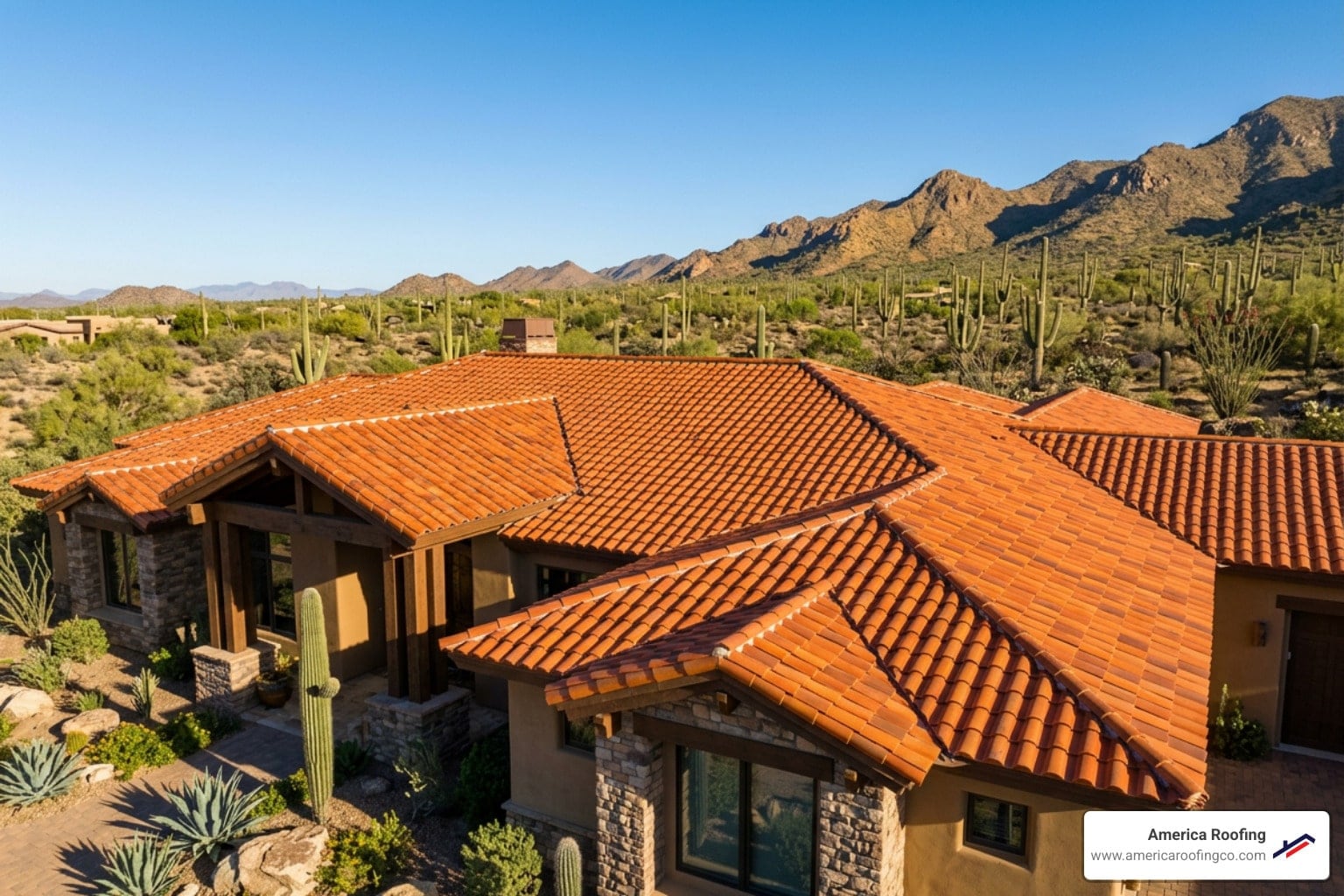
Finding the right team to protect your home is a significant decision that impacts your property's value for decades. When you work with professional tile roofers, you are ensuring that your investment is backed by specialized skill and local expertise. Honestly, getting the installation right the first time is the only way to truly enjoy the long-term benefits of a tile system.
The Unmatched Benefits of Hiring Professional Tile Roofers
Choosing the right material for your home is a major investment, but finding professional tile roofers to handle the installation is what truly guarantees a lifetime of protection. Whether you are battling the intense desert sun or preparing for the next monsoon season, a tile system offers unmatched durability and aesthetic appeal that other materials simply cannot match. Why settle for a roof that might fail when you can have one that lasts a lifetime?
Professional tile roofers are the difference between a roof that lasts decades and one that fails after the first major storm. In Arizona, where summer heat pushes past 110°F and monsoon season arrives without warning, your choice of roofer matters just as much as your choice of material. Getting this right from the start protects your home, your family, and your wallet.
When you hire professional tile roofers, you aren't just paying for labor; you are investing in a high-performance shield for your home. In the Phoenix-metro area, the environment is relentless. Between the blistering UV exposure that degrades shingles and the haboobs that sandblast surfaces, tile stands as the ultimate survivor.
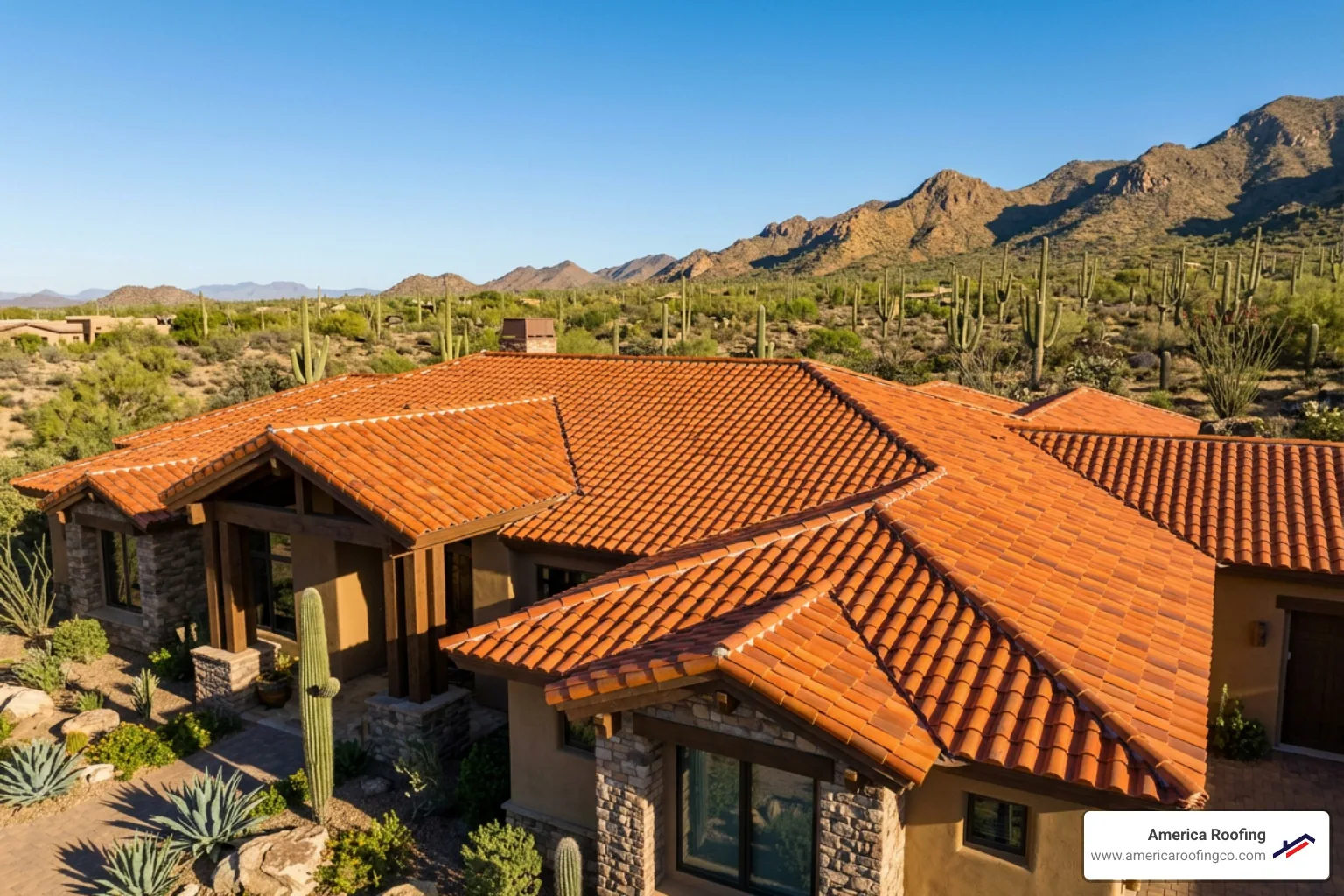
The benefits of a tile system are extensive, but they only manifest when the installation is handled by experts. Here is why tile remains the gold standard:
- Lifespan: While asphalt shingles might give you 15 to 20 years in the Arizona heat, a tile roof is a generational asset. Concrete tiles typically last 40–70 years, while high-quality clay tiles can exceed 100 years of service. For more details, check out this guide on how long tile roofs last.
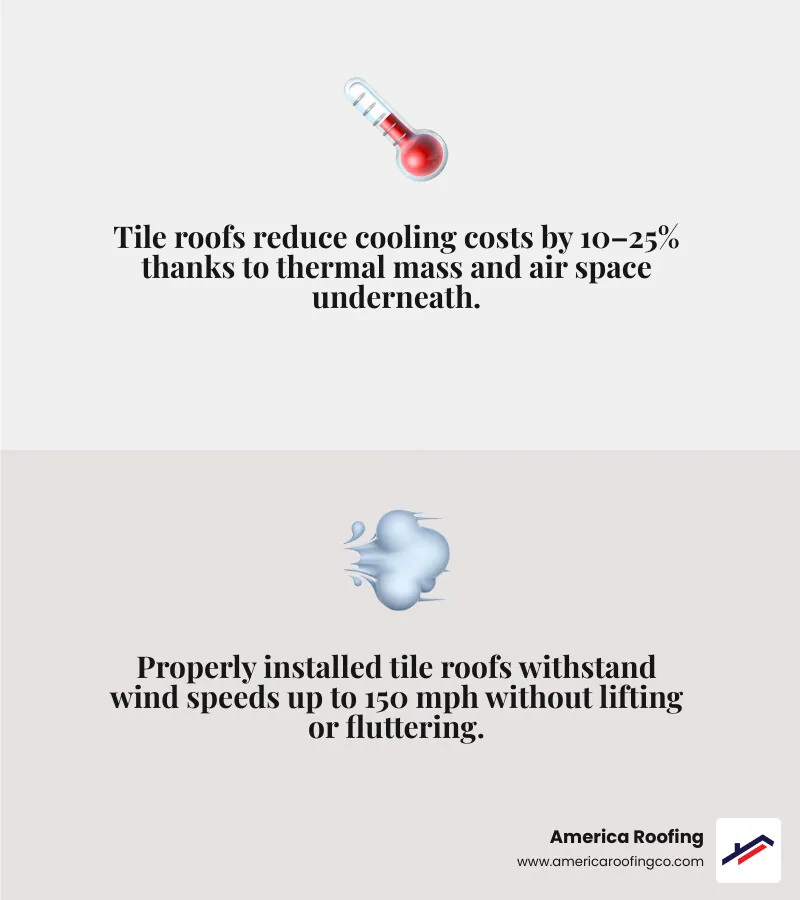
- Energy Efficiency: Tile roofs provide natural thermal resistance. Because of their thermal mass and the way they are installed with air space underneath, they can reduce cooling costs by 10–25%. This is a meaningful advantage when your AC is running 24/7 in July.
- Safety Ratings: Tile offers a Class A fire rating—the highest available. In drought-prone regions, this fire resistance is a critical safety feature.
- Weather Resistance: When properly fastened by professional tile roofers, these systems can withstand wind speeds up to 150 miles per hour. They don't lift or flutter like lighter materials.
- Property Value: Installing a tile roof isn't just a repair; it’s an upgrade. On average, a new tile roof can increase property values by 5–7%.
Comparison: Clay vs. Concrete Tiles
| Feature | Clay Tiles | Concrete Tiles |
|---|---|---|
| Lifespan | 100+ Years | 40–70 Years |
| Weight | 800–1,000 lbs/square | 750–900 lbs/square |
| Color Retention | Permanent (Fired-in) | Can fade over decades |
| Cost | Higher upfront | 30–40% less than clay |
| Maintenance | Very Low | Low |
Why Specialized Expertise Beats a General Contractor
Tile roofing requires material-specific experience. A qualified tile roofer should understand underlayment, flashing, fastening, safe access and how to replace damaged pieces without creating new failures.
For starters, there is the structural assessment. Concrete tiles are heavy, weighing between 750 to 900 pounds per square. A specialist must ensure your roof deck and trusses can handle that load. Then there is the deck loading process—distributing the weight evenly across the roof during the job so you don't end up with structural sagging or cracked rafters.
Furthermore, the "magic" of a tile roof isn't actually the tile—it’s the underlayment underneath. In Arizona’s extreme heat, standard underlayment can bake and become brittle. Specialists use high-grade synthetic underlayment and specific fastening systems designed for our unique monsoon winds. They also employ specific walking techniques. If an untrained worker walks on the "pans" of the tiles instead of the "laps," they will snap the tiles instantly, creating hidden leaks before the job is even finished. To understand these differences better, read more about tile vs shingle systems.
Industry Certifications and Training for Professional Tile Roofers
How do you spot a true pro? Look for the credentials. The best professional tile roofers invest in ongoing education through organizations like the Tile Roofing Industry Alliance (TRIA) and the National Roofing Contractors Association (NRCA).
- TRIA Certification: These courses focus on the specific manual requirements for standard and high-wind installations. It’s the industry benchmark for tile excellence. You can Register For TRIA Certification Courses to see the level of rigor required.
- NRCA PROCert: This is a prestigious competency-based certification. It uses third-party verified video submissions to prove that a roofer can actually perform the work to national standards, covering everything from flashings to valley installation.
- TRAC Training: The Training for Roof Application Careers (TRAC) helps turn new employees into quality installers through a blend of online and hands-on guidelines.
Understanding the Tile Roof Lifecycle: From Installation to Maintenance
A tile roof is a living system that requires a specific lifecycle approach. It starts with choosing the right style—whether it's the classic Spanish S-Tile, the elegant Mediterranean look, or modern Flat Concrete tiles that mimic slate or wood shake.
The installation involves more than just "nailing down tiles." It requires:
- Underlayment: The secondary water barrier that does the heavy lifting.
- Battens: Horizontal strips that provide a grid for the tiles and allow for essential airflow.
- Flashings: Specialized metal transitions around chimneys and vents that are the most common failure points if handled by amateurs.
If you are considering a full overhaul, you can find more info about replacement costs to help plan your budget.
Identifying When You Need a Professional Tile Roofer for Repairs
Here’s the thing: just because your tiles look okay from the ground doesn't mean your roof is healthy. In Arizona, the tiles act as a UV shield for the underlayment. Once that underlayment reaches 20–25 years of age, it begins to fail, even if the tiles are perfect.
You should call professional tile roofers if you notice:
- Cracked or Slipped Tiles: These expose the underlayment to direct sun and rain.
- Interior Water Stains: If you see brown spots on your ceiling, the secondary barrier has already been breached.
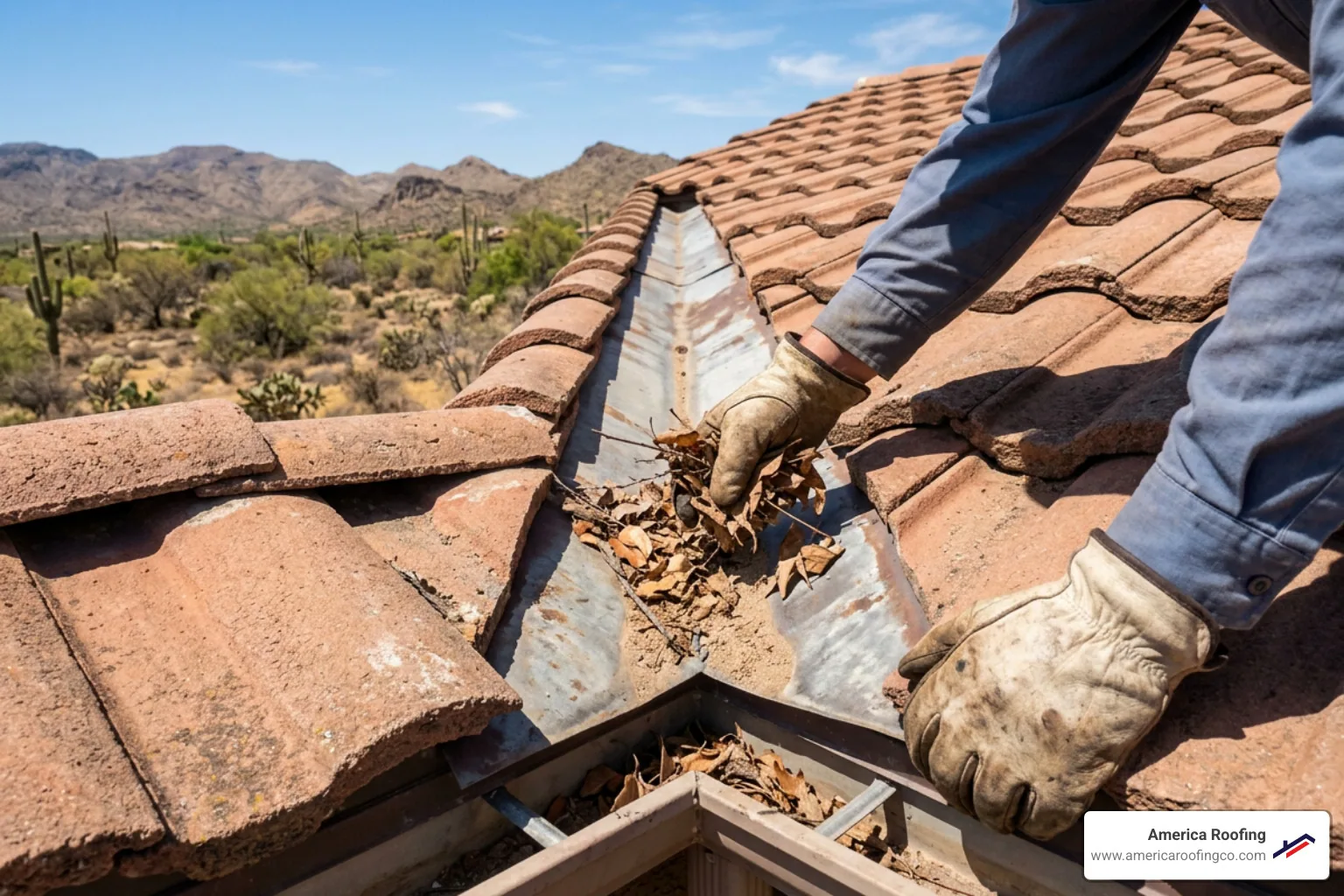
- Debris Buildup: Leaves and dirt in the valleys can act as a dam, forcing water under the tiles and causing rot.
- Worn Flashing: If the sealant around your pipes is cracking, a leak is imminent.
For those with concrete systems, getting a cement tile replacement for individual broken pieces can prevent a small problem from becoming a $20,000 replacement.
The Step-by-Step Professional Installation Process
When we take on a project at America Roofing, we follow a meticulous process to ensure your roof lasts for the next half-century:
- Design Consultation: We help you select the material (clay vs. concrete) and profile that matches your home’s architecture.
- Structural Check: We verify that your home can safely support the weight of the chosen tile.
- Tear-off & Prep: We remove the old materials and inspect the wood decking for any rot or damage.
- Waterproofing: We install premium, high-heat underlayment and reinforced flashings.
- Precision Alignment: We snap chalk lines to ensure every tile is perfectly straight and aesthetically pleasing.
- Final Inspection: A thorough walk-through to ensure every fastener is secure and every valley is clear.
To see the standards we hold ourselves to, you can Learn More About ProCertification and what it takes to be an elite installer.
Conclusion: Investing in Your Home’s Future
Choosing professional tile roofers is about peace of mind. At America Roofing, we’ve been serving the Phoenix-metro area since 1999. As a veteran-owned, third-generation family business, we understand that our reputation is built on every tile we lay. Whether you are in Mesa, Gilbert, Scottsdale, or Peoria, our team is engineered to handle the specific challenges of the Arizona climate—from 120°F summer days to the violent winds of monsoon season.
We believe in honest, no-pressure advice and fully transparent 2025 pricing. We don't just want to fix your roof; we want to provide a permanent solution that turns you into a lifelong advocate for our service. If you want to learn more about the specific options available for our region, check out our Arizona tile roofing services.
Honestly, when it comes to protecting your family from the extreme heat and haboobs of the Southwest, you shouldn't settle for anything less than the best. Let me explain: a properly installed tile roof isn't just a cover; it's a high-performance shield that pays for itself through energy savings and longevity. If you're ready to upgrade your home's protection, call the experts at 602-237-2478 or Request a Free Quote today.