

Clay tile roofs are a hallmark of Phoenix homes, known for their timeless beauty and exceptional performance in Arizona's extreme climate. If you're considering a new roof, understanding the benefits of clay tile is essential for making a wise investment. This guide provides the key information you need to know about clay tile roofing, from its durability and energy efficiency to installation and maintenance.
Why Clay Tile is the Established Choice for Phoenix Homes
Clay tile performs well in Arizona heat, but roof weight, underlayment, flashing, fastening and access all affect installation and service life.
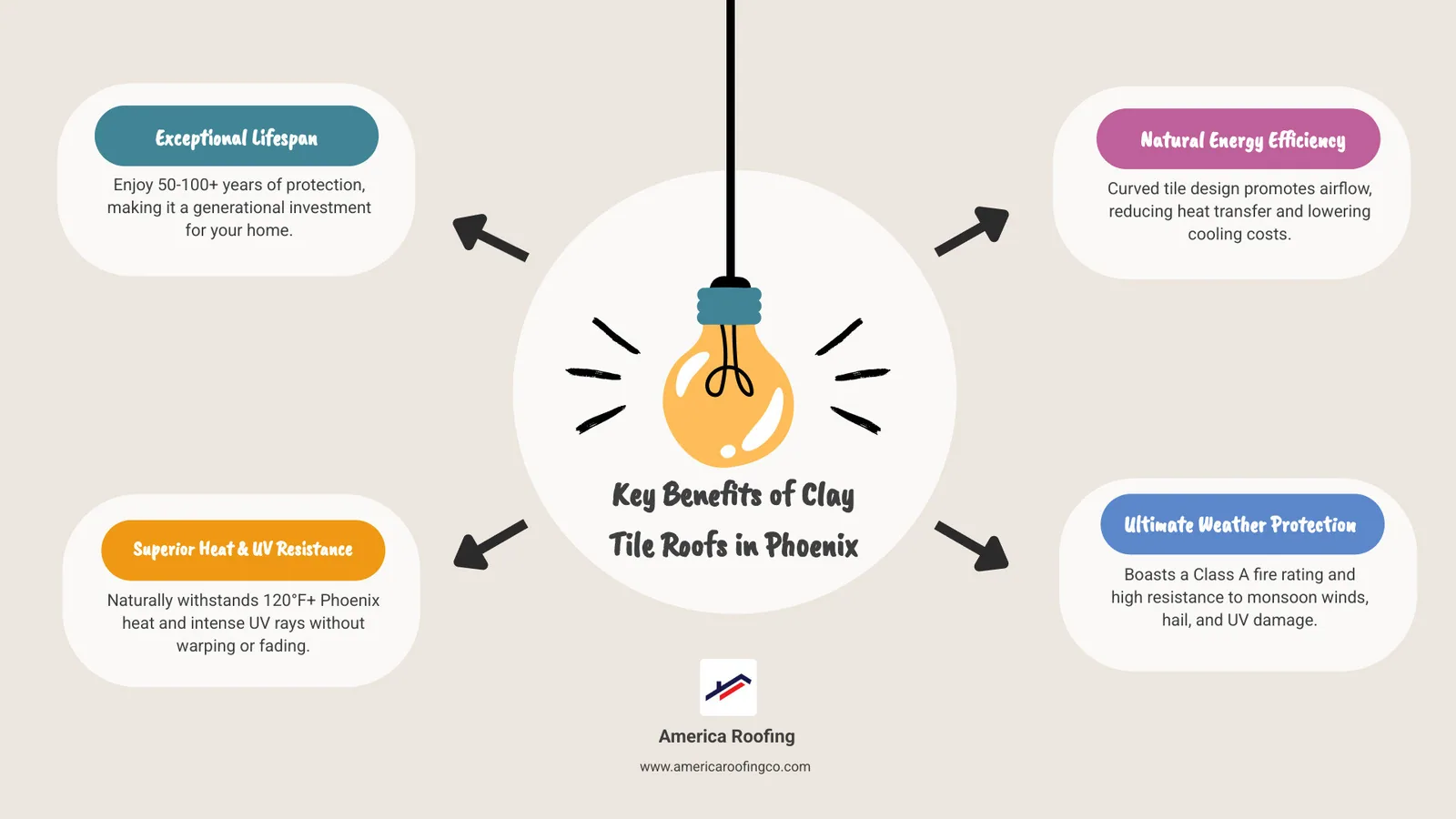
Key Benefits of Clay Tile Roofs in Phoenix:
- Lifespan: 50-100+ years with proper care
- Cost: $700-$1,000 per square ($17,500-$25,000 for average home)
- Weight: 800-1,000 lbs per square (may require structural assessment)
- Heat Resistance: Superior UV protection, no warping or melting
- Energy Efficiency: Natural ventilation reduces cooling costs
- Fire Rating: Class A (non-combustible)
- Maintenance: Low maintenance; underlayment replacement every 15-20 years
Phoenix roofs face triple-digit summers, intense UV exposure, and monsoon storms. Clay tile is the gold standard because it thrives in this harsh desert climate.
Clay tiles resist heat naturally. Unlike asphalt shingles that can soften and deteriorate, clay's composition allows it to stand up to 120°F days without warping or melting.
Energy savings are substantial. The curved design of clay tiles creates air pockets, allowing hot air to escape. This natural ventilation can significantly reduce your HVAC load and lower your electric bill.
Longevity justifies the investment. While clay tiles cost more upfront than other materials, they last 50-100 years, potentially making it the last roof your home will ever need.
Fire and storm protection are built-in. Clay tiles carry a Class A fire rating—the highest possible—and their weight helps them resist high monsoon winds, offering invaluable peace of mind.
Superior Heat and UV Ray Resistance
In Phoenix's 110°F+ heat, you need a roof that can perform. Clay tiles are naturally resistant to heat and UV rays, so they won't warp, melt, or deteriorate like asphalt shingles often do. A key benefit is their exceptional color retention; the baked-in color doesn't fade under the intense Arizona sun. Glazed clay tiles offer even greater protection, preventing color fading for decades and ensuring your home's curb appeal lasts. This means if a repair is ever needed, matching tiles is not an issue. For more on materials suited for our climate, see our guide on the Best Roofing Material for Warmer Climate.
Natural Insulation and Energy Savings
Clay tile roofs offer significant energy efficiency advantages in Phoenix. The curved profile of the tiles creates a natural air space above the roof deck, promoting airflow and ventilation. This design allows hot air to circulate and escape instead of transferring into your attic, acting as a thermal barrier. A cooler attic reduces the load on your air conditioning system, leading to a more comfortable home and lower HVAC costs during Phoenix's long summers. Explore other high-performing roofing materials in our article: 6 Most Amazing Roofing Materials You Should Use in Phoenix, AZ.
Exceptional Fire and Storm Resistance
Phoenix's climate demands a roof that can handle both wildfire risks and monsoon storms. Clay tiles are non-combustible and have a Class A fire rating, the highest possible, offering critical protection from flying embers. Their inherent weight and sturdiness also make them highly resistant to the high winds and hail common in monsoon season. With natural water-shedding properties, a clay tile roof is a robust shield against Arizona's unpredictable weather. Learn more about their lasting appeal in our article: Tile Roofing: Timeless Elegance and Durability in Roofing.
Clay vs. Concrete Tile: A Head-to-Head Comparison
When choosing a tile roof in Phoenix, the main options are clay and concrete. While both are excellent for Arizona's climate, they have key differences in lifespan, cost, weight, and durability. Understanding these distinctions will help you select the right material for your home and budget.
Here's how they stack up side-by-side:
| Feature | Clay Tile Roofs | Concrete Tile Roofs |
|---|---|---|
| Lifespan | 50-100+ years | 40-50 years |
| Cost (per square) | $700-$1,000 | $300-$600 |
| Weight (per square) | 800-1,000 lbs | 900-1,200 lbs |
| Durability | Extremely durable, fireproof, long-lasting | More durable than clay to impact, very strong |
| Color Fading | Excellent color retention, especially when glazed | Can fade in Arizona sun, leading to mismatched repairs |
| Brittleness | Can be brittle if walked on | Less brittle, more resistant to breakage from impact |
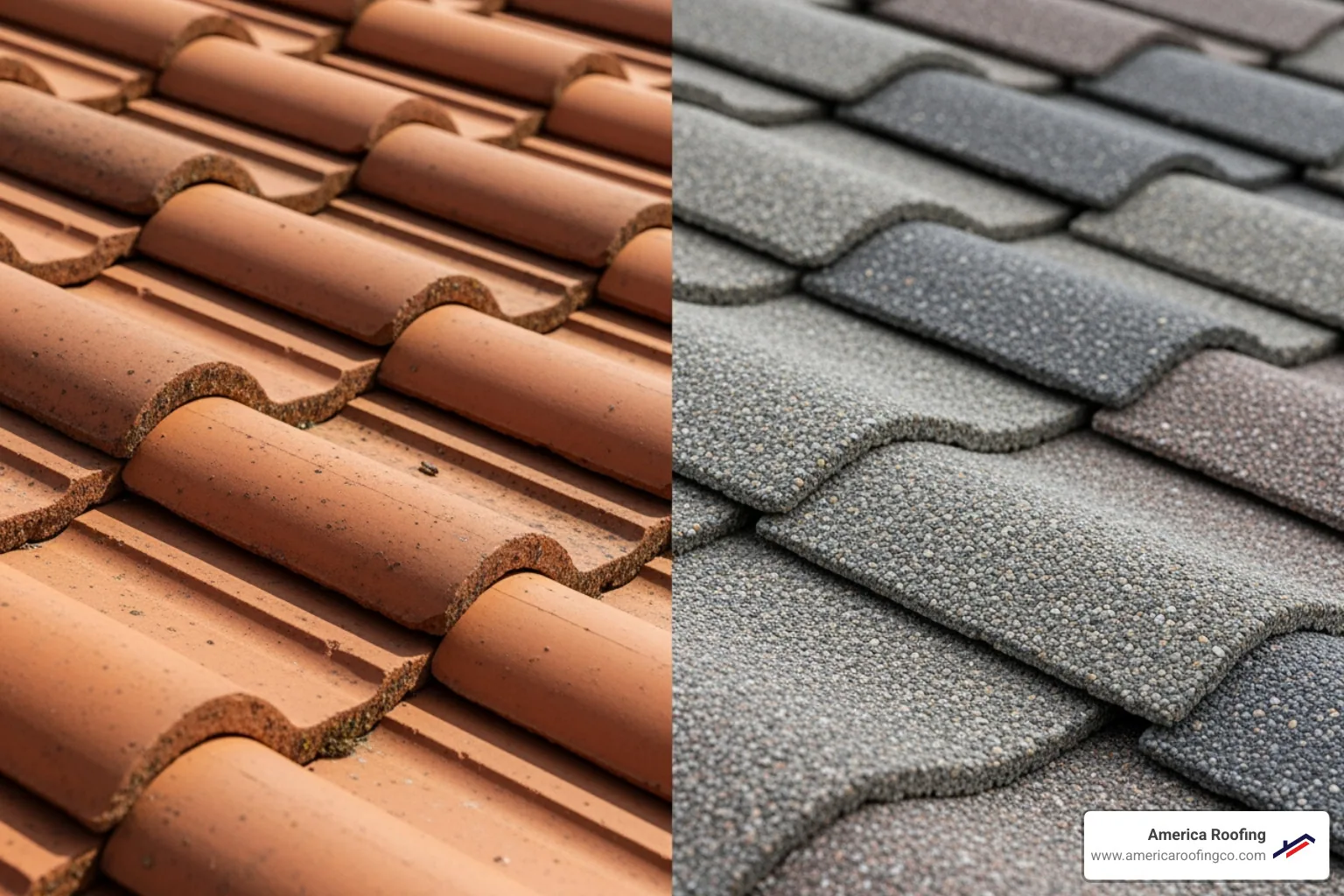
Both materials are fire-resistant and energy-efficient, but the details impact your long-term investment. For more context on how tile roofs compare to other options, check out our article What's Difference Tile Roofs Shingle Roofs.
Lifespan and Durability
For sheer longevity, a clay tile roof Phoenix installation is best, lasting 50 to 100+ years. Concrete tiles are also durable, with a lifespan of 40 to 50 years. However, durability also involves toughness. Concrete tiles are generally less brittle and more resistant to impact from falling branches or foot traffic. Clay tiles, while resilient to weather, can be more fragile under direct impact. This is why professional handling is crucial for any work on a clay roof. The trade-off is clear: clay offers a longer lifespan, while concrete provides better impact resistance.
Color and Aesthetics
Your roof's appearance is crucial for curb appeal, and this is where clay tiles excel. Clay tiles feature "through-body color," meaning the pigment is baked into the material, not just coated on the surface. This ensures the color won't fade even after decades of Phoenix sun. Glazed clay tiles offer even more protection for vibrant, long-lasting hues. In contrast, concrete tiles use a surface coating for color, which can fade over time with UV exposure. This can lead to a mismatched, patchwork look if you need to replace tiles down the road. For consistent, long-term beauty, clay is the superior choice. For a deeper comparison, see our Roofing Materials Showdown: Shingles vs. Tiles.
Weight and Cost Considerations
Two practical realities of tile roofing are weight and cost. Clay tiles weigh 800 to 1,000 pounds per square (100 sq ft), while concrete is heavier at 900 to 1,200 pounds per square. Your home's structure must be able to support this weight, and older homes may require reinforcement. A professional structural assessment is essential to ensure safety. In terms of cost, clay tiles are a higher upfront investment at $700 to $1,000 per square (around $17,500 to $25,000 for an average home). Concrete is more budget-friendly at $300 to $600 per square ($7,500 to $15,000 total). While clay costs more initially, its longer lifespan and superior color retention often result in a lower cost per year of ownership. The best choice depends on your budget, your home's structure, and your long-term plans.
Planning Your Clay Tile Roof Phoenix Installation
A new Clay tile roof Phoenix installation is a major investment in your home's appearance and protection. The planning process involves understanding structural needs and navigating the wide range of styles and colors. Working with an experienced local contractor simplifies this process. Our Residential Tile Roof Arizona team helps homeowners make confident, informed choices.
Styles and Color Options for Your Phoenix Home
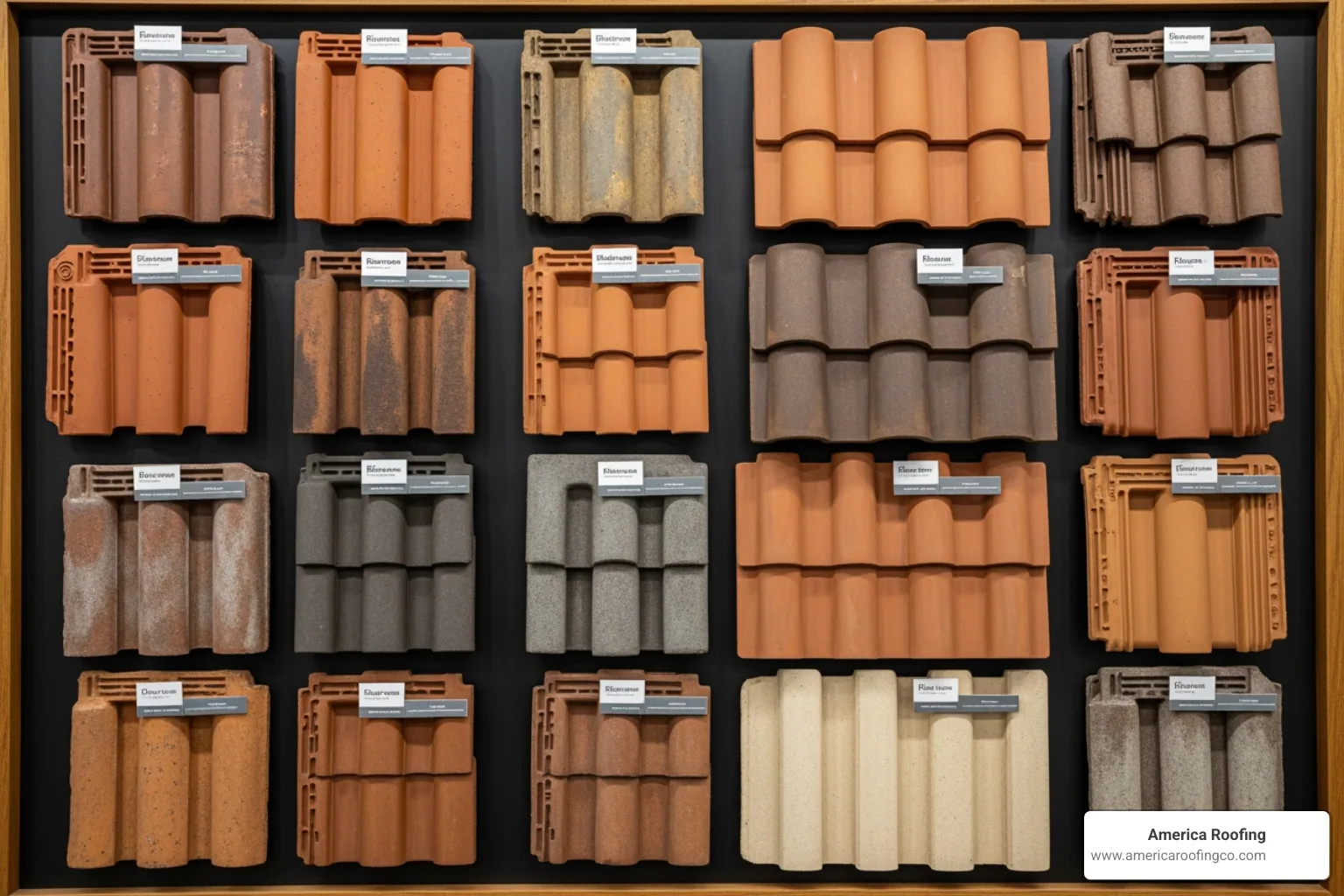
Clay tiles come in a wide variety of styles to match any Phoenix home, from Spanish Colonial to modern desert designs.
- Spanish "S" tiles (barrel tiles) create the iconic Southwestern look with curves that also provide excellent ventilation.
- Mission style tiles use a two-piece system for more dimension and shadow.
- Flat tiles offer a streamlined look that can mimic slate or wood shakes.
- Terracotta refers to the classic warm, earthy red and brown unglazed tiles.
Color choices range from traditional earth tones to deep charcoals, slate grays, and custom blends. Glazed tiles offer vibrant, fade-resistant hues. We source from top manufacturers like Eagle Roofing and Redland Clay Tile. You can see clay tile styles from Eagle Roofing and explore options from Redland Clay Tile to find the perfect look.
Understanding the Cost of a Clay Tile Roof in Phoenix
A complete clay tile roof installation on a typical Phoenix home costs between $17,500 to $25,000 or more. Prices are quoted per "square" (100 sq ft), with clay tiles running $700 to $1,000 per square. This price includes tiles, labor, high-quality underlayment, and flashing. Additional costs may apply if your home needs structural reinforcement. While clay costs more upfront than concrete or asphalt shingles, its 50 to 100-year lifespan, energy savings, and low maintenance make it a sound long-term financial investment. For a detailed cost breakdown, see our Tile Roof Replacement Cost: Complete Guide.
Weight and Structural Requirements
Clay tiles are heavy, weighing 800 to 1,000 pounds per square, so your home's framing must be strong enough to support the load. While most newer homes are built to handle this weight, older homes, especially those converting from shingles, require a professional structural assessment. This is a critical safety step. Our team evaluates your roof framing during the initial consultation and may recommend a structural engineer's report for older homes. If reinforcement is needed, such as adding supports or strengthening trusses, this is done before installation to ensure your new roof has a solid foundation for the next century.
Longevity and Maintenance: Protecting Your Investment
A Clay tile roof Phoenix can last for generations, but proper care is essential to protect your investment. Understanding key longevity factors and maintenance needs will ensure your roof performs optimally for its entire lifespan.
The Critical Role of Underlayment
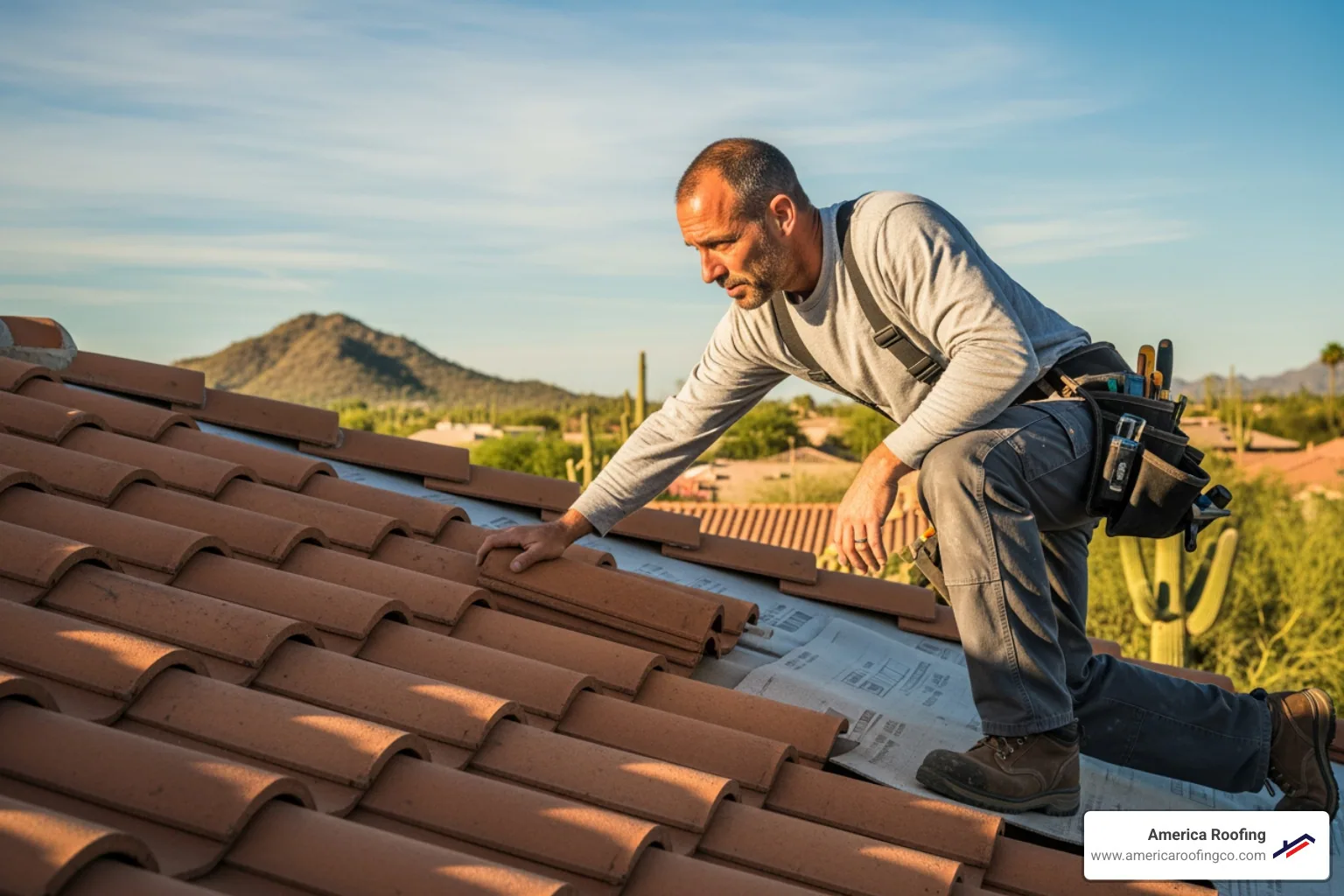
While clay tiles can last a century, the underlayment beneath them—the roof's true water barrier—has a shorter lifespan of 15 to 20 years in Arizona's climate. The tiles act as armor, but the underlayment is the shield that degrades from heat and UV exposure. When it fails, a "remove and reset" (R&R) is necessary. This process involves carefully removing the tiles, replacing the old underlayment with a new, high-quality water barrier, and reinstalling the original tiles. Using premium underlayment from the start is crucial for the entire system's performance. Learn the warning signs in our article: 5 Reasons to Get Your Roof Replaced in Arizona.
Maintenance Needs for a Clay Tile Roof in Phoenix
Clay tile roofs are low-maintenance, but not no-maintenance. Proactive care is key to achieving a 50-100 year lifespan.
- Annual Inspections: A professional should inspect your roof annually, especially before monsoon season, to clear debris from valleys and gutters that can block water flow.
- Tile Repair: Cracked or slipped tiles from impacts should be addressed promptly by a professional to prevent leaks. Avoid walking on your clay tile roof, as it can be brittle underfoot.
- Gutter Cleaning: Keep gutters clean to ensure proper drainage and prevent water from backing up under tiles.
- Underlayment Checks: Around the 15-year mark, inspections should focus on signs of underlayment wear to plan for a future R&R.
This proactive approach ensures your Clay tile roof Phoenix remains in top condition. For more tips, see How Long Do Tile Roofs Last?.
Choosing Your Phoenix Clay Tile Roofing Contractor
The quality of your Clay tile roof Phoenix installation depends entirely on the contractor. Without the right expertise and local knowledge, even the best materials won't perform as expected. In Phoenix's extreme climate, experience is critical. As a third-generation, family-owned roofing authority serving the Valley since 1999, we understand the nuances of clay tile work. Partnering with a true expert is essential for this major project. Explore our Tile Roof Replacement services to see our specialized approach.
Essential Qualities of a Qualified Roofer
Clay tile work requires a specialized skill set. When choosing a contractor, look for these essential qualities:
- Licensed and Insured: Verify a valid Arizona ROC license (like our ROC#186438) and comprehensive insurance. This is non-negotiable and protects you.
- Proven Clay Tile Experience: Ask for specific experience with clay tiles, not just general roofing. Proper installation requires knowledge of their weight, brittleness, and alignment.
- Local Portfolio: A reputable contractor should have a portfolio of completed clay tile projects in the Phoenix area, demonstrating their craftsmanship and local knowledge.
- Positive Customer Reviews: Check online reviews for consistent feedback on communication, quality, and professionalism. Our reputation as the Valley's highest-reviewed roofer is built on decades of customer satisfaction.
- Phoenix Climate Expertise: Your contractor must understand how extreme heat, UV rays, and monsoons affect material selection and installation techniques for optimal performance.
Questions to Ask a Potential Contractor
Before signing a contract for your Clay tile roof Phoenix project, ask these key questions to vet your contractor:
- What is your experience with "remove and reset" (R&R) projects? An experienced roofer can detail their process for this common and delicate procedure.
- What are the warranty details for materials and labor? A confident contractor offers a strong workmanship warranty alongside the manufacturer's warranty.
- Where do you source your materials? They should be transparent about using high-quality tiles and underlayment from reputable suppliers.
- What is the project timeline and how do you handle delays? Look for clear communication regarding scheduling and potential issues like weather or structural findings.
- What are your safety protocols? A professional will have clear procedures to protect their crew and your property.
Choosing the right contractor is about finding a partner with expertise and integrity. That's the America Roofing difference.
Conclusion
Choosing a clay tile roof Phoenix homeowners can trust is a smart long-term investment. It's a solution built for Arizona, withstanding 120°F summers, UV rays, and monsoon storms while helping lower energy bills. The value goes beyond its 50-100 year lifespan, offering Class A fire protection and best curb appeal that can increase your home's value.
However, expert installation is critical to realizing these benefits. You need an experienced, licensed contractor who understands the specific demands of clay tile in our climate.
America Roofing brings three generations of roofing expertise to every project. As a veteran-owned, family-run company (ROC#186438) serving the Phoenix metro since 1999, we engineer roofing solutions for our desert environment. We provide craftsmanship and attention to detail your home deserves.
When you're ready to invest in the lasting beauty and protection of clay tile, we offer honest advice to guide you through every step.