

Thinking about a new roof for your Phoenix home? In the Valley's extreme heat and monsoon winds, you need a material that balances beauty, durability, and long-term value. This guide explains why concrete tile roofs dominate local neighborhoods and what to know before you invest.
Why Concrete Tile Roofs Dominate Phoenix Neighborhoods
When considering a new roof in the Valley of the Sun, the choices can feel overwhelming, but one option consistently stands out for its blend of beauty, resilience, and value. Concrete tile roofs are a hallmark of Southwestern architecture, perfectly suited to withstand the intense Arizona climate. This guide will explore everything you need to know about this popular roofing choice, helping you decide if it's the right investment for your Phoenix home.
Concrete tile is widely used in Phoenix because it tolerates heat and offers a long-lived roof covering. The performance of the complete roof still depends on underlayment, flashing, fastening, structure and maintenance.
What is a Concrete Tile Roof?
- A roofing system made from a mixture of cement, sand, water, and pigments
- Lasts 50+ years when properly maintained
- Costs $10.70–$27.50 per square foot installed ($21,400–$55,000 for a typical 2,000 sq ft roof)
- Weighs 850–1,100 lbs per square (more than double the weight of asphalt shingles)
- Offers Class A fire rating and can withstand winds exceeding 125 mph
- Available in multiple styles: Spanish, French, Mission, and flat profiles
- Provides excellent energy efficiency through thermal mass properties
Drive through Ahwatukee, Scottsdale, or Paradise Valley, and you'll notice a common thread—concrete tile roofs grace the majority of homes. This isn't just about aesthetics. In Arizona's punishing climate, where summer temperatures routinely exceed 110°F and monsoon storms bring damaging winds and hail, your roof needs to be more than just attractive.
Concrete tiles deliver a rare combination of benefits that align perfectly with desert living. They reflect heat instead of absorbing it, helping slash those skyrocketing AC bills. Their weight and interlocking design keep them firmly in place during monsoon season. And unlike asphalt shingles that deteriorate rapidly under intense UV exposure, concrete tiles can last half a century or more.
But "concrete tile roof" is a broad category. Not all tiles are created equal, and the installation quality matters just as much as the product itself. From understanding the true cost to knowing what maintenance your roof will need, making an informed decision requires cutting through the marketing hype and getting to the facts.
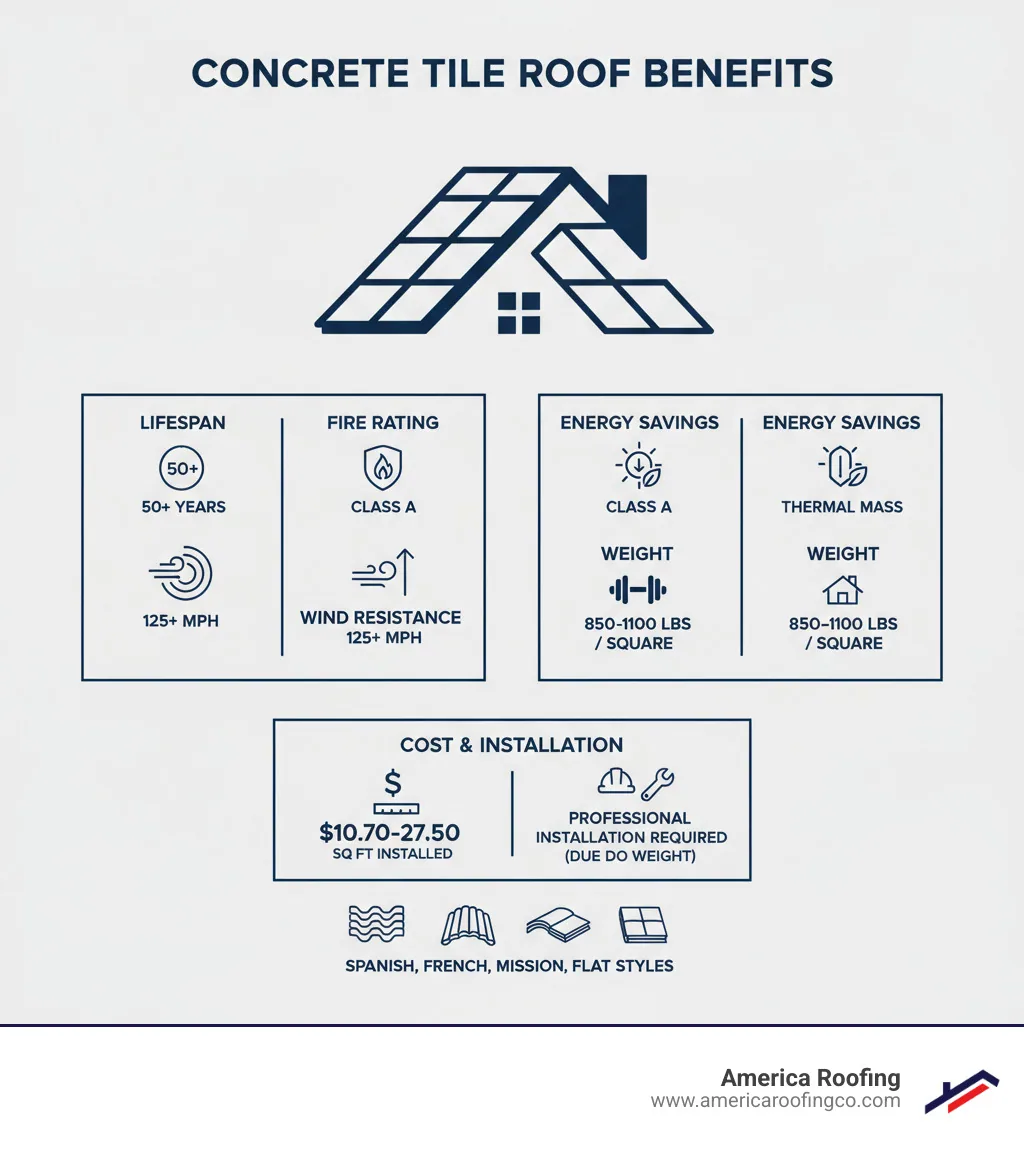
Concrete tile roof terms at a glance:
The Anatomy of a Concrete Tile Roof: More Than Just Concrete
A concrete tile roof is an engineered system designed for maximum durability. Its sophisticated composition and manufacturing process are key to its legendary performance in harsh climates.
Composition and Manufacturing Process
The core of a concrete tile roof is a simple mixture of natural materials: sand, cement, and water. To achieve the vibrant colors seen across Phoenix, pigments like iron oxides are added to create everything from warm terra cottas to deep charcoals.
The manufacturing process is highly precise. Modern concrete roof tiles are formed using high-pressure extrusion, where the mixture is forced through molds to create various profiles, such as the classic S-curve of Spanish tile or the clean lines of a flat profile. This ensures every tile meets exact specifications for density and shape.
After being formed, the tiles are cured in controlled chambers. This critical step allows the cement to fully hydrate and harden, creating a product with the durability and longevity needed to withstand decades of Arizona's sun and storms. Today's automated production has perfected a process that began in the mid-1800s, resulting in a remarkably resilient roofing material ideal for the Phoenix climate. For a deeper dive, This Old House offers a great resource: What Are Concrete Tile Roofs?
The Major Advantages for Phoenix Homeowners
Choosing a concrete tile roof is a smart investment that pays dividends for decades, as these roofs are engineered to handle the desert climate.
Exceptional Durability and Longevity
A properly maintained concrete tile roof can last 50 years or more, with some manufacturers offering limited lifetime warranties. Unlike other materials, concrete tiles are impervious to rot and insect damage and do not curl or deteriorate under intense UV exposure, meaning fewer replacements over the life of your home.
Class A Fire Rating
In Arizona's dry climate, fire safety is paramount. Concrete tile roofs carry a Class A fire rating, the highest available. This means the tiles are highly resistant to flame spread, offering the best possible protection for your home in the event of a wildfire. Learn more about Roofing materials and fire resistance.
Wind Resistance
Phoenix monsoons bring powerful winds that can lift lighter roofing materials. Concrete tiles are built for this, with their weight and interlocking design creating a system that sustains winds exceeding 125 miles per hour. This provides genuine peace of mind when storms roll in.
Energy Efficiency and Thermal Mass
Concrete tiles are your ally against 115°F summer days. Their thermal mass allows them to absorb and slowly release heat rather than transferring it into your home. This natural insulation keeps your home cooler, leading to noticeable savings on energy bills. Many tiles are also CRRC Certified for cool roofing, and the air gap under curved tiles further reduces heat transfer. Explore the Best roofing materials for the Phoenix AZ summers.
Aesthetic Versatility
Beyond performance, concrete tile roofs offer incredible beauty with over 50 color and style combinations. Whether you want the look of classic clay, rustic wood shake, or modern slate, there is a concrete tile profile to match. This versatility allows you to achieve perfect architectural harmony, enhancing both curb appeal and property value.
Low Maintenance
Once properly installed, concrete tiles are remarkably self-sufficient. They resist moss and algae growth and don't require periodic sealing. Routine annual inspections and prompt repair of any cracked tiles are typically all that's needed for decades of reliable performance.
Potential Drawbacks and Considerations
While concrete tile roofs offer many advantages, it's important to be aware of their potential drawbacks to ensure they are the right fit for your Phoenix home.
Heavy Weight
Concrete tile roofs are heavy, weighing 860 to 1100 pounds per roofing square (100 sq ft)—more than double that of asphalt shingles. While many Phoenix homes are built to support this weight, converting from a lighter material will likely require a structural engineer's assessment to see if reinforcement is needed.
Higher Initial Cost
A concrete tile roof requires a larger upfront investment than options like asphalt shingles due to material and specialized labor costs. However, its 50+ year lifespan and low maintenance often result in a lower life cycle cost, as you avoid multiple replacements. This balance is explored in our article on Roof Replacement vs. Repair: Making the Right Decision.
Fragility to Foot Traffic
Despite their overall toughness, individual concrete tiles can crack if walked on improperly. For this reason, any maintenance or inspections should be left to experienced professionals who know how to steer the roof safely without causing damage.
Color Fading
Phoenix's intense UV exposure can cause the pigments in concrete tiles to fade over time. This is a purely aesthetic issue and does not compromise the tile's protective function. Some homeowners appreciate the weathered look, while others may prefer the original vibrancy.
Underlayment Replacement
This is a critical point: while the tiles last 50+ years, the waterproof underlayment beneath them has a shorter lifespan, typically around 20 years. The underlayment is the primary waterproof barrier. This means you should plan for a "re-lay" project—where tiles are removed, the underlayment is replaced, and the original tiles are reinstalled—about two decades into your roof's life.
A Style for Every Home: Tile Profiles and Options
One of the most appealing aspects of concrete tile roofs is their incredible versatility in style and color. Whether your Phoenix home is a classic Spanish Colonial or a sleek contemporary design, there's a concrete tile profile that will complement your architecture beautifully.
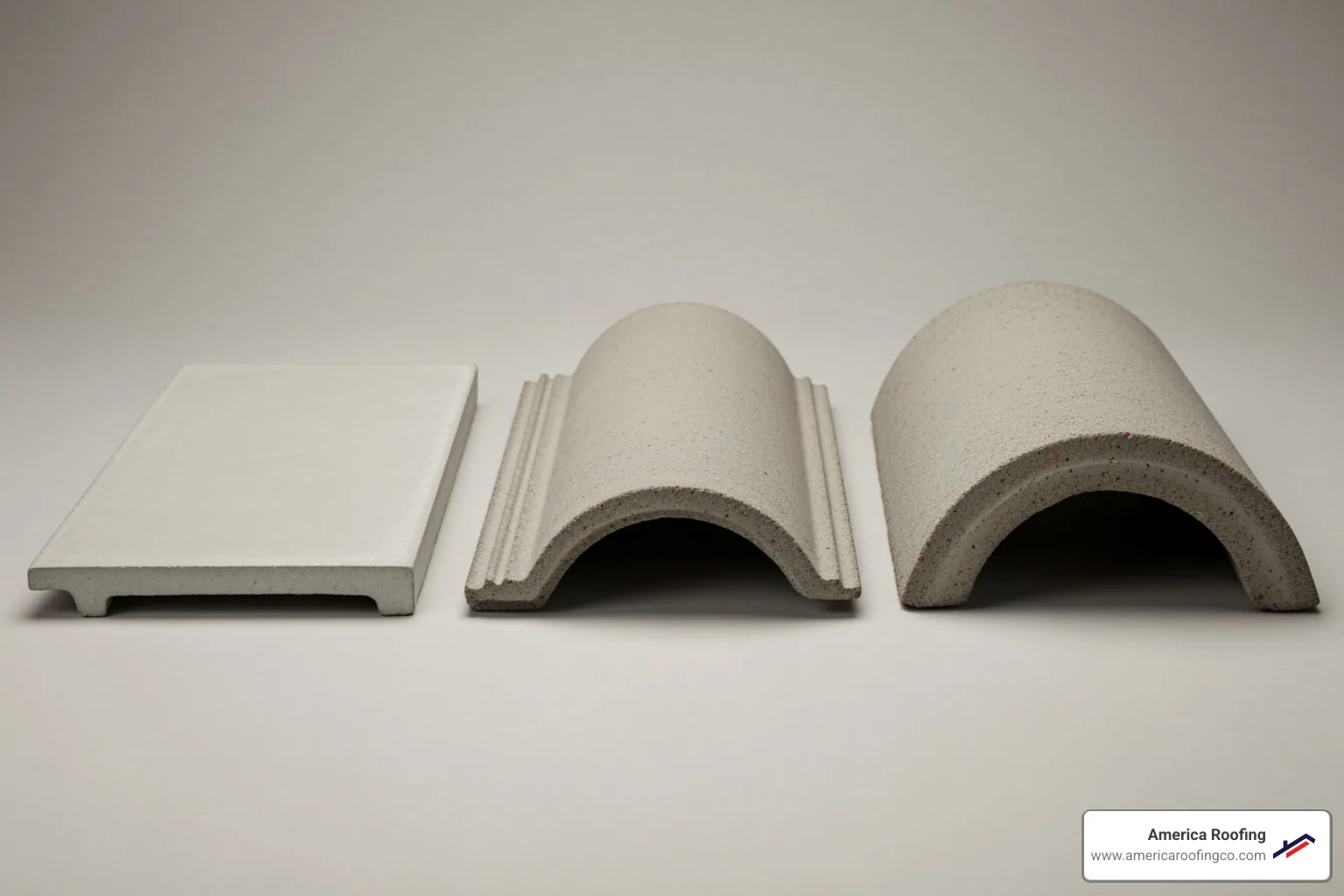
Diverse Styles and Color Options
Concrete tiles come in dramatically different profiles to suit any aesthetic:
- Spanish Style (S-Tile): Perhaps the most iconic, its "S" curve creates deep shadows and is perfect for Mediterranean and Southwestern homes.
- French Style: Offers a pronounced, neat curve that adds sophistication to European-inspired architecture.
- Mission Style: Often features an antique look that mimics handmade clay, ideal for Tuscan or historic-style homes.
- Flat Profile: Increasingly popular for modern and minimalist homes, these sleek tiles can convincingly replicate the appearance of natural slate or wood shakes.
- Shake and Slate Profiles: These beautifully mimic the rugged look of wood or natural slate, working well with Prairie, Craftsman, and Bungalow styles.
Beyond the profiles, the color palette is vast. Manufacturers blend pigments to create an astonishing range of shades, from vibrant terracottas to sophisticated charcoals. With over 50 color and style combinations available, you can perfectly match your home's exterior and improve its curb appeal. For more inspiration, explore our A Guide to Different Roofing Styles and Designs.
Understanding the Cost of a Concrete Tile Roof
When considering a concrete tile roof for your Phoenix home, understand the investment. While the upfront cost is higher than some alternatives, the long-term value is exceptional.
What to Expect for Your Investment
For a typical 2,000-square-foot roof in the Phoenix area, the total installation cost ranges from $21,400 to $55,000. This breaks down to $10.70 to $27.50 per square foot installed, which includes both materials and professional labor.
What Drives the Final Price?
Several factors determine the final cost of your concrete tile roof:
- Roof Size and Complexity: Larger roofs or those with a steep pitch, multiple valleys, and dormers require more labor and materials.
- Tile Style: Flat tiles are typically the most economical, while Spanish, Mission, or French profiles may cost more.
- Labor Costs: Specialized labor for tile installation is a significant part of the budget, reflecting the expertise needed for a durable, weatherproof system.
- Structural Reinforcement: If your home is being converted from a lighter material like shingles, it may require structural reinforcement to support the tile's weight.
- Old Roof Removal: The cost to tear off and dispose of your existing roof will be factored into the total project price.
A concrete tile roof is a long-term investment that pays for itself through a 50+ year lifespan, lower energy bills, and minimal maintenance. For a detailed breakdown, see our Tile roof replacement cost: Complete guide. To weigh the upfront cost against long-term value, read our article on Investing in a New Roof: Cost vs. Long-Term Benefits.
Built for the Desert: Lifespan and Performance
The Arizona desert is unforgiving, but concrete tile roofs are specifically built to handle its extremes for decades.
Expected Lifespan
Concrete tile roofs are renowned for their longevity, routinely lasting 50 years or more. Some have been known to last over 100 years. This means you'll likely never have to replace your roof again. However, it's important to know that the underlayment—the primary waterproof barrier beneath the tiles—typically needs replacement after about 20 years to maintain the roof's integrity. For more details, see our guide on How long do tile roofs last?. For technical information, the Tile Roofing Institute is an excellent resource.
Weather Resistance in the Desert
Concrete tiles are engineered to excel in Arizona's harsh climate.
- Heat and UV Exposure: Unlike materials that quickly deteriorate, concrete tiles are highly resistant to extreme heat and UV rays. Their thermal mass helps regulate temperature, and lighter colors reflect sunlight, keeping your attic cooler and lowering AC bills.
- Monsoon Performance: During monsoon season, the weight and interlocking design of concrete tiles allow them to withstand winds exceeding 125 miles per hour, preventing them from lifting or blowing away. At America Roofing, our expertise ensures your roof is engineered for Phoenix's extreme weather.
- Hail Impact: Concrete tiles offer excellent hail resistance, typically achieving a Class 3 or 4 rating (the highest available), meaning they can withstand significant impacts without damage.
For more on preparing your roof, read our guides on how to Prepare roof monsoon season Phoenix and Roofing for High Wind Zones: What You Need to Know.
Maintenance Needs for Your Concrete Tile Roof
While known for being low-maintenance, a concrete tile roof benefits from some routine care to ensure it reaches its maximum lifespan, especially in Phoenix where dust and storms are common.
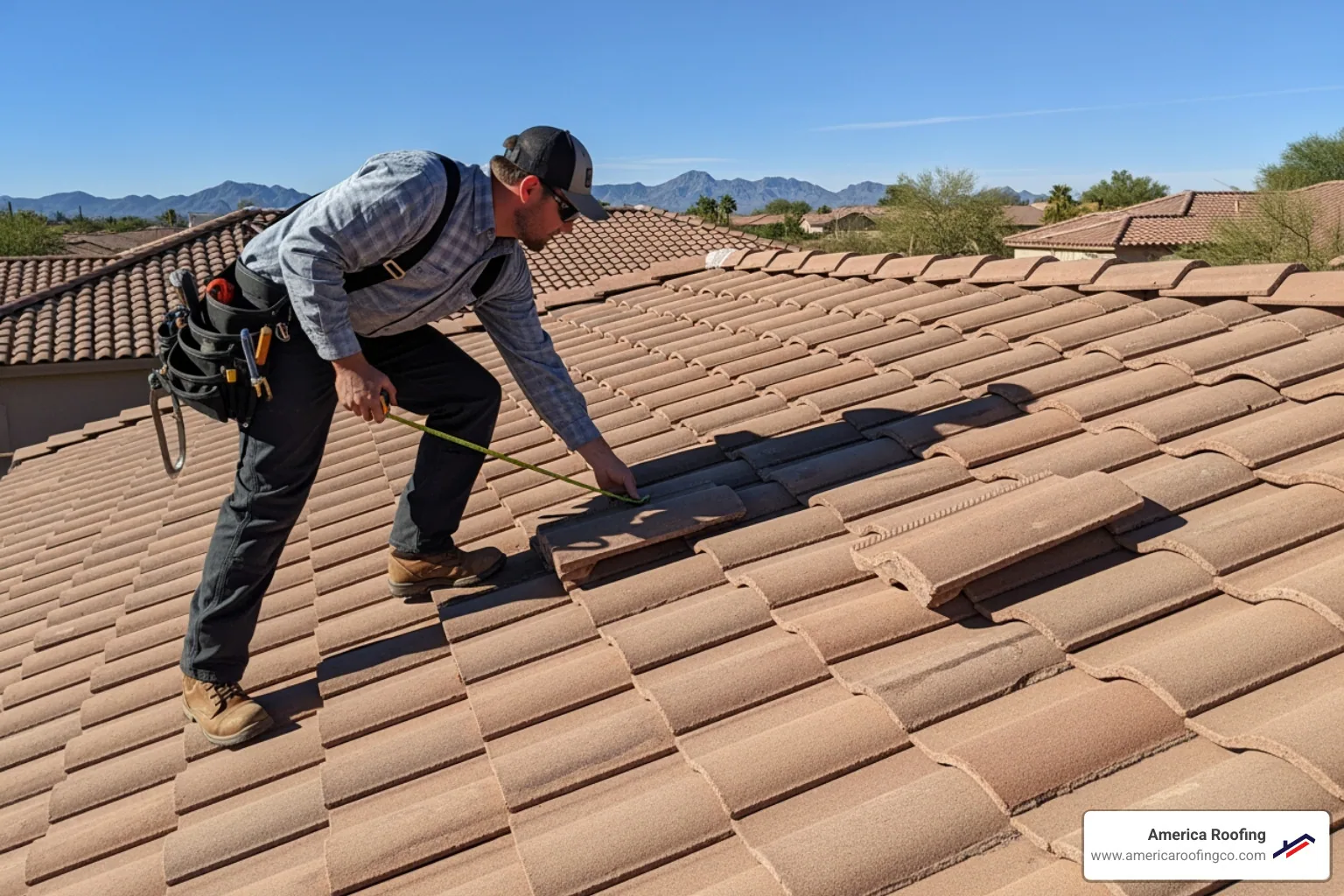
Routine Care for Peak Performance
- Annual Professional Inspections: This is the best way to spot potential issues like cracked tiles or failing flashing before they become costly leaks.
- Keep it Clear: Periodically remove accumulated leaves, twigs, and dust to ensure proper water drainage.
- Clean Gutters: Ensure water flows freely away from your roof and foundation by keeping gutters and downspouts clear, especially during monsoon season.
- Replace Damaged Tiles: If a tile is cracked or broken from impact, have it replaced promptly to maintain the roof's integrity.
- Avoid Foot Traffic: Concrete tiles can be brittle underfoot. Always hire a professional for any work that requires walking on the roof to prevent accidental damage.
- Professional Cleaning: While not often needed, if dust accumulates, consult a professional for cleaning. DIY pressure washing can cause significant damage.
For a complete guide, explore our Roof Repair and Maintenance: A Guide by America Roofing. We also have tips on How often clean roof Phoenix.
Concrete vs. The Competition: A Roofing Material Showdown
How do concrete tiles stack up against other popular roofing materials in Phoenix? While they sit in the middle of the price spectrum, their exceptional 50+ year lifespan makes them a superior long-term value.
Compared to clay tiles, concrete tiles offer similar aesthetics and performance at a more accessible price point, making them the smarter choice for most homeowners seeking a Mediterranean look. While metal roofing is also durable, it can be noisy in rain, may dent from hail, and often costs more. Asphalt shingles are the most budget-friendly option, but they can't compete on longevity in Arizona's climate, often failing in just 15-20 years under intense UV exposure.
| Material | Cost (per sq ft installed) | Lifespan | Durability | Weight (per sq) | Maintenance |
|---|---|---|---|---|---|
| Concrete Tiles | $10.70–$27.50 | 50+ years | Excellent | 850-1100 lbs | Low |
| Clay Tiles | $13–$30 | 50-100 years | Excellent | 600-850 lbs | Low |
| Asphalt Shingles | $3.50–$7 | 15-25 years | Fair to Good | 250-400 lbs | Moderate |
| Metal Roofing | $12–$25 | 40-70 years | Very Good | 100-200 lbs | Low |
When you look beyond the initial price, a concrete tile roof delivers exceptional long-term value through durability, energy efficiency, and minimal maintenance. It's an investment that protects your home for generations.
For more detailed comparisons, check out our guides on A comparison of roofing material and Roofing materials showdown: Shingles vs. Tiles.