

When the desert sun beats down on the Valley of the Sun, your home needs a shield that can withstand triple-digit heat and violent monsoon storms. That is exactly why the Arizona tile roof has become the gold standard for desert living, protecting generations of homeowners with unmatched durability. Honestly, choosing the right roofing system is one of the most important decisions you can make for your home's energy efficiency and long-term protection.
You know what? In Arizona, a roof is not just about curb appeal - it is about survival in extreme heat, UV exposure, wind, and sudden monsoon rain. Let me explain why tile has remained such a trusted choice for homeowners across Phoenix, Mesa, Scottsdale, and beyond.
Introduction
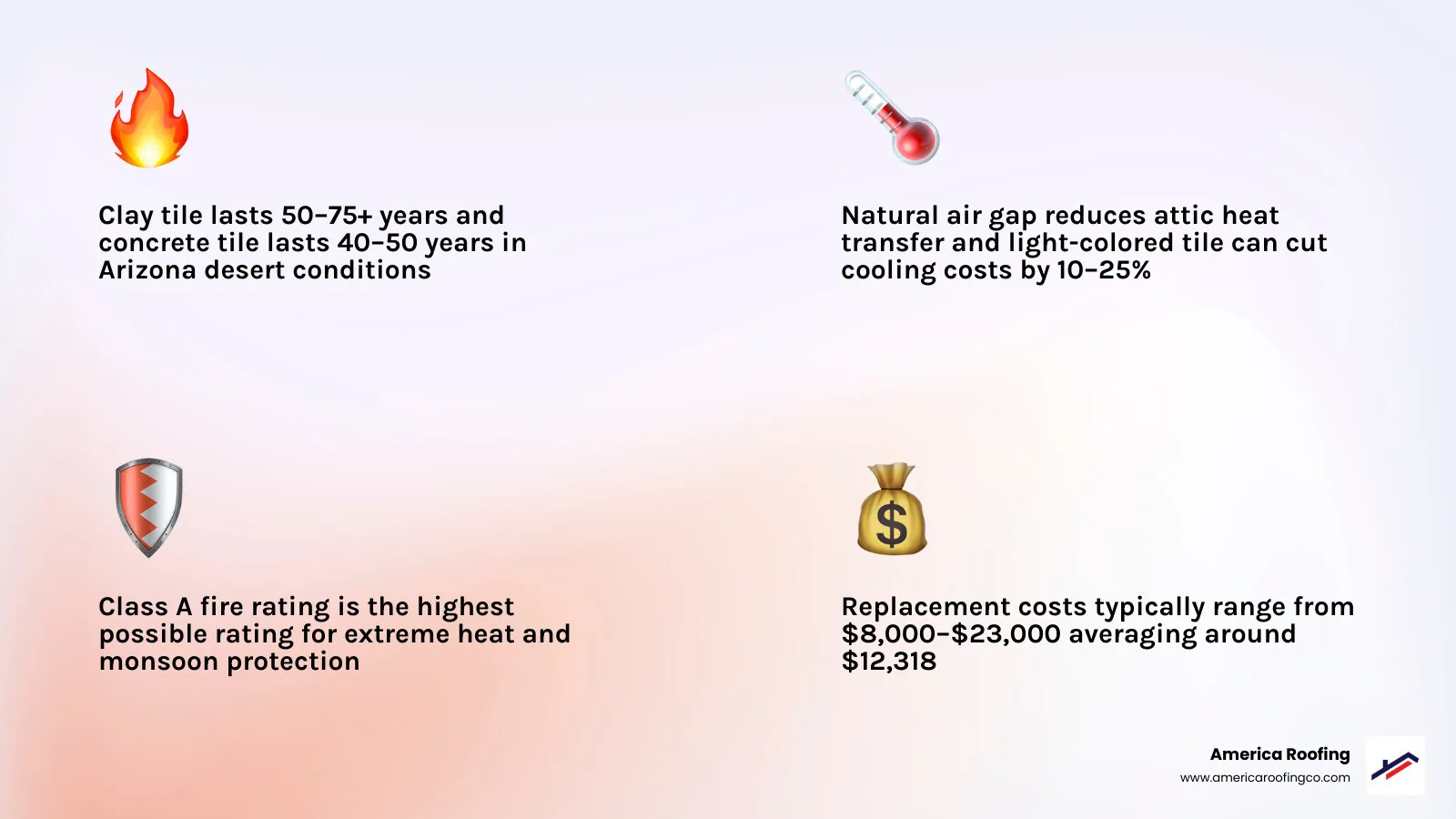
An Arizona tile roof is one of the smartest investments a desert homeowner can make. The combination of extreme heat, intense UV rays, and violent monsoon storms demands a roofing material that can take a beating - and tile delivers. Here is what you need to know right away:
Why Arizona Homeowners Choose Tile Roofing:
| Factor | What You Need to Know |
|---|---|
| Lifespan | Clay tile: 50-75+ years; Concrete tile: 40-50 years |
| Heat performance | Natural air gap reduces attic heat transfer |
| Fire rating | Class A - the highest possible rating |
| Energy savings | Light-colored tile can cut cooling costs by 10-25% |
| Popularity | Covers an estimated 60-70% of Phoenix-area homes built after 1980 |
| Replacement cost | Typically $8,000-$23,000, averaging around $12,318 |
| Biggest maintenance issue | Underlayment failure around years 15-25, not the tiles themselves |
Tile roofing in Arizona traces its roots to Spanish missionaries who brought the iconic curved clay barrel tile to the Southwest centuries ago. That design was not just beautiful - it was practical, built for hot, dry climates long before air conditioning existed. The style took hold in Arizona subdivisions during the late 1980s building boom, and today it defines the look of neighborhoods from Gilbert to Scottsdale to Tucson.
Here is the thing: tile performs so well in the desert because of a combination of thermal mass, natural ventilation, fire resistance, and sheer longevity that asphalt shingles struggle to match. When Phoenix summers push surface temperatures past 160 degrees F, tile roofs are engineered to handle it.
Arizona tile roof terms to remember:
Walk through any established neighborhood in Tempe, Chandler, or Peoria, and you will notice one undeniable truth: tile roofing is everywhere. In fact, tile roofing covers an estimated 60-70% of homes in Phoenix-area subdivisions built after 1980. This is not just a random design trend. The distinct Southwestern aesthetic, heavily influenced by early Spanish missionaries, has stood the test of time because it is uniquely suited to survive the Sonoran Desert.
During the massive residential subdivision boom of the late 20th century, builders realized that traditional asphalt shingles simply could not hold up under the relentless Arizona sun. Shingles bake, curl, and decay in as little as 15 years out here.
Tiles, on the other hand, offer an unbeatable Class A fire rating - the highest possible rating for flame resistance - and easily withstand scorching UV exposure. Let me explain exactly how these systems are engineered to protect your home.
The Anatomy and Performance of an Arizona Tile Roof
An Arizona tile roof is more than just a collection of beautiful clay or concrete pieces overlapping on your home. It is a highly engineered, multi-layered water-shedding system.
Here is how it works: the outer tiles act as a primary shield against the sun, wind, and rain, while a secondary waterproof underlayment system lies beneath them to catch any moisture that gets past.
Two natural scientific principles make this system incredibly efficient:
- Thermal Mass: Heavy tiles absorb heat slowly during the day and release it back into the atmosphere at night, rather than immediately transferring that heat down into your attic.
- Air Gap Ventilation: Because of their raised profiles, especially barrel or S-tiles, tiles create a natural air gap between the material and the roof deck. This natural air space acts as a buffer, allowing hot air to rise and escape, which helps reduce heat transfer into your home.
Clay vs. Concrete: Choosing Your Arizona Tile Roof Material
When deciding on a tile roof, you will generally choose between three primary materials: clay, concrete, and composite. Each has its own distinct advantages depending on your budget, structural load capacity, and aesthetic preferences.
- Clay Tile: The undisputed king of longevity. A premium clay roof can easily exceed 75 years of service. It is highly resistant to fading because the color is baked directly into the natural clay. If you are looking for classic elegance, exploring a Clay Tile Roof Phoenix project is the gold standard.
- Concrete Tile: The most common option in modern Arizona subdivisions. A high-quality Concrete Tile Roof typically has a lifespan of 40-50 years. It is highly customizable, comes in hundreds of colors, and offers a more budget-friendly price point than clay.
- Composite Tile: A modern alternative made from advanced polymer materials. It offers the classic look of clay or slate but at a fraction of the weight, often 1.5 to 5 lbs per square foot compared to 9 to 12 lbs for clay.
To compare styles, profiles, and color options, homeowners can review manufacturer specifications and visit local showrooms like Arizona Tile in Tempe to see materials in person, or discuss available matches with a qualified local roofing contractor to find the right fit for their home's architectural style.
Here is a quick look at how these three materials compare side-by-side:
| Feature | Clay Tile | Concrete Tile | Composite Tile |
|---|---|---|---|
| Average Lifespan | 50 to 75+ Years | 40 to 50 Years | 50 Years (with warranty) |
| Weight per Sq. Ft. | 9 to 12 lbs | 9 to 11 lbs | 1.5 to 5 lbs |
| UV Resistance | Exceptional (No fading) | High (May fade slightly) | High (UV-stabilized) |
| Relative Cost | Premium / High | Moderate / Affordable | Moderate to High |
| Best For | Historic & Luxury Homes | Suburban HOA Homes | Weight-restricted Roofs |
If you want to dive deeper into the historical elegance and structural advantages of these materials, check out our comprehensive guide on Tile Roofing Timeless Elegance and Durability in Roofing.
The Critical Role of Underlayment in Desert Climates
Here is the truth about tile roofs that many people do not realize until it is too late: the tile is fine, but the underlayment is what fails.
While your concrete or clay tiles can easily last half a century, the underlayment beneath them has an average lifespan of 20 to 25 years in Arizona. The extreme desert heat - where tile surfaces can reach an astonishing 160 degrees F to 180 degrees F in direct summer sun - essentially bakes the underlayment until it becomes brittle and cracks.
Once the underlayment fails, water from our intense monsoon storms will seep through the gaps between tiles and cause immediate interior leaks. This is why a complete Tile Roof Replacement often involves removing and carefully stacking your existing tiles, tearing off the failed underlayment, and installing a new, high-temperature synthetic underlayment before putting those same tiles back in place.
To understand the exact timeline of this process and how to plan for it, consult our detailed Phoenix Tile Roofs Lifespan Guide.
How Roof Colors Impact Energy Efficiency
Did you know your roof color can directly affect your monthly utility bills? It all comes down to the science of cool roofs, which relies on two main factors: solar reflectance and thermal emittance.
Lighter-colored tile roofs, such as sand, beige, light gray, or off-white, can keep roof surface temperatures up to 50 degrees F cooler during peak summer days. By preventing this massive heat load from radiating into your attic, a light-colored tile roof can lower your annual home cooling costs by 10% to 25%.
If you are planning a replacement, choosing a lighter tile shade is one of the easiest ways to fight back against the Arizona heat war.
Cost, Maintenance, and Selecting a Contractor
Because our weather goes from extreme, dry heat to violent wind and rain in a matter of hours, maintaining your tile roof requires a proactive approach. Monsoon preparation and regular professional inspections are your best defenses against sudden, costly leaks.
Common Issues with an Aging Arizona Tile Roof
Honestly, most homeowners do not think about their roofs until water is dripping from the ceiling. However, keeping an eye out for these common warning signs can save you thousands of dollars:
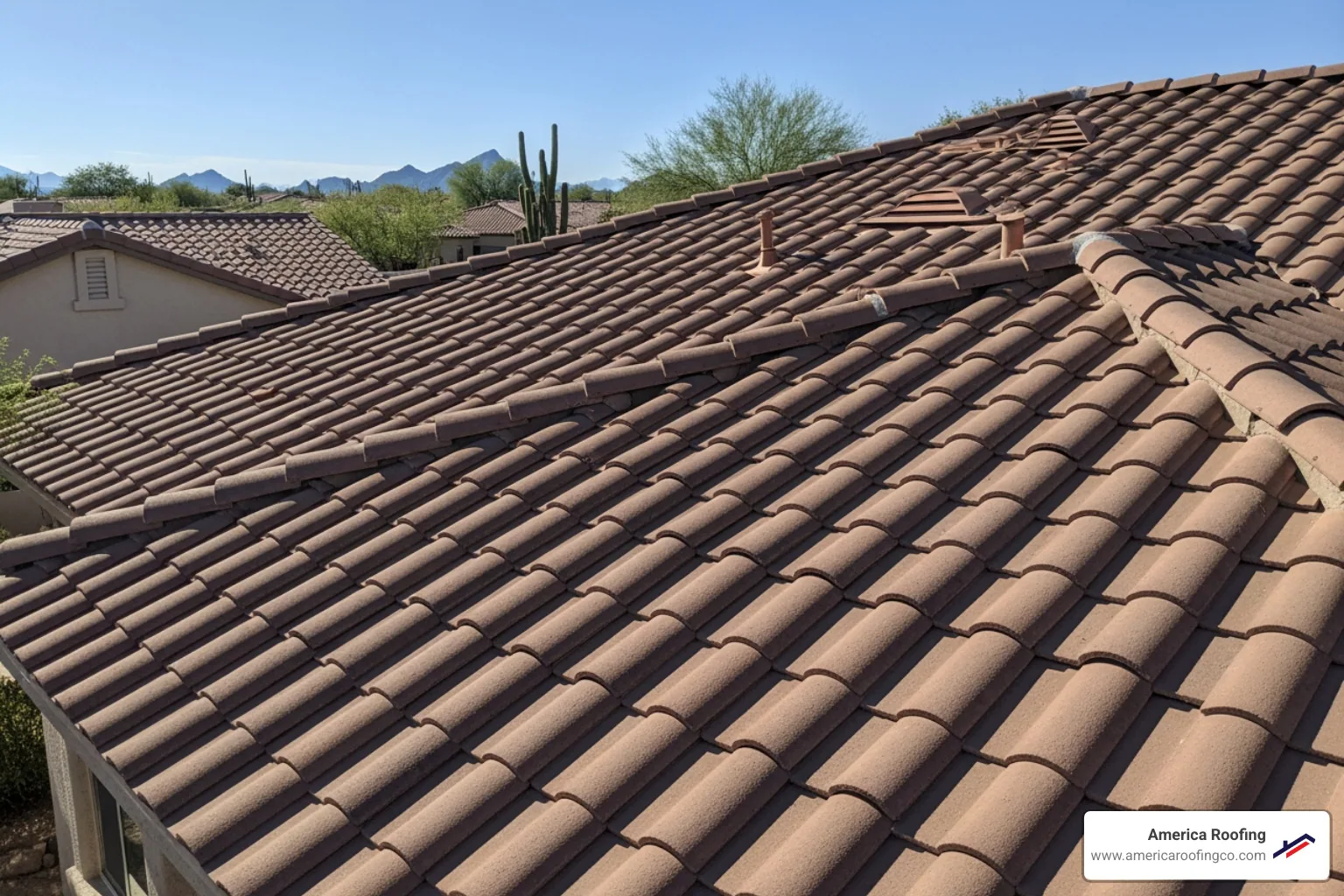
- Cracked or Broken Tiles: Often caused by walking on the roof, falling tree branches, or severe hail.
- Slipped or Loose Tiles: Over time, fasteners can corrode or wood battens can rot, causing tiles to slide out of alignment and expose the vulnerable underlayment below.
- Debris Accumulation: Leaves, dirt, and bird nests can trap moisture in your valleys, preventing proper water shedding.
If you suspect minor damage, you might be tempted to fix it yourself. Before you grab a ladder, make sure to read our warning on Leaky Tile Roof Repair for the Brave DIYer to understand the safety risks and technical complexities involved. For concrete-specific systems, our Concrete Tile Roof Repair Guide offers practical advice on keeping your roof in peak condition.
What Does a Tile Roof Replacement Cost?
Replacing roof tiles in Arizona typically costs between $8,000 and $23,000, with many projects averaging around $12,318.
Your actual price will depend on several key factors:
- Roof Size and Pitch: Larger roofs or highly steep slopes require more materials and specialized safety equipment.
- Tile Material Chosen: Standard concrete is highly cost-effective, while custom clay or synthetic composites sit at a premium.
- Underlayment Quality: Investing in a premium, double-layer, high-temperature synthetic underlayment adds to the upfront cost but helps ensure your roof remains waterproof for the next 25+ years.
- Tear-off Labor: Safely removing, disposing of, or stacking heavy tiles is highly labor-intensive.
For a complete breakdown of what goes into a professional estimate, check out our Tile Roof Replacement Cost Complete Guide.
Choosing a Reputable Arizona Roofing Contractor
The Arizona Registrar of Contractors maintains high standards for licensed roofers. When searching for a contractor to handle your Arizona tile roof, always verify their license, insurance, and local reputation.
You should also confirm that your contractor uses high-quality materials specifically engineered for harsh desert climates and has direct experience with extreme heat, monsoons, haboobs, and UV exposure. That local experience matters more than many homeowners realize.
At America Roofing, we are proud to be a fully licensed and insured (ROC#186438), veteran-owned, and third-generation family-owned Maricopa County roofing authority. Established in 1999, we specialize in concrete tile roof repair, replacement, maintenance, and emergency services tailored for the extreme heat, monsoons, and haboobs of the Phoenix and Tucson metros.
Whether you need a simple repair or a full system replacement, we deliver honest, no-pressure advice, fully transparent pricing, and dependable craftsmanship. Learn more about our specialized local services by visiting our Residential Tile Roof Arizona page.
Ready to protect your home with the ultimate desert defense? Call 602-237-2478 to speak with the local experts at America Roofing, or visit us online to Request a Free Quote today.