
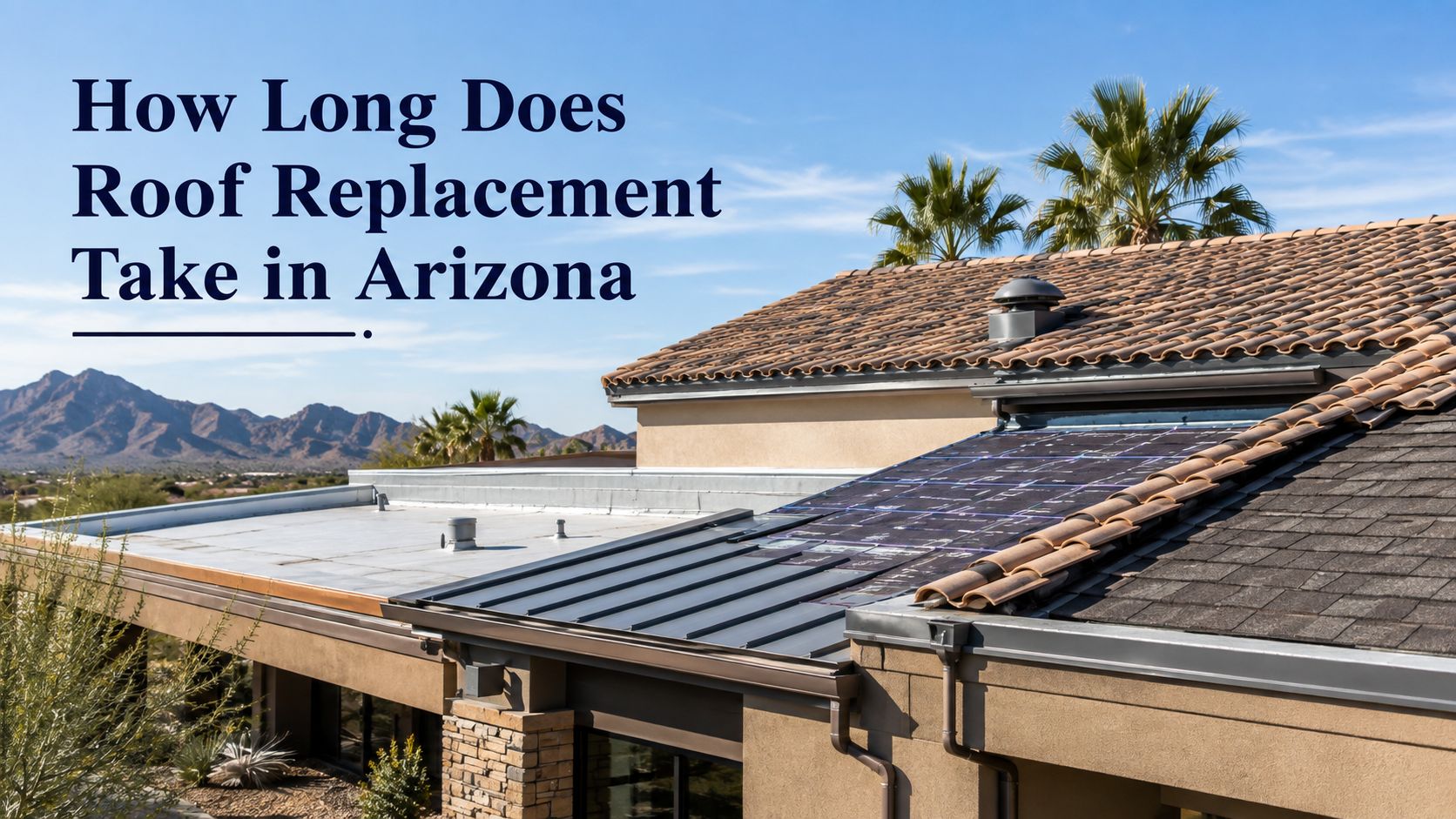
Shingle roofs are typically installed in 1 to 3 days, tile roofs in 3 to 7 days, and foam roofs in 1 to 3 days. Once permits, inspections, scheduling, and material coordination are included, a standard Arizona roof replacement commonly takes 2 to 4 weeks from contract signing to final sign-off.
That difference is the part many Phoenix and Tucson property owners miss. The crew may spend only a few days performing the visible roof work, while paperwork, material staging, heat, monsoon conditions, HOA review, and inspection scheduling determine how long the project occupies the calendar.
The Real Answer for Arizona Roof Timelines
The short answer depends on whether “replacement” means on-roof labor or the complete project.
According to Arizona roof replacement timeline guidance, asphalt shingles generally require 1 to 3 days to install, concrete or clay tile generally takes 3 to 7 days, and foam roofing generally takes 1 to 3 days. Those figures describe the physical installation, not the time between signing an agreement and receiving final approval.
The full project commonly spans 2 to 4 weeks, including permit processing, inspections, scheduling, and material coordination. That end-to-end period matters more to most owners because it affects insurance coordination, temporary exposure during tear-off, tenant notices, driveway access, and move-back-in planning.
A Phoenix homeowner who plans around only the tear-off date can be caught off guard when the permit is still pending or the crew is waiting for a material delivery. A Tucson property manager may also need to coordinate tenants, access gates, business hours, and final documentation. Those administrative steps can begin before anyone removes a tile or shingle.
Practical rule: Plan from contract signing to final sign-off, then treat the installation days as the active construction window inside that larger period.
Heavy tile systems also explain why Arizona timelines don't match many national roofing estimates. Tile takes more handling and staging than lightweight shingles. If the crew discovers damaged decking or must wait for a deck inspection, the schedule can expand after the old roof is removed.
For a Phoenix property owner comparing scope and timing, the Arizona roof replacement service page provides a relevant starting point for planning the work.
How Roof Type Changes the Schedule
Roof material changes the active work period, but the roof's hidden layers and building use often determine the end-to-end schedule. A tile roof may look intact from the street while its waterproofing layer has reached the end of its useful service life. A flat commercial roof may install quickly but require careful coordination around drains, parapets, rooftop equipment, and occupants.
| Roof Type | Typical On-Roof Install Time | Typical End-to-End Timeline | Key Timing Factor |
|---|---|---|---|
| Asphalt shingle | 1 to 3 days | Commonly 2 to 4 weeks | Permit, scheduling, decking condition, and material coordination |
| Concrete or clay tile | 3 to 7 days for installation | 4 to 8 weeks when underlayment replacement is included | Tile staging, underlayment, deck checks, and inspections |
| Foam roofing | 1 to 3 days | Commonly 2 to 4 weeks | Surface preparation, drainage, coating needs, and weather |
| Commercial flat roofing | Varies by system and site | Depends heavily on scope and coordination | Tenants, access, equipment, drains, inspections, and phased work |
The tile figure requires special attention. Arizona sources place tile underlayment life at roughly 20 to 25 years, even though the concrete or clay tile above it can remain serviceable. When the underlayment needs replacement, workers may need to remove, stage, inspect, and reset the tile before the roof can be signed off. That sequence can make a tile project 4 to 8 weeks end-to-end, as described in this tile roof replacement guide.
Shingles and tile
Shingles are usually faster because crews can remove and install broad sections with comparatively simple material handling. The timeline still changes with roof size, slope, access, multiple roof planes, and decking condition, but the active installation window is often compact.
Tile work is slower because the crew handles individual units and must protect reusable material when the project involves underlayment replacement. Broken tiles, complex valleys, and difficult roof access can also add handling and inspection work without being visible in the original street-level inspection.
Flat, foam, and commercial systems
Foam roofs can have a short installation period, but preparation matters. The roof needs suitable surface conditions, functioning drainage, and careful attention to penetrations and transitions. Coating work also has to be scheduled around weather and surface readiness.
Commercial reroofing adds a different type of complexity. A property manager may need to coordinate tenants, loading areas, rooftop equipment, security access, and work zones. The roofing crew can be ready while the building schedule isn't, so a phased plan may be more realistic than an uninterrupted installation.
What Happens Week by Week on a Replacement Project
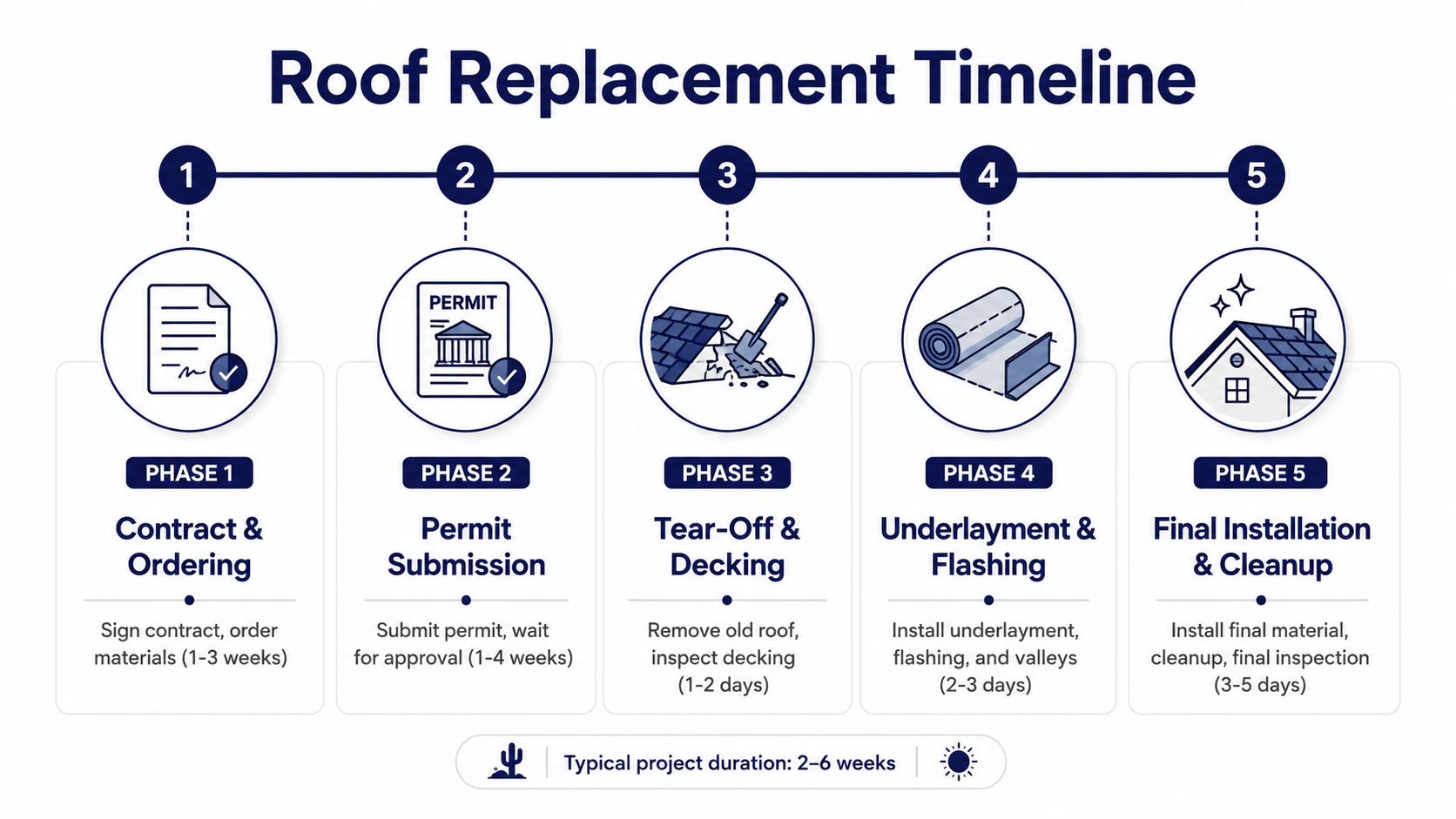
A roof replacement doesn't begin with tear-off. The first phase usually involves agreement on scope, material selection, ordering, access planning, and submission of required paperwork. The property owner should receive a clear explanation of what happens if the crew finds damaged decking, because that checkpoint can change both the work sequence and the completion date.
Before construction starts
Contract signing and material ordering happen before the roof crew arrives. Permit submission and inspection planning also belong in this period. Some of this time involves active coordination, while other portions are waiting for approvals, deliveries, or a confirmed production date.
Homeowners may notice delivery trucks, a dumpster, ladders, and crew vehicles before the roof work begins. Commercial owners should confirm where equipment can be placed without blocking customers, tenants, fire access, or loading operations.
Tear-off and deck inspection
Tear-off is the loudest and most disruptive phase. Workers remove the existing roofing, load debris, and inspect the exposed decking. The roof can be temporarily open during controlled portions of this process, so weather monitoring and daily dry-in procedures matter.
Damaged decking can't always be identified during the first estimate because the old roof conceals it. If replacement is needed, the crew must address it before installing underlayment and finish materials. That work can add days, particularly when an inspection or owner approval is required.
Installation and closeout
After decking is accepted, the crew installs underlayment, flashing, valleys, and other water-shedding details. The final material then goes on, whether that means shingles, tile, foam, or a commercial membrane system.
The last phase includes cleanup, removal of construction debris, final inspection, and sign-off. Owners arranging disposal or site logistics can also use this construction debris removal advice to understand why debris planning should be settled before tear-off begins.
For a phase-by-phase explanation, the guide to roof replacement steps can help owners prepare questions before signing.
What Actually Delays Arizona Roof Replacements
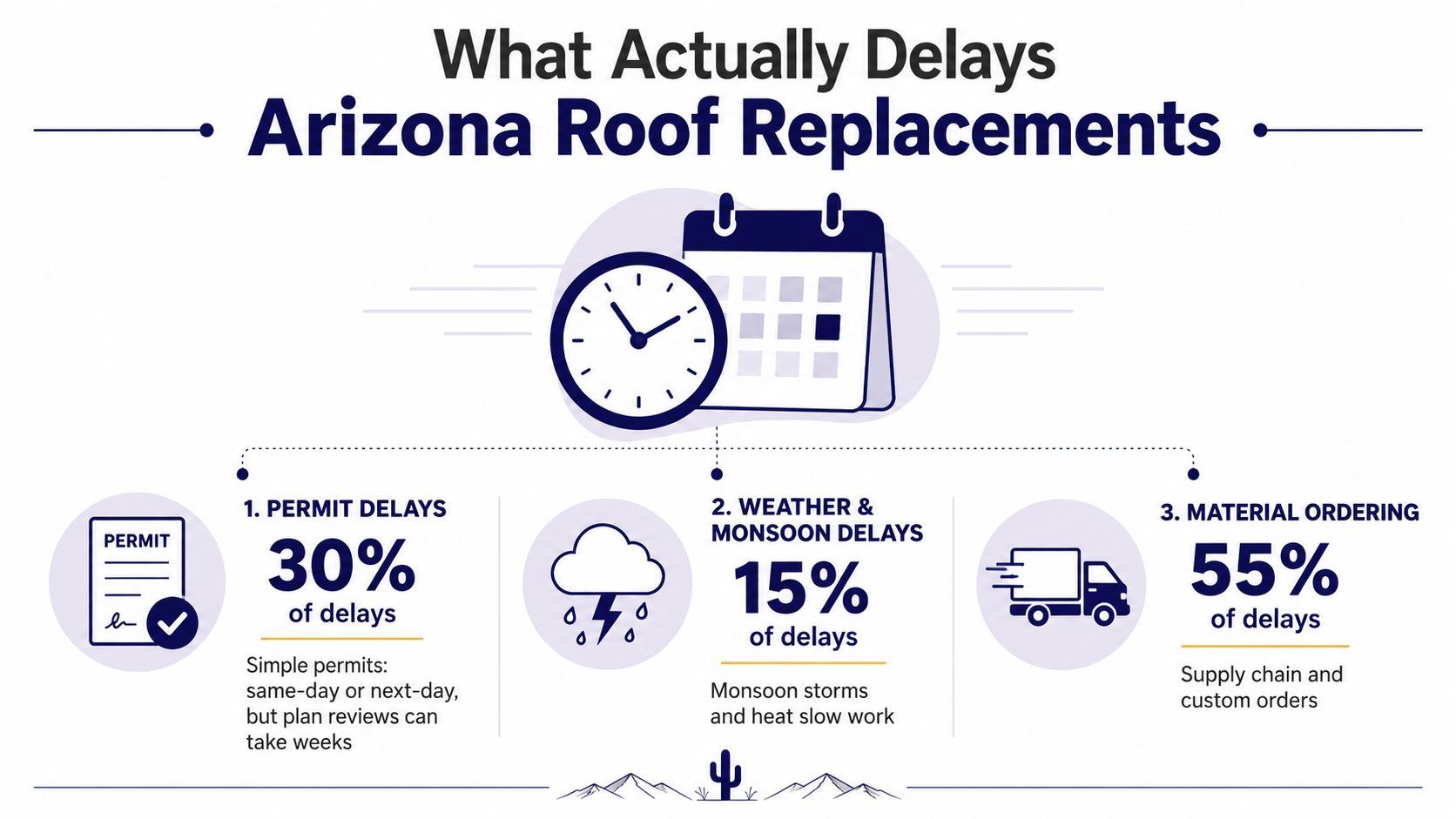
The roofing crew often isn't the first bottleneck. Paperwork may take longer than the active roof installation, especially when a property sits inside an HOA or the jurisdiction requires plan review.
Simple permits can be issued the same day or the next day, while plan review commonly takes 1 to 3 weeks, depending on the jurisdiction. HOA approval can take 2 to 4 weeks, and some associations may take up to 60 days, according to Arizona permitting guidance. Property managers and HOA boards should start those conversations before selecting a construction date.
Heat changes daily production
Phoenix averages 111 days per year at or above 100°F, which can limit safe and practical work hours. Crews may shift to shorter summer workdays, and a job that takes 1 to 3 days during more favorable conditions can expand to 3 to 5 days during peak heat, as noted in Arizona roofing timing information.
Heat affects more than worker comfort. It can change when crews start, how long they remain on exposed roof surfaces, and how they stage materials. Northern Arizona has a different constraint, with colder winter conditions and a shorter reliable roofing season.
Monsoon demand creates competition
The official Arizona monsoon season runs from June 15 through September 30. Storm risk, wind damage, emergency repairs, and contractor demand can all increase during that window. A planned replacement may not be physically difficult, but the available calendar can become less predictable when crews are responding to active damage.
Hidden conditions extend the job
Decking damage is the most important mid-project surprise because finish materials can't cover structurally compromised wood. Drainage problems, failed flashing, deteriorated underlayment, and difficult access can also change the sequence.
Property owners should ask for a written change-order process before work begins. That doesn't eliminate hidden conditions, but it prevents confusion about who approves additional work and how the revised schedule is set.
A detailed roof inspection in Arizona can help identify visible concerns before contract signing, although concealed decking still requires inspection after tear-off.
Scheduling Around Heat and Monsoon Season
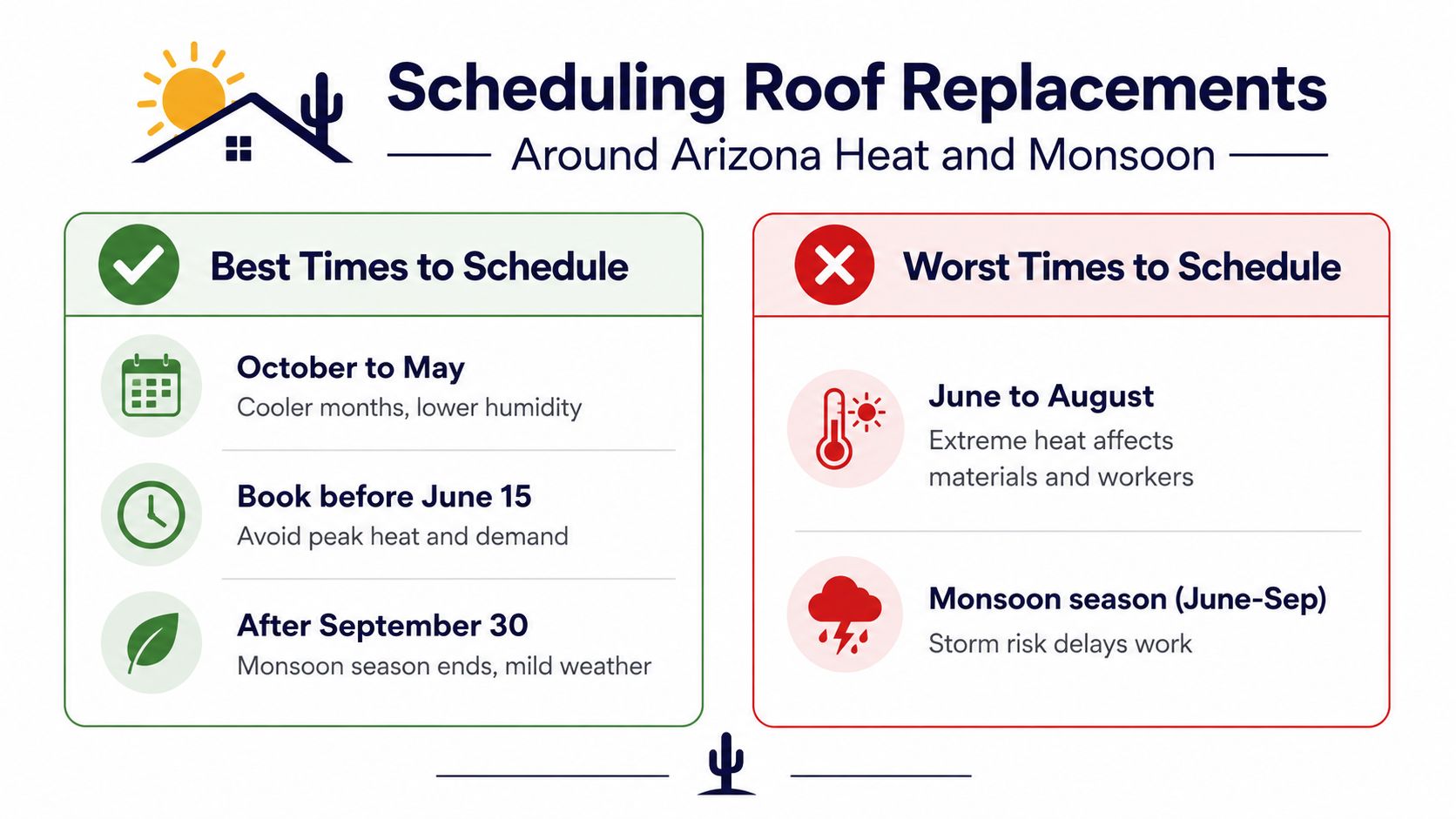
Planned replacement work is easier to control when it isn't competing with active storm damage. Arizona sources recommend scheduling planned replacements before June 15 or after September 30, avoiding the official monsoon period and some of the most difficult heat-related scheduling pressure. The recommendation appears in this Phoenix seasonal roofing guidance.
That doesn't mean every summer project must stop or every monsoon project must be postponed. A leaking roof, wind damage, or exposed decking may require prompt protection and repair. The practical approach is to separate immediate stabilization from the full replacement schedule. The contractor should explain whether temporary weather protection can be installed first, then identify the next available date for permanent work.
A practical booking approach
Owners planning a normal replacement should begin with the approval process, not the tear-off date. HOA boards need time to review color, profile, material, and appearance requirements. Commercial property managers should also establish tenant notices, access restrictions, parking changes, and noise expectations.
Storm damage requires a different order of operations:
- Document the condition: Photograph visible damage from the ground and record interior leaks without climbing onto the roof.
- Protect the building: Ask whether temporary measures are needed before the permanent replacement date.
- Confirm the sequence: Find out when inspection, material ordering, repair, and final installation will occur.
- Avoid unsafe access: Monsoon wind, wet surfaces, and damaged roofing create fall hazards.
Homeowners can remove several avoidable obstacles by preparing the site:
- Clear access areas: Move vehicles, patio furniture, and items that could interfere with ladders or material handling.
- Protect attic belongings: Dust and vibration can affect stored items, even when the roof work stays outside.
- Plan for noise: Arrange pets, children, calls, and work-from-home needs around the loudest phases.
- Confirm dumpster placement: Make sure the proposed location doesn't block gates, sidewalks, drive lanes, or building operations.
- Share restrictions early: Tell the contractor about gates, narrow access, tenant schedules, and neighborhood rules before delivery day.
Owners who want to identify vulnerable areas before committing to a replacement can find weak spots before the next storm.
Choosing a Contractor Who Keeps the Timeline Honest
A reliable schedule includes the parts that happen before and after the crew's active roof work. The estimate should state whether permit coordination and HOA approval are included, how material ordering affects the start date, and what happens if a monsoon storm interrupts the project after tear-off.
Property owners should also ask four direct questions:
- Who approves decking repairs? The contract should explain how hidden damage is documented and priced.
- What protects the roof during a weather interruption? The plan should address temporary dry-in and rescheduling.
- Who performs the work? The owner should understand whether the assigned crew is directly employed or subcontracted.
- What completes the project? Final cleanup, inspection, documentation, and sign-off should appear in the scope.
A contractor's proposed timeline should also fit the roof's age and system condition. Asphalt shingles in Arizona are commonly reported at 15 to 25 years, tile roofs at 30 to 50 years or longer, and foam roofs may need UV coating refreshes every 5 to 10 years, according to this Arizona roof lifespan guide. A repair, coating, or underlayment project may be more appropriate than full replacement, depending on the inspection findings.
Before signing, owners can also check a contractor license number and verify that the business information matches the contracting documents.
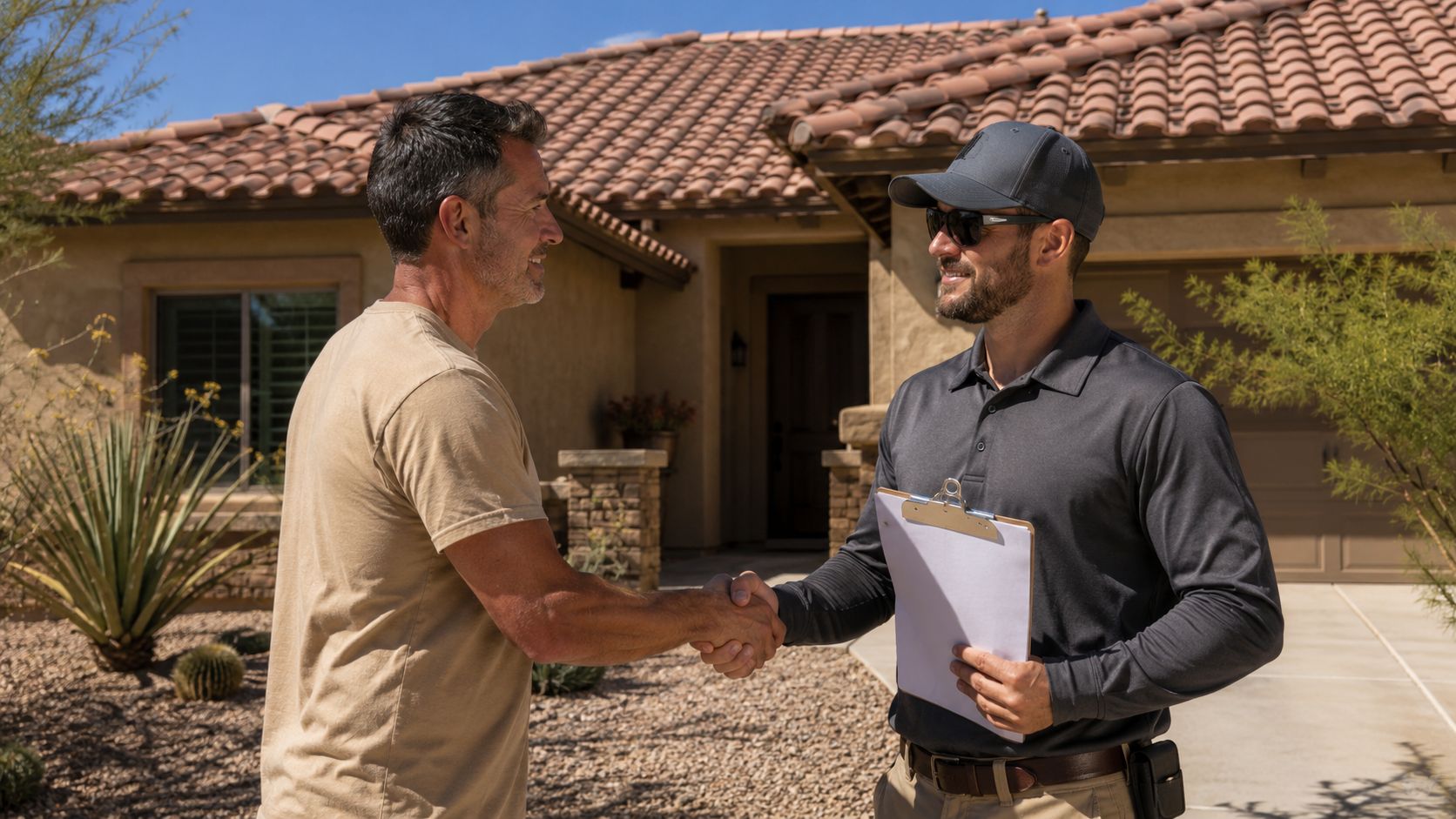
The practical recap is simple. Shingles and foam generally take 1 to 3 days on the roof, tile installation generally takes 3 to 7 days, and a standard Arizona project commonly takes 2 to 4 weeks end-to-end. Tile underlayment replacement can extend the overall sequence to 4 to 8 weeks, while permits, HOA review, heat, monsoon conditions, and concealed decking determine the final calendar.
America Roofing handles residential and commercial roof replacement, tile, shingle, flat, foam, coating, leak, and storm-damage work in Phoenix and Tucson. Call 602-237-2478 to discuss the likely sequence, or visit America Roofing to request a roofing estimate and plan the project around permits, heat, and monsoon timing.