
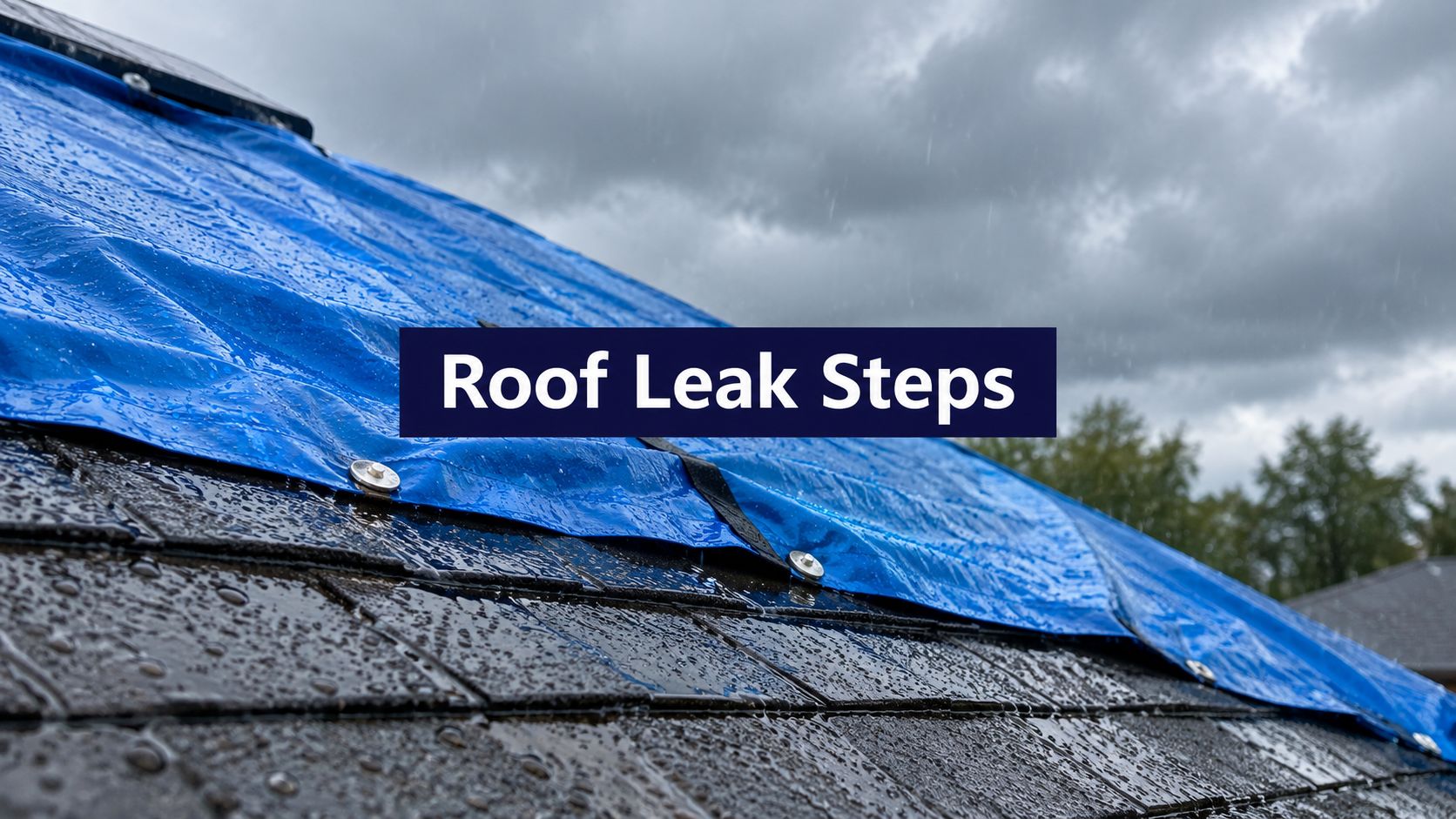
A monsoon storm can turn a quiet Phoenix or Tucson evening into an active ceiling leak within minutes. The right response isn't to climb onto a wet roof and chase the drip. The priority is safety, containment, documentation, temporary protection, and a professional inspection.
Monsoon Roof Leak Emergency Steps That Protect Your Home First
Rain is striking the windows, wind is pushing water beneath tiles or flashing, and a ceiling stain has suddenly become a steady drip. In that moment, the homeowner's job isn't to complete a roof repair. It's to keep people safe and limit the size of the loss until the storm passes.
Arizona monsoon rain is often wind-driven. Water may enter upslope from the spot where it appears indoors, especially around tile underlayment, roof penetrations, wall flashings, parapets, or drainage points. A small interior drip doesn't identify the full roof problem.
The first 24 hours should accomplish four things: control electrical and ceiling hazards, catch and redirect water indoors, record damage before cleanup, and arrange safe temporary roof protection. Emergency guidance commonly recommends buckets or bins under active drips, heavy plastic sheeting over floors and furniture, photo and video documentation before cleanup, insurer notification within 24 to 48 hours, and professional tarping when conditions are safe. These steps are outlined in the emergency roof response guidance.
Property owners can also keep broader preparedness materials available, including essential disaster prep guidance. For roofing-specific preparation, the America Roofing monsoon checklist helps organize inspection concerns before storm season.
Practical rule: A wet roof can wait. A person near energized electrical equipment or a collapsing ceiling shouldn't.
Safety Triage Before You Touch Water or Drywall
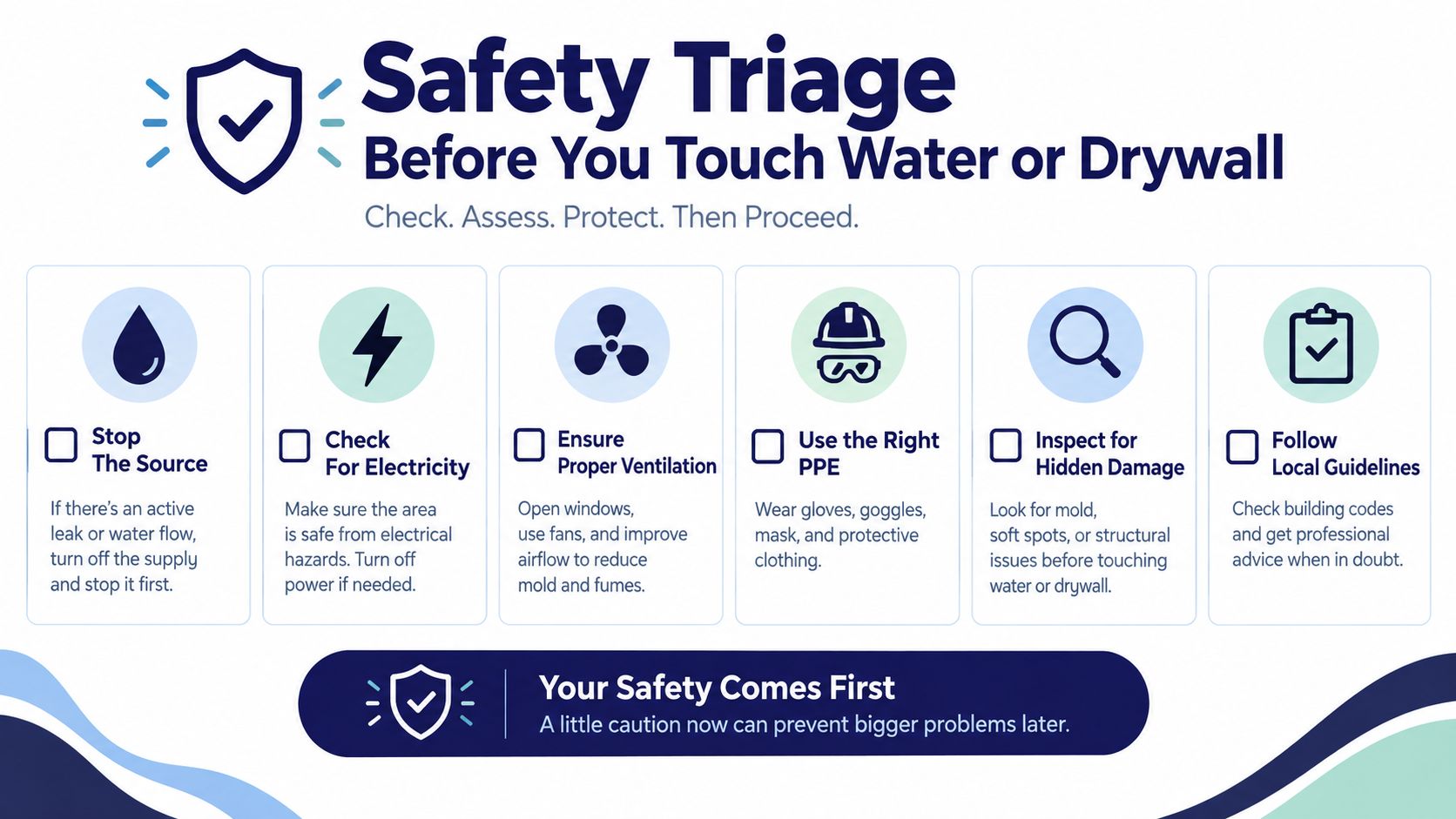
Water cleanup comes after hazard control. A leak near a light fixture, outlet, appliance, or electrical panel creates a different emergency from an isolated drip in the middle of a clear room.
Safe to enter
A room may be safe to enter briefly when the water is limited to a controlled drip, the ceiling is flat and stable, there are no wet fixtures or outlets nearby, and the floor isn't affected by electrical equipment. Keep children and pets away, wear shoes with good traction, and avoid touching wet cords or appliances.
Move through the room only long enough to relocate belongings or place a container. Don't stand beneath a visibly swollen ceiling.
Shut off the affected circuit
If water is near a ceiling light, wall outlet, switch, appliance, or exposed wiring, stay clear of the wet area and shut off the appropriate breaker only if the electrical panel can be reached safely from a dry location. Don't step through standing water to reach the panel, and don't touch electrical equipment with wet hands.
Water can travel through drywall and framing farther than the visible stain suggests. If the correct breaker isn't clear, or the panel itself is wet, leave the area and call a qualified emergency professional. The essential roof safety guidelines reinforce the need to avoid unsafe roof and electrical exposure.
Evacuate the area
A bulging, sagging, cracking, or rapidly spreading ceiling indicates trapped water and possible drywall or plasterboard failure. People should leave the room if the ceiling is deforming, water is entering around electrical fixtures, the ceiling is cracking, or structural damage is visible.
Don't puncture a ceiling from a ladder while standing below electrical equipment or a large unstable area. If there's an immediate threat of collapse, leave the building area and contact emergency services or a qualified professional rather than attempting cleanup.
How to Contain Water Inside Without Making Damage Worse
Once the room passes the safety check, containment should be orderly. Start at the drip zone and work outward, rather than dragging wet furniture across the room or spreading water into adjacent spaces.
Move and cover what can be saved
Relocate furniture, electronics, rugs, artwork, documents, and valuables away from the water path. Place heavy plastic sheeting over items that can't be moved, and protect flooring around each active drip. Buckets, storage bins, pots, or clean trash containers can work as short-term catch basins, but they need regular emptying during a storm.
Use towels to control splashing around containers, not as a substitute for them. Saturated towels can transfer water into flooring and create another cleanup problem.
Treat a ceiling bulge carefully
A ceiling bulge means water may be ponding above the drywall. A controlled puncture at the lowest point can allow water to drain into a bucket and may prevent a larger collapse, but it's only appropriate when the person can work safely from below, away from electrical exposure and unstable material.
Use one controlled drainage point if conditions allow. Don't poke multiple holes, climb onto furniture, or cut into a ceiling that has electrical fixtures nearby. If the bulge is large, cracking, or increasing, clear the room instead.

Document before cleanup
Photograph the ceiling, walls, flooring, furnishings, water trails, and visible roof damage before moving or drying anything. Record video of active dripping and note the rooms affected. This record supports communication with the insurer, restoration personnel, and the roofer.
Fans can help circulate air after electrical and structural hazards are cleared, but they shouldn't be aimed at saturated drywall before the condition is assessed. For general emergency water principles, property owners can review these emergency burst pipe repair steps. Roof-specific decisions are also covered in the Arizona homeowner leak repair guide.
Temporary Roof Protection That Actually Holds in Monsoon Wind
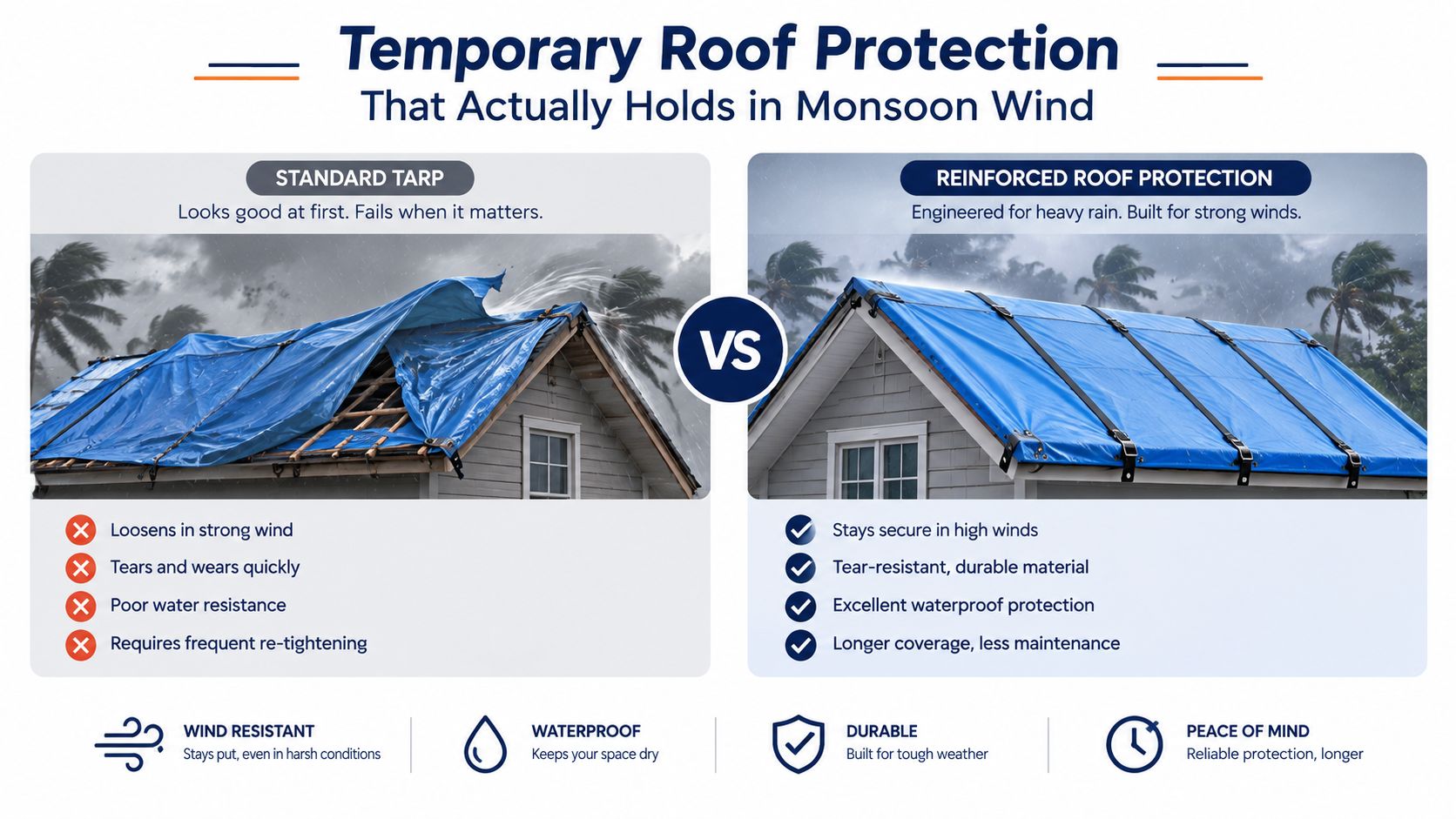
A proper tarp is a temporary water-shedding system. A smear of roofing sealant on a wet surface is usually a poor substitute, particularly when wind is driving rain beneath shingles, tile, flashing, or a roof penetration.
Why coverage beats spot patching
Emergency tarp guidance commonly calls for a heavy-duty polyethylene tarp that extends at least 3 to 4 feet beyond the damaged area on every side. Other professional-style guidance recommends running the tarp over the ridge and down both roof slopes, allowing runoff to pass over the damaged area rather than underneath it. The emergency roof tarping guidance describes this broader coverage approach.
The tarp must be secured with boards or counter-battens, not loose nails alone. Boards distribute holding force and help reduce wind uplift and edge leakage. A small patch placed only over the visible hole can fail because the actual entry point may be upslope.
When the roof should remain off-limits
Homeowners shouldn't access the roof during active rain, strong wind, darkness, or when surfaces are slick with dust and water. Tile roofs add breakage and fall hazards, while flat roofs can hide soft decking, ponded water, and fragile edges near parapets or drains.
A two-story roof, steep slope, damaged decking, or any roof with uncertain structural condition calls for professional protection. The safer homeowner contribution is to identify the interior leak path, photograph accessible attic conditions from a safe location, and tell the roofer whether the system is tile, shingle, flat, or foam.
For preventive planning after the emergency, the America Roofing storm proof guide provides related roof maintenance direction. Sealant has a role in permanent repairs when the surface and material are properly prepared, but it isn't a reliable emergency strategy on a wet, wind-exposed roof.
What Your Arizona Roof Type Changes About the Leak
The same ceiling drip can come from very different roof failures. Phoenix and Tucson properties commonly include tile, asphalt shingle, low-slope flat, and sprayed polyurethane foam systems, and each directs water differently.

Tile and shingle roofs
Tile can look intact while the underlayment beneath it has deteriorated, shifted, or been damaged around penetrations. Cracked or displaced tiles can admit wind-driven rain, but the water may travel along the underlayment or decking before appearing inside. Homeowners should report broken tiles, exposed underlayment, ridge areas, valleys, and recent roof work, but shouldn't lift tiles during a storm.
Shingle systems can leak after wind lift, missing shingles, exposed fasteners, failed flashing, or deterioration around vents and wall transitions. A visible shingle defect may not line up with the interior stain, so a surface-only patch can miss the water path.
Flat and foam roofs
Flat roofs depend heavily on drainage through drains, scuppers, crickets, and carefully detailed seams. Monsoon dust and debris can obstruct drainage, while ponding can expose weak seams, flashing transitions, penetrations, and parapet details. Commercial property managers should note whether water is collecting near drains, rooftop equipment, wall edges, or membrane seams.
Foam roofs can develop breaches in the foam or coating, particularly around penetrations and areas exposed to prolonged UV and heat. A coating breach needs material-specific evaluation. Scraping, puncturing, or covering the area with an incompatible product can complicate the permanent repair.
Give the roofer a useful description: roof material, approximate age if known, location of the indoor stain, whether water appears after wind from a particular direction, and whether drains or scuppers are holding water. Arizona heat, UV exposure, dust, and repeated thermal movement can turn a small weak point into an active monsoon leak.
Document Damage and Get the Right Professional Help Fast
A clean handoff reduces confusion. Before cleanup changes the scene, capture wide room views, close-ups of stains and cracks, active water, damaged contents, attic trails if safely accessible, and any visible exterior damage from the ground. Keep the original files and write down when the leak began, which rooms are affected, and whether the roof was recently repaired or coated.
Historical Phoenix claim data shows why delay during the storm window is risky. One Phoenix-focused analysis reported that 58% of claims occurred in July, August, and September, while 58.3% fell within the June 15 to September 30 monsoon window. The same dataset reported 565 claims in August, compared with an average of roughly 24 claims per month across April, May, and June, and said the peak monsoon month produced about 23.5 times the claims of a typical pre-monsoon month. Those figures are reported in the Phoenix monsoon claim analysis.
Notify the insurer within 24 to 48 hours when appropriate, preserve receipts for reasonable emergency measures, and avoid authorizing permanent demolition before the damage is documented unless safety requires immediate action. Property owners comparing policy language can review this explanation of what roofing insurance actually covers, while remembering that coverage depends on the specific policy and loss circumstances.
| Situation You See | Do This Next | Why It Matters |
|---|---|---|
| Isolated drip in a stable, dry room | Place a container, protect belongings, photograph the area, and arrange inspection | Containment limits interior spread while preserving a clear damage record |
| Water near a fixture, outlet, appliance, or wiring | Stay clear and shut off the affected breaker only from a dry, safe location | Water migration can create shock and fire hazards |
| Bulging, sagging, cracking, or rapidly deforming ceiling | Clear the room and seek emergency help | Trapped water and saturated ceiling materials can fail suddenly |
| Tile or shingle damage visible from the ground | Photograph it without climbing and tell the roofer the exact roof area | Roof access during rain and wind adds fall and material-breakage risk |
| Flat or foam roof with ponding, blocked drainage, or active seam leakage | Keep people off the roof and request system-specific inspection | Drainage and membrane or coating details often determine the repair |
| Commercial building with interior leakage | Protect inventory and operations, isolate unsafe areas, and notify the property contact | A larger footprint requires coordinated roof, electrical, and contents decisions |
The inspection scope should identify the entry path, show supporting photographs, describe the material-specific repair, distinguish temporary work from permanent work, and state applicable warranty language. For storm-related concerns, a documented storm damage roof inspection gives the owner a clearer basis for repair or replacement decisions.
Your Next Step After the Storm Passes
When rain stops, don't assume the leak has solved itself. A focused repair may be reasonable when the roof has a localized, accessible failure and surrounding materials remain sound. Repeated leaks, widespread tile or shingle deterioration, aging underlayment, damaged decking, recurring ponding, failed drainage, or broad foam and coating wear call for a larger evaluation.
Flat and commercial roofs deserve particular attention after a storm. The visible ceiling stain may be only one consequence of water moving across a low-slope system. Drains, scuppers, parapets, membrane seams, penetrations, and rooftop equipment curbs should be assessed together instead of treating one interior drip as an isolated hole.
Before the next storm, property owners can clear accessible debris from drainage points, check for displaced tiles or shingles from the ground, keep valuables away from known leak paths, and schedule an inspection if stains return. The practical sequence remains simple: make the area safe, contain water, document the loss, stay off the wet roof, arrange temporary protection, and obtain a material-specific repair plan.
For Phoenix and Tucson homes, offices, multifamily properties, and commercial buildings, America Roofing handles leak repair, storm damage response, tile and shingle systems, flat roofs, foam roofing, coatings, replacement, and commercial reroofing. Call 602-237-2478 after the area is safe, or use the request a roofing estimate form to start the inspection process.
America Roofing can assess active monsoon leaks, temporary roof protection needs, and permanent repair or replacement options for Phoenix and Tucson properties. Contact America Roofing to arrange a roof evaluation and receive a clear next-step recommendation based on the roof system and storm damage.