
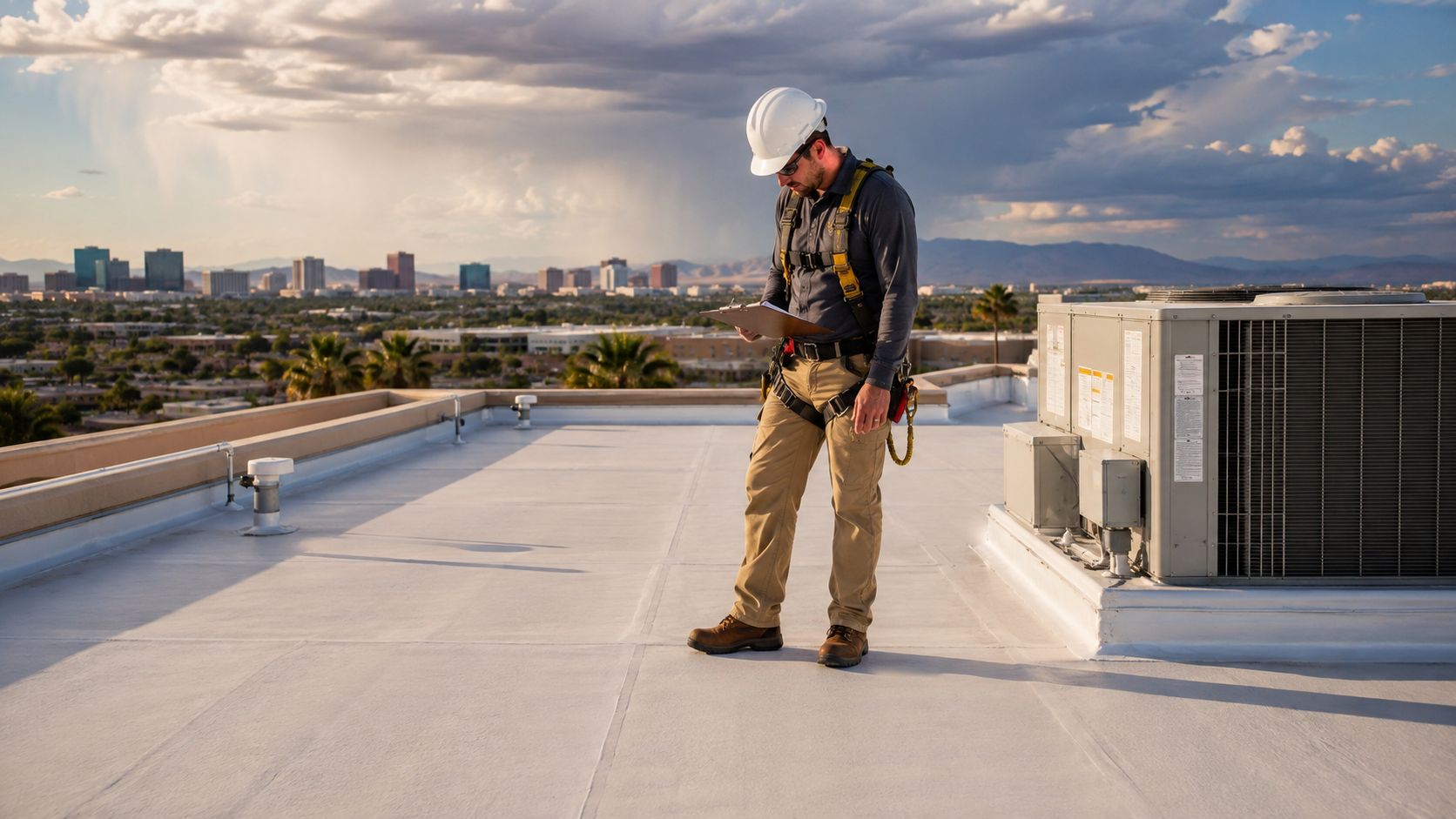
A commercial roof in Phoenix or Tucson can look sound from the parking lot while heat, ultraviolet exposure, dust, and monsoon wind are stressing seams, flashing, coatings, and drains above the ceiling. For most Arizona properties, the practical answer to how often a commercial roof should be inspected in Arizona is twice a year, with additional inspections when the roof is older, complicated, or exposed to storm damage.
The Arizona Commercial Roof Inspection Reality
A property manager may see a dry roof every day and still miss the problems developing above the occupied space. Arizona roofs often deteriorate where ground-level views can't reveal it, including behind parapet walls, around rooftop equipment, at membrane seams, and beside clogged drains.
Phoenix roofs absorb severe ultraviolet exposure and repeated heat cycles. Tucson roofs face the same broad climate pressures, although local surroundings, building layout, roof access, dust accumulation, and storm exposure can change where trouble appears first. A low-slope membrane may develop seam stress, while a foam roof may show coating wear and a tile roof may develop displaced tiles or damaged flashing.
Why calendar-based maintenance matters
Arizona's monsoon season officially runs from June 15 through September 30, according to the National Weather Service timing referenced for Arizona roof planning. That concentrated storm window matters because intense rain and wind can expose drainage weaknesses that stayed hidden during dry weather.
The roof isn't only reacting to rain. Sunlight ages exposed surfaces, thermal movement stresses joints and penetrations, and wind-driven dust collects around drains and parapets. A building can therefore need attention even when no interior leak has appeared.
Practical rule: A roof inspection isn't an administrative checkbox. It's a scheduled search for the small conditions that allow Arizona heat and storms to create a larger repair.
What the missed inspection usually looks like
The common failure isn't always a dramatic collapse or obvious opening. It may be a loose edge detail, a deteriorated seal around a penetration, a coating worn thin over foam, or ponding that remains after a storm. Those conditions can worsen before occupants notice a ceiling stain.
That's why property owners should match inspection timing to local climate exposure and the actual roof system. A vacant, simple roof may follow the minimum schedule, while an occupied facility with sensitive inventory, extensive equipment, or a history of leaks needs closer oversight.
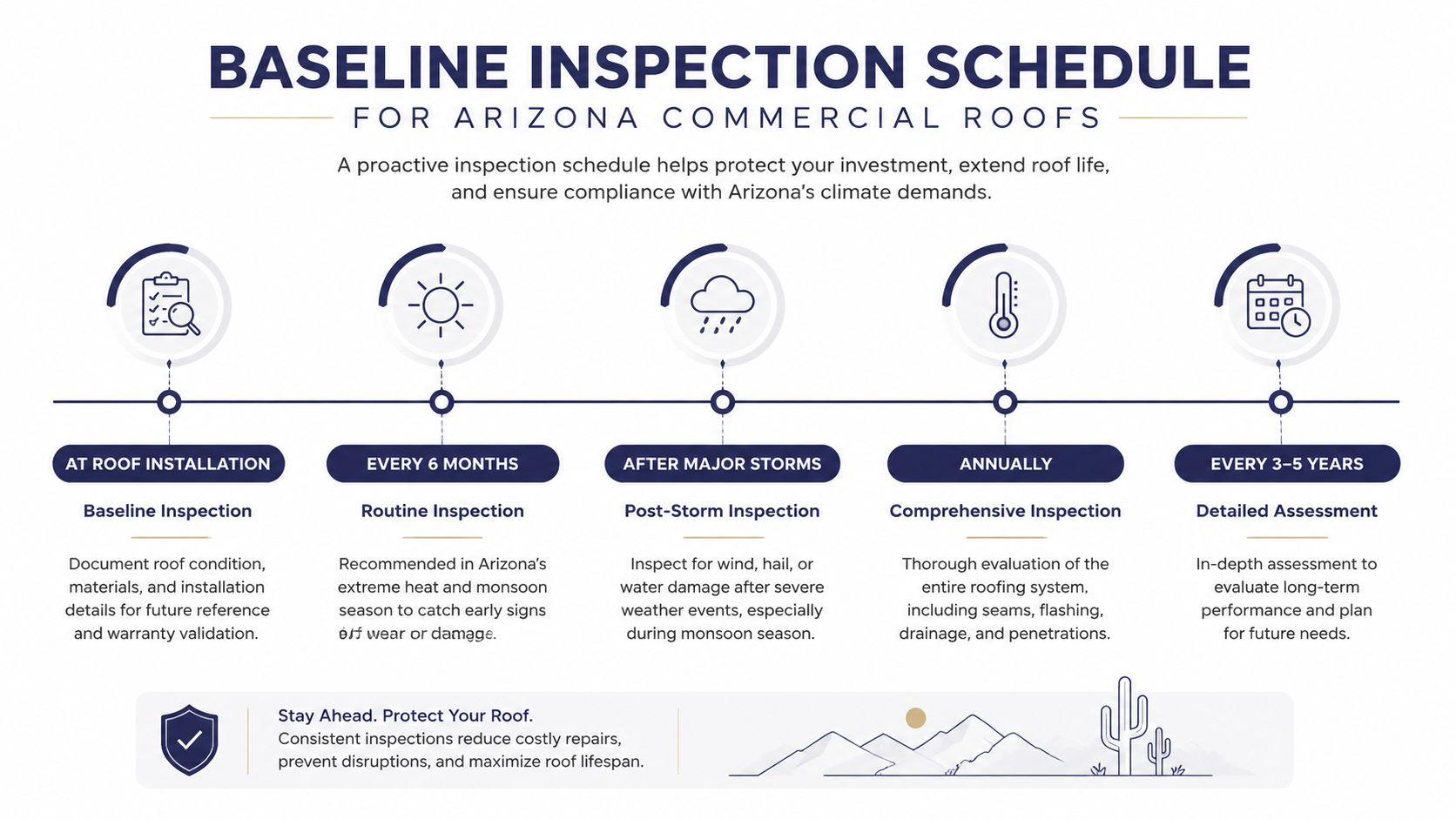
Baseline Inspection Schedule for Arizona Commercial Roofs
The spring visit sets the stage. Scheduling it before monsoon season begins lets the contractor evaluate the roof while conditions remain predictable. Guidance for commercial roof inspection guidance for Arizona properties connects this visit with heat-related wear and the fall review with storm damage documentation.
In Phoenix and Tucson, April through mid-May is a practical planning window. The roof can be checked before monsoon rain, strong wind, and intense summer exposure make existing weaknesses harder to control. The timing is similar across both cities, but the inspection still needs to reflect each building's drainage, equipment, and exposure.
What the spring visit should accomplish
The spring inspection determines whether the roof is prepared for the storm season. The contractor should examine:
- Drainage paths: Drains, scuppers, gutters, and overflow routes should be clear and functional.
- Membrane and seams: Look for splits, open laps, exposed fasteners, surface fatigue, and weak transitions.
- Flashings and penetrations: Pipe boots, curbs, parapets, edge metal, and equipment penetrations need close review.
- Foam and coatings: Exposed foam, cracking, blistering, or thin protective coating can leave the system open to sunlight and rain.
The fall inspection answers a different question: what did the monsoon period change? It should document wind-lifted materials, new ponding areas, damaged flashing, debris impact, and moisture entry around rooftop equipment. Property managers can use the inspection types for Arizona buildings to organize visits for maintenance, leak investigation, ownership changes, or insurance records.
When quarterly inspections make sense
A roof older than 10 years, known problem areas, or critical building operations can justify quarterly inspections. The same approach fits roofs with complicated drainage, frequent service traffic, extensive rooftop equipment, or recurring leak locations. These conditions create more opportunities for small defects to become active leaks between seasonal visits.
Major wind or rain events override the normal calendar. Post-storm guidance recommends an inspection within 48 to 72 hours after a major event, while visible damage and developing water entry can still be connected to the storm. Delaying the review can leave wet insulation, damaged seams, or blocked drains unresolved until the next scheduled inspection.
Inspection Frequency by Roof Type and Building Use
Roof type changes what an inspector needs to find. A commercial membrane, foam system, coating, and tile assembly each fail differently, so a simple calendar should be adjusted to the roof's weak points and the building's consequences of failure.
| Roof system | Building use | Recommended frequency |
|---|---|---|
| Low-slope membrane | Ordinary occupied commercial space | Spring and fall, with additional storm checks |
| Low-slope membrane with ponding or complex drainage | Facilities with sensitive interiors or equipment | Spring and fall, with closer follow-up where conditions persist |
| Foam roofing | Buildings exposed to heavy sun, foot traffic, or equipment service | Spring and fall, plus checks after major weather or roof work |
| Roof coating system | Properties where coating condition controls waterproofing | Spring and fall, with focused reviews of cracks, seams, and exposed areas |
| Tile or sloped roofing | Retail, office, multifamily, or mixed-use buildings | Seasonal inspections focused on tiles, flashing, underlayment indicators, and drainage |
A commercial flat roof needs particular attention around drains, scuppers, parapets, seams, and penetrations. Ground-level viewing won't reliably show whether water is collecting in a low area or whether a seam has begun to separate. Rooftop equipment also creates service traffic and additional penetration points.
Foam, coatings, and tile require different eyes
Foam roofing depends on an intact protective coating. Inspectors should look for exposed foam, surface cracking, blisters, soft areas, and damage caused by maintenance traffic. A coating system should be assessed for loss of continuity, open seams, and areas where ultraviolet exposure has weakened the surface.
Tile roofs have a different inspection profile. Broken or displaced tiles matter, but flashing, valleys, penetrations, and the condition of the underlying water-shedding layers often matter more than a roof viewed from the ground. A few damaged tiles don't automatically mean replacement, and an intact-looking tile field doesn't eliminate the need to evaluate the details.
Building use changes the risk decision
A warehouse with limited occupancy may tolerate a different response time than a facility holding sensitive inventory or supporting essential operations. The roof schedule should reflect the cost of disruption, the consequences of interior moisture, and how difficult it is to close or relocate operations.
For a critical building, quarterly reviews can be more sensible than relying only on seasonal visits. The point isn't to inspect every roof with the same intensity. It's to give higher-consequence buildings a shorter path from developing damage to documented repair.
Warning Signs That Demand Immediate Inspection
A scheduled inspection is preventive. It isn't permission to ignore a visible problem until spring or fall. A commercial roof needs prompt professional evaluation when the property team finds evidence that water, wind, movement, or surface deterioration has already affected the system.
Exterior signs that shouldn't wait
Property managers should report conditions such as:
- Standing water: Ponding that remains after weather clears points to a drainage or slope concern.
- Membrane damage: Cracks, blisters, splits, punctures, or open seams can become leak paths.
- Loose details: Lifted flashing, exposed fasteners, separated edge materials, or damaged sealant need closer review.
- Blocked drainage: Dust, leaves, branches, trash, and construction debris can obstruct drains and overflow routes.
- Impact or wind damage: Missing materials, displaced tiles, punctures, and damaged rooftop components deserve documentation after a storm.
Interior evidence can be just as important. New ceiling stains, damp insulation, mold growth in ceiling tiles, musty areas, or recurring moisture near a parapet may indicate a roof problem even when the roof surface appears dry.
Why ground-level checks aren't enough
Monsoon damage often hides behind parapet walls or below rooftop equipment. Water may travel through insulation or along a deck before appearing inside, so the visible stain doesn't necessarily identify the entry point.
The same caution applies to unexplained changes in building comfort or operating costs. Those changes don't prove roof failure, but they can justify a professional assessment when combined with damaged foam, wet insulation, or deteriorated roof surfaces. Property managers can use these Arizona roof inspection alert signs to decide when a routine visit should become a priority call.
A ceiling stain is evidence of water movement, not a diagnosis of the leak location. Roof access, moisture conditions, and concealed assemblies make professional tracing safer and more reliable than guessing from indoors.
Commercial Roof Inspection Checklist for Property Managers
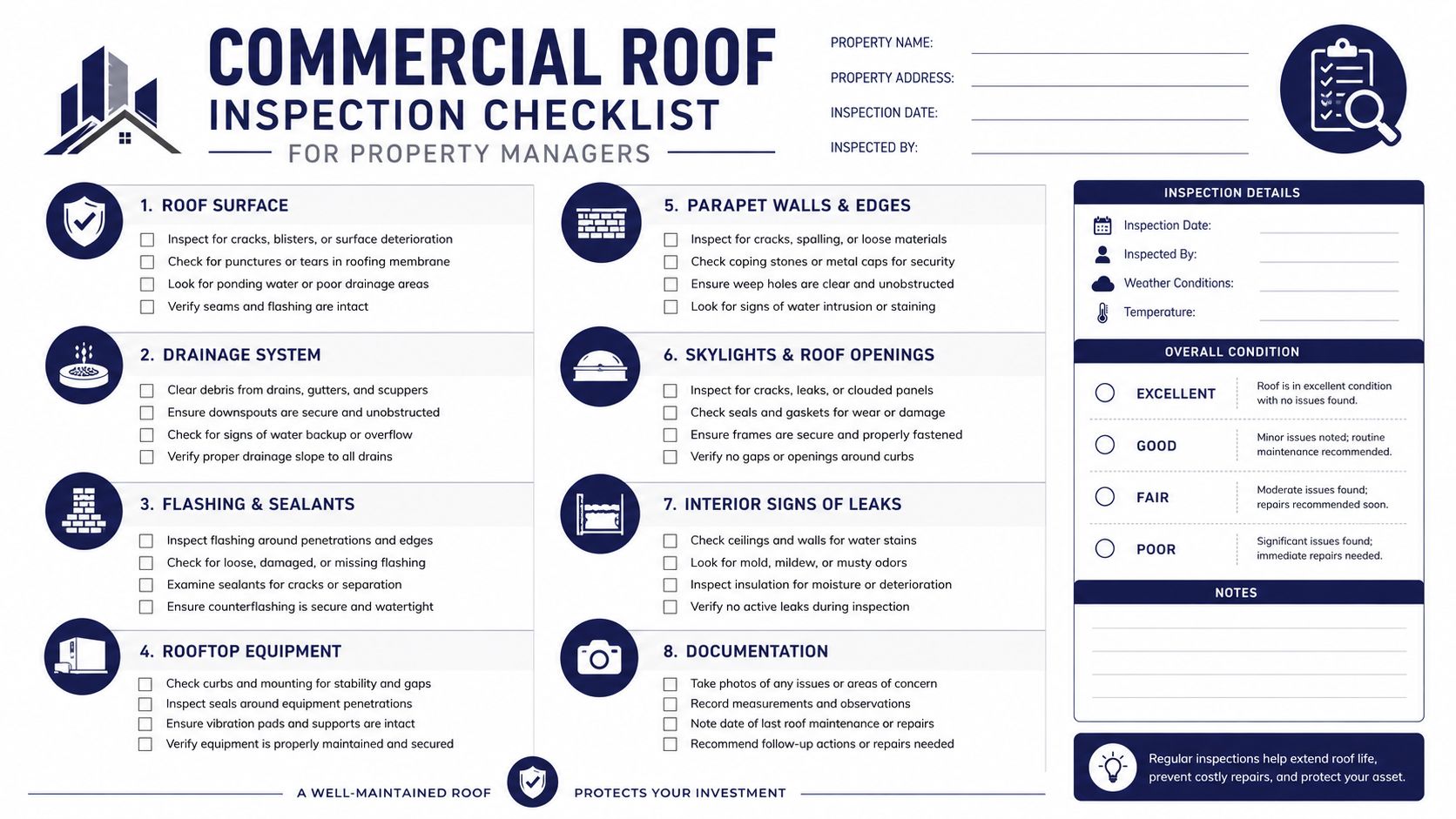
A useful inspection record gives the contractor a clear starting point and gives the property manager a defensible maintenance history. Staff shouldn't take unnecessary risks on a roof, especially near edges, skylights, fragile surfaces, or rooftop equipment. Visual observations from safe areas, interior reports, and dated photographs are valuable preparation for a professional inspection.
Surface and drainage review
Ask the inspection team to document the roof surface by location rather than writing only “roof appears serviceable.” A roof plan with marked problem areas makes follow-up easier.
- Surface condition: Note cracks, blisters, punctures, exposed foam, worn coating, displaced tiles, and loose materials.
- Drainage performance: Photograph drains, scuppers, gutters, overflow routes, and any area where water has collected.
- Debris accumulation: Record material gathered around drains, parapets, equipment supports, and corners.
- Low areas: Mark recurring ponding locations and compare them with earlier reports.
Details and rooftop equipment
Most commercial roof problems begin at transitions and penetrations, not in the broad middle of an otherwise sound field. The inspection should include:
- Flashings: Check parapet caps, curbs, wall transitions, edge metal, and penetration flashings.
- Seams and fasteners: Look for open laps, loose fasteners, failed sealant, and movement around joints.
- Equipment supports: Note damaged pads, sharp edges, service debris, and traffic paths.
- Coating continuity: Identify areas where coating has cracked, separated, or worn through.
Records that help later
Every report should include the inspection date, weather context, roof areas accessed, photographs, observed conditions, recommended action, and whether a follow-up visit is needed. Keep repair invoices, coating records, prior reports, roof plans, and correspondence together.
The best records show change over time. A dated photograph of a seam or drain can help distinguish a new storm condition from an older maintenance item, which supports repair planning and insurance discussions.
Insurance Requirements and Documentation Strategies
Arizona insurers, lenders, buyers, and warranty administrators may ask how a commercial roof has been maintained. A consistent file gives the property owner evidence for deciding whether a condition needs repair, coating, reroofing, or continued monitoring. It also records how Phoenix heat, intense UV exposure, and monsoon storms have affected the roof over time.
Industry-standard guidance supports a six-month inspection cycle as the minimum for larger or more complex roofs. Annual inspections may suit less demanding properties, but Phoenix and Tucson buildings still need schedules tied to local exposure, roof age, drainage, and storm activity. The Arizona commercial roof inspection guidance can provide additional context, but the insurance policy and warranty control the actual documentation requirements.
Build a record that can be understood quickly
Keep these items together:
- Dated inspection reports: Identify the roof areas reviewed, conditions found, photographs taken, and recommended response.
- Repair documentation: Save scopes of work, invoices, completion photographs, and material details.
- Storm records: Preserve weather dates, exterior and interior photographs, leak reports, and contractor correspondence after significant events.
- Roof system history: Record coating applications, membrane repairs, replacements, and changes around equipment or penetrations.
The file should show what changed and when. A dated photograph can help distinguish fresh monsoon damage from an older maintenance item, which makes repair planning and claim review more orderly.
Insurance policies and warranties may require specific maintenance, notice, or inspection records. Review the actual language instead of assuming a general Arizona schedule satisfies every condition.
Use documentation to make repair decisions
A well-kept roof file helps separate a localized repair from a broader replacement discussion. Repeated reports showing the same leak path, expanding ponding, widespread coating loss, or recurring seam failures may support capital planning. A clean history with isolated defects may support targeted repair and continued monitoring.
After a storm, document conditions before cleanup where safe, note interior impacts, and preserve invoices and photographs. America Roofing's claim process can support inspection, documentation, and repair coordination. The contractor should record roofing conditions accurately, without promising an insurance outcome.
Hiring a Qualified Arizona Commercial Roofing Contractor
The right inspection is more than a quick walk across the roof followed by a replacement recommendation. A qualified contractor should identify the roof system, inspect its vulnerable details, photograph findings, explain urgency, and separate maintenance items from repair conditions.
What to verify before scheduling
Property managers should ask for:
- Arizona licensing and insurance information: Confirm that the contractor is properly authorized and insured for the work being considered.
- System experience: The contractor should understand the specific membrane, foam, coating, tile, or low-slope assembly on the building.
- Written reporting: The report should identify locations, include photographs, and explain whether each issue needs immediate repair, monitoring, or planned work.
- A defined scope: Repair recommendations should state what will be addressed, what won't be addressed, and what conditions could change the scope.
A low bid without details isn't automatically a good value. It may omit drainage work, flashing repairs, substrate concerns, access requirements, or the testing needed to find concealed moisture. At the other extreme, a contractor who recommends full replacement for every defect may be overlooking practical repair or coating options.
Match the contractor to the roof's actual needs
A useful inspection distinguishes cosmetic wear from active failure. It also recognizes when a foam roof can be repaired or recoated, when a flat membrane needs targeted seam or flashing work, and when widespread deterioration makes reroofing the more responsible choice.
If workers will use roof anchor points or other fall-protection equipment, a separate Roof anchor testing service Phoenix resource can help property teams understand the need to evaluate those systems through an appropriate specialist. Roof access should remain controlled, documented, and safety-focused.
For owners who need formal documentation, a certified roof inspection may be appropriate for the transaction, claim, or review involved. America Roofing provides commercial inspection, repair, flat-roof, foam-roof, coating, and reroofing services for properties in Phoenix, Tucson, and nearby Arizona service areas.

The decision is straightforward. Schedule spring and fall inspections for a typical commercial roof, move to quarterly reviews when age, complexity, critical operations, or known defects raise the risk, and arrange a prompt inspection after major wind or rain damage. Keep dated records, respond to warning signs, and choose repair or replacement based on documented roof conditions rather than pressure or guesswork.
America Roofing can inspect commercial roofs in Phoenix and Tucson, document drainage, seams, flashings, coatings, and storm conditions, and explain whether repair, maintenance, or reroofing is appropriate. Visit America Roofing to request a roofing estimate, or call 602-237-2478 to arrange the next inspection.